
Reviewed · 2-DAY EXPERIENCES
Siem Reap: 2-Day Temple Highlights Sunrise and Sunset Option
Angkor is too large for a rushed one-day visit. This two-day temple tour gives you the grand monuments, quieter outposts, sunrise at Angkor Wat, and a sunset finish without making you arrange every ride and route yourself. The result is a useful first look at the Khmer Empire, with enough time to pause and look closely.
I like two things here. First, the mix is smart: Banteay Srei and Preah Khan show a different side of Angkor than the famous central temples. Second, the air-conditioned van, cold water, and cool towels matter more than they sound, especially in Cambodia’s heat.
The main catch is cost. The tour is advertised at $46 per person, but the required two or three-day temple pass costs another $62, and meals are not included. You also need to handle a pre-dawn start and plenty of walking, so this is not a soft, leisurely holiday outing.
Key points at a glance
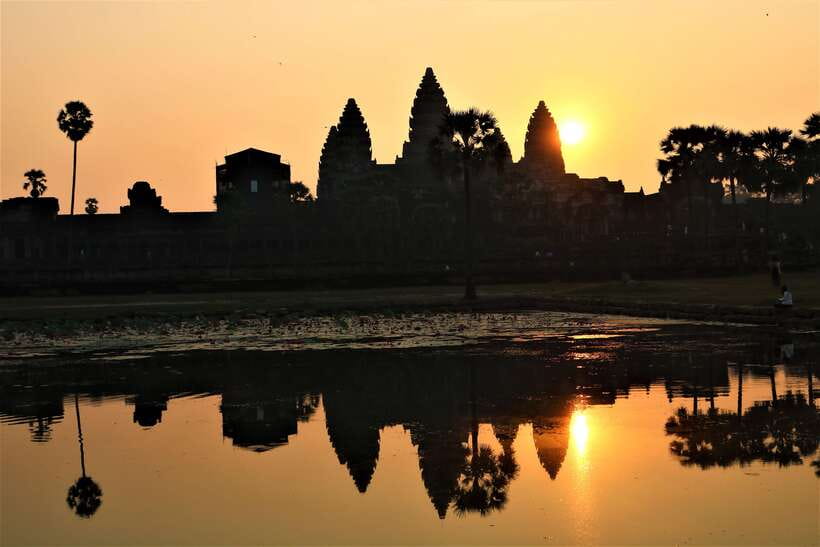
- Sunrise from Angkor Wat’s eastern side: Enter before dawn with a torch and reach the temple before the morning crowds fully gather.
- Banteay Srei’s fine sandstone carving: This smaller temple is known for unusually detailed relief work and sits well outside the main Angkor circuit.
- A varied first day: Pre Rup, Neak Pean, Preah Khan, and Bakheng or a rice-field sunset give you more than the standard Angkor Wat circuit.
- Ta Prohm beyond the postcard view: See the jungle-covered temple made famous by its trees, while also visiting the quieter Ta Nei.
- Guiding that adds meaning: Guides including Sak, Pi, Chhay, Pal, Bun, and So have been praised for explaining Hinduism, Buddhism, Khmer kings, temple design, and local culture.
- Practical heat relief: Hotel pickup, safe driving, air conditioning, bottled water, and chilled towels make long temple days easier.
Why two days works better at Angkor
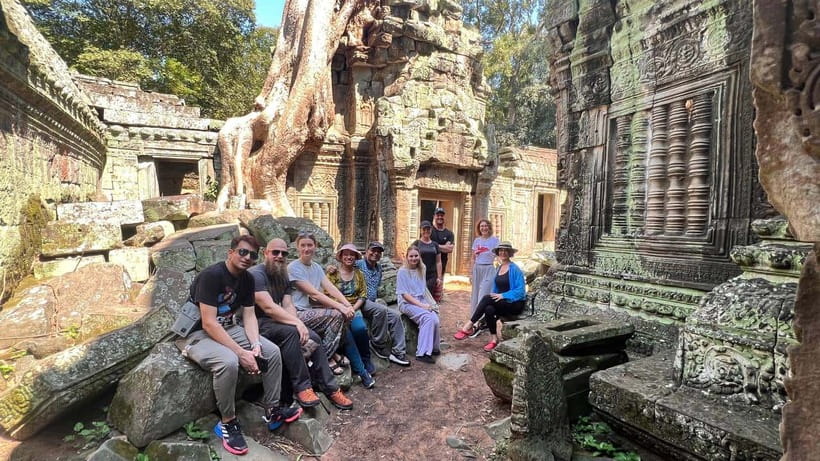
The Angkor archaeological area is not one temple. It is a spread of temples, reservoirs, gates, terraces, towers, and ruined city walls around Siem Reap. Trying to cover the major sights in one day usually means a hot race from one famous photo stop to the next.
This plan divides the experience sensibly. Day one reaches the more distant temples, including Banteay Srei, while day two focuses on Angkor Wat, Ta Prohm, Ta Nei, and Angkor Thom. You still cover a lot of ground, but the schedule gives your guide room to explain what you are seeing.
That human explanation is a major part of the value. A guide can point out the difference between Hindu and Buddhist imagery, explain why a temple was built, and show how carvings fit into Khmer religious stories. Guides such as Pi, Sak, Chhay, and Pal have also been praised for using maps, pictures, humor, and photo advice during the drives.
The group format can vary. A small group is available, and some departures have had only a handful of people, while others have reached around 12 or 15. That is still far more manageable than a large coach, but you should not assume a private experience unless you book the private option.
A few more Siem Reap trips to weigh up
- Angkor Wat Sunrise or Sunset Tour with Guide from Siem Reap
★ 5.0 · 12,109 reviews - Siem Reap: Angkor Wat: Small-Group Sunrise or Sunset Tour
★ 5.0 · 9,444 reviews - Sunset tour of Kampong Phluk stilts home village on the Tonle Sap
★ 5.0 · 4,865 reviews
Day one: Pre Rup and the outer temples
Pre Rup is a strong opening stop because it introduces the temple-mountain form used across Khmer architecture. Built as a state temple for King Rajendravarman in 961 or early 962, it combines brick, laterite, and sandstone.
Look for the layered structure and the sense of rising toward a sacred summit. Your guide can help connect the design to Hindu beliefs and royal power. The site is also a good reminder that Angkor is not simply a collection of photogenic ruins. These were religious and political centers, built to express a king’s place in the world.
The early part of the day may feel more manageable than day two, but heat still builds quickly. Wear shoes with a firm sole, take water each time you leave the van, and do not treat the first temple as a warm-up stroll. Steps and uneven stone appear throughout the Angkor sites.
Banteay Srei and Cambodia’s finest carved details
Banteay Srei is one of the most rewarding stops on the schedule. It is smaller than Angkor Wat, but its pinkish sandstone surfaces carry exceptionally fine reliefs. Floral patterns, figures, and mythological scenes are carved with a delicacy that can be hard to appreciate in photographs.
This is where a good guide earns the fee. The carvings are close to eye level in places, and your guide can show you details you might otherwise walk past. Ask about the Hindu stories depicted in the reliefs, the use of sandstone, and why this temple feels so different from the huge royal complexes.
Banteay Srei is also farther from Siem Reap than the central temples. The drive takes time, but that distance is part of the point. You are not simply repeating the same temple style all day. You are seeing a smaller sanctuary with a more intimate scale and unusually careful workmanship.
The site has only been accessible to visitors since the late 1990s, after the Khmer Rouge left the surrounding area. That recent access adds modern Cambodian history to the visit, and your guide can place the temple’s preservation in that wider story.
Neak Pean and Preah Khan’s quiet ruins
Neak Pean is reached across a causeway toward an artificial island in the Jayatataka Baray reservoir. Its central Buddhist temple sits on a circular island, creating a setting that feels quite different from the tall temple mountains.
The appeal here is as much the layout and water setting as the surviving stone. The stop is usually shorter than Angkor Wat or Ta Prohm, but it breaks up the day and gives you another way to understand Khmer religious planning.
Preah Khan follows with a more atmospheric kind of beauty. Built by Jayavarman VII in honor of his father, it is a large, partly ruined complex where galleries, courtyards, trees, and collapsing stone work together. It feels less polished than Angkor Wat and more open to the forces of time.
I especially like Preah Khan as a contrast stop. Angkor Wat can feel grand and formal. Preah Khan feels layered and personal, with long corridors and corners where the ruin itself becomes the subject. The World Monuments Fund is restoring parts of the temple, and some areas remain in notably good condition.
Give yourself time to look beyond the obvious tree roots. Your guide may show you carvings, doorways, and changes in construction that are easy to miss when you are focused on taking pictures.
Same country, a completely different kind of day:
- From Siem Reap: Kampong Phluk Floating Village Tour by Boat
★ 4.9 · 6,979 reviews - Siem Reap: Angkor Wat 2-Day Tour with Sunrise and Sunset
★ 4.9 · 4,429 reviews - Siem Reap: Kampong Phluk Floating Village Tour with Boat
★ 4.9 · 3,843 reviews - Siem Reap: Full-Day Angkor Wat Guided Tour with Sunset
★ 4.9 · 3,803 reviews
Sunset choices: Bakheng Temple or the rice fields
The sunset arrangement depends on the booking type. The small-group option includes sunset at Bakheng Temple, while the private option includes a rice-field sunset drink.
Bakheng is a hilltop temple with sunset views, but it is also a popular choice. You may find the approach and viewing area busy, and the climb or uneven access can be tiring after a full day. The reward is a broad view and the chance to end among Angkor’s most recognizable elevated sites.
The private option is gentler and more local in feel. Instead of another temple climb, you relax in Siem Reap’s rice fields with a drink as the sun drops across the horizon. This does not replace the archaeological drama of Bakheng, but it offers a quieter finish and a welcome change of pace.
Check which sunset is attached to your booking. The distinction matters, especially if you have mobility concerns or strongly prefer a calm countryside stop over a popular temple viewpoint.
Day two: Angkor Wat before sunrise
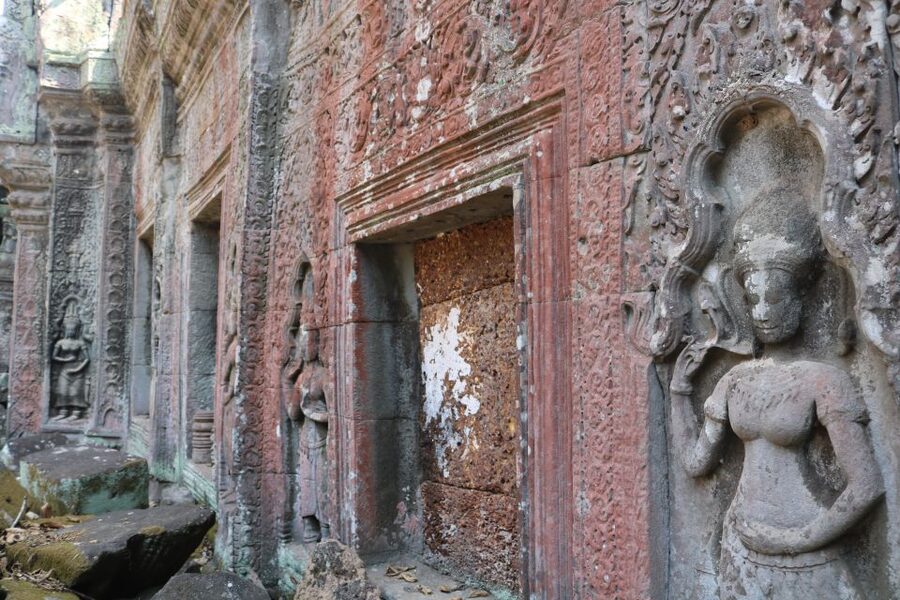
Day two begins before dawn. You enter Angkor Wat from the eastern side with a torch, moving through dark corridors before reaching the temple area for sunrise. Bring your own torch or headlamp, since the early approach can be very dark.
The familiar sunrise view is only one part of this morning. After the sky brightens, you explore the temple itself, including cloistered corridors and the long stretches of bas-relief carving. The scale can be difficult to grasp at first, so let your guide set a pace that leaves room for both explanation and quiet looking.
Sunrise is worth the lost sleep, but it is not a private spectacle. Angkor Wat is one of Cambodia’s most popular sights, and the best viewing places fill early. The guide’s timing and route can help, but no tour can guarantee an empty foreground.
Breakfast is taken outside the temple after the morning visit. Meals are not included, so budget for breakfast and lunch separately. This is a useful pause before the next temples, particularly because the second day combines an early start with more walking.
Ta Prohm, where the trees share the frame
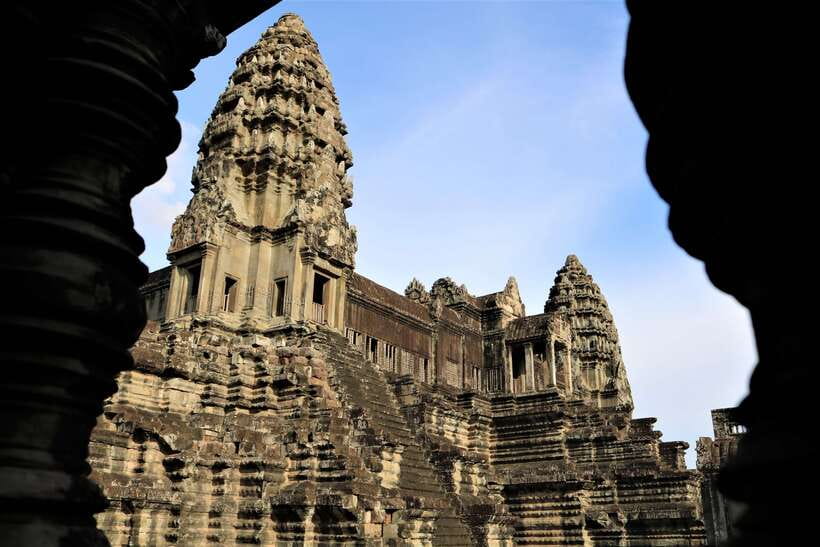
Ta Prohm is the temple most people recognize from photographs of giant roots pressing against old stone. It is famous for good reason, but the site has more to offer than a single tree-and-wall picture.
The temple was once home to 2,740 monks. Today, its courtyards and galleries retain the worn, overgrown appearance associated with its rediscovery by French explorer Henri Mouhot in the early 1850s. The trees are dramatic, but the carved doorways and long passages are equally important.
Your guide can help you separate the original design from later damage and restoration. Ta Prohm can become crowded, particularly around the best-known root formations, so expect to wait your turn for photos. If you want a more reflective visit, use the busy photo points quickly, then spend time in less crowded passages.
This stop can be physically demanding. Roots, stones, narrow passages, and uneven ground require steady footing. Comfortable shoes are not optional here.
Ta Nei and the gates of Angkor Thom
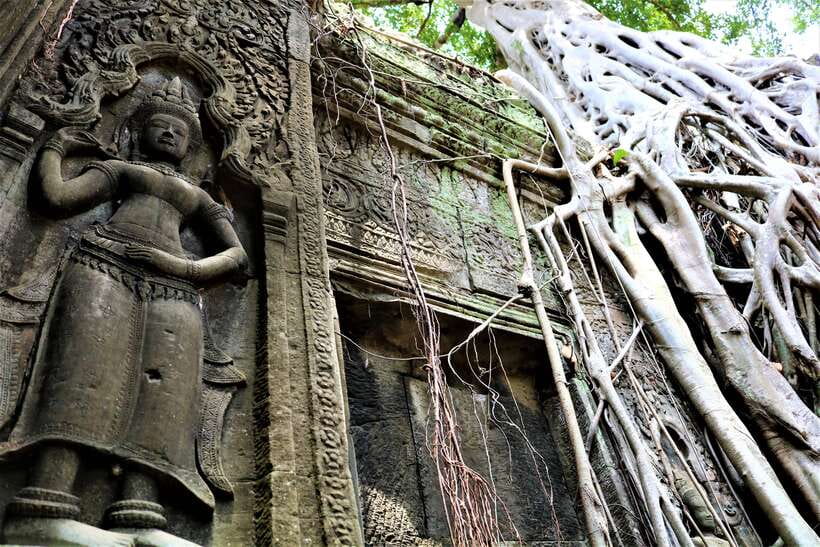
Ta Nei is a smaller late 12th-century stone temple in the Angkor area. It does not carry the same fame as Ta Prohm, and that is part of its appeal. The visit adds a quieter ruin to a day otherwise focused on Angkor Wat and Angkor Thom.
I like the inclusion of Ta Nei because it prevents the itinerary from becoming a parade of only the most photographed monuments. You get a sense of the wider archaeological area and a chance to study a less imposing site without the same level of attention.
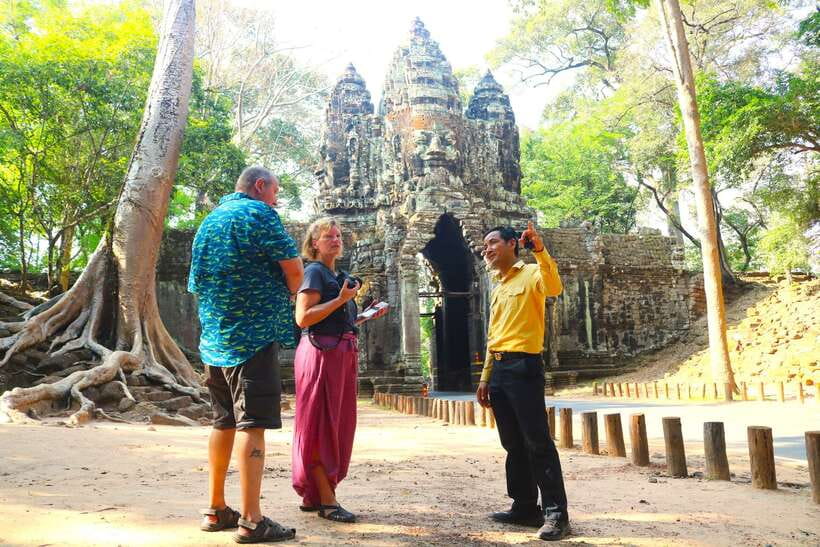
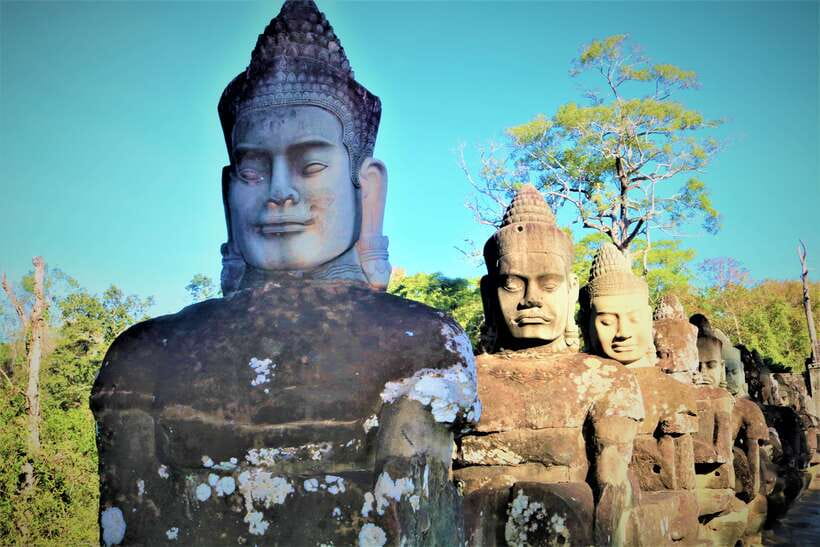
Next comes the southern gate of Angkor Thom. A row of 54 stone figures lines each side of the approach, with gods on the left and demons on the right. This is a powerful introduction to the fortified city, and your guide can explain the religious symbolism behind the figures and the naga serpent they hold.
The gate is also a busy photo stop. Stay alert near the road and listen for instructions about where to gather. The van’s air conditioning and cold towels become especially welcome after walking around the gate and city entrance.
Bayon, the face towers, and royal public spaces
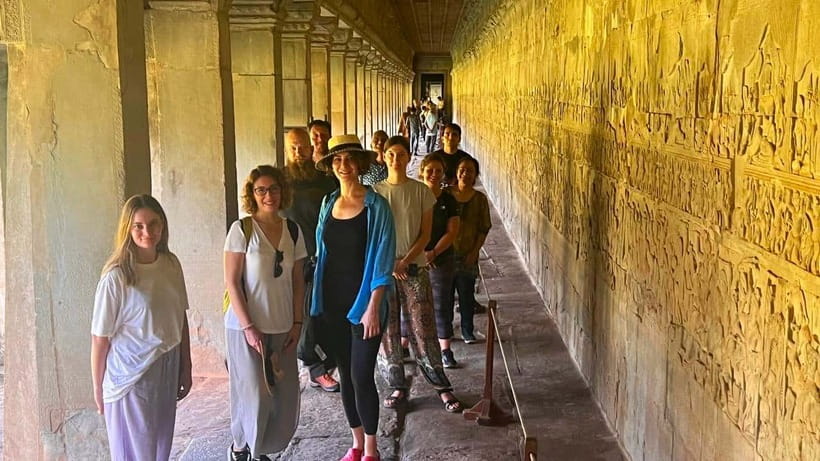
Inside Angkor Thom, Bayon is the main event. Its central towers carry more than 200 enormous faces, creating a maze-like temple where the view changes every few steps.
The faces are compelling, but Bayon is not easy to understand without help. From the ground, the towers can seem randomly packed together. A guide can explain the temple’s Buddhist setting, its royal purpose, and the way the structure was designed to surround you with images of power and protection.
Take your time with the bas-reliefs if your energy allows. They show more than religious scenes. They also offer glimpses of warfare, court life, markets, animals, and daily activity. This is one of the places where the tour’s cultural explanations can turn a pile of ancient stone into a readable historical record.
The final stops are the Terrace of the Leper King and the Terrace of Elephants. These open-air monuments give you a different experience from the enclosed galleries. They help show how Angkor Thom functioned as a royal city, not just a place of worship.
By this point, fatigue is real. The itinerary is full, and the combination of a pre-dawn start, heat, stairs, and stone paths can wear you down. The schedule is manageable when the guide adjusts the pace, but you should speak up if you need a pause. Several guides, including Bun and Pi, have been praised for giving groups time for photos and rest instead of rushing everyone through.
The guide and driver make the difference
The temples are extraordinary on their own, but the quality of the people leading the day will shape your experience. Guide assignments vary, with past tours led by names such as Chhay, Sak, Pi, Pal, Bun, So, Yuth, Sam, and Sokpee.
The strongest guiding style here is conversational rather than a nonstop lecture. You can expect explanations of Khmer kings, Hinduism, Buddhism, temple symbolism, construction, colonial-era rediscovery, the Khmer Rouge period, and present-day Cambodian culture. Guides have also been praised for answering questions, taking photos, finding less crowded corners, and using humor to keep long drives lively.
The driver’s role is just as practical. Drivers including Vichet, Keal, Mao, Naroo, Seyha, and Sal have been praised for safe driving, punctual hotel pickups, and having chilled water and towels ready after temple walks. That service is not decorative. After standing in the sun on hot stone, a cold towel can reset your whole afternoon.
Do not assume a specific guide or driver will be assigned to you. Names can change by date and group. What you can reasonably expect is an English-speaking licensed guide and air-conditioned transport from Siem Reap City hotels.
Price, comfort, and what you still pay
At $46 per person, the tour price is attractive for two days of transport and guiding. But the real entrance cost is closer to $108 per person once you add the required $62 two or three-day Angkor pass. Meals are extra, and the sunset inclusion depends on whether you choose private or small group.
That total can still be good value if you want structure. You are paying for hotel pickup and return, an experienced guide, a planned route, transport between widely spaced temples, and practical support in the heat. Hiring separate rides and arranging a guide for two days could easily become less convenient, even if the headline cost looks lower.
The tour is best for someone who wants the major sights without spending hours comparing temple routes. It is also a good fit if you value cultural context, photo help, and a small group rather than a huge bus.
It is less suitable if you prefer to move at your own pace, skip early mornings, or spend half a day at one temple. You should also note the stated restrictions: the activity is not wheelchair accessible, is not suitable for people with mobility impairments or children under eight, and asks you to dress with covered shoulders and knees. Shorts are listed as not allowed, so pack light trousers or a longer skirt.
What to bring for two hot temple days
Wear comfortable walking shoes with good grip. Insect repellent is specifically recommended, and a small torch is useful for the pre-dawn eastern entrance at Angkor Wat.
Dress respectfully with covered shoulders and knees. Pack sunscreen, but do not count on your own supplies alone. Complimentary bottled water and cool towels are provided, yet you will still want a refillable bottle, sunglasses, and clothing suited to heat.
Leave plenty of room in your day bag for your temple pass, phone, camera, and a light layer for the early morning. Feeding animals is not allowed, and the site rules should be followed carefully.
Should you book this Angkor tour?
I would book it if this is your first visit to Siem Reap and you want a well-planned two-day introduction. The route covers Angkor Wat, Angkor Thom, Bayon, Ta Prohm, Banteay Srei, Preah Khan, Neak Pean, Pre Rup, Ta Nei, and a sunset stop. That is a strong range, from grand royal monuments to quieter and more atmospheric ruins.
The best reason to choose it is the balance of famous sites and useful support. You get sunrise, sunset, air conditioning, an English-speaking guide, hotel transfers, and regular water and towels. The main reasons to hesitate are the extra temple-pass cost, meals not being included, the early start, and the amount of walking.
Book the small-group option if you want Bakheng sunset and a social setting. Choose the private option if the rice-field drink appeals more and you want a little more control over the pace. Either way, reserve this for a day when you can sleep afterward.
FAQ
How long is the tour?
The experience lasts two days.
What temples are visited?
The itinerary includes Angkor Wat, Angkor Thom, Bayon, Ta Prohm, Ta Nei, Banteay Srei, Pre Rup, Neak Pean, and Preah Khan. The sunset option also includes Bakheng Temple for the small-group option or a rice-field sunset drink for the private option.
Is sunrise at Angkor Wat included?
Yes. Day two begins with a pre-dawn departure for sunrise at Angkor Wat.
Do I need to bring a torch?
Yes. The morning plan involves entering Angkor Wat in darkness from the eastern side, so you should bring a torch.
Is the temple entrance fee included?
No. The two or three-day temple pass costs $62 per person and is not included in the tour price.
Are meals included?
No. Meals are not included. Breakfast is taken outside Angkor Wat on day two, and you should budget separately for food.
Is hotel pickup available?
Yes. Pickup and drop-off are available from hotels in Siem Reap City.
Is transport air-conditioned?
Yes. Round-trip transport is provided in an air-conditioned vehicle.
What language does the guide speak?
The live guide speaks English.
Is the tour wheelchair accessible?
No. The activity is not wheelchair accessible and is not suitable for people with mobility impairments. It is also not suitable for children under eight.
More 2-Day Experiences in Siem Reap
- Angkor 2-Day Sunset & Sunrise Small-Group Tour
★ 5.0 · 2,567 reviews - 2 Days Exclusive Temple Highlights with Sunset and Sunrise Tour
★ 5.0 · 1,157 reviews - Siem Reap: Angkor Sunrise 1- or 2-Day Guided Temples Tour
★ 4.9 · 1,132 reviews - 2 Days Guided Historical Tour in Angkor
★ 5.0 · 855 reviews
Just added around Siem Reap
- Ultimate Sunrise to Angkor Wat, Angkor Thom and Bayon Temple★ 5.0 · 3 reviews
- Twilight Tastes of Siem Reap Include Dinner★ 5.0 · 13 reviews
- Trekking Tour at Phnom Kulen National Park from Siem Reap★ 5.0 · 3 reviews
- Full-Day Private Tour of Angkor Wat with Pick Up★ 5.0 · 12 reviews
- Private Day Trip to Angkor Temples with Expert Guide★ 5.0 · 4 reviews
- Waterfall & River of 1000 Siva Linga- Kulen Mountain Private Tour★ 5.0 · 3 reviews
- Professional Photo Shoot in Angkor Archaeological Park, Siem Reap★ 5.0 · 42 reviews
- Siem Reap City Tour with War Museum and Killing Field★ 5.0 · 27 reviews
2-Day Experiences, compared.

Angkor Wat 2-Day Tour with Sunrise and Sunset
Read our review →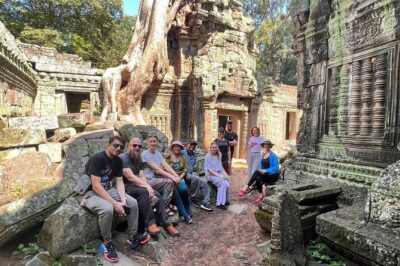
2 Days Exclusive Temple Highlights with Sunset and Sunrise Tour
Read our review →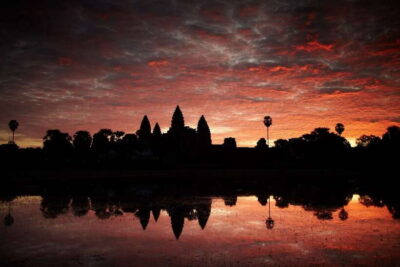
Angkor Sunrise 1- or 2-Day Guided Temples Tour
Read our review →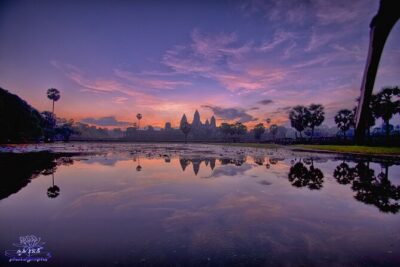
2-Day Angkor Wat With Small, Big Circuit and Banteay Srei Tour
Read our review →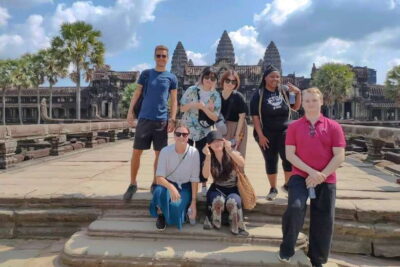
Angkor Wat 2-Day complex Sun rise & Sun set with Guided Tour
Read our review →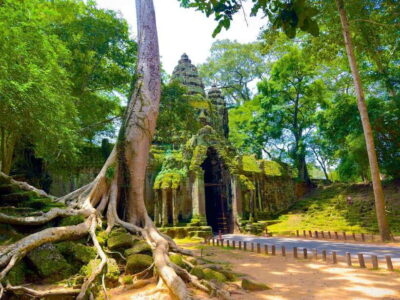
2-Days Angkor Wat with Sunrise Small-Group Tour
Read our review →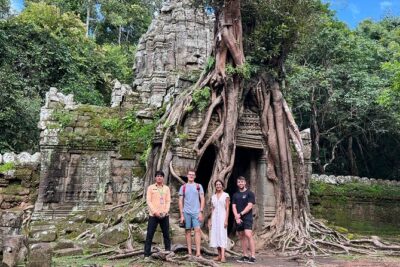
2-Day Angkor Wat Tour with Banteay Srei and Floating Village
Read our review →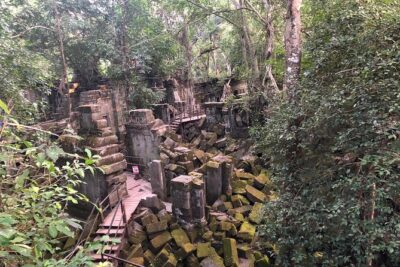
2 Days Discover Angkor Wat Complex and Cambodia’s Villages Tours
Read our review →Browse the lists this tour appears in