
Reviewed · FLOATING VILLAGE TOURS
Siem Reap: Kampong Phluk Floating Village Tour with Boat
Kampong Phluk is not a staged village built for a quick photo stop. It is a working community of roughly 1,000 families, where homes rise as high as 9 meters above the ground and daily life follows the changing water. The trip combines a village visit, boat rides, and a sunset over Tonle Sap for $19.
I like the chance to see how families adapt between wet and dry seasons, and I like that the guides often bring personal knowledge of the area. Tom, Chout, Poun, Pon, and Ho Heang are among the guides praised for clear English, humor, and strong local insight. The main drawback is that the village looks very different depending on water levels, and the optional mangrove canoe costs an extra $5.
Key points to know
- A real working community: Kampong Phluk is home to fishermen and farmers, not simply a floating attraction.
- The season changes the route: High water allows boat access through the village, while lower water may mean walking along the main street.
- Local guides add depth: Guides such as Tom and Chout explain the homes, seasons, fishing, schools, and village life in clear English.
- Tonle Sap is the finale: A larger riverboat carries you to a floating restaurant, where sunset is the main event.
- The canoe is optional: The mangrove trip costs $5 extra and adds a closer look at the flooded forest.
- Good value at $19: Transport, guide, village admission, boat ride, water, and hotel transfers are included, but food and extra drinks are not.
Leaving Siem Reap for Kampong Phluk
The afternoon begins with hotel or meeting-point pickup, usually starting at least 30 minutes before the advertised 2:30 p.m. departure. The return is planned for about 7:30 p.m., so this is a half-day outing that fits neatly around a morning at Angkor.
You ride in an air-conditioned minibus toward Kampong Phluk, about 45 minutes from Siem Reap, though some pickups may take longer. The road passes through Roluos, a small town with local markets, before the countryside opens toward the Tonle Sap floodplain.
I like this drive because it gives the village some context. You are not simply transported from a hotel to a dock with no explanation. The trip shows how quickly Siem Reap gives way to smaller communities, markets, farms, and roads shaped by the lake economy.
Pickup timing deserves attention. The vehicle may arrive before the listed start time, so you should be ready in the hotel lobby rather than waiting until 2:30. The exact drive can vary, with one account describing a trip of about 30 minutes and another closer to an hour. That difference likely reflects pickup points and road conditions.
More Floating Village Tours in Siem Reap:
- From Siem Reap: Kampong Phluk Floating Village Tour by Boat
★ 4.9 · 6,979 reviews - Sunset tour of Kampong Phluk stilts home village on the Tonle Sap
★ 5.0 · 4,865 reviews - Siem Reap Floating Village Kampong Phluk Sunset with Boat
★ 5.0 · 1,962 reviews
Seeing Kampong Phluk from the water
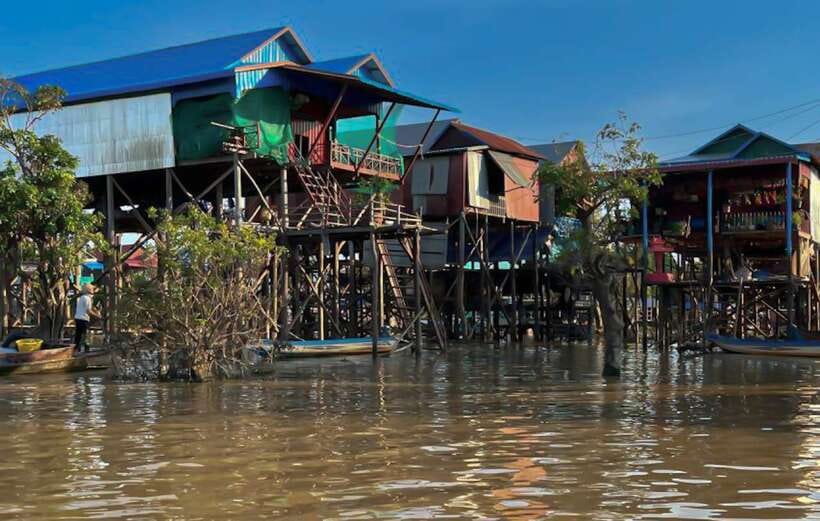
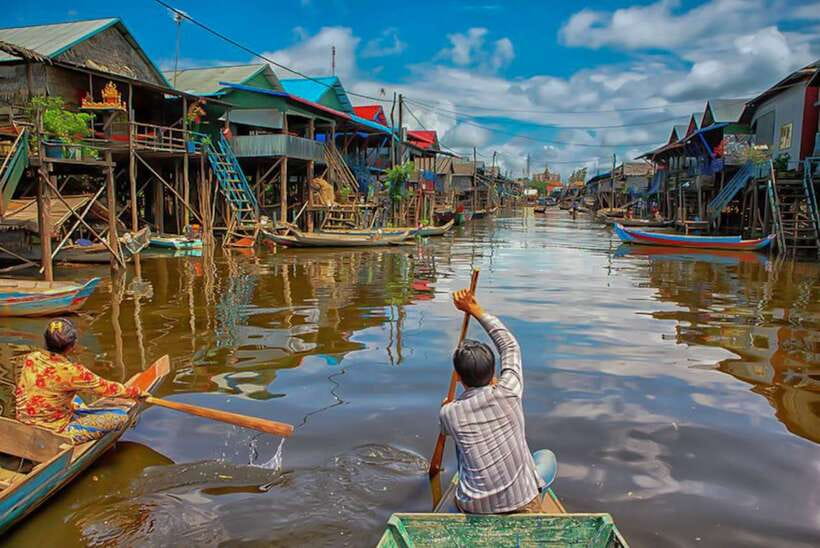
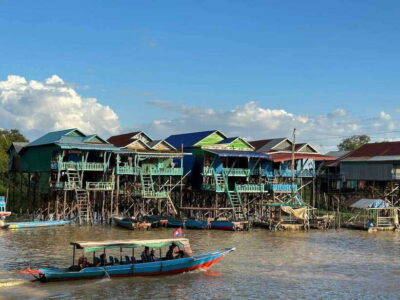
Kampong Phluk’s most memorable feature is its tall stilt houses. During the wet season, the water rises around the homes, and boats become the natural roads. The community’s school, pagoda, houses, workplaces, and daily errands are connected by water.
The stated wet season runs from June through March, but conditions can shift. When the water is high enough, you travel by boat through the village with your small group. You may see people heading to work, children near the school, and residents moving about the community in the same way they do every day.
The height of the houses is not decoration. It is a practical response to the lake’s yearly rise and fall. At up to 9 meters, the stilts leave living space above floodwater while creating room below for boats, storage, and work. Your guide explains how the village adjusts to changing tides and seasons, which turns an impressive view into something easier to understand.
In the dry season, the experience shifts. Before the water rises again, you may walk along the main street and see people going about their routines, including the construction of new homes. This version gives you closer views of the houses and village paths, but it lacks the sense of moving through the community by boat.
That seasonal change is both a strength and a limitation. You cannot book this tour expecting one fixed scene all year. High water offers the most dramatic boat access through the village. Lower water can offer more time on foot and a clearer look at the buildings and streets.
A community shaped by fishing and farming
Kampong Phluk is described as a sustainable, self-sufficient community that rebuilt and continued its way of life after Cambodia’s civil war ended. Most of the roughly 1,000 families work as fishermen or farmers, so the village is tied closely to the water and the seasonal cycle.
This matters because the tour is more useful when you watch for working details rather than treating every view as a backdrop. Look at how homes are positioned, how boats replace roads in high water, and how food and work relate to the lake. Your guide can help connect those details to local life.
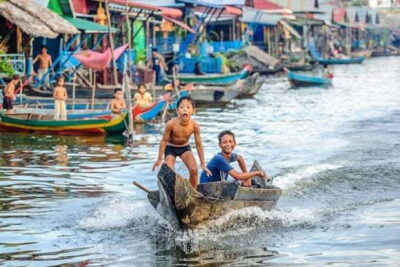
Children are often friendly and curious, and the route may include a look at an English school. That can be a memorable part of the visit, especially for families and anyone interested in education in rural Cambodia. You should still treat the school as a place of learning, not a performance arranged for photographs.
Some tours also include an opportunity to enter a local home. A welcoming resident may show you how a house works and explain a little about life above or beside the water. This is one of the more personal parts of the afternoon, but it should be approached with respect. Ask before taking photos, and follow your guide’s lead.
The village has a tourist economy, and local people are happy to welcome visitors because tourism supports community development. That does not make the visit artificial. It simply means you should spend thoughtfully, listen carefully, and remember that people here are going about their lives.
Murals where Hindu and Buddhist traditions meet
The village visit includes a stop at a religious building described as a Hindu and Buddhist church. Its colorful murals illustrate how the two traditions coexist in Cambodia.
This is a useful pause in the itinerary because it adds a cultural layer beyond houses and boats. The painted walls are visually striking, but the important point is the shared religious setting. Your English-speaking guide can explain what you are seeing and answer questions as the group moves through the site.
Dress and behavior should be respectful at any religious stop. The supplied information does not specify a formal dress code, but modest clothing and quiet conduct are sensible choices. Keep your phone charged for photos, but do not let the camera replace the chance to look closely at the murals.
Same country, a completely different kind of day:
- Angkor Wat Sunrise or Sunset Tour with Guide from Siem Reap
★ 5.0 · 12,109 reviews - Siem Reap: Angkor Wat: Small-Group Sunrise or Sunset Tour
★ 5.0 · 9,444 reviews - Siem Reap: Angkor Wat 2-Day Tour with Sunrise and Sunset
★ 4.9 · 4,429 reviews - Siem Reap: Full-Day Angkor Wat Guided Tour with Sunset
★ 4.9 · 3,803 reviews
The optional canoe through the mangroves
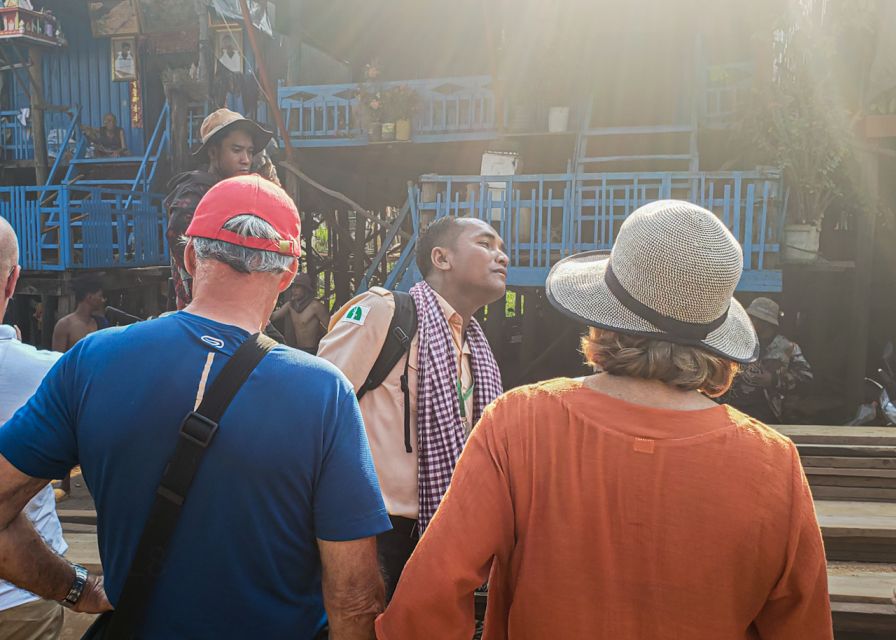
After or during the main village visit, you can pay an additional $5 for a canoe trip through the mangrove forest. This is not included in the $19 price, so bring enough cash or confirm the payment method before setting out.
The canoe adds a slower, quieter look at the flooded forest. Instead of viewing the community mainly from a road, minibus, or larger boat, you move at close range among the mangroves. One account describes the canoe portion as lasting about 20 minutes, giving you a useful idea of its scale.
I would add it if you enjoy nature and want more than the basic village circuit. It is less essential if your main goal is to see the stilt homes, meet the guide, and reach the lake for sunset. The extra cost is modest, but the activity can feel like an add-on rather than the central purpose of the tour.
The canoe is also dependent on water conditions. If the forest is accessible, it can be one of the most atmospheric parts of the afternoon. If you are trying to keep the total cost low, skip it without feeling that you have missed the main experience.
Taking the riverboat onto Tonle Sap
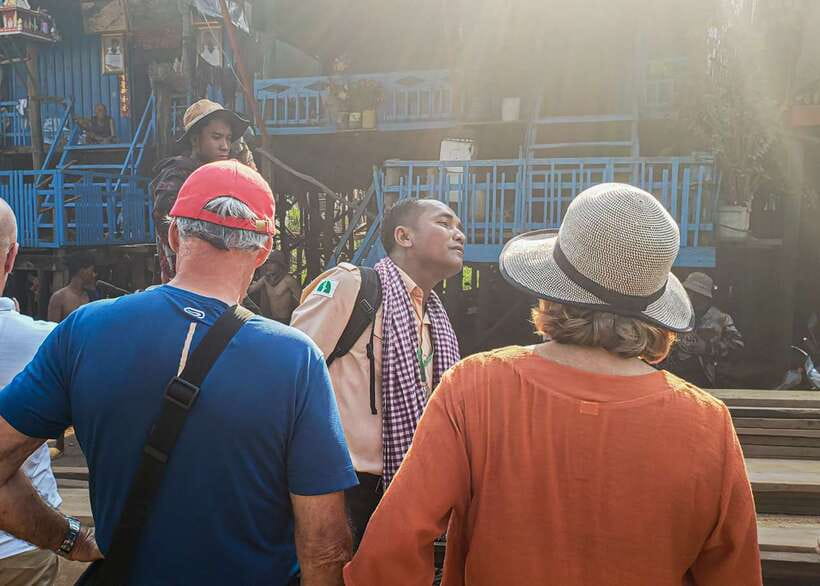
The final boat journey carries you away from the village and onto Tonle Sap, Cambodia’s great inland lake. A riverboat with a roof takes the group across the open water toward a floating restaurant.
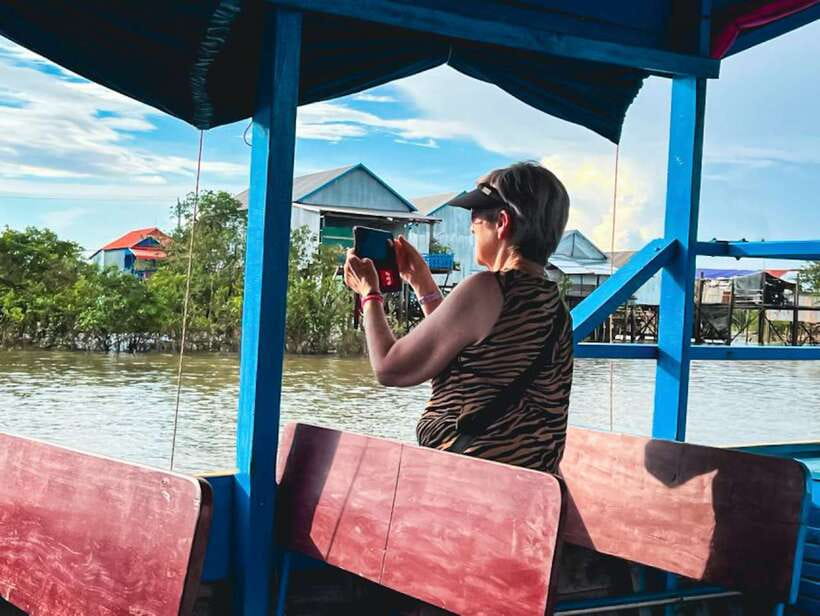
Life jackets are available on the boats, and the roof gives you shade during the ride. The change in scale is noticeable: the stilted village feels close and detailed, while the lake opens into a broad, calm setting with fewer fixed landmarks.
At the floating restaurant, you can order food and additional drinks, but these are not included. The menu is described as offering regular dishes along with some more unusual options, including crocodile in at least one account. You do not need to eat there to take part in the sunset stop, but you should budget separately if you want dinner or a drink.
The restaurant is a practical place to rest after the village walk and boat rides. Restroom stops are included at several points, and chilled bottled water is provided throughout the tour. Those small comforts matter in Cambodia’s heat, especially after time outdoors.
Sunset over the lake
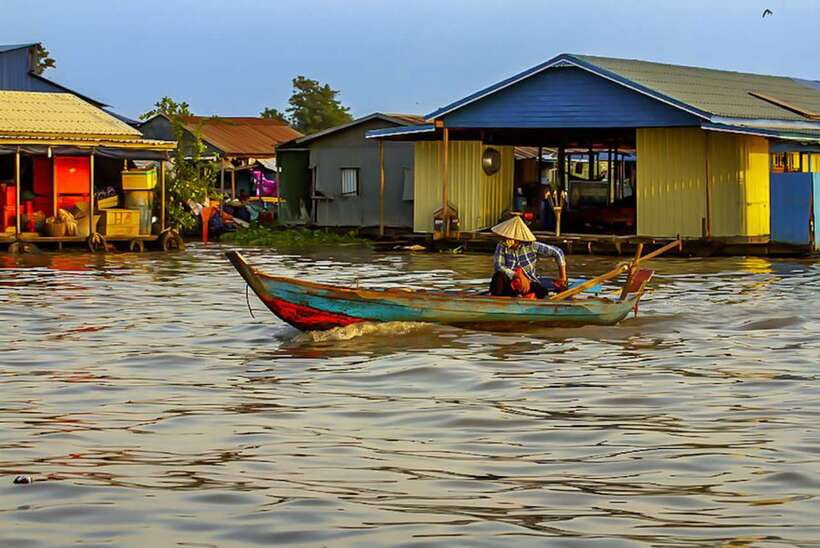
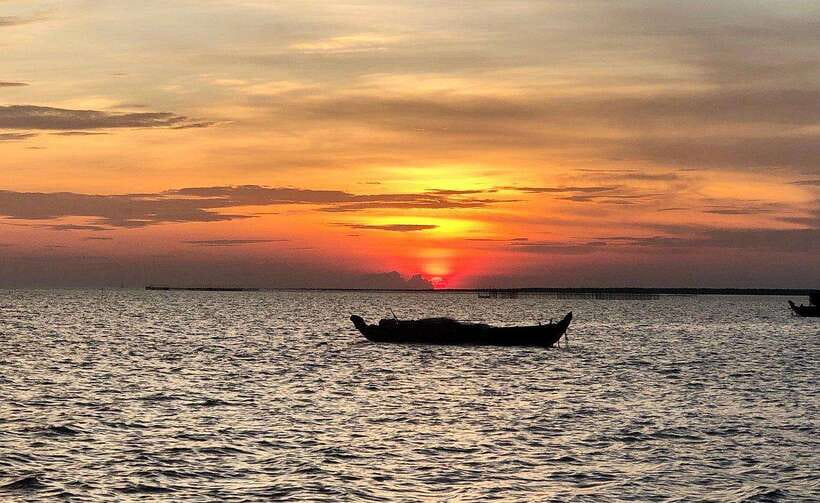
The sunset is the tour’s polished finish. From the floating restaurant or nearby boat, you watch the light spread across Tonle Sap before returning after dark.
Sunset quality depends on clouds and weather, of course, but the viewpoint is unusual. You are not watching from a city rooftop or roadside temple. You are on the water, with the lake around you and the village route behind you.
Check the booking option carefully because sunset views are included only if that option is selected. The stated schedule runs from a 2:30 p.m. departure to about 7:30 p.m., so this is built as an afternoon-to-evening trip rather than a morning excursion.
I like ending here because the quiet gives the visit time to settle. The village can be busy with movement and explanation. On the lake, you get a chance to sit, have a cool drink, and think about how much Cambodian life depends on water that changes dramatically through the year.
The guides make a major difference
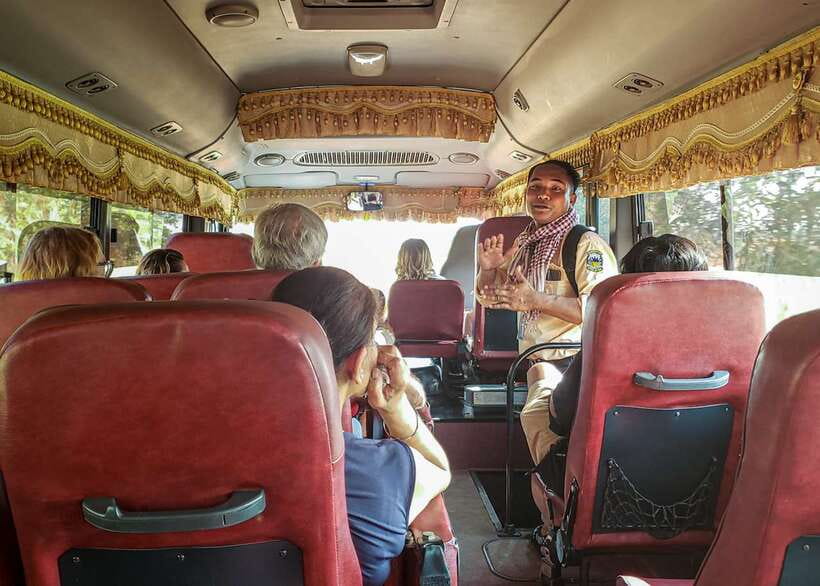
The guide is central to this experience. The strongest guiding names associated with this tour include Tom, Chout, Poun, Pon, Pom, Pun, and Ho Heang. Assignments can change, so you should not assume a particular person is guaranteed, but the guide quality is clearly a major part of the tour’s appeal.
Tom is frequently praised for excellent English, humor, and personal stories from Kampong Phluk. Several accounts describe him as a local from the village, which gives his explanations a direct connection to the place. Chout is also described as coming from the floating villages, with a lively personality and clear pride in his community.
Poun and Pon are noted for being friendly, helpful, and well informed about culture and local life. Ho Heang is praised for keeping the drive entertaining while explaining the village’s background. These details point to what you should expect from a good guide: not just directions, but answers about homes, seasons, fishing, schools, religion, and family life.
The language offered is English. Private and small-group formats are available, which can affect how much time you have for questions and how personal the visit feels. If you want the most conversation, a private or smaller group is likely the better choice, though the supplied information does not give a separate price for each format.
What $19 covers, and what it does not
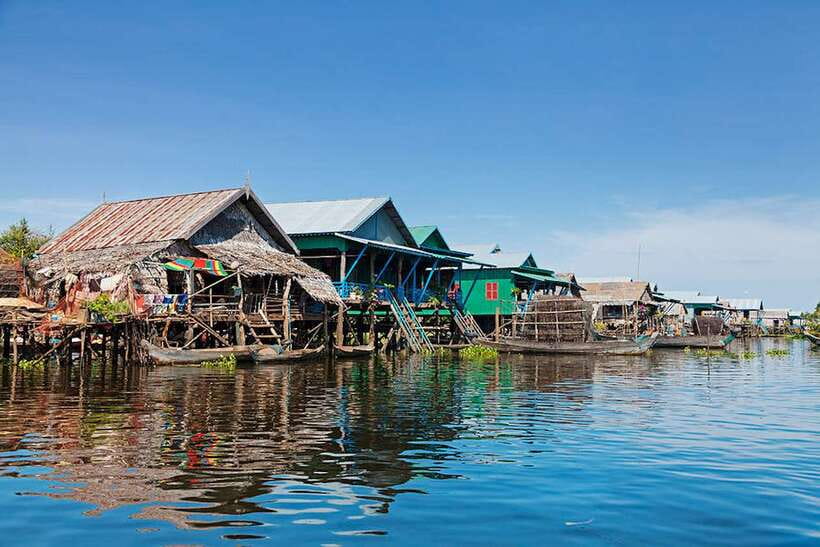
At $19 per person, the tour offers strong value for a five to six-hour outing. The price includes hotel pickup and drop-off, an air-conditioned minibus, an English-speaking guide, village admission, the main boat ride, chilled bottled water, and sunset views if you select that option.
That package removes several costs that can add up on an independent outing. You do not need to arrange transport to a distant dock, negotiate the village admission, or find your own way back to Siem Reap after sunset.
Food and extra drinks cost more. The floating forest canoe is another $5. If you want dinner at the restaurant and the mangrove ride, your real spend will be higher than the advertised price, but it should still remain reasonable for an afternoon with transport and several activities.
The value is strongest for first-time visitors who want a simple, organized introduction to Tonle Sap. If you prefer to set your own pace, avoid scheduled stops, or spend longer photographing one part of the village, a private arrangement may suit you better.
Practical advice before you go
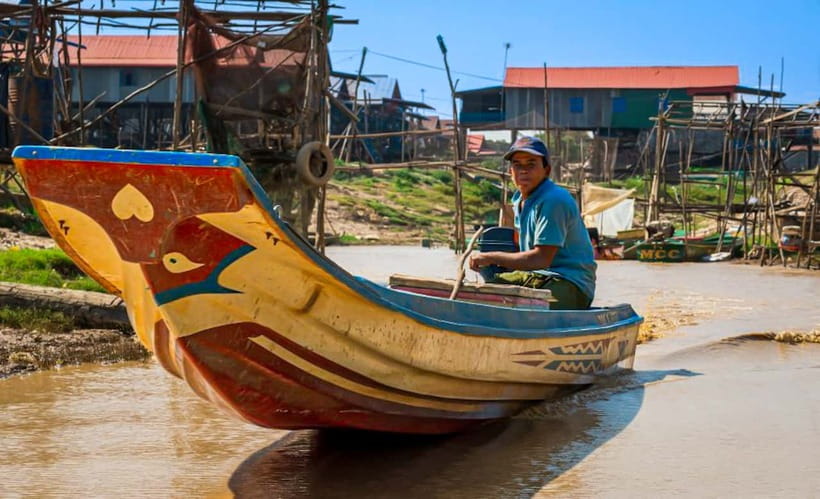
Wear shoes that can cope with either a village walk or boat boarding. The route changes with water levels, and the ground may not feel the same in the dry and wet seasons.
Bring a charged smartphone and any personal medication. Chilled water is supplied, but you should still bring anything you need for the afternoon. Alcohol and drugs are not allowed.
The boats have roofs and life jackets. The roof helps with sun and weather, while the life jackets provide a basic safety measure. Keep bags secure and avoid bringing anything you would regret getting wet.
This tour is not suitable for wheelchair users, babies under one year, or people over 70. The combination of minibus transfers, uneven village access, boat boarding, and time outdoors may be demanding.
Free cancellation is available up to 24 hours before departure, and you can reserve now and pay later. Those terms are useful if your Siem Reap plans are still moving around, but check the exact conditions at booking.
Who should book this Kampong Phluk trip
I would recommend it to you if you want to see a working Cambodian community rather than spend another half-day inside the main temple zone. It suits couples, small groups, solo visitors, and families with older children who can manage boats and walking.
It is especially good for people who like local stories. The homes on stilts are the visual hook, but the guide’s explanations about seasonal water, fishing, farming, schools, and village cooperation give the visit its value.
You should think twice if you dislike group schedules, restaurant stops, or tourist infrastructure. Kampong Phluk is an authentic community, but it also receives visitors, charges admission, and includes a floating restaurant. The experience is not untouched rural life, and it should not be sold to yourself as such.
The season also matters. Choose this trip in high water if traveling through the village by boat is your priority. Choose it in lower water if you prefer walking along the main street and seeing the homes from ground level. Either way, the Tonle Sap sunset remains the main closing scene.
Should you book it?
At $19, this is an easy recommendation for most Siem Reap visitors who want a half-day outside the temples. You get transport, a guide, village access, boat time, and a sunset setting without having to organize the moving parts yourself.
Book it if you value local explanation and do not mind that the exact route depends on the season. Add the $5 canoe if mangroves appeal to you, and budget for food at the floating restaurant. I would skip it only if you need step-free access, want a fully independent visit, or have limited patience for a fixed afternoon schedule.
FAQ
How long does the Kampong Phluk tour last?
The tour lasts about five to six hours. The stated schedule begins with pickup before the 2:30 p.m. departure and usually ends around 7:30 p.m.
Is hotel pickup and drop-off included?
Yes. Pickup and drop-off at your accommodation are included. The guide and driver may begin pickup at least 30 minutes before the departure time.
What language does the guide speak?
The live guide speaks English. Guides associated with the experience include Tom, Chout, Poun, Pon, Pom, Pun, and Ho Heang, though a specific guide is not guaranteed.
Is the mangrove canoe ride included?
No. The optional canoe ride through the floating forest costs an additional $5.
Are food and drinks included?
Chilled bottled water is included. Food and additional drinks at the floating restaurant are not included.
Is the tour available in every season?
The tour operates with different village routes depending on water levels. In higher water, you may travel by boat through the village. In lower water, you may walk along the main street before taking the boat onto Tonle Sap.
Just added around Siem Reap
- Ultimate Sunrise to Angkor Wat, Angkor Thom and Bayon Temple★ 5.0 · 3 reviews
- Twilight Tastes of Siem Reap Include Dinner★ 5.0 · 13 reviews
- Trekking Tour at Phnom Kulen National Park from Siem Reap★ 5.0 · 3 reviews
- Full-Day Private Tour of Angkor Wat with Pick Up★ 5.0 · 12 reviews
- Private Day Trip to Angkor Temples with Expert Guide★ 5.0 · 4 reviews
- Waterfall & River of 1000 Siva Linga- Kulen Mountain Private Tour★ 5.0 · 3 reviews
- Professional Photo Shoot in Angkor Archaeological Park, Siem Reap★ 5.0 · 42 reviews
- Unveiling 2 Days Private Angkor Wat/Beyond In Sunrise/Sunset Tour★ 5.0 · 48 reviews
Floating Village Tours, compared.
Sunset tour of Kampong Phluk stilts home village on the Tonle Sap
Read our review →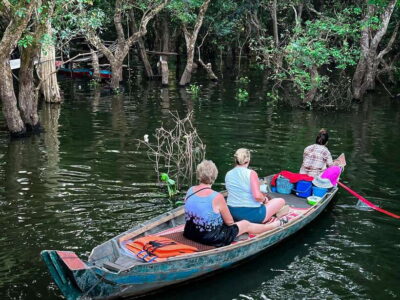
Siem Reap Floating Village Kampong Phluk Sunset with Boat
Read our review →
Kompong Phluk Floating Village Half-Day Tour ( Morning / Sunset )
Read our review →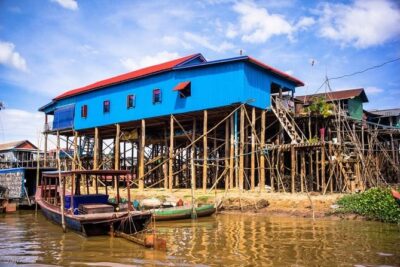
Tonle Sap Lake & Kampong Phluk Village Half-Day Tour
Read our review →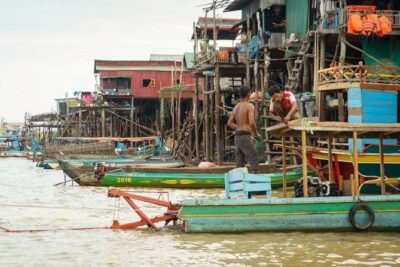
Tonle Sap, Kampong Phluk & Floating Village Tour
Read our review →Browse the lists this tour appears in