
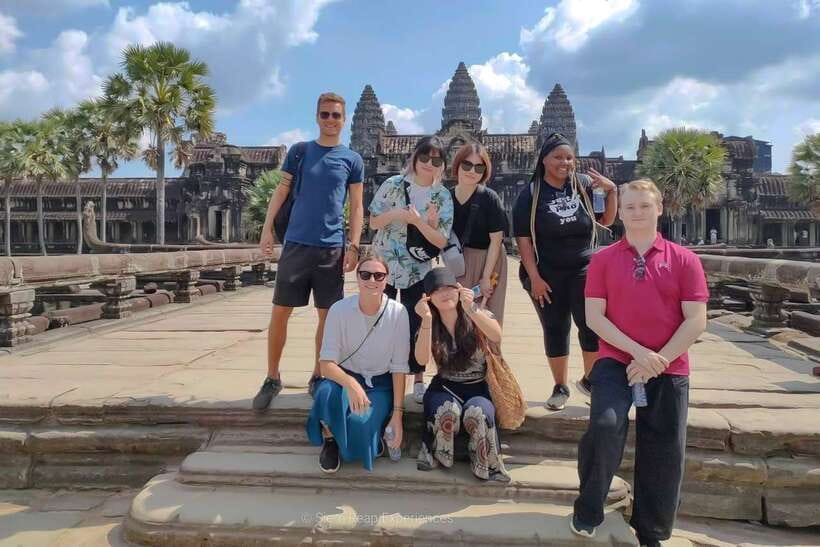
Reviewed · ANGKOR WAT TOURS
Angkor Wat 2-Day complex Sun rise & Sun set with Guided Tour
Angkor Wat is best understood in stages, not rushed through in a single hot morning. This $30 tour gives you two very different days: a sunrise visit around the inner temples, followed by a longer circuit through quieter ruins and a sunset climb at Phnom Bakheng.
I like the small group of up to 13 and the useful split between a sunrise small tour and a sunset big tour. I also like the guides’ practical touch. Sam, Sayon, John, Nick, and others are frequently praised for clear explanations, Cambodian stories, good pacing, and taking photos at the best spots.
The main drawback is the early start. Pickup on Day 1 can be between 4:00 and 4:20 a.m., and some people wait in darkness for the sunrise. The heat, long walking, and extra $37 or $62 temple pass also need to be part of your budget.
Key points to know before booking
- Sunrise at Angkor Wat: Arrive before dawn for the famous reflection pool view, but expect a long wait before the sun appears.
- Eleven temples over two days: The route covers Angkor Wat, Angkor Thom, Bayon, Banteay Kdei, Ta Keo, Preah Khan, Neak Pean, Ta Som, East Mebon, Pre Rup, and Phnom Bakheng.
- Different circuits each day: Day 1 focuses on the smaller inner circuit, while Day 2 covers the larger circuit and more distant temples.
- Air-conditioned minibus: The cool vehicle matters after walking in Cambodia’s heat and humidity.
- Guides who help with photos: Guides including Sam, Sayon, John, Nick, and Vone are praised for history talks and finding good picture spots.
- Bring the temple pass money: The tour fee does not include the Angkor Archaeological Park ticket, which costs $37 for one day or $62 for two or three days.
Why two days works better than one
Angkor is not one temple. It is a huge archaeological park with grand state temples, Buddhist shrines, Hindu sanctuaries, jungle-covered ruins, reservoirs, terraces, and long roads between them. A one-day visit can give you the headline sights, but it often leaves you trying to absorb too much at once.
This tour gives you one early day and one later day. That helps your eyes and mind adjust to the scale of the Khmer empire. Day 1 brings the famous images and major central temples. Day 2 adds smaller details, unusual structures, and a sunset viewpoint.
The $30 tour price is good value for transport, a guide on two separate days, hotel pickup and drop-off, bottled water, refreshing towels, and visits to 11 temples. The pass changes the calculation. Add $37 for a one-day ticket or $62 for a two or three-day ticket. For this experience, the two or three-day pass makes the most sense because the tour operates over two days.
You should also budget for food. Breakfast and lunch are available at local restaurants near the temples, but meals and soft drinks are not included. One stop has received criticism for slow service and incorrect orders, so I would keep some patience in reserve and avoid relying on a tightly timed meal plan.
More Angkor Wat Tours in Siem Reap:
- Angkor Wat Sunrise or Sunset Tour with Guide from Siem Reap
★ 5.0 · 12,109 reviews - Siem Reap: Angkor Wat: Small-Group Sunrise or Sunset Tour
★ 5.0 · 9,444 reviews - Siem Reap: Angkor Wat 2-Day Tour with Sunrise and Sunset
★ 4.9 · 4,429 reviews
Day 1: Angkor Wat at sunrise, then the small circuit
Your hotel pickup is scheduled between 4:00 and 4:20 a.m. Wait in the lobby 30 minutes early, since the driver has only a short window after the scheduled pickup time. The minibus is air-conditioned, a welcome feature even before the day heats up.
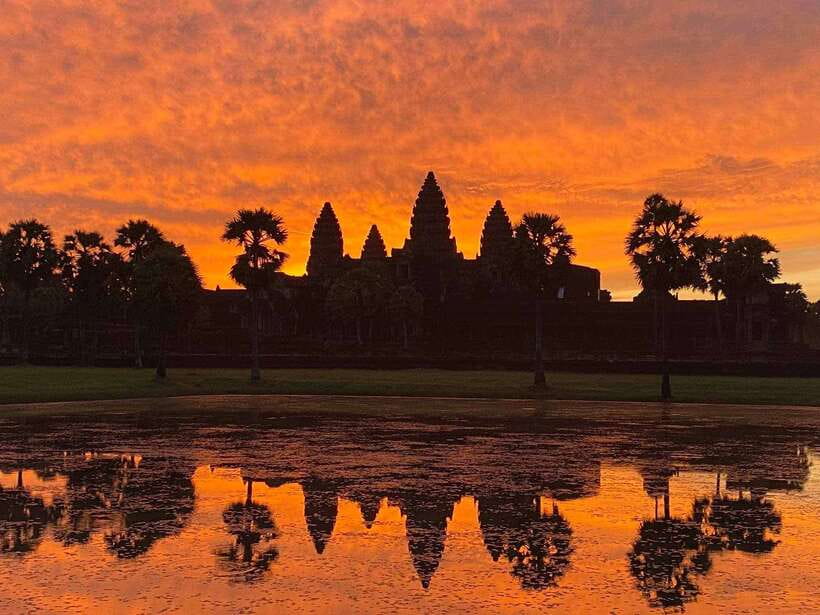
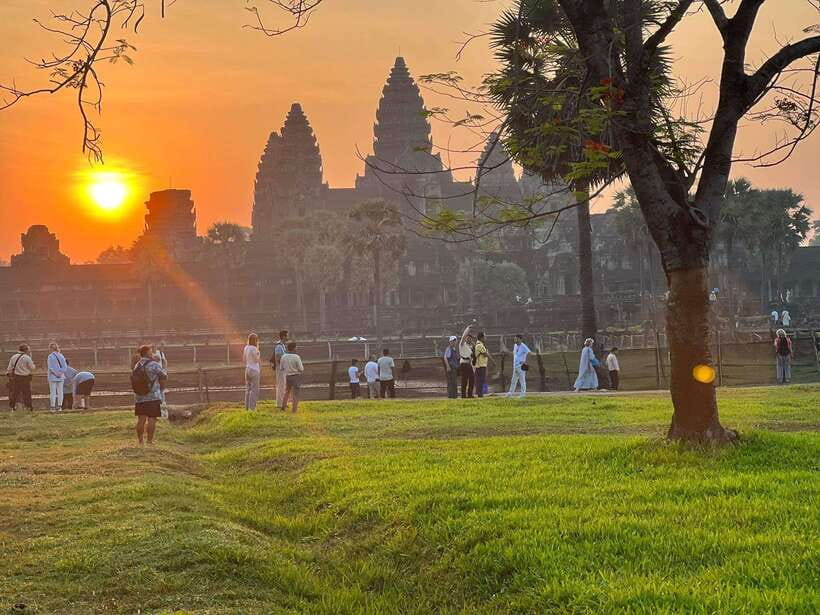
At Angkor Wat, you arrive in the dark and make your way toward the sunrise viewing area. The famous scene is the temple silhouette reflected in the water as the sky brightens behind the towers. It can be beautiful, but the timing is not perfectly predictable. In winter, some people have waited around 90 minutes before the sun came up, and during the rainy season an early start may bring clouds rather than a clear sunrise.
That is the tradeoff. You gain cooler air and an atmospheric first look at Cambodia’s best-known monument, but you lose sleep and may spend a while standing in darkness. Bring a small flashlight or use your phone carefully, since the ground can be uneven before daylight.
Once the light improves, your guide can explain the temple’s design, carvings, religious meaning, and place in Khmer history. The value of a guide becomes clear here. Without help, Angkor Wat can look like an enormous collection of towers and galleries. With context, the carved scenes and carefully planned spaces begin to make sense.
Allow time for your own photographs, too. The guides are not simply moving the group from one stop to another. Sam, Sayon, Nick, and several other guides are praised for pointing out good angles and taking photos for visitors. That is especially useful for solo visitors and couples who want more than selfies.
Angkor Thom and the Bayon faces
After Angkor Wat, the route moves to Angkor Thom, the great walled city that once formed the center of the Khmer capital. The area is known for its gateways, large-scale stonework, and the Bayon temple.
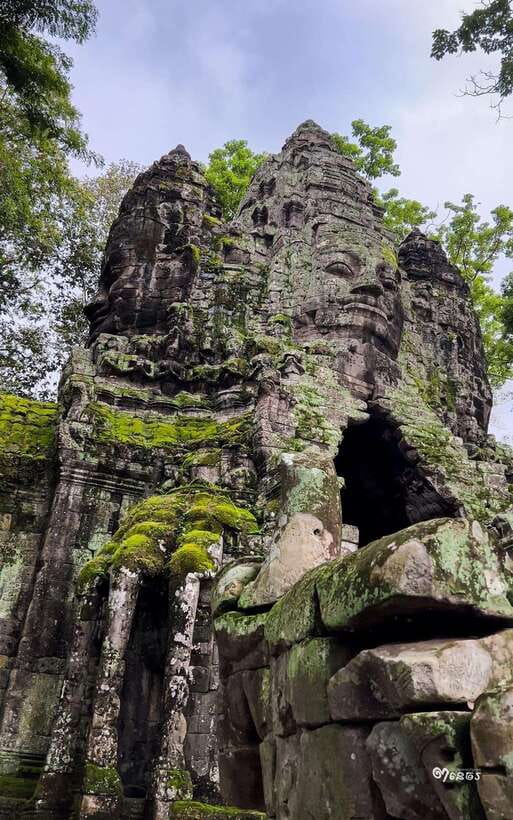
Bayon is the place where the famous smiling stone faces appear from every direction. The faces are powerful because they reveal themselves gradually as you walk among the towers. You might find the narrow passages crowded, but a good guide can help you understand what you are seeing and keep the group together.
The Angkor Thom section also gives you a sense of scale. Angkor Wat is the grand postcard temple, while Angkor Thom feels more like an entire royal city. That contrast is one reason the two-day plan works well.
Banteay Kdei and Ta Keo
Banteay Kdei is a Buddhist temple with a calmer feel than the largest monuments. It was used by monks, and its worn galleries and carved stone offer a closer look at the smaller details of Angkor architecture. This is a good place to slow down and look at doorways, reliefs, and the way trees and stone now share the site.
Ta Keo is a pyramid temple built in the 10th century. Its steep form gives it a different character from the long galleries of Angkor Wat and Banteay Kdei. The climb and uneven surfaces can be tiring, especially after several hours of walking, so sturdy footwear is sensible.
The first day ends with a return to your hotel, usually between 1:00 and 1:30 p.m. That early finish is valuable. You can eat, rest, swim, or simply recover before the second temple day. You will need the break, since the combination of an early wake-up, heat, and stone paths is demanding.
A few more Siem Reap trips to weigh up
- Angkor 2-Day Sunset & Sunrise Small-Group Tour
★ 5.0 · 2,567 reviews - 2 Days Exclusive Temple Highlights with Sunset and Sunrise Tour
★ 5.0 · 1,157 reviews - Siem Reap: Angkor Sunrise 1- or 2-Day Guided Temples Tour
★ 4.9 · 1,132 reviews - 2 Days Guided Historical Tour in Angkor
★ 5.0 · 855 reviews
Day 2: Preah Khan and the larger circuit
Pickup on Day 2 is later, between 10:00 and 10:20 a.m. This is a much easier start, and you are less likely to feel that the alarm has stolen the entire night.
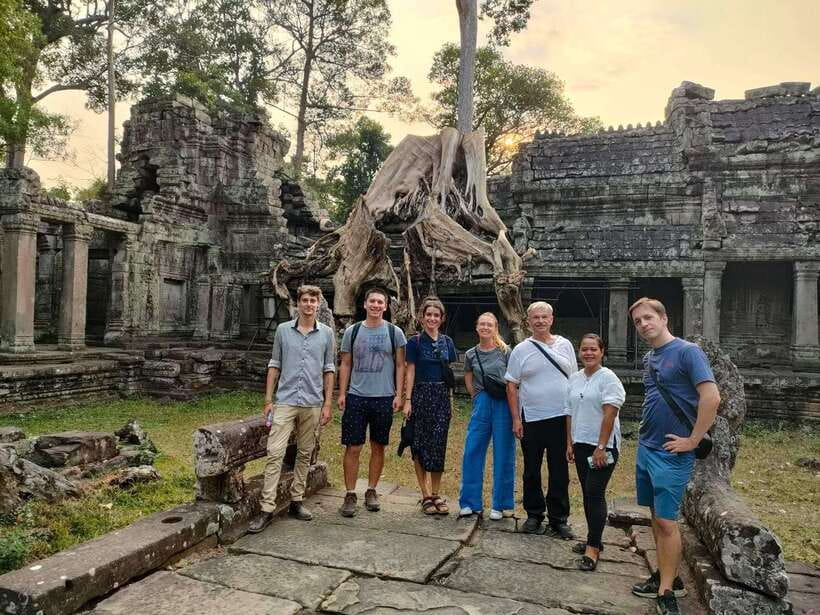
The route begins at Preah Khan, described as the largest temple on this circuit. It was built by King Bayon for his father and stretches through long corridors, courtyards, and carved spaces. Preah Khan rewards a slower walk because the layout can feel layered and complex.
This temple also helps show how Angkor sites were not all built for the same purpose. Your guide can connect the architecture with the religious and royal roles of the site, rather than treating every ruin as just another photo stop.
Neak Pean and the water system
Neak Pean is set on an island, surrounded by water that was used for bathing during the Angkor period. Its setting is different from the enclosed courtyards of Preah Khan. The approach gives you a chance to see how water shaped the planning of the ancient city.
Neak Pean is not the largest temple on the route, so it is best appreciated for its design and setting. If you are expecting another Angkor Wat, you may find the visit brief. If you enjoy unusual structures and the link between religion, health, and water management, it adds useful variety.
Ta Som and its tree-covered gate
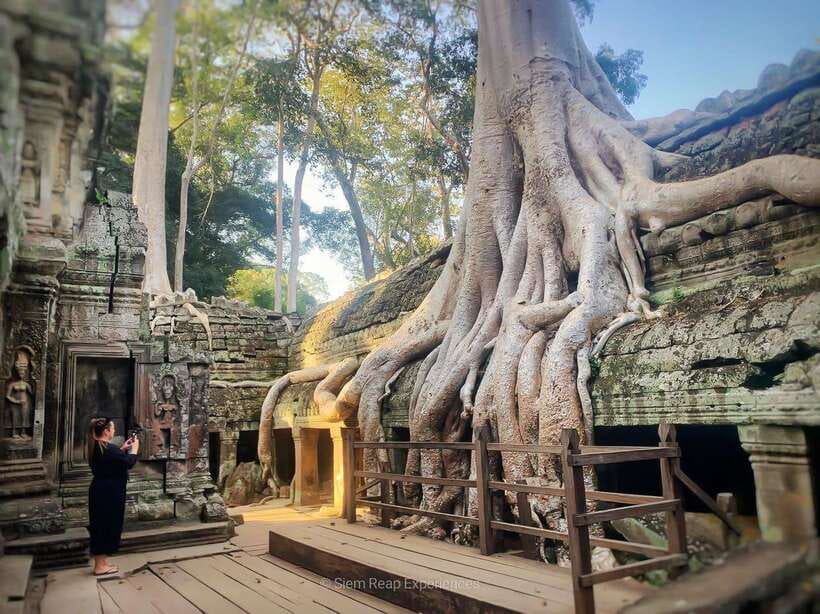
Ta Som is one of the most memorable smaller stops because a tree has grown over the East Gate. The stone and roots have become a single visual scene, but the guide’s explanation helps you look past the popular photograph.
This is the kind of stop that gives the second day its character. The larger temples show power and ceremony. Ta Som shows time, weather, and nature changing the way the site looks. Bring your camera, but do not stop at the gate. Walk far enough to see how the rest of the temple is arranged.
East Mebon and Pre Rup
East Mebon once stood on an artificial island in a reservoir. The reservoir is now dry, so the temple’s original relationship with water is harder to picture. That is where a guide earns the fee. You can see the stone structure yourself, but you need explanation to understand how different the setting once was.
Pre Rup is another stone temple with a strong pyramid shape. It was used by Hindus to meditate on the full moon. The high stone levels and open views make it an atmospheric stop, though the climb and heat can be tiring late in the day.
Take your time on the steps and watch your footing. Angkor’s surfaces are uneven, and there is no prize for reaching the top quickly. A hat, sunscreen, long trousers, and water will make this part far more comfortable.
Phnom Bakheng sunset, the final view
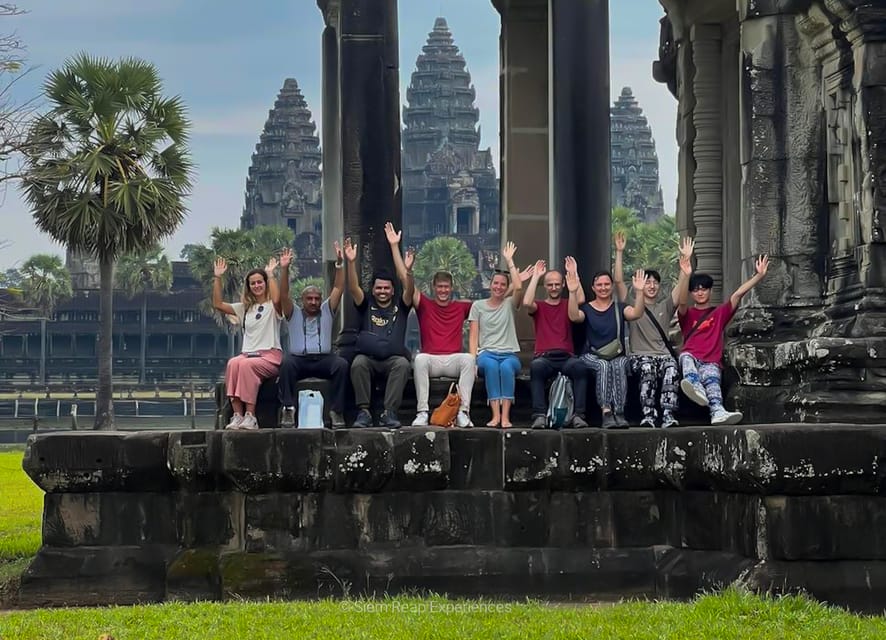
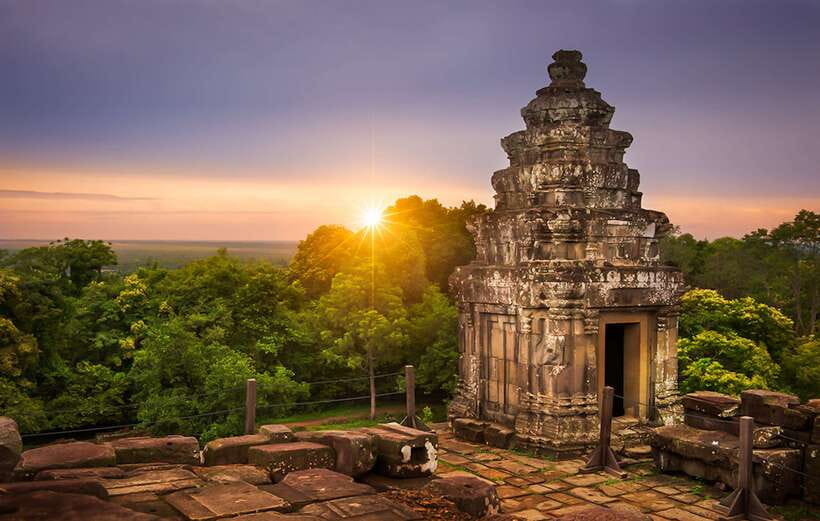
The second day ends at Phnom Bakheng, a hilltop temple with 33 towers representing the heavens. Its high position makes it the tour’s sunset viewpoint.
Sunset is a popular finish, so you should expect this to be a more crowded moment than some of the earlier temple visits. The reward is the change in light across the stone structures and the surrounding area. It gives the two-day tour a clear ending after a day of corridors, reservoirs, gates, and pyramid temples.
The sunset is weather dependent. Clouds can soften the view or block it. Even when the sky does not cooperate, Phnom Bakheng remains an important temple in its own right, with a design tied to the heavens and a location unlike the flat, enclosed sites visited earlier.
The tour returns to your hotel around 7:00 p.m. That makes Day 2 a full outing. Plan a quiet evening afterward rather than booking another demanding activity.
Guides, group size, and the human side of the tour
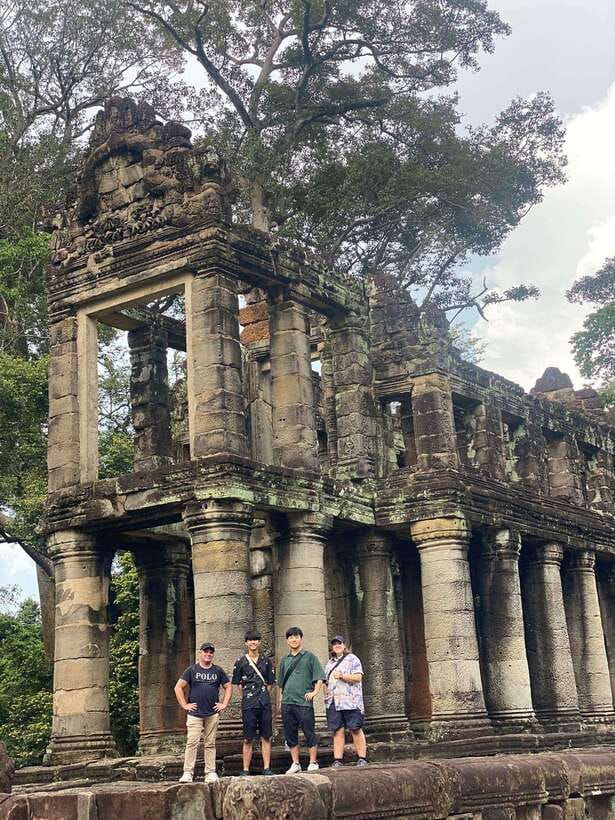
The tour uses English-speaking guides, and you may have a different guide on each day. That is worth knowing in advance. Names praised for clear explanations, humor, organization, and photography include Sam, Sayon, John, Nick, Vone, Sary, Pheap, Rith, and Savon, but you cannot assume a particular guide will be assigned.
The best guides on this tour do more than recite dates. They explain Cambodian culture, religion, temple symbolism, and daily life. John is known for an energetic style and humor. Sayon is often praised for keeping the group together and finding good photo spots. Sam is described as calm, organized, and especially strong at explaining temple meaning. Pheap has even used traditional instrument sounds while discussing carvings.
The small group is limited to 13 people, though the practical group size can feel closer to 10 to 15. That is small enough to hear the guide and ask questions, but not private. You will still need to stay with the group and follow meeting times.
Guides also help with the practical parts of the day. Several are praised for announcing toilet stops, arranging photo breaks, keeping belongings safe, and finding ways to avoid the thickest crowds. The air-conditioned minibus waits while you walk, which makes a real difference when the temperature climbs.
Heat, clothing, food, and what to carry
You need clothing that covers your knees and shoulders. Short skirts, sleeveless shirts, and shorts are not allowed at the temples. A sarong can be useful if you need an extra cover-up, but make sure it provides proper coverage.
Pack a camera, hat, sunscreen, cash, and plenty of personal water if you prefer more than the supplied bottles. Chilled bottled water and refreshing towels are included, but you will still be walking outdoors for hours.
Breakfast or lunch can be bought at local restaurants near the temples. Since food is not included, cash is useful. Allow extra time for meals, as service can be slow at some stops.
The tour is not suitable for babies under one year, people over 95, or wheelchair users. The uneven temple surfaces, stairs, early start, and long walks make this a better fit for people who can manage a physically active sightseeing day.
Who should book this Angkor tour
I would choose this tour if you want a strong first look at Angkor without arranging transport, a driver, and explanations on your own. It suits first-time visitors who want the major sights plus several less familiar temples.
It is also a good choice for solo visitors. The group setting gives you company, the guides can take photos, and the minibus removes the need to negotiate transport for two long days.
You should think twice if you dislike early mornings, group schedules, or long outdoor walks. The sunrise pickup is particularly demanding, and the sunset day runs until about 7:00 p.m. You can also find the heat and humidity exhausting, especially in the middle of the year.
Book your temple pass online through Angkor Enterprise before the activity, ideally at least one day ahead. The tour itself does not require a passport, but you must provide the correct hotel address and wait in the lobby before pickup.
Cancellation is flexible up to 24 hours before the activity, and you can reserve now and pay later. Those terms help if your Siem Reap plans are still changing.
Should you book it?
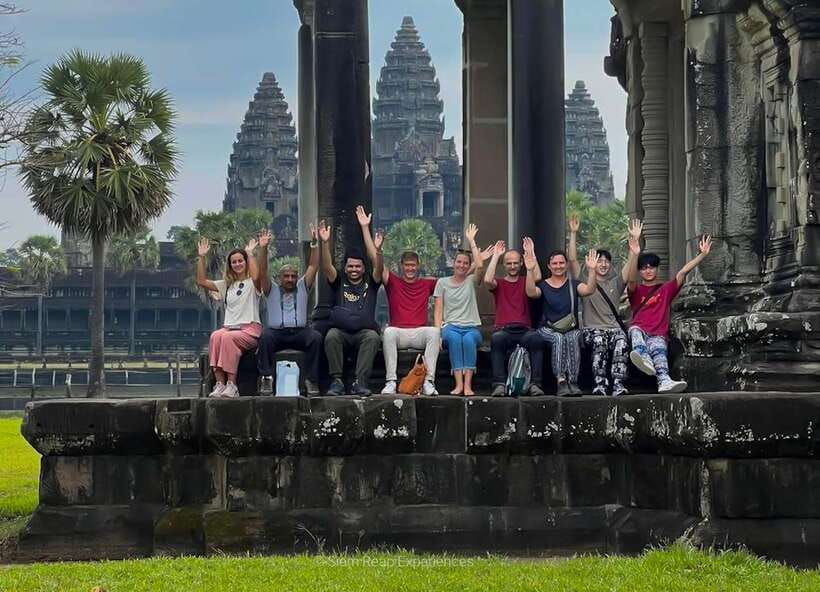
Book this two-day Angkor Wat tour if you want good value, reliable transport, and a guide who adds meaning to the stones. The coverage is broad, with 11 temples, two different circuits, sunrise, sunset, water temples, jungle growth, Buddhist and Hindu sites, and enough free time for photographs.
The strongest reason to book is the balance between structure and breathing room. You do not have to plan every road and temple yourself, yet you still get moments to wander and take pictures. Just accept the very early Day 1 pickup, pay separately for the temple pass and meals, and bring suitable clothing and shoes.
If you want a private itinerary or a slower visit at each temple, this group tour may feel too fixed. For most first-time visitors with only a few days in Siem Reap, though, it is a sensible and affordable way to see Angkor properly.
FAQ
How much does the two-day Angkor Wat tour cost?
The tour costs $30 per person. The Angkor Archaeological Park ticket is separate and costs $37 for one day or $62 for two or three days.
Does the tour include the Angkor temple pass?
No. You need to purchase the temple pass separately. Online purchase through the Angkor Enterprise website is recommended before the activity.
What time is pickup on Day 1?
Day 1 pickup is scheduled between 4:00 and 4:20 a.m. You should wait in your hotel lobby 30 minutes before the scheduled pickup time.
What time is pickup on Day 2?
Day 2 pickup is scheduled between 10:00 and 10:20 a.m. Pickup is from your accommodation in Siem Reap.
What time does the tour finish?
Day 1 generally ends with hotel arrival between 1:00 and 1:30 p.m. Day 2 ends with hotel arrival at about 7:00 p.m.
How many temples does the tour visit?
The tour visits 11 temples over two days: Angkor Wat, Angkor Thom, Bayon, Banteay Kdei, Ta Keo, Preah Khan, Neak Pean, Ta Som, East Mebon, Pre Rup, and Phnom Bakheng.
Is food included?
No. Breakfast, lunch, and soft drinks are not included. You can buy food at local restaurants near the temples.
Is hotel pickup and drop-off included?
Yes. Pickup and drop-off at your accommodation in Siem Reap are included, along with an air-conditioned minibus.
What language is the tour conducted in?
The live guided tour is conducted in English.
What should I wear to the temples?
You should wear clothing that covers your knees and shoulders. Shorts, short skirts, and sleeveless shirts are not allowed. A hat, sunscreen, and sarong are also recommended.
Just added around Siem Reap
- Ultimate Sunrise to Angkor Wat, Angkor Thom and Bayon Temple★ 5.0 · 3 reviews
- Twilight Tastes of Siem Reap Include Dinner★ 5.0 · 13 reviews
- Trekking Tour at Phnom Kulen National Park from Siem Reap★ 5.0 · 3 reviews
- Full-Day Private Tour of Angkor Wat with Pick Up★ 5.0 · 12 reviews
- Private Day Trip to Angkor Temples with Expert Guide★ 5.0 · 4 reviews
- Waterfall & River of 1000 Siva Linga- Kulen Mountain Private Tour★ 5.0 · 3 reviews
- Professional Photo Shoot in Angkor Archaeological Park, Siem Reap★ 5.0 · 42 reviews
- Ultimate Siem Reap Food Tour by Tuk Tuk – 20 Tastings, 8 Stops★ 5.0 · 13 reviews
Angkor Wat Tours, compared.

Angkor Wat Sunrise or Sunset Tour with Guide from Siem Reap
Read our review →
Angkor Wat: Small-Group Sunrise or Sunset Tour
Read our review →
Angkor Wat 2-Day Tour with Sunrise and Sunset
Read our review →

Angkor Wat Sunrise tour with Small – Group and Guide tours
Read our review →
Angkor Wat Highlights and Sunrise Guided Tour from Siem Reap
Read our review →
Angkor Wat Sunset Small Group Tour with Lunch Included
Read our review →
Full-Day Angkor Wat Sunrise Private Tour with Guide from Siem Reap
Read our review →Browse the lists this tour appears in