
Reviewed · ANGKOR WAT SUNRISE TOURS
Siem Reap: Angkor Sunrise 1- or 2-Day Guided Temples Tour
Angkor Wat at sunrise is the headline, but the real strength of this tour is the range. In two days, you move from the finely carved Banteay Srei to the giant stone faces of Bayon, then on to Ta Prohm, where tree roots grip the ruins. The route shows you several sides of Angkor, not just the postcard temple.
I like the way the tour combines a guide with plenty of time to look around on your own. I also like the practical care: air-conditioning, regular bottled water, and cold towels waiting at the vehicle. Guides such as Sak, Pal Saruon, and Sokpee are often praised for clear explanations, local stories, and finding good photo angles.
The main drawback is the schedule. The two-day version begins around 4:20 AM on sunrise day, and the first day can run into the evening for sunset. You will walk over uneven ground, climb steps, and spend long hours in the heat, so this is not a gentle sightseeing outing.
Key points to know before booking
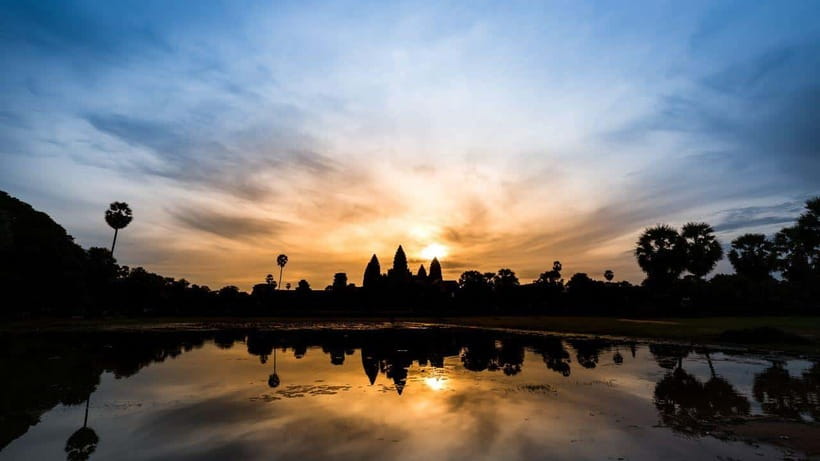
- Sunrise at Angkor Wat: You leave Siem Reap before dawn and spend about two hours inside the main temple after the sunrise view.
- A strong two-day temple mix: Banteay Srei, Pre Rup, Neak Pean, Preah Khan, Angkor Thom, Bayon, Ta Prohm, and Angkor Wat all bring different styles and settings.
- Guides add real value: The best guides, including Sak, Pal Saruon, Bun, Pi, and Sokpee, explain carvings, religion, Cambodian life, and local customs.
- Small group transport: Groups are limited to 15, with hotel pickup, air-conditioning, water, and cool towels.
- The temple pass costs extra: The $19 tour price does not include the 2 or 3 day pass, listed at $62 per person.
- Expect a physically demanding day: Comfortable shoes, covered knees and shoulders, sun protection, and insect repellent matter here.
What the $19 tour price really covers
At $19 per person, this is an inexpensive way to organize transport and guiding around a huge temple complex. You are paying for hotel pickup and drop-off, an English-speaking guide, an air-conditioned vehicle, bottled water, and cool towels. That last pair of comforts matters more than it may sound after several hours outdoors.
The important catch is the entrance fee. The Angkor temple pass is not included and costs $62 per person for the 2 or 3 day option listed here. Add that to the tour price when comparing it with other choices. Meals are also separate.
Even with the pass, the package can make good financial sense if you have only a short stay in Siem Reap. Angkor covers a large area, and arranging transport between distant temples takes time and local planning. A guide also helps you understand what you are looking at instead of treating each stop as another pile of old stone.
The tour allows free cancellation up to 24 hours before departure, and you can reserve first and pay later. Last-minute date changes are allowed up to seven hours before the start, with no extra charge. These terms are useful if your Cambodia plans are still shifting.
More Angkor Wat Sunrise Tours in Siem Reap:
- Angkor Wat Sunrise or Sunset Tour with Guide from Siem Reap
★ 5.0 · 12,109 reviews - Angkor Wat Sunrise tour with Small – Group and Guide tours
★ 5.0 · 3,655 reviews - Full-Day Angkor Wat Sunrise Private Tour with Guide from Siem Reap
★ 5.0 · 2,920 reviews
Day one: Banteay Srei and the Grand Circuit
The first day begins around 7:40 to 8:10 AM, depending on the final pickup message. The exact time is sent the day before. This is the longer and more varied day, with a morning route to temples outside Angkor Thom and a sunset finish.
Pre Rup, a high temple with a clear sense of structure
Pre Rup is usually the first stop. Built in 961 or 962, this Hindu temple uses laterite and sandstone, giving it a solid, warm-toned appearance. Its stepped form helps you see how Khmer temple builders arranged towers and terraces around a central sacred space.
I find Pre Rup useful as an opening visit because it gives you a quick lesson in Angkor architecture before the more famous stops. The steps can be steep and the stone can be rough, so take your time rather than racing to the top.
Banteay Srei, the finest detail of the route
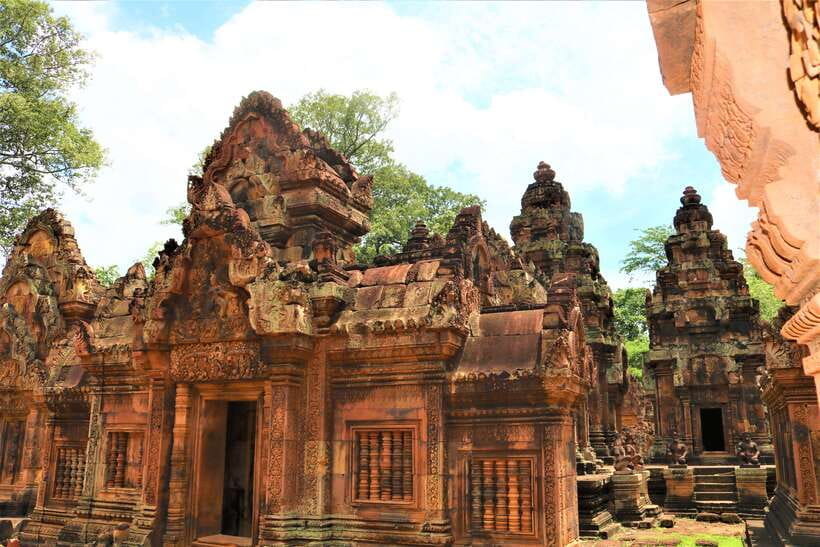
Banteay Srei is the star of the first day. It is smaller than Angkor Wat, but its sandstone carvings are unusually fine. Figures, floral patterns, and relief scenes cover the temple with a level of detail that rewards a slow look.
This is where a guide earns their keep. At a small temple, it is easy to walk past a carving without seeing what makes it special. Guides such as Pal Saruon and Sokpee are often praised for explaining the stories and pointing out details that are easy to miss.
Banteay Srei is also farther from the central Angkor sites, so visiting it independently requires more transport time. The tour handles that journey while giving you a clear route for the day. The tradeoff is that the schedule is fixed, and you cannot linger indefinitely at one carving.
A few more Siem Reap trips to weigh up
- Siem Reap: Angkor Wat: Small-Group Sunrise or Sunset Tour
★ 5.0 · 9,444 reviews - Siem Reap: Angkor Wat 2-Day Tour with Sunrise and Sunset
★ 4.9 · 4,429 reviews - Angkor Wat Highlights and Sunrise Guided Tour from Siem Reap
★ 5.0 · 3,213 reviews - Angkor Wat Sunrise & 3 Main Temples with Breakfast – Small Group
★ 5.0 · 2,857 reviews
Neak Pean, a temple on an artificial island
On the way back, you visit Neak Pean. This Buddhist temple sits on a circular artificial island within Jayatataka Baray, a large water reservoir. The approach and island setting give the stop a different feel from the tall, enclosed temple structures earlier in the day.
Neak Pean is not a vast complex, and the visit is shorter than Angkor Wat or Ta Prohm. That is part of its appeal. It gives your feet a change of pace and shows how water shaped the design of the Angkorian capital.
Preah Khan, roots, corridors, and restoration
Preah Khan was commissioned by Jayavarman VII in honor of his father. It is a ruined temple, but the combination of tree roots, broken galleries, and crumbling stone makes it one of the most atmospheric stops.
The site is smaller and less imposing than Angkor Wat, yet it often feels more intimate. You can see how a major religious complex changes over time, with restoration work alongside sections left in a rougher state. The World Monuments Fund is restoring parts of Preah Khan, and some areas remain remarkably well preserved.
I like this stop because it balances the polished carvings at Banteay Srei. You get both careful craftsmanship and the powerful effect of age, vegetation, and partial ruin. Watch your footing in narrow passages and over uneven stones.
Sunset and the length of day one
The day ends with a sunset stop before returning to Siem Reap. Timing varies, and the supplied schedule gives different end times, from late afternoon to early evening. In practice, you should plan for a long day that may finish around sunset or afterward.
This is worth knowing before you book. The sunset can be beautiful, but you will already have spent hours walking in the heat. Carry water, use the supplied cool towel, and keep your expectations flexible because clouds can affect the view. One person had a cloudy sunrise but a superb sunset, a good reminder that nature sets the timetable.
Day two: sunrise, Angkor Thom, and Ta Prohm
Sunrise day starts between about 4:15 and 4:40 AM, with pickup commonly set around 4:20 to 4:30 AM. You need to be ready in the hotel lobby well before dawn. The return is usually around 12:30 to 1:30 PM, although the time depends on the group and the pace at each site.
Seeing Angkor Wat before the heat
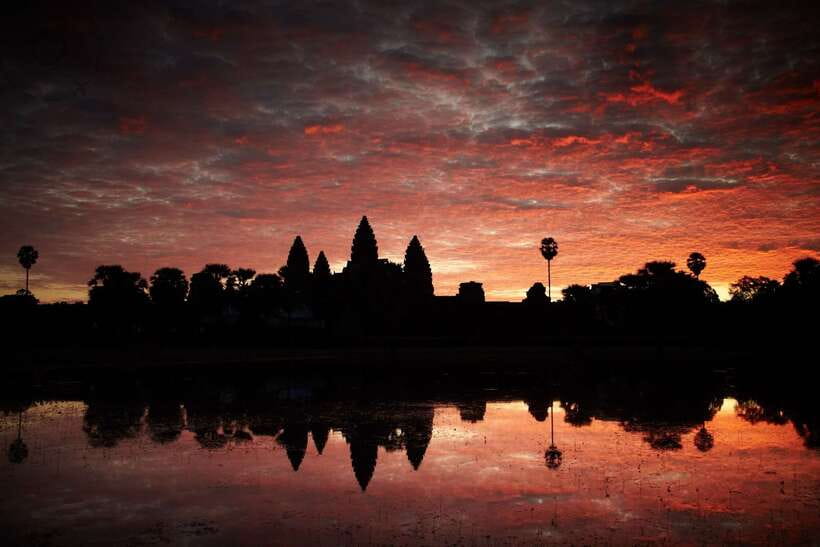
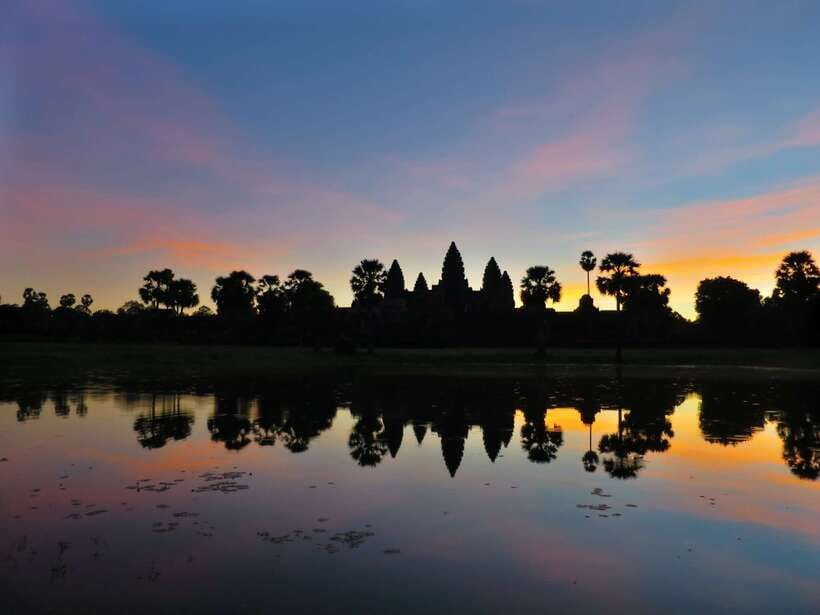
You arrive outside Angkor Wat in darkness and wait for the sky to brighten behind the temple. The view is famous for good reason: the towers gradually take shape as the light changes, and the moat can reflect the building when conditions cooperate.
Crowds are part of the experience, especially at the best-known viewing points. A good guide can help you choose a useful position and then move the group inside at the right time. Several guides, including Sak and Pal Saruon, are praised for reaching good photo spots early and helping with group pictures.
Do not treat sunrise as a guaranteed perfect photograph. Cloud, rain, and crowd position are beyond anyone’s control. The early start improves your chances and lets you see the temple in cooler air, but you still need patience.
Two hours inside Angkor Wat
After the sunrise view, the tour spends about two hours exploring Angkor Wat itself. You move through corridors, central chambers, and upper terraces while the guide explains the temple’s Hindu and Buddhist symbolism.
The bas-reliefs are a major reason to use a guide. They show stories and scenes from Khmer religious tradition, but the scale and detail can make them hard to read without context. The guide also connects the carvings to life during the Khmer Empire, so the visit becomes more than a photo stop.
Two hours gives you a solid first look, but Angkor Wat is enormous. If you want to study every gallery at a slow pace, a group tour may feel too brief. The benefit is that you still have enough time to see the key interior areas before moving on.
Breakfast is taken near the temple and is not included. You can buy food at local restaurants near the sites. Bring some cash if you want breakfast, drinks, or a later meal, since your food costs are separate from the tour.
Angkor Thom and the Southern Gate
The next stop is the Southern Gate of Angkor Thom. A row of 54 stone figures lines each side of the approach, with gods on one side and demons on the other. This entrance gives you a strong sense of the old city’s scale before you reach the central monuments.
Angkor Thom was a fortified city rather than a single temple. That difference matters. You are not simply moving from one shrine to another; you are entering the remains of a major royal center with gates, terraces, and sacred buildings arranged within it.
Bayon and its many stone faces
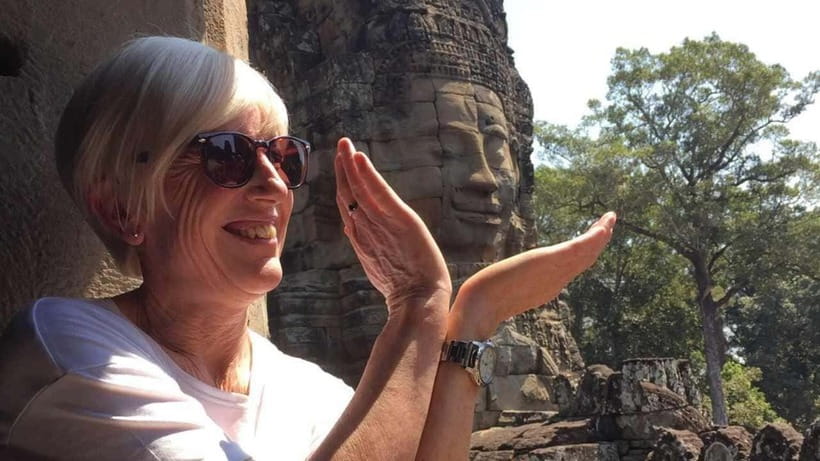
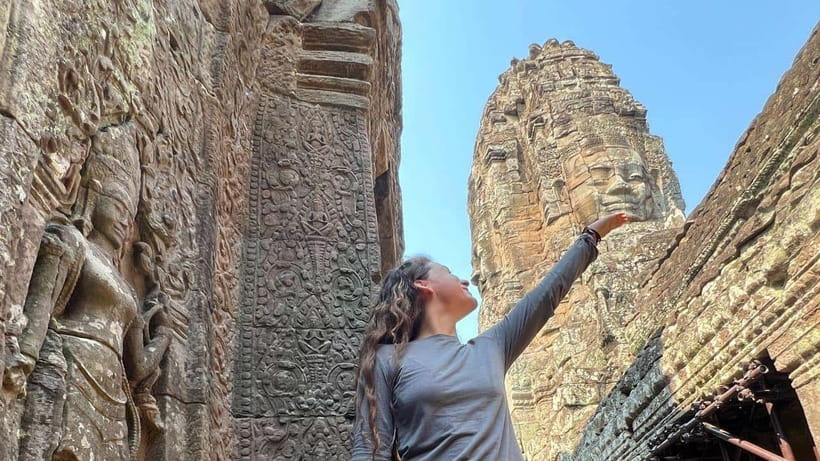
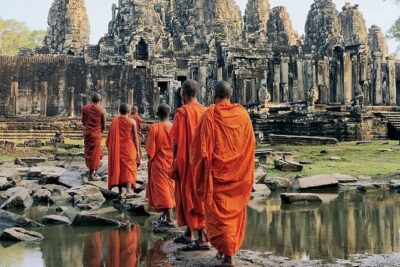
Bayon Temple is the central highlight inside Angkor Thom. Its towers carry more than 200 enormous carved faces, creating one of the most memorable scenes in Cambodia.
The temple can feel confusing at first, with passages and towers packed closely together. A guide helps you read the layout and notice the faces from different angles. The best guides also leave time for you to explore instead of talking nonstop.
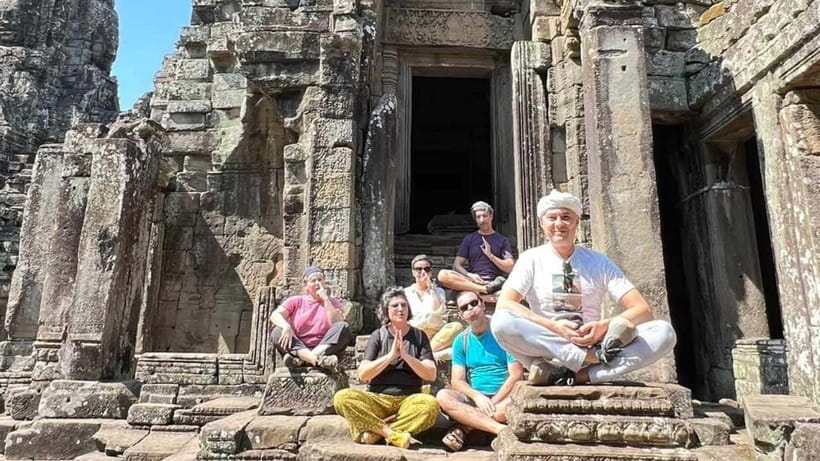
Bayon is a good example of why this tour works better than a rushed checklist. You get an explanation of the site, then time to look for your own favorite face, carving, or corridor. The balance between guided talk and free wandering is one of the strongest parts of the experience.
The Leper King and Elephants terraces
The route continues to the Terrace of the Leper King and the Terrace of Elephants. These long stone platforms once formed part of Angkor Thom’s ceremonial center.
The terraces are not as instantly recognizable as Bayon or Ta Prohm, but they help explain how the city functioned. Look at the carved figures and the scale of the platforms. Your guide can connect these structures to royal ceremonies and the wider plan of Angkor Thom.
By this point, the heat may be building. The vehicle’s air-conditioning, bottled water, and cold towels provide a useful break between stops. Drivers such as Naro, Vichet, Ro, Mao, and Keal are frequently praised for safe driving and for having refreshments ready when the group returns.
Ta Prohm, the jungle temple
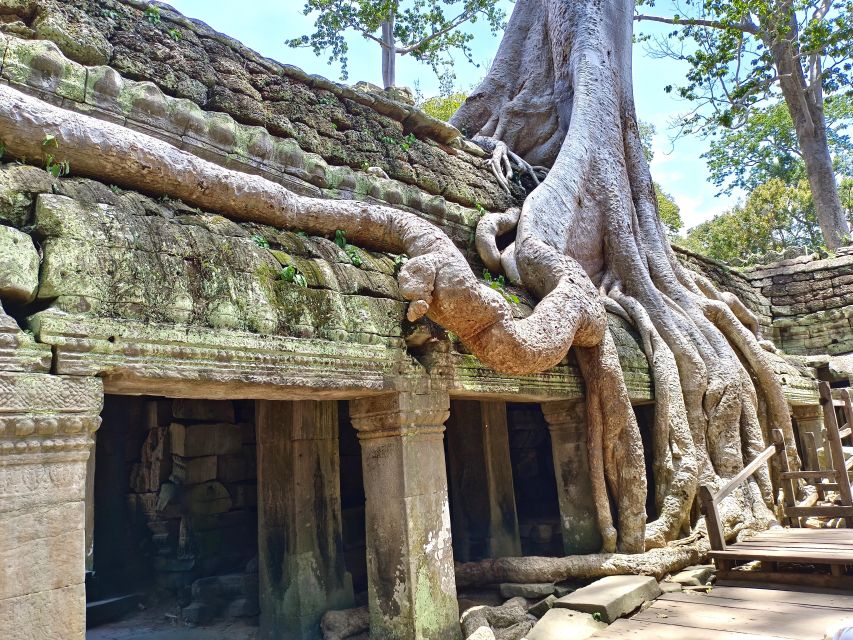
Ta Prohm is the final major stop and the temple many people remember most after Angkor Wat. Tree roots grow over walls and towers, while narrow passages lead through a mix of broken stone and surviving carvings.
The setting is dramatic, but it can also be crowded. Do not expect to have the famous root-covered areas to yourself. A guide who knows alternate paths and quieter corners can make the visit more enjoyable, and several guides are praised for finding less crowded photo positions.
Ta Prohm once housed almost 3,000 monks. That fact helps put the ruins in perspective. This was not an isolated forest shrine, but part of a large religious and social center.
The tour returns to your hotel around 12:30 to 1:30 PM. That early finish is welcome after the pre-dawn start. You still see four major areas on day two, but you avoid adding another afternoon of temple walking when many people are tired.
The guide and driver make the difference
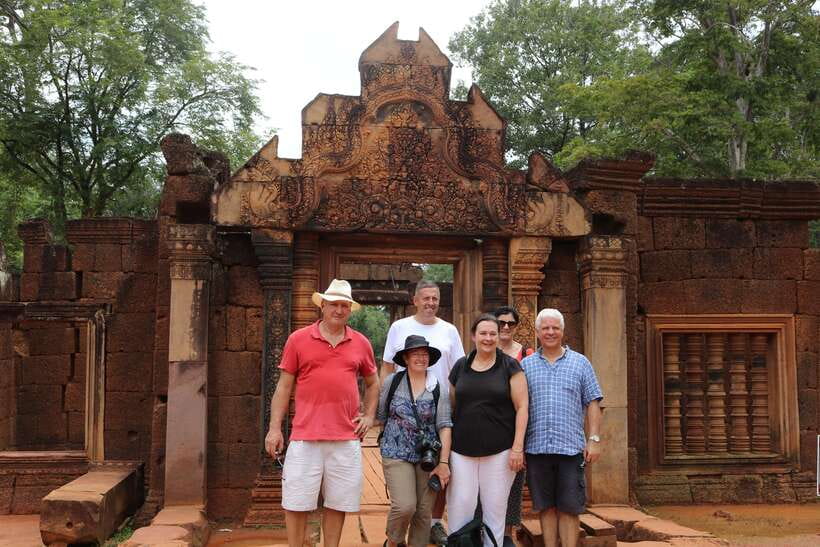
The temples are extraordinary on their own, but the quality of the guide can shape the whole experience. Names frequently associated with strong tours include Sak, Pal Saruon, Sokpee, Pi, Bun, Sam, Kiss, and Sopheaprath. Guide assignments are not guaranteed, so book for the overall service rather than a specific person.
The praised qualities are clear: good English, humor, local stories, help with photographs, and a willingness to answer questions about Hinduism, Buddhism, Cambodian life, and the temples. Some guides also suggest less crowded spots and allow free time after explaining a site.
The driver’s role is just as practical. You are moving between temples in hot conditions, and a safe, punctual driver makes the long days easier. The cold water and scented or eucalyptus towels are not luxury extras, but they are a welcome reset after walking through sun-baked ruins.
Groups are limited to 15 people, though some departures may be much smaller. Smaller groups make it easier to hear the guide and keep the pace together. They do not turn the tour into a private visit, so you still need to stay aware of the agreed meeting times.
Clothing, walking, and the practical effort
Wear comfortable shoes with a good grip. The sites include rough ground, rubble, uneven paths, and steep steps. You may find yourself climbing and descending several times across the day.
Cover your knees and shoulders when visiting the temples. Shorts are not allowed under the stated rules, so choose light clothing that meets the dress requirement. Add sunglasses, a sun hat, a camera, and insect repellent to your day bag.
Heat is a serious part of the experience. The water and towels help, but they do not replace drinking regularly and taking sensible breaks. The tour is not suitable for children under eight or wheelchair users, and the uneven temple surfaces make that restriction understandable.
One day or two?
Choose the two-day option if Angkor is a main reason for your visit to Siem Reap. It gives you the best mix of major sights and smaller temples, with Banteay Srei, Preah Khan, Neak Pean, and Pre Rup adding variety to the famous Angkor Wat, Bayon, and Ta Prohm.
The one-day option suits you if time is tight or you want a shorter commitment. Check the available date and exact itinerary before booking, since the activity is offered in one or two day formats and availability controls the starting times.
A two-day plan is not slow travel. Day one can last into the evening, and day two starts before dawn. Still, the spacing helps prevent the entire visit from becoming one exhausting temple marathon. You get different architectural styles, different settings, and a better chance to absorb what you are seeing.
Should you book this Angkor tour?
I would book this tour if you want the major Angkor sights explained clearly, prefer not to arrange long temple transfers yourself, and value small practical comforts. The $19 cost is good for the guide and transport, but remember to add the $62 temple pass and your meals.
Choose it with realistic expectations. You will not have every temple to yourself, the sunrise may be cloudy, and the schedule demands early starts and plenty of walking. If you can handle that, the two-day version gives you a well-planned introduction to Angkor, with enough free time to look around and enough local context to make the stones meaningful.
FAQ
Is the Angkor temple pass included?
No. The 2 or 3 day temple pass is listed separately at $62 per person. Meals are also not included.
How early does the sunrise day begin?
Hotel pickup is usually between 4:20 and 4:30 AM, with some stated times as early as 4:15 AM. The exact pickup time is provided the day before.
What time does the sunrise day end?
Return to your hotel is generally between 12:30 and 1:30 PM.
What time does the first day begin?
Day one pickup is generally between 7:40 and 8:10 AM. The exact time is sent one day before the tour.
What temples are visited on day one?
Day one includes Pre Rup, Banteay Srei, Neak Pean, and Preah Khan, followed by a sunset stop.
What temples are visited on day two?
Day two includes sunrise and a visit inside Angkor Wat, the Southern Gate of Angkor Thom, Bayon, the Terrace of the Leper King, the Terrace of Elephants, and Ta Prohm.
Is breakfast included?
No. Breakfast and other meals can be purchased at local restaurants near the temples.
Is hotel pickup included?
Yes. Hotel pickup and drop-off are included for both tour days.
What language is the tour conducted in?
The live guided tour is conducted in English.
Is the tour suitable for wheelchair users or young children?
No. It is not suitable for wheelchair users or children under eight years old. The tour involves walking over uneven ground and using temple steps.
Can I cancel the booking?
Yes. You can cancel up to 24 hours before the tour for a full refund. General last-minute date changes can be made up to seven hours before departure without an additional charge.
More 2-Day Experiences in Siem Reap
- Angkor 2-Day Sunset & Sunrise Small-Group Tour
★ 5.0 · 2,567 reviews - 2 Days Exclusive Temple Highlights with Sunset and Sunrise Tour
★ 5.0 · 1,157 reviews - 2 Days Guided Historical Tour in Angkor
★ 5.0 · 855 reviews - 2-Day Angkor Wat With Small, Big Circuit and Banteay Srei Tour
★ 5.0 · 545 reviews
Just added around Siem Reap
- Ultimate Sunrise to Angkor Wat, Angkor Thom and Bayon Temple★ 5.0 · 3 reviews
- Twilight Tastes of Siem Reap Include Dinner★ 5.0 · 13 reviews
- Trekking Tour at Phnom Kulen National Park from Siem Reap★ 5.0 · 3 reviews
- Full-Day Private Tour of Angkor Wat with Pick Up★ 5.0 · 12 reviews
- Private Day Trip to Angkor Temples with Expert Guide★ 5.0 · 4 reviews
- Waterfall & River of 1000 Siva Linga- Kulen Mountain Private Tour★ 5.0 · 3 reviews
- Professional Photo Shoot in Angkor Archaeological Park, Siem Reap★ 5.0 · 42 reviews
- Ultimate Siem Reap Food Tour by Tuk Tuk – 20 Tastings, 8 Stops★ 5.0 · 13 reviews
Angkor Wat Sunrise Tours, compared.

Angkor Wat Sunrise or Sunset Tour with Guide from Siem Reap
Read our review →
Angkor Wat Sunrise tour with Small – Group and Guide tours
Read our review →
Full-Day Angkor Wat Sunrise Private Tour with Guide from Siem Reap
Read our review →
Angkor Wat Sunrise & 3 Main Temples with Breakfast – Small Group
Read our review →
Angkor Wat Sunrise and Full-Day Sightseeing Tour
Read our review →
Siem Reap Tour: Angkor Wat Sunrise, Bayon, Ta Prohm, Banteay Srei
Read our review →
Angkor Wat Sunrise Explore The Most Iconic Temples
Read our review →Browse the lists this tour appears in