
Reviewed · HISTORICAL TOURS
Exploring Battambang History (Walking Tour)
Battambang’s story is written across old French buildings, a Chinese temple, a central market, and places tied to Cambodia’s wars and changing religions. This three-to-four-hour tour gives you a local guide to connect those pieces, rather than leaving you to guess what an old facade once meant. I especially like the focus on the 300 French colonial-era houses and the chance to understand Battambang as a former trading center.
I also like the early 7:30 a.m. start, included hotel pickup from Battambang hotels, and the modest $25 price. The main thing to clarify before booking is the format: the experience is presented as a walking history tour, but its description also includes cycling through the countryside, a temple, a crocodile farm, and village stops. Ask whether your departure is on foot or by bicycle.
Key points at a glance
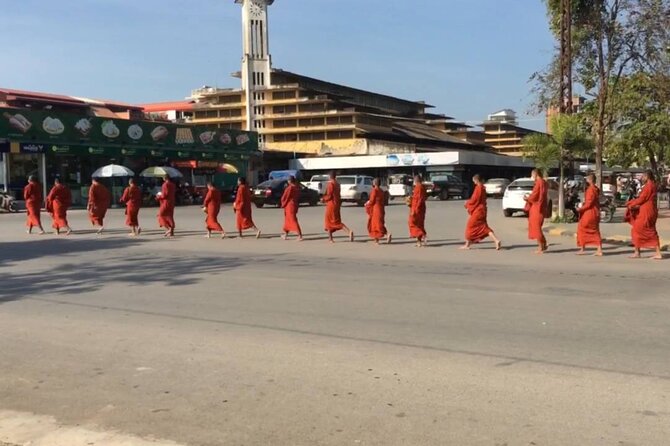
- French colonial Battambang: See the Central Market, old houses, the Governor’s House, and the former Indochina Bank.
- History beyond the postcards: The guide discusses Thai control, the Khmer Rouge period, civil war, and Battambang’s role as a trading center.
- Culture in context: Hinduism, Buddhism, Christianity, Islam, and Chinese religious influence all form part of the story.
- Possible countryside extension: Some arrangements include cycling, rice fields, farms, villages, a temple, and a crocodile farm.
- Strong guide element: Sothea and Sothai are praised for good English and personal passion, while Reaksa is noted as a friendly cycling guide.
- Good small-group value: The maximum group size is 15, bottled water and fees are included, and the price is $25 per person.
Battambang’s old center in a few useful hours
The tour begins at 7:30 a.m., a sensible time for seeing the city before the heat becomes tiring. If pickup is arranged from your Battambang hotel, you avoid the small but annoying task of finding the meeting point in an unfamiliar city.
The exact route can vary, but the city portion is built around Battambang’s past. You are not simply shown an old building and given its date. The guide explains how French influence, Thai rule, Chinese trade, religion, and Cambodia’s modern conflicts shaped the city you see today.
That context matters in Battambang. Its older streets can look quiet and ordinary at first glance. With the right explanation, a market, bank, or painted wall becomes evidence of how money, power, faith, and war moved through the city.
The pace is described as easy, and the walk takes only a few hours. You should still expect time outdoors, uneven streets in places, and morning sun. Flexible or sports clothing, sunglasses, sun lotion, and a camera are sensible choices.
A few more Battambang trips to weigh up
- 2 Days Guided Historical Tour in Angkor
★ 5.0 · 855 reviews - Siem Reap: Banteay Srei and Grand Circuit Heritage Tour
★ 4.9 · 163 reviews - Banteay Srei and Grand Circuit Heritage Tour from Siem Reap
★ 5.0 · 142 reviews
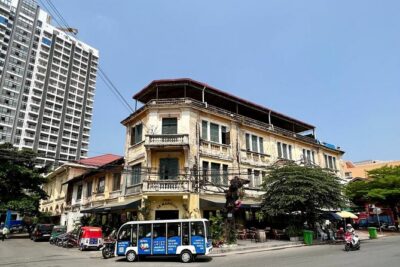
Central Market and the French-era houses
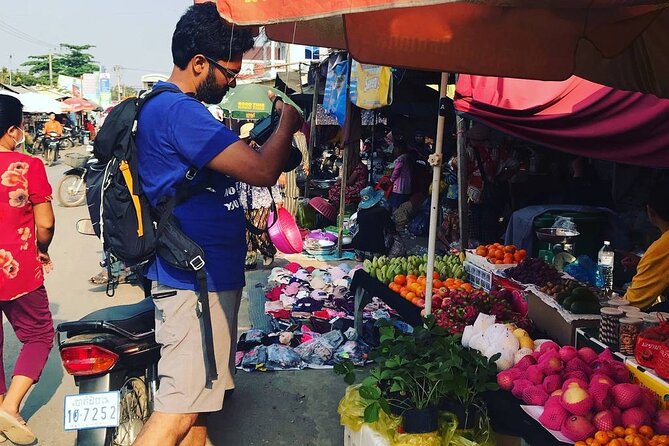
Central Market is one of the clearest starting points because it shows Battambang as a place of commerce. Its French-style design points to the period when the city was linked to wider colonial trade networks.
The market itself is more useful as a piece of living city history than as a quick photo stop. Your guide can help explain how trade shaped local life and why Battambang became known as an important center in Cambodia’s rice-producing northwest.
The route also takes in about 300 houses built during the French colonial period. That is a substantial collection, and it gives you a chance to look past grand monuments. Architecture here is part of the everyday street scene, not isolated behind a fence.
I like this part of the experience because it rewards attention. Look for old proportions, fading paint, balconies, and details around doors and windows. The tour does not promise entry into every building, so think of this as an exterior walk with historical explanation, not a series of interior visits.
White Elephant, Naga Peace, and changing rule
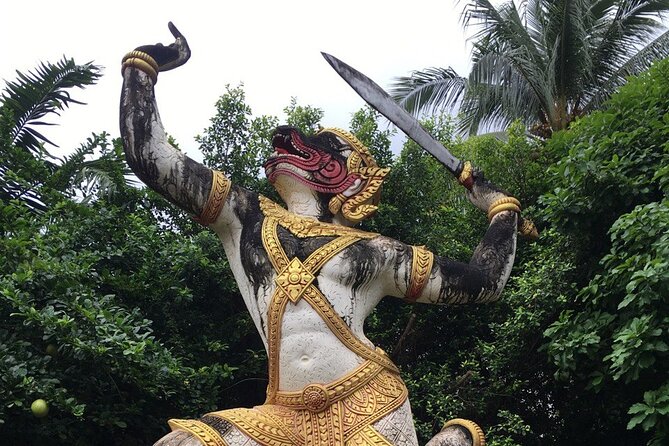
The White Elephant is tied to the period when Thailand controlled Battambang. The guide uses this landmark to explain a chapter that can be missed if you only study Cambodia through Angkor and the twentieth century.
You also see Naga Peace, a symbol connected with the hope that Cambodia will have no more war. This is a useful reminder that local monuments often carry a message beyond decoration. The stop links Battambang’s older political story with the country’s long effort to recover from conflict.
These details are especially valuable if you are new to Cambodian history. You do not need to arrive with a long list of dates. A good guide can give you a basic timeline and show how different periods overlap in one city.
Sothea and Sothai are named as guides who explain Battambang’s past in good English. Sothai is also described as friendly and easy to follow, which matters on a history walk. You can ask questions as you go instead of treating the tour as a one-way lecture.
The Governor’s House and harder chapters
The Governor’s House introduces one of the darker periods in Battambang’s story. The description connects it with a very difficult time in the city’s past, and the wider tour covers the Khmer Rouge period and civil war.
This part may feel less light than the market and architecture stops, but it is important. Battambang cannot be understood through colonial facades and religious sites alone. The city and its people were shaped by decades of violence, political change, and disruption.
The information provided does not promise a museum visit or a detailed memorial program. Expect a guide-led explanation at historical places, with the meaning of each stop tied to the city around you. If you want a specialist genocide-history tour, this may not be enough on its own. If you want a broad introduction to Battambang’s past, it adds needed depth.
I appreciate that the tour includes both beautiful and painful parts of the story. That balance helps you see Cambodia as a living country, not just a collection of ancient monuments.
Same country, a completely different kind of day:
- Battambang: Tuk-Tuk, Bamboo Train, Killing/Bat Caves, Sunset
★ 4.9 · 1,436 reviews - Battambang Tuk Tuk tour: Bambootrain, Killing & Bat Caves,Sunset
★ 5.0 · 799 reviews - Afternoon tour by tuk tuk to bamboo train,bat cave,killing cave,countryside.
★ 5.0 · 344 reviews - Local Livelihood Half Day Bike Tour in Battambang
★ 5.0 · 287 reviews
Chinese Temple and the city’s religious mix
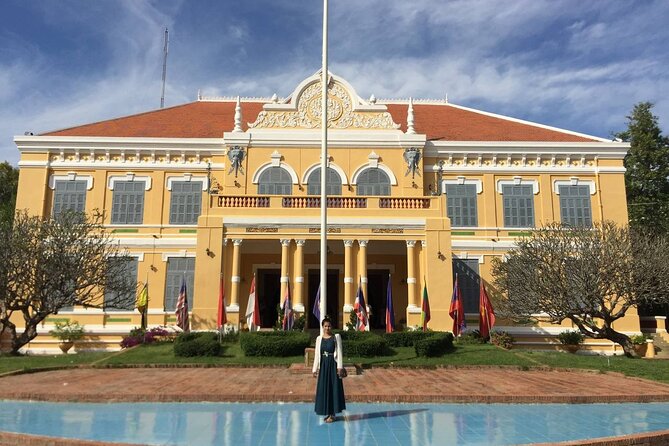
The Chinese temple shows how Chinese communities and beliefs influenced Battambang. This is a good counterpoint to the French buildings because it widens the picture of who helped shape the city.
The tour also discusses Hinduism, Buddhism, Christianity, and Islam. That does not mean you should expect a long visit to a site representing each faith. Rather, the guide uses the city’s places and traditions to explain the mix of religions found in Cambodia.
This cultural range is one of the strongest reasons to take the tour early in your stay. Once you understand the background, later visits to temples, markets, and neighborhoods make more sense. You will notice that local identity is not one simple story.
Please dress with respect for religious places and follow your guide’s instructions. The supplied details call for flexible clothing, but they do not give a formal dress code for the temple. Modest, comfortable clothing is the safest choice.
Indochina Bank and Battambang as a trading center
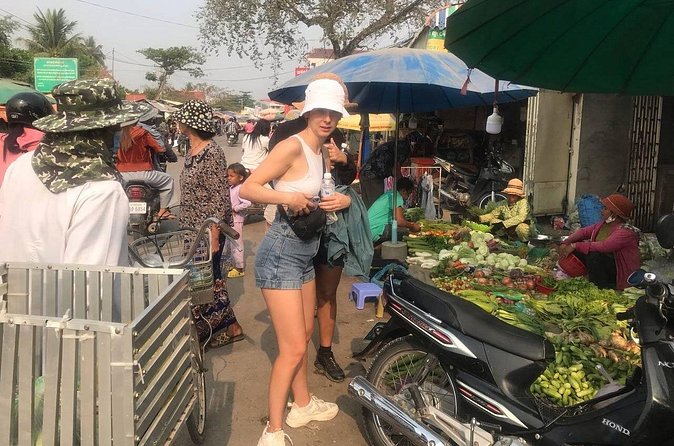
The former Indochina Bank gives the tour a practical angle. Rather than discussing politics alone, the guide explains how money moved and how financial institutions supported trade.
That may sound less eye-catching than a temple, but it helps explain Battambang’s importance. A city becomes a major trading center through markets, transport, agriculture, finance, and links with nearby regions. The bank is one visible clue to that wider system.
Battambang’s connection with rice production also comes through in the tour’s wider focus. The city is often described as part of Cambodia’s rice bowl, and the countryside option lets you see the farms and fields behind that reputation.
This is where the experience becomes more than a standard architecture walk. You are given a way to connect the city’s old commercial buildings with the rural economy around it.
The possible bicycle and countryside route
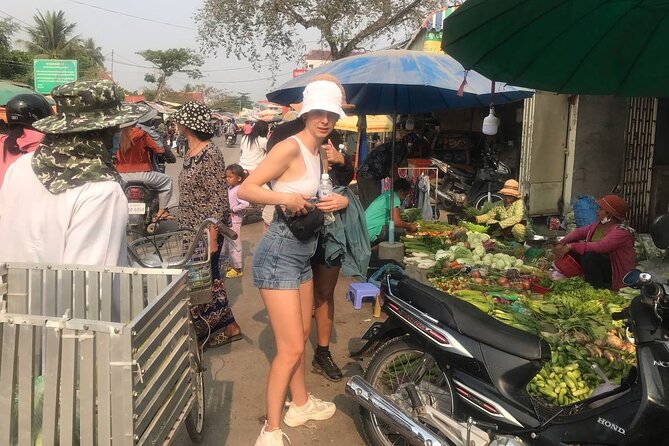
The tour information also describes cycling outside the city. This portion includes countryside views, rice fields, farms, cows, village life, a temple, a crocodile farm, and photo stops where parking is not a problem.
That is a different experience from the city history walk, so confirm the plan when you book. It may be a cycling version of the same half-day service, or the operator may combine city history with a countryside ride depending on your booking.
If cycling is included, the appeal is clear. You see more ground than on foot and can reach quieter areas without worrying about parking or city traffic. Reaksa is specifically praised as a friendly cycling guide with good English, while other cycling departures have been led by Sothea.
The countryside stops appear to focus on daily life rather than major monuments. Rice fields, farms, cows, and village encounters give you a look at how people live beyond central Battambang. The guide can explain customs and work in a way that a solo ride would not.
A cycling route also brings practical questions. The supplied information does not state the bicycle type, route distance, road surface, helmet policy, or level of cycling required. Ask about these points if comfort or fitness is a concern. The general activity notes say most people can participate, but that is not a substitute for knowing the exact route.
The temple and crocodile farm add variety, though the details do not specify which temple or farm. I would treat these as possible additions rather than guaranteed highlights until the operator confirms your itinerary.
What the $25 price really buys you
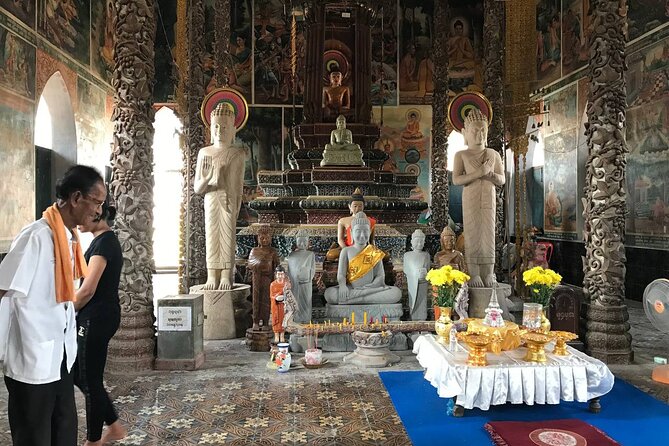
At $25 per person, this is good value if you want a guided introduction rather than a private car and a long list of disconnected stops. The price includes a local English-speaking guide, bottled drinking water, all fees and taxes, and pickup and drop-off from Battambang hotels.
Admission is listed as free for the main itinerary. That means you are paying mainly for the guide’s time, local interpretation, and transport arrangement, not a bundle of costly entrance tickets.
The strongest value comes from the explanation. You can walk past French-era buildings by yourself, but you may not understand how the Central Market, Governor’s House, Chinese temple, and Indochina Bank fit into one story. A guide turns scattered sights into a usable map of the city’s past.
The value is lower if you want a deep specialist treatment of only one subject. This is a broad half-day introduction covering colonial rule, Thai control, religion, trade, the Khmer Rouge, and civil war. Its strength is range and local connection.
A group can include up to 15 people. That is still manageable for a walking tour, though a larger group may make questions and street-side explanations less personal. If you want the most direct contact with the guide, request a smaller departure if that option is available.
Who will enjoy this most
I would choose this for a first visit to Battambang, especially if you want to understand the city before exploring on your own. It also suits solo visitors, since the guide provides company and a clear route without forcing you to arrange every stop yourself.
It is a good match for anyone interested in architecture, local culture, religion, trade, or Cambodia’s modern history. The tour is also useful if you have only a morning or half a day free.
Cycling fans should consider it, but only after confirming the format and equipment. The countryside element sounds appealing for seeing rice fields and village life, yet the advertised walking and cycling details do not line up perfectly.
This may not suit you if you want a major temple complex, a formal museum tour, or a long, intensive account of the Khmer Rouge era. It is an overview with several connected stops, not a single-subject study.
Timing, packing, and cancellation
Plan on roughly three to four hours. The start time is 7:30 a.m., and hotel pickup and drop-off are offered for Battambang hotels.
Bring water, though bottled drinking water is included. A camera, sunglasses, sun protection, and flexible or sports clothing are specifically recommended. If the cycling route applies to your booking, wear clothes that allow easy movement.
Mobile tickets are supported, confirmation is provided at booking, and service animals are allowed. The activity is near public transportation, and the notes say most people can participate.
Cancellation is free up to 24 hours before the local start time for a full refund. Cancellations or changes made inside that 24-hour window are not accepted for a refund.
Should you book Exploring Battambang History?
I would book this tour if you want a well-priced introduction to Battambang’s past and prefer local explanation to sightseeing without context. The old market, colonial houses, Governor’s House, Chinese temple, and Indochina Bank create a strong city route, while guides such as Sothea, Sothai, and Reaksa add the personal angle that makes the places easier to remember.
Before paying, confirm one point: are you booking the walking history route, the countryside bicycle route, or a combination? That small check will prevent mismatched expectations.
Choose it for a balanced look at architecture, trade, religion, and war history in a few hours. Skip it only if you want a specialized museum or memorial tour, or if you need firm cycling details that the supplied information does not provide.
FAQ
How long does the Battambang history tour last?
The experience lasts approximately three to four hours.
What time does the tour start?
The stated start time is 7:30 a.m.
Is hotel pickup available?
Yes. Pickup and drop-off are offered from Battambang hotels.
What is included in the $25 price?
The price includes a local English-speaking guide, bottled drinking water, and all fees and taxes.
Is this a walking tour or a cycling tour?
The experience is presented as a walking history tour, while its description also includes cycling through the countryside. Confirm the exact format with The Adventure Bike before booking.
What places are covered on the city route?
The city itinerary includes Central Market, French colonial houses, the White Elephant, Naga Peace, the Governor’s House, a Chinese temple, and the former Indochina Bank.
What is the cancellation policy?
You can cancel at least 24 hours before the local start time for a full refund. Cancellations or changes made less than 24 hours before the start are not refunded.
Just added around Battambang
- Bamboo Train, Banann Temple, Fruit Bat, Bat Cave, Sunset★ 4.2 · 3 reviews
- Afternoon tour to Original Bamboo train. Bat cave. Killing cave★ 5.0 · 25 reviews
- Private Taxi Transfer Battambang from/to Phnom Penh★ 5.0 · 7 reviews
- Private Taxi Transfer From Battambang – Siem Reap City★ 5.0 · 4 reviews
- Afternoon Tour BambooTrain & Bat Cave★ 5.0 · 57 reviews
- Private Boat from Battambang to Siem Reap via Tonle Sap Lake★ 4.5 · 3 reviews
- Explore local livelihood & countryside (Half-Day Cycling Tour)★ 5.0 · 19 reviews
- Full/Half Day Tuk TuK: Handicrafts Bambootrain Killing&Bat Caves★ 5.0 · 14 reviews
Historical Tours, compared.
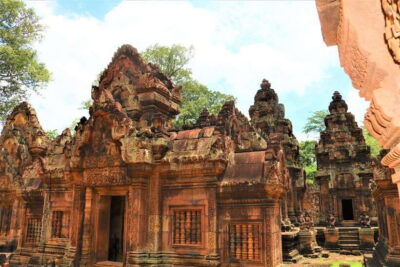
Banteay Srei and Grand Circuit Heritage Tour from Siem Reap
Read our review →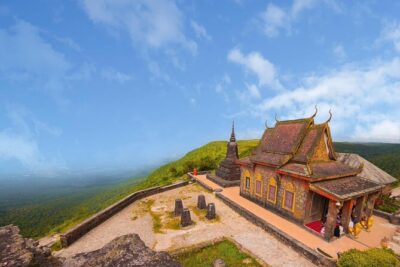
Bokor Mountain Adventure – History, Sights and Waterfalls
Read our review →
Angkor World Heritage with Sunrise – Small Group
Read our review →
Private Angkor Wat Tour & Angkor Park/Heritage With Local Guide
Read our review →Browse the lists this tour appears in