
Reviewed · HISTORICAL TOURS
Guided Phnom Penh Heritage Tour
Phnom Penh’s past comes into focus on this 19-stop heritage ride, where old photographs and short films show how a fishing village became Cambodia’s capital. Oliver, the guide, adds stories in English and French, while a tablet and headphones explain buildings you may otherwise pass without a second look.
I like the way the tour covers French colonial and Art Deco architecture, along with royal life, Chinese heritage, and the Khmer Rouge period. I also like the practical pace: you see a lot in 2.5 hours without walking through Phnom Penh’s heat all day. The trade-off is that several landmarks are viewed from outside, and entry to Wat Phnom, the National Museum, and Royal Palace costs extra and is not part of the tour.
Key points to know before booking
- Twenty-two heritage sites in about 2.5 hours: This is a broad city introduction, not a slow museum visit.
- Oliver leads the outing: He welcomes you at the meeting point, answers questions, and provides commentary in English and French.
- Tablet and headphones included: Historical films, vintage photographs, and anecdotes explain what you are seeing.
- Small group of up to 10 people: The limited size makes it easier to ask questions and keep track of the guide.
- Several interiors may be possible: The Hokkien Temple, National Library, old bank, and Royal University of Fine Arts can sometimes be entered.
- Three major admissions are extra: Wat Phnom, the National Museum, and the Royal Palace are explained from outside, but their visits are not included.
Why this short ride works as a Phnom Penh introduction
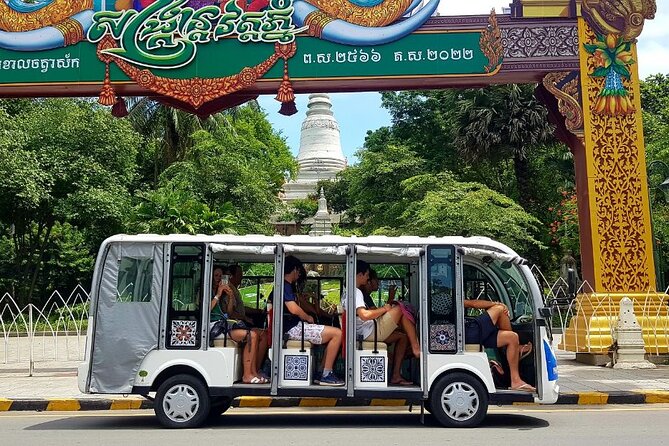
Phnom Penh can feel hard to read at first. New development, old villas, markets, temples, government buildings, and French-era façades sit close together, but their connections are not always obvious. This tour gives you that missing thread.
The story begins with Phnom Penh’s growth from a fishing settlement into a capital. You then see how French planning shaped the city, how Art Deco became fashionable, and how royal and elite life influenced its buildings. The presentation also reaches the darker years of the Khmer Rouge regime, so the tour does not treat architecture as decoration without context.
The digital format is the unusual part. You are not simply listening to a guide point at a façade. The screen shows earlier versions of places through films and vintage images, letting you compare the city you see with the city that once stood there. That is especially useful for buildings that have been altered, covered, or are no longer open to the public.
I would book this early in a Phnom Penh stay. The tour gives you a map of the city and helps you decide which places deserve a longer visit later. If you take it near the end of your stay, you may still enjoy it, but you lose some of its practical value.
A few more Phnom Penh trips to weigh up
- Oudong Mountain History and Pagoda Tour
★ 5.0 · 39 reviews - Phnom Penh Historical Tour
★ 5.0 · 13 reviews - Udong Historical Site Tour
★ 5.0 · 8 reviews
Starting at the Post Office and old Indochina Bank
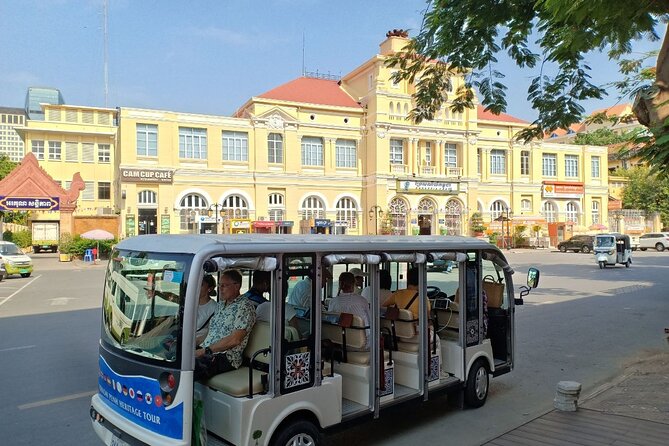
Meet at the corner of Street 102 and Street 13, near the Cambodia Post Office. The driver and Oliver welcome you there. Since the meeting point is in a busy part of the city, keep an eye out for the guide and allow time to identify the vehicle.
The opening material explains how Phnom Penh became a capital. Three audiovisual presentations at the Post Office introduce the city and its development, followed by a short film about the former Bank of Indochina at the old Palais de la Poste.
This opening sequence sets the tone well. You are not just being shown attractive old buildings. You are learning why banks, post offices, hotels, police offices, and government residences appeared where they did. If the old bank is open, there may be a chance to see inside, but that depends on access.
Grand Hotel Manolis, police station, and governor’s house
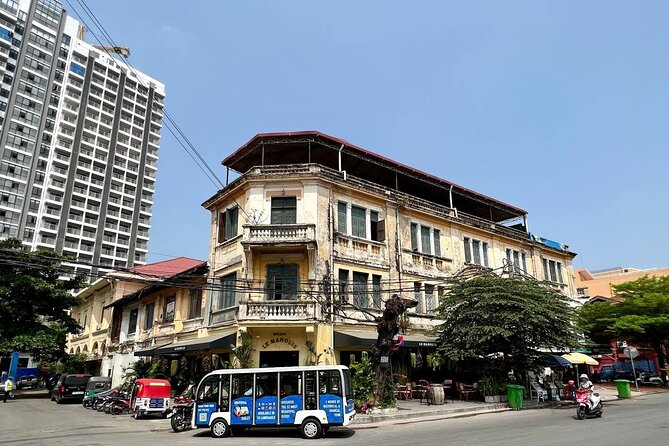
The next stops bring you past Le Manolis, identified as Phnom Penh’s first hotel, then the former municipal police station and the old governor’s house, now associated with the Council for the Development of Cambodia.
Each stop has a short audiovisual segment, usually about five minutes. That keeps the ride moving, though it also means you should not expect a long architectural inspection at every site. I would use these stops to take photographs from the vehicle and note which buildings you want to revisit on foot.
The old governor’s residence is a good example of the tour’s approach. A building may be occupied by a modern institution, yet its earlier role still explains the way the district developed. The screen material helps fill in the parts you cannot see from the street.
Chinese heritage at the house and Hokkien Temple
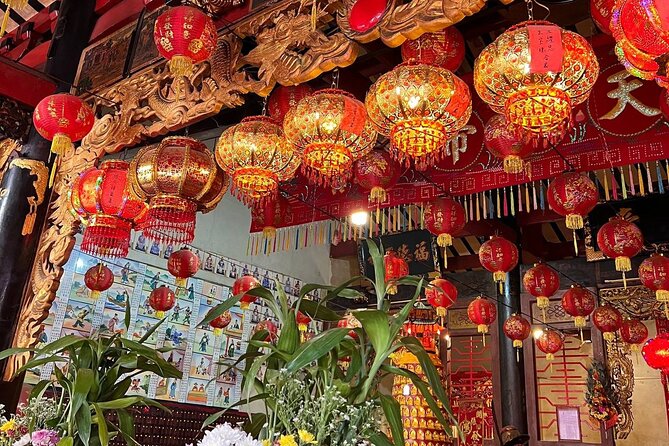
The Chinese house and Hokkien Temple offer one of the most distinct changes in subject. These stops show that Phnom Penh’s story is not only French and royal. Chinese communities shaped trade, neighborhoods, religious life, and the city’s social fabric.
Two audiovisual presentations cover this section. The Hokkien Temple may be open for an interior visit, which gives this part more depth than a simple roadside viewing. Access is not guaranteed, so treat the possible visit as a bonus rather than a promise.
I like this stop because it broadens the story. The tour presents the city as a meeting place of communities, institutions, and architectural styles. That makes the later discussion of elite life and urban planning easier to understand.
Same country, a completely different kind of day:
- The Killing Field and Toul Sleng Genocide Museum (S21) Tour
★ 5.0 · 1,977 reviews - Phnom Penh: Sunset Cruise with Unlimited Beers & BBQ Buffet
★ 4.5 · 727 reviews - Aroma Therapy Massage, Relaxation therapeutic aromatherapy oil massages.
★ 5.0 · 645 reviews - Killing field and Toul Sleng genocide museum Tour
★ 5.0 · 610 reviews
Wat Phnom and the old Naga Bridge
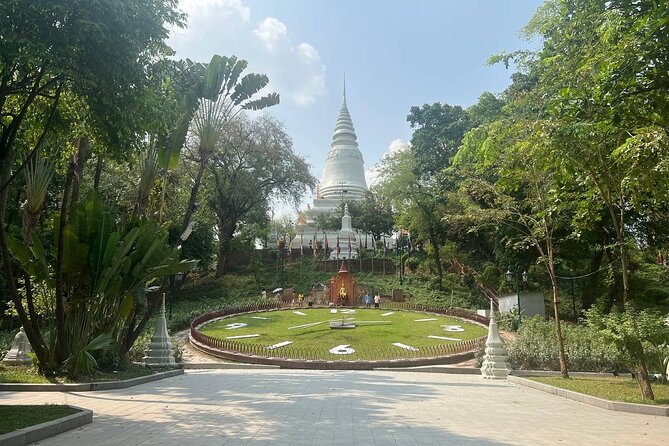
The old Naga Bridge receives a short presentation before the tour reaches Wat Phnom. The bridge’s former appearance is brought back through the audiovisual guide, a useful feature when the present-day view gives you only part of the story.
At Wat Phnom, you have time for photographs, but entry to the hilltop temple is not included. The tour explains the site, but you will need to pay the admission separately if you want to visit the temple itself.
This is an important distinction. The tour includes access to the sightseeing experience and its commentary, not all the city’s attractions. If Wat Phnom is high on your list, plan a separate return visit so you can take your time rather than trying to fit a temple visit into the short stop.
The route also covers a former country club site, now connected with the location of the United States Embassy. Photography is not allowed at this stop. Listen to the presentation and follow the guide’s instructions rather than treating it like a normal photo opportunity.
The National Library and Raffles Hotel Le Royal
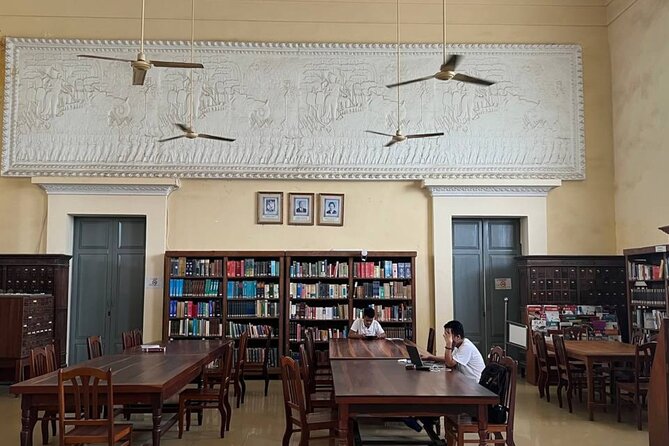
The National Library is covered in another short film, and you may be able to go inside if it is open. The possibility of entering matters here because the building’s value is not limited to its exterior. Still, opening conditions can change, so the tour should be viewed as a guided introduction rather than a guaranteed library visit.
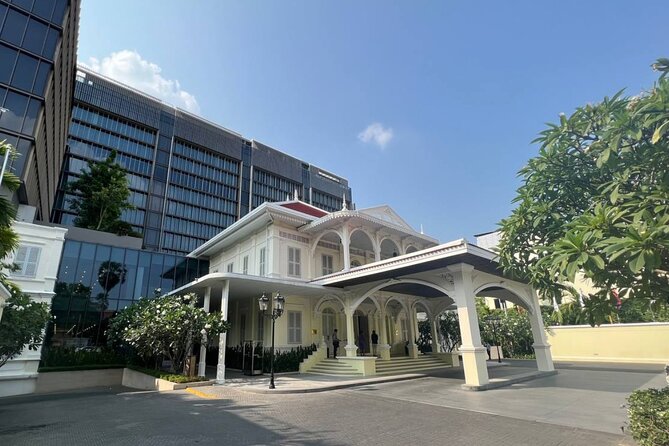
Next comes Raffles Hotel Le Royal, described as one of Cambodia’s finest hotels. The audiovisual presentation places the hotel within Phnom Penh’s early twentieth-century social world, when the city’s elite and international visitors gathered in grand surroundings.
This is where the tour’s focus on lifestyle becomes useful. You are not only seeing a historic hotel. You are getting a glimpse of how status, hospitality, colonial administration, and commerce shaped the capital.
Railway station, Central Market, and No Problem Villa
The route continues to the railway station and Central Market. The station presentation adds another piece to the story of movement and urban growth, while the Central Market section introduces one of Phnom Penh’s best-known civic and commercial spaces.
The old No Problem Villa, now associated with the Hyatt Regency Phnom Penh, brings the route back to the city’s private architecture and changing use of historic buildings. Short presentations explain these sites while you continue through the city.
This part is best understood as a city overview. You will not have time to shop at Central Market or explore a hotel interior as part of the formal route. Instead, you gain useful background and can return later with a better sense of what you are looking at.
Royal University of Fine Arts and the National Museum
The Royal University of Fine Arts is one of the strongest stops because a guided visit is included. The presentation explains the university, and you may see students practicing their art. The tour also adds stories and anecdotes, making this more than a view from the road.
Allow about 25 minutes here, the longest scheduled stop in the route. It gives the experience a human touch. You see an active place connected to Cambodian artistic traditions rather than only preserved colonial buildings.
The National Museum comes next, with a short presentation about the museum of the Kingdom. The museum visit itself is not included, so you will need a separate ticket and more time if you want to see the collections inside.
I would save the National Museum for another part of your schedule. Pairing it with the Royal Palace can make sense, but this heritage tour is better for orientation than for detailed museum time.
The old mansion, UNESCO house, and Royal Palace
The FCC Phnom Penh stop covers an old mansion that is under renovation and covered during 2024 and 2025. This is a case where the historical film matters more than the current view. You may see little of the building itself, but the presentation keeps the site in the route.
The UNESCO Cambodia house follows. Its inclusion adds another layer to the city’s cultural story and shows how heritage work has a place in modern Phnom Penh.
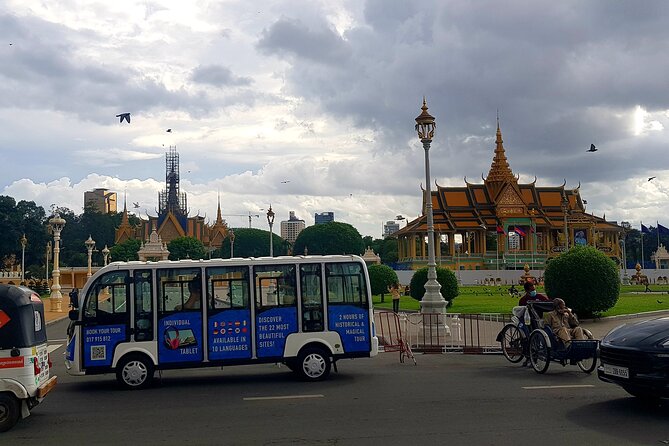
The Royal Palace receives the final major landmark presentation before the route moves toward Street 240. The palace visit is not included. You can see and photograph the area as permitted, but you will need a separate visit if you want to enter the palace grounds.
The palace stop is valuable even without admission because it connects the royal family to the city’s development. Still, anyone hoping for a palace tour should know that this experience does not replace one.
Street 240 and the final walk-off point
The tour ends on Oknha Chhun Street, also known as Street 240, near the Royal Palace and Wat Botum Square. The last presentation covers Street 240, the British ambassador’s residence, and the epilogue.
Street 240 gives the ending a more residential and diplomatic feel after the markets, institutions, temples, and hotels earlier in the route. It is a sensible place to continue exploring on foot, but the experience officially ends there.
The route does not return you to the starting point. Plan your next move in advance, especially if you have luggage or a fixed appointment. Public transport is nearby, but private transportation is not included.
How the audiovisual guide changes the experience
The tablet and headphones are more than a translation tool. They allow the tour to use old photographs, films, and historical anecdotes without asking the guide to give a long speech at every curb.
The guide is available in 10 languages. Oliver is also available for questions, and the tour has been conducted in English and French. If you want a fully personal walking lecture, this format may feel less intimate. If you like visual proof and a steady flow of information, it works well.
The videos are especially helpful at places that have changed use, are closed, or are partly hidden. They also make the architecture easier to read. A plain façade can become interesting once you see its earlier setting and understand who used it.
Price, pace, and comfort at $24.36
At $24.36 per person, I see this as good value if you want broad coverage in limited time. In roughly 2.5 hours, you get 22 major sites, a guide, bottled water, a tablet, headphones, and commentary in 10 languages.
The value drops if you already know Phnom Penh well or want full entry to its main museums and temples. Several important admissions are extra, and some stops last only three to five minutes. You are paying for orientation, transport during the sightseeing route, and historical interpretation rather than a series of long interior visits.
The ride is also useful on a hot day. One review specifically noted that seeing the city from the vehicle was preferable to walking everywhere in high heat. You still need to be ready for short periods outside and for photography stops, but the tour avoids turning every connection into a long walk.
The group limit is 10 people, which is a comfortable size for questions. The practical schedule means the tour does not feel designed for lingering. Think of it as a well-organized first look, followed by your own slower visits.
Who should book this Phnom Penh tour
I would recommend it to first-time visitors, people with only a short stay, and anyone interested in architecture and city history. It is also a good choice if you want to identify places for a later private visit.
The tour suits you if:
- You want to see many parts of central Phnom Penh quickly.
- You learn well from old photographs and short films.
- You prefer a vehicle on hot days.
- You want commentary in one of 10 languages.
- You enjoy buildings that are usually skipped by standard sightseeing routes.
- You plan to return to the National Museum, Royal Palace, Wat Phnom, or Central Market later.
I would hesitate if your main goal is to spend hours inside temples, museums, or palaces. The itinerary shows you those sites and explains them, but it does not include their full visits.
Booking is flexible, with free cancellation up to 24 hours before the start time. Confirmation is sent within 48 hours, subject to availability. Service animals are allowed, the route is near public transportation, and most people can participate.
Should you book the Guided Phnom Penh Heritage Tour?
Book it if you want a fast, thoughtful introduction to Phnom Penh and value context more than long visits inside individual attractions. The old images, the unusual architectural stops, Oliver’s help with questions, and the chance to visit the Royal University of Fine Arts make it more useful than a simple drive past landmarks.
Take it near the start of your stay. Bring your camera, but remember that photography is restricted at the former country club and embassy stop. Then use the tour’s suggestions to return on foot to the places that catch your interest.
Skip it if you already have a carefully planned architecture tour or need guaranteed entry to the Royal Palace, National Museum, and Wat Phnom. For most first-time visitors, though, $24.36 buys a useful city framework, a welcome break from the heat, and a clear list of places worth seeing at a slower pace.
FAQ
How long does the Guided Phnom Penh Heritage Tour last?
The tour lasts approximately 2 hours and 30 minutes.
Where does the tour start?
It starts at Phnom Penh Heritage Tour at the corner of Street 102 and Street 13 in Phnom Penh, Cambodia.
Where does the tour end?
It ends on Oknha Chhun Street, also called Street 240, near the Royal Palace and Wat Botum Square.
Is transportation included?
Private transportation is not included, but the sightseeing route includes time to view places from the bus or sightseeing vehicle.
Are entrance tickets to the main attractions included?
Admission to Wat Phnom, the National Museum, and the Royal Palace is not included. The possible visits to the old bank, Hokkien Temple, and National Library depend on whether those sites are open.
What languages are available for the audiovisual guide?
The tablet audiovisual guide is available in 10 languages. The guide commentary has been provided in English and French.
Just added around Phnom Penh
- The killing field and Toul Sleng Genocide museum (S21) Tour★ 4.5 · 19 reviews
- Watch Khmer Kickboxing with Free Beers by Ringside Seats★ 5.0 · 11 reviews
- Udong Old Capital Tour★ 4.5 · 3 reviews
- Watch Live Khmer Traditional boxing in Phnom Penh★ 5.0 · 46 reviews
- Udong Historical Site Tour★ 5.0 · 8 reviews
- Warm Stone Massage★ 5.0 · 23 reviews
- Killing Fields & Toul Sleng Genocide Museum Tickets With Tuk Tuk★ 5.0 · 6 reviews
- S-21 Prison and Killing Fields★ 5.0 · 8 reviews
Historical Tours, compared.
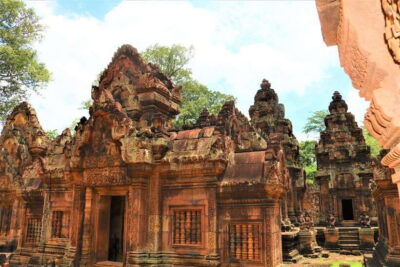
Banteay Srei and Grand Circuit Heritage Tour from Siem Reap
Read our review →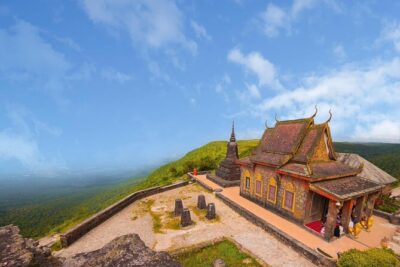
Bokor Mountain Adventure – History, Sights and Waterfalls
Read our review →
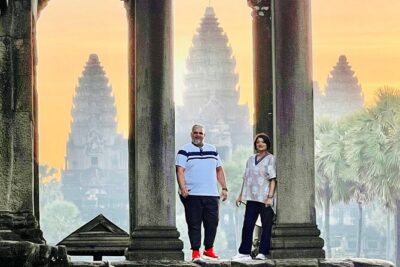
Angkor World Heritage with Sunrise – Small Group
Read our review →
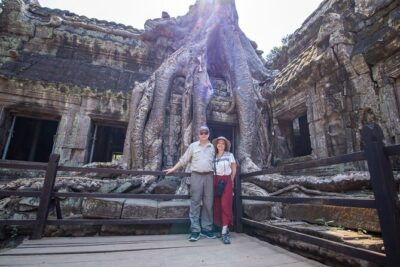
Private Angkor Wat Tour & Angkor Park/Heritage With Local Guide
Read our review →
Kulen Mountain Waterfall and Historical Wonders Private Tour
Read our review →Browse the lists this tour appears in