
Reviewed · HISTORICAL TOURS
3-Day Tour (The Historical of Khmer Empire)
The best thing about this three-day tour is its range. You move from the famous stone faces of Bayon and the grand scale of Angkor Wat to quieter sites such as Ta Nei, Koh Ker, and Beng Mealea. It gives you both the major sights and a wider look at how Khmer temple building changed over time.
I like the private format, since your group can set the pace and ask questions without keeping up with strangers. I also like the mix of close-in Angkor temples and longer drives into the countryside, especially on the day that reaches Koh Ker and Beng Mealea. Guides such as Veasna, Vutha, Sophia, and Sophea have been praised for their temple explanations, photo help, and care with families.
The main consideration is the pace. Each day runs roughly from 8 a.m. to 5 p.m., and the third day includes long road transfers. The $250.50 price covers the guide, vehicle, driver, water, and towels, but temple admission and meals are extra, so your final cost will be higher.
Key points to know before booking
- Private touring: Only your own group takes part, with an English-speaking guide and professional driver.
- A broad Khmer route: See Angkor Thom, Angkor Wat, Ta Prohm, the Roluos temples, Banteay Srei, Koh Ker, and Beng Mealea.
- Three full days: Daily touring is scheduled from about 8 a.m. to 5 p.m., with lunch breaks at your own expense.
- Long third day: Koh Ker is about 113 kilometers from Siem Reap, followed by Beng Mealea, about 60 kilometers away.
- Flexible guiding: The tour can be customized, and other guide languages may be requested for an added charge if available.
- Strict temple clothing rules: Cover your shoulders and knees, and avoid brightly colored or offensive clothing.
What the $250.50 price really covers
At $250.50 per person, this is not an all-inclusive holiday package. It is a private sightseeing service built around transport, guiding, and route planning. You receive an English-speaking guide, an air-conditioned vehicle with a professional driver, cool drinking water, cool wet towels, and applicable taxes and service charges.
That arrangement can be good value for a couple, family, or small group that wants a dedicated guide. A private vehicle matters in Siem Reap because you can return to the vehicle between temples, collect water, and adjust the day with your guide. Families also avoid the strain of trying to keep children on a fixed group schedule.
You need to budget separately for the Angkor Archaeological site pass. The pass is not included, is paid for in U.S. dollars at the main gate, and can be purchased for one to seven days. Children under 12 are free of charge. The pass should remain visible during your visits.
Meals are also separate. Lunch is taken at a local restaurant in or near the Angkor area, but you pay for it yourself. Breakfast, dinner, drinks beyond the supplied water, shopping, accommodation, and travel insurance are not covered.
This makes the tour easiest to price if you think of the $250.50 as the cost of a private guide and vehicle over three long days. It is less attractive if you want meals, tickets, and hotel arrangements bundled into one bill.
A few more Siem Reap trips to weigh up
- 2 Days Guided Historical Tour in Angkor
★ 5.0 · 855 reviews - Siem Reap: Banteay Srei and Grand Circuit Heritage Tour
★ 4.9 · 163 reviews - Banteay Srei and Grand Circuit Heritage Tour from Siem Reap
★ 5.0 · 142 reviews
Day one: Bayon, Banteay Srei, and the outer temples
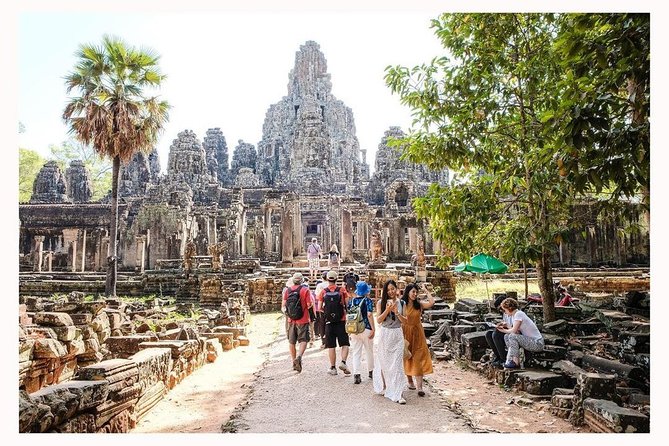
The first morning begins with Angkor Thom, the great walled city that includes several important monuments. Bayon is the headline stop. Its towers carry the famous serene stone faces associated with classic Khmer art. The planned visit is about one hour, which gives you time to study the faces and carved scenes without making the first stop too rushed.
Your guide is especially useful here. Bayon can look like a pile of towers at first, but the structure becomes easier to understand when someone points out the levels, galleries, and carved details. The stone faces are the obvious attraction, yet the surrounding reliefs help explain how religious imagery and royal power were presented.
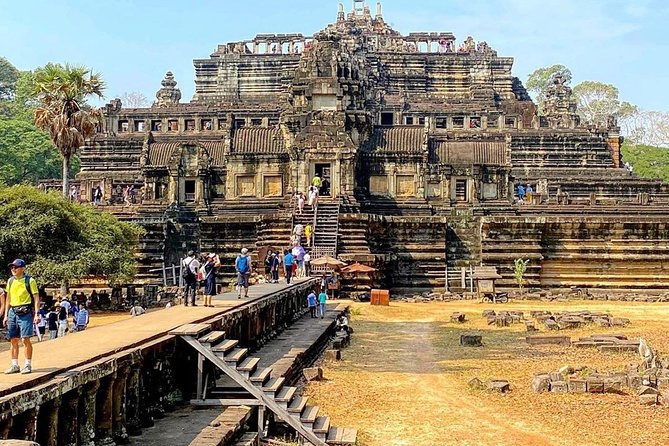
Next comes Baphuon, a three-level temple mountain dedicated to Shiva. The visit is about 30 minutes. Compared with Bayon, it is a shorter stop, but its high form and position within Angkor Thom show a different phase of Khmer temple design.
The route then moves to the Terrace of the Elephants. This long wall, about 300 meters in length, is decorated with elephants and garudas. It once formed part of the ceremonial heart of Angkor Thom. You should not expect a complete temple here. The appeal is the scale of the terrace and the carved frontage.
The nearby Terrace of the Leper King takes another 30 minutes. Its double wall is covered with nagas, demons, and other mythological figures. The narrow passages between the walls can be more interesting than the top platform because they bring you close to the carvings.
Preah Palilay adds a quieter note. This sandstone and laterite tower sits in a shaded forest setting, and its eastern gopura has Buddhist carvings. It is a good counterpoint to the more monumental stops earlier in the morning. The planned visit is 30 minutes, so you get a brief taste rather than a long archaeological study.
Lunch is at your own expense in the Angkor area. Since the day continues into the afternoon, keep lunch practical and allow enough time to cool down. The tour supplies water and wet towels, but you still need suitable clothing, sun protection, and comfortable walking shoes.
Banteay Srei’s fine carvings
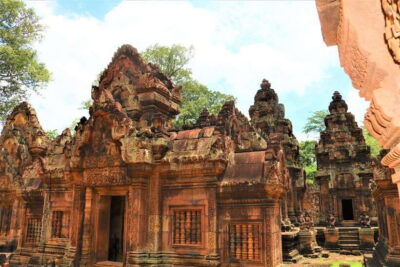
The afternoon drive reaches Banteay Srei, one of the most delicate temples on the route. Its name is commonly translated as citadel of women, a modern name linked to the fine quality of its carvings. You have about two hours here, the longest stop of day one.
Banteay Srei is built on a smaller scale than Angkor Wat, but its carved sandstone details are unusually precise. Your guide can help you read the lintels, false doors, figures, and mythological scenes rather than treating the temple as a quick photo stop.
The smaller scale also means the site can feel more intimate. That does not mean it is physically easy. You still spend much of the day walking and standing, and the combination of heat and carved stone can wear you down by afternoon.
Banteay Samre follows for about an hour. This large, flat temple uses an Angkor Wat style of architecture and art. It is less famous than Banteay Srei, but it helps you compare the two. Banteay Srei is prized for fine detail, while Banteay Samre gives you a broader, more defensive-looking temple layout.
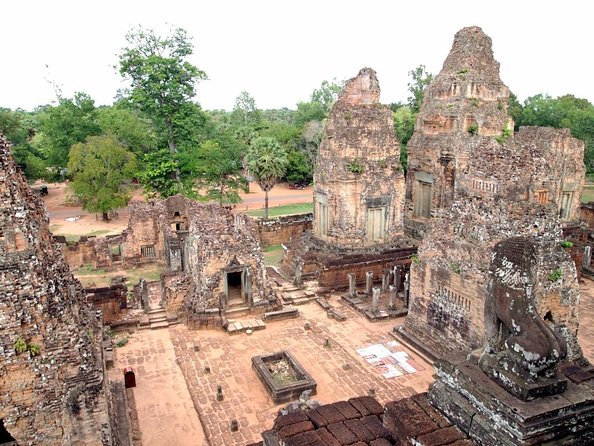
Pre Rup is listed as an optional sunset stop on day one. It is a temple mountain with carved false doors and views over the surrounding countryside. Since sunset depends on weather, timing, and the day’s pace, treat this as an extra rather than the core reason to choose the tour.
Day two: Angkor Wat, Ta Prohm, and the Roluos temples
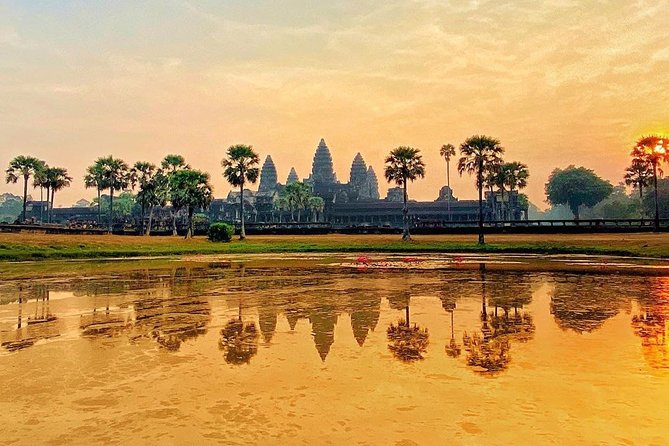
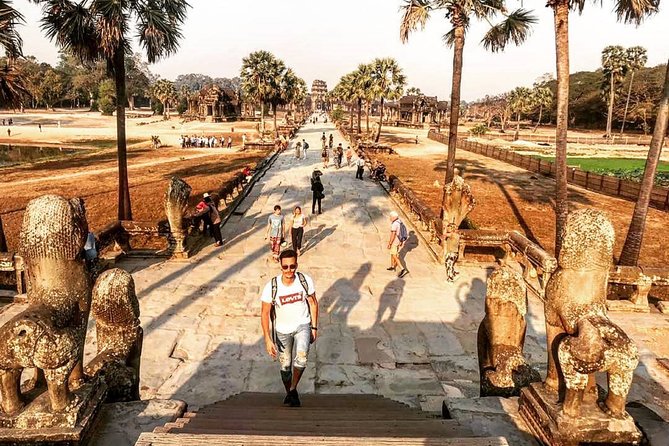
Day two begins with the temple most people come to Siem Reap to see: Angkor Wat. The planned visit is two hours. That is enough for a first look at the main structure and key galleries, but not enough to inspect every corner of the complex.
Angkor Wat works best when you slow down. Its scale can be hard to grasp from the front entrance, so pay attention to the long approach, the galleries, the towers, and the layers of the central temple. Your guide can provide the setting for the carvings and explain how the building functioned as both a Hindu temple and a royal monument.
Two hours is a reasonable starting visit, especially after the previous day. Still, if Angkor Wat is your main reason for coming to Cambodia, you may want to discuss the timing and priorities with your guide. The tour is customizable, so you can make clear that you want extra attention to the galleries, architecture, or photographs.
Ta Prohm follows for about 90 minutes. This sprawling monastic complex is only partly cleared of jungle growth, which gives it a very different mood from Angkor Wat. Tree roots press against walls, courtyards open unexpectedly, and the remaining vegetation helps you picture how difficult it was to maintain these places after their original use declined.
Ta Prohm is also one of the most photographed temples in Angkor. Your guide can help you find attractive viewpoints, but the site is not just a backdrop. Look for the surviving carvings and the way builders fitted galleries, towers, and courtyards together.
Ta Nei is a shorter and quieter stop. It is a jungle temple with links to the art of Jayavarman VII, including apsara and lintel carvings. The 30-minute visit makes it more of a special pause than a full exploration, but that is part of its appeal. You get a smaller site after two major monuments.
Lunch again is on your own near the Angkor area. The route then shifts to the Roluos Group, an early Khmer capital known as Hariharalaya. This section is important because it takes you away from the later, more famous monuments and shows earlier forms of temple design.
Same country, a completely different kind of day:
- Angkor Wat Sunrise or Sunset Tour with Guide from Siem Reap
★ 5.0 · 12,109 reviews - Siem Reap: Angkor Wat: Small-Group Sunrise or Sunset Tour
★ 5.0 · 9,444 reviews - From Siem Reap: Kampong Phluk Floating Village Tour by Boat
★ 4.9 · 6,979 reviews - Sunset tour of Kampong Phluk stilts home village on the Tonle Sap
★ 5.0 · 4,865 reviews
Bakong, Preah Ko, and Lolei
Bakong is the strongest stop in the Roluos Group. It is a temple mountain at the center of the first Angkorian capital and receives about 45 minutes. Its form helps you see how the temple mountain idea developed before reaching the larger scale of Angkor Wat.
Preah Ko, or Sacred Bull, was one of the early major temples at Hariharalaya. The visit lasts about 40 minutes. Its importance is less about dramatic jungle scenery and more about its place in the early Khmer capital.
Lolei is the final Roluos temple, with about 40 minutes planned. It was built as an island temple in the middle of a large reservoir called Indratataka. The reservoir is now dry, but the site still helps explain the importance of water management to Khmer cities.
The Roluos section rewards you if you care about sequence and development. You are not simply collecting temple photographs. You are seeing early examples, then comparing them with the larger and more elaborate buildings visited elsewhere in the tour.
The day ends at Psar Chaa, or the Old Market, for about two hours. This is the most practical shopping stop, with souvenirs and local curios. You can browse at your own pace, but keep your spending in mind. Since shopping is not included, this is a chance to buy gifts rather than a required part of the temple program.
Day three: Koh Ker and Beng Mealea
The third day is the most ambitious. The morning drive heads to Koh Ker, about 113 kilometers from Siem Reap. Koh Ker served as a temporary capital under King Jayavarman IV during a period of conflict within the Angkorian kingdom.
The temple visit is planned for two hours. This is where the private vehicle earns its keep, since Koh Ker is far beyond the central Angkor circuit. The long drive takes time, but it also changes the feel of the tour. You are no longer moving between closely grouped monuments. You are making a full-day excursion into a more distant part of the Khmer world.
Koh Ker is useful for understanding that Angkor was not always centered in one permanent capital. Its period as a temporary capital adds a political dimension to the architecture. Ask your guide to connect the temple’s design with the period in which it was built and the changes taking place within the kingdom.
After lunch, the route continues to Beng Mealea, about 60 kilometers from Siem Reap. The temple covers roughly one square kilometer, with jungle growth extending across much of the site. Built around the end of the 11th century, it is a Hindu temple with a more untamed appearance than the central Angkor monuments.
Beng Mealea can be especially rewarding if you like ruins that feel less polished. Fallen stones, vegetation, and partially cleared structures make it harder to read, so a guide’s explanation matters. At the same time, the rougher condition means you should not expect the same clear paths and restored views found at major sites.
The long third day may be too much for someone who wants a relaxed holiday schedule. You spend several hours on the road and still have two substantial temple visits. For someone interested in the wider Khmer Empire, however, this is one of the most valuable parts of the route.
Pre Rup is again listed as an optional sunset stop. It can provide a final temple-mountain view if time and conditions allow. If you are tired after Koh Ker and Beng Mealea, skipping it is sensible.
Guides, vehicles, and the private touring style
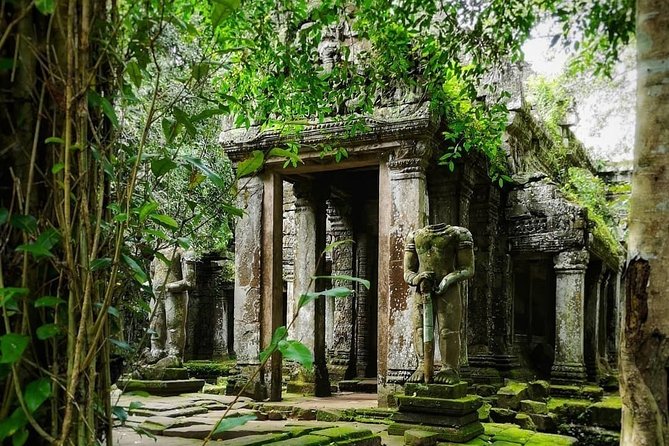
The experience is operated on a fully private basis. Only your group takes part, which gives you room to ask for more explanation at a favorite site or adjust the balance between temples and photographs.
Several guides are associated with the tour. Veasna is described as attentive with families and strong at explaining the temples. Sophia is praised for detailed explanations and for finding good photo locations. Sophea is described as warm and accommodating with a mixed-age group. Vutha and Vandy are also named in connection with private tours, with Vandy serving as a driver on some outings.
You cannot select a particular guide from the information provided, so treat these names as examples of the available team rather than a promise. English is included. Other languages may be requested, subject to availability and an additional charge.
Transport is by air-conditioned vehicle with a professional driver. Pickup and return transfers apply to customers staying inside Siem Reap. Exact pickup time is usually confirmed when you reserve, though operational changes may be passed on the day before departure.
Clothing, comfort, and daily planning
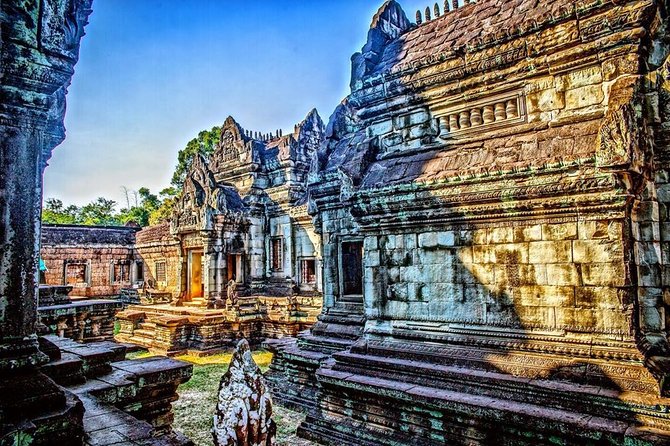
Wear light clothing that covers your shoulders and falls below your knees. Some temples and palace areas, including Baphuon, enforce the rule strictly. Clothing with offensive images or writing, as well as brightly colored clothing, may result in refused entry.
Expect three active days. You will walk through temple grounds, climb or approach uneven areas, and spend time in heat. The supplied water and cool towels are useful, but they do not replace sensible preparation.
Protect cameras and phones from natural elements. The operator places responsibility for electronic equipment on you, so use a proper bag or protective wrapping rather than leaving devices exposed.
Free cancellation is available if you cancel at least 24 hours before the start time. Late cancellations and changes are not refunded or accepted under the stated policy. The tour also requires good weather. If poor weather forces cancellation, you can choose another date or receive a full refund.
Who should book this three-day temple route?
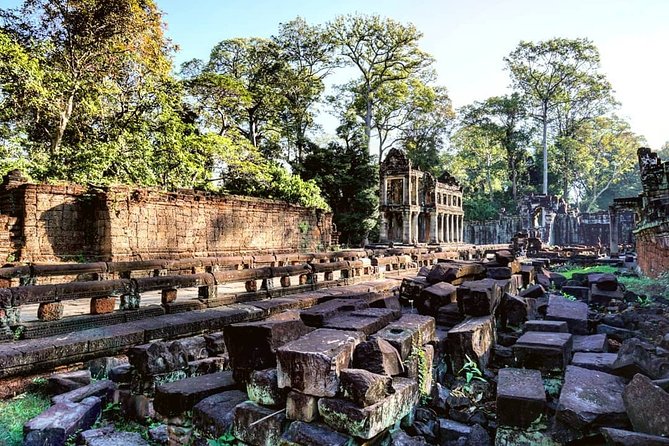
I would choose this tour if you want the major Angkor monuments but do not want to stop there. It suits couples, families, and small groups who value a private vehicle and an adjustable schedule.
It is also a good match for anyone curious about temple chronology. Bayon, Baphuon, the Roluos Group, Angkor Wat, Koh Ker, and Beng Mealea show different periods, functions, and styles. The route gives you more context than a one-day highlights trip.
I would hesitate if you dislike long drives, want all meals and admissions included, or prefer a slow schedule with only a few temples each day. Day one and day two are full, while day three is a serious road trip.
FAQ
Is this a private tour?
Yes. Only your own group takes part, with a private vehicle, professional driver, and English-speaking guide.
Does the price include the Angkor entrance pass?
No. The Angkor Archaeological site pass is not included. You purchase it separately in U.S. dollars at the main gate, with options ranging from one to seven days.
Are meals included?
No. Breakfast, lunch, dinner, drinks, and personal food expenses are not included. Lunch is taken at a local restaurant at your own cost.
What clothing should I wear?
Wear light clothing that covers your shoulders and knees. Avoid brightly colored clothing and shirts with offensive or disrespectful images.
Does the tour include hotel pickup?
Pickup and return transfers are included for customers staying inside Siem Reap. The exact pickup time is confirmed during booking when possible.
Are other languages available besides English?
English guiding is included. Other languages may be requested, but they depend on availability and may require an additional charge.
What happens if bad weather cancels the tour?
If poor weather causes cancellation, you can choose a different date or receive a full refund. For your own cancellation, you must cancel at least 24 hours before the start time for a full refund.
Should you book it?
Book this tour if you want a private, guide-led look at both the famous Angkor core and the farther Khmer sites. The strongest reasons are the wide route, private transport, family-friendly flexibility, and guides such as Veasna, Sophia, and Sophea, who are noted for clear explanations and personal attention.
Before paying, add the temple pass, meals, shopping, and insurance to the $250.50 price. If you are comfortable with three full days and a long final excursion, this is a strong way to see far more than Angkor Wat alone.
Just added around Siem Reap
- Ultimate Sunrise to Angkor Wat, Angkor Thom and Bayon Temple★ 5.0 · 3 reviews
- Twilight Tastes of Siem Reap Include Dinner★ 5.0 · 13 reviews
- Trekking Tour at Phnom Kulen National Park from Siem Reap★ 5.0 · 3 reviews
- Full-Day Private Tour of Angkor Wat with Pick Up★ 5.0 · 12 reviews
- Private Day Trip to Angkor Temples with Expert Guide★ 5.0 · 4 reviews
- Waterfall & River of 1000 Siva Linga- Kulen Mountain Private Tour★ 5.0 · 3 reviews
- Professional Photo Shoot in Angkor Archaeological Park, Siem Reap★ 5.0 · 42 reviews
- Siem Reap City Tour with War Museum and Killing Field★ 5.0 · 27 reviews
Historical Tours, compared.
Banteay Srei and Grand Circuit Heritage Tour from Siem Reap
Read our review →
Bokor Mountain Adventure – History, Sights and Waterfalls
Read our review →
Angkor World Heritage with Sunrise – Small Group
Read our review →
Private Angkor Wat Tour & Angkor Park/Heritage With Local Guide
Read our review →
Kulen Mountain Waterfall and Historical Wonders Private Tour
Read our review →Browse the lists this tour appears in