
Reviewed · HISTORICAL TOURS
2-Days Tour (The Best Historical of Khmer Empire)
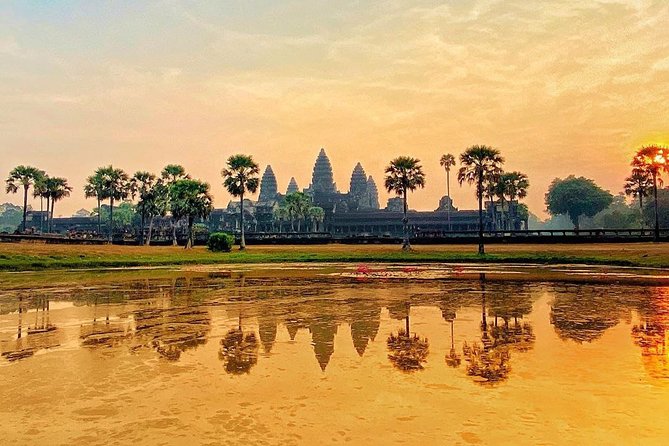
The best part of this two-day tour is its sweep. You move from the giant stone faces of Bayon and the famous towers of Angkor Wat to quiet forest ruins, delicate Banteay Srei, and the early Khmer capital at Roluos. It gives you both the headline sights and the older, calmer corners.
I like the private format, especially because your guide can adjust the pace and help with photographs. I also like the practical care: an air-conditioned vehicle, cold water, and chilled wet towels matter after hours in Cambodia’s heat. Guides named Veasna and Vutha received especially warm praise for their stories, humor, and attention to families.
The main consideration is cost beyond the $145 tour price. Angkor entrance fees, lunch, drinks, tips, and shopping are extra, and the two days are full. You will walk in strong sun, climb uneven temple paths, and need clothing covering your shoulders and knees.
Key points at a glance
- Private two-day touring: Only your own group participates, with an English-speaking guide and professional driver.
- A useful mix of temples: The plan includes Angkor Wat, Bayon, Ta Prohm, Banteay Srei, Pre Rup, and the Roluos Group.
- Sunset at Pre Rup: The high temple gives you an open view across the countryside, weather and crowd conditions permitting.
- Early Khmer capital: Bakong, Lolei, and Preah Ko show the beginnings of Angkorian temple building at Hariharalaya.
- Comfort between stops: You receive air-conditioned transport, cool water, and wet towels.
- Flexible pacing: The private setup allows changes to suit your group, subject to timing and practical limits.
A private way to see Angkor in two days
At $145 per person, this is not the cheapest way to hire transport around Siem Reap. It is also more than a basic tuk-tuk arrangement. The value comes from having one vehicle, one guide, and a schedule built around your own group for two long days.
That matters at Angkor. The temples are spread across a large area, and the heat can make even short walks feel demanding. You do not have to arrange a new ride at every stop, explain your plans repeatedly, or work around strangers in a shared group.
Your guide is licensed and speaks English. The strongest part of the service is the interpretation. Guides such as Veasna and Vutha have been praised for explaining the carvings, adding humor, helping with photographs, and changing the pace for families. Sophea Kas and Bunthe are also names connected with past tours, though the guide assigned to you depends on availability.
The vehicle is air-conditioned, and cold water and wet towels are supplied. These sound like small touches, but they become important during a full day of stone terraces and exposed courtyards. Lunch is not provided, so you should budget for your own midday meal.
A few more Siem Reap trips to weigh up
- 2 Days Guided Historical Tour in Angkor
★ 5.0 · 855 reviews - Siem Reap: Banteay Srei and Grand Circuit Heritage Tour
★ 4.9 · 163 reviews - Banteay Srei and Grand Circuit Heritage Tour from Siem Reap
★ 5.0 · 142 reviews
Day one: the royal heart of Angkor Thom
The first morning begins at Angkor Thom, the great walled city that once served as a royal center. Bayon is the natural highlight. Its towers carry large carved faces, and the effect changes as you walk around them. From one angle the faces seem calm and watchful. From another, they blend into a dense mass of stone.
You have about 40 minutes at Bayon. That is enough for a guided introduction and a close look, but a photography-minded visitor may want more time. Ask your guide to point out the bas-reliefs as well as the faces. The historical scenes and daily-life details help you see Bayon as more than a collection of famous towers.
Nearby, Baphuon is a three-tiered temple mountain built under Udayadityavarman II and dedicated to Shiva. It predates Angkor Wat and has a different feel from Bayon. The long approach and steep upper levels make this a more physical stop, and the strict dress rules apply here.
The Terrace of the Elephants follows. Its carved wall runs for about 300 meters and includes elephants and garudas. The terrace once formed part of the ceremonial center of Angkor Thom, so your guide can help explain how the royal city used this broad public space.
The Terrace of the Leper King is smaller but visually intricate. Its double wall is covered with nagas, demons, and other mythological figures. The name comes from a statue associated with the Leper King, not from a simple description of the terrace itself. Look closely at the inner carvings, where the narrow passage creates a more enclosed experience than the open Elephant Terrace.
Quiet corners inside Angkor Thom
Preah Palilay offers a welcome change of mood. The sandstone and laterite tower sits in a shaded forest setting, and its eastern entrance has Buddhist carvings. The site is smaller than Bayon or Baphuon, but that is part of its appeal. It gives you a quieter stop and a chance to notice how trees, stone, and fallen blocks share the space.
Phimeanakas is a pyramid temple from the 10th century, located near the former royal enclosure. The temple itself is less visually complete than Angkor Wat, yet its position helps you understand the scale of the old palace area. You also see part of the ancient enclosure wall.
These shorter stops are valuable because they prevent the day from becoming a parade of only famous monuments. They also give your guide room to explain how temples, royal buildings, terraces, and walls worked together.
Banteay Srei and Banteay Samre
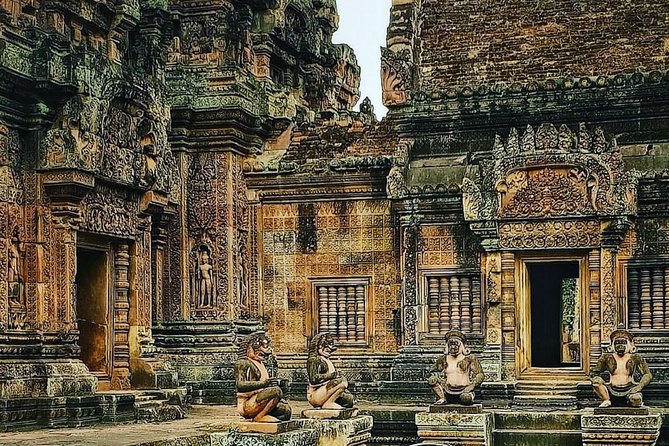
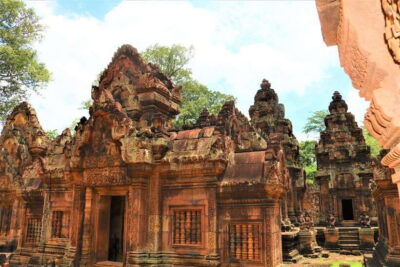
After a lunch break, the tour heads toward Banteay Srei. Its name is commonly translated as citadel of women, and the temple is famous for fine carvings cut into pinkish sandstone. At around 90 minutes, this is one of the longer stops, and it deserves the time.
Banteay Srei is smaller than the major Angkor monuments, but its scale makes the decoration easier to study. Doorways, lintels, figures, and floral patterns are packed with detail. Your guide can help you read the scenes instead of simply walking past them for photographs.
The drawback is the distance from the central Angkor temples. You spend more time in the vehicle to reach Banteay Srei, but the journey pays off if delicate carving interests you. It is also one of the places where a flexible private schedule helps, since you can spend less time at a stop that feels less important to your group.
Banteay Samre is a large, flat temple with architecture and decoration that recall Angkor Wat. It is connected with a local legend about a farmer who mistakenly killed a king, a story your guide may use to add a human touch to the stonework.
The 45-minute visit is enough to walk through the main areas without rushing too hard. Compared with Angkor Wat, Banteay Samre feels more compact and easier to take in. That makes it a useful contrast late in the afternoon.
Same country, a completely different kind of day:
- Angkor Wat Sunrise or Sunset Tour with Guide from Siem Reap
★ 5.0 · 12,109 reviews - Siem Reap: Angkor Wat: Small-Group Sunrise or Sunset Tour
★ 5.0 · 9,444 reviews - From Siem Reap: Kampong Phluk Floating Village Tour by Boat
★ 4.9 · 6,979 reviews - Sunset tour of Kampong Phluk stilts home village on the Tonle Sap
★ 5.0 · 4,865 reviews
Sunset from Pre Rup
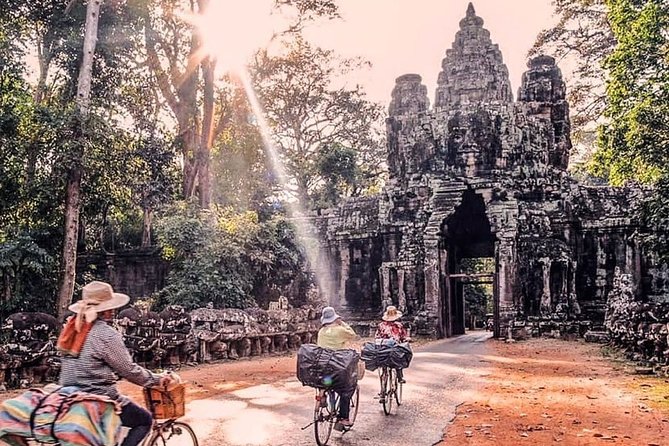
Pre Rup is offered as an optional sunset stop. This temple mountain has strong architectural lines, carved false doors, and a high position overlooking the countryside. The view is the main reason to finish here, but sunset conditions are never guaranteed. Clouds, weather, and the number of people at the site will shape the experience.
Treat this as a bonus rather than the sole reason to book the tour. You may find the warm light rewarding, but the temple is worth seeing even if the sky does not cooperate. Bring sun protection and water, and expect uneven stone surfaces.
Day two begins with Angkor Wat
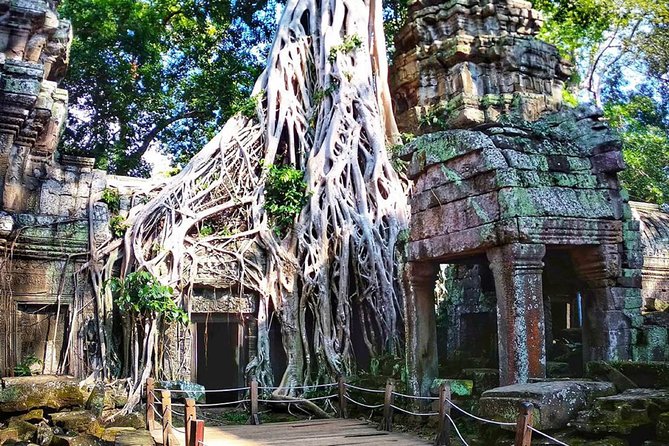
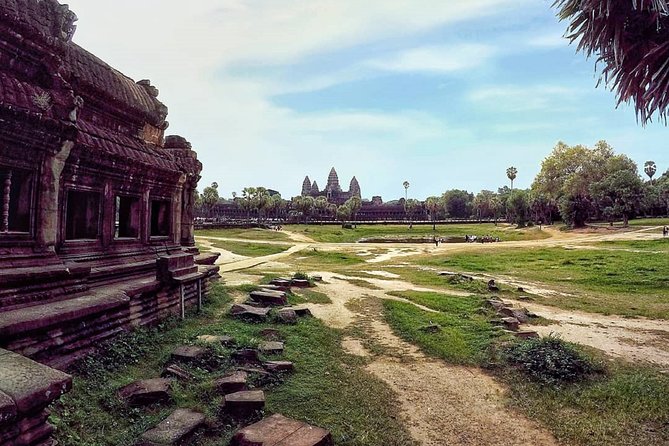
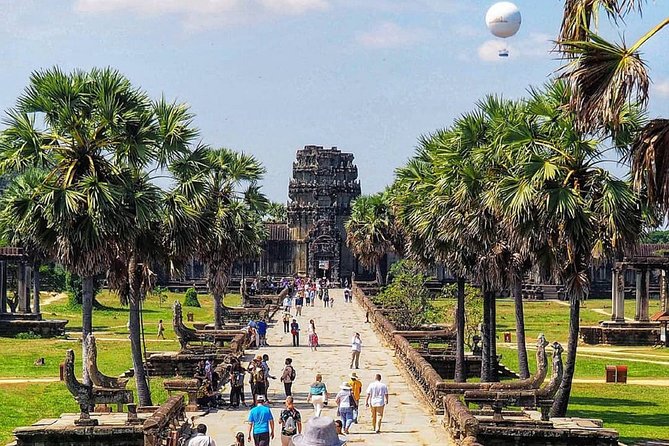
Angkor Wat receives about two hours on the second morning. That is a sensible amount of time for a first visit, though you will still need to make choices. The complex is huge, and its galleries, towers, courtyards, and reliefs can easily fill much longer.
Start with the overall plan of the temple before getting lost in details. Angkor Wat combines a broad approach, multiple enclosures, long galleries, and a central tower group. The decorative work rewards slow looking, while the scale makes it easy to tire before you reach the upper levels.
Your guide can explain the temple’s Hindu origins, architectural layout, and carved scenes. Ask questions early, especially if you want help with photography or a slower look at a particular gallery. The private arrangement makes those requests easier.
Dress carefully. Shoulders must be covered and shorts or skirts should fall below the knees at temples that enforce the rules. Comfortable shoes are essential, since you will walk over stone and uneven ground.
Ta Prohm and the power of the forest
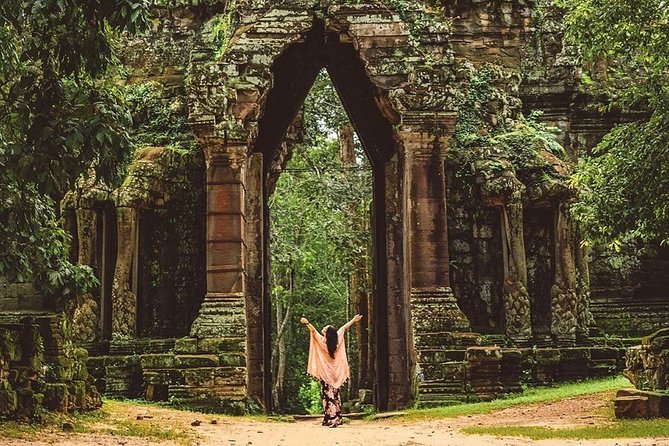
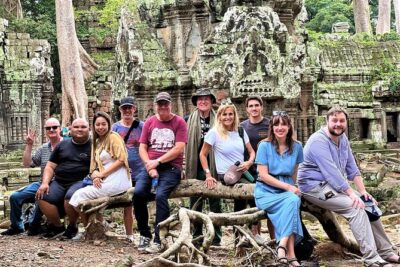
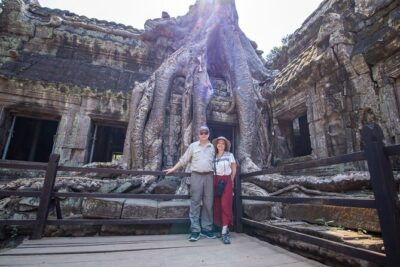
Ta Prohm receives about two hours and is one of the tour’s most atmospheric stops. Parts of the monastic complex remain tangled with jungle growth, creating the familiar tree-and-temple views associated with Angkor.
The appeal is not simply the trees. Ta Prohm shows the tension between conservation and nature. Some areas are cleared for safety and access, while other walls remain framed by roots and vegetation. Your guide can help you separate what is original from what has been stabilized for modern visitors.
Because Ta Prohm is a major sight, two hours gives you a fair chance to move beyond the first photo stop. Still, the site can feel tiring after Angkor Wat. Use the vehicle break afterward to cool down, drink water, and dry off with the supplied towel.
The Roluos Group and the first Angkorian capital
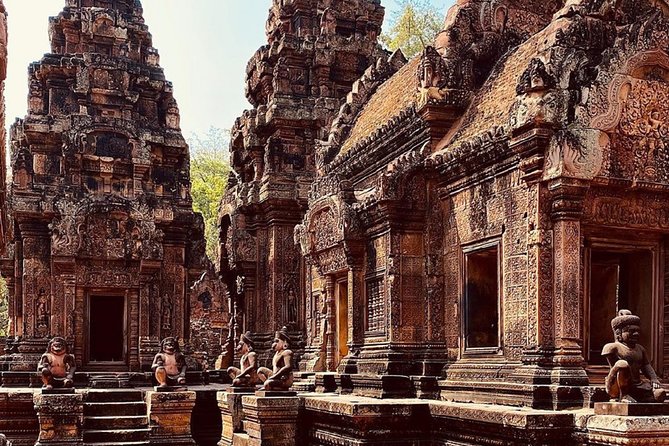
In the afternoon, the tour turns to Bakong, Lolei, and Preah Ko at Roluos. This is one of the most worthwhile features for anyone who wants to understand how Khmer temple architecture developed.
Bakong is described as the strongest member of the group. It is a sandstone temple mountain at the center of the early capital, and its form helps you recognize ideas later used on a much grander scale. You have about an hour here, enough to walk around the main structure and discuss its design.
Lolei is a small Hindu temple built in the 9th century on an island in a now-dry baray, or reservoir. The site connects religion with water management, an important part of early Khmer royal planning. At 20 minutes, the visit is brief, so ask your guide to explain the reservoir and the original setting.
Preah Ko means sacred bull. It is one of the empire’s first major temples and formed part of Hariharalaya, the early Khmer capital. The 15-minute stop is short, but it completes the story that began at Bakong. You see not just famous ruins, but the earlier chapter that led toward Angkor’s later achievements.
The Roluos stops are less famous than Angkor Wat and Ta Prohm. That is precisely why they work well on a private tour. You can give them the attention they deserve instead of treating them as an afterthought.
Old Market and Artisans Angkor
After the temples, you visit Psar Chaa, Siem Reap’s Old Market. This is the practical, commercial part of the experience. You can browse souvenirs and local curios, but shopping is your own expense and the market can feel more sales-focused than cultural.
Set a clear budget before you enter. If you are not shopping, an hour may feel long. If you want gifts, the stop gives you time to compare items without trying to fit shopping into a temple morning.
Artisans Angkor follows, with about an hour devoted to a training center for rural young people learning handicraft skills. This adds a modern social and economic dimension to the trip. You see an organized effort to provide practical work through silk, stone, wood, and other craft production, although the exact demonstration or showroom experience is not specified.
I like this final pairing because it connects ancient craftsmanship with present-day livelihoods. Still, you should view it as a structured craft visit, not a replacement for a museum or archaeological site.
What to budget and how to prepare
The $145 price covers air-conditioned transport, a professional driver, a licensed English-speaking guide, cool water, wet towels, taxes, and service charges. It does not cover the Angkor Archaeological Site pass, meals, drinks, tips, shopping, portage, hotel accommodation, or travel insurance.
The pass is bought separately at the main gate and is charged in US dollars. Options range from one day to seven days, and children under 12 enter free. Since both tour days use Angkor sites, check the current pass choice before you go and keep it visible during your visits.
You should bring:
- Sunglasses, a hat, and high-SPF sunblock
- Clothing covering shoulders and knees
- Comfortable walking shoes
- A protected phone or camera
- Money for lunch, drinks, tips, and purchases
The tour includes pickup and return transfers for people staying in and inside Siem Reap. Give accurate hotel details when booking. Accommodation changes within 24 hours may be difficult to arrange, and a no-show or unapproved last-minute change can lead to cancellation charges.
Most people can participate, but walking is required. The experience is private, and language requests beyond English may be possible with extra charges and availability.
Should you book it?
Book this tour if you want the major Angkor temples, the early Roluos capital, Banteay Srei, and practical city stops in one organized package. It is especially suitable for families, first-time visitors, and anyone who values a guide who can explain carvings and adjust the pace.
I would also choose it if comfort matters. The air-conditioned Lexus SUV mentioned in past bookings, along with cold water and wet towels, can make two hot temple days much easier.
Think twice if you prefer slow, independent exploration or want to control every minute. The schedule is full, lunch is not included, and the entrance pass adds to the final cost.
Free cancellation is available up to 24 hours before the start time. Inside that window, no refund is offered, and poor weather may lead to a different date or a full refund. For most first visits to Siem Reap, the private format and broad temple coverage make the $145 fee reasonable, provided you plan for the extra costs.
FAQ
Is this a private tour?
Yes. Only your own group participates, with a private vehicle, driver, and English-speaking guide.
Does the tour include hotel pickup?
Pickup is offered for people staying in Siem Reap. Return transfers are included for accommodations in and inside Siem Reap.
Is the Angkor entrance pass included?
No. You must buy the Angkor Archaeological Site pass separately at the main gate. Fees are charged in US dollars.
Are meals included?
No. Lunch is excluded on both days, so you arrange and pay for your own meals and drinks.
What type of vehicle is used?
Transportation is provided in an air-conditioned vehicle with a professional driver. Past bookings specifically describe a comfortable Lexus SUV.
What language does the guide speak?
The tour includes a licensed English-speaking guide. Other languages may be available on request, subject to availability and extra charges.
Which temples are visited on the first day?
Day one includes Bayon, Baphuon, the Terrace of the Elephants, the Terrace of the Leper King, Preah Palilay, Phimeanakas, Banteay Srei, Banteay Samre, and optional sunset at Pre Rup.
Which sites are visited on the second day?
Day two includes Angkor Wat, Ta Prohm, Bakong, Lolei, Preah Ko, Psar Chaa Old Market, and Artisans Angkor.
Is sunset at Pre Rup guaranteed?
No. Sunset at Pre Rup is optional and depends on weather and conditions at the site.
Can children join the tour?
Most people can participate, and the private format can suit families. Children under 12 are free of charge for the Angkor entrance pass, though the tour price and other costs should be confirmed when booking.
Just added around Siem Reap
- Ultimate Sunrise to Angkor Wat, Angkor Thom and Bayon Temple★ 5.0 · 3 reviews
- Twilight Tastes of Siem Reap Include Dinner★ 5.0 · 13 reviews
- Trekking Tour at Phnom Kulen National Park from Siem Reap★ 5.0 · 3 reviews
- Full-Day Private Tour of Angkor Wat with Pick Up★ 5.0 · 12 reviews
- Private Day Trip to Angkor Temples with Expert Guide★ 5.0 · 4 reviews
- Waterfall & River of 1000 Siva Linga- Kulen Mountain Private Tour★ 5.0 · 3 reviews
- Professional Photo Shoot in Angkor Archaeological Park, Siem Reap★ 5.0 · 42 reviews
- Ultimate Siem Reap Food Tour by Tuk Tuk – 20 Tastings, 8 Stops★ 5.0 · 13 reviews
Historical Tours, compared.
Banteay Srei and Grand Circuit Heritage Tour from Siem Reap
Read our review →
Bokor Mountain Adventure – History, Sights and Waterfalls
Read our review →
Angkor World Heritage with Sunrise – Small Group
Read our review →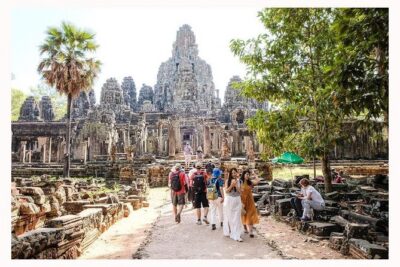
Private Angkor Wat Tour & Angkor Park/Heritage With Local Guide
Read our review →Browse the lists this tour appears in