
Reviewed · KILLING FIELDS TOURS
Morning Tour,Ak Phnom temple,Rice wine,Rice Paper, killing Field
Battambang’s best stories are often found outside town, where rice fields give way to old temples, small food businesses, and quiet villages. This tour takes you to Ek Phnom, an 11th-century temple ruin, then links it with rice wine, rice paper, dried banana, and local market stops. The result is much more than a temple run.
I like two things right away. The tuk-tuk transport keeps the day open to the countryside, and a good English-speaking guide can explain what you are seeing instead of simply pointing at it. I also like the mix of everyday Cambodian life and difficult history, from village workshops to Wat Samrong Khong killing field.
The main caution is that the details need confirming before you book. The experience is described as a half-day morning tour, yet the listing also says two days, with an empty second-day entry. Extra admission and activity fees are not included, so ask for the exact schedule and likely add-ons.
Key points at a glance

- Ek Phnom temple and giant Buddha: See an 11th-century Angkor-style ruin paired with a large modern Buddha statue.
- Hands-on village industries: Learn how bamboo sticky rice, rice paper, rice wine, dried bananas, and banana chips are made.
- A real rural route: Ride through rice fields and villages north and northwest of Battambang rather than staying in the city center.
- A serious historical stop: Wat Samrong Khong killing field adds important, somber context to the day.
- Small-group tuk-tuk travel: The group limit is 10 people, with hotel pickup offered and water included.
- Strong guide feedback: Pao, Mr. Pov, and Yi Yong are praised for clear English, local knowledge, humor, and care.
From Battambang into the rice fields
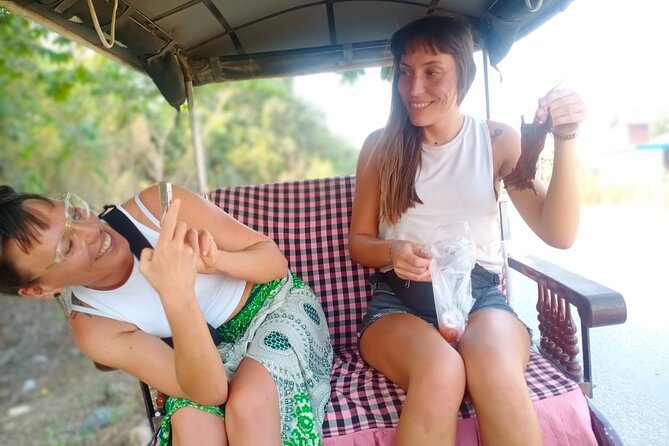
The trip begins with pickup in Battambang by tuk-tuk. That matters here. You are not being sealed inside a bus while the countryside slips past a window. The ride itself is part of the experience, with rice fields and village roads forming the link between the stops.
The route heads north and northwest of town. Ek Phnom is about 15 kilometers from Battambang, so the outing gives you a useful look at the area beyond the urban streets. The tour is capped at 10 people, which should make it easier to hear the guide and ask questions, although the exact vehicle arrangement is not specified.
Water is included, but breakfast is not. For a morning departure, I would eat before pickup. The Cambodian heat can build quickly, and one of the clearest practical tips from the experience is to choose the morning rather than the hottest part of the day.
The provider is Mr. Pov Battambang Amazing Tour. Guides named in the tour information include Mr. Pov, Pao, and Yi Yong, so your exact guide may vary. Pao receives especially strong praise for his English, humor, enthusiasm, and ability to explain local life. Yi Yong is also described as attentive from hotel pickup onward, with useful explanations about Buddhism and Hinduism.
More Killing Fields Tours in Battambang:
- Morning Tuk tuk: City, Handicrafts, Killing field, Temples
★ 4.9 · 13 reviews - The Killing Field and Toul Sleng Genocide Museum (S21) Tour
★ 5.0 · 1,977 reviews - Killing field and Toul Sleng genocide museum Tour
★ 5.0 · 610 reviews
Ek Phnom, an 11th-century temple ruin
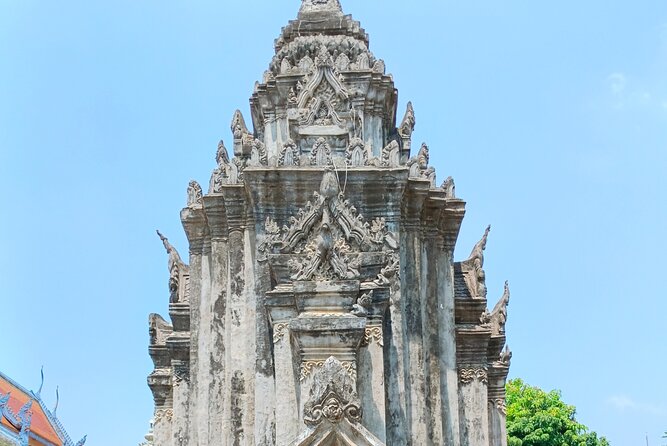
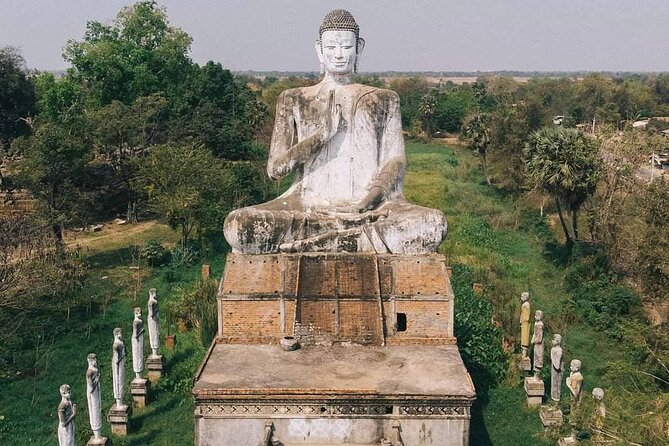
Ek Phnom is the main historical attraction. It is an 11th-century Buddhist temple ruin built in the Angkor style, about 15 kilometers northwest of Battambang. If you have already seen Angkor Wat, do not expect the same scale. The appeal here is the quieter setting and the chance to examine a smaller ruin without the grand crowds associated with Cambodia’s most famous temple complex.
The temple gives the guide plenty to explain. The tour specifically connects Buddhism and Hinduism, two traditions that overlap in the religious art and architecture of Cambodia. A strong guide can help you notice those links instead of reducing the visit to old stones and photographs.
The site is paired with a giant Buddha statue, creating an interesting contrast. You get an older religious monument and a much newer expression of devotion in the same outing. That combination helps make the stop feel connected to present-day Cambodia rather than frozen in the past.
Your time at Ek Phnom is listed as part of a 30-minute stop, although the overall schedule is not fully clear. That is enough for a guided look and photographs, but not a long archaeological visit. If you like to linger over temple details, ask whether the stop can be extended or whether the 30-minute figure refers only to one part of the route.
Bamboo sticky rice and village food production
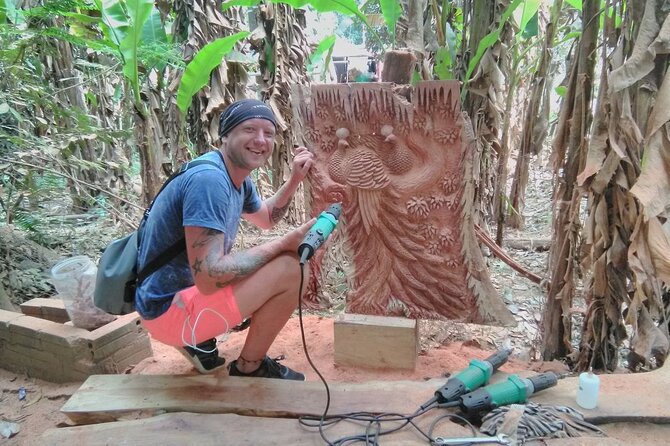
One of the most appealing parts of this tour is its attention to local food production. You may visit a village operation making bamboo sticky rice, a Cambodian snack prepared in bamboo. The value is not simply in tasting something. You get to see how a familiar food is made and how small local businesses turn basic ingredients into products for sale.
The rice paper stop adds another layer. Rice paper is easy to recognize once it reaches a market or restaurant, but seeing its production gives you a better sense of the work behind it. This is the sort of stop I find more useful than a standard souvenir shop because the product is tied to daily life.
The tour also includes dried banana and banana chip production. These visits can be brief, but they show how fruit is preserved and sold. They are also practical pauses in the route, giving you something to taste and the chance to buy local snacks if purchases are available.
The descriptions do not promise a formal cooking class, so set your expectations accordingly. You are going to learn about local production, not necessarily prepare a full meal. The exact length of each stop and the cost of tastings or purchases should be confirmed before departure.
A shot of rice wine, with a practical warning

Rice wine is another memorable part of the route. You are offered the chance to try a shot and visit a local rice-wine operation. This is a small but revealing part of the day, since rice is not only a staple food in Cambodia. It also becomes a drink with a place in village commerce and hospitality.
I like the stop because it connects the countryside to something you can taste. It also gives you a direct view of a local product rather than a polished presentation made only for sightseeing.
The catch is that ticket and activity fees are not included in the $20 price. The tour information does not spell out which stops charge an admission fee or how much tastings cost. Ask specifically about the rice wine, food workshops, temple access, and any purchases so the low headline price does not surprise you later.
If you do not drink alcohol, you can still visit the production stop, but the supplied details do not explain the alternatives. Make your preference clear when booking. The same advice applies if you have dietary or medical reasons to avoid tasting unfamiliar products.
A few more Battambang trips to weigh up
- Handicraft tour/rice paper,/rice wine/bat cave Sun Set
★ 4.6 · 10 reviews - Rooftop Romantic Dinner – 4 Courses Set Meal & Wine
★ 3.5 · 5 reviews
Fish market and the texture of ordinary life
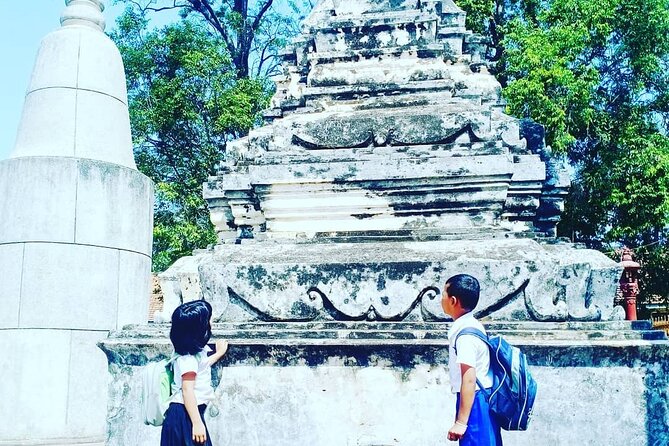
A fish market is included in the route. It may not sound as photogenic as a temple, but it helps balance the historical stops with the working life of Battambang’s surrounding communities.
A market visit also requires a bit more awareness from you. This is a place connected to local trade and food, not a staged cultural display. Follow the guide’s lead, ask before taking close photographs, and expect a more direct look at everyday commerce.
The itinerary lists the fish market alongside the village food stops, dried banana, rice paper, and rice wine. That sequence makes sense: you move from agricultural production to processing and selling food. It gives the tour a clearer purpose than a random collection of roadside stops.
The available schedule lists 30 minutes for the first group of attractions, but it does not break down the time at the market or each workshop. If markets are a priority for you, ask how long the group will stay and whether the stop is a working market visit or a short viewing point.
Wat Samrong Khong killing field
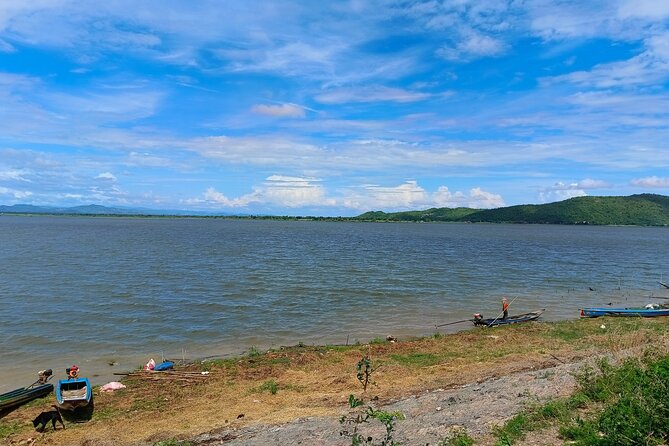
Wat Samrong Khong killing field is the most serious stop. Cambodia’s recent past cannot be treated as a footnote, and this site brings the country’s history into the day in a direct way.
The mood changes here. After food production, temple architecture, and countryside rides, you are asked to pay attention to loss and remembrance. The value of the visit depends heavily on the guide’s tone and explanation. Pao and the other guides are praised for making difficult subjects understandable, but you should still expect a quiet and sobering experience.
I consider this an important part of the route, yet it will not suit everyone. If you want a light morning focused only on food and temples, the killing field may feel heavy. If you want a more honest picture of Cambodia, leaving this history out would make the day less complete.
Give yourself time to process the stop. Do not rush straight from a serious historical site into jokes, tasting, or shopping. A thoughtful guide should make the transition carefully, and you can ask for a short pause if needed.
Why the guide matters more than the route
The stops are worthwhile, but the guide is what can turn this from a simple tuk-tuk ride into a useful day out. The strongest descriptions of the experience focus on clear English, humor, enthusiasm, and a willingness to explain Cambodia rather than just drive between attractions.
Pao is praised for being funny, engaging, and well informed about the local area. Yi Yong is described as taking good care of the group from hotel pickup and explaining the relationship between Buddhism and Hinduism. Mr. Pov is praised for enthusiasm, strong English, and taking time to explain each stop.
That makes it sensible to request a guide by name if one is available, though the information does not guarantee a particular guide. Ask for Pao, Yi Yong, or Mr. Pov when booking, then confirm who will actually lead your tour.
You should also ask how long the experience will last. Some descriptions call it a half-day morning tour. Other comments describe a full-day outing lasting around 10 hours. The published itinerary shows Day 1 and an empty Day 2, while the tour summary says two days. This is the largest practical uncertainty in the booking details.
Is $20 good value?
At $20, the tour offers strong value if the listed inclusions match your booking. You receive tuk-tuk transport, a guide, water, hotel pickup, and a route that combines a temple, food production, market life, and recent history.
The price is especially fair for solo visitors or couples who want a guide without arranging several separate rides. It also saves you the trouble of negotiating transport to multiple rural stops. A local guide can provide context that you would likely miss on a self-guided ride.
The price does not cover tickets and fees. Breakfast is also excluded. Since the exact extra charges are not listed, budget a little beyond the advertised amount and ask for a cost breakdown before you go.
The value changes depending on the length. If this is truly a half-day outing, $20 is attractive. If the operator intends a much longer full-day route, confirm what additional stops, meals, or fees apply. Do not assume that the full-day experiences described by guests are identical to the morning package.
Who should book this Battambang tour?
I would recommend this experience to you if you want to see Battambang beyond its central streets. It suits people who enjoy combining architecture, food, village industries, and history in one outing.
It is a good match for first-time visitors who want an introduction to the area without arranging each stop alone. The small maximum group size should help, and the tuk-tuk makes the rural route more personal than a larger vehicle.
You should also consider it if you care about explanation. The route is not only about taking pictures at Ek Phnom. The best version includes discussion of religion, local products, Cambodian history, and the meaning of the sites you visit.
I would be more cautious if you want a tightly timed, museum-style tour with fixed admission costs. The schedule and fee information are not precise enough for that. You also may not enjoy it if you dislike heat, tuk-tuk travel, food-production stops, or serious historical sites.
Booking details worth checking first
Confirmation is provided at booking, pickup is offered, and mobile tickets are available. Most people can participate, and service animals are allowed according to the supplied information.
The experience requires good weather. You can cancel for a full refund up to 24 hours before the start time, while cancellations or changes made inside that window are not refunded or accepted. If poor weather cancels the outing, you are offered another date or a full refund.
Before paying, ask four direct questions:
- Is this booking half-day or full-day?
- Which guide will lead it?
- Which admission and tasting fees should you expect?
- What time will pickup and return take place?
Those questions matter more here than they would on a standard city walking tour because the published duration and extra costs are unclear.
Final verdict: book it for the countryside and the guide
I would book this tour if I had one morning in Battambang and wanted a practical introduction to the area. Ek Phnom gives you an old temple, the rice wine and food stops show how local products are made, and Wat Samrong Khong adds a necessary historical weight.
The strongest reason to book is the chance to travel with a guide such as Pao, Yi Yong, or Mr. Pov, provided you confirm availability. Their role is important on a route that moves between religion, village commerce, and painful history.
Just clarify the timing and extra fees first. At $20, the package looks like a good buy, but the two-day wording, half-day description, and full-day accounts do not line up. Book it for an authentic rural outing, not for a perfectly fixed schedule.
FAQ
How much does the Battambang tour cost?
The listed price is $20. Admission and other activity fees are not included, and breakfast is also excluded.
How long does the tour last?
It is described as a morning half-day tour, but the summary also says approximately two days, and some tour descriptions refer to full-day outings. Confirm the exact duration before booking.
What is included in the price?
The price includes water, a shared tour, a guide, and tuk-tuk transport. Pickup is offered.
Which places are visited?
The route includes Ek Phnom temple, a giant Buddha statue, rice wine production, rice paper production, dried banana and banana chips, a fish market, rice fields and villages, and Wat Samrong Khong killing field.
Can I request a specific guide?
Guides named in the information include Mr. Pov, Pao, and Yi Yong. You can ask whether one of them is available, but a particular guide is not guaranteed in the supplied details.
What is the cancellation policy?
You can cancel at least 24 hours before the local start time for a full refund. Cancellations and changes made less than 24 hours before the start are not refunded or accepted. Poor-weather cancellations offer another date or a full refund.
More Morning in Battambang
- Morning village tour Livelihood tour with Local Product discover
★ 5.0 · 36 reviews - half day morning tour by Tuk-Tuk
★ 5.0 · 20 reviews - Explore the Village &Countryside By Bicycle-Half Day Morning
★ 4.8 · 13 reviews - Half day morning bicycle tour to Explore local livelihood and test local snacks
★ 5.0 · 9 reviews
Just added around Battambang
- Bamboo Train, Banann Temple, Fruit Bat, Bat Cave, Sunset★ 4.2 · 3 reviews
- Afternoon tour to Original Bamboo train. Bat cave. Killing cave★ 5.0 · 25 reviews
- Private Taxi Transfer Battambang from/to Phnom Penh★ 5.0 · 7 reviews
- Private Taxi Transfer From Battambang – Siem Reap City★ 5.0 · 4 reviews
- Afternoon Tour BambooTrain & Bat Cave★ 5.0 · 57 reviews
- Explore local livelihood & countryside (Half-Day Cycling Tour)★ 5.0 · 19 reviews
- Private Boat from Battambang to Siem Reap via Tonle Sap Lake★ 4.5 · 3 reviews
- Full/Half Day Tuk TuK: Handicrafts Bambootrain Killing&Bat Caves★ 5.0 · 14 reviews
Killing Fields Tours, compared.
The Killing Field and Toul Sleng Genocide Museum (S21) Tour
Read our review →
Killing field and Toul Sleng genocide museum Tour
Read our review →
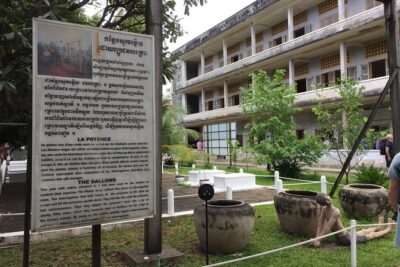
Private Half Day To Killing Field & S21 Genocidal Museum in Phnom Penh
Read our review →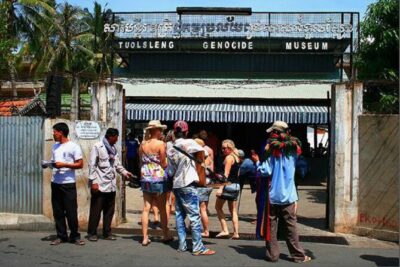
Tuol Sleng Genocide Museum (S-21) and Choeung Ek Killing Fields Tour
Read our review →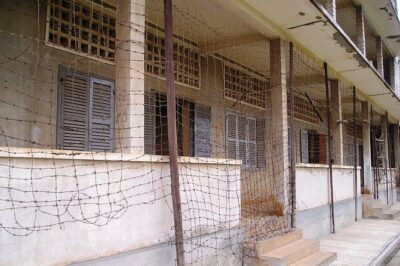
Phnom Penh City Tour, Silver Pagoda, Genocide Museum, Killing Fields
Read our review →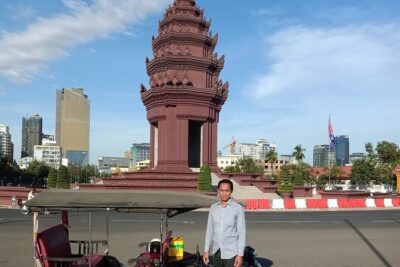
A Full Day Tour for Royal Palace, S21, Killing Fields & More
Read our review →
Full-Day Phnom Penh Sightseeing Tour & Killing Field
Read our review →Browse the lists this tour appears in