
Reviewed · BATTAMBANG TOURS
Morning village tour Livelihood tour with Local Product discover
The best part of this half-day outing is its close look at everyday rural work. Instead of moving from one grand monument to another, you visit homes, workshops, and small food producers where rice paper, sticky rice, fermented fish paste, dried bananas, banana chips, and rice wine are made.
I like the small maximum group of 10, which should make it easier to hear the guide and ask questions. I also like the practical help from the driver-guide, including hotel pickup, bottled water, and safe driving. The main drawback is that the tour covers several working sites in four to five hours, so each stop may be fairly brief rather than a long hands-on workshop.
Key points at a glance
- Traditional food production: See rice paper, bamboo-cooked sticky rice, dried bananas, banana chips, and rice wine made in local settings.
- A working countryside experience: Visit Khmer homes and workplaces instead of seeing only formal sights.
- Optional historical stop: Add Wat Samrong Knong temple complex and its killing fields if you want a more serious cultural visit.
- Small group format: The tour accepts no more than 10 people, keeping the outing more personal.
- Good value at $15: Pickup, a guide, tastings, and several countryside stops make this an inexpensive way to spend a morning.
- Simple scheduling: Pickup or meeting takes place between 8:00 and 8:30 a.m., with free cancellation up to 24 hours before departure.
Leaving Battambang for the countryside
The morning begins with pickup or a meeting between 8:00 and 8:30 a.m. The outing then moves beyond Battambang into the surrounding countryside, where the focus is on local livelihoods and food production.
A short introduction to Battambang and its past helps give the morning some context. After that, the tour becomes much more visual and practical. You are not simply told how a product is made. You watch people carry out familiar work in the places where they normally do it.
That difference matters. A museum display can explain Cambodian food traditions, but a working home or small producer shows the tools, heat, smells, and routine behind them. I find this sort of visit useful because it connects the food on a market stall with the people and effort needed to produce it.
The group limit of 10 is another plus. A very large group would make small workspaces awkward, while a smaller group should allow the guide to explain what you are seeing without shouting over a crowd.
A few more Battambang trips to weigh up
- Morning Tour,Ak Phnom temple,Rice wine,Rice Paper, killing Field
★ 5.0 · 22 reviews - half day morning tour by Tuk-Tuk
★ 5.0 · 20 reviews - Morning Tuk tuk: City, Handicrafts, Killing field, Temples
★ 4.9 · 13 reviews
Rice paper and the quiet skill behind it
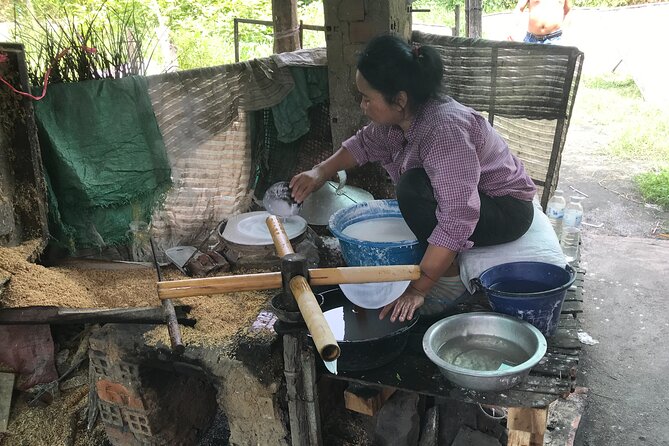
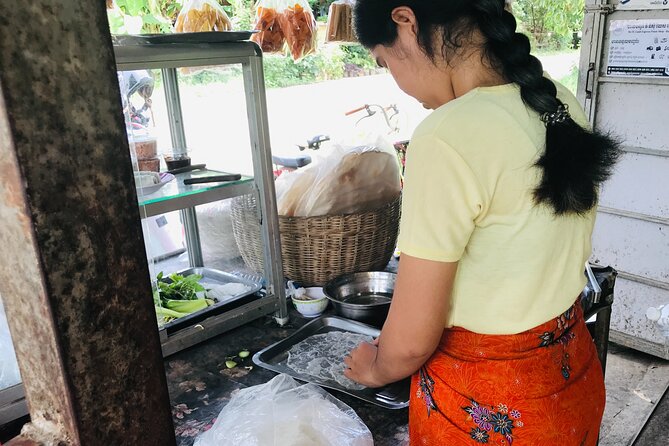
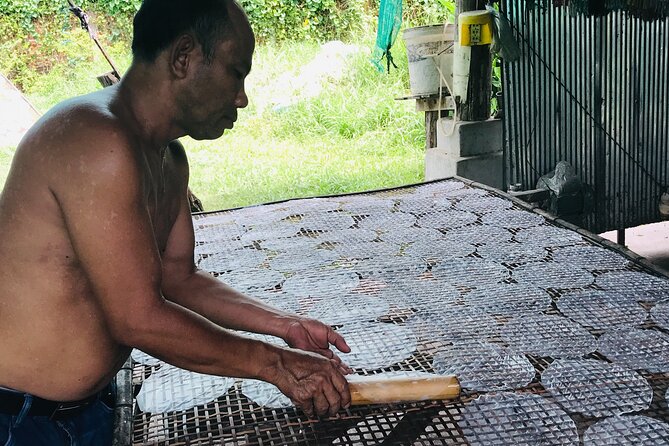
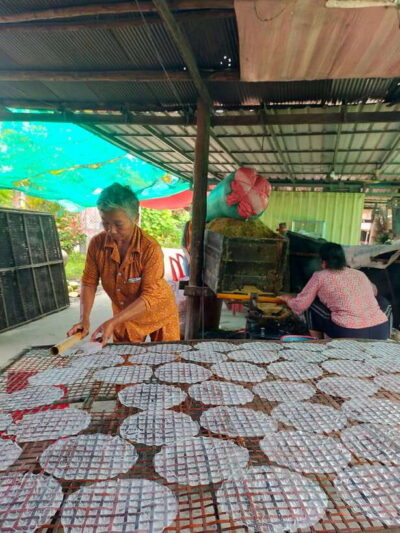
One of the morning’s first memorable stops is a look at rice paper production. Rice paper is familiar in Cambodian and Southeast Asian cooking, but seeing it made by hand changes how you think about this everyday food.
You can expect to watch the local process rather than receive a polished cooking demonstration designed only for tourists. The appeal is in the repeated, careful work and the simple equipment used to turn rice into thin sheets.
I would pay close attention here, since this is the kind of stop that can pass quickly if you focus only on taking photographs. Ask the guide how the paper is used and how the different products fit into local cooking. The supplied information does not promise a full lesson or a chance to make rice paper yourself, so I would treat this as a viewing and tasting stop, not a formal class.
Sticky rice cooked inside bamboo
The tour also shows sticky rice being cooked in bamboo tubes over an open fire. This is one of the more distinctive food stops because the cooking method is easy to understand at a glance, yet very different from preparing rice in a modern kitchen.
The bamboo tube and open fire give you a direct sense of how local food is made with basic materials. You will also have the chance to taste traditional products during the morning, though the exact number of tastings can vary.
This stop should appeal to anyone who likes food with a clear connection to place. It is less useful for someone looking only for major historical sights. The fire and food preparation also mean that you should expect a working environment, not a spotless restaurant or air-conditioned kitchen.
Fermented fish paste and a strong local flavor
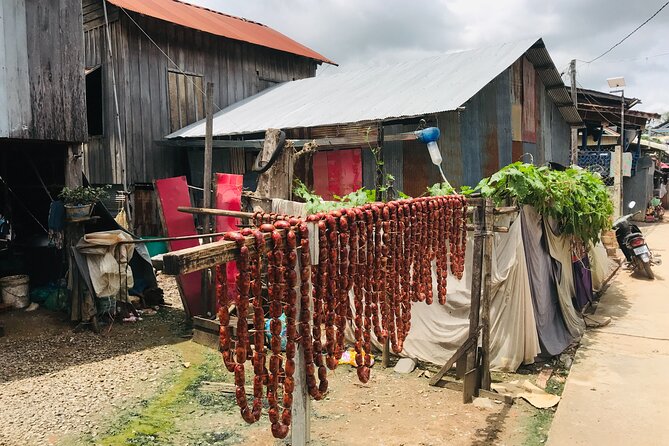
A visit to an old factory making fermented fish paste offers a look at one of Cambodia’s strongest and most important food traditions. Fermented fish paste is not a mild flavor, and the smell may be intense for some people.
That is part of the point. The stop shows how local food traditions can involve preservation, time, and flavors that may be unfamiliar to you. I appreciate that the tour includes this kind of place rather than limiting the morning to products that are easy for every visitor to like.
If you are sensitive to strong smells, prepare yourself for a more powerful stop. You are there to see how the paste is made, not necessarily to buy or eat a large amount of it. The experience gives useful context to Cambodian meals and markets, even if it is not the most comfortable part of the tour.
Same country, a completely different kind of day:
- Battambang: Tuk-Tuk, Bamboo Train, Killing/Bat Caves, Sunset
★ 4.9 · 1,436 reviews - Battambang Tuk Tuk tour: Bambootrain, Killing & Bat Caves,Sunset
★ 5.0 · 799 reviews - Afternoon tour by tuk tuk to bamboo train,bat cave,killing cave,countryside.
★ 5.0 · 344 reviews - Local Livelihood Half Day Bike Tour in Battambang
★ 5.0 · 287 reviews
Bananas in several forms
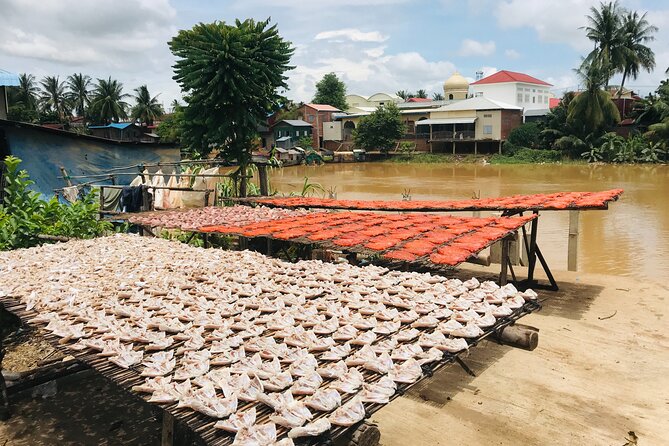
The countryside visits continue with producers making dried bananas and banana chips. This is a lighter and more approachable stop after the fermented fish paste factory, and it gives you another example of how local crops become foods that can be stored or sold.
You can compare the two methods. Dried bananas have a softer texture and a more concentrated sweetness, while banana chips offer a crispier snack. The tour lets you see production before tasting the finished food, which makes the sampling more meaningful.
This is also a good place to think about scale. The experience is built around local homes and workplaces, not a large industrial plant. That makes the process easier to understand, but it also means conditions may be basic and the visit may depend on what is being produced that morning.
An old rice wine distillery
The traditional rice wine distillery adds a drink-making stop to the food visits. You will see how rice is used in a local beverage tradition and may have the chance to taste products along the way.
Rice wine can be a useful window into rural life because it connects agriculture, cooking, and social customs. The distillery also breaks up the food stops, giving the morning a wider look at village production.
I would keep your expectations measured. The information promises a visit to a traditional old distillery, but it does not state that you will receive a full brewing lesson or a large tasting session. If you do not drink alcohol, ask the guide what non-alcoholic tasting options are available. The tour description does not specify them, so do not assume they will be provided.
Wat Samrong Knong and the killing fields option
You can also choose to visit the Wat Samrong Knong temple complex and its killing fields. This adds a more serious historical layer to a morning that otherwise focuses on food and rural work.
The temple complex offers a change of pace after the production visits. The killing fields, by contrast, require a respectful attitude and may be emotionally difficult. I would choose this addition if you want to connect local life with Cambodia’s difficult modern history.
The optional wording matters. This stop may not be part of the main route for every booking, so confirm with the provider if it is important to you. The tour’s stated duration is about four to five hours, and adding the site may affect how long you spend at the food and craft stops.
What the $15 price really gives you
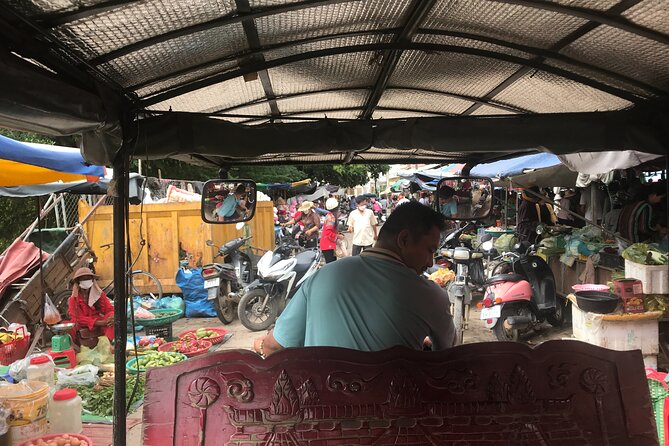
At $15 per person, this is an inexpensive way to see several parts of the Battambang countryside in one morning. The value comes from the combination of transport, a local guide, multiple production visits, and tastings rather than from one major admission ticket.
You are also paying for access to places that would be difficult to connect on your own. A visitor could perhaps find individual food producers, but arranging a sensible route through rice paper, bamboo sticky rice, fermented fish paste, bananas, and rice wine would take time and local contacts.
The price is especially fair if you are staying outside central Battambang and need transport. One customer specifically used the same driver for trips to and from town because the accommodation was farther out. Pickup is offered, although the exact pickup area should be confirmed when booking.
The tour also offers group discounts, but the supplied details do not give the discount amount. If you are booking with friends or family, ask for the current group rate before paying.
The guide and transport make a difference
The driver-guide is a key part of this experience. The guide is expected to introduce Battambang, explain local activities, show you around the production sites, and respond to requests during the outing.
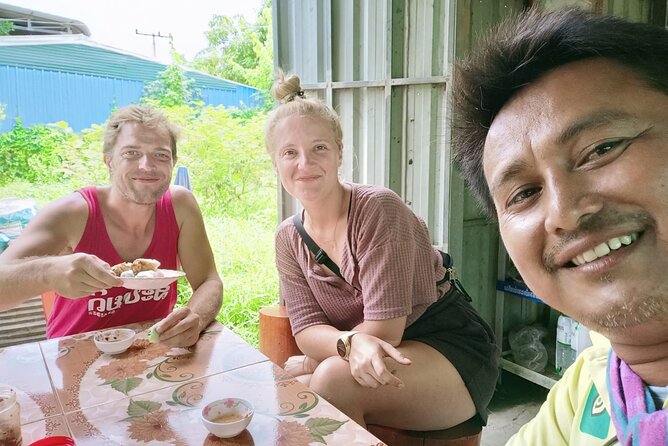
The available feedback gives particular praise to the guide’s kindness and flexibility. One account describes a driver who tried to accommodate a special request, supplied water, and drove safely. Those small details matter on a rural morning, where the quality of the transport can shape the whole experience.
The guide’s name is not provided in the tour information, so I would not expect to book a specific named guide. The operator is Kim Tours Battambang. The service has a 5 out of 5 rating from 36 reviews, with 100 percent recommending it, which is a strong record, though still a modest number of ratings.
The tour is offered with a mobile ticket and confirmation at booking. Service animals are allowed, and the experience is near public transportation. Most people can participate, but the information does not give detailed notes about walking distance, road surfaces, seating, or restroom access. If you have mobility concerns, ask before booking.
Who will enjoy this morning most
I would recommend this tour to you if you want local food and daily work, not just temples and city streets. It suits curious eaters, photographers, families, and anyone who enjoys seeing how ordinary products are made.
It is also a good choice if you have only one morning in Battambang. The route brings several countryside experiences together without requiring you to arrange separate transport.
The tour may be less suitable if you want a slow, private visit at each stop. With several locations packed into four to five hours, the pace is likely to be active. A group of up to 10 is small, but it is not the same as a private tour.
You should also think about your comfort with strong food smells, open-fire cooking, and basic working sites. This is a real-world rural outing, so it may feel less polished than a standard sightseeing tour. That is part of its appeal, but it is worth knowing before you go.
Timing, weather, and cancellation advice
The tour runs in the morning, with the meeting window set from 8:00 to 8:30 a.m. Starting early is useful in the Cambodian countryside, especially if you prefer to finish before the warmer part of the day.
The experience depends on good weather. If poor weather forces a cancellation, you will be offered another date or a full refund. You can cancel for a full refund if you do so at least 24 hours before the start time.
Cancellations or changes made less than 24 hours before departure are not refunded or accepted. The cutoff uses local time, so check the clock carefully if you are arranging plans from another time zone.
My advice before you book
Bring water and comfortable clothing suitable for a morning around homes, workshops, and open fires. Bottled water has been provided by the driver on at least one outing, but I would not rely on that alone.
Keep some flexibility in your schedule. Rural production depends on what people are doing that day, and the exact rhythm of the visits may not feel as fixed as a museum timetable. Ask the guide questions, especially about ingredients, cooking methods, and how the products are used.
If Wat Samrong Knong and the killing fields are important to you, confirm that option before departure. It may change the balance between historical sightseeing and food production.
Should you book the Battambang village tour?
I would book this tour if you want an affordable, well-organized way to see rural Battambang through food and work. The strongest reasons are the variety of local products, the small group limit, and the helpful driver-guide service, including pickup and water.
I would skip it only if you want a relaxed private tour, dislike strong smells, or prefer major monuments over working village sites. For most people with a half-day available, $15 is a sensible price for a practical look at how Cambodian food and drink are made.
FAQ
How long does the Battambang village tour last?
The tour lasts approximately four to five hours.
What time does the tour begin?
The meeting and pickup window is from 8:00 to 8:30 a.m., Monday through Sunday.
How many people can join the tour?
The tour has a maximum group size of 10 people.
What products can I see being made?
You can see rice paper, sticky rice cooked in bamboo tubes, fermented fish paste, dried bananas, banana chips, and traditional rice wine being produced.
Is pickup available?
Yes. Pickup is offered, and the experience is also near public transportation.
Can I cancel for a refund?
Yes. You can receive a full refund if you cancel at least 24 hours before the experience starts. Cancellations within 24 hours are not refunded. If bad weather causes the tour to be canceled, you will be offered another date or a full refund.
Just added around Battambang
- Bamboo Train, Banann Temple, Fruit Bat, Bat Cave, Sunset★ 4.2 · 3 reviews
- Afternoon tour to Original Bamboo train. Bat cave. Killing cave★ 5.0 · 25 reviews
- Private Taxi Transfer Battambang from/to Phnom Penh★ 5.0 · 7 reviews
- Private Taxi Transfer From Battambang – Siem Reap City★ 5.0 · 4 reviews
- Afternoon Tour BambooTrain & Bat Cave★ 5.0 · 57 reviews
- Explore local livelihood & countryside (Half-Day Cycling Tour)★ 5.0 · 19 reviews
- Private Boat from Battambang to Siem Reap via Tonle Sap Lake★ 4.5 · 3 reviews
- Full/Half Day Tuk TuK: Handicrafts Bambootrain Killing&Bat Caves★ 5.0 · 14 reviews
Battambang Tours, compared.
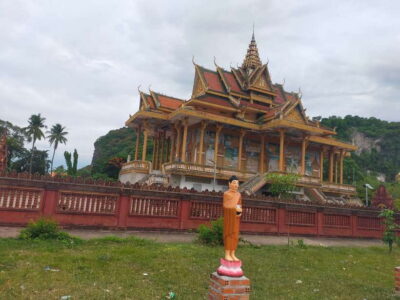
Tuk-Tuk, Bamboo Train, Killing/Bat Caves, Sunset
Read our review →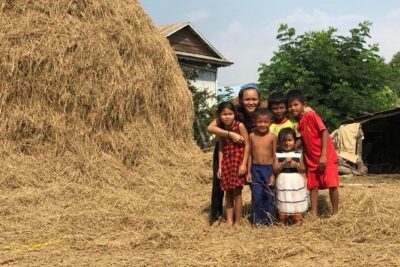
Afternoon tour by tuk tuk to bamboo train,bat cave,killing cave,countryside.
Read our review →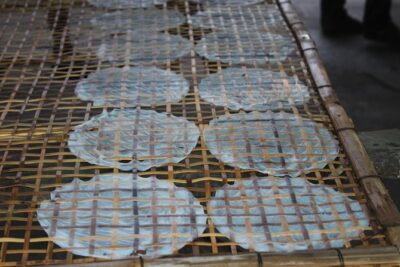
Local Livelihood Half Day Bike Tour in Battambang
Read our review →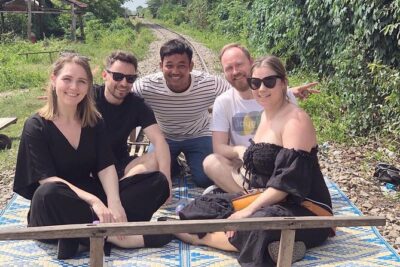
Explore Battambang full day tour by Tuk Tuk (start from 9am-6:30pm)
Read our review →
A Day TukTuk Handicrafts Bambootrain Killing&BatCaves,Sunset
Read our review →
Afternoon Tour: Bamboo Train, Killing Cave &Bat Cave
Read our review →Browse the lists this tour appears in