
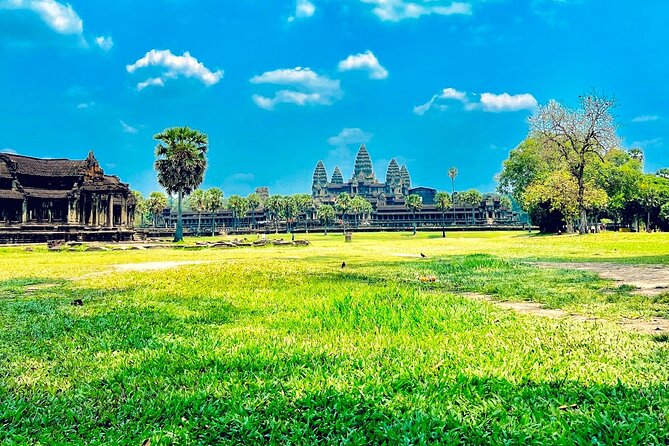
Reviewed · 2-DAY EXPERIENCES
Highlight of Angkor Complex 2 Days Private Tour
Angkor is not one temple. It is a huge former capital scattered across forest, reservoirs, terraces, and stone roads. This two-day private tour gives you the major monuments, including Angkor Wat, Bayon, and Ta Prohm, while also reaching quieter places such as Ta Nei and Banteay Prei.
I like the broad range of sites and the privacy of traveling only with your own group. I also like the practical touches: hotel pickup, a private vehicle, drinking water, cool tissues, and room to request a change such as a stop at the land mine museum. The main drawback is the pace. Day one lists about eight hours and 20 minutes of temple visits before driving time, so you should expect a full, tiring day.
Key points to know before booking
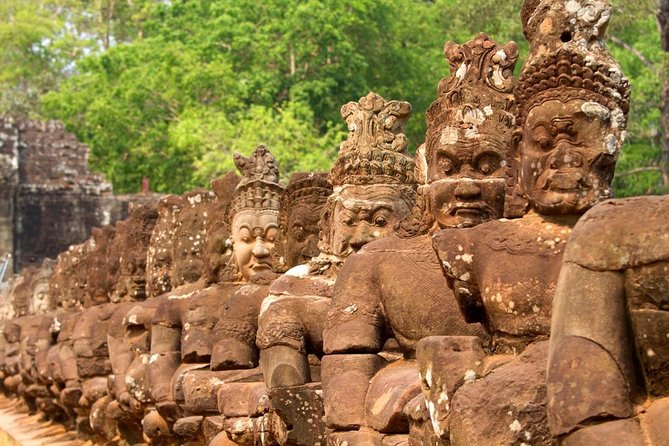
- Major temples and remote ruins: You see Angkor Wat, Bayon, Ta Prohm, Banteay Srei, and Preah Khan, plus less-visited sites such as Ta Nei and Banteay Prei.
- Private touring: Only your own group takes part, which makes it easier to ask questions, adjust the pace, or request a practical stop.
- A named guide option: Mr. Sara is associated with the tour, and professional English-speaking guiding is included. Other languages are offered as well.
- The Angkor Pass costs extra: Your guide assists with buying the pass before entering the park, but it is not included in the $149.46 tour price.
- Meals are separate: Lunch is available at local restaurants, with dishes listed at about $3 to $10 each.
- Dress matters: Cover your shoulders and wear trousers, knee-length pants, or a knee-length skirt for visits to the religious sites.
Why two private days work well at Angkor
The Angkor complex is too large for a quick temple stop between other Siem Reap activities. You need time to move between sites, listen to explanations, climb uneven steps, and simply look carefully at the carvings.
This itinerary covers both the central Angkor area and the outer temples. Day one focuses on Angkor Thom, Ta Prohm, Angkor Wat, and Ta Nei. Day two reaches Banteay Srei and several temples on the Grand Circuit, along with a local food stop.
A private format is especially useful here. The temples do not all reward the same pace. At Bayon, I would want time to study the faces and bas-reliefs. At Angkor Wat, you may want a longer look at the galleries. At a smaller site such as Banteay Prei, you may decide that a shorter visit is enough.
The tour includes a professional English-speaking licensed guide, and it is offered in several languages. Mr. Sara is one guide named in connection with the experience. The driver and guide are expected to keep you comfortable and on schedule, though the number of stops means you should still speak up if you need a short pause.
A few more Siem Reap trips to weigh up
- Siem Reap: Angkor Wat 2-Day Tour with Sunrise and Sunset
★ 4.9 · 4,429 reviews - Angkor 2-Day Sunset & Sunrise Small-Group Tour
★ 5.0 · 2,567 reviews - 2 Days Exclusive Temple Highlights with Sunset and Sunrise Tour
★ 5.0 · 1,157 reviews
Day one begins at Angkor Thom’s South Gate
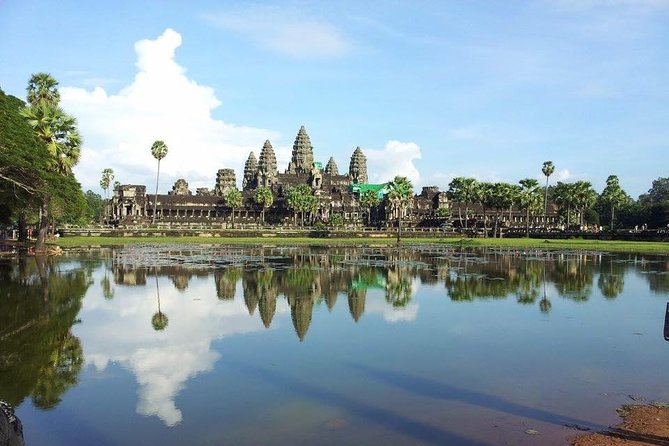
The South Gate is a fitting entrance to Angkor Thom. It is one of the most photographed gateways because many of its sculpted heads remain in place and the structure has been restored.
You have about 25 minutes here. That is enough to see the approach, examine the figures lining the causeway, and hear how the gate fits into the larger city. It is also a useful first stop because it gives you a sense of scale before you reach the temples inside.
The admission fee is not included at this or any other stop. You need an Angkor Pass, and the guide helps you purchase it at the entrance to Angkor Park before the tour begins.
Bayon and the great city of Angkor Thom
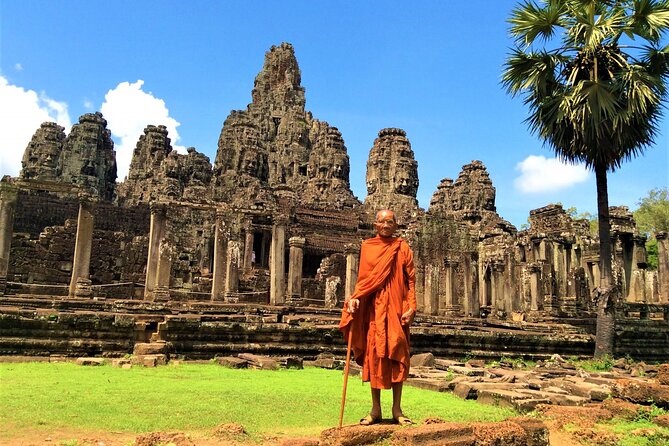
Bayon is one of the tour’s essential stops. Built nearly a century after Angkor Wat, it occupies the center of Angkor Thom and is known for its huge carved faces, narrow passages, towers, and detailed scenes.
The scheduled visit is one hour. I consider that a sensible minimum. Bayon can feel confusing at first, with galleries and towers arranged in a dense pattern, so a guide adds real value by pointing out what you are seeing and explaining how the temple relates to the royal city around it.
After Bayon, the tour spends about 30 minutes taking in Angkor Thom itself. The city was planned on a grand scale, and the walls, gates, terraces, and central temple make more sense when considered as one royal and religious center rather than as separate ruins.
Baphuon, Phimeanakas, and the royal center
Baphuon is a tall temple built on a long sandstone base. Its five levels are unusual because they are close to the same size rather than narrowing sharply as they rise.
Allow 45 minutes here. The design is bold, but the stairs and elevated sections can be demanding. Take your time and pay attention to the footing, especially after several earlier stops.
Phimeanakas sits near the center of the area once enclosed by the Royal Palace. Its original golden pinnacle is described in an old account, but the structure you see today is a weathered stone temple. The scheduled 30 minutes lets you place it within the royal compound and compare its scale with Baphuon.
The Terrace of the Elephants follows, with about 45 minutes planned. Its carved panels show elephants, processions, and royal imagery. This is less about entering a complete temple and more about reading a ceremonial platform that once faced a major public area.
The Terrace of the Leper King receives another 30 minutes. Look closely at the bas-reliefs on both the inner and outer faces. The carvings become more interesting when your guide explains how the terrace fits into the building program of King Jayavarman VII.
Same country, a completely different kind of day:
- Angkor Wat Sunrise or Sunset Tour with Guide from Siem Reap
★ 5.0 · 12,109 reviews - Siem Reap: Angkor Wat: Small-Group Sunrise or Sunset Tour
★ 5.0 · 9,444 reviews - From Siem Reap: Kampong Phluk Floating Village Tour by Boat
★ 4.9 · 6,979 reviews - Sunset tour of Kampong Phluk stilts home village on the Tonle Sap
★ 5.0 · 4,865 reviews
Ta Prohm, the tree-covered favorite
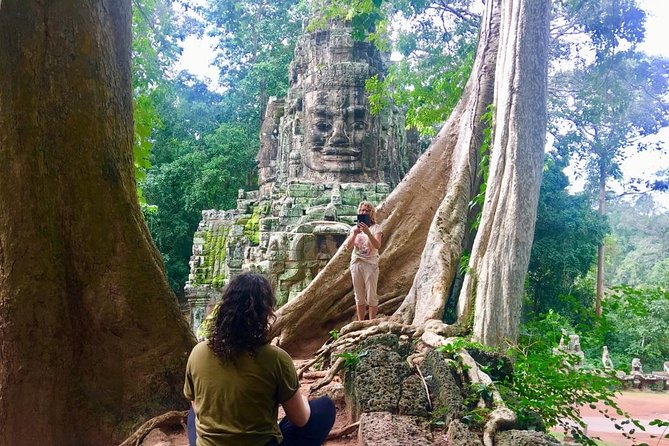
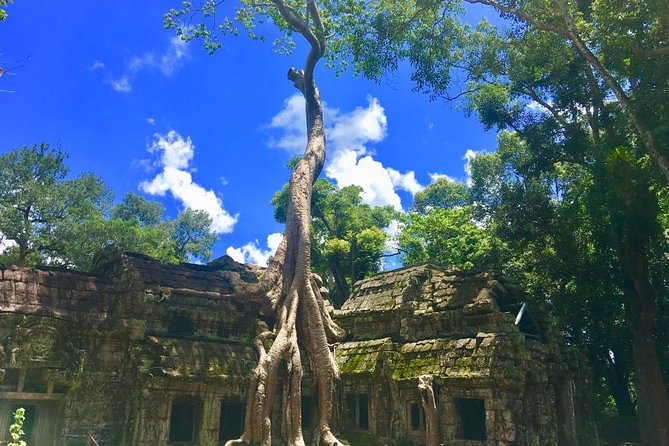
Ta Prohm is the most atmospheric stop on day one. Trees grow over and around the stonework, and the temple has been kept in a partly ruined state rather than being cleared into a neat reconstruction.
The tour allows 90 minutes, which is welcome. Ta Prohm has narrow corridors, fallen blocks, galleries, and shaded corners, so you need more than a quick photo stop to appreciate it. The famous tree roots are only part of the appeal. The larger point is the uneasy balance between forest growth, ancient construction, and modern efforts to keep the site safe.
The temple can also be crowded, and uneven ground is part of the visit. Comfortable shoes matter more here than polished sightseeing footwear. Respect the site by keeping your shoulders and knees covered.
Angkor Wat deserves the longest visit
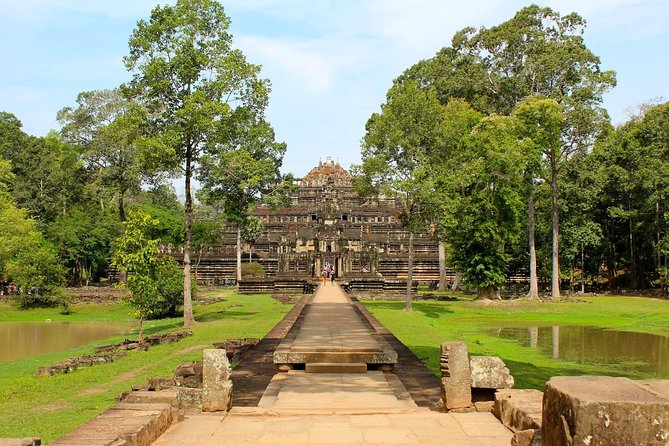
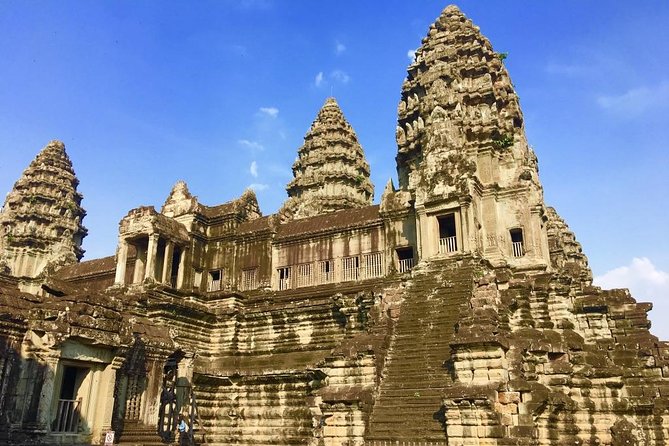
Three hours are assigned to Angkor Wat, the largest and best-preserved monument in the complex. That is the right kind of time allocation for a temple this important.
You can use the first part of the visit to understand the overall plan: the broad causeway, enclosing galleries, central towers, and carefully balanced proportions. Then spend time on the reliefs and sculpture, where small details reward patient looking.
The drawback is placement. After South Gate, Bayon, Angkor Thom, Baphuon, Phimeanakas, two terraces, and Ta Prohm, you may reach Angkor Wat with tired legs. The private format helps because your group can discuss comfort and timing with the guide, but this remains a packed day.
The itinerary does not specify a sunrise visit, so you should not book this tour expecting that particular experience. It presents Angkor Wat as the final major temple of the first day, with a long visit rather than an early morning photo session.
Ta Nei adds a quieter jungle stop
Ta Nei is a small temple deep in the Cambodian forest and is harder to find than the headline monuments. Its 45-minute visit gives the first day a useful change of scale.
Do not expect the same level of restoration or drama as Angkor Wat. Ta Nei suits you if you enjoy quieter ruins and want to see how much of the Angkor area extends beyond the famous circuit. The lack of a large crowd can also make it easier to focus on the stonework and setting.
Day two reaches the outer temples
Day two begins with Banteay Srei, about 1 hour and 20 minutes from the schedule. This temple is famous for its fine carvings and pinkish sandstone appearance, and it is often described as one of the finest examples of Khmer art.
The smaller scale makes Banteay Srei different from Angkor Wat. Details matter here: doorways, lintels, pediments, and carefully carved figures. Give your guide room to explain what you are looking at, because the attraction is precision rather than sheer size.
Banteay Samre follows for about 45 minutes. It is one of the more complete temple complexes in the area, with restoration carried out using anastylosis, a method that reassembles original architectural pieces where possible.
The site also shows why maintenance matters. Some parts may look less cared for than the restored structures at the most famous temples. That is not a reason to skip it, but it sets realistic expectations.
Pre Rup and Eastern Mebon show the Grand Circuit
Pre Rup receives about 50 minutes. Its stacked form, strong lines, and balanced proportions make it a fine place to understand the classic temple-mountain design.
The height gives the structure much of its impact, though stairs and exposed stone can make the visit physically demanding. I would use this stop to look at the overall design first, then inspect the details once you are oriented.
Eastern Mebon takes about 30 minutes. The free-standing stone elephants at the corners are its most memorable feature, and the carvings include religious scenes such as Indra riding his elephant.
These two temples work well together. Pre Rup gives you a grand architectural outline, while Eastern Mebon rewards close attention to sculpture. Because the visits are shorter, listen carefully to the guide before wandering off to take pictures.
Neak Pean and Preah Khan
Neak Pean is built around a large square man-made pond, about 70 meters on each side, with smaller pools around it. The approach and water-centered layout make it unlike the hill temples and enclosed galleries earlier in the tour.
The planned visit is 45 minutes. Depending on conditions, you might find the walk to the central area just as interesting as the shrine itself. This is a place for understanding how water, health, and sacred design were linked in the Angkor world.
Preah Khan allows one hour. Built in the late 12th century by Jayavarman VII and dedicated to his father, it is a large complex with corridors, courtyards, carvings, and partially restored areas.
I like Preah Khan because it has both scale and texture. You can see grand planning, but you also encounter trees, broken walls, and long interior passages. It asks for a slower eye than a simple stop-and-photo visit.
Banteay Prei and a local food stop
Banteay Prei is a minor, rarely visited temple near Prasat Prei. The scheduled 45 minutes may feel generous if you are mainly interested in the famous monuments, but it is useful for anyone who wants a broader understanding of Angkor beyond the standard route.
This is also where the private structure earns its keep. If your group has a strong interest in small temples, you can spend time studying the site. If everyone is tired, you can keep the visit focused.
The final stop is a local food and market visit at Prasatdak Village, including steamed toddy palm cake. Preah Dak Market is known for souvenirs, objects, and local arts. This gives the second day a more everyday note after hours among royal and religious ruins.
Lunches are not included. Local restaurants offer vegetarian and non-vegetarian dishes, with menu prices listed at about $3 to $10 per dish. Bring that extra cost into your budget, and remember that the Angkor Pass is also separate.
What the $149.46 price really covers
At $149.46 per person, the tour is not an all-inclusive ticket. The price covers hotel pickup and drop-off, private transfers in a comfortable vehicle, a professional English-speaking licensed guide, drinking water, and cool fresh tissues throughout the trip.
The best value comes from the private vehicle and guide. Angkor’s sites are spread out, and organizing the route yourself would require transport, entrance planning, and a strong grasp of the temples. Here, the guide helps with the pass and keeps the two-day route moving.
The price becomes better value for a small private group that wants a full temple program. It is less attractive if you only want Angkor Wat and one or two nearby temples, since this tour is designed for broad coverage.
Group discounts are offered, but the amount is not specified. Ask for the exact total for your party before booking. Tips for the guide and driver are not included, so plan for those separately if you feel the service deserves it.
Comfort, clothing, and flexibility
Hotel pickup and drop-off are included, but you need to provide your hotel name. The tour is near public transportation, though its private vehicle means you do not need to arrange public transport between temples.
Water and cool tissues are small details that matter in a long temple program. You will spend much of the day walking, standing, and moving between exposed stone areas and shaded ruins.
Wear a shirt that covers your shoulders and trousers, knee-length pants, or a knee-length skirt. These are religious grounds, and suitable clothing avoids a problem at the entrance.
Most people can take part, but the itinerary includes stairs, uneven paths, and long days. If you have mobility concerns, discuss them before booking. The schedule is flexible enough for requests, and one confirmed example included a worthwhile land mine museum stop when requested, but extra stops may require changes to the planned route.
The tour has free cancellation if you cancel at least 24 hours before the local start time. Changes or cancellations made inside that period are not accepted for a refund.
Should you book this Angkor tour?
Book it if you want a serious two-day look at Angkor, prefer a private group, and would rather have transport and temple explanations handled for you. The mix of famous monuments, outer temples, quiet ruins, and a local food stop gives you more than the standard Angkor Wat circuit.
You should think twice if you dislike early starts, long sightseeing days, stairs, or a tightly packed schedule. You will also need to add the Angkor Pass, lunches, and tips to the advertised price.
For a small group that values coverage and flexibility, this is a strong choice. Ask whether Mr. Sara is available if you specifically want that guide, confirm the language you need, and keep the final day of your Siem Reap stay lighter so your legs can recover.
FAQ
Is the Angkor Pass included in the tour price?
No. The Angkor Pass is not included. Your guide assists you with purchasing it at the entrance to Angkor Park before the tour begins.
Are meals included?
No. Lunches are at your own expense. Local restaurants offer vegetarian and non-vegetarian dishes, with menu prices listed at about $3 to $10 per dish.
Is this a private tour?
Yes. Only your own group participates in the activity.
What is included with transportation?
Hotel pickup and drop-off are included, along with private transfers in a comfortable vehicle as described for the tour.
What clothing should I wear?
Wear a shirt that covers your shoulders and trousers, knee-length pants, or a knee-length skirt. The temples are ancient religious grounds.
Is an English-speaking guide included?
Yes. A professional English-speaking licensed guide is included. The experience is also offered in a range of languages.
Just added around Siem Reap
- Ultimate Sunrise to Angkor Wat, Angkor Thom and Bayon Temple★ 5.0 · 3 reviews
- Twilight Tastes of Siem Reap Include Dinner★ 5.0 · 13 reviews
- Trekking Tour at Phnom Kulen National Park from Siem Reap★ 5.0 · 3 reviews
- Full-Day Private Tour of Angkor Wat with Pick Up★ 5.0 · 12 reviews
- Private Day Trip to Angkor Temples with Expert Guide★ 5.0 · 4 reviews
- Waterfall & River of 1000 Siva Linga- Kulen Mountain Private Tour★ 5.0 · 3 reviews
- Professional Photo Shoot in Angkor Archaeological Park, Siem Reap★ 5.0 · 42 reviews
- Ultimate Siem Reap Food Tour by Tuk Tuk – 20 Tastings, 8 Stops★ 5.0 · 13 reviews
2-Day Experiences, compared.

Angkor Wat 2-Day Tour with Sunrise and Sunset
Read our review →
2 Days Exclusive Temple Highlights with Sunset and Sunrise Tour
Read our review →
Angkor Sunrise 1- or 2-Day Guided Temples Tour
Read our review →
2-Day Angkor Wat With Small, Big Circuit and Banteay Srei Tour
Read our review →
2-Day Temple Highlights Sunrise and Sunset Option
Read our review →
Angkor Wat 2-Day complex Sun rise & Sun set with Guided Tour
Read our review →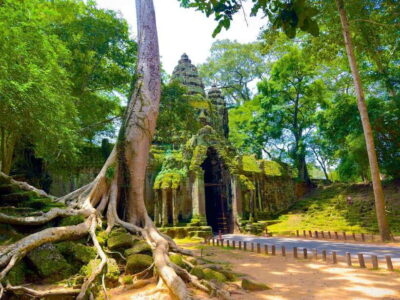
2-Days Angkor Wat with Sunrise Small-Group Tour
Read our review →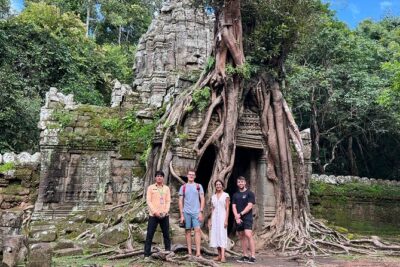
2-Day Angkor Wat Tour with Banteay Srei and Floating Village
Read our review →Browse the lists this tour appears in