
Reviewed · 2-DAY EXPERIENCES
2-Days in temples and other areas
Angkor Wat is only the beginning. This private two-day tour takes you from the giant stone faces of Bayon and the tree-covered ruins of Ta Prohm to the quieter temples of Preah Khan, Neak Pean, Pre Rup, and Banteay Srei. I like the private format, which lets your guide adjust the pace, and I like having transport and water included for long, hot days among the ruins.
I also like the chance to add less-visited places and a landmine museum, something guide Narin has done for previous groups. The main drawback is cost: $261 does not include temple tickets, food, or the Tonle Sap boat, so your final bill will be higher.
Key points at a glance
- Private two-day schedule: Your group has its own guide, car or van, and pickup from a Siem Reap hotel.
- Major temples plus quieter stops: Angkor Wat, Angkor Thom, Bayon, Ta Prohm, Preah Khan, Neak Pean, Pre Rup, and Banteay Srei are included.
- Guide Narin can adapt the day: Previous arrangements have included earlier starts, different pacing, extra temples, and restaurant suggestions.
- Tonle Sap adds a change of scene: The second day ends with a boat trip to the floating villages, paid separately.
- Budget for extras: Temple admission, lunches, dinner shows, circus tickets, and the floating-village boat are not included.
- Plan for heat and walking: A moderate level of fitness is needed, and covered knees and shoulders are required at Angkor Wat.
Why two days works better than one
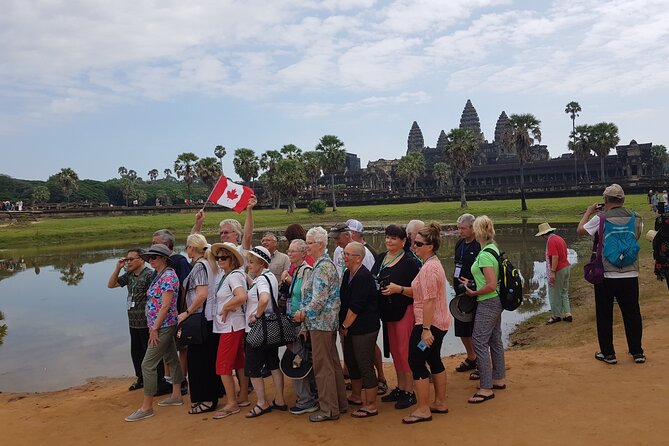
If you have only one day near Siem Reap, the first day gives you a strong introduction to the Angkor Archaeological Park. You see the grand scale of Angkor Thom, Bayon’s carved faces, Ta Prohm’s atmospheric ruins, and Angkor Wat itself.
Two days makes the trip feel less like a race. The second day reaches farther from the central temple circuit and adds a boat outing on Tonle Sap. You still cover a lot, but you have more room to pause, ask questions, and change the order when the heat or your energy calls for it.
The private setup matters here. A large group must follow one timetable. With your own guide and vehicle, you can ask to spend longer at a temple, move on from one that does not interest you, or start earlier to avoid the hottest part of the day. Guide Narin has been praised for making those kinds of adjustments, including starting early and changing the schedule to suit a family’s pace.
This is not a slow, two-day retreat. You will visit many sites, walk over uneven ground, and spend hours outside. One previous arrangement covered 12 ancient temples in two days, along with other local sights. That gives you a useful idea of the pace.
A few more Angkor Wat trips to weigh up
- Siem Reap: Angkor Wat 2-Day Tour with Sunrise and Sunset
★ 4.9 · 4,429 reviews - 2-Day Angkor Wat With Small, Big Circuit and Banteay Srei Tour
★ 5.0 · 545 reviews - Angkor Wat 2-Day complex Sun rise & Sun set with Guided Tour
★ 4.9 · 439 reviews
Day one: Angkor Thom, Bayon, Ta Prohm, and Angkor Wat
Your guide picks you up at your hotel in Siem Reap and drives you into the Angkor area. Transport is supplied in a car or van, along with drinking water. Since this is a private activity, only your group joins the tour.
Angkor Thom is the first major area. This ancient walled city contains several important monuments, so it is more than a single temple stop. Your guide can help you understand how the city fits into the wider Angkor complex before you focus on its best-known monument, Bayon.
Bayon is famous for its enormous carved faces. They appear on the towers of the temple and create a striking first impression as you walk through the stone corridors. This is one place where a guide adds real value. Without context, the faces are impressive but puzzling. With an explanation of the temple’s place in the Angkor period, the carvings become easier to read.
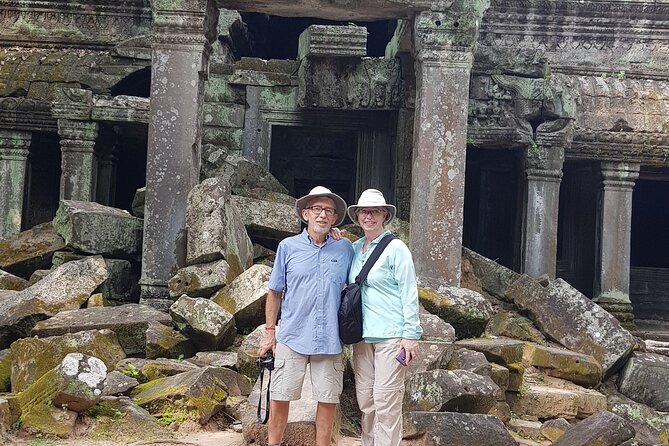
Ta Prohm offers a very different mood. Trees and roots press against the old stone, and broken galleries give the temple a less formal appearance than Angkor Wat. It is a popular stop, so the private tour does not guarantee quiet. Still, your guide may help you find a better time or a less crowded section, and the site provides a welcome contrast to Bayon’s ordered towers.
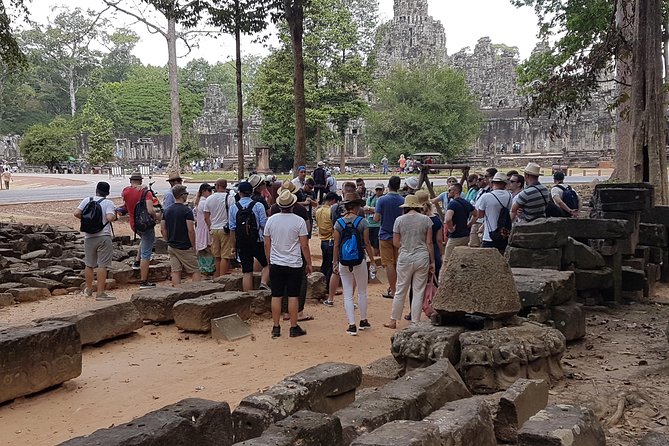
Angkor Wat is the day’s major visit. Its scale is difficult to absorb in a quick glance. You move through broad courtyards, galleries, towers, and carved surfaces that reward a slower look. The temple is also an active religious site, so modest clothing matters. Shorts that expose the knees and bare shoulders are not suitable for entry. One guest arrived in shorts and needed help finding covered clothing, so check your outfit before leaving the hotel.
Lunch takes place in the Angkor Archaeological Park, but it is not part of the tour price. You pay directly for your meal. Restaurant choices can vary, and Narin has taken groups to local restaurants that they enjoyed, but you should still allow extra money and time for lunch.
After the temple visits, the driver takes you back to your hotel. The evening is open. The tour recommends a traditional Khmer dance show or Khmer circus, as well as local restaurants, but these are optional and paid separately. That open evening is useful after a full day on foot. You can choose a performance, eat nearby, or simply rest before the next morning.
Day two: Preah Khan and the quieter eastern temples
The second day moves beyond the best-known cluster. The schedule includes Preah Khan, Neak Pean, Pre Rup, Banteay Srei, and Tonle Sap. The temple visits are followed by lunch, with the meal again paid by you, then the floating-village trip.
Preah Khan was built by King Jayavarman VII and dedicated in 1191. It likely served as a temporary royal residence while Angkor Thom was being built. That detail gives the ruin a practical side: you are not looking only at a religious monument, but at part of a larger building program connected to the royal capital.
The site has long corridors, courtyards, and a central sanctuary. It can feel more open and less immediately familiar than Angkor Wat, which makes a guide especially helpful. Narin has taken groups to more remote temples where large organized groups do not usually go, and Preah Khan is the sort of stop where that extra attention pays off.
Neak Pean is an island temple in the middle of the Jayatataka baray, an ancient reservoir. Reaching it involves crossing toward the central island, so the approach is part of the visit. The water setting changes the rhythm of the day after the enclosed passages at Preah Khan.
Pre Rup is a Hindu temple built as the state temple of King Rajendravarman. It was dedicated in 961 or early 962. The raised brick structure gives you another architectural style to compare with the later Buddhist monuments associated with Jayavarman VII. If you have begun to notice differences in materials, layouts, and decorative details, this stop helps bring those differences into focus.
Banteay Srei is the most distant temple named on the schedule and one of the most distinctive. Built in the 10th century and dedicated to Shiva and Parvati, it is known for finely worked decoration and a smaller scale than the main Angkor monuments. The distance adds driving time, but it also gives the day a sense of range. You are not simply repeating the first day’s grand central temples.
The supplied schedule lists the second day at about seven hours, though the full day can feel longer once meals and the Tonle Sap boat are added. Ask your guide about the order of stops and timing at the start of the morning. A private vehicle makes it easier to manage the day, but the number of sites still creates a demanding schedule.
Ending at Tonle Sap and the floating villages
After lunch, the tour continues to Tonle Sap Lake and its famous floating villages. The boat is not included, so you pay that cost separately.
This is a useful addition because it shifts the focus from ancient stone buildings to present-day life on and around the lake. The visit also gives you a break from temple corridors and stairs. Keep your expectations practical: the tour provides access to the lake and floating villages, but the exact boat arrangements and price are not specified in the information supplied.
Since the boat is an extra expense, ask about the cost before you board. You should also keep some flexibility in your schedule, as the time on the lake is not described in detail. The tour’s value here is the contrast. You spend the morning with royal and religious monuments, then see a very different side of the Siem Reap region.
Same country, a completely different kind of day:
- Angkor Wat Sunrise or Sunset Tour with Guide from Siem Reap
★ 5.0 · 12,109 reviews - Siem Reap: Angkor Wat: Small-Group Sunrise or Sunset Tour
★ 5.0 · 9,444 reviews - Siem Reap: Full-Day Angkor Wat Guided Tour with Sunset
★ 4.9 · 3,803 reviews - Angkor Wat Sunrise tour with Small – Group and Guide tours
★ 5.0 · 3,655 reviews
What the private guide adds
A private guide can turn a long list of temples into a coherent day. Narin is repeatedly praised for his friendly manner, local knowledge, flexibility, and ability to adjust the pace. He has helped with clothing problems, suggested restaurants, started earlier to avoid peak heat, and added places outside the most common route.
That flexibility is one of the strongest reasons to choose this tour instead of simply hiring transport. You can ask questions as they arise, stop for water, and decide how much detail you want. If you are fascinated by architecture, you can linger. If the children are tiring, you can shorten a visit.
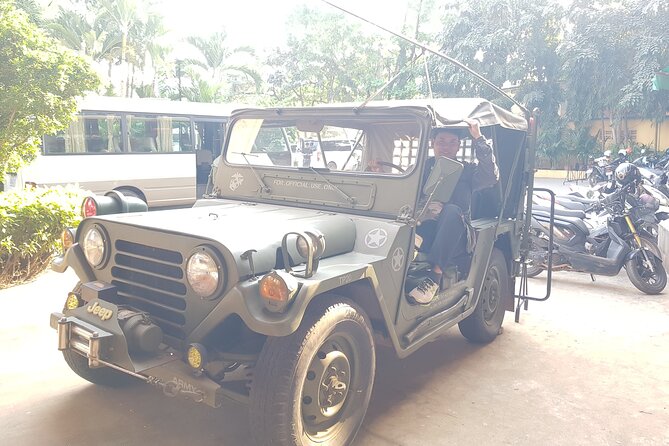
The driver also matters. The tour includes a car or van and water, and the ride provides welcome relief between widely separated sites. One account specifically praised the comfortable car ride and helpful driver.
Do not expect every possible stop to be guaranteed. The published route names the main sites, while the extra landmine museum appeared as an addition for one group. You can ask Narin about similar options, but treat them as possible adjustments rather than fixed inclusions.
Price, tickets, meals, and the real total
The listed price is $261 for roughly two days. For a private tour with a guide, vehicle, pickup, and water, that can be reasonable if you are sharing the cost with family or friends. It is less attractive for a solo visitor or a couple on a tight budget, especially because several major expenses sit outside the headline price.
You need to budget separately for:
- Temple admission
- Lunches and other food
- The Tonle Sap boat
- Any Khmer dance performance or circus
- Dinner and restaurant costs
The paper ticket feature means you should expect a physical ticket rather than a purely digital entry arrangement. The information does not give the ticket price, so check the current cost before booking and include it in your calculations.
The value improves if you want private attention and a flexible timetable. If you only want a ride between temples and do not care about explanations or changes to the schedule, a cheaper transport-only option may suit you better. Here, the main product is the guide’s help in making sense of the sites and managing a busy two-day route.
Heat, clothing, and walking
You need moderate physical fitness for this activity. The temples involve walking across uneven surfaces, and the two-day plan includes several sites rather than one or two easy stops. Comfortable shoes, sun protection, and water are sensible, even though water is supplied.
Dress with Angkor Wat in mind. Knees and shoulders must be covered there, and arriving in unsuitable clothing can create an awkward delay. Loose, modest clothing is the simple solution.
Starting early is worth asking about. Narin has adjusted start times for people who wanted to avoid the hottest part of the day. The tour does not promise a particular sunrise departure, so confirm your preferred timing when arranging pickup.
Weather can affect the activity. It requires good weather, and a cancellation caused by poor conditions results in a different date or a full refund. You can cancel for a full refund if you do so at least 24 hours before the start time. Changes or cancellations inside that window are not accepted.
Who should book this tour?
I would choose this tour if you want the major Angkor sites but also want to reach less central temples and Tonle Sap without organizing separate transport. It suits families, couples, and small groups who value having their own guide and vehicle.
It is also a good fit if you have waited a long time to see Angkor and want a fuller visit rather than a quick look at Angkor Wat alone. The private format gives you a better chance to shape the pace around your interests.
I would think twice if you dislike full sightseeing days, have limited mobility, or want every cost included in one payment. The schedule is active, and the extras add up. You should also be comfortable spending much of both days outdoors.
Should you book it?
Book this tour if the combination of famous temples, quieter ruins, local guidance, and Tonle Sap appeals to you. Guide Narin’s flexibility is a major advantage, particularly for families and anyone who wants help with timing, clothing, meals, or extra stops.
Skip it if you prefer a slower itinerary or a low-cost temple transfer. At $261 before tickets, food, and the boat, this is a convenience and guidance purchase, not a bargain excursion. For a private two-day look at Angkor and its surrounding sights, though, it offers a sensible amount of coverage and useful personal attention.
FAQ
How long is the tour?
The tour lasts approximately two days. The second day is listed as about seven hours, while the total timing may vary depending on the number of stops, meals, and the Tonle Sap boat visit.
Is hotel pickup included?
Yes. Pickup is offered from hotels in Siem Reap, with the starting point listed as Krong Siem Reap, Cambodia.
Is this a private tour?
Yes. Only your group participates in the private activity.
Which temples are visited?
The schedule includes Angkor Wat, Angkor Thom, Bayon, Ta Prohm, Preah Khan, Neak Pean, Pre Rup, and Banteay Srei.
Is Tonle Sap included?
The visit to Tonle Sap and the floating villages is part of the second-day plan, but the boat is not included in the price. You pay for it separately.
Are temple tickets included?
No. Temple tickets are excluded, so you must pay for admission separately.
Are meals included?
No. Lunch and other food costs are paid by you. The tour stops for lunch on both days.
What happens if the weather is poor?
If poor weather causes the activity to be canceled, you can choose another date or receive a full refund. You can also cancel at least 24 hours before the start time for a full refund.
Just added around Angkor Wat
- Ultimate Sunrise to Angkor Wat, Angkor Thom and Bayon Temple★ 5.0 · 3 reviews
- Full-Day Private Tour of Angkor Wat with Pick Up★ 5.0 · 12 reviews
- Private Day Trip to Angkor Temples with Expert Guide★ 5.0 · 4 reviews
- Professional Photo Shoot in Angkor Archaeological Park, Siem Reap★ 5.0 · 42 reviews
- Unveiling 2 Days Private Angkor Wat/Beyond In Sunrise/Sunset Tour★ 5.0 · 48 reviews
- Two-days tour discovering Angkor Wat and Floating Village★ 5.0 · 7 reviews
- Angkor Wat Experience Temple Pass and Siem Reap Food Tour★ 5.0 · 13 reviews
- Angkor Wat Sunset TUK TUK Tour★ 5.0 · 4 reviews
2-Day Experiences, compared.

Angkor Wat 2-Day Tour with Sunrise and Sunset
Read our review →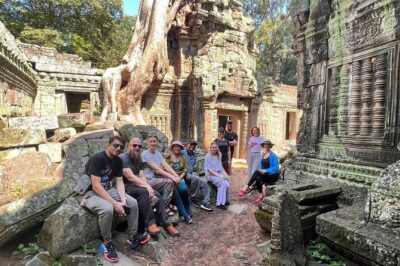
2 Days Exclusive Temple Highlights with Sunset and Sunrise Tour
Read our review →
Angkor Sunrise 1- or 2-Day Guided Temples Tour
Read our review →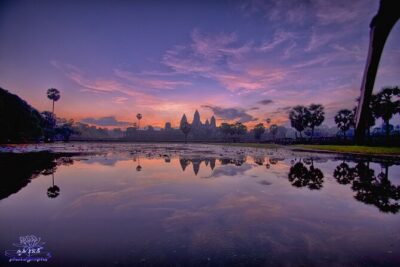
2-Day Angkor Wat With Small, Big Circuit and Banteay Srei Tour
Read our review →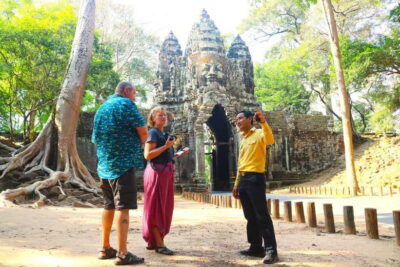
2-Day Temple Highlights Sunrise and Sunset Option
Read our review →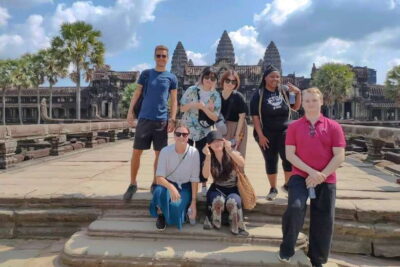
Angkor Wat 2-Day complex Sun rise & Sun set with Guided Tour
Read our review →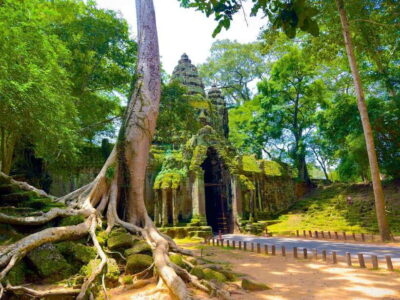
2-Days Angkor Wat with Sunrise Small-Group Tour
Read our review →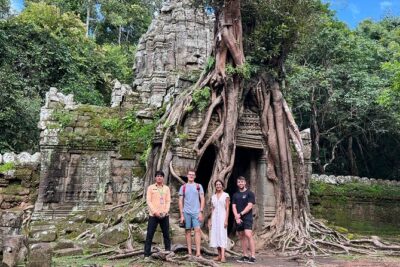
2-Day Angkor Wat Tour with Banteay Srei and Floating Village
Read our review →Browse the lists this tour appears in