
Reviewed · KILLING FIELDS TOURS
Morning Tuk tuk: City, Handicrafts, Killing field, Temples
Battambang reveals itself best outside the main streets, where families still turn rice into noodles, paper, wine, and sweet bamboo snacks. This five-hour tuk tuk tour links those small workshops with temples, villages, paddy fields, and the city’s key sights.
I like the close look at everyday work, especially the fresh rice paper and spring rolls. I also like the history at Wat Samrong Knong, where an old Buddhist site carries painful Khmer Rouge-era stories. The one consideration is the early start and open-air ride, which may feel hot, dusty, or tiring for some people.
Key points
- Four local food stops: See rice noodles, bamboo sticky rice, rice paper, and rice wine made by hand, with tastings included.
- Wat Samrong Knong’s difficult history: Visit a 1707 temple, an 1887 brick stupa, a torture house, and a killing field.
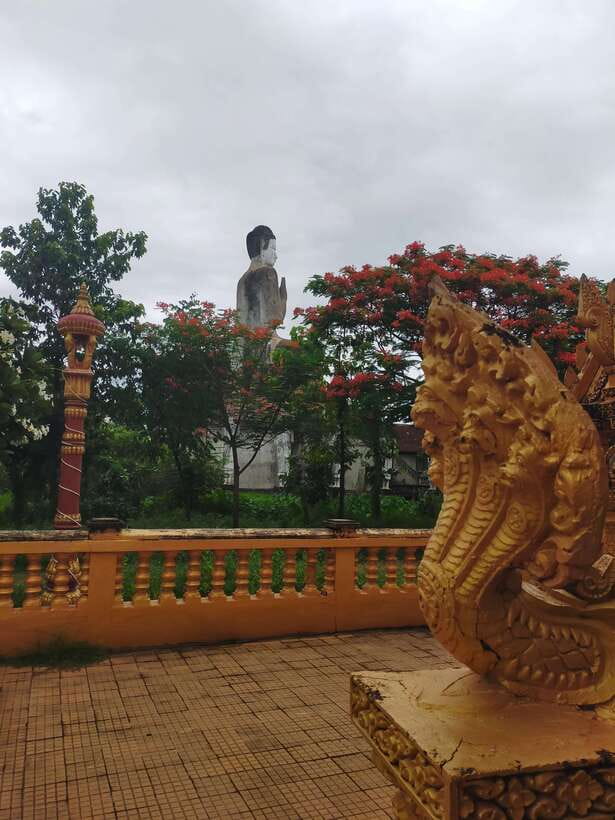
- Ek Phnom in one stop: See a 25-meter Buddha, a modern Buddhist temple, and an 11th-century Angkorian ruin.
- A guide-led view of Battambang: Guides such as Samol and David explain local history, Buddhism, farming, food, and folk tales in English.
- Easy door-to-door transport: Hotel pickup and drop-off are included within 5 kilometers of Battambang town.
- Good value at $20 per person: Admissions, water, snacks, wet wipes, donations, and transport are included.
Why this Battambang tuk tuk tour works
At $20 per person, this is a practical way to cover a wide area without arranging several separate rides. You get a tuk tuk, an English-speaking guide, entry fees, bottled water, snacks, and tastings in one half-day outing.
The real value is not simply the number of stops. It is the way the food workshops connect you with rural life. Rice is not just served in a bowl here. It becomes noodles, paper wrappers, wine, and a sweet snack cooked inside bamboo. That connection gives the tour a clear theme and makes the morning feel more meaningful than a standard city drive.
The tour has earned a 4.9 rating from 13 reviews, with particular praise for guides Samol and David. Samol is described as funny, relaxed, careful behind the wheel, and strong in English. He also takes photographs and can share them through WhatsApp, a useful extra if you want a few good pictures without constantly holding your phone.
More Killing Fields Tours in Battambang:
- Morning Tour,Ak Phnom temple,Rice wine,Rice Paper, killing Field
★ 5.0 · 22 reviews - The Killing Field and Toul Sleng Genocide Museum (S21) Tour
★ 5.0 · 1,977 reviews - Killing field and Toul Sleng genocide museum Tour
★ 5.0 · 610 reviews
Starting at 7:20 AM in Battambang
Pickup begins at about 7:20 AM from your accommodation or a restaurant. The service covers locations within 5 kilometers of Battambang town, so check your address before booking if you are staying farther out.
An early start makes sense. It gives you cooler air for the first part of the ride and leaves you back in town around lunchtime. You will spend much of the morning in an open tuk tuk, so wear light clothing that covers your shoulders and bring sun protection. Sleeveless shirts are not allowed, and you should dress respectfully for the temples.
The ride itself is part of the experience. Your guide introduces the history, religion, agriculture, culture, and folk stories of Cambodia and Battambang as you move between town and countryside. This is a better setup than arriving at each sight with no context, especially at places where the meaning is not obvious from the buildings alone.
Battambang’s city center and Ta Dambong Kranhoung
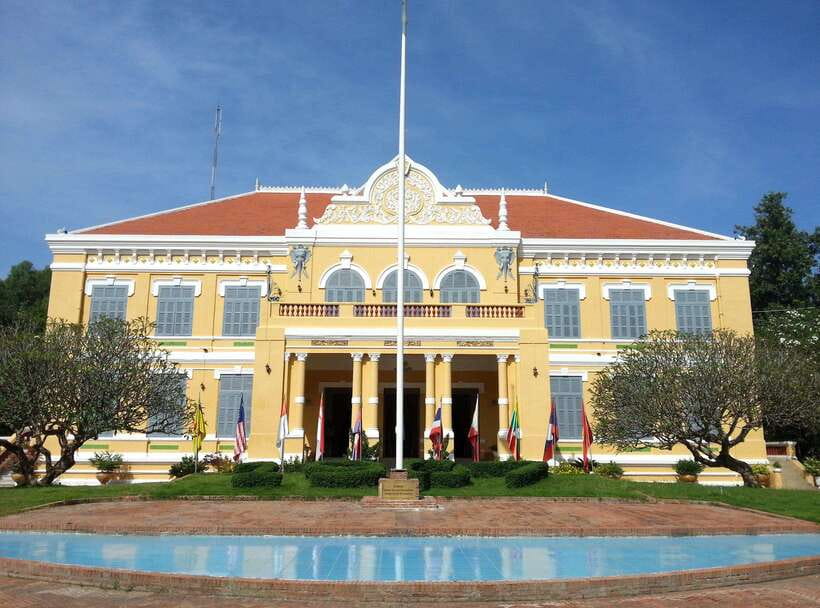
The morning begins with Battambang’s central sights. You see historic buildings, the central market, the provincial hall, and the statue of Ta Dambong Kranhoung, the city’s best-known symbol.
This section helps you get your bearings before the tour heads into the countryside. It is not a long architecture walk, and the main appeal is the guide’s explanation of how the city fits into Cambodian history and daily life.
If you have already spent several days in Battambang, this opening may feel familiar. Still, it works well as a short introduction, particularly if this is your first morning in town. Keep your camera ready, since the tour includes photo opportunities throughout the day.
Khmer rice noodles made by local families
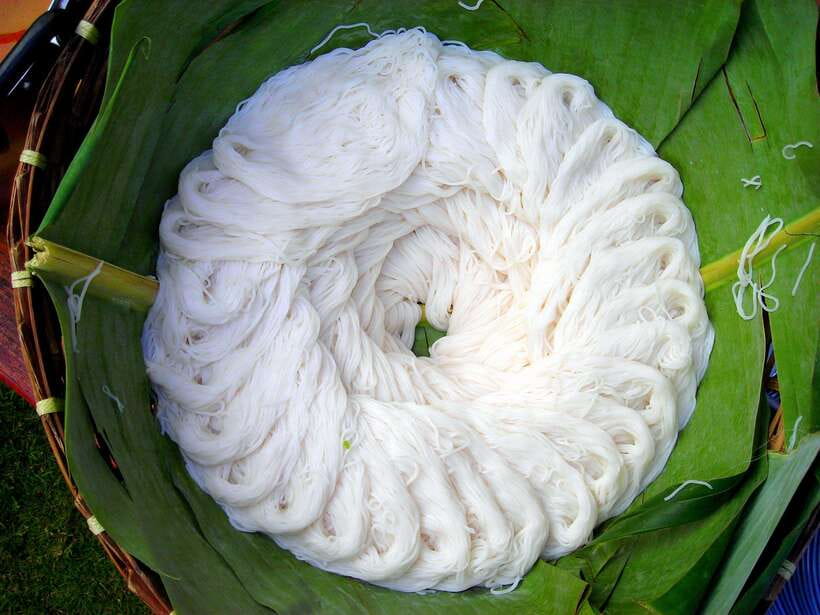
The first craft stop visits a small Khmer rice noodle operation. You see locals turn rice into noodles and learn why the food is eaten for breakfast, lunch, and dinner instead of being limited to one meal.
This is one of the strongest parts of the morning because you are watching a working food tradition rather than viewing a finished dish at a restaurant. You can try the noodles, which gives you a direct sense of the product before it reaches a market or kitchen.
The stop is also useful for understanding how rice shapes Cambodian food culture. In Battambang, rice is a crop, a staple, and a source of income. The noodle-making visit makes that connection visible in a simple way.
Do not expect a polished factory tour with signs and machines. The appeal is the small-scale setting and the chance to see people working with familiar local methods. If you prefer major monuments to food production, this part may feel modest. For most people interested in daily life, it is exactly the point.
A few more Battambang trips to weigh up
- Battambang: Tuk-Tuk, Bamboo Train, Killing/Bat Caves, Sunset
★ 4.9 · 1,436 reviews - Battambang Tuk Tuk tour: Bambootrain, Killing & Bat Caves,Sunset
★ 5.0 · 799 reviews - Afternoon tour by tuk tuk to bamboo train,bat cave,killing cave,countryside.
★ 5.0 · 344 reviews - Explore Battambang full day tour by Tuk Tuk (start from 9am-6:30pm)
★ 5.0 · 240 reviews
Bamboo sticky rice, a sweet snack with a practical past
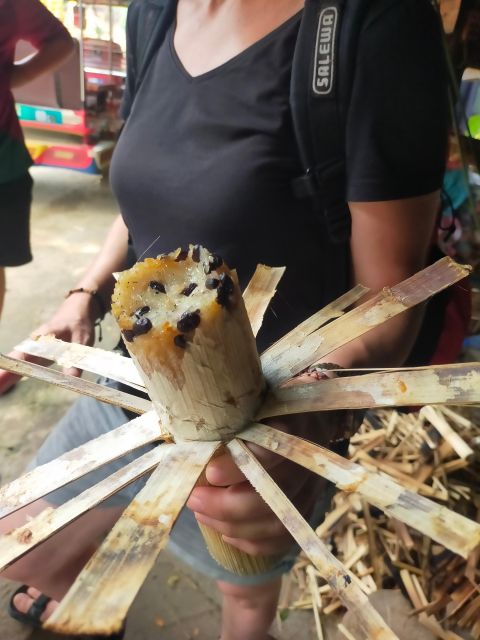
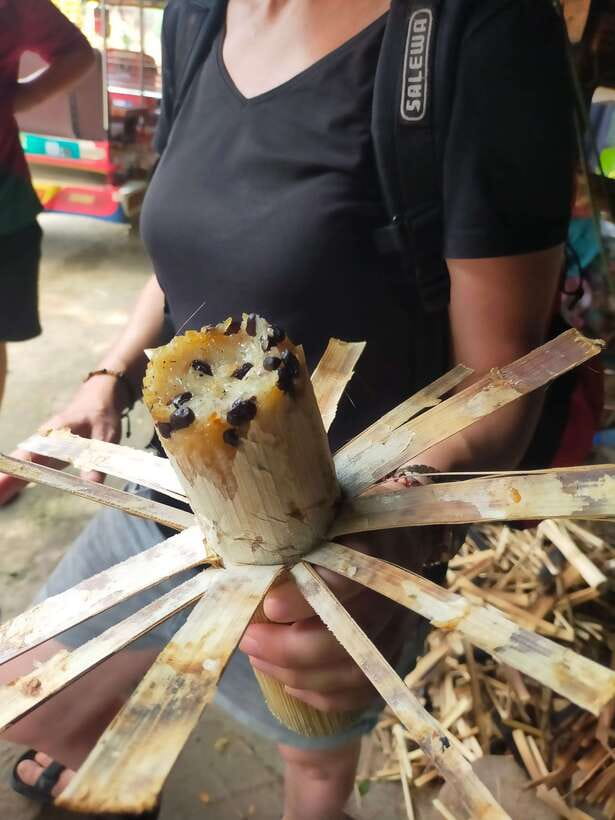
Next, you watch bamboo sticky rice being prepared. The dish is a sweet snack or dessert, cooked in bamboo and known locally for its pleasant taste.
This stop adds a different texture to the rice story. Instead of noodles, you see rice prepared as a portable treat. You also get to taste it, along with other snacks included during the morning.
The visit is short but memorable because the bamboo container is part of the cooking method, not just decoration. You see how a simple local product can serve as both cookware and packaging.
Food tastings are small, so do not treat this as breakfast replacement. The tour starts early, and you may want to eat something before pickup if you need a full meal. The planned return to Battambang is around lunchtime.
Wat Samrong Knong and Battambang’s painful past
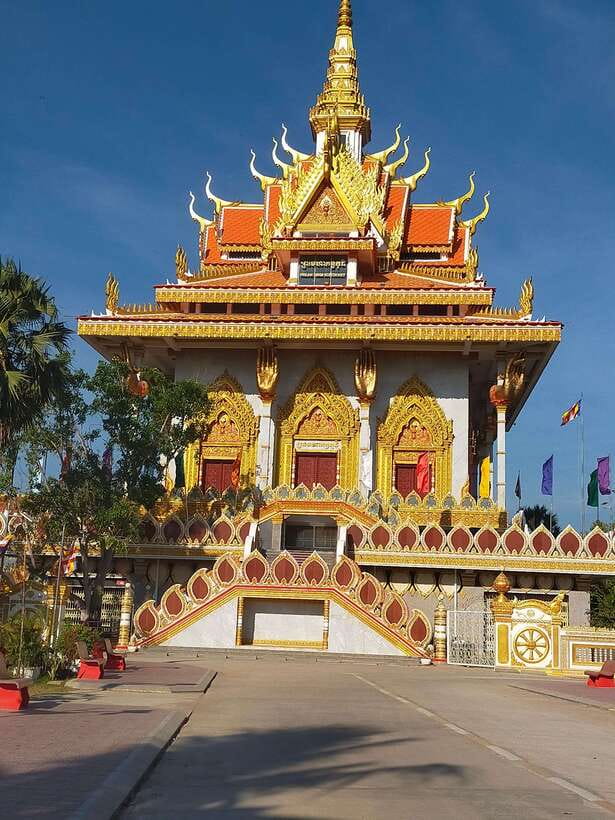
Wat Samrong Knong is one of the tour’s most important stops. The Buddhist temple dates to 1707, and the brick stupa was built in 1887. Together, they show the long religious history of the site.
The visit also covers a far darker chapter. During the Khmer Rouge period, the pagoda was used to house soldiers and as a detention area for victims. You see the torture house and the killing field, where approximately 10,008 people were killed.
This is not a light sightseeing stop. Give it time and respect. The contrast between the old Buddhist setting and the violence that took place there is difficult, but it is part of understanding Cambodia beyond temples and countryside views.
Your guide’s explanation matters here. The site carries details that can be hard to understand without local context, and the tour is designed to connect the buildings with Cambodia’s recent past. If you want only cheerful food visits and scenic rides, this part may be emotionally heavy. It should not be rushed or treated as a casual photo stop.
Rice paper and the work behind spring rolls
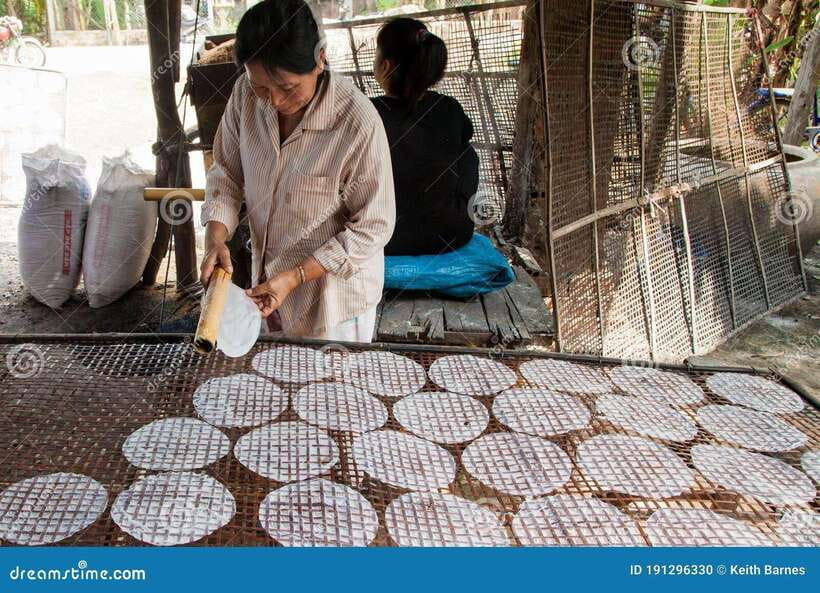
The next visit shows how rice paper is made. Villagers produce the thin wrappers used for spring rolls, and the work remains a source of income for local families.
You learn that an individual worker can make at least 1,500 sheets per day. That figure changes the way you look at a spring roll. The wrapper seems delicate and simple on a plate, but producing it in such quantity takes steady, repetitive work.
This is another excellent example of the tour’s value. You are not only tasting Cambodian food. You are seeing the labor behind it and meeting people who still make these products for a living.
Fresh spring rolls are a highlight of the tasting portion. One guest described them as the freshest and most delicious spring rolls they had eaten, and that makes sense when you have just seen the wrappers being produced locally. Again, the tasting is an added sample, not a full cooking class or meal.
Rice wine from an operation dating to the 1980s
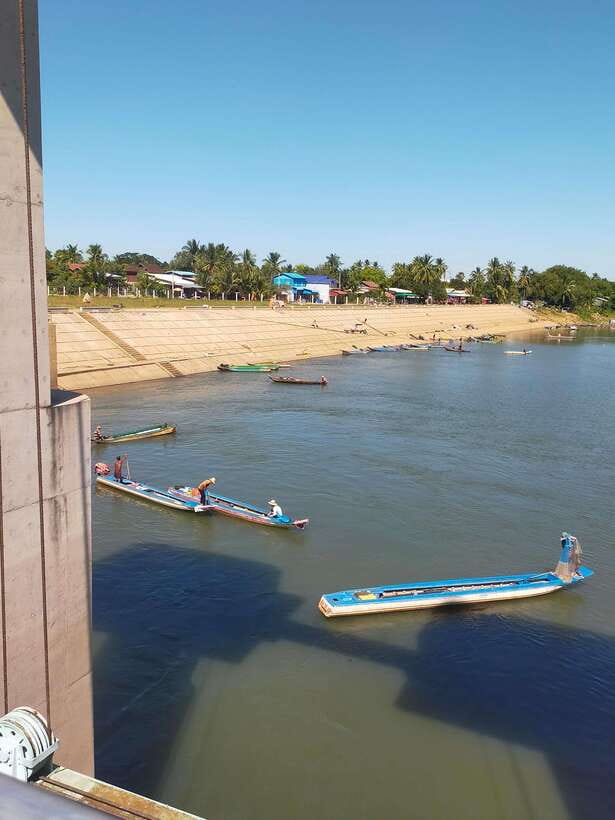
The rice wine stop visits a production site that has been in use since the 1980s. Your guide explains how rice wine is made and offers a sample.
You also hear about traditional uses beyond drinking. The wine has been used as medicine and to soak plants, fruits, and even poisonous animals such as cobras and tarantulas. Those details give the stop a strong local character, though the stories may not appeal to everyone.
Drink carefully. The tour includes a sample, but the morning contains several stops and a tuk tuk ride, so there is no reason to treat the tasting as a drinking session. If you do not drink alcohol, ask your guide about the sample and simply enjoy the production explanation.
The rice wine visit rounds out the rice theme nicely. By this point, you have seen rice become a meal, a dessert, a wrapper, and a drink. That is a more memorable lesson than a general statement that rice is important in Cambodia.
Ek Phnom’s giant Buddha and Angkorian ruins
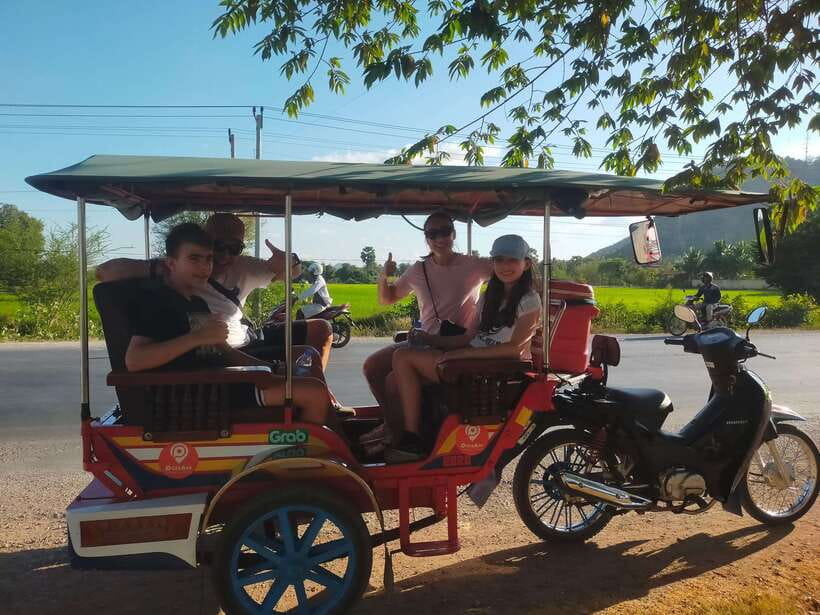
The final major stop is Ek Phnom. A 25-meter-high Buddha rises among standing Buddha statues, creating one of the most striking photo opportunities of the morning.
You then walk to a Buddhist temple built in 1991. Inside, murals show the story of Buddha. The building is a working religious site rather than an ancient ruin, so it helps to notice the difference between the modern temple and the much older remains nearby.
Ek Phnom also includes the ruins of an 11th-century Angkorian Hindu temple built under King Suryavarman I. Seeing the Buddhist temple, giant Buddha, and Angkorian Hindu structure together gives you a compact view of Cambodia’s changing religious traditions.
The site is best appreciated with a guide who can explain what you are seeing. The modern religious buildings are visually bold, while the old temple remains require more imagination. You will likely spend time walking between areas, so practical footwear is useful.
The tuk tuk ride and countryside views
Between stops, the route passes small villages and paddy fields. You see a more rural side of Battambang than the central market and provincial buildings can provide.
A tuk tuk is a good fit for this route because it keeps the ride open and connected to the surroundings. You can see roadside activity and fields as you move along, though you should also expect road noise, dust, heat, and occasional bumps.
The tour includes cold bottled water and wet wipes. Those are small additions, but they matter after several food stops and an open-air ride. Bring extra sun protection and clothing suitable for temple visits.
The pace is fairly full for five hours. You are not spending half a day at one temple. Instead, the morning moves from city sights to food production, difficult history, and religious sites. That variety keeps it interesting, but anyone who prefers slow, quiet visits may find the schedule brisk.
Guide quality and the human side of the tour
The guide can make or break this experience. Samol is the name most closely associated with the strongest comments, with praise for his clear English, humor, safe driving, photographs, and explanations of Cambodian history and Buddhism. David is also described as friendly and accommodating, with a local point of view on food, history, and culture.
The best part of a live guide here is the connection between stops. Without explanation, a noodle workshop is simply a noodle workshop. With context, you begin to see the role of rice in the local economy, diet, and household life.
Ask questions as you go. The listed topics include religion, agriculture, folk tales, and history, so you can steer the conversation toward the areas that interest you most. The experience is not designed as a formal lecture. It works better as an ongoing conversation from the back of a tuk tuk.
Who should book, and who should think twice
I would recommend this tour to you if you want a first look at Battambang beyond the central streets. It suits people who enjoy local food, small-scale production, cultural history, and a varied half-day route.
It is especially useful for short stays. In five hours, you cover city landmarks, four food-related production stops, a site connected with the Khmer Rouge, and Ek Phnom. The included transport and admissions make the $20 price easy to justify.
You should think twice if you dislike open-air transport, have limited stamina, or want a quiet temple tour with long periods at each monument. The activity is not suitable for people with high blood pressure or people over 70, according to the stated restrictions. It is also not suitable for baby strollers, and sleeveless shirts are not permitted.
Free cancellation is available up to 24 hours before the tour for a full refund, and you can reserve now and pay later. Those terms are useful if your Cambodia plans are still shifting.
Should you book this Battambang morning tour?
Book it if you want to understand how local families use rice in everyday life and you are comfortable combining food tastings with serious history. The strongest moments are the handmade production visits, the fresh spring rolls, the rice wine stories, and the guide’s local explanations.
Skip it if your main goal is an unhurried temple day or a full cooking lesson. This is a moving, varied morning rather than a deep visit to one subject.
For most visitors, the combination is the reason to go. You see Battambang’s streets, villages, paddy fields, food traditions, Buddhist sites, Angkorian remains, and a painful modern history before lunch. At $20, with pickup, tastings, admissions, water, and a guide included, it offers a lot without feeling like a simple checklist of monuments.
FAQ
What time does the tour begin?
Pickup starts at about 7:20 AM from your accommodation or a restaurant.
How long does the Battambang tuk tuk tour last?
The experience lasts five hours and returns you to Battambang for lunch or to your hotel.
Is hotel pickup and drop-off included?
Yes. Pickup and drop-off are included for locations within 5 kilometers of Battambang town.
What language does the guide speak?
The live guide speaks English.
What food and drink tastings are included?
You can taste Khmer rice noodles, bamboo sticky rice, rice paper products such as spring rolls, and rice wine. Snacks are included.
Is the tour suitable for everyone?
The tour is not suitable for people with high blood pressure or people over 70. Baby strollers are not allowed, and sleeveless shirts are prohibited.
More Morning in Battambang
- Morning village tour Livelihood tour with Local Product discover
★ 5.0 · 36 reviews - half day morning tour by Tuk-Tuk
★ 5.0 · 20 reviews - Explore the Village &Countryside By Bicycle-Half Day Morning
★ 4.8 · 13 reviews - Half day morning bicycle tour to Explore local livelihood and test local snacks
★ 5.0 · 9 reviews
Just added around Battambang
- Bamboo Train, Banann Temple, Fruit Bat, Bat Cave, Sunset★ 4.2 · 3 reviews
- Afternoon tour to Original Bamboo train. Bat cave. Killing cave★ 5.0 · 25 reviews
- Private Taxi Transfer Battambang from/to Phnom Penh★ 5.0 · 7 reviews
- Private Taxi Transfer From Battambang – Siem Reap City★ 5.0 · 4 reviews
- Afternoon Tour BambooTrain & Bat Cave★ 5.0 · 57 reviews
- Explore local livelihood & countryside (Half-Day Cycling Tour)★ 5.0 · 19 reviews
- Private Boat from Battambang to Siem Reap via Tonle Sap Lake★ 4.5 · 3 reviews
- Full/Half Day Tuk TuK: Handicrafts Bambootrain Killing&Bat Caves★ 5.0 · 14 reviews
Killing Fields Tours, compared.
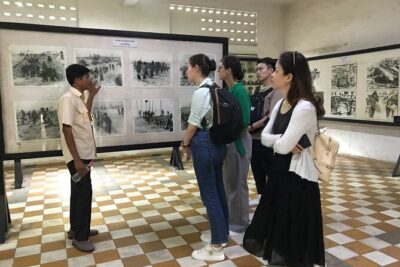
The Killing Field and Toul Sleng Genocide Museum (S21) Tour
Read our review →
Killing field and Toul Sleng genocide museum Tour
Read our review →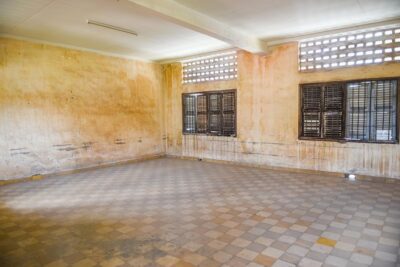
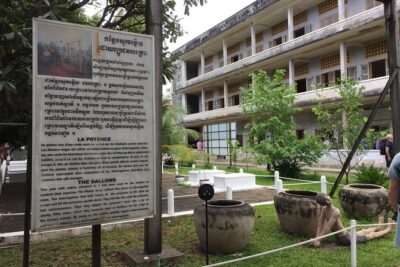
Private Half Day To Killing Field & S21 Genocidal Museum in Phnom Penh
Read our review →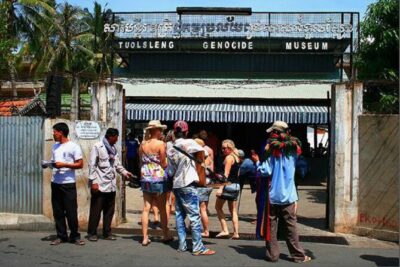
Tuol Sleng Genocide Museum (S-21) and Choeung Ek Killing Fields Tour
Read our review →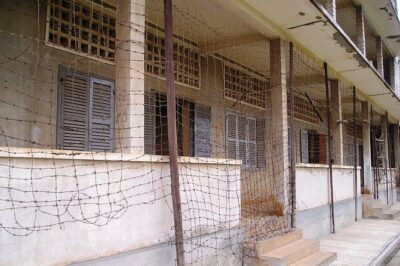
Phnom Penh City Tour, Silver Pagoda, Genocide Museum, Killing Fields
Read our review →
A Full Day Tour for Royal Palace, S21, Killing Fields & More
Read our review →
Full-Day Phnom Penh Sightseeing Tour & Killing Field
Read our review →Browse the lists this tour appears in