
Reviewed · COOKING CLASSES
City Tour & Cooking Class
The best part of this Siem Reap experience is the way it links the city’s difficult past, Buddhist traditions, local shopping, and everyday food in one compact outing. You move from Wat Thmey and the Angkor National Museum to a market and then into a hands-on Khmer cooking class, rather than seeing each subject in isolation.
I like the local market visit, where you select fresh ingredients with the chef, and I like the personal feel of a private tour led by guides such as Kosorl or Mr K. You also get hotel pickup, drop-off, cold drinking water, the cooking class, and the meal for $40 per person.
The main drawback is the extra admission cost at Wat Thmey and the Angkor National Museum, which adds $16 per person if you visit both. The home-style cooking setting may also be basic, with one account noting no ensuite bathroom, hot water, or flushing toilet at the homestay.
Key points to know before booking
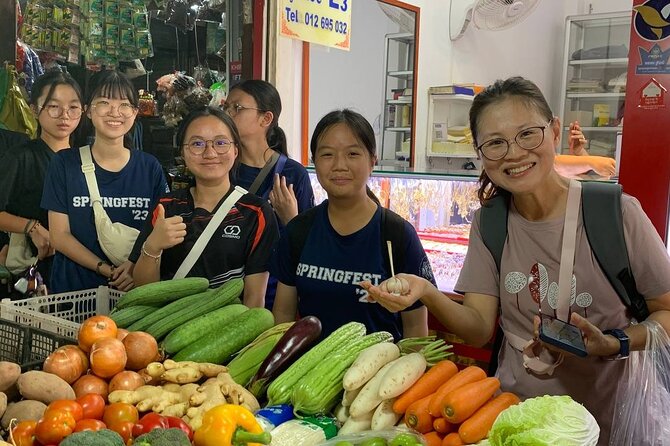
- Khmer cooking begins at a local market: You shop for ingredients with the chef before cooking and eating the meal.
- Four city stops add useful context: Wat Thmey, the Old Market, Angkor National Museum, and Wat Preah Prom Rath cover grief, trade, empire, and Buddhism.
- Kosorl and Mr K are named guide options: The experience depends heavily on conversation and explanation, not just transportation between sights.
- The tour is private: Only your own group takes part, which makes it easier to ask questions and set the pace.
- The base price includes practical extras: Pickup, drop-off, an English speaking guide, cold water, the cooking class, and your meal are included.
- Plan for added entrance fees: Wat Thmey costs $4 and the Angkor National Museum costs $12 per person.
A city tour that ends at the stove
Many Siem Reap tours focus on Angkor Wat and leave the modern city as a blur of roads, hotels, and souvenir shops. This outing takes a different route. It gives you a short look at several important places, then shifts from sightseeing to participation.
That change matters. You are not only hearing about Khmer culture. You are handling ingredients, learning how dishes are put together, and eating what you prepare. The cooking section is the heart of the experience, especially if you want an activity that feels more personal than a standard temple circuit.
The whole program lasts about three to five hours. The listed stops are each planned for about an hour, though the exact pace can vary. Since the activity is private, you can ask your guide to explain a point in more detail or help keep the day moving if you have limited time in Siem Reap.
A few more Siem Reap trips to weigh up
- Khmer Cooking Class at a Local’s Home in Krong Siem Reap
★ 5.0 · 2,731 reviews - Siem Reap: Khmer Cooking Class at a Local’s Home
★ 5.0 · 1,108 reviews - Award-Winning Cooking Class Experience with Professional Teacher
★ 5.0 · 745 reviews
Wat Thmey and the difficult story of Cambodia
The first stop is Wat Thmey, also known as Siem Reap’s Killing Field. This is one of the places connected with the Khmer Rouge and Pol Pot period from 1975 to 1979, when people were forced from cities and subjected to brutal treatment.
The stop is serious and should not be treated as a quick photo opportunity. A guide such as Kosorl or Mr K can help place the site within Cambodia’s recent past and explain why it matters to people living here today. The experience summary allows about an hour, enough time for a thoughtful visit without turning the entire outing into a memorial tour.
Wat Thmey has a $4 admission fee, not included in the $40 price. Carry small cash if possible, and give yourself a little emotional space before moving on to the lighter parts of the day. The contrast between this stop and the cooking class is sharp, but it also reflects real Cambodian life, where memory, religion, family, and food exist side by side.
Psar Chaa, where the city shops
Psar Chaa, or the Old Market, brings you into the practical side of Siem Reap. It sells the sort of goods you might find in a shopping mall, but with a Khmer setting and local character. Fruit, vegetables, flowers, sweets, cakes, gold jewelry, and everyday products fill the market’s stalls.
The value of this stop is not simply shopping. It gives you a chance to see the ingredients and food habits that later appear in the cooking class. Your guide can help identify unfamiliar produce and explain how local dishes use herbs, spices, and other basic items.
The market visit also prepares you for the class. Instead of arriving at a kitchen where everything has already been measured, you take part in choosing the food. That small step makes the meal feel connected to the place you are visiting.
The market stop is listed as free, but you should keep your wallet secure and remember that the cooking ingredients are part of the organized activity. You may still see things you want to buy, especially Khmer sweets or small gifts, so leave room in your bag.
Angkor National Museum and the Khmer timeline
The Angkor National Museum provides a more formal look at Cambodia’s past. Its collection covers the periods before the Khmer Empire, the empire itself, and the years that followed. The museum sits along the route toward Angkor Wat, so it fits naturally into a wider Siem Reap sightseeing plan.
I see this as the most useful stop for anyone who wants more context before visiting the Angkor temples. Museum displays can help you understand the religious ideas, rulers, art, and stonework that you later encounter at Angkor. It is also a cooler, more structured break from the outdoor parts of the tour.
Admission costs $12 per person and is not included. That fee is significant compared with the tour price, particularly if you are traveling on a tight budget. If you have already visited the museum, ask whether your private itinerary can spend more time at the market or at Wat Preah Prom Rath instead. The information provided does not promise substitutions, so confirm any changes before booking.
Same country, a completely different kind of day:
- Angkor Wat Sunrise or Sunset Tour with Guide from Siem Reap
★ 5.0 · 12,109 reviews - Siem Reap: Angkor Wat: Small-Group Sunrise or Sunset Tour
★ 5.0 · 9,444 reviews - From Siem Reap: Kampong Phluk Floating Village Tour by Boat
★ 4.9 · 6,979 reviews - Sunset tour of Kampong Phluk stilts home village on the Tonle Sap
★ 5.0 · 4,865 reviews
Wat Preah Prom Rath and Buddhist art
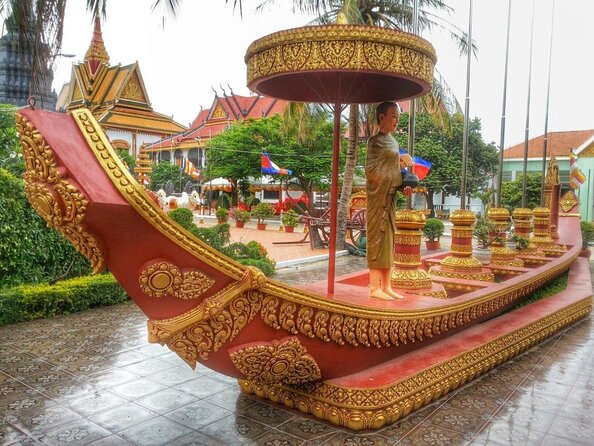
Wat Preah Prom Rath is centrally located just north of the Old Market and Pub Street. This Buddhist temple offers a gentler, more visual stop after Wat Thmey and the museum.
Inside the Buddha Hall, painted scenes tell the story of the Buddha. Your guide can explain the images and point out details that are easy to miss if you walk through alone. The temple is free to enter, making it one of the tour’s better value stops.
Do remember that this is an active religious place, not only a sightseeing site. Dress and behave respectfully, and follow your guide’s lead about where to stand and when photography is suitable. The tour description does not list a formal dress code, but modest clothing is the sensible choice for a temple visit.
Choosing ingredients with a Khmer chef
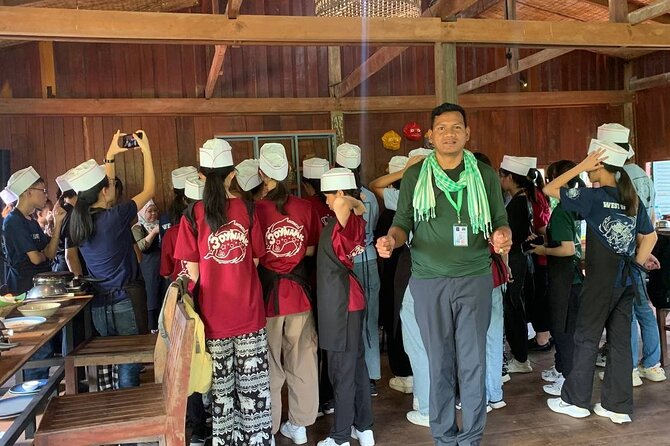
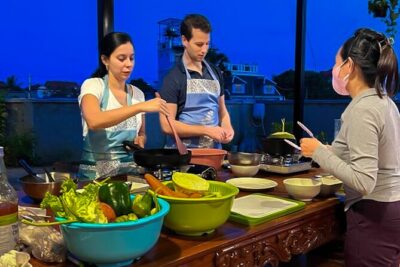
After the city stops, the experience turns toward food. You visit a local market with a home-style chef and select the fresh ingredients used in your meal. This gives you a clear view of how the cooking begins, before any pan or cutting board appears.
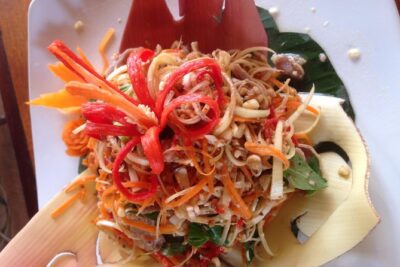
The class focuses on traditional Khmer food and includes fish amok in at least one reported class. Fish amok is one of Cambodia’s best known dishes, and preparing it yourself helps you understand its texture, seasoning, and method better than simply ordering it in a restaurant.
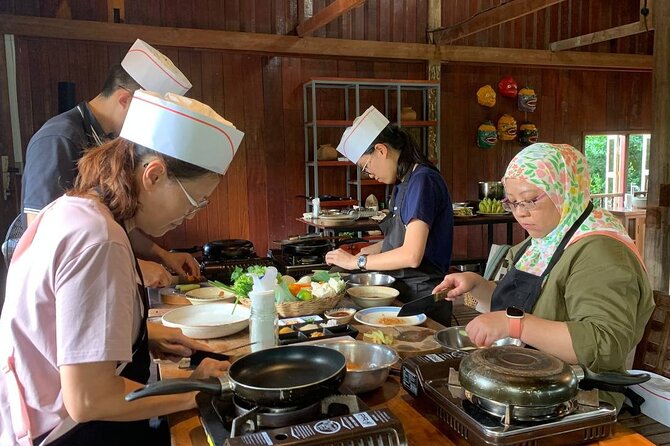
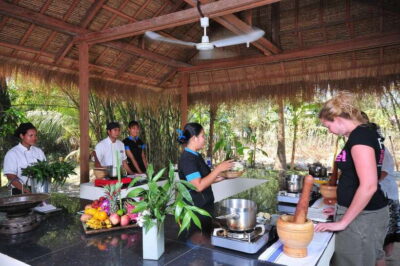
The cooking is hands-on. You should expect guidance from the chef as you prepare the food, rather than a demonstration where you sit and watch. The small-group approach described for Khmer classes allows for close help, and the private format means only your group participates in the activity.
That private setup is especially useful for families, couples, and students. You can ask basic questions without feeling rushed, and the chef can adjust the level of help to suit your group. It also creates more room for conversation about ingredients, home cooking, and Khmer customs.
Eating what you prepare
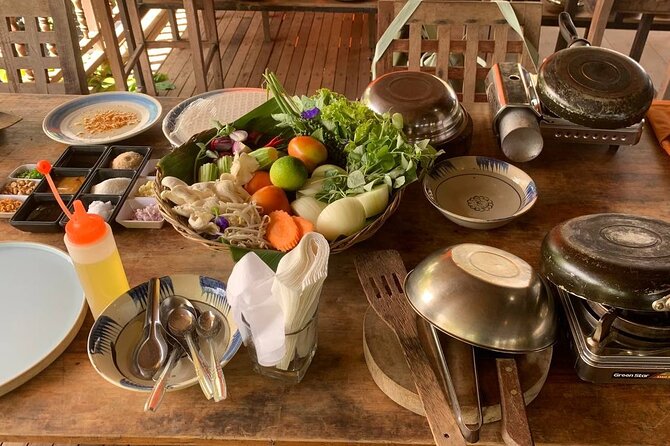
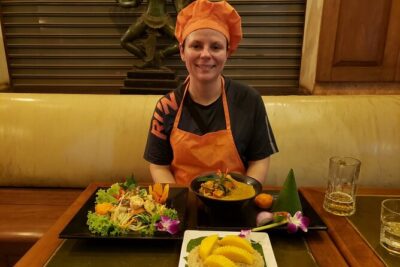
The meal is included in the price, along with the cooking class. That sounds simple, but it changes the mood of the day. You are not rushing off to find lunch after a class. You sit down and try the food while the preparation is still fresh in your mind.
Do not worry if your knife work or seasoning is imperfect. The chef’s job is to guide you, and the point is to learn by doing. One useful feature of this type of class is that your success does not depend on arriving with cooking skill. You get help as you go, then share the result with your group.
The meal also gives you a chance to compare your version with the chef’s method. Ask about the herbs, spice balance, and the way the dish would be served at home. The description promises a traditional Khmer meal but does not specify every dish, so ask at booking if you need to know the menu in advance.
The home-style setting: personal, but not polished
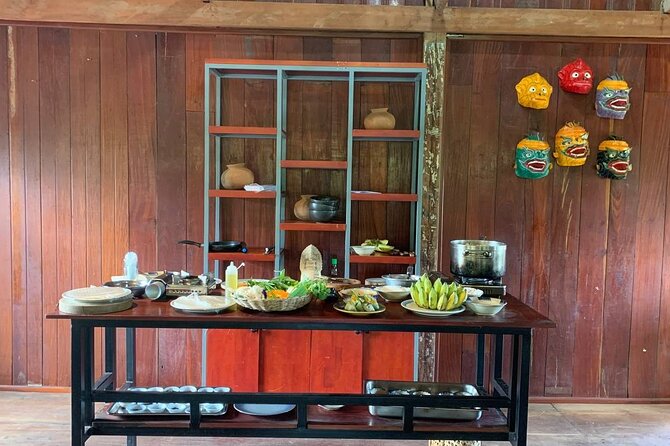
The cooking class may take place in a local home or home-style setting, including Sok San Homestay. That is a major part of its appeal. You get a look at everyday Khmer family life instead of learning in a large commercial kitchen designed mainly for tourists.
The tradeoff is comfort. One account describes basic facilities, with no ensuite bathroom, hot and cold running water, or flushing toilet, though bathroom facilities are available. This will not bother everyone, but it matters if you expect a polished culinary school.
I would choose this experience for its human contact, not for luxury. If you want spotless counters, restaurant service, and hotel-style facilities, look for a more formal cooking school. If you want to see how a family setting shapes the meal, the simpler surroundings are part of the point.
What the guides add to the day
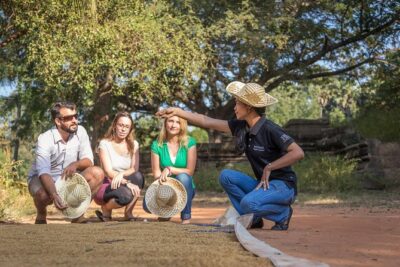
The guide is important here because the outing covers very different subjects. Kosorl is described as friendly, prompt, and engaging, with a strong connection to the places visited. Mr K is also named as a guide who brings conversation into food, history, politics, family, and daily life.
Those details tell you what kind of guiding to expect. This is not only a transfer service between attractions. You will get more from the tour if you enjoy asking questions and talking with your guide. The guide can connect the Old Market to the ingredients in your meal, or explain why a Buddhist painting matters after you have seen Cambodia’s darker history at Wat Thmey.
At the same time, guide quality can shape a private experience more than a large group tour. When booking, it is sensible to ask which guide is scheduled and whether your preferred language needs to be confirmed. The supplied details specifically identify English speaking guiding.
Is $40 good value?
At $40 per person, the price is reasonable if you want both sightseeing and a meal-based activity. Included in that amount are hotel pickup and drop-off, an English speaking guide, cold drinking water, the cooking class, and the meal.
The two extra entrance fees change the calculation. Visiting Wat Thmey and the Angkor National Museum adds $16 per person, bringing the practical total to $56 before any other personal spending. Wat Preah Prom Rath and the Old Market do not charge admission according to the supplied details.
You are paying for more than four short stops. The price also covers private transportation, guide time, ingredient shopping, instruction, and lunch. A private tour usually offers better value for a family or small group than for one person, especially if a group discount applies. Ask about the discount before booking, since no specific rate is provided.
For a half-day in Siem Reap, I consider the package good value if you would otherwise book a separate cooking class and city tour. It is less compelling if your main goal is a full day at the Angkor temples, since none of the temple entrances are part of this activity.
Who should book this experience?
I would recommend it to you if you want a first look at Siem Reap beyond the famous temple circuit. It suits people who enjoy food, conversation, local markets, and a mix of serious and everyday sights.
It also works well for students and families. The hands-on class gives younger participants something active to do, while the guide adds historical and cultural context. The private format makes it easier to manage different interests within one group.
You may want to skip it if you dislike basic home facilities, have no interest in cooking, or want a tightly focused history tour. The itinerary covers a lot in three to five hours, so each stop receives a broad introduction rather than a long scholarly visit.
The cancellation policy is friendly: cancel at least 24 hours before the start time for a full refund. Cancellations or changes made inside that window are not refunded or accepted. Confirmation is provided at booking, and the activity is listed as suitable for most participants.
Should you book the Siem Reap city tour and cooking class?
Book it if you want a compact, personal day that combines Cambodia’s recent history, Buddhist culture, local shopping, and food. The strongest reasons are the market-to-kitchen format, the private guide service, and the chance to prepare a Khmer dish such as fish amok before eating it.
Before paying, add the $16 admission cost if you plan to enter both Wat Thmey and the Angkor National Museum. Also decide how you feel about a home-style setting with basic facilities. If those points suit you, this is a useful choice for seeing Siem Reap through people, food, and memory, not only monuments.
FAQ
How long does the Siem Reap city tour and cooking class last?
The experience lasts approximately three to five hours. The listed stops are planned for about one hour each, though the exact timing may vary.
What is included in the $40 price?
The price includes an English speaking tour guide, pickup and drop-off, the cooking class, the meal, and cold drinking water.
Are entrance fees included?
No. Wat Thmey costs $4 per person, and the Angkor National Museum costs $12 per person. The Old Market and Wat Preah Prom Rath are listed as free.
Is this a private activity?
Yes. Only your own group takes part in the private tour and cooking activity.
Does the experience include a market visit?
Yes. Before the cooking class, you visit a local market with the chef to select fresh ingredients for the meal.
Can I cancel for a full refund?
Yes, if you cancel at least 24 hours before the experience start time. Cancellations and changes made less than 24 hours in advance are not accepted, and the amount paid is not refunded.
Just added around Siem Reap
- Ultimate Sunrise to Angkor Wat, Angkor Thom and Bayon Temple★ 5.0 · 3 reviews
- Twilight Tastes of Siem Reap Include Dinner★ 5.0 · 13 reviews
- Trekking Tour at Phnom Kulen National Park from Siem Reap★ 5.0 · 3 reviews
- Full-Day Private Tour of Angkor Wat with Pick Up★ 5.0 · 12 reviews
- Private Day Trip to Angkor Temples with Expert Guide★ 5.0 · 4 reviews
- Waterfall & River of 1000 Siva Linga- Kulen Mountain Private Tour★ 5.0 · 3 reviews
- Professional Photo Shoot in Angkor Archaeological Park, Siem Reap★ 5.0 · 42 reviews
- Siem Reap City Tour with War Museum and Killing Field★ 5.0 · 27 reviews
Cooking Classes, compared.
Khmer Cooking Class at a Local’s Home in Krong Siem Reap
Read our review →
Award-Winning Cooking Class Experience with Professional Teacher
Read our review →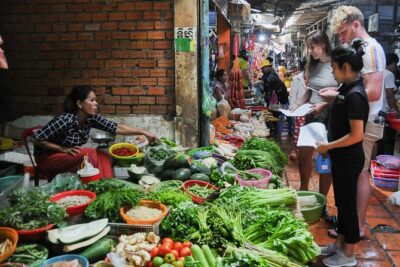
Browse the lists this tour appears in