
Reviewed · COOKING CLASSES
Award-Winning Cooking Class Experience with Professional Teacher
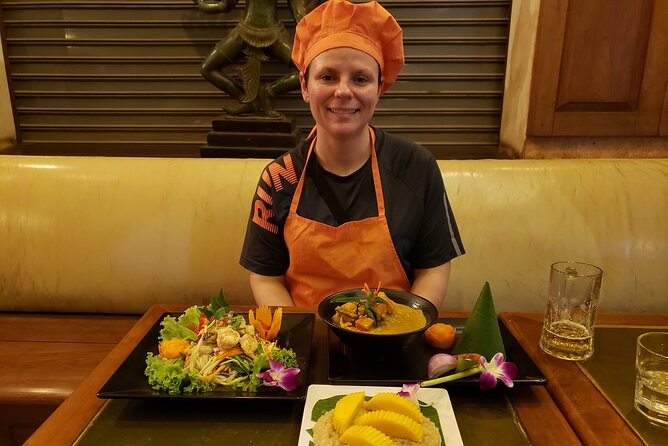
Siem Reap’s Paper Tiger Cooking Class turns a market visit into dinner. You’ll learn how Khmer cooks use local produce, prepare dishes such as fish amok, chicken curry, beef loc lac, and green mango salad, then sit down to eat a three-course meal you helped make. I especially like the choice of dishes and the warm, patient teaching reported from instructors including Sopheap, Sinuon, and Channy.
The market stop gives you useful food context before the knives come out, and the $22 price covers the class, meal, and digital recipes. The main caution is comfort: the open-air kitchen can become very hot, and one account raised concerns about equipment and recipe follow-up. Bring extra water and keep expectations practical rather than restaurant-polished.
Key points to know before booking
- Choose your own Khmer dishes: Menus can include fish amok, chicken curry, beef loc lac, green mango salad, vegetarian options, and flambéed bananas.
- Start with a local market visit: You’ll see the produce, meat, herbs, and spices used in Khmer cooking near Pub Street.
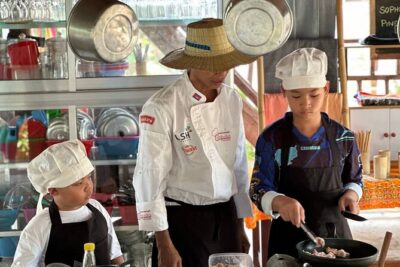
- Expect hands-on preparation: You chop vegetables, mix seasonings, make amok paste, and cook under your instructor’s guidance.
- Your meal is included: The class prepares a starter, main course, and dessert for lunch or dinner.
- Small enough for personal help: The maximum group size is 20, though some sessions have been much smaller.
- Plan for heat: The kitchen is open to the outside and uses an open flame, so bring water and dress for a warm cooking session.
Why this is a useful first taste of Siem Reap
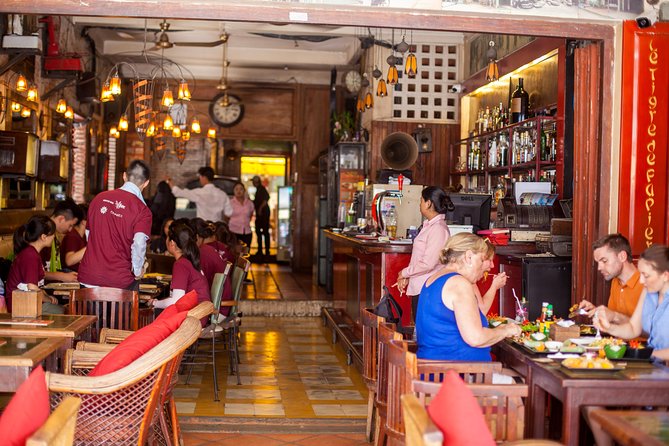
Food can give you your bearings quickly. At Paper Tiger, you meet in the middle of Pub Street, then move into a lesson that connects what you see in the market with what lands on your plate.
Paper Tiger has been teaching visitors since 2001, so this is not simply a restaurant demonstration. You are expected to take part. The teacher explains ingredients and cooking methods, then lets you do much of the chopping, seasoning, and preparation yourself.
I like this format because Cambodian food can look simple on the plate while depending on a careful balance of herbs, aromatics, paste, sweetness, salt, and heat. Making the food gives you a better sense of those layers than ordering a finished dish at a restaurant.
The class is aimed at ages 8 to 70, which makes it a reasonable choice for families, couples, and mixed-age groups. A child who enjoys practical activities can take part, though an adult should judge how comfortable that child is around knives, hot pans, and an open flame.
A few more Siem Reap trips to weigh up
- Khmer Cooking Class at a Local’s Home in Krong Siem Reap
★ 5.0 · 2,731 reviews - Siem Reap: Khmer Cooking Class at a Local’s Home
★ 5.0 · 1,108 reviews - Cambodian Village Cooking Class
★ 5.0 · 265 reviews
The market visit near Pub Street
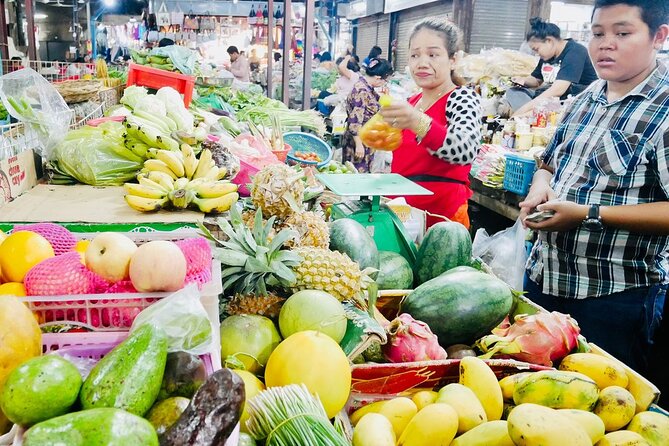
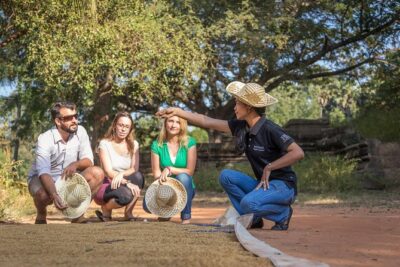
The historic market tour is a short but important opening chapter. You’ll look at fresh produce and meats, with the teacher identifying ingredients used in Khmer cooking and explaining their place in local meals.
This part helps you connect unfamiliar ingredients with the dishes you’ll prepare later. You might see herbs, vegetables, fruit, spices, and meats that are easy to pass by when shopping alone. One especially useful detail is that local markets show both what Cambodia grows and what it needs to bring in from elsewhere.
The quality of this stop depends heavily on the instructor. Sopheap, Sinuon, and Channy are repeatedly praised for explaining ingredients clearly and adjusting the amount of help they give. Channy, for example, is described as making the market visit more than a walk past stalls by answering questions and linking the produce to the meal.
Do not expect a long food-market tour with a separate shopping budget. The purpose is to observe and learn, then return to the kitchen. The experience information does not promise that you will personally select and purchase every ingredient used in your recipes.
Cooking fish amok, curry, loc lac, and salad
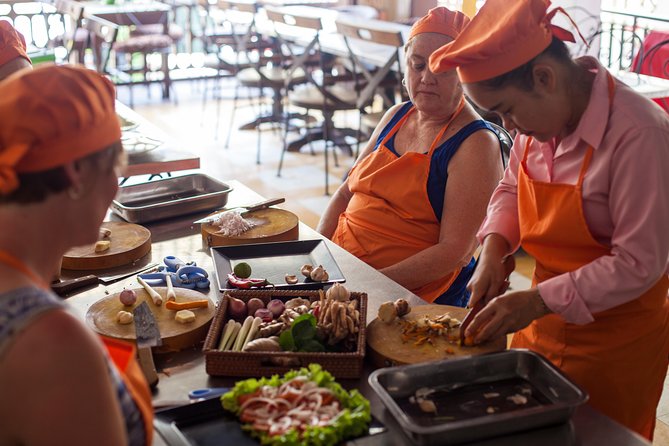
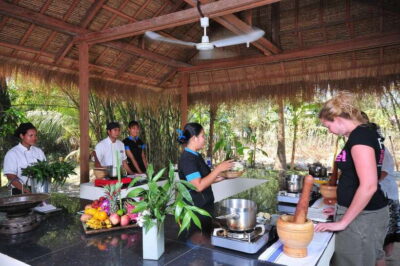
Back at Paper Tiger, the class becomes practical. Your teacher demonstrates each step, then you prepare the ingredients and cook with guidance. The exact menu can vary, but the examples include fish amok, chicken curry, beef loc lac, green mango salad, and other Khmer classics.
Fish amok is one of the best choices if you want a Cambodian dish with a clear local identity. You may make the amok paste yourself, working through the herbs and seasonings rather than starting with a ready-made mixture. That gives you a more useful recipe for home cooking.
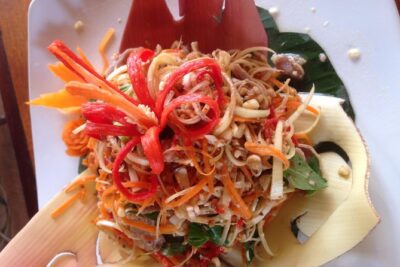
Chicken curry offers a familiar route into Khmer flavors, while beef loc lac gives you a different style of dish with meat and seasoning at the center. Green mango salad is a good pick if you want something fresh and sharp alongside a richer main course.
The class also offers meat, fish, and vegetarian choices. You should confirm your preferences with the teacher at the start, especially if your group has different tastes. The most common structure is one starter, one main, and one dessert, not three full mains per person.
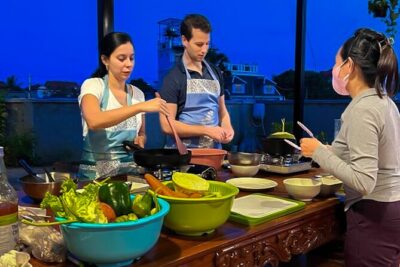
The hands-on work is a real benefit. You may chop most of the vegetables, prepare spices, stir the pan, or shape the final dish. The teacher remains close enough to correct technique and explain why a step matters, rather than simply cooking in front of you while you watch.
Portions appear generous. Several sessions produced more food than small groups could finish, with leftovers in some cases. That is good value for hungry diners, though you should not assume you can take food away unless the staff confirms it.
The instructors make the biggest difference
The class is sold with a professional teacher, but the person leading your session shapes the experience more than the title does. Sopheap receives especially strong praise for patience, humor, and clear instructions. Sinuon is also repeatedly described as warm, flexible, and skilled at helping people through each stage.
Channy is noted for her market knowledge and her ability to involve each person at the right level. Rith is mentioned as an instructor who answers questions and explains the food carefully. The supplied information also names Jenny as a teacher who could guide both visitors and Cambodian participants who had never cooked before.
This range of names suggests that the experience is not tied to one single personality. It also means the standard may vary from one class to another. Most accounts describe teachers who are engaged and encouraging, but one disappointing session involved a rushed market visit and limited instruction.
That difference matters if cooking is your main reason for booking. A good teacher can turn a basic recipe into a lesson about Cambodian home cooking. A hurried teacher can make the same three hours feel like a quick meal-preparation task.
Same country, a completely different kind of day:
- Angkor Wat Sunrise or Sunset Tour with Guide from Siem Reap
★ 5.0 · 12,109 reviews - Siem Reap: Angkor Wat: Small-Group Sunrise or Sunset Tour
★ 5.0 · 9,444 reviews - From Siem Reap: Kampong Phluk Floating Village Tour by Boat
★ 4.9 · 6,979 reviews - Sunset tour of Kampong Phluk stilts home village on the Tonle Sap
★ 5.0 · 4,865 reviews
Eating the meal you prepared
The best payoff comes when the cooking ends and the class sits down to eat. Your lunch or dinner is included, so the final meal is not an extra tasting added to the price. You get to compare the dishes your group made and see how the ingredients work together.
I like this shared-table finish because it gives the lesson a clear purpose. You are not chopping food for a demonstration that someone else eats. You prepare the meal, taste the result, and decide which recipes are worth repeating at home.
Dessert can include flambéed bananas, which receives special praise for being a memorable end to the meal. Presentation also matters here. One account highlights careful plating, while another describes the meal as one of the best parts of the whole experience.
Drinks are a less clear point. Water is not listed among the inclusions, and one session involved an extra charge for bottled water. Bring your own water or ask about drink prices before ordering. Given the heat of the kitchen, this is a small but useful precaution.
How much value do you get for $22?
At $22 per person, the class offers three hours of instruction, a market visit, the cooking activity, and the meal you prepare. You also receive digital recipes so you can attempt the dishes again at home.
That is strong value if you want an activity rather than just a restaurant meal. You receive food, instruction, and a local market introduction in one package. The value improves for couples or families who would otherwise pay separately for a meal and another organized activity.
The class can also produce a large amount of food. In smaller sessions, two people may end up with more than they can eat. That is generous, though the portion size may feel excessive if you have a light appetite or several other meals planned.
Group discounts are available, but the discount terms are not specified in the supplied details. The maximum group size is 20, so you should not assume every booking will be private. Some classes have ended up with only two people, while others include a small group.
There is no private transportation. You meet at 9V33+XWF, 59 Street 08, in Krong Siem Reap, near the middle of Pub Street, and the activity ends back there. The location is near public transportation, making this easier to reach from central Siem Reap than an out-of-town farm class.
Heat, equipment, and other practical cautions
The cooking area is open to the outside and uses an open flame. One account describes the kitchen as uncomfortably hot, with temperatures above 35 degrees Celsius and only a fan. I would choose loose clothing, tie back long hair, and carry water.
The class is not presented as an air-conditioned kitchen. If you struggle with heat, consider booking a cooler part of the day if the available schedule allows it. The experience data does not list exact class times, although a 5 p.m. session is specifically mentioned in one account.
Most sessions are described as clean, fun, and easy to follow. However, one detailed complaint questioned the condition of pans, uncovered spice containers, and cross-use of utensils. This is a serious food-safety concern, even though it does not match the many positive accounts.
I would treat this as a hands-on local cooking space, not a polished culinary school. If you have strict hygiene needs, allergies, or food restrictions, ask questions before you begin. The provided details confirm vegetarian options, but they do not give a full allergy or dietary policy.
Recipe follow-up is another point to check. Digital recipes are included, but one participant reported receiving recipes that did not match the dishes cooked and having trouble getting a corrected set. Save the dish names during class and confirm how the digital recipe book will be delivered.
Who will enjoy this class most?
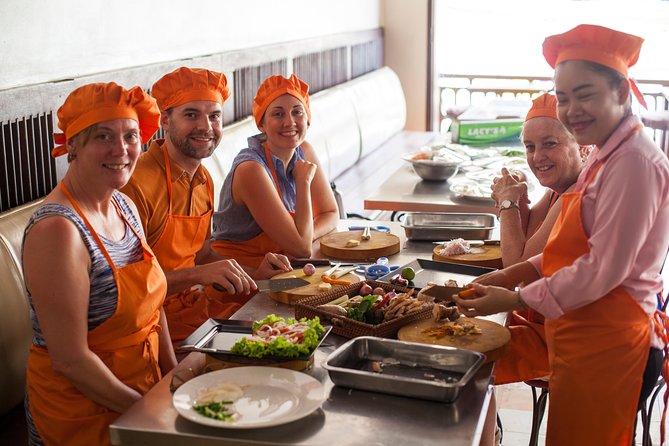
This is a good fit for you if you want to do more than look at temples and eat restaurant food. It gives you a relaxed way to learn about Khmer ingredients, work with your hands, and finish with a full meal.
Families can benefit from the age range of 8 to 70, provided younger children can manage the cooking setup. Couples and friends may enjoy choosing different dishes so the group can share a wider range of flavors.
It also suits people who are new to Southeast Asian cooking. Instructors explain ingredients and methods as you go, and you can ask questions while preparing the food. You do not need to arrive as an experienced cook.
Experienced home cooks may still enjoy the market context and local methods, but should keep expectations realistic. You may not receive restaurant-level precision, advanced culinary theory, or a perfectly standardized recipe for every dish.
I would not make this your first choice if you need private transport, air conditioning, a guaranteed private class, or tightly controlled dietary preparation. The class is social and practical, with some variation in group size and teaching style.
Timing, meeting point, and cancellation
The activity lasts about three hours and returns to the meeting point. You should allow a little breathing room around it rather than scheduling a temple visit or flight immediately afterward.
The starting point is 59 Street 08, listed as 9V33+XWF, in central Siem Reap. Since there is no private transportation, check the map and allow time to reach the Pub Street area.
Confirmation is received at booking. Free cancellation is available up to 24 hours before the local start time. Changes or cancellations inside that 24-hour window are not accepted for a refund.
Should you book the Paper Tiger cooking class?
I would book it if you want a good-value, hands-on introduction to Khmer food and are happy with a warm, open-air kitchen. The market stop, choice of dishes, generous meal, and digital recipes make this more useful than a simple cooking demonstration.
Go in with three practical plans: bring water, ask which dishes and drinks are included, and confirm how you will receive the recipes. If possible, choose an instructor-led session with enough time for questions, and tell the teacher about dietary needs before shopping or cooking begins.
The high overall rating and the many strong accounts point to an experience that usually succeeds because of its teachers, especially Sopheap, Sinuon, and Channy. But the isolated complaints about rushed instruction, heat, equipment, and recipe delivery are worth taking seriously.
For most visitors spending a few days in Siem Reap, this is a worthwhile change of pace. You leave with a full meal, a better grasp of local ingredients, and recipes that may bring a taste of Cambodia back to your own kitchen.
FAQ
Where does the cooking class meet?
It meets at 9V33+XWF, 59 Street 08, Krong Siem Reap 171000, Cambodia, in the middle of the Pub Street area.
How long does the activity last?
The cooking class and market visit take approximately three hours.
What age range is allowed?
The experience is listed for ages 8 through 70.
How many people can join the class?
The maximum group size is 20 people. Group size can be smaller, and some sessions have had only two participants.
What food can I learn to cook?
Possible dishes include fish amok, chicken curry, beef loc lac, green mango salad, vegetarian dishes, and flambéed bananas. The usual structure is one starter, one main, and one dessert.
Is food included in the price?
Yes. Lunch or dinner prepared during the class is included, along with the cooking lesson and historic market tour.
Can I cancel for a full refund?
Yes. You can cancel at least 24 hours before the experience start time for a full refund. Cancellations or changes made less than 24 hours ahead are not accepted for a refund.
Just added around Siem Reap
- Ultimate Sunrise to Angkor Wat, Angkor Thom and Bayon Temple★ 5.0 · 3 reviews
- Twilight Tastes of Siem Reap Include Dinner★ 5.0 · 13 reviews
- Trekking Tour at Phnom Kulen National Park from Siem Reap★ 5.0 · 3 reviews
- Full-Day Private Tour of Angkor Wat with Pick Up★ 5.0 · 12 reviews
- Private Day Trip to Angkor Temples with Expert Guide★ 5.0 · 4 reviews
- Waterfall & River of 1000 Siva Linga- Kulen Mountain Private Tour★ 5.0 · 3 reviews
- Professional Photo Shoot in Angkor Archaeological Park, Siem Reap★ 5.0 · 42 reviews
- Siem Reap City Tour with War Museum and Killing Field★ 5.0 · 27 reviews
Cooking Classes, compared.
Khmer Cooking Class at a Local’s Home in Krong Siem Reap
Read our review →
Browse the lists this tour appears in