
Reviewed · ANGKOR WAT TOURS
Private Tour: (Avoid Crowds & Heat) 2-Day Angkor Temples
Angkor is at its best when you can change your pace. This private two-day tour pairs the famous temples with quieter ruins such as Banteay Samre and Ta Nei, while your guide works around heat and crowds. Guides including Tay, Sopheara, Viet, and Kim have earned especially warm praise for their temple knowledge and personal attention.
I like the route for two reasons: it gives you the big sights without making every stop feel like a photo queue, and the air-conditioned vehicle, snacks, cold water, and cool towels make Cambodia’s heat easier to handle. The main drawback is cost planning: the $62 tour price does not include the Angkor pass, which adds $62 per person for a two or three-day visit.
Key points at a glance
- A private route beyond Angkor Wat: Visit Banteay Srei, Banteay Samre, Preah Khan, Neak Pean, and Ta Nei, not only the famous central temples.
- Crowd-aware planning: The guide can adjust the order and pace, with Ta Nei chosen specifically as a quieter temple.
- Two very different days: Day one focuses on outlying and lesser-known ruins, while day two brings Angkor Wat, Angkor Thom, Bayon, and Ta Prohm.
- Comfort in the Cambodian heat: Travel by private air-conditioned vehicle with snacks, refreshments, cold water, and cool towels.
- Sunrise or sunset available: Tell your guide on day one if you want to add sunrise or sunset the next day at no extra charge.
- A strong fit for first-time visitors: The licensed guide provides the historical framework that helps the carvings, towers, and enormous temple cities make sense.
Why this two-day Angkor plan works
A first visit to Angkor can feel like a pile of grand names: Angkor Wat, Bayon, Ta Prohm, Baphuon, Preah Khan, and more. This tour gives those names a sensible shape. You spend the first day with temples outside the main circuit, then use the second day for the monuments most people come to Siem Reap to see.
That order has a practical benefit. You get time to learn the broad story of Khmer architecture before reaching Angkor Wat and Angkor Thom. By day two, you can better recognize the difference between earlier brick temples, later Buddhist monuments, carved lintels, giant faces, and jungle-wrapped ruins.
The private format matters too. Only your group participates, so you are not locked into a large group’s timetable. You can ask questions, linger over a carving, or move along when the heat starts to win. The guide and driver provide hotel pickup and drop-off in Siem Reap, with a listed start time of 7:30 a.m.
More Angkor Wat Tours in Siem Reap:
- Angkor Wat Sunrise or Sunset Tour with Guide from Siem Reap
★ 5.0 · 12,109 reviews - Siem Reap: Angkor Wat: Small-Group Sunrise or Sunset Tour
★ 5.0 · 9,444 reviews - Siem Reap: Angkor Wat 2-Day Tour with Sunrise and Sunset
★ 4.9 · 4,429 reviews
Day one: pink sandstone and the Big Loop
Banteay Srei, the Citadel of Beauty
Banteay Srei is more than a warm-up stop. Built in the second half of the 10th century, this small temple is known for its detailed carving and pink sandstone. It sits a little more than 20 kilometers north of Angkor, so reaching it takes you away from the central cluster.
You have about an hour here. That is enough time to study the fine decoration without trying to cover an enormous temple city. The scale is modest compared with Angkor Wat, but the carving is the reason to come. Look closely at the doorways, pediments, and towers rather than rushing around for a single wide photograph.
Banteay Srei can be a busy stop, and the tour’s promise to avoid crowds does not mean every temple will be empty. Still, placing it first gives you a useful early start and leaves the rest of the day for sites with a quieter feel.
Banteay Samre, a peaceful temple with Angkor Wat echoes
The next stop is Banteay Samre, with about 45 minutes to explore. Built in the first half of the 12th century, its tower style is linked to the design language you will see at Angkor Wat.
This is a good contrast with Banteay Srei. Instead of delicate pink sandstone carving being the main event, Banteay Samre gives you a more isolated setting and a calmer look at temple structure. I like this stop because it helps you notice how Khmer builders repeated and refined ideas across different sites.
The tour description calls it an isolated temple, but conditions can vary. Treat the quieter setting as a welcome possibility rather than a guarantee of solitude.
A few more Siem Reap trips to weigh up
- Angkor 2-Day Sunset & Sunrise Small-Group Tour
★ 5.0 · 2,567 reviews - 2 Days Exclusive Temple Highlights with Sunset and Sunrise Tour
★ 5.0 · 1,157 reviews - Siem Reap: Angkor Sunrise 1- or 2-Day Guided Temples Tour
★ 4.9 · 1,132 reviews - 2 Days Guided Historical Tour in Angkor
★ 5.0 · 855 reviews
Pre Rup and the appeal of mixed stone
Pre Rup receives about 30 minutes. Its name means turning the body, and it dates from the middle of the 10th century. The temple’s visual appeal comes from the mix of laterite, brick, and sandstone, with each material bringing a different color and texture.
Half an hour is a short visit, but it can work well after the more detailed stops. You can focus on the overall form, the warm stone colors, and the way the temple rises in levels. If you enjoy climbing, you will find the upper areas especially rewarding, but the stairs and uneven surfaces require care.
A five-star assessment of the tour specifically warned about lots of stairs and climbing. That is useful advice. You do not need to be an athlete, but comfortable shoes and an honest sense of your own mobility will make these two days more enjoyable.
Preah Khan, a former Buddhist university and city
Preah Khan gets about an hour, which is appropriate for a large and layered site. Jayavarman VII built it in the late 12th century as a Buddhist university and city. Its atmosphere recalls Ta Prohm, yet its details are different, including a distinctive round-columned, two-story building.
This is one of the day’s most rewarding stops if you like ruins that reveal several uses and building styles at once. You are not simply looking at one central tower. You are moving through a wider complex where corridors, courtyards, stonework, and vegetation create changing views.
Your guide is particularly valuable here. Without context, Preah Khan can seem like an endless sequence of doorways. With a licensed guide, you can connect the remains to Jayavarman VII’s building program and understand why the site mattered beyond its appearance.
Neak Pean, a small monument in the water
Neak Pean takes about 30 minutes. Built in the late 12th century by Jayavarman VII, it was intended for miraculous healing. The unusual monument sits in the middle of a pond and carries a symbolic meaning tied to purity and healing.
This is a different kind of temple visit. You are not exploring a vast complex or climbing a tall pyramid. The approach and water setting are the main parts of the experience, so the stop provides a change of pace after Preah Khan.
The allotted time is enough for a focused visit, though you should not expect a long, open-ended exploration. If you enjoy symbolism and unusual settings, Neak Pean will likely stay with you. If you prefer large ruins with many corridors, it may feel brief.
Day two: Angkor Wat, Angkor Thom, and jungle ruins
Angkor Wat, the essential two-hour visit
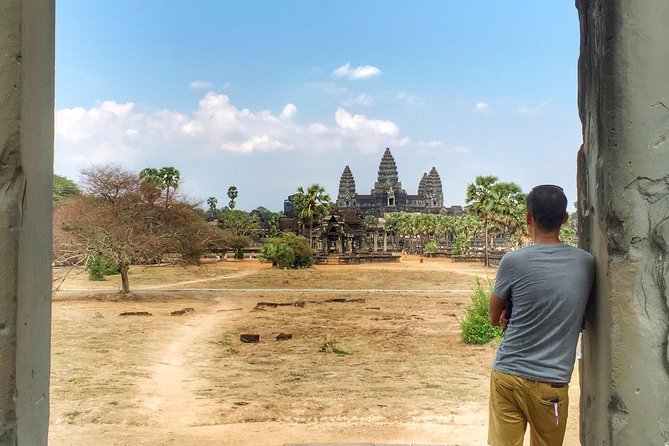
Day two begins with Angkor Wat, described as the world’s largest religious monument. You have about two hours, enough to see the main approach, courtyards, galleries, towers, and major carvings at a purposeful pace.
Angkor Wat can overwhelm you at first. Its scale is the point, but scale alone does not explain the site. Your guide can help connect the layout, reliefs, towers, and religious purpose so you are not left admiring only the famous front view.
Two hours is useful but not endless. You will see the central highlights, yet you may want more time if you study every carved panel or move slowly. The optional sunrise can add another layer to the visit. You must tell your guide on day one if you want sunrise or sunset the following day, and the extra arrangement is complimentary.
Do not assume a sunrise request solves every crowd issue. Angkor Wat is the best-known temple in the park, so it naturally draws people. The value of the private guide is the ability to manage the rest of your timing and explain what you are seeing.
Angkor Thom, a walled royal city
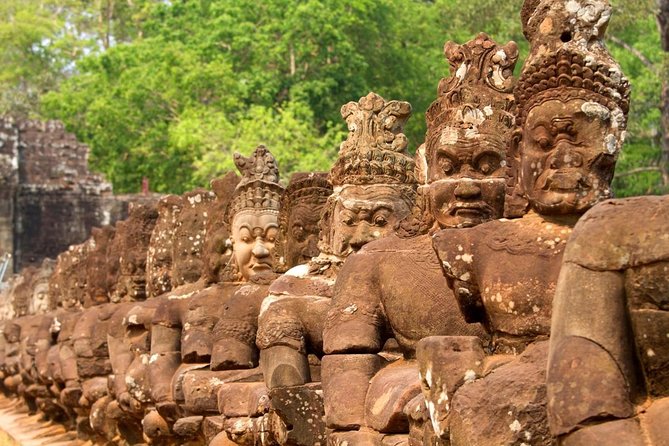
Angkor Thom receives about two hours. This is not one temple but a former Khmer capital enclosed by walls, with Bayon, Phimeanakas, Baphuon, the Terrace of the Elephants, the Terrace of the Leper King, Prah Palilay, and other monuments within it.
The scale changes your idea of what a temple visit can be. You are touring an urban center, not just walking up to a shrine. A guide can make the city easier to read by pointing out how its major monuments fit within the wider royal and ceremonial plan.
Bayon is the obvious highlight, with its famous carved faces. Baphuon offers another strong architectural experience, while the terraces add a sense of royal display. Two hours lets you cover the key areas, though it will feel active and demanding in the heat.
This is also where the private setup earns its keep. Angkor Thom contains enough separate sights to make a fixed group schedule frustrating. Your guide can tell you when a stop deserves extra time and when it is better to keep moving toward the next major monument.
Ta Prohm, where trees press into stone
Ta Prohm gets an hour and brings the romantic, overgrown side of Angkor. Strangler figs and silk-cotton trees twist among the ruins, creating the famous image of nature pressing through human construction.
The trees are not just decoration. They change how you move through the temple and how you understand its preservation challenges. One moment you are studying carved stone, and the next a root or trunk becomes part of the view.
Ta Prohm is also well known as a filming location, which adds to its fame and its crowds. An hour is enough for the main route, but it can feel short if you want to stop often. Follow your guide’s timing advice, especially if the paths are busy.
Ta Nei, a quieter Buddhist temple
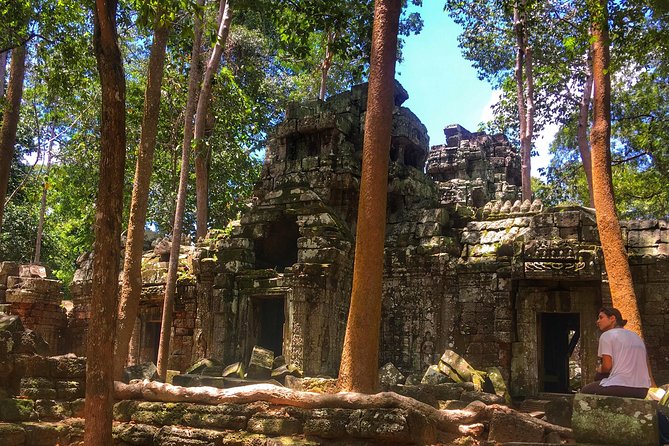
Ta Nei is the final listed stop and takes about 30 minutes. Built during the late 12th century under Jayavarman VII, it is a Buddhist temple chosen in part because it offers a way to avoid the crowds.
This smaller, unrestored jungle temple is a smart finish. After the major monuments, Ta Nei lets you see a less polished side of Angkor. The setting and limited restoration make the visit feel more exploratory, though you should expect uneven ground and fewer grand architectural features than at Angkor Wat or Bayon.
Do not judge Ta Nei by size. Its value is the change in mood. You have already seen the monuments that define Angkor, and now you can spend half an hour with a quieter ruin where the surroundings matter as much as the building.
A guide can change the whole experience
The most praised part of this tour is the guiding. Names specifically associated with strong experiences include Tay, Sopheara, Viet, and Kim. Tay is praised for managing temple order and views to reduce time among crowds. Sopheara is described as highly educated and especially strong on the history. Viet is noted for shaping the visit around the group’s interests, while Kim is praised for explaining Khmer civilization and architecture with patience.
You cannot necessarily request one of these guides, so think of the names as examples of the provider’s guiding strength, not a guarantee. The important feature is the licensed local guide, who can explain the temples in clear English and answer questions as you go.
I would ask on day one about the next day’s sunrise or sunset plan, how much climbing is expected, and which temples can be adjusted if you need a slower pace. The private format gives you room to discuss those choices.
Transport, refreshments, and the heat factor
The tour uses a private air-conditioned vehicle, with hotel pickup and drop-off in Siem Reap. That matters more than it may sound. Two full temple days involve repeated transitions between outdoor heat, stone surfaces, and walking routes, so a cool vehicle gives you a place to recover.
Snacks and refreshments are included. Specific feedback also highlights cold water and lemongrass-scented cool towels. These small comforts do not replace sensible clothing, water, and sun protection, but they make the long day easier.
The schedule begins at 7:30 a.m., and many stops are timed between 30 minutes and two hours. You should expect an active trip, not a slow luxury outing. Stairs, climbing, uneven ground, and long walks are part of the experience, so comfortable footwear is essential.
What the $62 price really covers
The listed tour price is $62, with group discounts available. For a private two-day experience with a licensed guide, private transport, hotel transfers, snacks, and refreshments, that is a reasonable base price.
The important catch is the Angkor Archaeological Park entrance pass. It is not included, and the supplied price for a two or three-day pass is $62 per person. That means you should budget at least $124 per person before any other personal expenses, assuming the listed tour price applies per participant.
The value is strongest for first-time visitors who want structure and interpretation. You are paying not only for a car but also for a guide who can arrange the order of the temples, adapt the pace, and make the ruins easier to understand. If you already know Angkor well and prefer to arrange transport independently, the added cost may be less appealing.
Who should book this private tour?
I would choose this experience if you are visiting Angkor for the first time and want the major temples covered without giving up quieter sites. It is also a good match for history fans, photographers who value flexible timing, couples, families, and small groups who prefer their own vehicle and guide.
It suits people who can handle two active days with stairs and climbing. If you need a very relaxed schedule or have limited mobility, ask about pacing before booking, since the listed route includes several large complexes and uneven temple grounds.
The tour is less suitable if you want only Angkor Wat and a short temple outing. In that case, two days and the additional entrance cost may be more than you need. It is designed for a broad look at the Angkor area, not a quick visit to one famous monument.
Should you book it?
Book this tour if you want a well-shaped first visit, private transport, clear historical background, and a mix of famous and quieter temples. The strongest reasons are the crowd-aware planning, the chance to adjust your pace, and the comfort of returning to an air-conditioned vehicle between ruins.
Before paying, add the $62 park pass to your budget and be ready for stairs, heat, and substantial walking. If those points work for you, this is a strong-value way to see Angkor in two days, especially when you want more than the standard Angkor Wat photograph.
FAQ
Is the Angkor entrance ticket included?
No. The Angkor Archaeological Park entrance ticket is separate. The listed cost is $62 per person for a two or three-day visit.
Is this a private tour?
Yes. Only your group participates in the activity.
Does the tour include hotel pickup and drop-off?
Yes. Pickup and drop-off at hotels in Siem Reap are included.
What time does the tour start?
The listed start time is 7:30 a.m.
Is transport air-conditioned?
Yes. Transport is provided in a private air-conditioned vehicle.
Are snacks and refreshments included?
Yes. Snacks and refreshments are included. The tour information also notes cold water and cool towels as part of the service.
Can I request sunrise or sunset?
Yes. Tell your guide on day one if you would like sunrise or sunset the following day. This is offered at no extra charge.
Which temples are visited?
The route includes Banteay Srei, Banteay Samre, Pre Rup, Preah Khan, Neak Pean, Angkor Wat, Angkor Thom, Ta Prohm, and Ta Nei.
Can I cancel for a full refund?
Yes, if you cancel at least 24 hours before the experience start time. Cancellations made less than 24 hours before the start time are not refunded, and changes within that period are not accepted.
Just added around Siem Reap
- Ultimate Sunrise to Angkor Wat, Angkor Thom and Bayon Temple★ 5.0 · 3 reviews
- Twilight Tastes of Siem Reap Include Dinner★ 5.0 · 13 reviews
- Trekking Tour at Phnom Kulen National Park from Siem Reap★ 5.0 · 3 reviews
- Full-Day Private Tour of Angkor Wat with Pick Up★ 5.0 · 12 reviews
- Private Day Trip to Angkor Temples with Expert Guide★ 5.0 · 4 reviews
- Waterfall & River of 1000 Siva Linga- Kulen Mountain Private Tour★ 5.0 · 3 reviews
- Professional Photo Shoot in Angkor Archaeological Park, Siem Reap★ 5.0 · 42 reviews
- Ultimate Siem Reap Food Tour by Tuk Tuk – 20 Tastings, 8 Stops★ 5.0 · 13 reviews
Angkor Wat Tours, compared.

Angkor Wat Sunrise or Sunset Tour with Guide from Siem Reap
Read our review →
Angkor Wat: Small-Group Sunrise or Sunset Tour
Read our review →
Angkor Wat 2-Day Tour with Sunrise and Sunset
Read our review →

Angkor Wat Sunrise tour with Small – Group and Guide tours
Read our review →
Angkor Wat Highlights and Sunrise Guided Tour from Siem Reap
Read our review →
Angkor Wat Sunset Small Group Tour with Lunch Included
Read our review →
Full-Day Angkor Wat Sunrise Private Tour with Guide from Siem Reap
Read our review →Browse the lists this tour appears in