
Reviewed · ANGKOR WAT TOURS
2-Day Angkor Wat With Small, Big Circuit & Banteay Srei Tour
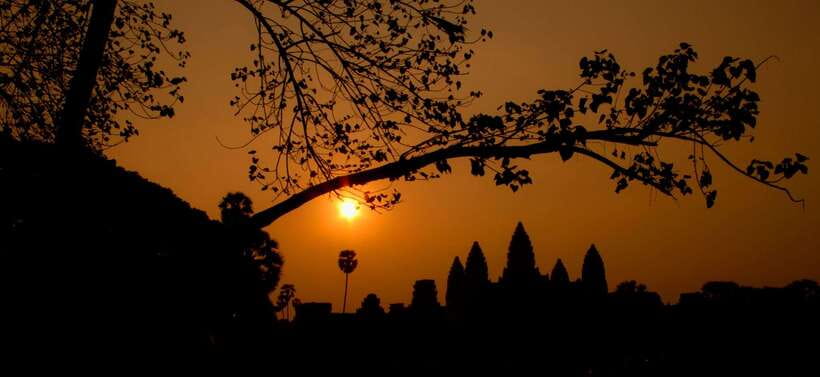
Angkor Wat is only the beginning. This private two-day tour takes you from the famous towers to quiet jungle temples, the smiling faces of Bayon, and the pink sandstone carvings of Banteay Srei. The second morning begins with sunrise behind Angkor Wat, then heads into the wider temple area and nearby rice fields.
I like the private guide and flexible pace, which let you spend more time at the temples that interest you. I also like the practical care: air-conditioned transport, cold water, and cool face towels at stops. The main drawback is the long, full schedule. You will cover a lot of ground, and the temple pass, meals, and sunrise start add to the cost and effort.
Key points to know before booking
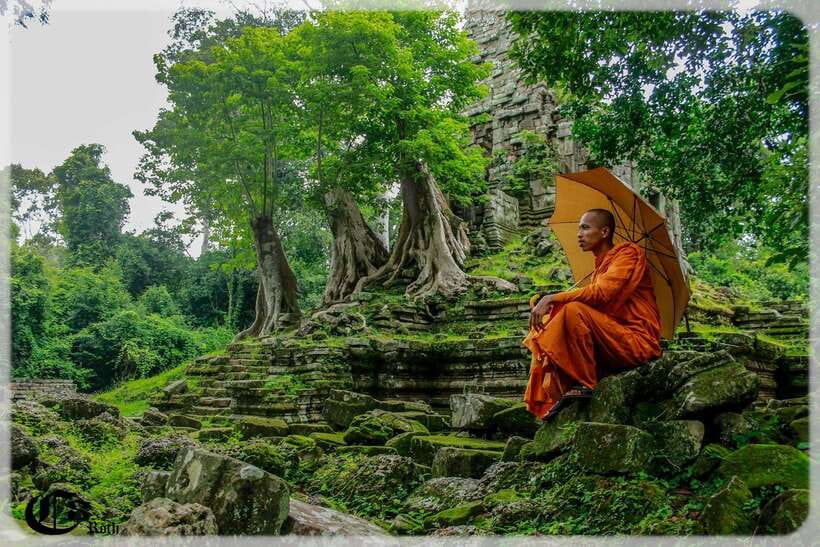
- Two full days cover the major temples and quieter outer sites, including Angkor Wat, Ta Prohm, Bayon, Preah Khan, and Banteay Srei.
- Sunrise at Angkor Wat is built into Day 2, followed by a return for breakfast before the temples reopen as your main focus.
- The private format gives you room to adjust the pace, with guides such as Bunhak and Chhay praised for clear explanations and good photo stops.
- Cool towels and cold water are supplied, a small but welcome comfort during long walks in Cambodia’s heat.
- The $136 price excludes the temple pass, which costs $62 per person for two or three days, plus food.
- The itinerary is ambitious, so this suits an active sightseer more than someone wanting slow mornings and long breaks.
What the two-day Angkor plan really gives you
At $136 per person, this is not an entrance ticket bundled with a quick drive past the ruins. It is a private, guided two-day program covering the central temples, the larger circuit, and the countryside sites around Banteay Srei.
The required temple pass costs another $62 per person for two or three days. That brings the known cost to $198 before lunch and breakfast. For that price, you receive hotel pickup and drop-off, private air-conditioned transport, an English-speaking licensed guide, drinking water, and face towels.
The value depends on how much help you want. Angkor is spread over a large area, and moving between temples takes time. A private vehicle removes the need to arrange separate transport, while a guide can explain the carvings, religious stories, and layers of Cambodian history that are easy to miss when you walk through alone.
You also have the advantage of a private group. The guide can adjust the timing to your interests, at least within the broad two-day plan. If you care more about sculpture than photographs, or prefer a shorter stop at one temple and longer time at another, this setup gives you more say than a large shared bus.
More Angkor Wat Tours in Siem Reap:
- Angkor Wat Sunrise or Sunset Tour with Guide from Siem Reap
★ 5.0 · 12,109 reviews - Siem Reap: Angkor Wat: Small-Group Sunrise or Sunset Tour
★ 5.0 · 9,444 reviews - Siem Reap: Angkor Wat 2-Day Tour with Sunrise and Sunset
★ 4.9 · 4,429 reviews
Day 1 begins with Angkor Wat
Morning pickup takes place at your Siem Reap accommodation. You need to provide the hotel name, address, phone number, and website, then wait in the lobby about 10 minutes before the scheduled pickup.
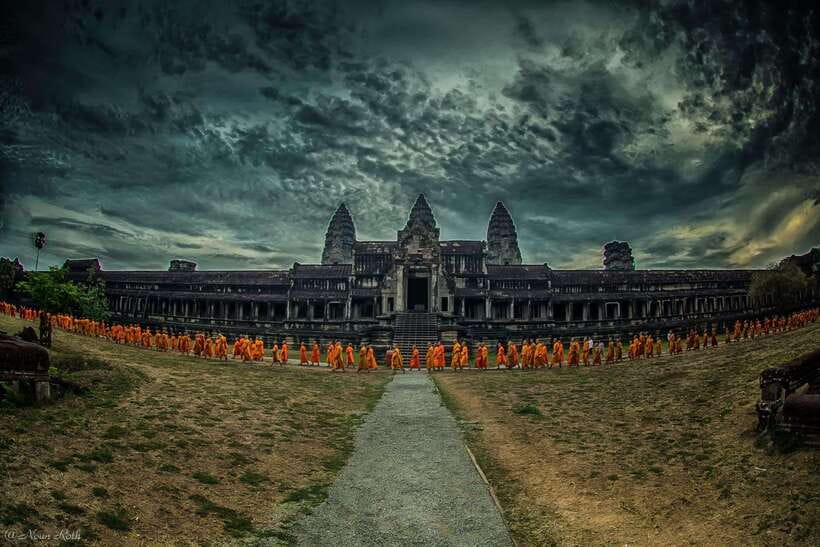
The first major stop is Angkor Wat, the enormous 12th-century religious complex that gives the archaeological area its name. Allow several hours here. That is not wasted time. The scale of the moats, galleries, towers, courtyards, and carved surfaces needs a patient visit.
Your guide can give the site a clear order, helping you understand how the temple was designed and how Hindu and later Buddhist traditions shaped its use. The experience is much better when you know what you are looking at, rather than simply taking photos of the central towers and moving on.
Angkor Wat is also the busiest and most famous stop. A private guide cannot remove the crowds, but can help you make better use of your time and point out angles and details you might otherwise pass. Wear footwear suited to uneven paths and expect plenty of walking and stairs.
Ta Prohm brings the jungle into the story
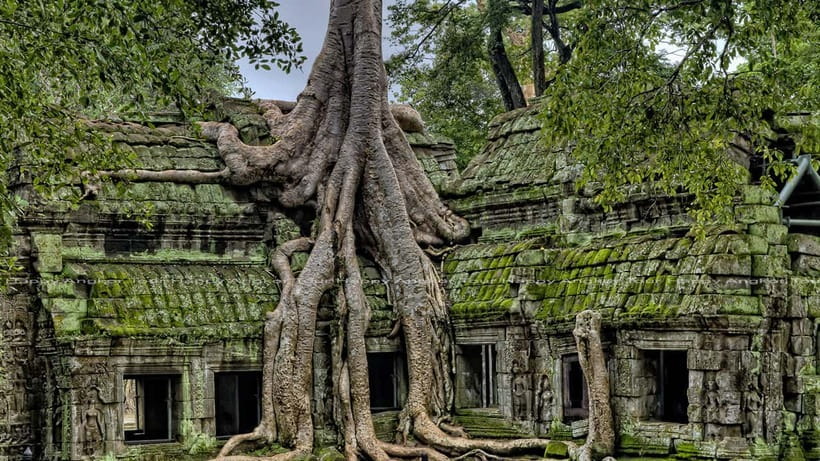
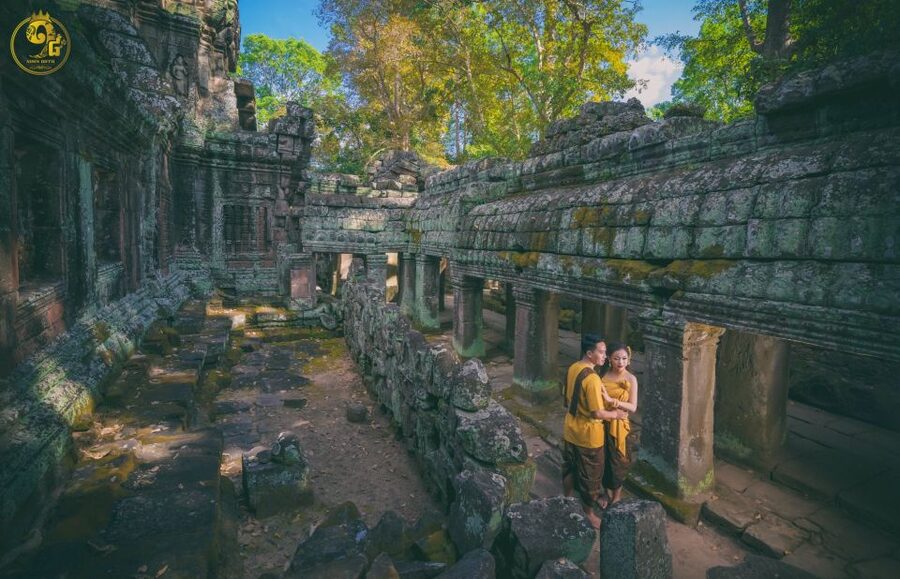
After Angkor Wat, the route continues through the temples on the small circuit. Ta Prohm is the dramatic centerpiece here, with huge tree roots pressing against old stone walls.
This is the temple associated with the film Tomb Raider, and that connection has made it one of Angkor’s most photographed places. The film link is fun, but Ta Prohm is more than a movie setting. Its partly overgrown courtyards show how nature and architecture can occupy the same space, and the tree roots make the site feel different from the more ordered Angkor Wat.
The setting also creates a practical problem: Ta Prohm can feel crowded, especially around the best-known root-covered walls. A private guide can choose less congested approaches and help you move through without wasting time retracing every path.
Lunch follows at a local restaurant, with food purchased separately. Because the day continues for hours, use this stop as a real break rather than a rushed meal. Food is not included, so carry some money in Cambodian riel or another accepted currency.
Ta Nei and the gates of Angkor Thom
The next temple is Ta Nei, a smaller and quieter stop than Angkor Wat or Ta Prohm. Its inclusion adds variety to the day. You get a chance to see a less famous ruin before entering the monumental city of Angkor Thom.
The route enters Angkor Thom through either the Victory Gate or the Death Gate. These gates give you a sense of the city’s scale before you reach its central temples. The approach is part of the experience, not just a transfer between stops.
Inside, Bayon is the star. Its towers carry the famous smiling faces, and the temple can feel almost theatrical as you move through its stone corridors. Your guide is especially useful here because the site’s plan is less immediately clear than Angkor Wat. You can spend your time looking upward at the carved faces, then pause for an explanation of the religious and royal ideas behind the monument.
Nearby Baphuon offers a different mood. It is a Hindu temple with a long raised approach and steep sections. Behind it, you can see the immense Reclining Buddha. The combination of temple ruins and later Buddhist imagery makes this part of Angkor Thom a good place to ask questions about changing religious traditions.
More Banteay Srei Tours in Siem Reap:
- Full-Day Banteay Srei & 4 Temples – Grand Tours Join-in Tour
★ 5.0 · 1,155 reviews - Siem Reap Tour: Angkor Wat Sunrise, Bayon, Ta Prohm, Banteay Srei
★ 5.0 · 931 reviews - 2-Day Angkor Wat With Small, Big Circuit and Banteay Srei Tour
★ 5.0 · 545 reviews - From Siem Reap: Banteay Srei Temple & Grand 5 Temple Tour
★ 4.8 · 262 reviews
Royal walls, terraces, and a hilltop sunset
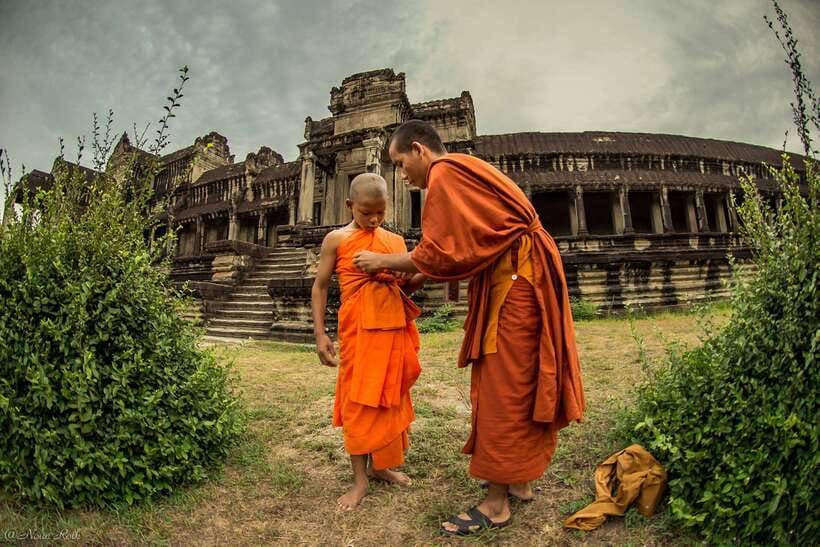
The walk through Angkor Thom continues past the Royal Enclosure Wall, Phimeanakas, the Elephant Terrace, the Leper King Terrace, and Palilay. These stops do not all carry the same visual impact as Bayon, but together they explain how the ancient city worked.
The terraces are particularly useful for understanding public ceremony and royal display. Carvings of elephants and other figures give the broad stone platforms a very different character from the enclosed temples.
The day ends at Phnom Bakheng for sunset. This is a hilltop viewpoint, so reaching it involves a climb. The reward is a wide view over the surrounding area, though sunset is a popular time and conditions can vary.
Do not treat the sunset stop as guaranteed solitude. You are sharing a famous viewpoint with other sightseers, and the long first day may make the climb feel tiring. Still, it gives the day a strong finish and lets you see Angkor from above rather than from inside another courtyard.
Day 2 starts before sunrise
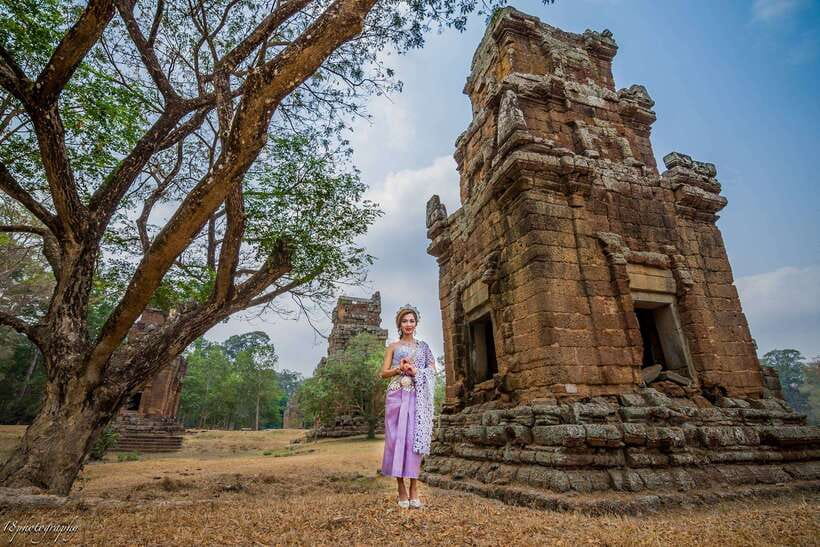
The second day begins early with sunrise at Angkor Wat. You return to the temple before breakfast, then go back to your hotel or stop at a restaurant for a meal at your own expense.
Sunrise is one of the most appealing parts of the schedule because the temple’s towers can appear in silhouette as the sky brightens behind them. It is also the least restful start. You will need to rise well before a normal sightseeing morning, and the experience is dependent on the sky.
The tour puts sunrise on Day 2 rather than Day 1, which makes practical sense. You see Angkor Wat first in daylight on the previous afternoon, then return with a better sense of the building’s layout. After breakfast, the day shifts toward the Big Circle and the outer temples.
Preah Khan, Neak Pean, and Ta Som
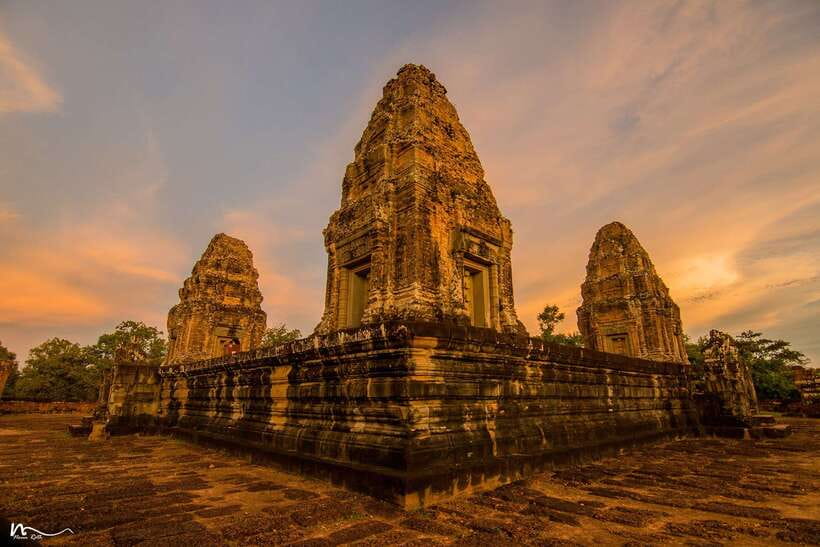
Preah Khan is the first major Big Circle stop named in the itinerary. It is a large complex with long galleries and a strong sense of depth. You can expect more walking here, but the size helps spread out the experience compared with the most famous central temples.
Neak Pean is quite different. Its design centers on a small temple surrounded by water, giving the site a more compact and symbolic feel. It is not a place to rush through. The setting and layout are the main points, so your guide’s explanation adds real value.
Ta Som brings back the theme of vegetation and stone. It is often appreciated for its quieter atmosphere and tree growth around the structure. The itinerary’s focus on Ta Som also fits the tour’s wider aim: you are not limited to the best-known postcard sites.
These temples can blur together after a long morning. That is where the private format helps. You can ask your guide to compare the temples instead of receiving the same general explanation at each stop. Guides including Bunhak and Chhay have been praised for combining historical, mythological, religious, and cultural information in English.
East Mebon and Pre Rup show a different Angkor
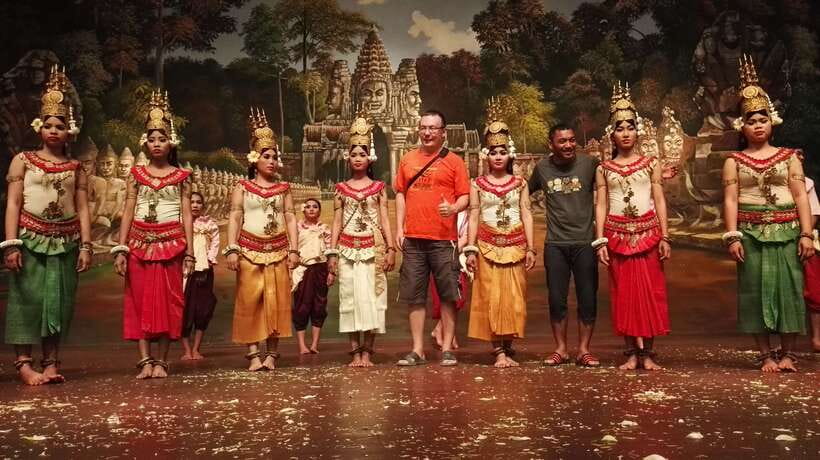
East Mebon and Pre Rup are both important stops on the Big Circle, but they feel different from the enclosed jungle temples. Their brick and laterite structures offer broad views across the surrounding area and a stronger sense of the older temple-building tradition.
Pre Rup is also associated with sunset viewing, but on this tour it appears as part of the morning or afternoon temple route. That is worth noting because the schedule does not promise a sunset here. You are seeing it for its architecture and setting rather than waiting for a particular light effect.
At this point, the second day has already included sunrise and several substantial ruins. Lunch at a local restaurant is not included, and this break matters. The outer circuit is less about ticking off one famous image and more about seeing how varied the Angkor area can be.
Rice fields lead to Banteay Srei
After lunch, the vehicle leaves the central temple zone and heads through villages and rice-paddy fields toward Banteay Srei. The change of scenery is welcome after two days of stone corridors and courtyards.
Banteay Srei is known as the Ladies Temple and is dedicated to Hindu goddesses. Its pink sandstone is the defining feature. The stone allows for fine, detailed carving, and the temple feels more delicate than the huge ceremonial complexes visited earlier.
This is one of the strongest reasons to choose the full two-day itinerary instead of stopping after the central temples. Banteay Srei sits farther out, so reaching it takes extra driving, but the color and small-scale carvings make it unlike Angkor Wat, Bayon, or Ta Prohm.
The outer location also means you should be prepared for a longer day. You are trading some free time in Siem Reap for a temple that offers a different visual experience. For many people, that trade is worthwhile, especially if you care about sculpture and architectural detail.
Banteay Samre and Banteay Kdei finish the route
The itinerary continues to Banteay Samre before heading to Banteay Kdei. These final visits keep the day focused on temple variety rather than ending after the more famous Banteay Srei.
Banteay Samre gives you another chance to see a less central complex and to compare its design with the temples from the previous two days. By the time you reach Banteay Kdei, you will likely appreciate the change of pace more than another headline sight.
Banteay Kdei is included at the end of the route, after the drive through the villages and fields. The exact order and time at each stop can be discussed with your private guide, although the tour is still full enough that you should not expect unlimited time everywhere.
The guide and vehicle make a real difference
The strongest part of this experience is the guide-led format. You are not simply dropped at each ruin with a driver. The English-speaking guide is licensed and explains Cambodian culture, art, religion, and history along the route.
Several guides and drivers are named in the available tour information. Bunhak worked with driver Sreang, while Chhay worked with drivers That and another driver described as his regular partner. You should not assume a specific person is guaranteed when booking, but these names show the kind of guide and driver pairing associated with the experience.
The best practical detail is the movement through the temples. One account praised entering from one side and exiting from another, avoiding a needless walk back to the parking area. That is the sort of small decision that matters after several hours on foot.
The van has been described as comfortable, and the operator provides cold water and refreshing towels at stops. The towels are not a luxury gimmick. After walking through hot stone courtyards, a cool face towel can make the next temple feel manageable.
How hard is the schedule?
This is an active sightseeing program. You will walk through large temple grounds, deal with uneven surfaces, climb steps in places, and spend much of the day getting in and out of the vehicle.
Day 1 is particularly dense: Angkor Wat, Ta Prohm, lunch, Ta Nei, Angkor Thom, several terraces, and Phnom Bakheng. Day 2 begins before sunrise, then continues through multiple Big Circle temples and the farther sites near Banteay Srei.
I would choose this tour if you have only two days and want a broad introduction to Angkor. I would think twice if you prefer to study one temple at a time, take long café breaks, or avoid early mornings.
The private format helps, but it does not change the distances between sites. Tell the guide early if you need a slower pace. The itinerary can be customized to your interests, but major stops may need to be shortened if you want extra time elsewhere.
Who should book this Angkor tour?
You are a good match if you want the main temples plus several sites that require more driving. It also suits you if you value explanations, photography help, and a driver who handles the route while you focus on the ruins.
The tour is especially useful for first-time visitors who want context. Angkor can be confusing without a plan, and the guide connects the buildings to Hindu and Buddhist traditions, royal power, Cambodian culture, and the history of the site.
Photographers may appreciate the private setup. The guide can help find strong picture positions, and you are less tied to a large group’s fixed walking speed. Just remember that sunrise, Ta Prohm, Bayon, and sunset at Phnom Bakheng are popular moments, not private photo sessions.
The tour is less suitable if the advertised price is your full budget. Add the $62 temple pass and your meals. Also keep in mind that the most comfortable vehicle and cold towels do not remove the heat, walking, or early start.
Should you book it?
Book this tour if you want to cover Angkor’s big names and its wider temple area in two well-organized days. The private guide, flexible pacing, cool towels, cold water, and air-conditioned transport add useful comfort, while the route reaches beyond the standard Angkor Wat and Ta Prohm pairing.
Before paying, budget $62 for the temple pass and extra money for food. Then decide how you feel about the packed schedule. If you are ready for long temple days and an early sunrise, this is a strong way to see a wide range of Angkor with personal guidance. If you want a slower visit, ask the guide to trim the route around your priorities.
FAQ
How much does the tour cost?
The tour costs $136 per person. The temple pass is not included and costs $62 per person for a two or three-day pass. Food is also separate.
Is the tour private?
Yes. The experience is arranged for a private group, with private air-conditioned transportation and a live English-speaking guide.
Is hotel pickup included?
Yes. Pickup and drop-off from hotels and other accommodations in Siem Reap are included. You should provide the accommodation address, name, phone number, and website, and wait in the lobby 10 minutes before pickup.
Does the tour include Angkor Wat sunrise?
Yes. Day 2 begins with sunrise at Angkor Wat. Breakfast afterward is not included, so you return to your hotel or stop at a restaurant at your own expense.
Which temples are visited?
The route includes Angkor Wat, Ta Prohm, Ta Nei, Angkor Thom, Bayon, Baphuon, Phimeanakas, the Royal Enclosure Wall, the Elephant Terrace, the Leper King Terrace, Palilay, Phnom Bakheng, Preah Khan, Neak Pean, Ta Som, East Mebon, Pre Rup, Banteay Srei, Banteay Samre, and Banteay Kdei.
What is included during the temple visits?
The tour includes an English-speaking guide, private air-conditioned transportation, cool drinking water, and face towels. Meals and the temple pass are not included.
More 2-Day Experiences in Siem Reap
- Angkor 2-Day Sunset & Sunrise Small-Group Tour
★ 5.0 · 2,567 reviews - 2 Days Exclusive Temple Highlights with Sunset and Sunrise Tour
★ 5.0 · 1,157 reviews - Siem Reap: Angkor Sunrise 1- or 2-Day Guided Temples Tour
★ 4.9 · 1,132 reviews - 2 Days Guided Historical Tour in Angkor
★ 5.0 · 855 reviews
Just added around Siem Reap
- Ultimate Sunrise to Angkor Wat, Angkor Thom and Bayon Temple★ 5.0 · 3 reviews
- Twilight Tastes of Siem Reap Include Dinner★ 5.0 · 13 reviews
- Trekking Tour at Phnom Kulen National Park from Siem Reap★ 5.0 · 3 reviews
- Full-Day Private Tour of Angkor Wat with Pick Up★ 5.0 · 12 reviews
- Private Day Trip to Angkor Temples with Expert Guide★ 5.0 · 4 reviews
- Waterfall & River of 1000 Siva Linga- Kulen Mountain Private Tour★ 5.0 · 3 reviews
- Professional Photo Shoot in Angkor Archaeological Park, Siem Reap★ 5.0 · 42 reviews
- Siem Reap City Tour with War Museum and Killing Field★ 5.0 · 27 reviews
Angkor Wat Tours, compared.

Angkor Wat Sunrise or Sunset Tour with Guide from Siem Reap
Read our review →
Angkor Wat: Small-Group Sunrise or Sunset Tour
Read our review →
Angkor Wat 2-Day Tour with Sunrise and Sunset
Read our review →

Angkor Wat Sunrise tour with Small – Group and Guide tours
Read our review →
Angkor Wat Highlights and Sunrise Guided Tour from Siem Reap
Read our review →
Angkor Wat Sunset Small Group Tour with Lunch Included
Read our review →
Full-Day Angkor Wat Sunrise Private Tour with Guide from Siem Reap
Read our review →Browse the lists this tour appears in