
Reviewed · ANGKOR WAT TOURS
Two Day Angkor Temples Tours
The best thing about this private Angkor tour is its range. In two days, you move from the delicate pink sandstone of Banteay Srei to the giant face towers of Bayon, the tree-covered ruins of Ta Prohm, and the grand scale of Angkor Wat. Guides such as Borey Hang, Mr. Kim, Bunleat, and Kimhoeun focus on history, religion, local culture, and photography.
I like the flexible private format, which lets you spend more time at a favorite temple instead of being pushed along with a large group. I also like the air-conditioned vehicle, a welcome break in Siem Reap’s heat. The main consideration is pace: this covers many temples in two full days, and temple admission, GST, meals, and other costs are not included.
Key points at a glance
- Four well-regarded guide options: Borey Hang, Mr. Kim, Bunleat, and Kimhoeun are named as guides connected with the tour.
- A strong two-day route: You see Banteay Srei, Preah Khan, Neak Pean, Angkor Wat, Angkor Thom, and Ta Prohm, along with several smaller temples.
- Private and adjustable: Only your group participates, so the guide can adapt the pace and focus.
- Useful photography help: The guides pay attention to photo spots and can assist with family pictures and iPhone photography.
- Comfort between ruins: Transport is provided in an air-conditioned vehicle, with pickup offered.
- Plan for extra costs: Temple admission is not included, and the listed price of $102.57 per person does not include GST.
A thoughtful route through Angkor’s outer temples
Many first-time visitors focus only on Angkor Wat. This tour gives you a fuller picture of the Khmer empire by starting with temples that show different periods, layouts, and religious ideas.
Day one begins with Banteay Srei, about an hour at the site. This 10th-century Hindu temple is dedicated to Shiva and is cut from pinkish stone. Its scale is modest compared with Angkor Wat, but its carved details are unusually fine. If you care about sculpture, this is one of the most rewarding stops on the route.
The drawback is that Banteay Srei is not in the central cluster of Angkor monuments. The tour description gives no exact driving times, so your day may include substantial time on the road. That is a fair trade for seeing a temple with a character very different from the larger royal monuments.
Next comes Banteay Samre, with about an hour to look around. Built in the 12th century under Suryavarman II and dedicated to Vishnu, it dates from the same broad period as Angkor Wat. Its state of preservation makes it easier to read than some tree-covered ruins, and its less famous name can make the stop feel calmer.
This is also where a private guide helps. Rather than just pointing out walls, your guide can explain how Hindu temple design, royal power, and religious symbolism fit together. The supplied information specifically highlights guides’ ability to discuss both Hinduism and Buddhism, which matters because Angkor’s monuments were built and adapted under both traditions.
More Angkor Wat Tours in Siem Reap:
- Angkor Wat Sunrise or Sunset Tour with Guide from Siem Reap
★ 5.0 · 12,109 reviews - Siem Reap: Angkor Wat: Small-Group Sunrise or Sunset Tour
★ 5.0 · 9,444 reviews - Siem Reap: Angkor Wat 2-Day Tour with Sunrise and Sunset
★ 4.9 · 4,429 reviews
Preah Khan, Neak Pean, and Ta Som
Preah Khan receives about an hour and is one of the largest complexes in Angkor. Its name means Sacred Sword. Inside, you find vaulted corridors, carved stone, and sections softened by lichen and age.
I would give this temple your attention rather than treating it as a quick photo stop. Preah Khan works as a counterpoint to Ta Prohm. It has the same sense of a monumental ruin being slowly reclaimed, but its maze-like plan gives you more to follow and compare.
Neak Pean is a shorter visit, about 40 minutes. This small Buddhist temple sits on an artificial island in the middle of the man-made lake called Jayatataka, also known as the North Baray. The approach across the water is part of the appeal. The temple itself is petite, so the stop is about setting and design as much as scale.
Ta Som follows for roughly 30 minutes. Built by Jayavarman VII in the late 12th century, it is a small satellite temple of Preah Khan. Its eastern gate has a large carved head, and the site can be appreciated quickly.
The short time at Ta Som may suit you if you want a broad survey of Angkor. If you prefer slow photography or careful inspection of carvings, ask your guide if the schedule can be adjusted. Several people who worked with these guides valued their willingness to change the plan when a particular temple captured their interest.
Eastern Mebon and Pre Rup close day one
The afternoon continues at Eastern Mebon, with about 50 minutes. Rajendravarman II built this Hindu temple in the 10th century on an island in the Eastern Baray reservoir. The reservoir is now dry, so the monument no longer has its original island setting.
That change gives you a useful reminder: Angkor was not simply a collection of isolated stone buildings. Water management shaped the city and supported its population. At Eastern Mebon, you can better understand how temples, reservoirs, causeways, and royal planning worked together.
Pre Rup comes next, with about 40 minutes. Built by the same ruler in the 10th century, it is a pyramid-shaped temple mountain with three tiers. The high structure gives the stop a strong sense of vertical design, especially after the flatter corridors and galleries of earlier sites.
Day one covers seven temples, so it is a substantial outing. You will see more variety than on a one-day highlights trip, but you should expect to feel tired by the final stop. The air-conditioned vehicle is not a minor perk here. It gives you a cool place to recover between walks over uneven stone and exposed paths.
Angkor Wat deserves the longest visit
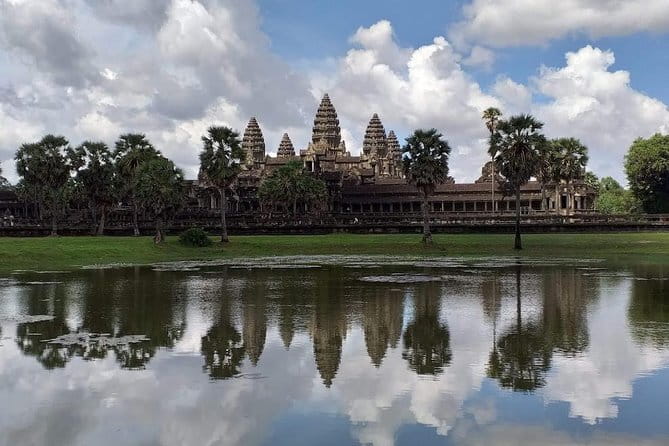
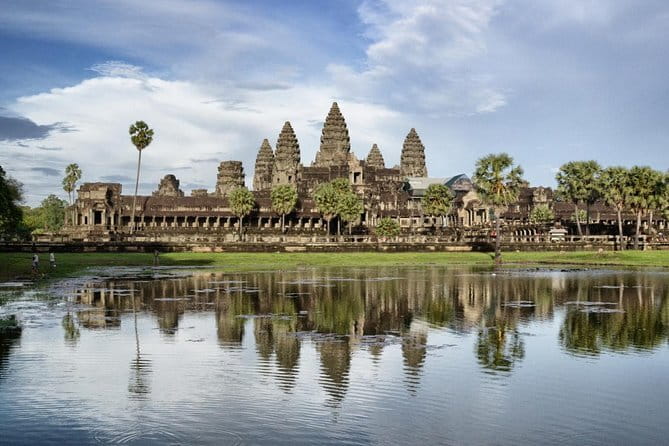
Day two starts with Angkor Wat and allows about two hours. Built in the 12th century by Suryavarman II for Vishnu, it is the largest and most visually imposing monument in the Angkor complex.
Two hours lets you see the main approach, galleries, courtyards, towers, and carved surfaces without reducing the visit to a quick circuit. Still, Angkor Wat is vast. If you enjoy inscriptions, bas-reliefs, or photography, you may want to tell the guide early that this is a priority.
A private guide can make those two hours more useful. The strongest feedback about Borey, Kim, Bunleat, and Kimhoeun centers on their ability to explain temple history along with religious and cultural context. Borey is also praised for photography tips, including work on iPhone photography, and for helping families find good places for pictures.
Do not assume that the $102.57 price includes entry to the archaeological park. Admission tickets are specifically excluded. The meeting point is listed at Angkor Enterprise on Apsara Road in Siem Reap, while pickup is offered, so confirm the exact collection arrangement when you book.
A few more Siem Reap trips to weigh up
- Angkor 2-Day Sunset & Sunrise Small-Group Tour
★ 5.0 · 2,567 reviews - 2 Days Exclusive Temple Highlights with Sunset and Sunrise Tour
★ 5.0 · 1,157 reviews - Siem Reap: Angkor Sunrise 1- or 2-Day Guided Temples Tour
★ 4.9 · 1,132 reviews - 2 Days Guided Historical Tour in Angkor
★ 5.0 · 855 reviews
Phnom Bakheng is a brief but unusual stop
The itinerary includes Phnom Bakheng after Angkor Wat. The supplied schedule lists one minute for this stop, which is unusually short for a temple visit. Treat it as a brief look or photo pause unless your guide confirms that more time is available.
Phnom Bakheng was built by Yasovarman I in the early 10th century and is described as the first temple mountain built near Angkor. Its five tiers and seven levels give it a different profile from the later monuments.
Because the stated duration is so limited, this stop should not be the reason you choose the tour. If Phnom Bakheng matters to you, ask about the timing before departure. The private format may allow changes, but no guaranteed adjustment is stated.
Angkor Thom and the faces of Bayon
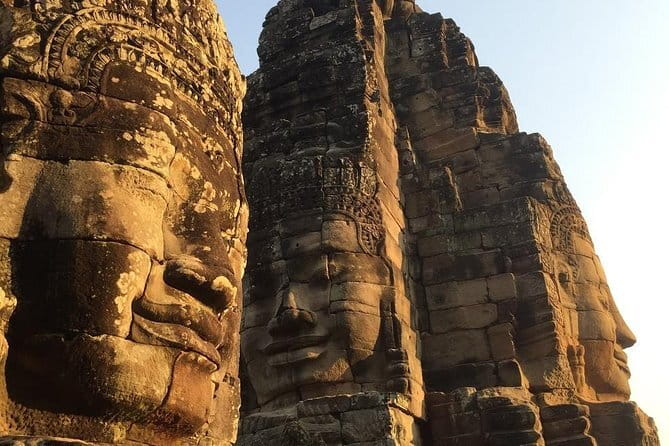
Angkor Thom receives about two hours. This was the last great city of Angkor, built by Jayavarman VII. Its central monument is Bayon, known for its large carved faces and dense stone galleries.
The two-hour allocation is sensible because Angkor Thom is more than one temple. You can use the time to understand the city as a planned royal center rather than rushing directly to Bayon. Your guide can also help you distinguish the Buddhist focus of Jayavarman VII’s building program from the earlier Hindu monuments.
The claim that the surrounding region may once have supported up to one million people gives this stop useful scale, though the itinerary presents it as a historical estimate. What you can clearly see today is the ambition of the city: gates, walls, monumental routes, and a central temple that feels different from Angkor Wat.
This is one of the places where a well-informed guide earns the fee. The stone faces are memorable on their own, but the visit becomes more meaningful when you understand who built the city, what the images represented, and how Angkor changed over time.
Ta Prohm brings the drama
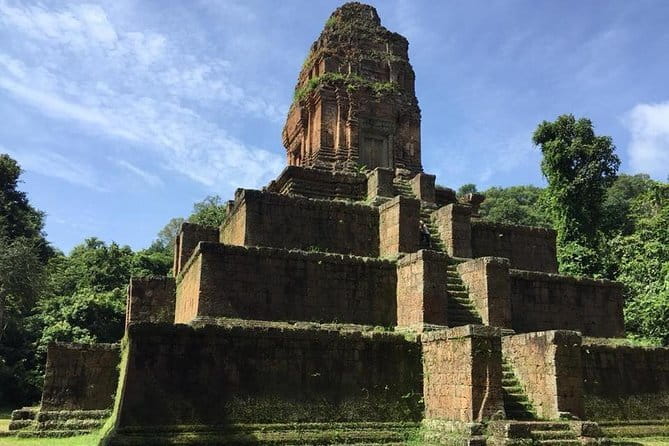
The final major stop is Ta Prohm, with about an hour. Of all the temples on this route, it may be the easiest to remember. Trees have grown through and around sections of the ruin, creating the atmospheric scene many people associate with Angkor.
Ta Prohm was built under Jayavarman VII and is often paired with Preah Khan because both show the power of nature and time over a major religious complex. Here, however, the trees and collapsed stone create a more theatrical visit.
An hour is enough to see the main areas without turning the stop into a sprint. If you find Ta Prohm especially compelling, the private schedule may be adjusted. One family’s guide changed the plan after seeing how much they enjoyed this temple, a useful example of why a private tour can be better than a fixed group itinerary.
The site can also be crowded. No crowd pattern or special access is promised, so do not book this tour expecting an empty temple. What you do get is help finding the most effective angles and a guide who can keep the visit focused.
Guides are the main reason to choose this tour
The vehicle and route are useful, but the guide will shape the quality of your two days. Borey Hang is repeatedly singled out for excellent English, flexible planning, local knowledge, and a warm manner. His family has lived in Siem Reap for generations, according to the information provided, and he is particularly interested in photography.
Mr. Kim is described as strong on both ancient Angkor and Cambodia’s more recent history. That broader context can help you connect the temples with the country you see around Siem Reap today.
Bunleat is associated with detailed explanations. If you prefer to linger over carvings, religious ideas, and architectural details, his style may suit you. The tradeoff is that detailed talks can make the route run longer than the planned stop times.
Kimhoeun is another guide named in the feedback, with an emphasis on extensive temple knowledge and attentive service. The tour company may assign a different guide depending on availability, so ask for a preferred guide when booking, but do not assume that person is guaranteed.
The most consistent strengths are clear English, personal attention, and flexibility. The guides are also described as responsive before the tour, which is helpful if you need to explain mobility concerns, family interests, or photography goals.
What the $102.57 price really covers
At $102.57 per person, the price buys a private two-day touring service with an air-conditioned vehicle and guide support. It does not cover temple admission, GST, or any other item not specifically listed as included.
The value depends on your group size and priorities. A private tour costs more than joining a large shared bus, but you are not paying only for transport. You are paying for a guide who can explain the temples, adjust the pace, help with pictures, and keep the day organized.
The air-conditioned vehicle is important in practical terms. Angkor visits involve heat, walking, stairs, and exposed courtyards. A cool vehicle between stops makes a long temple day easier, especially for families or anyone who dislikes spending the whole day outdoors.
Group discounts are offered, but no discount amounts are provided. Ask how the price changes with your party size. Since the tour is private, a larger family or group may get better value per person than a solo booking.
Who will get the most from these two days
I would choose this tour if you want the major Angkor landmarks but also want smaller and less familiar monuments such as Banteay Srei, Banteay Samre, Neak Pean, Ta Som, Eastern Mebon, and Pre Rup.
It suits first-time visitors who want historical explanation instead of only transportation. It also suits families because the guide can respond to children’s attention spans and help with family photos.
Photography-minded visitors should ask for Borey or explain their goals in advance. The guide’s interest in finding strong photo locations and offering iPhone advice is a specific advantage.
This may not suit you if you want a slow, meditative visit to only two or three temples. Seven stops on the first day and four on the second create a full schedule. The short Ta Som and Phnom Bakheng allocations especially show that the route favors coverage over lingering.
You should also have moderate physical fitness. The information provided does not promise accessibility features, and Angkor temples commonly involve uneven ground and stone steps. Keep your footwear practical and tell the guide about any limitations before the tour begins.
Practical details before you book
Confirmation is provided at booking. The listed ticket redemption point is Angkor Enterprise, Apsara Road, Krong Siem Reap, Cambodia. Pickup is offered, but you should confirm whether the vehicle will collect you from your accommodation or whether you need to meet at the stated point.
The tour requires good weather. If poor weather causes cancellation, you are offered another date or a full refund. You can cancel for a full refund up to 24 hours before the start time. Within 24 hours, the payment is not refunded, and changes are not accepted.
The tour is private, so only your own group participates. That is the key difference from a standard bus excursion. You can ask questions freely, stop for pictures, and request a change of emphasis without worrying about a busload of strangers.
The posted score is 5 out of 5 from 18 ratings, with 100 percent recommendation. More important than the number itself is the pattern behind it: Borey, Kim, Bunleat, and Kimhoeun are praised for temple knowledge, cultural context, friendly service, clean air-conditioned transport, flexibility, and photography help.
Should you book the Two Day Angkor Temples Tours?
Book it if you want a private, guide-led overview that reaches Angkor Wat and Ta Prohm while still making room for smaller temples and different architectural periods. The route is broad, the vehicle is comfortable, and the guide can make a major difference at sites that otherwise look like endless stone corridors.
Before paying, confirm the guide, pickup point, temple pass cost, GST, and the very short Phnom Bakheng stop. If you prefer a slower schedule, ask which stops can be shortened or removed.
For most first-time visitors with only two days in Siem Reap, this is a strong choice. It gives you the famous monuments, enough historical explanation to make sense of them, and the flexibility that a fixed group tour cannot provide.
FAQ
How long is the Angkor temples tour?
The tour lasts approximately two days. Day one includes seven temple stops, and day two includes Angkor Wat, Phnom Bakheng, Angkor Thom, and Ta Prohm.
Is this a private tour?
Yes. Only your group participates in the activity.
Is transportation included?
An air-conditioned vehicle is included. Pickup is offered, but you should confirm the exact pickup arrangement before the tour.
Are Angkor temple admission tickets included?
No. Admission tickets are not included for the listed temple stops.
Where is the ticket redemption point?
The stated ticket redemption point is Angkor Enterprise on Apsara Road in Krong Siem Reap, Cambodia.
What is not included in the listed price?
The price does not include temple admission or GST. The provided information does not list meals or other personal expenses as included.
Can I cancel for a full refund?
You can cancel at least 24 hours before the start time for a full refund. Cancellations or changes made within 24 hours are not accepted for a refund. If poor weather causes the tour to be canceled, you are offered another date or a full refund.
Just added around Siem Reap
- Ultimate Sunrise to Angkor Wat, Angkor Thom and Bayon Temple★ 5.0 · 3 reviews
- Twilight Tastes of Siem Reap Include Dinner★ 5.0 · 13 reviews
- Trekking Tour at Phnom Kulen National Park from Siem Reap★ 5.0 · 3 reviews
- Full-Day Private Tour of Angkor Wat with Pick Up★ 5.0 · 12 reviews
- Private Day Trip to Angkor Temples with Expert Guide★ 5.0 · 4 reviews
- Waterfall & River of 1000 Siva Linga- Kulen Mountain Private Tour★ 5.0 · 3 reviews
- Professional Photo Shoot in Angkor Archaeological Park, Siem Reap★ 5.0 · 42 reviews
- Ultimate Siem Reap Food Tour by Tuk Tuk – 20 Tastings, 8 Stops★ 5.0 · 13 reviews
Angkor Wat Tours, compared.

Angkor Wat Sunrise or Sunset Tour with Guide from Siem Reap
Read our review →
Angkor Wat: Small-Group Sunrise or Sunset Tour
Read our review →
Angkor Wat 2-Day Tour with Sunrise and Sunset
Read our review →

Angkor Wat Sunrise tour with Small – Group and Guide tours
Read our review →
Angkor Wat Highlights and Sunrise Guided Tour from Siem Reap
Read our review →
Angkor Wat Sunset Small Group Tour with Lunch Included
Read our review →
Full-Day Angkor Wat Sunrise Private Tour with Guide from Siem Reap
Read our review →Browse the lists this tour appears in