
Reviewed · ANGKOR WAT SUNRISE TOURS
3-Days Private Angkor Wat Sunrise/Sunset Tours & Floating Village
Angkor is best understood slowly, and this three-day private tour gives the temples room to breathe. You begin with Angkor Wat and Ta Prohm, return for sunrise on another morning, and finish with Beng Mealea and Kampong Phluk. I like the unhurried pace and the private guide who can adjust explanations and photo stops to your group.
I also like the practical touches: hotel pickup, cold water, wipes, and an air-conditioned SUV or minivan. The main catch is cost. The $370 group price does not include the Angkor pass, Beng Mealea, Kampong Phluk, or meals, so your final bill can rise quickly, especially with a small group.
Key points to know before booking
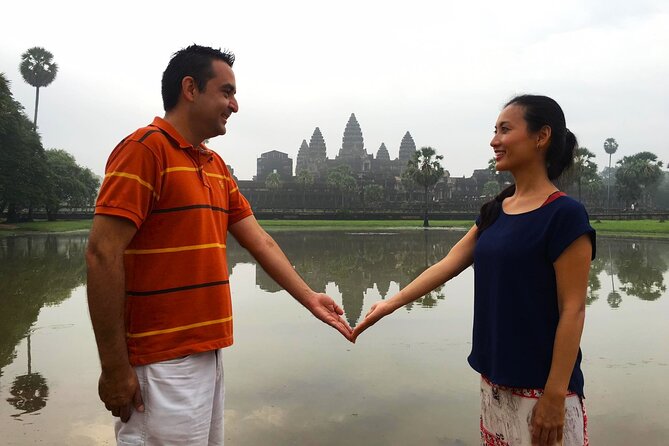
- Sunrise and sunset are on different days: You get an early Angkor Wat visit and a Phnom Bakheng sunset, rather than trying to force both into one exhausting day.
- The private vehicle matters: Your group of up to 12 rides in an air-conditioned SUV or minivan, with hotel pickup and drop-off included.
- The temples range from famous to remote: Expect Angkor Wat, Bayon, Ta Prohm, Banteay Srei, and the rougher, more adventurous Beng Mealea.
- The guide is also a photographer: The professional historian and photographer guide offers history, photo tips, and help with framing.
- Extra fees are substantial: Budget $50 per person for the three-day Angkor pass, $12 for Beng Mealea, and $20 for Kampong Phluk.
- Temple clothing is strict: Cover your knees and shoulders at places of worship, or entry may be refused.
Angkor is not one temple. It is a vast collection of religious monuments, gates, reservoirs, terraces, and former city spaces spread around Siem Reap. Trying to see the main sights in one day can turn a remarkable visit into a hot race from one famous doorway to the next.
This plan takes a better approach. It gives you three days, private transport, and a guide who can explain what you are seeing instead of simply pointing out the next stop. The route still has long days, but it has more breathing space than a standard one-day temple circuit.
The experience is rated 4.8 out of 5, with 96 percent recommending it. The strongest praise centers on helpful service, good photo guidance, and clear explanations of the temples. That fits the design of the tour: it is less about ticking off one monument and more about seeing how Angkor’s temples differ.
What the $370 group price really covers
The advertised price is $370 per group of up to 12 people. That can be good value if you fill the vehicle, but it needs careful reading.
Included are hotel pickup and drop-off, a professional historian and photographer guide, private air-conditioned transport, cold water, wipes, gasoline, parking, and toll roads. You are paying for a private experience rather than joining a crowded bus, and that becomes more valuable as your group gets larger.
The required extras are important:
- Three-day Angkor Park admission: $50 per person
- Beng Mealea entrance: $12 per person
- Kampong Phluk entrance: $20 per person
- Breakfast, lunch, dinner, and soft drinks
For one person, the base tour plus the listed entrance fees comes to $452 before food. For two people, it works out to $267 per person before meals. For 12 people, the total is $1,354, or about $113 per person before meals.
That makes this a strong group purchase, but a costly choice for a solo visitor. Ask your group to budget for the add-ons before booking. The private guide and vehicle are the main value here, not a low all-in price.
More Angkor Wat Tours in Siem Reap:
- Angkor Wat Sunrise or Sunset Tour with Guide from Siem Reap
★ 5.0 · 12,109 reviews - Siem Reap: Angkor Wat: Small-Group Sunrise or Sunset Tour
★ 5.0 · 9,444 reviews - Siem Reap: Angkor Wat 2-Day Tour with Sunrise and Sunset
★ 4.9 · 4,429 reviews
Day One: Angkor Wat, Ta Prohm, and the great city
Pickup begins at 8:30 a.m. from your hotel lobby. The first practical task is buying the three-day Angkor temple pass, then you head to Angkor Wat.
Angkor Wat dates to the early 12th century and is the largest monument on the route. Give it time. The scale can be hard to grasp from a single photograph, while the carved galleries and layered towers make more sense as you move through the complex.
Your guide’s historical explanation is especially useful here. Angkor Wat is not just a scenic ruin. Its layout, carvings, towers, and religious purpose all connect, and a good explanation helps you notice the engineering rather than only the famous outline.
The visit lasts about three hours. That is enough time for a serious look, though the heat and walking may test you. Wear sensible shoes and bring a hat, while keeping your shoulders and knees covered.
After Angkor Wat, you continue to Ta Prohm for about an hour. This is the temple most closely linked with the film Lara Croft: Tomb Raider. Trees and vegetation have grown through the ruins, giving the site a raw, damaged beauty.
Ta Prohm is popular for a reason, but it is not a quiet secret. The private guide helps by making the visit more than a search for the best movie-like photograph. Look at the carvings, the collapsed sections, and the way nature has become part of the structure.
After a lunch break, the afternoon moves into Angkor Thom, the ancient city built in the late 12th century. The route includes the South Gate, Bayon, Baphuon, the Terrace of the Elephants, and the Terrace of the Leper King.
Bayon is the emotional center of Angkor Thom. More than 200 large stone faces look out from its towers, each with a calm, mysterious expression. You will want to photograph them, but the guide’s context helps you understand why this temple feels so different from Angkor Wat.
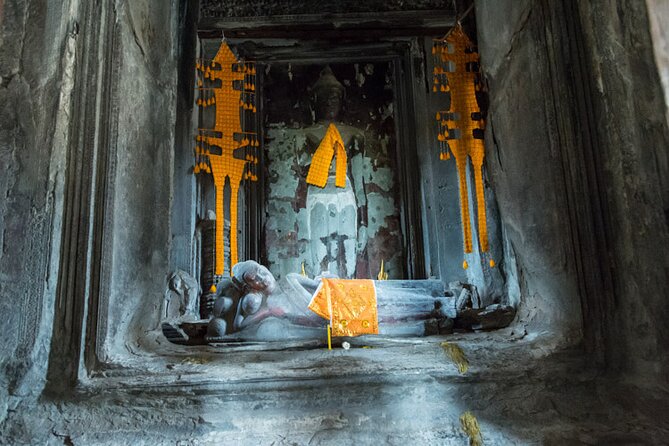
Baphuon brings a change of scale and setting. You can climb toward the top for a quieter view, and the back of the temple includes a huge reclining Buddha carving. The climb is not extreme, but it adds effort after a full morning, so take it at your own pace.
The Terrace of the Elephants was once an arena or ceremonial viewing area. Its carvings include elephants, animals, and scenes linked with royal display. The Terrace of the Leper King is smaller, but its high bas-reliefs reward a closer look.
You also visit Angkor Thom’s South Gate, with its rows of gods and demons pulling a seven-headed serpent. The enormous stone faces on the gate make this a fine short stop, and your guide can explain the symbolism behind the famous tug-of-war scene.
The day ends at Phnom Bakheng, a late ninth-century Hindu temple on a hill. From the viewpoint, you can look across toward Angkor Wat and other monuments while the sun drops.
This is a fitting sunset location, but sunset visits can be tiring after a full temple day. The one-hour stop is best treated as a final viewpoint, not another place to explore in detail. If you want the best photographs, tell your guide early that sunset images matter to you.
Day Two: Smaller temples and Banteay Srei
Day Two covers a different side of Angkor. Instead of concentrating on the largest monuments, it links several temples around the eastern and northern parts of the park before heading to Banteay Srei.
Preah Khan is large, Buddhist, and partly overgrown. It was dedicated to the king’s father and combines long corridors, courtyards, carved stone, and vegetation. You get about an hour here, enough to see the main route without turning the visit into a rushed walk.
Neak Pean is reached by a long wooden bridge across the ancient reservoir known as Jaya Tataka. The temple is associated with healing water and an old hospital complex. The bridge gives the stop a different feel from the enclosed temple corridors, although the attraction itself is smaller than Angkor Wat or Bayon.
Ta Som is a compact 13th-century Buddhist temple built under Jayavarman VII. Its east gate, where a tree has grown over the stonework, is one of the day’s best photo scenes. The 40-minute visit is short, but that suits the temple. You can see its central features without feeling that you need half a day.
Eastern Mebon once sat on an island in the Eastern Baray reservoir. The reservoir has since dried, and the temple now sits among villages and rice fields. Its standing elephant sculptures are the main draw, and the stop helps you picture how water shaped Angkor’s city planning.
Pre Rup is another older brick temple, built in the 10th century and dedicated to Shiva. Its upper level gives you a broad view, with five main spires creating a strong profile. There are stairs and uneven surfaces, so this is where moderate fitness becomes useful.
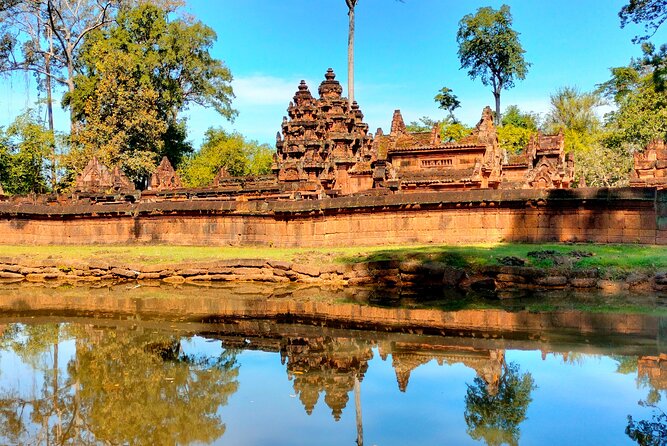
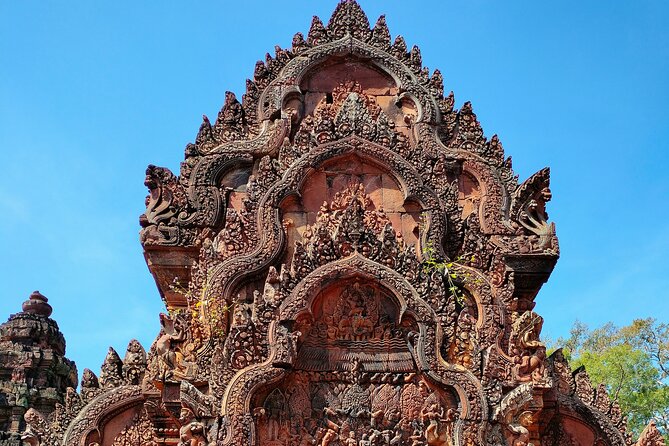
Banteay Srei requires the longest drive, about 40 minutes each way, followed by roughly 50 minutes at the temple. The pink sandstone and fine carvings make it unlike the larger gray-stone monuments closer to Siem Reap.
The distance is the drawback. You spend a noticeable part of the day in the vehicle, but Banteay Srei earns its place if detailed carving interests you. Its smaller size also makes it easier to study individual figures and patterns.
Day Two is not a light day, but it is more varied than the first. You move from large Buddhist complexes to brick towers, reservoirs, carved elephants, and a small pink sandstone temple. The private vehicle becomes useful here because the route covers a lot of ground.
Day Three: Sunrise, Beng Mealea, and life on Tonle Sap
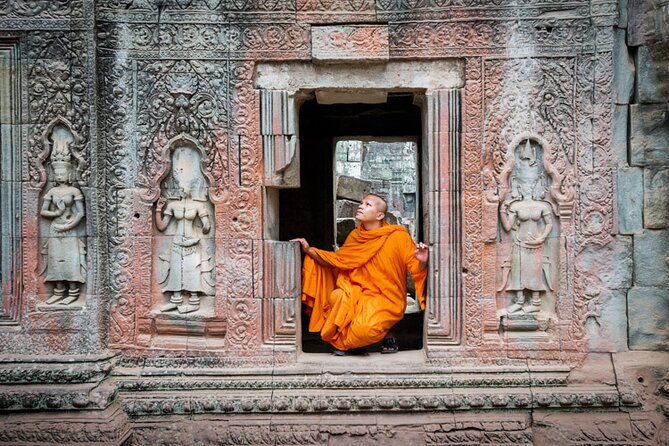
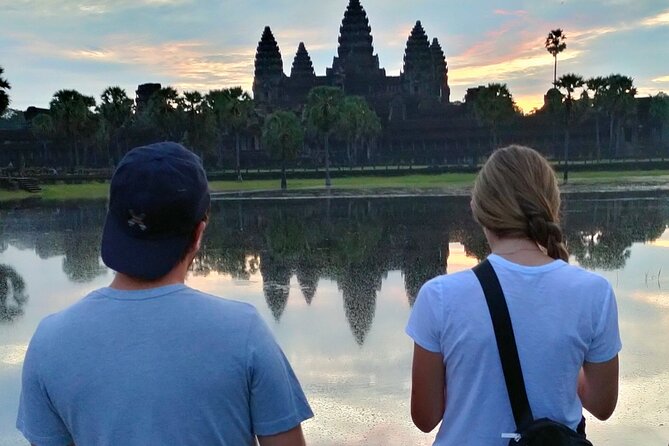
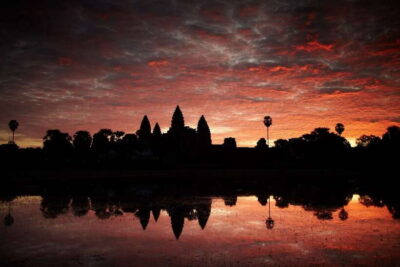
Day Three begins early at Angkor Wat for sunrise. The temple is bathed in morning light, and the reflection can create the classic view across the water.
Sunrise is not guaranteed to produce perfect color, since weather controls the sky. Still, the early visit changes the mood of Angkor Wat. You see the monument before the heat builds, and returning after the first day lets you notice details you may have missed.
The two-hour stop is followed by the longest drive of the tour, about 68 kilometers to Beng Mealea. This is not a quick add-on near the main park. Plan for a substantial stretch in the vehicle.
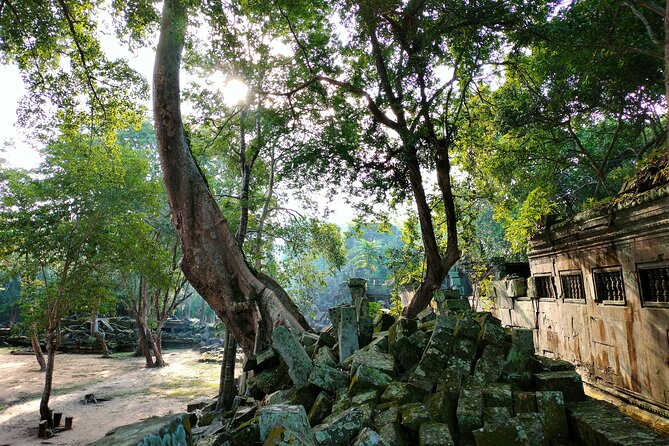
Beng Mealea is known for its broken galleries, vines, rubble, and untouched feel. You can walk around the ruins in a more adventurous way than at the carefully managed central temples. The Indiana Jones comparison is easy to understand, although you should still watch your footing on uneven stone.
The three-hour visit gives you time to explore rather than simply take a roadside look. It also gives the day a different character. Angkor Wat shows planning and scale, while Beng Mealea makes you focus on collapse, vegetation, and the physical age of the site.
Beng Mealea costs an additional $12 per person. That fee is easy to overlook when comparing tour prices, so include it in your budget.
The final stop is Kampong Phluk Floating Village on Tonle Sap, with about three hours for the experience. This is not another temple. It is a working community connected with fishing and the lake, with a pagoda, schools, rice fields, cattle, and mangrove forests.
The village gives the tour a valuable change of subject. After two and a half days focused on kings, gods, stone faces, and ancient reservoirs, you see how people live around water today. The $20 entrance fee is included in the tour’s listed price structure as a separate village charge, so check your total before departure.
Kampong Phluk is a long final stop after Beng Mealea. If you prefer a quiet last afternoon, the schedule may feel demanding. If you want more than temples, it is one of the most useful parts of the three-day plan.
More Angkor Wat Sunrise Tours in Siem Reap:
- Angkor Wat Sunrise tour with Small – Group and Guide tours
★ 5.0 · 3,655 reviews - Full-Day Angkor Wat Sunrise Private Tour with Guide from Siem Reap
★ 5.0 · 2,920 reviews - Angkor Wat Sunrise & 3 Main Temples with Breakfast – Small Group
★ 5.0 · 2,857 reviews - Siem Reap: Angkor Wat Sunrise and Full-Day Sightseeing Tour
★ 4.9 · 2,828 reviews
The guide and vehicle make the difference
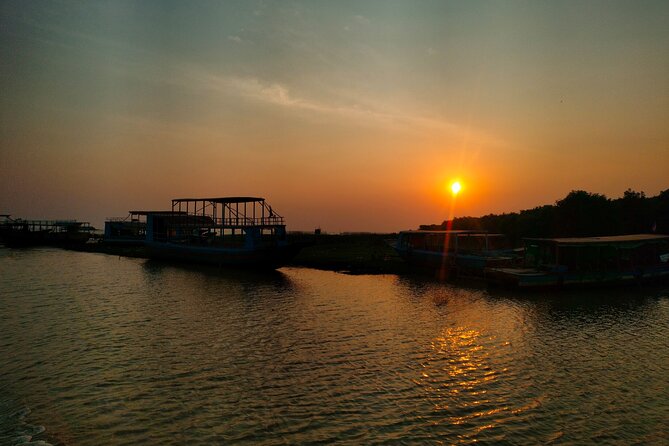
The guide is described as both a professional historian and photographer. That combination is well suited to Angkor. You get help understanding the monuments, but also practical advice for framing the faces at Bayon, the tree-covered gate at Ta Som, and the reflection at sunrise.
The strongest service feedback highlights early-morning-to-afternoon support and help getting better pictures. That matters because the best Angkor photographs often depend on small choices: where you stand, what you include, and when you wait.
Since this is private, only your group participates. You can ask for more history at Bayon, more photo time at Angkor Wat, or a faster visit at a smaller stop. The group limit is 12, but a smaller party will usually find it easier to move and communicate with the guide.
Transport is by private air-conditioned SUV or minivan. That is welcome in Cambodia’s heat, especially on Day Two’s extended route and the drive to Beng Mealea. Cold water and wipes are simple additions, but they are useful after dusty paths and long temple walks.
Clothing, effort, and what to pack
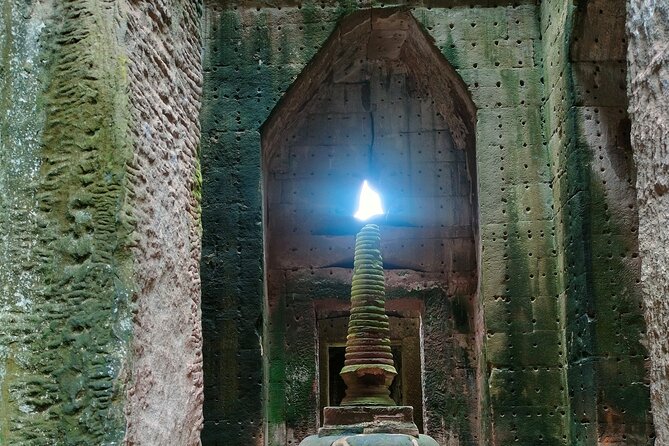
The dress instructions use both formal and smart casual wording, but the important rule is clear: cover your knees and shoulders at temples and other places of worship. This applies to men and women, and entry may be refused if you arrive in shorts or sleeveless tops.
You should also expect a moderate level of physical activity. The days include walking, uneven temple ground, bridges, and some stairs. Baphuon and Pre Rup involve raised sections, while Beng Mealea includes rubble and rough surfaces.
Bring:
- Covered, comfortable clothing
- Walking shoes with a firm sole
- Sun protection
- A small bag for water and personal items
- Extra money for entrance fees and meals
Breakfast, lunch, dinner, soft drinks, and the listed entrance fees are not included. Ask your guide about the day’s meal timing at the start of each morning so you can plan around the long drives and early sunrise.
Who should book this three-day Angkor tour?
I would choose this experience if you want the main Angkor temples without compressing everything into one day. It suits couples, families, and groups of friends who value a private vehicle and a guide who can combine historical explanation with photo help.
It is also a good fit if you want variety. You get major monuments, smaller temples, a hilltop sunset, a remote jungle ruin, and a modern lake community.
I would hesitate if you are traveling alone on a tight budget. The group price is much better when shared, and the extra admission charges are considerable. I would also think twice if you dislike early starts, long drives, or three full days of walking.
Free cancellation is available up to 24 hours before the start time. If bad weather causes cancellation, you can receive a different date or a full refund. That gives you some protection, but weather can still affect the quality of sunrise and sunset photography.
Should you book it?
Book this tour if you want a private, photo-friendly way to see Angkor at a slower pace, and if your group can share the $370 base cost. The strongest reasons are the split sunrise and sunset visits, the professional guide, and the mix of famous temples with Beng Mealea and Kampong Phluk.
Before paying, total the $50 Angkor pass, $12 Beng Mealea fee, $20 floating village fee, and your meals. If that final figure works for your group, this is a well-planned choice for a first visit to Siem Reap. If not, compare a shorter private temple tour and keep the extra days for independent exploring.
FAQ
How long does the tour last?
The experience lasts approximately three days.
What time does pickup begin?
Pickup begins at 8:30 a.m. from your hotel lobby. Day Three includes an early sunrise visit at Angkor Wat.
Is hotel pickup included?
Yes. Hotel pickup and drop-off are included.
Is the tour private?
Yes. Only your group participates, with a maximum group size of 12 people.
What type of vehicle is used?
Transport is provided in a private air-conditioned SUV or minivan.
Is the Angkor temple pass included?
No. The three-day Angkor Park admission costs $50 per person.
Are Beng Mealea tickets included?
No. Beng Mealea has a separate entrance fee of $12 per person.
Is the Kampong Phluk entrance fee included?
The Kampong Phluk entrance fee is listed separately at $20 per person.
Are meals and drinks included?
No. Breakfast, lunch, dinner, soft drinks, and other meals are not included. Cold water and wipes are included.
What clothing is required?
You must cover your knees and shoulders at places of worship and selected museums. Shorts and sleeveless tops are not allowed, and entry may be refused if you do not follow the dress requirements.
More Evening Experiences in Siem Reap
- Siem Reap: Full-Day Angkor Wat Guided Tour with Sunset
★ 4.9 · 3,803 reviews - Angkor Wat Sunset Small Group Tour with Lunch Included
★ 5.0 · 3,059 reviews - Angkor 2-Day Sunset & Sunrise Small-Group Tour
★ 5.0 · 2,567 reviews - Siem Reap: Angkor Wat Sunrise or Sunset Guided Tour
★ 4.9 · 2,123 reviews
More Floating Village Tours in Siem Reap
- From Siem Reap: Kampong Phluk Floating Village Tour by Boat
★ 4.9 · 6,979 reviews - Sunset tour of Kampong Phluk stilts home village on the Tonle Sap
★ 5.0 · 4,865 reviews - Siem Reap: Kampong Phluk Floating Village Tour with Boat
★ 4.9 · 3,843 reviews - Siem Reap Floating Village Kampong Phluk Sunset with Boat
★ 5.0 · 1,962 reviews
Just added around Siem Reap
- Ultimate Sunrise to Angkor Wat, Angkor Thom and Bayon Temple★ 5.0 · 3 reviews
- Twilight Tastes of Siem Reap Include Dinner★ 5.0 · 13 reviews
- Trekking Tour at Phnom Kulen National Park from Siem Reap★ 5.0 · 3 reviews
- Full-Day Private Tour of Angkor Wat with Pick Up★ 5.0 · 12 reviews
- Private Day Trip to Angkor Temples with Expert Guide★ 5.0 · 4 reviews
- Waterfall & River of 1000 Siva Linga- Kulen Mountain Private Tour★ 5.0 · 3 reviews
- Professional Photo Shoot in Angkor Archaeological Park, Siem Reap★ 5.0 · 42 reviews
- Ultimate Siem Reap Food Tour by Tuk Tuk – 20 Tastings, 8 Stops★ 5.0 · 13 reviews
Angkor Wat Sunrise Tours, compared.

Angkor Wat Sunrise or Sunset Tour with Guide from Siem Reap
Read our review →
Angkor Wat Sunrise tour with Small – Group and Guide tours
Read our review →
Full-Day Angkor Wat Sunrise Private Tour with Guide from Siem Reap
Read our review →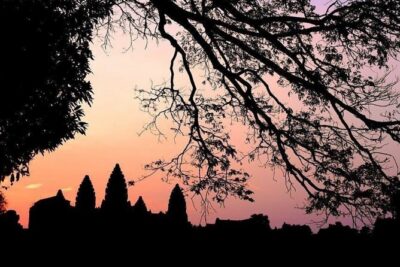
Angkor Wat Sunrise & 3 Main Temples with Breakfast – Small Group
Read our review →
Angkor Wat Sunrise and Full-Day Sightseeing Tour
Read our review →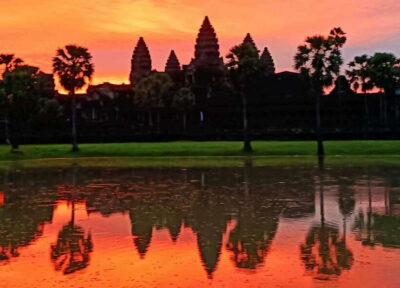
Angkor Sunrise 1- or 2-Day Guided Temples Tour
Read our review →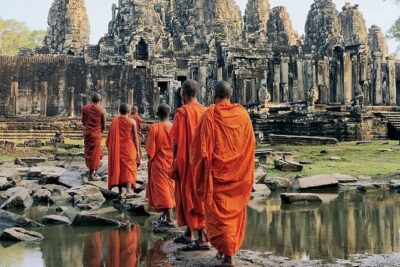
Siem Reap Tour: Angkor Wat Sunrise, Bayon, Ta Prohm, Banteay Srei
Read our review →Browse the lists this tour appears in