
Reviewed · ANGKOR WAT TOURS
2-Day Angkor Wat and Banteay Srei with Countryside Exploration
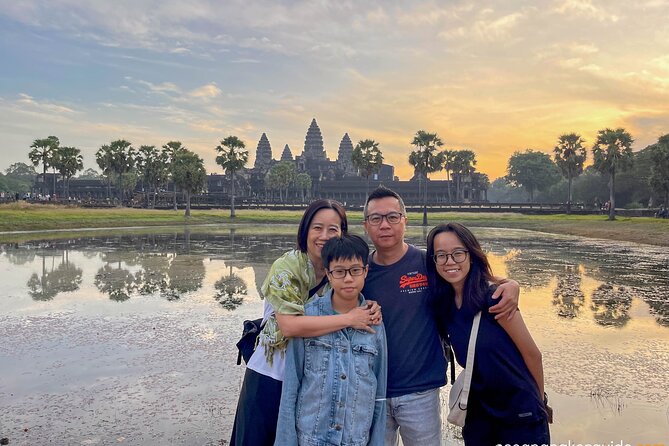
Angkor Wat at sunrise is the main event, but the real value comes from seeing it as part of a larger Khmer temple circuit. You start before dawn, watch the sky brighten behind the towers, then move through jungle ruins, royal temples, quiet reservoirs, and the finely carved Banteay Srei.
I like the local breakfast after sunrise, which gives the first morning a useful break and supports a family-run restaurant. I also like the cold water, chilled towels, air-conditioned minivan, and guides such as Sam, Sinan, Mony, Sareik, and Makara, who bring different styles to the temple explanations.
The main drawback is the pace. Day 1 begins around 4:30 or 5:00 a.m. and can run until about 1:00 p.m., with several major temples packed into one long morning. You see a lot, but you need energy, covered clothing, and a willingness to start in the dark.
Key points to know before booking
- Angkor Wat sunrise comes first: You need your two-day Angkor pass before pickup so you do not lose time at the entrance.
- Banteay Srei is the detail champion: This smaller sandstone temple is famous for fine carvings, and the tour gives it about two hours.
- Day 1 is the demanding day: Angkor Wat, Ta Prohm, Angkor Thom, and Bayon require an early start and plenty of walking.
- Day 2 adds quieter temple settings: Preah Khan, Neak Pean, Ta Som, and Eastern Mebon spread the experience beyond the most famous sites.
- The meals keep things local: Breakfast is arranged at a local family restaurant, while Day 2 lunch comes from an individual menu.
- The listed price is not the final cost: The tour costs $160 per person, then you add the $62 two-day Angkor pass and the $5 Landmine Museum ticket.
What the $160 price really covers
At $160 per person, this is not a budget temple shuttle. It is priced as a guided two-day experience with hotel pickup, an English-speaking guide, air-conditioned transport, breakfast, lunch, water, and towels.
The extra entrance fees matter. The two-day Angkor pass costs $62 per person, and the Landmine Museum costs another $5. That brings the known total to $227 per person before extra drinks or food not included in the package.
I still see reasonable value here if you want one booking to handle the route, timing, transport, and temple explanations. Angkor Park is spread over a large area, and the second day reaches Banteay Srei and the Landmine Museum outside the main temple cluster. You are paying for coordination as much as for the vehicle.
The lunch arrangement is worth noting. Day 2 lunch is included, but you order an individual dish from a menu. Soft drinks and other food are not included, so keep some Cambodian riel or US dollars handy for extras.
This is described as a private activity for your own group, with group discounts offered. The supplied booking information also refers to small-group departures, so check the exact group arrangement when you book if traveling alone or with a large party.
More Cambodian Countryside Tours in Siem Reap
- Siem Reap Countryside Bike Tour / E-Bike or Tuk Tuk
★ 5.0 · 935 reviews - Siem Reap Countryside Quad Biking Tour
★ 5.0 · 322 reviews - Siem Reap: Guided Countryside Bike Tour
★ 4.9 · 294 reviews
Day 1: Angkor Wat before dawn
Pickup takes place from your hotel lobby between 4:30 and 5:00 a.m. You should wait in the lobby 15 minutes early. That sounds fussy at a normal hour, but at this time of day a late departure can cost you the best part of the sunrise.
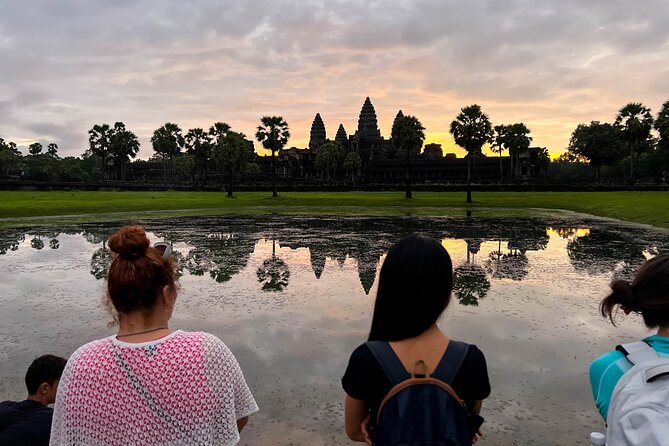
Angkor Wat is the largest temple in the world and the emotional anchor of the tour. The first visit lasts about two hours, giving you time to watch the sunrise and see the temple grounds in the cool morning light.
The sunrise itself is not guaranteed to be dramatic. Clouds, haze, or a flat gray sky are always possible. The smart reason to do it is not just the photograph. Early arrival gives you a first look at Angkor Wat before the heat builds and before the day feels crowded.
Bring your temple pass with you. The pass is not included, and the operator requires all participants to have it before the tour begins. You can buy it online in advance.
Breakfast beside Srah Srang
After Angkor Wat, you stop near Srah Srang for about an hour. The plan includes breakfast at a local family restaurant, with local food rather than a hotel-style buffet.
This is a small but useful touch. You have already been awake for several hours, and a proper meal makes the rest of the morning much easier. It also puts some money into a local family business instead of treating the temple circuit as a sealed tourist route.
Vegetarian food is available if you request it ahead of time. Breakfast is included on Day 1, but other food and soft drinks are not automatically covered.
Srah Srang itself is known as a reservoir setting, but the practical appeal here is the break. You can eat, cool down, and reset before more stone steps and temple paths.
Pre Rup and the morning temple rhythm
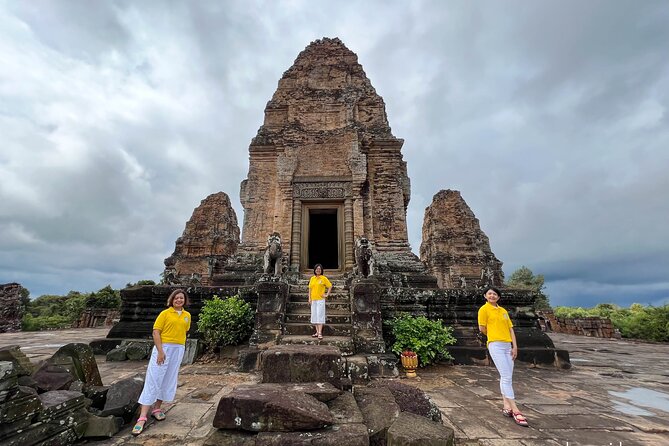
The next stop is Pre Rup, visited for about 40 minutes. This large brick Hindu temple gives you a different look from the sandstone towers and enclosed galleries at Angkor Wat.
Pre Rup is especially good for seeing how varied Angkor architecture can be. Its strong brick structure and raised form make it feel more severe and geometric. You will likely climb some steps, so take your time and watch your footing.
The schedule allows less than an hour here. That is enough for an introduction and photographs, but not for a slow architectural study. I see this as a concise stop that keeps the route moving toward the major afternoon? No, toward Ta Prohm and Angkor Thom, rather than a place where you linger.
More Angkor Wat Tours in Siem Reap:
- Angkor Wat Sunrise or Sunset Tour with Guide from Siem Reap
★ 5.0 · 12,109 reviews - Siem Reap: Angkor Wat: Small-Group Sunrise or Sunset Tour
★ 5.0 · 9,444 reviews - Siem Reap: Angkor Wat 2-Day Tour with Sunrise and Sunset
★ 4.9 · 4,429 reviews - Siem Reap: Full-Day Angkor Wat Guided Tour with Sunset
★ 4.9 · 3,803 reviews
Ta Prohm and the famous tree roots
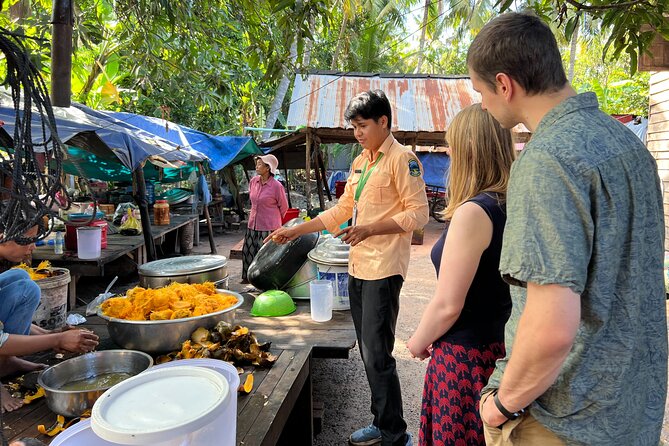
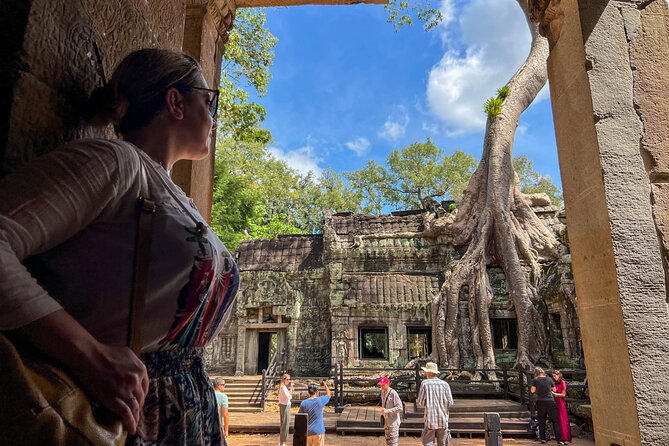
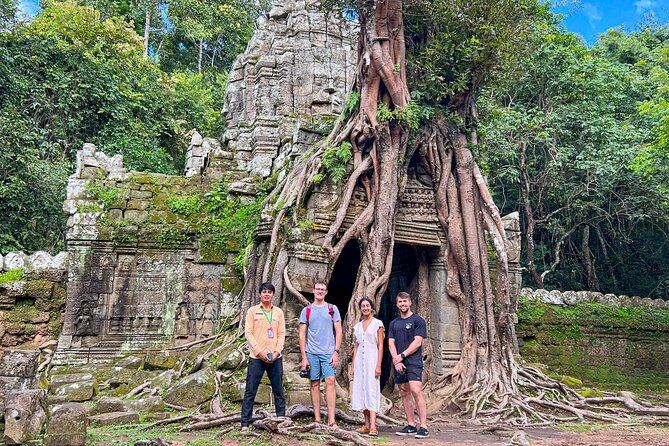
Ta Prohm receives about an hour. This is the temple most closely associated with jungle ruins, with trees and huge roots growing across parts of the structure.
The appeal is immediate. You can see what happens when a major stone complex is left partly in its original overgrown condition. Roots push over walls, doorways frame broken galleries, and the temple feels less orderly than Angkor Wat.
Your guide is useful here because Ta Prohm can become a quick photo stop if you do not understand its layout and purpose. The guides on this tour use personal stories and historical explanation in different ways. Sareik, for example, has shared experiences from his life as a monk and his family’s memories of Cambodia’s war years. Sinan is described as more serious and measured, while Sam is known for keeping the mood light through a very early and tiring day.
The one-hour visit is a good middle ground, though you should expect plenty of walking and uneven ground.
Angkor Thom and the faces of Bayon
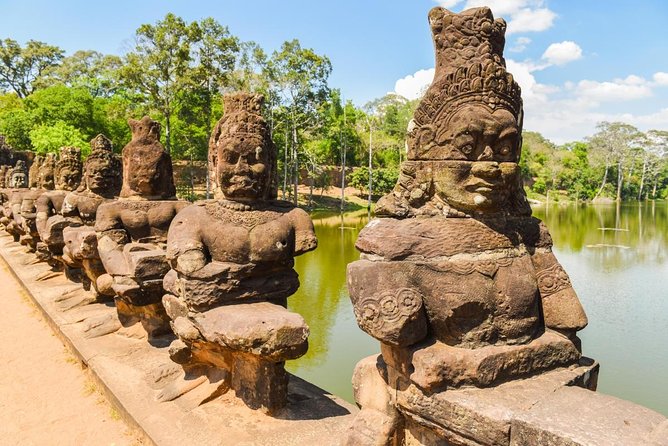
The route then moves to Angkor Thom’s South Gate for about 15 minutes. This is a short stop, but it gives you a clear look at the monumental entrance with rows of gods and demons.
The gate is often called one of the most famous entrances in the Angkor area. Your guide can help you read the symbolism in the statues instead of treating the gate as just another stone structure.
Bayon follows, with about an hour inside the temple. Its towers carry the famous smiling faces, described in the tour material as more than 200 carved faces. The faces appear from different angles as you walk through the narrow passages and upper levels.
Bayon feels very different from Angkor Wat. Angkor Wat is broad, balanced, and formal. Bayon is tighter and more confusing, with towers and corridors pressing in around you. I would give your guide your full attention here because the architecture is easier to appreciate when someone explains how the temple is arranged.
After Bayon, you return to your Siem Reap hotel. The listed transfer takes about 30 minutes, and the first day may finish around 1:00 p.m. That is still a long morning, especially after the pre-dawn pickup.
Day 2: Quieter temples and countryside roads
Day 2 starts at 8:00 a.m. after breakfast. That later departure is welcome. You have time to sleep, eat at your hotel, and begin the second temple day without the pressure of a sunrise schedule.
The route leaves the city center and reaches a group of temples that receive less attention than Angkor Wat, Ta Prohm, and Bayon. This is where the two-day format earns its keep. You are not simply repeating the same type of stop. You get a broader sense of how the Angkor area worked as a network of religious and royal sites.
Transport is by air-conditioned minivan or minibus. Free cool water and towels are provided during the tour. In Siem Reap’s heat, that is not a luxury detail. It makes the long transfers and dusty temple walks more manageable.
Preah Khan, Neak Pean, and Ta Som
Preah Khan is the first Day 2 stop, with about an hour to explore. It was a major Buddhist temple and is one of the larger complexes on the route.
You can expect long corridors, stone galleries, and a less polished feeling than Angkor Wat. Preah Khan rewards slow walking, but the one-hour slot means you will see a focused section rather than every corner.
Neak Pean follows for about 30 minutes. This temple sits on an artificial island in the Jayatataka Baray, a reservoir associated with Preah Khan. Its setting makes it different from temples built directly on broad land terraces.
The walk to Neak Pean is part of the appeal. It is not simply a large block of stone at the roadside. The water, causeway, and island design help you understand how water management shaped the Angkor world.
Ta Som is another compact stop, also lasting about 30 minutes. Built at the end of the 12th century for King Jayavarman VII, it is smaller than Preah Khan but still memorable for its quiet atmosphere and surviving carvings.
I like this part of the route because it slows the visual rhythm. Instead of one famous monument after another, you get smaller sites where the structure and setting are easier to take in.
Eastern Mebon and the included lunch
Eastern Mebon receives about 30 minutes. This 10th-century temple was built during the reign of King Rajendravarman on an artificial island in the now-dry East Baray reservoir.
The reservoir is no longer full, so the temple’s original relationship with water takes some imagination. That is where a good guide earns their fee. Without context, Eastern Mebon can look like another brick temple. With an explanation of its former island position and royal purpose, the site becomes much easier to understand.
Lunch takes about an hour at a local restaurant in the Angkor area. You order an individual dish from a menu, and vegetarian options can be arranged if you give advance notice.
Do not expect lunch to be a long culinary program. Its main job is to feed you before the afternoon drive to Banteay Srei. Still, the local restaurant setting is preferable to losing time returning to the city.
Banteay Srei and Cambodia’s finest stone carving
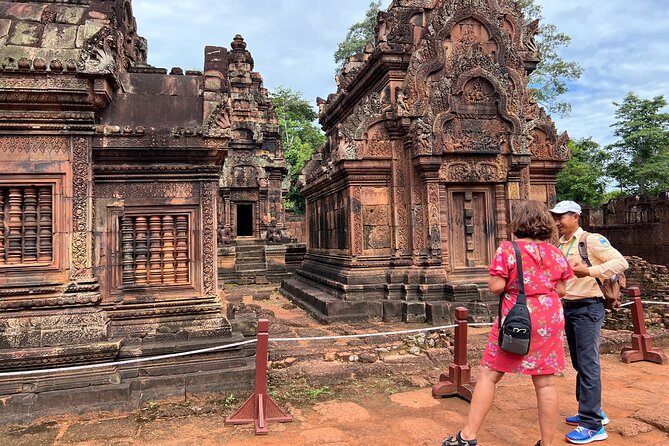
Banteay Srei is the star of Day 2. The drive out to it takes you away from the central temple group and into the countryside, and the visit lasts about two hours.
The temple is smaller than Angkor Wat, but its sandstone carvings are exceptionally detailed. Figures, patterns, and scenes cover the walls with a level of precision that can be hard to see at larger temples.
This is a place where you should slow down. Look at door frames, lintels, pediments, and the small decorative figures around the main structures. The warm pink and red tones of the sandstone also give Banteay Srei a different appearance from the gray stone used at several better-known sites.
Because the temple is compact, two hours is generous compared with the shorter stops at Neak Pean, Ta Som, and Eastern Mebon. You have time to listen, take photographs, and notice details rather than simply checking off another name.
The long drive is the tradeoff. If your main goal is only Angkor Wat, Banteay Srei adds time to the day. If you want the finest carving on this route, the journey is worth it.
The Cambodian Landmine Museum
On the return to Siem Reap, the tour stops at the Cambodian Landmine Museum for about 20 minutes. The $5 admission is not included.
The museum presents different types of mines used during Cambodia’s civil war. This is a brief visit, but it adds modern Cambodian history to a tour otherwise focused on centuries-old temples.
I would not treat it as a casual final photo stop. The subject is serious, and the visit can change the way you think about the countryside and the country’s recent past. The short time allowed means you will receive an introduction rather than an exhaustive visit.
The museum is a useful part of the itinerary because it keeps the tour from presenting Cambodia as only an ancient civilization. The temples are extraordinary, but the country’s modern story matters too.
Guides, vehicles, and the human side of the tour
The strongest feature across the supplied experiences is the guiding. Names that appear in the operation include Sam, Sinan, Makara, Mony, Tha, Sareik, Saraik, Jan, and several drivers and coordinators.
The styles vary. Sam is described as funny and welcoming, with enough energy to carry a group through the 4:30 a.m. start. Sinan is more formal and serious in his explanations. Sareik is praised for patience and for connecting temple history with his own life as a former monk and his family’s experience during the war.
Mony is also noted for photography skills, which could be useful if you want help with temple portraits and group shots. I would still ask your guide before taking photographs in sensitive areas and remember that the guide’s main job is explanation, not personal photography.
The vehicle has air conditioning, and cold water and towels are supplied. That practical care matters more than fancy extras once you have been walking on stone in the heat.
Clothing, timing, and what to bring
Cambodian temples require covered knees and shoulders. Do not rely on the idea that loose or short clothing will be acceptable. Pack light trousers or a longer skirt, plus a shirt that covers your shoulders.
For Day 1, bring your Angkor pass, water bottle, phone or camera, and something warm enough for a pre-dawn start if you are sensitive to cool air. You will have cold water and towels, but you still need comfortable walking clothes and shoes.
The tour is listed as suitable for most people, but the schedule is active. The concern is less technical difficulty than heat, steps, uneven surfaces, and the very early pickup. If you are tired after long walks, use the temple stops as chances to sit, drink, and listen rather than trying to inspect every corner.
Your two-day pass must be purchased before the tour. This is especially important because Day 1 begins before sunrise. The operator specifically asks you to have the pass ready so the group can move directly into the park.
Who should book this two-day route
I would choose this tour if you have two full days in Siem Reap and want a broad first look at Angkor without arranging separate cars, meals, and guides.
It suits you if you value explanation over simply taking pictures. The temple stories, the Khmer rulers, the Buddhist and Hindu changes, and the modern stop at the Landmine Museum give the trip more shape.
It also suits couples, families, and small private groups that want hotel pickup and a planned route. Vegetarian meals are possible with advance notice.
I would choose a shorter private plan instead if you dislike early mornings, need a loose schedule, or prefer to spend half a day at only one or two temples. Day 1 covers a lot, and one supplied assessment makes the fair point that the route could be compressed into one very long day. The two-day plan is less frantic overall, but its first day is still demanding.
Should you book it?
Book this tour if you want the major Angkor names plus Banteay Srei, smaller temple sites, local meals, and a short but meaningful look at Cambodia’s recent past. The guide quality appears to be the biggest strength, and the combination of Sam’s humor, Sinan’s serious style, Sareik’s personal perspective, and Mony’s photography help shows the team can adapt to different groups.
The price is sensible only after you budget for the $62 Angkor pass and $5 museum ticket. Once those are added, you are paying a substantial amount, but you receive two days of transport, guiding, meals, water, and a carefully connected route.
My call is simple: choose it if you have the time and want the full Angkor introduction. Skip it if the 4:30 a.m. start and long first day sound like punishment rather than part of the adventure.
FAQ
Is the Angkor pass included?
No. The two-day Angkor pass costs $62 per person and must be purchased before the tour begins.
What time is pickup on Day 1?
Hotel pickup is between 4:30 and 5:00 a.m. You should wait in the hotel lobby 15 minutes before your scheduled pickup time.
Are meals included?
Breakfast on Day 1 and lunch on Day 2 are included. Day 1 breakfast is local food at a family restaurant, and Day 2 lunch lets you order an individual dish from a menu.
Is the Landmine Museum ticket included?
No. Admission costs $5 per person.
Can I request vegetarian meals?
Yes. You should request vegetarian breakfast and lunch options in advance.
What should I wear to the temples?
Your knees and shoulders must be covered. Shorts and tops that leave the shoulders uncovered are not permitted for this experience.
More 2-Day Experiences in Siem Reap
- Angkor 2-Day Sunset & Sunrise Small-Group Tour
★ 5.0 · 2,567 reviews - 2 Days Exclusive Temple Highlights with Sunset and Sunrise Tour
★ 5.0 · 1,157 reviews - Siem Reap: Angkor Sunrise 1- or 2-Day Guided Temples Tour
★ 4.9 · 1,132 reviews - 2 Days Guided Historical Tour in Angkor
★ 5.0 · 855 reviews
More Banteay Srei Tours in Siem Reap
- Full-Day Banteay Srei & 4 Temples – Grand Tours Join-in Tour
★ 5.0 · 1,155 reviews - Siem Reap Tour: Angkor Wat Sunrise, Bayon, Ta Prohm, Banteay Srei
★ 5.0 · 931 reviews - 2-Day Angkor Wat With Small, Big Circuit and Banteay Srei Tour
★ 5.0 · 545 reviews - From Siem Reap: Banteay Srei Temple & Grand 5 Temple Tour
★ 4.8 · 262 reviews
Just added around Siem Reap
- Ultimate Sunrise to Angkor Wat, Angkor Thom and Bayon Temple★ 5.0 · 3 reviews
- Twilight Tastes of Siem Reap Include Dinner★ 5.0 · 13 reviews
- Trekking Tour at Phnom Kulen National Park from Siem Reap★ 5.0 · 3 reviews
- Full-Day Private Tour of Angkor Wat with Pick Up★ 5.0 · 12 reviews
- Private Day Trip to Angkor Temples with Expert Guide★ 5.0 · 4 reviews
- Waterfall & River of 1000 Siva Linga- Kulen Mountain Private Tour★ 5.0 · 3 reviews
- Professional Photo Shoot in Angkor Archaeological Park, Siem Reap★ 5.0 · 42 reviews
- Ultimate Siem Reap Food Tour by Tuk Tuk – 20 Tastings, 8 Stops★ 5.0 · 13 reviews
Angkor Wat Tours, compared.

Angkor Wat Sunrise or Sunset Tour with Guide from Siem Reap
Read our review →
Angkor Wat: Small-Group Sunrise or Sunset Tour
Read our review →
Angkor Wat 2-Day Tour with Sunrise and Sunset
Read our review →

Angkor Wat Sunrise tour with Small – Group and Guide tours
Read our review →
Angkor Wat Highlights and Sunrise Guided Tour from Siem Reap
Read our review →
Angkor Wat Sunset Small Group Tour with Lunch Included
Read our review →
Full-Day Angkor Wat Sunrise Private Tour with Guide from Siem Reap
Read our review →Browse the lists this tour appears in