
Reviewed · ANGKOR WAT TOURS
2 Day Angkor Wat Kulen Mountain Beng Mealea Floating Village Tour
Angkor Wat at sunrise is only the opening act here. Over two long days, you’ll move from polished temple avenues to jungle ruins, a mountain waterfall, sacred carvings in a riverbed, and homes raised above Tonle Sap Lake. The range is the tour’s real strength.
I like the excellent value: $88 includes transport, guide, breakfast, lunch, entrance tickets, water, and hotel pickup on both days. I also like the human touch, especially the village breakfast, palm cake in Preah Dak, and the chance to see guides such as Mony and Chiep Chy explain Cambodia beyond the usual postcard views.
The trade-off is the schedule. Day one begins around 4:30 AM, and day two packs Kulen Mountain, Beng Mealea, and a floating village into one outing. You get a lot, but you’ll need sturdy shoes, patience, and enough energy for two full days.
Key points to know before booking
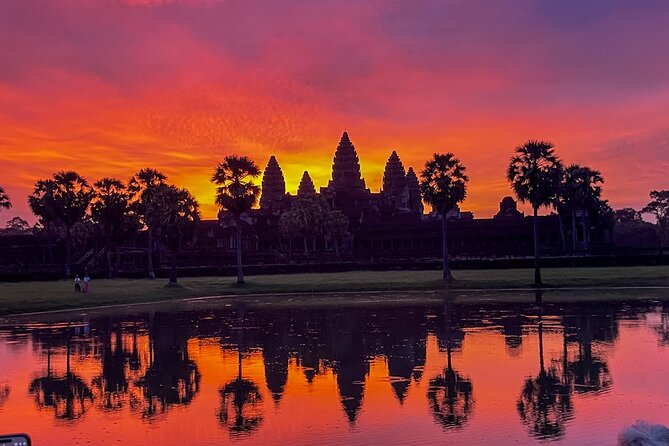
- Sunrise starts before dawn: Pickup is scheduled between 4:30 and 5:00 AM, with Angkor Wat reached early for the morning light.
- Kulen Mountain adds a natural side of Cambodia: You’ll see a viewpoint, reclining Buddha, sacred 1000 Lingas, and a waterfall where swimming is possible.
- Beng Mealea feels very different from the main Angkor circuit: Trees, fallen stones, and broken galleries give the temple a rougher, more atmospheric character.
- Food and basic comforts are covered: Breakfast, lunch, drinking water, cool towels, and vegetarian food are included.
- The small group limit helps: The maximum is 14 people, enough for a social outing without the feel of a large coach tour.
- Guides are a major part of the experience: Mony is noted for temple explanations and photography, while Chiep Chy is especially attentive to comfort in strong sun.
Why this two-day route works
Many Angkor trips stay inside the central temple zone. This one reaches farther. You see the major monuments, but you also get a look at rural life, a mountain pilgrimage site, and a lake community.
That variety matters. Angkor Wat can feel like a world apart from modern Cambodia if you only move between gates and galleries. Stops at Preah Dak, the countryside restaurant near Srah Srang, and Kampong Phluk connect the ancient stones with places where people live and work today.
The tour is guided in English, and transportation with a driver is provided. The group cap of 14 is modest enough that you should be able to hear explanations and ask questions. Several guide and driver pairings are used, including Mony with Tram and Chiep Chy with a driver. Mony is particularly useful if you want help with photographs as well as temple details. Tram is praised for providing cool towels, water, and considerate drop-offs.
The $88 price is strong for what is covered. Angkor entrance tickets alone can make a temple-heavy outing expensive, and this price also includes the more distant Kulen Mountain and Beng Mealea visits, meals, transport, and a boat visit at Kampong Phluk. Soft drinks are not included, so bring some spending money if you want soda or other paid drinks.
More Angkor Wat Tours in Siem Reap:
- Angkor Wat Sunrise or Sunset Tour with Guide from Siem Reap
★ 5.0 · 12,109 reviews - Siem Reap: Angkor Wat: Small-Group Sunrise or Sunset Tour
★ 5.0 · 9,444 reviews - Siem Reap: Angkor Wat 2-Day Tour with Sunrise and Sunset
★ 4.9 · 4,429 reviews
Day one begins with Angkor Wat before breakfast
Your hotel pickup is set for about 4:30 AM. That means an early night is not optional. Have clothes, shoes, and anything you need ready before bed, because there is little time for a slow morning.
The first stop is Angkor Wat, where the temple towers come into view as the sky brightens. Sunrise is one of the most popular times to visit, so do not expect solitude. The advantage of arriving early is the changing light and the cooler air, not an empty monument.
You have about two hours at the temple. A guide adds real value here because Angkor Wat is too large to understand by simply walking through it. You can expect help with the main stories, major architectural features, and photo locations. Mony is also specifically praised for taking good pictures, which can be useful when you want a group shot without handing your phone to a stranger.
The practical issue is footing. Temple courtyards and stone steps can be uneven, and the morning visit still becomes hot once the sun rises. Wear shoes with grip and carry water, even though more water is supplied during the day.
Breakfast near Srah Srang and palm cake in Preah Dak
After Angkor Wat, the tour slows down for breakfast at a local family restaurant in the countryside near Srah Srang. This is a welcome pause after the early start. Breakfast is included, and vegetarian food is available.
The stop is not just a meal break. Eating at a family-run place gives you a closer look at the rural economy around the temple zone. It also lets you support a local business rather than spending every meal at a large tourist venue.
You then visit Preah Dak, a village known here for its countryside setting and traditional palm cake. The stop lasts about 20 minutes, so think of it as a short cultural visit rather than a long village tour.
I like this part because it gives the day texture. The ancient temples are the headline, but a taste of palm cake and a glimpse of village life make Cambodia feel less like a string of archaeological sites. Do not expect a long cooking lesson or an extended market visit. The value is in the brief connection.
Ta Prohm, where trees claim the temple
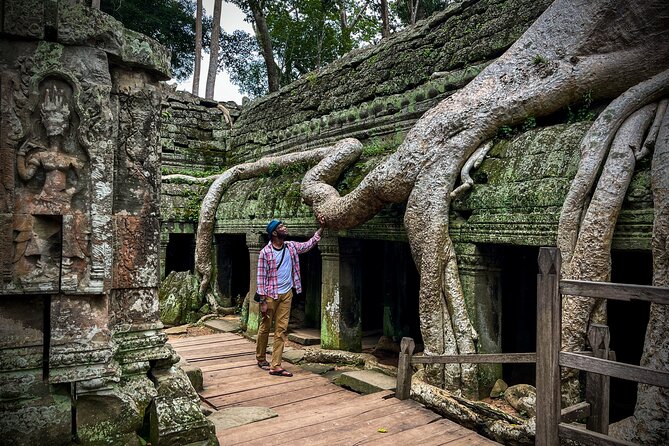
Ta Prohm is one of the most memorable temple stops in the Angkor area. Its galleries and walls sit among large trees and spreading roots, creating the famous image of nature pressing into stone.
The temple is associated with the film Tomb Raider, but its appeal does not depend on the movie. Ta Prohm shows what happens when a major religious complex is left with a strong sense of its jungle setting. The broken masonry and heavy roots give it a mood that polished restoration cannot reproduce.
You have about an hour here. That is enough to see important sections, but not enough to wander every corner. Stay close to your guide at first so you understand the layout, then use any free time for photographs.
Expect crowds and narrow passages. Roots and stones can make the ground awkward, so sandals are a poor choice. The tour calls this a trek, but the information does not promise a long hike. It is better understood as a temple walk with uneven surfaces.
More Floating Village Tours in Siem Reap:
- From Siem Reap: Kampong Phluk Floating Village Tour by Boat
★ 4.9 · 6,979 reviews - Sunset tour of Kampong Phluk stilts home village on the Tonle Sap
★ 5.0 · 4,865 reviews - Siem Reap: Kampong Phluk Floating Village Tour with Boat
★ 4.9 · 3,843 reviews - Siem Reap Floating Village Kampong Phluk Sunset with Boat
★ 5.0 · 1,962 reviews
Angkor Thom and the Bayon faces
The final major temple area on day one is Angkor Thom, entered through the South Gate. The route includes Bayon, Baphoun, the Terrace of the Elephants, and the Terrace of the Leper King.
Bayon is the star. Its towers carry the enigmatic faces often associated with Angkor, and the close-packed structure feels very different from Angkor Wat’s broad ceremonial design. Your guide can help you spot faces and explain how the temple fits into the wider city.
The listed visit lasts about two hours, making this the longest temple block of the morning after Angkor Wat. That is useful if you enjoy detail, but it can feel like a lot after a pre-dawn start and Ta Prohm. Take short rests when you can, and use the supplied water and towels.
You return to Siem Reap around 1:00 PM. This is one of the tour’s best design choices. You get the important morning temple circuit without being kept outside through the hottest part of the afternoon. You can rest before the second day, though the early start still makes the first day physically demanding.
Day two climbs Kulen Mountain
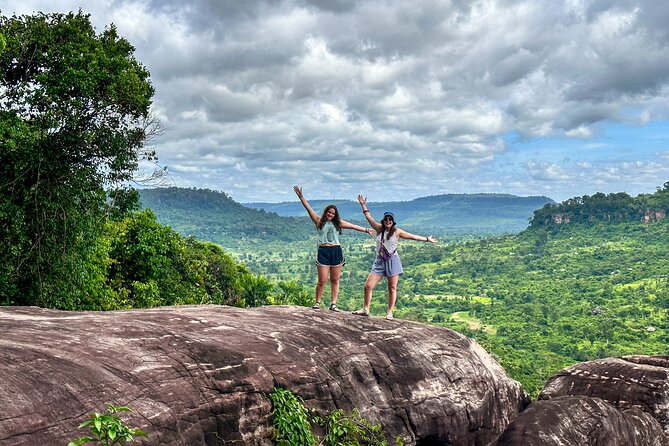
Day two goes beyond the central Angkor zone. The first stop is Poeng Ta Kho, a cliff viewpoint with wide views across forests and canyons. The walk from the parking area is described as short, with a 30-minute visit.
This is a good opening because it changes the scene immediately. After spending day one among walls, towers, and galleries, you begin day two looking out over open country. The view is the reason to stop, not a monument or museum.
Conditions can vary with weather, and the tour information does not specify the exact path surface. Comfortable shoes remain useful. If you are uneasy with heights, keep that in mind when deciding whether this tour suits you.
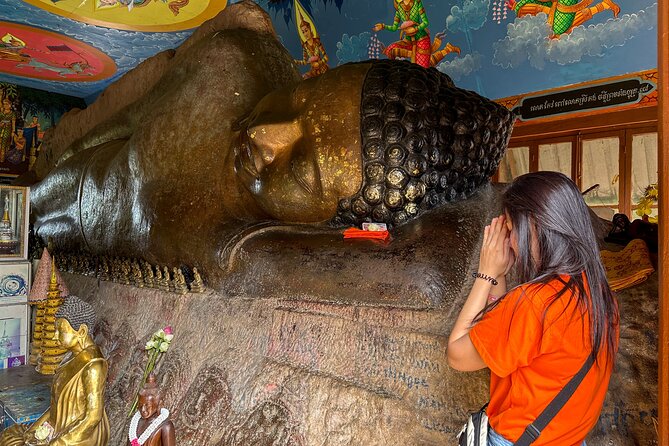
Next comes Preah Ang Thom pagoda, home to an 8-meter reclining Buddha carved into the mountainside. The site is still a place of worship, not only an archaeological stop. You may see families lighting incense and monks offering prayers, so modest clothing and respectful behavior are appropriate.
The climb and visit last about an hour. This is a spiritual place, and its meaning comes from the continuing local practice as much as from the carved Buddha. Listen to your guide, but also leave room for quiet observation.
The 1000 Lingas and Kulen Waterfall
The 1000 Lingas site is one of the more unusual stops on the tour. Sacred fertility symbols were carved into the riverbed by 11th-century priests. Water passes over these carvings, linking the river to religious life during the Angkor period.
You have around 30 minutes here. The riverbed is the key feature, so this is not a stop where you need a long walking route. A guide can help you understand why the carvings were placed in running water and how the site fits into the area’s sacred traditions.
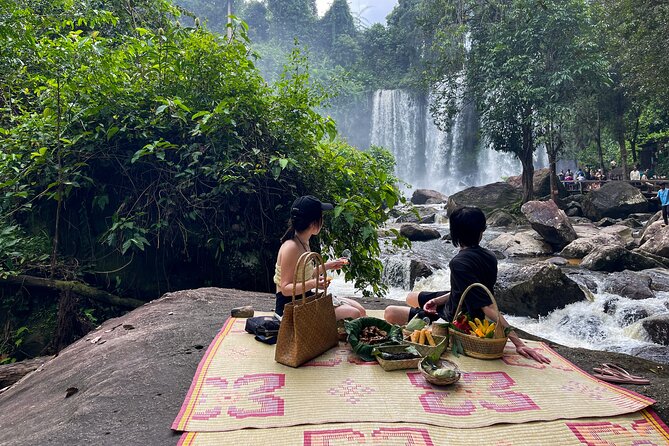
Afterward, the tour reaches Phnom Kulen Waterfall for about 90 minutes. The stop includes time by the falls and the chance to swim in the pools. This is the most relaxed portion of day two, though it still follows a morning of walking and driving.
Bring swimwear if you want to enter the water. The tour provides towels, but the information does not say that changing facilities are available, so plan your clothing sensibly. You can enjoy the falls without swimming, but the chance for a cool dip is a welcome break in Cambodia’s heat.
Lunch is included after the mountain stops. Vegetarian food can be arranged, which is useful if you have dietary needs. Soft drinks cost extra, while water is supplied during the excursion.
Beng Mealea gives you a rougher temple experience
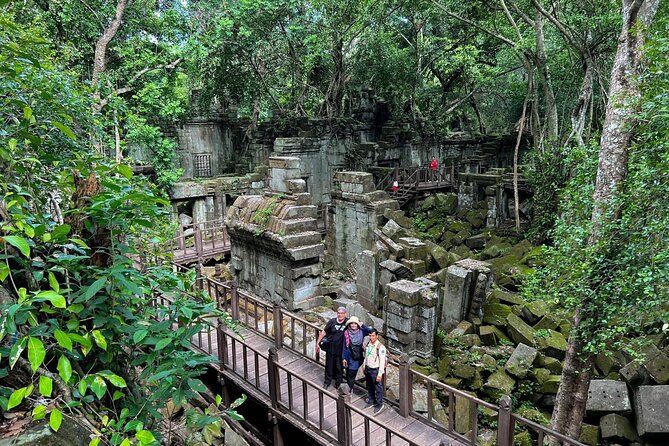
After lunch, Beng Mealea offers a sharp contrast to the better-known Angkor monuments. Built in the 12th century, this temple is heavily broken and wrapped in jungle growth. Fallen blocks, dark passageways, and tree-covered stone create a more untamed feeling than the restored or carefully managed central sites.
You have about an hour here. Beng Mealea is not simply a smaller Angkor Wat. Its appeal is the way the ruins feel less orderly, with nature and collapse shaping the visit. If you enjoy atmospheric ruins, this may be your favorite temple of the two days.
The drawback is that broken temples require more care. Watch where you step, follow local instructions, and do not treat the stones as climbing equipment. The tour description presents the site as a jungle temple, but it does not promise extensive exploration beyond the scheduled hour.
The drive out to Beng Mealea is part of the day’s time commitment. That distance is worthwhile if you want more than the standard Angkor loop, but it makes the tour less suitable for anyone who prefers slow visits at fewer places.
Kampong Phluk on Tonle Sap closes the trip
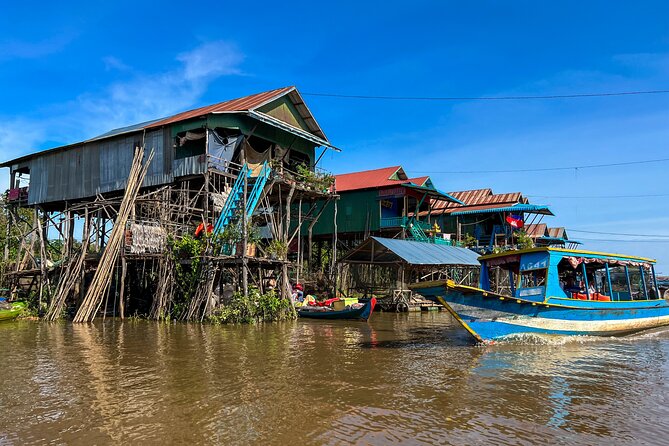
The final major stop is Kampong Phluk, a floating village on Tonle Sap Lake. A boat ride takes you through a community where families live around the water, with tall stilt houses and mangrove areas shaping daily life.
The boat visit lasts about 90 minutes. This is not a temple tour, and that is exactly why it belongs here. After two days of royal monuments and sacred sites, you see a living community whose routines are tied to the lake.
Approach the visit with respect. You are passing through people’s home area, not entering a staged historical exhibit. Your guide can help explain what you are seeing, while the boat offers a natural pace for watching the stilt houses, waterways, and surrounding vegetation.
The tour returns to Siem Reap around 6:30 PM. You can be dropped at your hotel or at the Old Market for evening shopping and dinner. That choice is handy if you still have energy, but most people will appreciate going straight to their room after such a long day.
Guides, drivers, and the small-group feel
The strongest personal element is the guide service. Mony is repeatedly associated with clear temple explanations, patience, friendly service, and strong photography. Chiep Chy is noted for speaking with warmth about Cambodia and for checking on a guest who felt unwell in direct sun.
Those details matter because this route has long periods outdoors. A guide who notices when you need shade or a pause can make the day much more comfortable. Your exact guide may vary, but Mony and Chiep Chy are names connected with this experience.
Drivers also affect the quality of a packed tour. Tram is praised for keeping people hydrated with water and cool towels and for making a convenient drop-off at the Old Market. Those are small touches, but they matter after hours in heat and dust.
The maximum group size is 14. That is not a private tour, but it is small enough for a more personal exchange than you get on a large bus. Group discounts are offered, so the value may improve if you are booking with family or friends.
Who should book this tour?
I would choose this tour if you have only two days in Siem Reap and want to see more than Angkor Wat and Bayon. It covers the major temple names, then adds Kulen Mountain, Beng Mealea, and Tonle Sap village life.
It suits active sightseers who like variety and do not mind early mornings, road time, uneven temple floors, or a full schedule. It also works well for first-time visitors who want transport, tickets, meals, and a guide handled in one booking.
I would think twice if you want a slow archaeological experience. The schedule gives you set time at each place, and day two in particular is ambitious. Families and older adults may participate, since most people can take part, but personal stamina matters more here than any formal age rule.
The price is a major reason to consider it. At $88 per person, you receive two days of guiding, entrance tickets, transport, breakfast, lunch, water, towels, and hotel pickup and drop-off. You still pay for soft drinks, and the tour does not include a hotel stay, but the main costs of sightseeing are covered.
Final verdict: a wide-ranging Siem Reap choice
Book this tour if you want a broad first look at Cambodia around Siem Reap, with temples, mountain scenery, water, food, and village life all in one package. The best moments are likely to be the sunrise at Angkor Wat, the tree-covered corridors of Ta Prohm, the waterfall at Kulen, and the boat ride through Kampong Phluk.
Skip it in favor of a slower private plan if you dislike pre-dawn starts or prefer spending half a day at one temple. For everyone else, the combination of included costs, a 14-person maximum, and attentive guide service makes this a sensible two-day introduction. Free cancellation is available up to 24 hours before the start time, which gives you some useful flexibility when planning.
FAQ
What time does the tour start?
Pickup begins between 4:30 and 5:00 AM on day one. You should be ready in your hotel lobby at about 4:30 AM.
Is hotel pickup and drop-off included?
Yes. Hotel pickup and drop-off are included on both days in Siem Reap.
Are Angkor and other entrance tickets included?
Yes. All admission tickets for the two-day tour are included.
Are breakfast and lunch included?
Yes. Breakfast and lunch are included. A vegetarian food option is available.
How large is the tour group?
The tour has a maximum of 14 participants.
Can I swim at Kulen Mountain Waterfall?
Yes. The Kulen Mountain stop includes time for swimming in the waterfall pools. Cool towels and water are provided during the excursion.
What happens at the end of day two?
The tour returns to Siem Reap at about 6:30 PM. You can be dropped at your hotel or at the Old Market for shopping and dinner.
More Phnom Kulen Tours in Siem Reap
- Kulen Waterfall Join-in Tour (local Picnic lunch)
★ 5.0 · 2,434 reviews - Kulen Mountain: Small-Group Tour and Picnic lunch
★ 4.9 · 1,802 reviews - Phnom Kulen Waterfall & the Sacred 1000 Lingas (with Lunch)
★ 4.8 · 974 reviews - Guided Small-Group Tour in Kulen Mountain Park Waterfall
★ 5.0 · 480 reviews
More Beng Mealea Tours in Siem Reap
- Siem Reap: Kulen Mountain, Beng Mealea and Tonle Sap Tour
★ 5.0 · 1,483 reviews - Kulen Mountain with Beng Mealea and Tonle Sap Small Group Tour
★ 5.0 · 780 reviews - Koh Ker Temple Group & Beng Mealea Full-Day Join-in Tour
★ 5.0 · 710 reviews - From Siem Reap: Koh Ker and Beng Mealea Temples Tour
★ 4.9 · 293 reviews
Just added around Siem Reap
- Ultimate Sunrise to Angkor Wat, Angkor Thom and Bayon Temple★ 5.0 · 3 reviews
- Twilight Tastes of Siem Reap Include Dinner★ 5.0 · 13 reviews
- Trekking Tour at Phnom Kulen National Park from Siem Reap★ 5.0 · 3 reviews
- Full-Day Private Tour of Angkor Wat with Pick Up★ 5.0 · 12 reviews
- Private Day Trip to Angkor Temples with Expert Guide★ 5.0 · 4 reviews
- Waterfall & River of 1000 Siva Linga- Kulen Mountain Private Tour★ 5.0 · 3 reviews
- Professional Photo Shoot in Angkor Archaeological Park, Siem Reap★ 5.0 · 42 reviews
- Ultimate Siem Reap Food Tour by Tuk Tuk – 20 Tastings, 8 Stops★ 5.0 · 13 reviews
Angkor Wat Tours, compared.

Angkor Wat Sunrise or Sunset Tour with Guide from Siem Reap
Read our review →
Angkor Wat: Small-Group Sunrise or Sunset Tour
Read our review →
Angkor Wat 2-Day Tour with Sunrise and Sunset
Read our review →

Angkor Wat Sunrise tour with Small – Group and Guide tours
Read our review →
Angkor Wat Highlights and Sunrise Guided Tour from Siem Reap
Read our review →
Angkor Wat Sunset Small Group Tour with Lunch Included
Read our review →
Full-Day Angkor Wat Sunrise Private Tour with Guide from Siem Reap
Read our review →Browse the lists this tour appears in