
Reviewed · BENG MEALEA TOURS
From Siem Reap: Koh Ker and Beng Mealea Temples Tour
The best thing about this tour is the quiet. Beng Mealea and Koh Ker sit well beyond Siem Reap’s busy temple circuit, so the day brings jungle ruins, open countryside, and the sound of birds instead of a steady stream of tour groups. I like the chance to see very different Khmer temples in one day, and I like that the guides, including Nara, Kim, Tola, and Pheap, explain both the stones and the culture behind them. The main drawback is the distance: you spend several hours on the road, and the rough, uneven temple paths demand steady walking.
I especially like two details that make the long outing easier. The group is limited to 10 people, and some departures are much smaller, sometimes only one to four people. You also get bottled water and cold towels, welcome comforts in Cambodia’s heat. Bring cash for both entrance tickets and lunch, since the $50 tour price does not cover either.
Key points at a glance
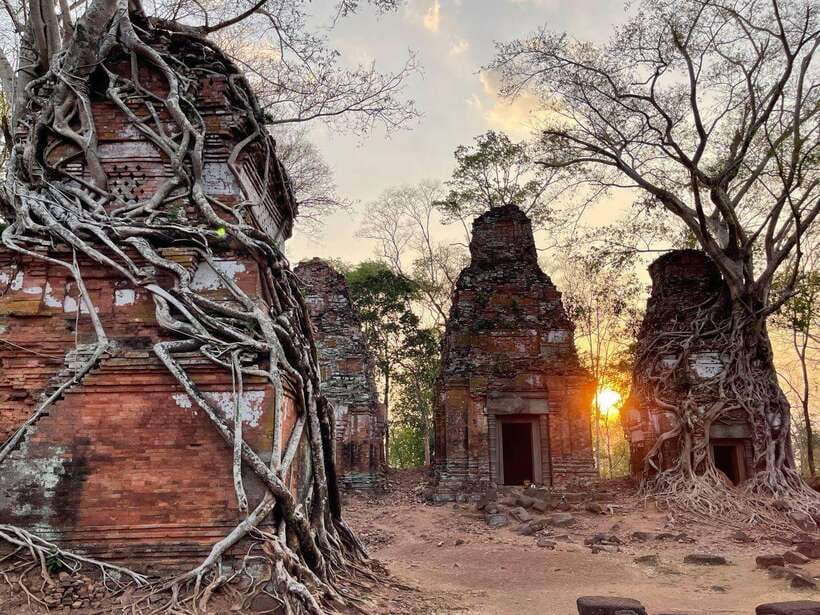
- Beng Mealea’s jungle setting: Explore a partly collapsed sandstone temple where trees and thick brush have reclaimed towers, courtyards, and passageways.
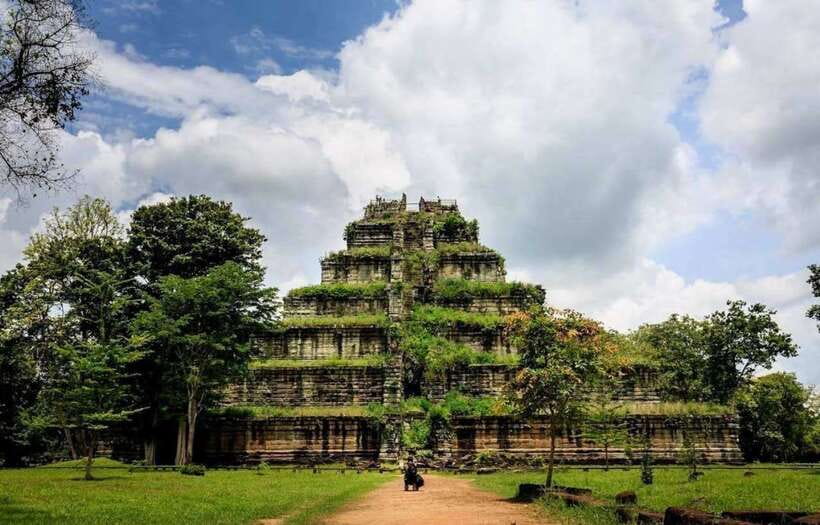
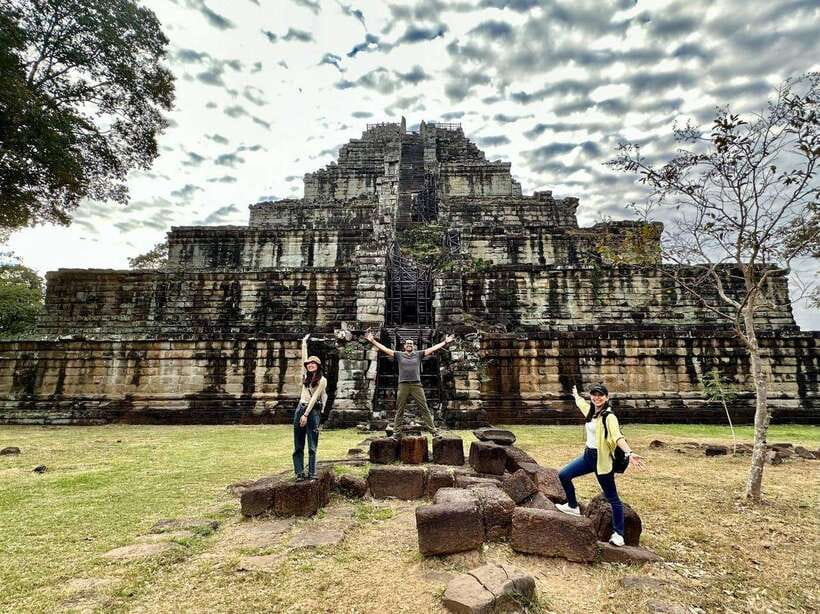
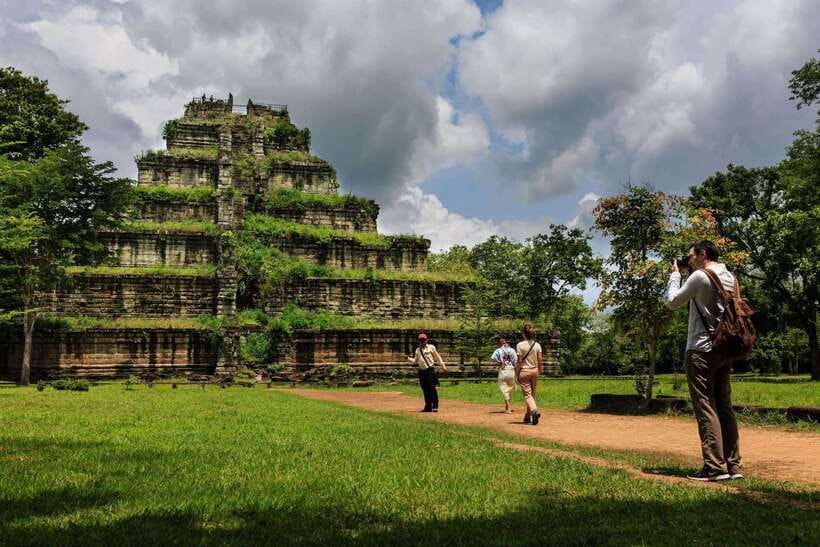
- Koh Ker’s seven-tiered pyramid: Climb Prasat Thom’s sturdy staircase for broad views over the surrounding countryside.
- A genuinely small group: The advertised maximum is 10 people, while some departures operate with only a handful or even one person.
- More than a temple checklist: Guides explain Khmer beliefs, Hindu and Buddhist influences, architecture, farming, customs, and Cambodia’s modern story.
- Long but comfortable transport: Hotel pickup, an air-conditioned vehicle, bottled water, and cold towels help soften the extended drives.
- Extra costs to budget: Beng Mealea requires an Angkor Wat ticket, Koh Ker costs $15, and lunch is paid separately.
Why Beng Mealea makes a strong first stop
The drive from Siem Reap begins with about 20 minutes of transport to a local café or meeting stop, followed by another roughly 70-minute road journey. The exact pickup rhythm can vary. One reported experience involved an early hotel pickup and a wait while other departures gathered at the operator’s office, so I would allow extra time rather than plan a tight morning connection.
The countryside is part of the day’s appeal. You pass villages and farmland on the way north, and the guide may point out local agriculture, customs, and traditional products during stops along the route. This is not just dead time between monuments. It gives you a look at Cambodia beyond Siem Reap’s hotels and souvenir stalls.
Beng Mealea was built from sandstone as a Hindu temple in the 12th century. It stood along an ancient royal road leading toward Preah Khan Kompong Svay, an important reminder that Khmer temples were tied to roads, power, worship, and movement across the empire.
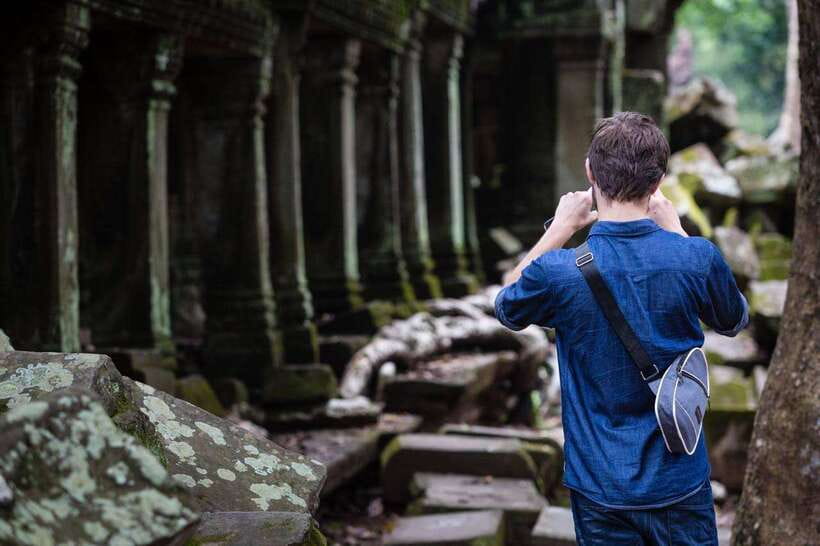
Inside, the site feels less ordered than the famous temples near Siem Reap. Towers lie broken among trees. Courtyards appear through dense vegetation. Stone blocks sit where walls once formed neat corridors. You can still make out the broad plan of the temple, but nature has taken a firm hand in the design.
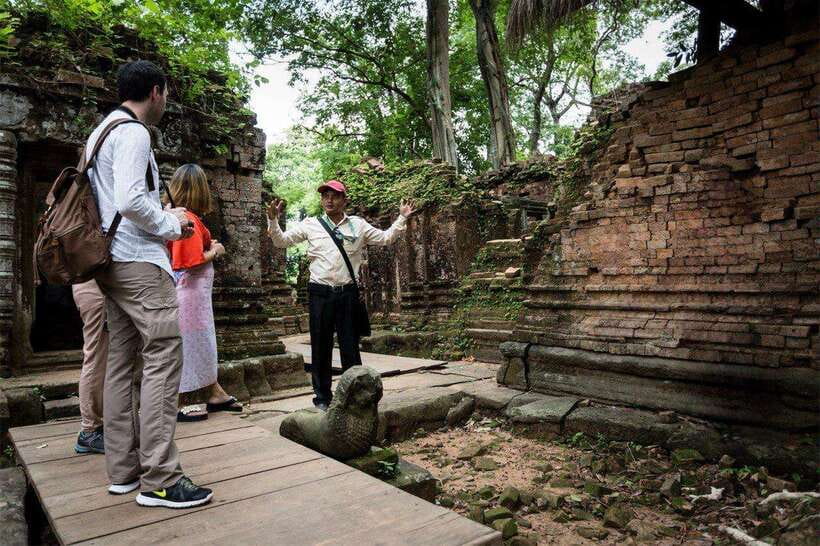
That mixture is what makes Beng Mealea memorable. At Angkor Wat, the grandeur comes from scale and formal balance. At Beng Mealea, the pleasure comes from working out what you are seeing. A guide matters here because fallen stones can look like random rubble until someone explains the original entrance, courtyard, shrine, or carving.
You spend about two hours at Beng Mealea, enough time for a guided walk and photographs without treating the place as a rushed roadside stop. The paths are uneven, and the site involves a moderate amount of walking. Wear shoes with a firm sole, especially if the ground is wet.
The temple can look different depending on the season. During greener months, vegetation may press more heavily around the ruins. In drier conditions, the structure and stonework can be easier to read. Either way, you should expect a partly wild archaeological site, not a polished monument with smooth walkways.
Remember that your Angkor Wat ticket is required for Beng Mealea. It is not included in the tour price, and the supplied information does not give the ticket cost, so check the current price before booking.
More Beng Mealea Tours in Siem Reap:
- Siem Reap: Kulen Mountain, Beng Mealea and Tonle Sap Tour
★ 5.0 · 1,483 reviews - Kulen Mountain with Beng Mealea and Tonle Sap Small Group Tour
★ 5.0 · 780 reviews - Koh Ker Temple Group & Beng Mealea Full-Day Join-in Tour
★ 5.0 · 710 reviews
The road to Koh Ker and the value of going far
After Beng Mealea, the vehicle continues for about 80 minutes toward Koh Ker. This is the point where the tour earns its price, but also where you need to accept the time commitment.
Koh Ker lies north of Siem Reap and was abandoned to the forest for centuries. Its distance makes independent transport less simple than visiting the central Angkor temples. A shared tour removes the need to arrange a long private drive, find each ruin, and manage the return journey yourself.
The road time also gives the guide room to connect the sites. Several guides have been praised for answering questions about Khmer religion, temple design, local life, and the difference between ancient and more recent Cambodian history. Chenda, who has archaeological excavation experience, has even used hand-drawn maps to explain routes and gateways. Details like that can turn a drive into useful preparation for the ruins ahead.
The small group setup matters most here. With 10 people as the limit, the outing is more personal than a large coach tour. Some departures have run with four people, while others have operated with only one booking. That can mean more time for questions, easier photo stops, and less waiting for people to catch up.
There is one practical caution. A small group does not mean you can wander without paying attention. One account describes a participant becoming separated while stopping repeatedly for photographs. Keep the guide in sight, especially around broken walls, side paths, and thick vegetation. If you want extra time for pictures, tell the guide clearly before moving away from the group.
Prasat Thom and the pyramid view
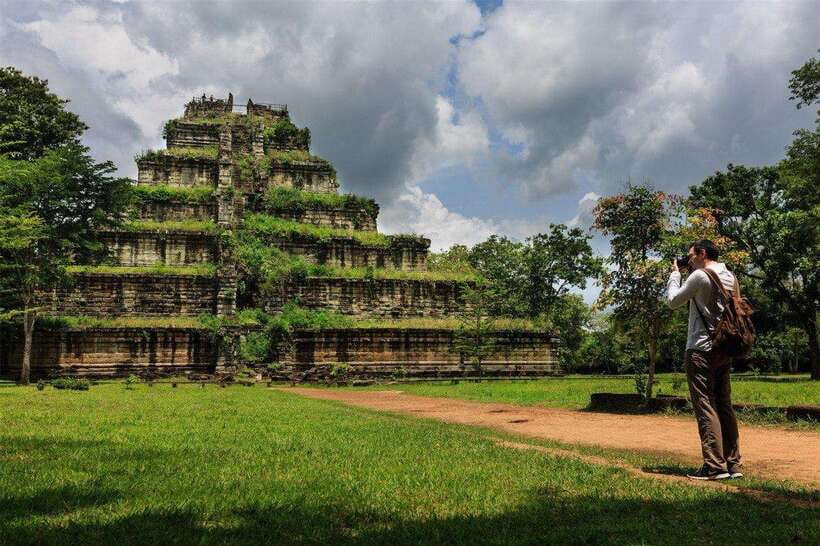
Koh Ker contains several sacred sites, but Prasat Thom is the visual anchor. Its seven-tiered pyramid rises above the trees in a shape unlike the broad galleries of Angkor Wat or the enclosed chambers of Beng Mealea.
A staircase provides access to the upper level, according to the supplied details. The climb is not a casual stroll, and the rough surroundings call for sensible footwear and care. If you have mobility limitations, this is not the right outing. The tour is specifically unsuitable for people with mobility impairments and children under 12.
From the top, you get a broad view over the Cambodian countryside. The reward is not only the pyramid itself, but the sense of how isolated the site remains. The long ride suddenly makes more sense when you look across a quiet stretch of forest and fields rather than a packed temple road.
The pyramid was part of a larger religious and political center. Your guide can help place it within Khmer beliefs and construction methods, while also explaining what is visible today and what has disappeared. The best guides do not simply name a king or date. They show you how the form of the temple reflects worship, status, and movement through sacred space.
Allow yourself time to look at the masonry. Koh Ker is not a single photo stop. Its appeal comes from comparing the bold pyramid with smaller shrines and forest-covered remains nearby.
Prasat Pram, Prasat Chrap, and the smaller ruins
The tour also includes sites such as Prasat Pram and Prasat Chrap, along with linga shrines reclaimed by nature. These smaller monuments provide useful contrast with Prasat Thom.
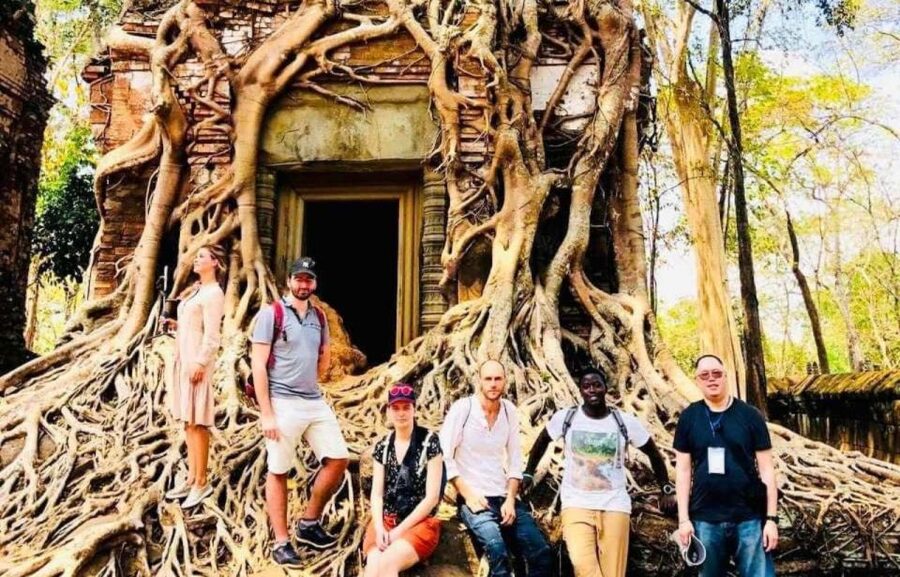
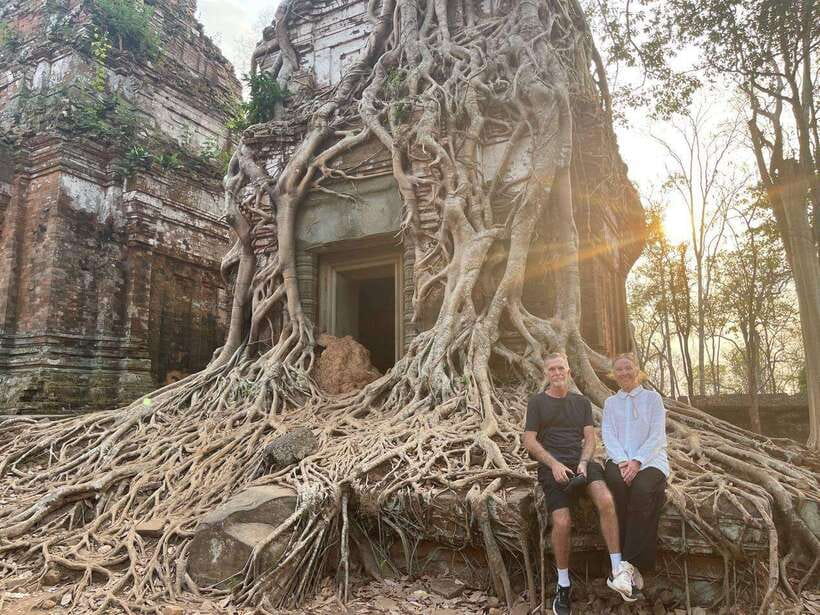
Prasat Pram is especially photogenic because trees grow through and around the temple ruins. The effect is dramatic, but it is worth looking beyond the familiar tree-and-stone picture. Ask your guide about the layout, the religious purpose of the shrines, and how the surrounding growth affects what can still be seen.
Prasat Chrap offers another view of Koh Ker’s scattered character. Rather than one grand compound that explains itself at a glance, you move between remains with different scales and degrees of survival. This makes the guide’s role important. Several named guides, including Lok, Ra, Kimhak, and Ry, have been praised for giving clear explanations while allowing quiet time to explore.
That balance suits these sites. You want enough information to understand the carvings and religious setting, but you also want moments when the guide stops talking and lets you hear the forest. This is one reason the smaller group can make the day feel less mechanical.
Expect no fully restored museum-like presentation. You are looking at ruins shaped by age, vegetation, weather, and conservation work. Some areas may be easier to cross than others, and the tour operates in all weather. Rain can make stone and soil slippery, while strong sun makes water, sunscreen, and insect repellent essential.
More Koh Ker Tours in Siem Reap:
- Preah Vihear: Full-Day Preah Vihear and Koh Ker Temple Tour
★ 4.9 · 263 reviews - Full-Day Preah Vihear, Koh Ker and Beng Mealea Private Tour
★ 4.4 · 101 reviews - Preah Vihear temple – Koh Ker & Other temple with Small Group
★ 5.0 · 96 reviews - 4-Day Excursion of Angkor, Koh Ker, Beng Mealea, Tonle Sap and Waterfalls
★ 5.0 · 87 reviews
Lunch, local products, and the real cost
The scheduled lunch break lasts about one hour at a nearby restaurant. Traditional curries, soups, and stir-fries are available at your own expense. The setting may be natural and pleasant, but do not assume the meal is included or that it will suit every taste.
One useful personal tip is to pack a takeaway from a Siem Reap restaurant if you are particular about food. The tour information specifically allows you to plan lunch separately, so you can choose between ordering locally, carrying something familiar, or eating a lighter meal before the return drive.
The day may also include stops for traditional local products. These brief pauses add a human side to the journey, though they are not the main reason to book. Think of them as a chance to stretch your legs and see how goods are made or sold outside the city.
At $50 per person, the tour offers solid value for the transport, hotel pickup and drop-off, English-speaking guide, bottled water, cold towels, local taxes, and a full eight-hour outing. The price is not the total cost, however. Add the $15 Koh Ker entrance fee, the Angkor ticket needed for Beng Mealea, and lunch.
For one person or a very small party, the value can be particularly strong if the tour still operates with shared-tour pricing. A solo booking has sometimes resulted in private transport and one-on-one guiding. That is not guaranteed, but the operator’s willingness to run with a very small number is worth noting.
If you have several people and want complete control over timing, private transport may appeal. Be careful with the wording, though: private transportation does not include a guide unless you book one as an add-on. For first-time temple explorers, I would usually choose the guided option because Beng Mealea and Koh Ker reward explanation.
Guides who add more than dates and names
The strongest part of this experience is the guide service. Names attached to especially positive days include Nara, Kim, Tola, Pheap, Pip, Lok, Ra, Chenda, Sophea, Ry, and Kimhak. Guide assignment is not guaranteed, but the repeated pattern is clear: you should expect an English-speaking guide who can discuss temple history and Cambodian culture.
Pheap, also called Pip, is often noted for humor, enthusiasm, and taking well-composed photographs. Nara and Tola are praised for clear temple explanations. Kim is described as attentive and easy to understand, while Chenda brings archaeological experience and map-based explanations. These are useful traits on a site where the stones alone do not always tell an obvious story.
Many guides also take photographs for you. This is handy when traveling alone or as a couple, but treat it as a helpful service rather than a formal photography session. Ask before stepping into a particular position, and keep an eye on the group while setting up a picture.
The driver matters on a day with long road sections. Several accounts specifically praise clean, comfortable vehicles and careful driving. Transport may be a bus, minivan, car, or SUV depending on group size. Bottled water and cold towels help, but you should still carry your own water if you drink often in hot weather.
What to pack and what to wear
Dress for a religious site and for walking. Shoulders must be covered, and trousers or shorts should reach at least the knee. Comfortable casual clothing works best, but thin layers can help with changing conditions during a full day outside.
Bring:
- A camera or phone with enough battery
- Hiking or sturdy walking shoes
- Sunscreen
- Insect repellent
- Cash for entrance fees and lunch
Large bags and luggage are not allowed, and smoking and pets are not permitted. Pack light. A small day bag is more useful than a heavy backpack on uneven temple paths.
The tour runs in all weather, so check the forecast and dress sensibly. A light rain layer may be useful, though the supplied information does not promise storage or shelter. If rain is expected, take extra care on stone surfaces.
Who should book this temple day
I would choose this tour after seeing the main Angkor circuit, or when I wanted a quieter and less familiar side of Khmer architecture. It is also a smart option for anyone who wants Koh Ker but does not want to arrange a long, complicated journey alone.
You are a good fit if you:
- Have a full day available from Siem Reap
- Enjoy ruins in an untidy, partly forested setting
- Want historical and cultural explanation in English
- Are comfortable with long drives and moderate walking
- Prefer a small group to a large coach
- Have already budgeted for the extra entrance fees and lunch
I would think twice if you dislike long road journeys, need smooth paths, want a highly polished archaeological site, or have mobility limits. The tour is not suitable for wheelchair users or people with walking disabilities, and children under 12 cannot join.
Should you book the Koh Ker and Beng Mealea tour?
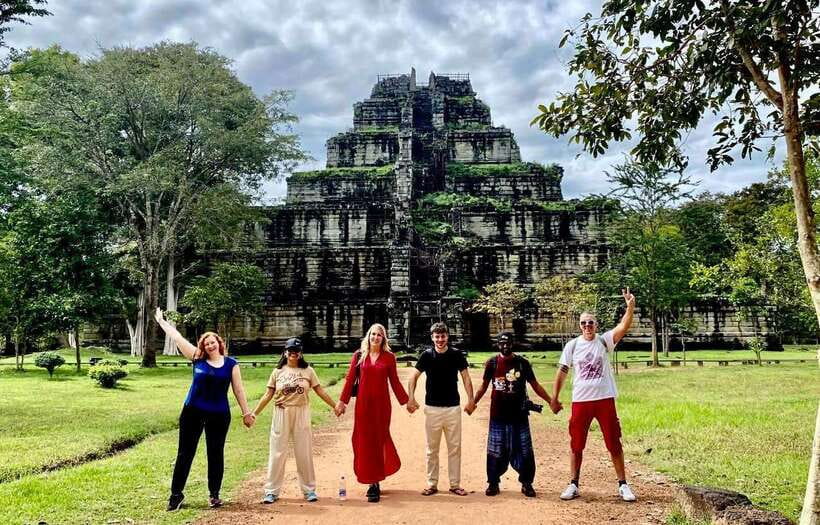
Book it if you want two very different temple experiences and value a quiet setting over convenience. Beng Mealea gives you tangled stone and jungle atmosphere, while Koh Ker provides a bold pyramid, smaller shrines, and a more remote sense of place.
The $50 price is fair once you count the transport, guide, hotel service, and full day of access. Just treat the entrance fees and lunch as part of the real budget. I would also leave the evening free after returning to Siem Reap. Eight hours on Cambodian roads and temple paths is rewarding, but it is still a long day.
If your priority is the most famous monuments with the least travel time, stay closer to Angkor. If you want quieter ruins, useful history, countryside views, and a guide who can make sense of scattered temples, this is one of the better additions to a Siem Reap visit.
FAQ
How long does the Koh Ker and Beng Mealea tour last?
The tour lasts 8 hours, including transport from Siem Reap, visits to both temple areas, a lunch break, and the return to your hotel.
Is hotel pickup included?
Yes. Pickup and drop-off are included from hotels or accommodations within Siem Reap City. You should provide your accommodation details when booking and be ready in the lobby at least 40 minutes before departure.
What language does the guide speak?
The live guide service is in English.
How large is the tour group?
The group is limited to 10 participants. Some departures may be much smaller, depending on the number of bookings.
Are entrance fees included?
No. Beng Mealea requires an Angkor Wat ticket, and Koh Ker has a separate entrance fee of USD 15.
Is lunch included?
No. Lunch is taken at a nearby restaurant and is paid for separately. You may order local curries, soups, and stir-fries, or bring a takeaway meal.
Is the tour suitable for people with mobility impairments?
No. A moderate amount of walking on uneven surfaces is involved, and the tour is not recommended for people with walking disabilities or wheelchair users.
What should I wear to the temples?
Wear comfortable casual clothing with shoulders covered and trousers or shorts reaching at least the knee. Sturdy walking shoes are recommended.
Just added around Siem Reap
- Ultimate Sunrise to Angkor Wat, Angkor Thom and Bayon Temple★ 5.0 · 3 reviews
- Twilight Tastes of Siem Reap Include Dinner★ 5.0 · 13 reviews
- Trekking Tour at Phnom Kulen National Park from Siem Reap★ 5.0 · 3 reviews
- Full-Day Private Tour of Angkor Wat with Pick Up★ 5.0 · 12 reviews
- Private Day Trip to Angkor Temples with Expert Guide★ 5.0 · 4 reviews
- Waterfall & River of 1000 Siva Linga- Kulen Mountain Private Tour★ 5.0 · 3 reviews
- Professional Photo Shoot in Angkor Archaeological Park, Siem Reap★ 5.0 · 42 reviews
- Ultimate Siem Reap Food Tour by Tuk Tuk – 20 Tastings, 8 Stops★ 5.0 · 13 reviews
Beng Mealea Tours, compared.
Kulen Mountain, Beng Mealea and Tonle Sap Tour
Read our review →
Kulen Mountain with Beng Mealea and Tonle Sap Small Group Tour
Read our review →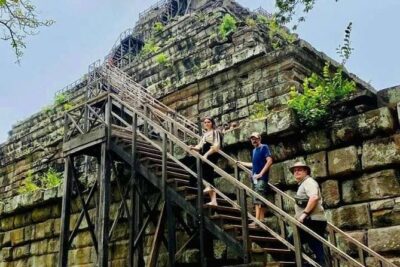
Koh Ker Temple Group & Beng Mealea Full-Day Join-in Tour
Read our review →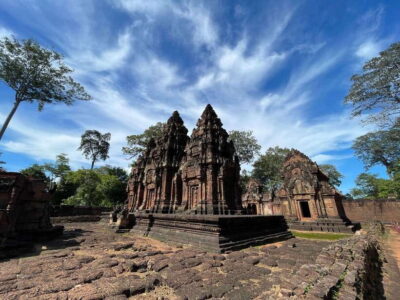
Banteay Srei, Kulen Waterfall & Beng Mealea Exploration
Read our review →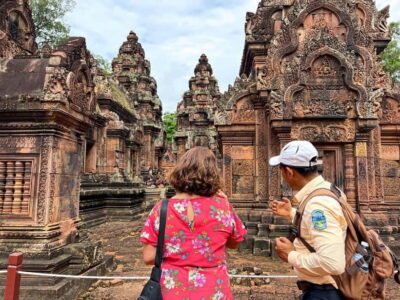
Banteay Srei, Beng Mealea and Kulen Mountain with Picnic
Read our review →Kulen Mountain, Beng Mealea, and Tonle Sap Tour
Read our review →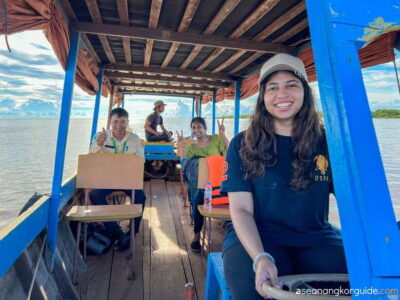
Private Beng Mealea and Floating Village Tour with Sunset
Read our review →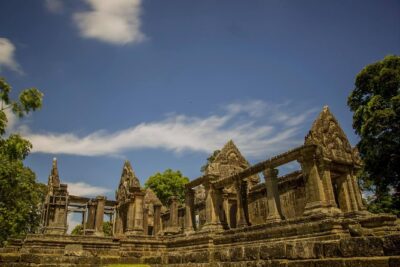
Full-Day Preah Vihear, Koh Ker and Beng Mealea Private Tour
Read our review →Browse the lists this tour appears in