
Reviewed · 2-DAY EXPERIENCES
2-Day ‘Angkor & Village’ Tour
This tour packs Cambodia’s biggest sights into two full days, then adds a sharp change of scene: from carved stone temples to Kompong Phluk’s stilted fishing villages on Tonle Sap. You get Angkor Wat in the afternoon and again at sunrise, plus Bayon, Ta Prohm, Banteay Srei, and several lesser-known temples.
I like the private air-conditioned car, which gives you shade, cold water, and a little breathing room between ruins. I also like the guide-led format: guides such as Choup and Seng have been praised for explaining the temples well and adjusting the day to suit the group. The catch is the physical effort. Climbing temple steps and walking over uneven ground can be tiring, especially on the first day.
Key points at a glance
- Angkor Wat twice: See the great temple in daylight, then return before dawn for its famous sunrise.
- A private tour, not a fixed group: Your party travels in its own air-conditioned vehicle with hotel pickup and drop-off.
- Kompong Phluk by boat: Add a look at life on Tonle Sap, with villages built largely on tall stilts.
- Banteay Srei is a highlight: This smaller 10th-century temple is known for fine stone carving and sits away from the main Angkor circuit.
- The temple pass costs extra: The tour price is $130, but admission to Angkor Park is not included.
- Expect a demanding two days: You need to walk normally and manage stairs, rough surfaces, heat, and long sightseeing hours.
What $130 buys you in two private days
At $130, this is a strong value if you want a private guide and vehicle rather than joining a large coach. The price covers hotel pickup and drop-off, an air-conditioned vehicle, an English-speaking guide, bottled water, cold towels, and the motorized boat fee for Kompong Phluk.
The main extra cost is your temple pass. The supplied details list a two-day pass at $67 per person, while the ticket information also gives prices of $62 for three days and $72 for seven days. Since those figures do not line up neatly, check the current price at Angkor Enterprise before you go. You need one pass per person, and the tour price does not cover it.
Meals, soft drinks, and alcohol are also extra. Lunch is mentioned as part of the day’s timing, but not as an included feature, so budget for your own meals. That arrangement is fair enough: you choose what and where to eat, while the guide and driver keep the sightseeing moving.
The private format adds real value. You are not waiting for strangers at every stop, and you can ask for explanations, pauses, or a little more time at a favorite temple. The guide and driver have also shown flexibility, including adding Tonle Sap for a group that wanted to see it. That flexibility is one of the better reasons to choose this tour over a cheaper shared outing.
A few more Siem Reap trips to weigh up
- Siem Reap: Angkor Wat 2-Day Tour with Sunrise and Sunset
★ 4.9 · 4,429 reviews - Angkor 2-Day Sunset & Sunrise Small-Group Tour
★ 5.0 · 2,567 reviews - 2 Days Exclusive Temple Highlights with Sunset and Sunrise Tour
★ 5.0 · 1,157 reviews
Day one, Bayon and the royal heart of Angkor Thom
The day begins with hotel pickup at about 8:30 a.m. You first stop at the Angkor Enterprise ticket office to buy or collect the pass needed for the park. Allow about 30 minutes for this step. Keep the pass handy, since it is required for the temple visits.
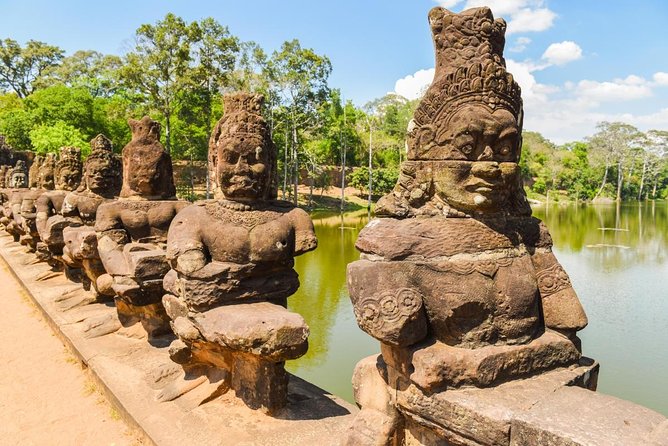
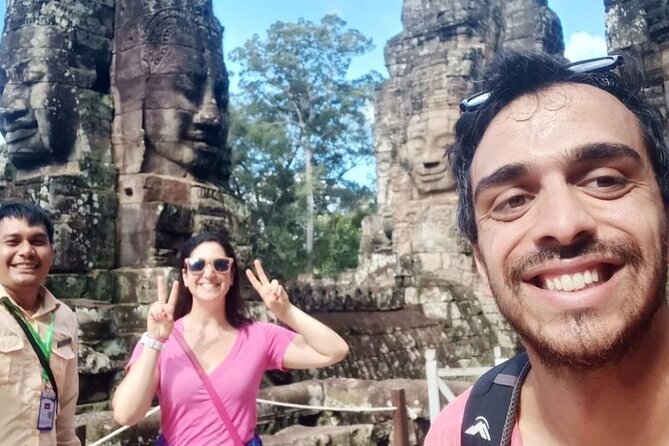
Bayon is the first major temple. Built in the late 12th or early 13th century under Jayavarman VII, it served as the state temple of his Buddhist capital. Its famous stone faces appear from towers and passageways, giving the place a strange, watchful character.
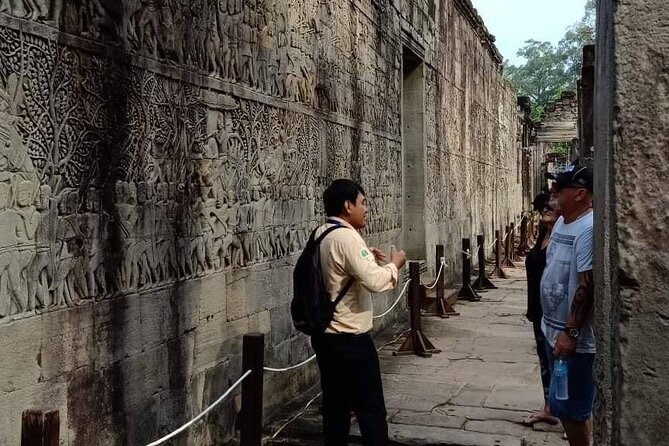
Your guide matters most here. Bayon can look like a maze of half-understood carvings if you walk through without context. Plan on about an hour, with some uneven footing and stairs. The central passages can feel tight, so comfortable shoes and a little patience help.
Next comes Baphuon, a three-tiered temple mountain in Angkor Thom. It was built in the mid-11th century as a Hindu temple dedicated to Shiva, long before Bayon’s Buddhist period. The scale and raised design make it a good contrast to Bayon’s crowded towers and faces.
Baphuon requires more climbing than some visitors expect. You will walk across a long raised approach and then manage steps. If your knees or balance are not great, take your time and ask the guide where to pause. The tour information says it is not suitable for people with below-average fitness or those unable to walk normally, and this warning is worth taking seriously.
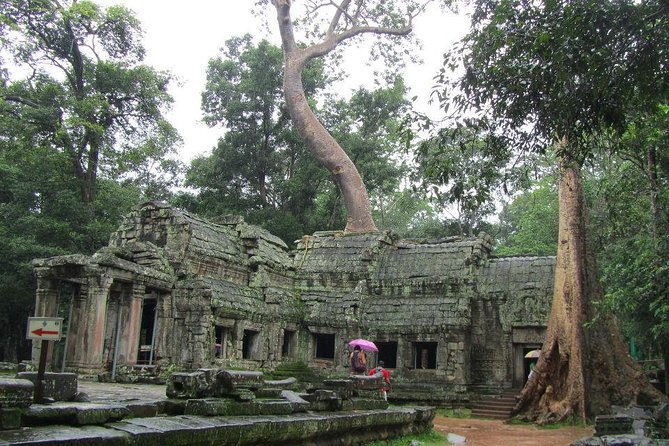
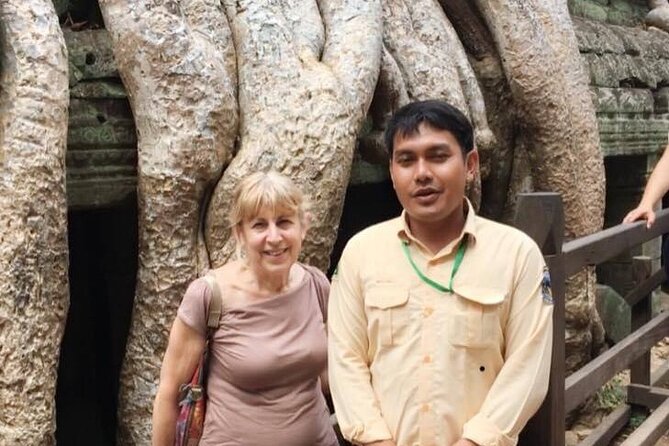
Ta Prohm brings a different mood. Built in the late 12th and early 13th centuries, it was originally called Rajavihara and is now famous for its trees, stone galleries, and partly broken corridors. The roots and walls create the atmospheric scene many people picture when they think of Angkor.
That fame also means Ta Prohm can be one of the busier stops. Your private vehicle does not guarantee quiet ruins, but it does make the route easier and more comfortable. Give yourself an hour, watch your footing, and do not rush the carved doorways simply because the next group is coming through.
The Terrace of the Elephants takes about 30 minutes. It formed part of the eastern boundary of the royal palace grounds, facing the parade area. The long carved platform is less enclosed than the temples, so your guide can help you picture royal processions and public ceremonies from the open ground in front.
Three hours inside Angkor Wat
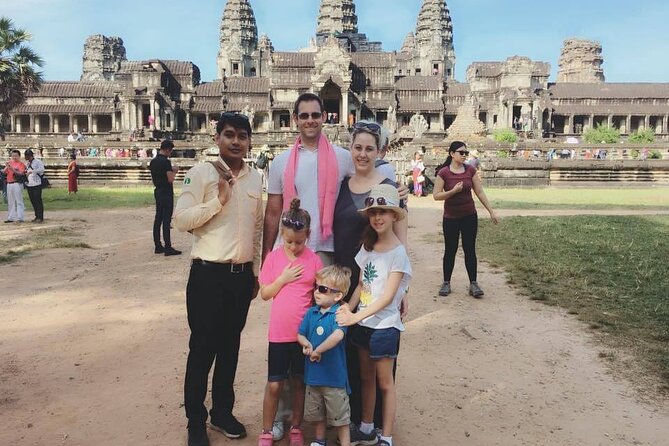
After lunch, you reach Angkor Wat for a longer visit of about three hours. This is the main event, but it rewards a slower pace rather than a quick photo stop.
Angkor Wat was first built as a Hindu temple and later became a Buddhist place of worship. Its immense scale is easier to understand when you walk through the outer galleries, view the carved scenes, and see how the towers frame the central sanctuary.
A guide adds practical value here. There is a lot to notice, from the layout and bas-reliefs to the change in religious use. You can also use the three-hour block to set your own pace. If you want every gallery, the time will pass quickly. If you prefer the broad design and a few key carvings, you can avoid wearing yourself out before the second day.
The itinerary then allows three hours at Phnom Bakheng. This temple mountain dates from the late ninth century and was dedicated to Shiva before later Buddhist use. It sits on a hill, so reaching it adds another climb after a long day of temple walking.
The stop is attractive for its elevated setting, but the combination of hill, steps, and late-day fatigue may test you. The schedule does not promise a specific sunset program, so treat Phnom Bakheng as a hilltop temple visit rather than assuming a guaranteed sunset experience. Your guide can tell you how much time makes sense on the day.
Day two begins before dawn at Angkor Wat
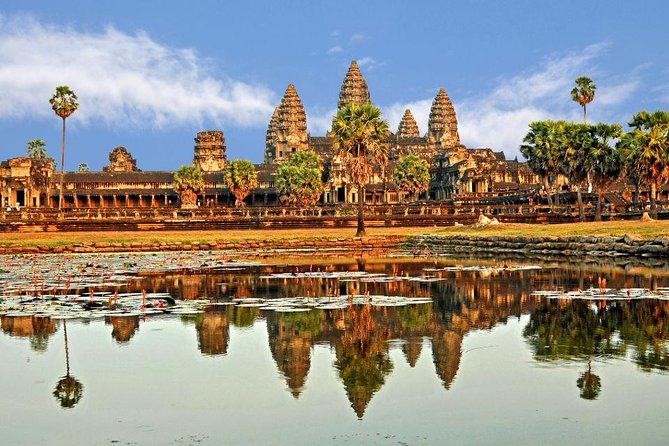
The second morning returns to Angkor Wat for sunrise. The early start is the price of the view, and the schedule allows about three hours before returning to your hotel for breakfast.
This repeat visit is one of the tour’s smartest choices. Angkor Wat looks different in low morning light than it does during the first afternoon. You also get a chance to revisit parts you hurried through the day before, though sunrise areas can be busy.
Returning to the hotel for breakfast gives you a useful reset. You are not forced to carry a full day’s supplies from dawn onward, and you can cool down before heading out again. Still, the early start means day two is not an easy day. Plan for fatigue and bring water, even though bottled water is supplied.
Same country, a completely different kind of day:
- Angkor Wat Sunrise or Sunset Tour with Guide from Siem Reap
★ 5.0 · 12,109 reviews - Siem Reap: Angkor Wat: Small-Group Sunrise or Sunset Tour
★ 5.0 · 9,444 reviews - From Siem Reap: Kampong Phluk Floating Village Tour by Boat
★ 4.9 · 6,979 reviews - Sunset tour of Kampong Phluk stilts home village on the Tonle Sap
★ 5.0 · 4,865 reviews
Banteay Srei and the finest small-scale carving
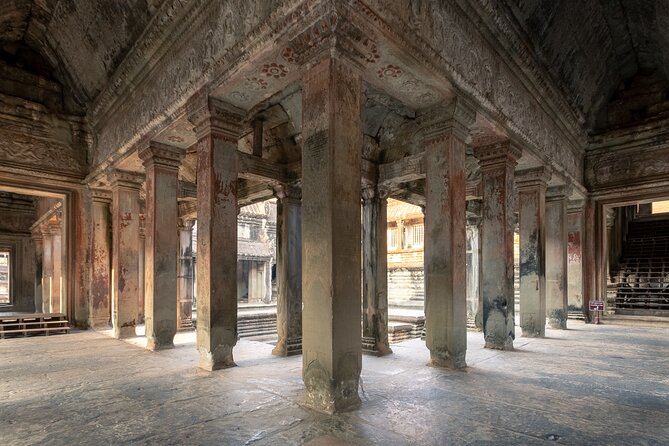
Banteay Srei lies about 25 kilometers northeast of the main temple group. The drive takes you away from the central Angkor circuit and leads to a temple from the 10th century, dedicated to Shiva.
It is often called the ladies temple, but the more useful reason to visit is its detailed carving and smaller scale. The red-toned stone and fine decoration give Banteay Srei a very different feel from the giant structures at Angkor Wat and Bayon.
The two-hour stop is well judged. You have time to examine the carved lintels and doorways without treating the temple as a quick roadside pause. The extra driving also matters: this is not the most efficient stop if you only want the central temples, but it is a good choice if you want variety.
Banteay Samre follows for about an hour. Built in the early 12th century during the reigns of Suryavarman II and Yasovarman II, it is a Hindu temple in the Angkor Wat style. It is another useful comparison point, particularly after Banteay Srei. You can see how different dates, designs, and levels of preservation shape the experience.
Pre Rup adds a brick-and-laterite finish
Pre Rup takes another hour. Built in 961 or early 962 as the state temple of Rajendravarman, it combines brick, laterite, and sandstone in a temple-mountain form.
Pre Rup is less about one famous image and more about structure. Its stepped shape gives you a clear sense of how Khmer temple mountains were built and used. As with Baphuon and Phnom Bakheng, the stairs can be demanding, so do not treat this as a casual stroll.
By this point, you have seen enough major sites to understand the range of Angkor architecture. That progression is a strength of the itinerary. You are not simply ticking off the same type of ruin all day.
Kompong Phluk changes the pace
The final major stop is Kompong Phluk, a collection of villages largely built on stilts along Tonle Sap. The name means Harbor of the Tusks, and the community depends heavily on fishing, with the wet season from May through October shaping daily life.
The motorized boat fee is included, which keeps the pricing clearer than many excursions that add the boat charge later. The village visit lasts about three hours, giving you more than a quick ride past the shoreline.
This is the tour’s best break from stone temples. You see a working community connected to the lake, not another royal monument. Water levels and seasonal conditions affect what you see, so keep your expectations grounded. The supplied details explain the stilted village and fishing economy, but do not promise a particular wildlife sighting, floating forest, or water level.
There is an important choice here. Instead of Kompong Phluk, you can visit Preah Khan, Neak Poan, Ta Som, and East Mebon. That alternative keeps you among the temples and may suit you if Angkor is your only priority. The village option is better for contrast, while the temple alternative gives you more ancient sites.
The tour returns to town at about 5:00 p.m. That makes for a full second day, but not an unreasonable one if you have built in rest and accept that the schedule is active.
Transport, guiding, and the private-tour advantage
The air-conditioned vehicle is more than a comfort detail in Siem Reap. After walking among exposed ruins, the cool ride gives you a chance to recover before the next stop. Hotel pickup and drop-off also remove the need to arrange separate transport each morning.
Cold towels and bottled water are small touches, but they matter in a two-day program. The guide speaks English and stays with you through the temple explanations, while the driver handles the transfers.
The tour is private, so only your group participates. That makes it a good fit for couples, families with older children, or friends who want to set their own rhythm. Children under three are not accepted, and the physical demands make this a poor choice for anyone who cannot manage ordinary walking and stairs.
The strongest guide feedback centers on clear explanations, flexibility, and extra effort to make the day enjoyable. Choup and Seng are two guide names associated with especially positive experiences, though you should confirm who will lead your booking. A good request at the start is simple: tell the guide whether you want more history, more photography time, fewer stairs, or a faster pace.
What to pack and how to manage the two days
Wear shoes with a firm sole. Smooth sandals can be awkward on worn stone, steps, and uneven paths. Light clothing, sun protection, and a small bag for water are sensible, even with a car and supplied drinks.
Keep your temple pass safe. You buy it at Angkor Enterprise, and each person needs an individual pass. The ticket office portion is listed as about 30 minutes, so do not assume you can skip it and go straight to Bayon.
You should also plan meals in advance at a basic level. Food is not included, and the schedule has several long blocks. A late lunch on day one would make the Angkor Wat visit harder, while breakfast after sunrise is built into day two.
Do not underestimate the sunrise return. Day one already includes Bayon, Baphuon, Ta Prohm, the terraces, Angkor Wat, and Phnom Bakheng. If you want the full program, get a good night’s sleep and accept that the second morning starts early.
Should you book the Angkor and Village tour?
I would book this tour if you want the major Angkor sites, a sunrise at Angkor Wat, a private guide, and a Tonle Sap village in one organized package. The combination gives you both grand monuments and a look at present-day lake life, while the air-conditioned vehicle makes the long days easier.
I would choose another plan if you want slow, unhurried temple visits or if stairs and rough ground are a problem. The itinerary is ambitious, and the $130 price is not the final cost once you add the temple pass and meals.
For an active visitor with only two days in Siem Reap, this is a practical choice. Confirm the current pass price, ask which guide is assigned, and decide in advance between Kompong Phluk and the extra temples. Those three details will help you know exactly what you are buying.
FAQ
Is the tour private?
Yes. Only your group participates, and the tour uses a private air-conditioned vehicle.
Is hotel pickup included?
Yes. Pickup and drop-off at your accommodation are included.
What time does the tour start?
The stated start time is 8:30 a.m. on the first day. Day two begins early for the Angkor Wat sunrise.
Is the Angkor temple pass included?
No. The temple pass is an additional cost. The supplied details list a two-day pass at $67 per person and also show other Angkor Enterprise prices, so check the current rate before purchase.
Is the Kompong Phluk boat included?
Yes. The motorized boat fee is included in the tour price.
Are meals included?
No. Meals, soft drinks, and alcohol are not included.
Can I visit other temples instead of Kompong Phluk?
Yes. The alternative is Preah Khan, Neak Poan, Ta Som, and East Mebon.
Is the tour suitable for people with limited mobility?
The tour is not suitable for people who cannot walk normally or have below-average fitness. Temple visits include walking and climbing steps, and the itinerary lasts two full days.
Just added around Siem Reap
- Ultimate Sunrise to Angkor Wat, Angkor Thom and Bayon Temple★ 5.0 · 3 reviews
- Twilight Tastes of Siem Reap Include Dinner★ 5.0 · 13 reviews
- Trekking Tour at Phnom Kulen National Park from Siem Reap★ 5.0 · 3 reviews
- Full-Day Private Tour of Angkor Wat with Pick Up★ 5.0 · 12 reviews
- Private Day Trip to Angkor Temples with Expert Guide★ 5.0 · 4 reviews
- Waterfall & River of 1000 Siva Linga- Kulen Mountain Private Tour★ 5.0 · 3 reviews
- Professional Photo Shoot in Angkor Archaeological Park, Siem Reap★ 5.0 · 42 reviews
- Ultimate Siem Reap Food Tour by Tuk Tuk – 20 Tastings, 8 Stops★ 5.0 · 13 reviews
2-Day Experiences, compared.

Angkor Wat 2-Day Tour with Sunrise and Sunset
Read our review →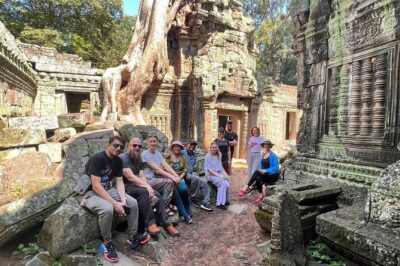
2 Days Exclusive Temple Highlights with Sunset and Sunrise Tour
Read our review →
Angkor Sunrise 1- or 2-Day Guided Temples Tour
Read our review →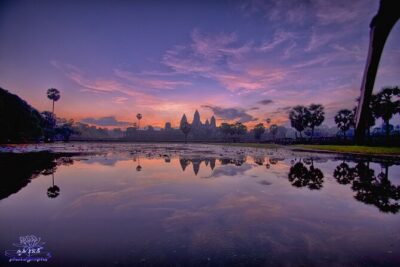
2-Day Angkor Wat With Small, Big Circuit and Banteay Srei Tour
Read our review →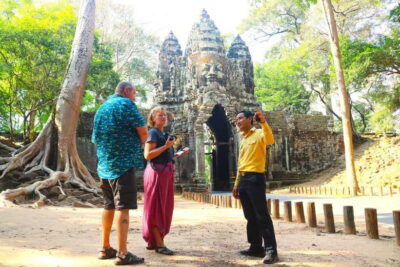
2-Day Temple Highlights Sunrise and Sunset Option
Read our review →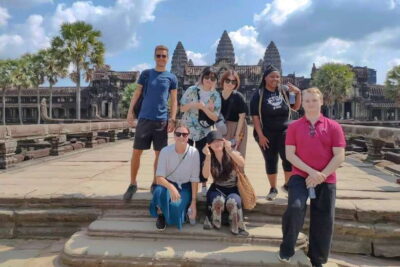
Angkor Wat 2-Day complex Sun rise & Sun set with Guided Tour
Read our review →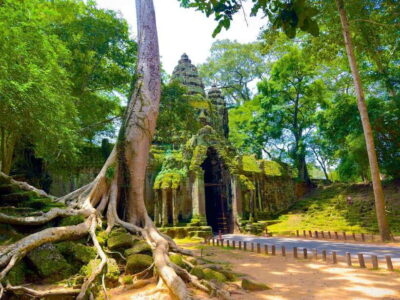
2-Days Angkor Wat with Sunrise Small-Group Tour
Read our review →
2-Day Angkor Wat Tour with Banteay Srei and Floating Village
Read our review →Browse the lists this tour appears in