
Reviewed · FARMS
Siem Reap: Lotus Silk Farm- Tour, Lake & Masterclass
The remarkable thing here is how much one lotus can provide. At Lotus Silk Farm, you see stems turned into fine fiber, then use different parts of the plant to make paper, yarn, jewelry, incense, an eco-printed silk scarf, and an engraved lotus symbol. The 30-minute boat ride through the flower fields gives the afternoon a calm, beautiful finish.
I like the hands-on teaching and the direct connection with local women artisans. I also like the value: six workshops, a farm tour, refreshments, and a boat ride are bundled into the $70 price. The main consideration is timing. The visit lasts 4.5 hours, and transport is only provided from the Biolab Cafe in central Siem Reap, not from your hotel.
Key points worth knowing
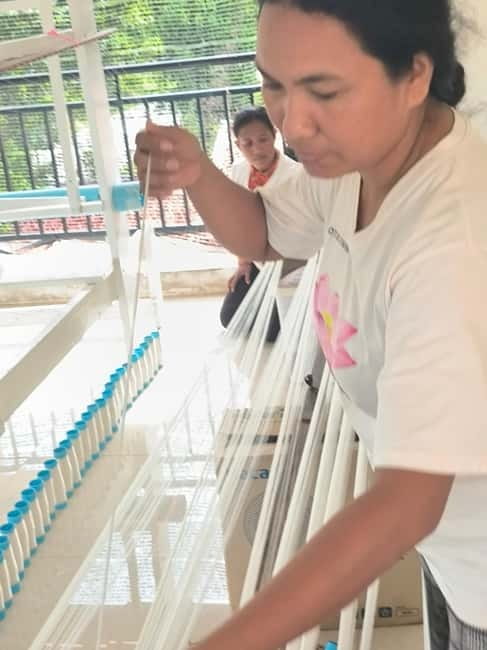
- Lotus silk is made by hand: Watch artisans pull delicate fibers from lotus stems and twist them into yarn.
- Six crafts keep the pace lively: You make paper, yarn, jewelry, incense, an eco-print, and a carved vegan leather piece.
- The boat ride is more than a transfer: A boatman creates a lotus bouquet while you glide through the flower fields.
- You leave with your own work: Your six handmade pieces, plus additional small gifts in some cases, become useful reminders of the visit.
- The $70 price covers a full half-day: The fee includes transport from Biolab Cafe, instruction, materials, tea, biscuits, and the boat trip.
- Sunset may be special: A late outing can offer softer light over the lotus fields, though starting times depend on availability.
Why the lotus farm makes a strong change from temple touring
Siem Reap is rightly famous for Angkor Wat, but several days of temple corridors and carved stone can leave you ready for something softer. This outing shifts the focus to living craft, rural work, and the sacred lotus, a flower with strong religious meaning in Cambodia.
The visit is based at a social enterprise that has supported women artisans since 2003. That matters because your fee is tied to actual production and teaching, not just a quick photo stop. You see people at work, learn the process, and take part rather than simply browse finished goods in a shop.
I would choose this experience if you want a cultural activity that does not require a long day of walking. It suits families, couples, craft fans, and anyone who wants something beyond Angkor. The work is guided and approachable, so you do not need previous artistic skill.
The tone is relaxed rather than rushed. The supplied schedule includes a 30-minute guided visit, six craft activities, refreshments, and a 30-minute boat ride, with the complete outing lasting about 4.5 hours. The extra time allows for instruction, making, moving between areas, and looking through the boutique.
A few more Siem Reap trips to weigh up
- Siem Reap Lotus Silk Farm Discovery tour & Lake experience
★ 4.7 · 291 reviews - Siem Reap: Khmer Village and Fish Farm ATV Tour
★ 4.9 · 266 reviews - Angkor Silk Farm & Lotus Silk Farm: Siem Reap Discovery Tour
★ 4.8 · 68 reviews
Starting at Biolab Cafe in central Siem Reap
Your transport begins at Biolab Cafe and Restaurant, an air-conditioned café and garden in downtown Siem Reap. Pickup times are 8:30 AM, 10:00 AM, and 12:00 PM. Arrive about five minutes early and look for the lotus-colored flag marked PICKUP, along with the Lotus Silk Farm logo.
A grey van waits outside. The café has restrooms, free WiFi, air conditioning, and coffee or other refreshments for purchase, which makes it a sensible meeting point if you arrive early.
Hotel pickup is not included. You need to arrange your own way to Biolab Cafe, so allow time for a tuk-tuk or taxi. One past outing had a pickup delay of about 30 minutes, though this was described as unusual. I would still avoid scheduling a temple visit or flight immediately afterward.
Transportation is included only between the café and the farm. Meals are not included, and the provided refreshments are limited to lotus tea and lotus biscuits. Bring extra water if you like, although water is provided.
Seeing lotus stems become silk
The guided farm visit explains the full lotus silk process, from plant to thread. Master Khmer artisans demonstrate how delicate fibers are drawn from lotus stems and joined into yarn. It is slow, careful work, and that is the point. A single finished textile represents repeated hand movements rather than industrial machinery.
This section gives the craft workshops more meaning. Without it, making a piece of lotus paper or jewelry could feel like a pleasant art class. After seeing the fiber extracted, you understand why lotus silk is treated as a luxury material and why it can support a lower-waste production model.
The farm also uses leftover stem material. Recycled waste becomes lotus paper and a vegan leather material for engraving. That practical use of the whole plant is one of the most interesting parts of the visit. You are not only seeing a flower grown for beauty. You are learning how several parts can become useful products.
The guides add cultural and religious context. Sokha, Sean, and Melany are among the guides associated with different visits, and the teaching is available in English or French. Sokha has been praised for explaining historical and religious details, while Sean is known for a friendly, welcoming manner. Guide assignments can vary, so do not book expecting one particular person.
Six workshops, six very different souvenirs
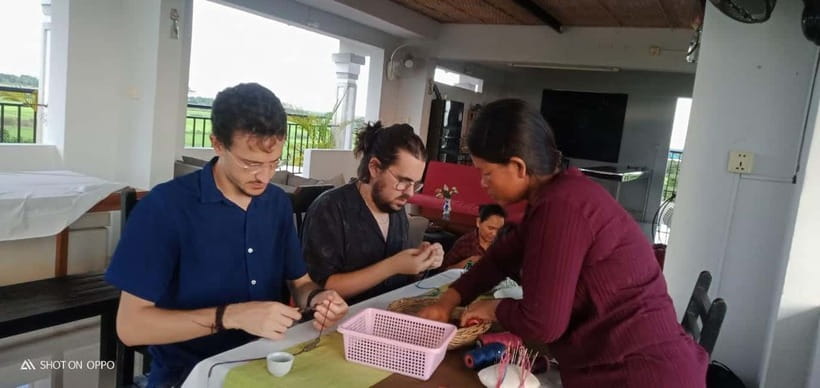
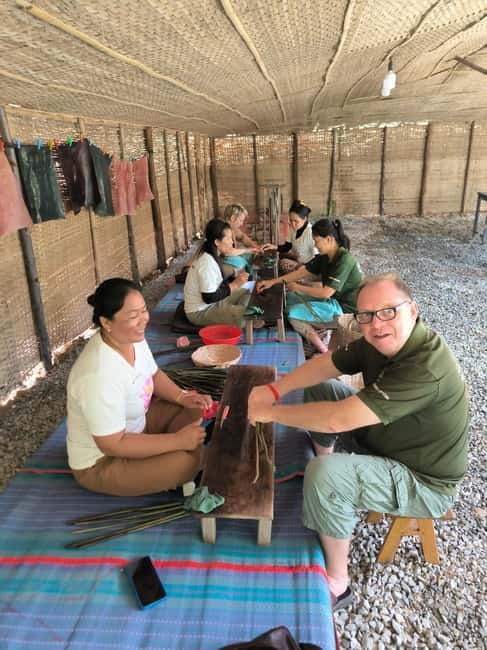
The craft session is the heart of the experience. You move through six activities, each using lotus material or drawing on traditional Cambodian skills. The work is designed for beginners, with artisans showing you each step.
Same country, a completely different kind of day:
- Angkor Wat Sunrise or Sunset Tour with Guide from Siem Reap
★ 5.0 · 12,109 reviews - Siem Reap: Angkor Wat: Small-Group Sunrise or Sunset Tour
★ 5.0 · 9,444 reviews - From Siem Reap: Kampong Phluk Floating Village Tour by Boat
★ 4.9 · 6,979 reviews - Sunset tour of Kampong Phluk stilts home village on the Tonle Sap
★ 5.0 · 4,865 reviews
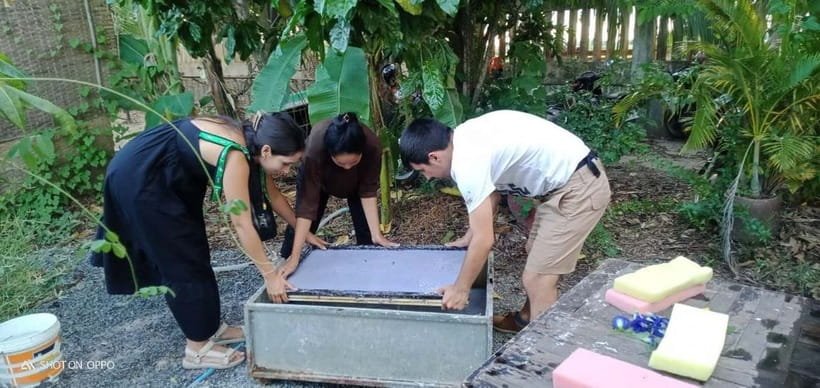
Lotus paper from stem waste
You use recycled lotus stem material to make paper. This is a useful lesson in the farm’s approach to waste, since the part left after fiber extraction does not simply get thrown away.
The activity is hands-on but not presented as a full professional paper-making course. You should expect a guided introduction and a small finished item, not a large sheet of paper ready for a notebook. The appeal is seeing the material change form under your hands.
Spinning lotus fiber into yarn
The yarn activity connects directly with the earlier demonstration. You handle the precious lotus fiber and learn how it is twisted into a usable thread.
This is probably the most revealing craft for anyone interested in textiles. Lotus silk looks simple once finished, but the fine fibers require patience and control. I would pay close attention here, because the technique helps explain the price of lotus silk products in the boutique.
Jewelry from dried lotus seeds
Dried lotus seeds become small decorative pieces. This is an easy activity for children and adults, and it gives you a souvenir with a clear connection to the plant.
The seed jewelry is also a reminder that the lotus has more than one useful part. The farm turns the flower, stem, and seed into different products, so the workshops do not feel like six versions of the same task.
Preparing incense sticks
The incense workshop introduces another traditional use of the lotus and related botanical materials. You prepare incense sticks with guidance from the artisans, learning through touch and repetition.
The activity adds a sensory element to the day without turning the visit into a lecture. It also connects the flower with the spiritual life of Cambodia, where the lotus carries religious importance.
Eco-printing botanicals onto silk
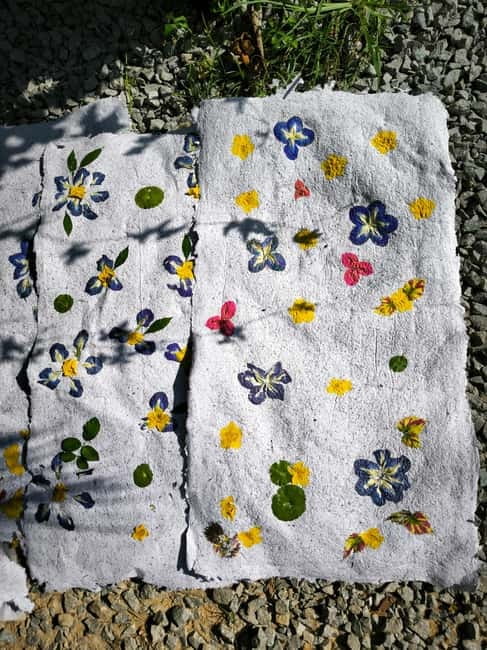
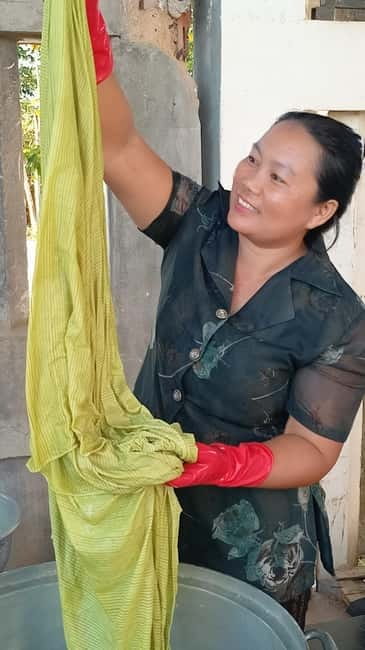
This is one of the more visually appealing sessions. You gather fresh botanicals from the garden and arrange them into a personal composition on a premium silk scarf.
The result depends partly on your arrangement, so each scarf has an individual look. You should not expect a factory-perfect pattern. That is part of the charm. Your choices, rather than a machine, determine the final design.
Engraving the lotus symbol
The final craft uses vegan leather made from lotus stem waste. You engrave the sacred lotus symbol into the material, creating a small piece that links design, belief, and recycling.
This activity gives the workshop a clear closing note. You have handled the plant in several forms, from fiber and seed to paper and stem-based leather. Taking home six pieces makes the fee feel more tangible.
The quiet boat ride through the lotus fields
The boat ride is the part I would not skip. You board a traditional wooden boat for about 30 minutes and glide through expansive lotus fields. This is not a standard sightseeing cruise with a long list of landmarks. It is slow, quiet, and centered on the flowers and water.
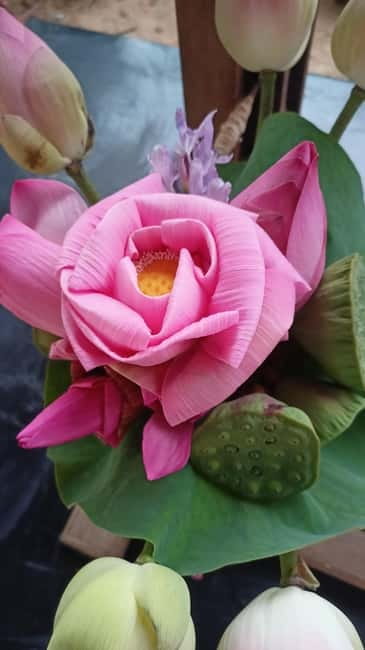
The boatman adds a personal touch by folding lotus petals into a bouquet. Some visits also include a lotus hat or other small floral creation. The bouquet is a welcome gift and a lovely object to photograph, but the real value is the stillness of the ride.
The timing can change the mood. Morning offers cooler conditions, while a late afternoon departure may bring softer light and, if the timing works, a sunset over the lotus fields. One outing scheduled around 4 PM was especially praised for its sunset views. Check the available start times rather than assuming every departure reaches the fields at sunset.
Bring a camera, but try not to spend the entire ride looking through it. The water, flowers, and handmade bouquet are the kind of details you appreciate more when you pause for a minute.
Tea, biscuits, and the boutique
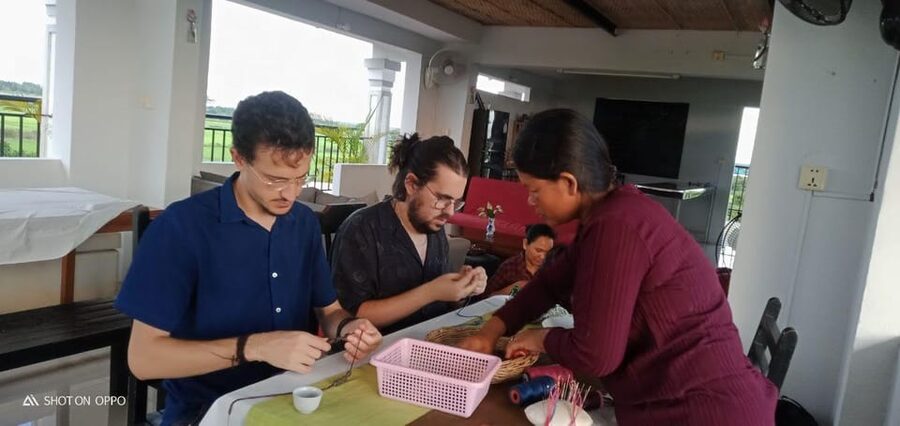
Lotus tea and homemade lotus biscuits are included. They are light refreshments rather than a meal, so eat beforehand if you tend to get hungry during a half-day activity.
The tea is a pleasant chance to slow down after the workshops. It also gives you another taste of how the lotus appears in everyday products, not only silk and decoration.
There is a boutique selling lotus silk products, textiles, and souvenirs. Purchases are extra. I would browse with curiosity but keep the distinction clear: the $70 fee includes your workshop creations and gifts, not anything you buy from the shop.
In some cases, visitors receive an additional leaving gift beyond the craft pieces and the lotus bouquet. That extra gift is not described as a guaranteed item, so treat it as a possible bonus rather than part of the booking promise.
What the $70 price really covers
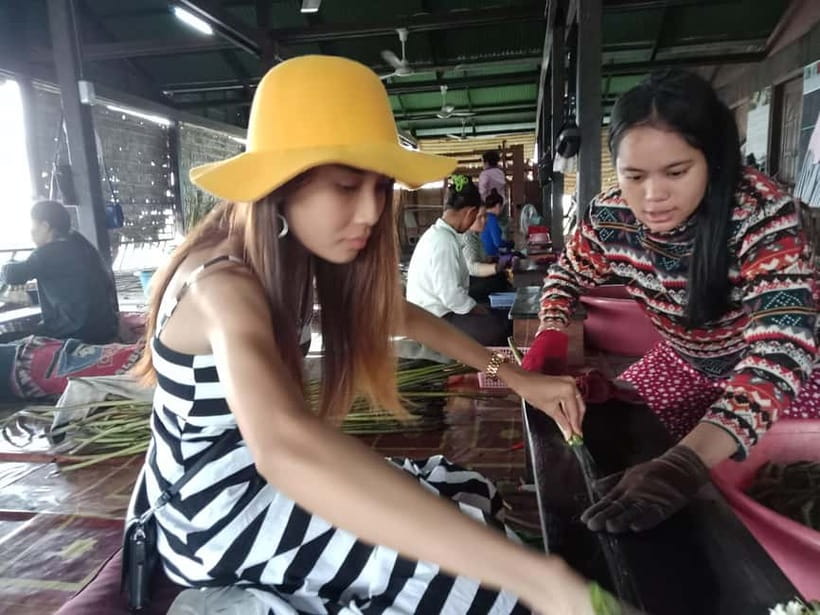
At $70 per person, this is not the cheapest short activity in Siem Reap. It is, however, a substantial package. The price includes the farm visit, six DIY crafts, materials, instruction, the 30-minute boat ride, lotus tea, biscuits, your creations, gifts, and transport from Biolab Cafe.
You are effectively combining three outings: a textile and social enterprise visit, a series of craft classes, and a nature boat ride. If you paid separately for similar activities, the total could easily become more expensive, while also requiring more planning.
The value is strongest if you genuinely want to make things. Someone interested only in seeing lotus flowers could find the visit too long and should consider a shorter outing. But if you enjoy practical cultural activities, the six finished pieces give the price real weight.
The social side also matters. You are supporting local women artisans and helping preserve traditional skills that are becoming less common. That does not turn the activity into a charity visit. You receive teaching, transport, materials, and a full program in return.
Timing, comfort, and who should book
Wear comfortable shoes and clothing that you do not mind wearing during craft work. The activity is wheelchair accessible, which helps make it suitable for a wider range of visitors, though you should still confirm any personal requirements when booking.
The outing works well for families because the crafts offer clear tasks and immediate results. It also suits older visitors who want a gentler half-day away from temple steps. Couples and solo visitors can enjoy the boat ride and the quieter pace.
Photography fans will find plenty to capture: lotus blossoms, the wooden boat, hands working with fiber, fresh botanicals, and handmade objects. Still, the farm is a working place, so your best photographs will come from observing carefully rather than treating every moment as a staged display.
Free cancellation is available up to 24 hours before the activity for a full refund. You can also reserve and pay later, useful if your Siem Reap schedule is still shifting.
Is Lotus Silk Farm worth your time?
I would book this tour if you want an active cultural experience with a peaceful ending. The strongest reasons are the clear explanation of lotus silk, the six varied crafts, and the boat ride through the flower fields. The outing has enough structure to feel organized, but enough quiet time to avoid feeling like a rushed production line.
Skip it if you want a short photo stop, a full meal, or a tour focused mainly on textile shopping. The meeting point also adds a small planning task because hotel pickup is not included.
For most people, the $70 price is fair because it covers a half-day of instruction, transport, materials, refreshments, and nature viewing. Choose a late afternoon slot if sunset matters to you, arrive early at Biolab Cafe, and leave room in your luggage for six handmade souvenirs.
FAQ
How long does the Lotus Silk Farm experience last?
The activity lasts about 4.5 hours and includes the guided farm visit, six craft activities, refreshments, and a 30-minute boat ride.
How much does the experience cost?
The price is $70 per person.
Where is the meeting point?
You meet at Biolab Cafe and Restaurant in downtown Siem Reap. Look for the lotus-colored pickup flag and the grey van outside the café.
Is hotel pickup included?
No. Transport is provided only from and back to Biolab Cafe and Restaurant.
What pickup times are available?
Pickup times are 8:30 AM, 10:00 AM, and 12:00 PM. You should arrive five minutes before departure.
What crafts will I make?
You make lotus paper, lotus fiber yarn, seed jewelry, incense sticks, an eco-printed silk scarf, and an engraved lotus symbol on vegan leather made from lotus stem waste.
Is the boat ride included?
Yes. The 30-minute guided boat ride through the lotus fields is included in the price.
What refreshments are provided?
Lotus tea, lotus biscuits, and water are provided. Meals and additional food or beverages are not included.
Which languages are available?
Instruction is available in English and French.
Can I cancel my booking?
You can cancel up to 24 hours before the activity for a full refund. Reserve now and pay later is also available.
Just added around Siem Reap
- Ultimate Sunrise to Angkor Wat, Angkor Thom and Bayon Temple★ 5.0 · 3 reviews
- Twilight Tastes of Siem Reap Include Dinner★ 5.0 · 13 reviews
- Trekking Tour at Phnom Kulen National Park from Siem Reap★ 5.0 · 3 reviews
- Full-Day Private Tour of Angkor Wat with Pick Up★ 5.0 · 12 reviews
- Private Day Trip to Angkor Temples with Expert Guide★ 5.0 · 4 reviews
- Waterfall & River of 1000 Siva Linga- Kulen Mountain Private Tour★ 5.0 · 3 reviews
- Professional Photo Shoot in Angkor Archaeological Park, Siem Reap★ 5.0 · 42 reviews
- Siem Reap City Tour with War Museum and Killing Field★ 5.0 · 27 reviews
Farms, compared.
Pepper Farm Tours, Salt, Lake & Phnom Chhngok Temple
Read our review →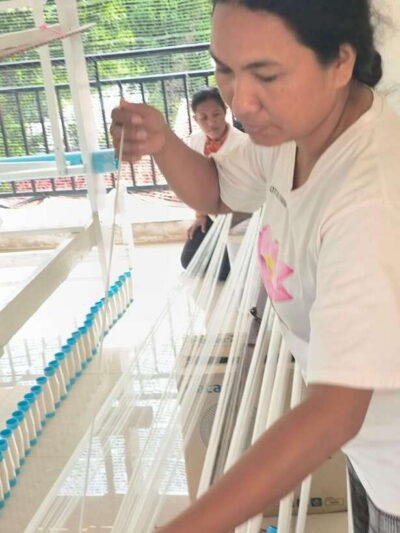
Siem Reap Lotus Silk Farm Discovery tour & Lake experience
Read our review →
Full-day Countryside Tour with Pepper Farm and Kep
Read our review →
Tuk Tuk Trip to Pepper Farm, Kep, Crab Market & More
Read our review →
Kampot Countryside include Pepper farm, Salt field & Lake
Read our review →
KAMPOT TRAVEL-Pepper farm. Cave.Secret lake-Crab market & Salt…
Read our review →
Kampot’s Countryside & Kayak Tour, Pepper Farm include Lunch
Read our review →Browse the lists this tour appears in