
Reviewed · FLOATING VILLAGE TOURS
Siem Reap: Kampong Phluk and Tonle Sap Sunset Boat Cruise
The best part of this afternoon outing is the change of scale: you leave Siem Reap’s roads behind and reach Tonle Sap, where homes, boats, fishing, and daily life are shaped by the lake. I like the early stop at SATCHA, which gives you a look at Cambodian wood, stone, and rattan work before the main trip, and I like that the boat ride is paired with a visit to Kampong Phluk rather than treated as a quick photo stop. The possible catch is weather and water level. Rain or strong wind can hide the sunset, while low water from late March through July can limit access to the flooded forest.
This is a well-organized private-group trip for anyone who wants an easy half-day outside Siem Reap. Hotel pickup, transport, entry fees, and the local boat are included, and the English-speaking guide handles the practical details. Bring sunscreen, insect repellent, and patience for changing conditions on the lake.
Key points to know before booking

- Kampong Phluk is about 21 kilometers from Siem Reap, making this a simple way to see rural Cambodia without arranging separate transport.
- SATCHA comes first, with local artisans working in wood, stone, and rattan, and there is no stated pressure to buy.
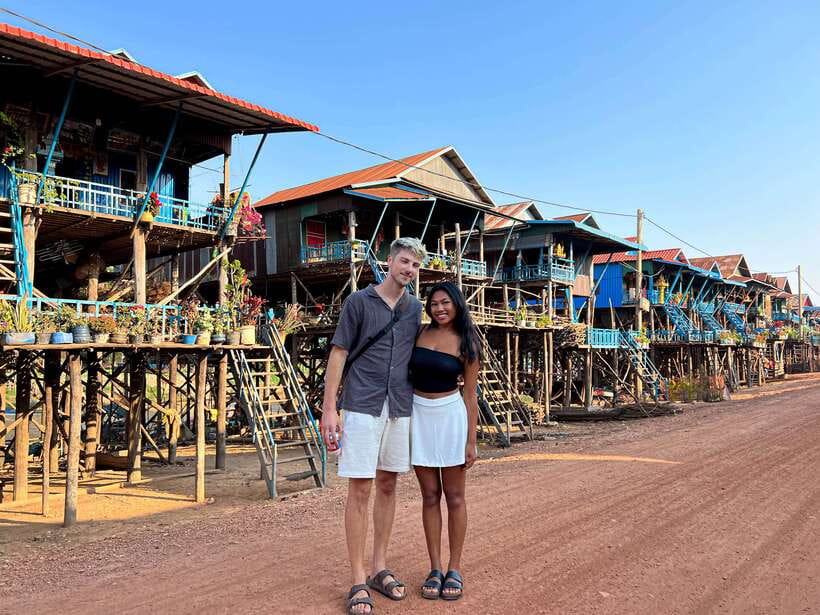
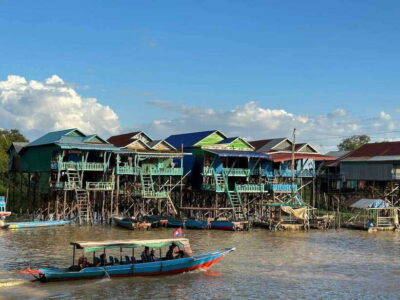
- The village changes with the water level, from flooded forest and boat routes in wetter months to tall stilt houses and exposed ground in the dry season.
- Sunset is weather-dependent, especially during periods of rain and wind in July and other wet-season months.
- The afternoon schedule runs from roughly 2:00 or 2:30 pm to evening, including hotel return, so you do not need to give up a full sightseeing day.
- The $80 price includes the guide, air-conditioned vehicle, boat ride, entrance fee, pickup, drop-off, and water, but not dinner or wine.
Leaving Siem Reap for SATCHA
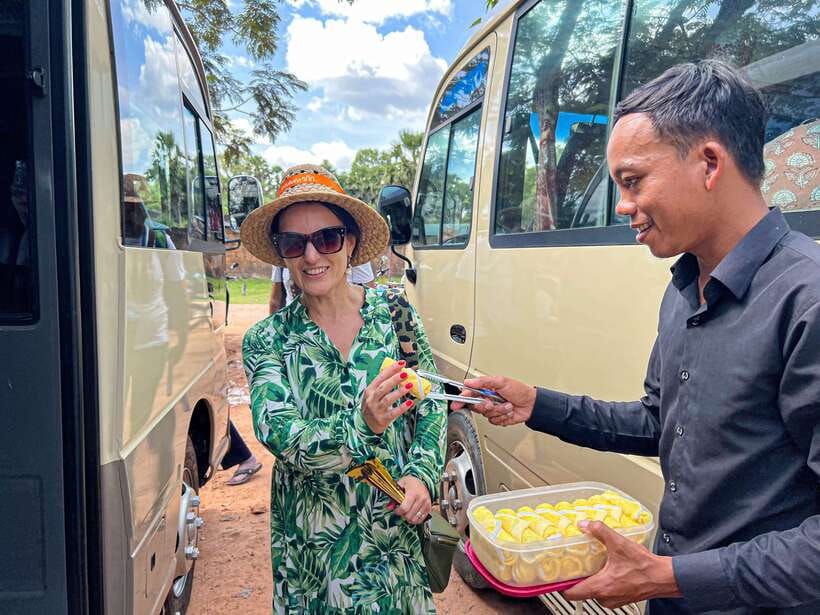
Pickup takes place between 2:00 and 2:30 pm at your hotel in Siem Reap. You should wait in the lobby about 10 minutes before the planned time. The vehicle is an air-conditioned minivan or minibus, a useful comfort when the afternoon is hot.
The trip begins at SATCHA, a Cambodian handicraft center built around local makers. Its purpose is not simply to sell souvenirs. The center helps keep traditional skills in use while giving artisans room to work with modern design.
You can expect to see crafts connected with wood, stone, and rattan. The stop adds a human layer to the outing. Before you see a floating village built around fishing, you see another side of Cambodian work, one based on hand skills and design.
This stop also makes the afternoon less one-note. A boat trip can sometimes feel like a long ride with a short village visit attached. SATCHA gives you a clear first chapter and helps you understand that Cambodian culture is expressed through working skills as well as temples and monuments.
You are not required to buy anything. That matters. You can look at the workshops, listen to the explanations, and decide for yourself if a craft is worth taking home. If you do want a souvenir, this is a more useful place to consider one than a random roadside shop because you can see the making process.
More Floating Village Tours in Siem Reap:
- From Siem Reap: Kampong Phluk Floating Village Tour by Boat
★ 4.9 · 6,979 reviews - Sunset tour of Kampong Phluk stilts home village on the Tonle Sap
★ 5.0 · 4,865 reviews - Siem Reap: Kampong Phluk Floating Village Tour with Boat
★ 4.9 · 3,843 reviews
The 21-kilometer road to Kampong Phluk
From SATCHA, the vehicle continues toward Kampong Phluk, about 21 kilometers from central Siem Reap. The road takes you away from the town and toward open countryside, with a more rural feel as the trip progresses.
The drive is part of the experience, not just dead time between attractions. You get a view of the countryside and a sense of how quickly the setting changes once you leave Siem Reap’s tourist center.
At the lake port, you transfer to a local boat. The boat is the key to understanding Kampong Phluk. This is not a village arranged around a paved street. Water levels affect transport, work, homes, and the route through the surrounding area.
The exact feel of this transfer depends heavily on the season. During higher water, the boat can move through waterways and the flooded forest. When water recedes, routes become shallower and some smaller canoes may not be able to enter the forest. A boat can even become stuck in difficult conditions.
That may sound like a flaw, but it is also an honest part of seeing a place governed by the annual water cycle. If you want a guaranteed postcard scene, this is not that kind of outing. If you want to see how a community adjusts to its environment, the changing conditions are useful.
Seeing everyday life in Kampong Phluk
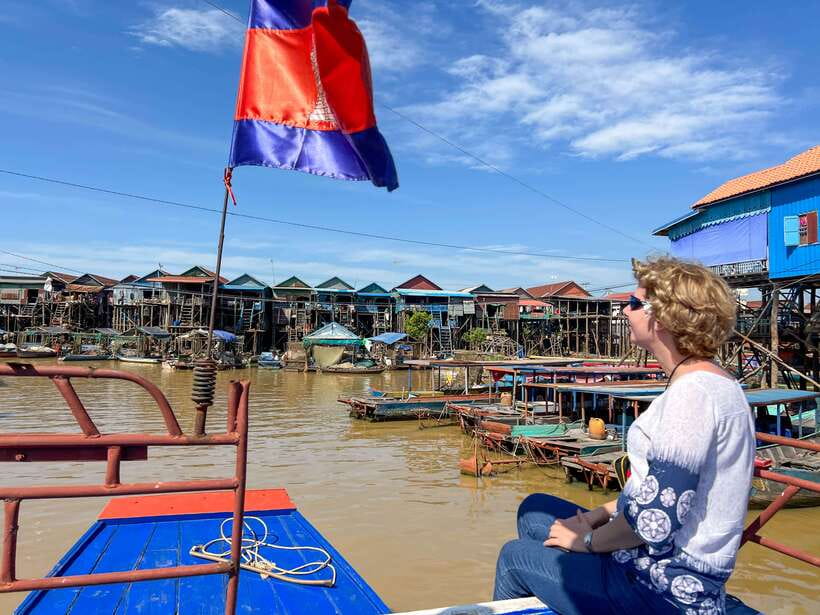
Kampong Phluk is a fishing village on Tonle Sap, with about 3,000 residents. Many families live in brightly painted homes raised on long stilts near the lake. The high structure is not decorative. It helps homes cope with the major change in water level during the rainy season.
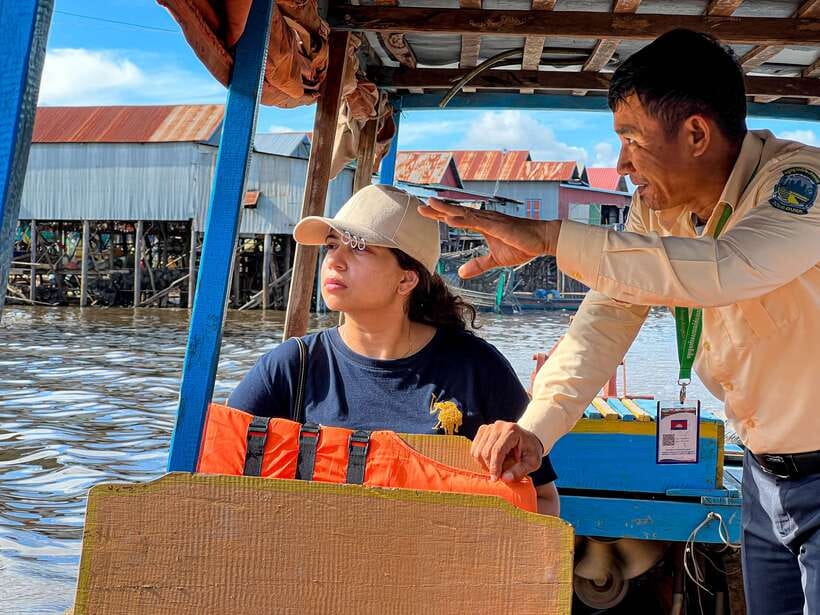
From the boat, you see how fishing shapes the village. Boats are not just sightseeing platforms. They are part of work, transport, and daily routines. Your guide explains what you are seeing, which helps you read the village as a living community rather than a collection of unusual houses.
The strongest part of this visit is its directness. You are not looking at a staged cultural show. You are passing homes and waterways where families make much of their living from fishing. That means you should keep your camera use respectful and pay attention to the guide’s advice.
The village looks different depending on when you go. From the end of March through the end of July, water levels begin to fall. Tall stilts become more obvious, and parts of the area may look dry rather than flooded. Some people prefer the high-water view, when boats move through water close to homes and trees.
I would not dismiss the dry months. Low water can show you the practical side of village life that high water hides. You may see the height of the homes more clearly and gain a better sense of how families prepare for changing conditions. The tradeoff is that the flooded forest may be harder to reach, and smaller canoes may not run.
This is why the month matters more than a simple wet-season or dry-season label. If your priority is a classic floating-village photograph, ask about current water levels before booking. If your priority is learning how the community works, the dry period can offer a different and worthwhile view.
The flooded mangrove forest and local wildlife
The boat route may include the flooded mangrove forest around Kampong Phluk. This area supports local wildlife, including crab-eating macaques, and forms part of the environment that helps define the village.
Access is not guaranteed in every season. When the water is low, smaller canoes may struggle to pass, and certain routes may be blocked. Strong rain and wind can also make the ride less comfortable.
Still, the forest is an important part of the outing because it shows that Tonle Sap is more than open water and floating houses. The lake supports a linked system of waterways, trees, animals, and fishing communities.
Keep sunscreen and insect repellent close at hand. Sunglasses help with glare on the water. A cool bottle of water is supplied, but you should still dress for a warm afternoon and bring anything else you normally need for several hours outdoors.
More Tonle Sap Lake Tours in Siem Reap:
- Siem Reap: Kulen Mountain, Beng Mealea and Tonle Sap Tour
★ 5.0 · 1,483 reviews - Tonle Sap Lake & Kampong Phluk Village Half-Day Tour
★ 5.0 · 1,045 reviews - Kulen Mountain with Beng Mealea and Tonle Sap Small Group Tour
★ 5.0 · 780 reviews - Siem Reap: Tonle Sap, Kampong Phluk & Floating Village Tour
★ 4.4 · 397 reviews
A Buddhist monastery on an artificial island
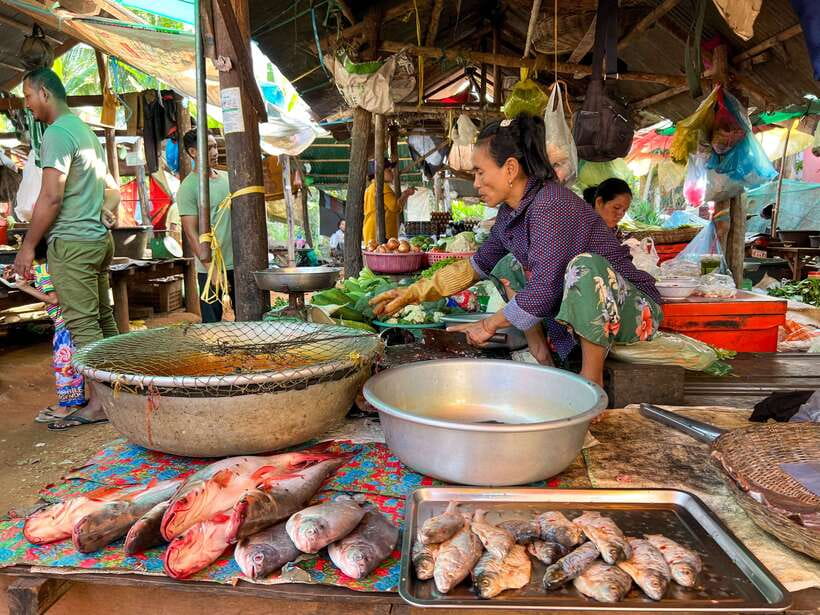
The itinerary includes a stop at a Buddhist monastery built on an artificial island. This gives the cruise a cultural pause between the village and the sunset.
The monastery is worth seeing for the way it fits into the lake setting. You are not visiting another major temple complex in the style of Angkor. Instead, you are seeing a place of worship connected to a water-based community and built in response to the local setting.
Your guide can put the stop into context and explain what you are seeing. The visit is also a chance to leave the boat for a short time, stretch your legs, and take in the surroundings before returning to the lake.
As with any religious site, modest clothing and respectful behavior are sensible. The available details do not specify a dress code, so check with your guide if you are unsure.
Sunset on Tonle Sap
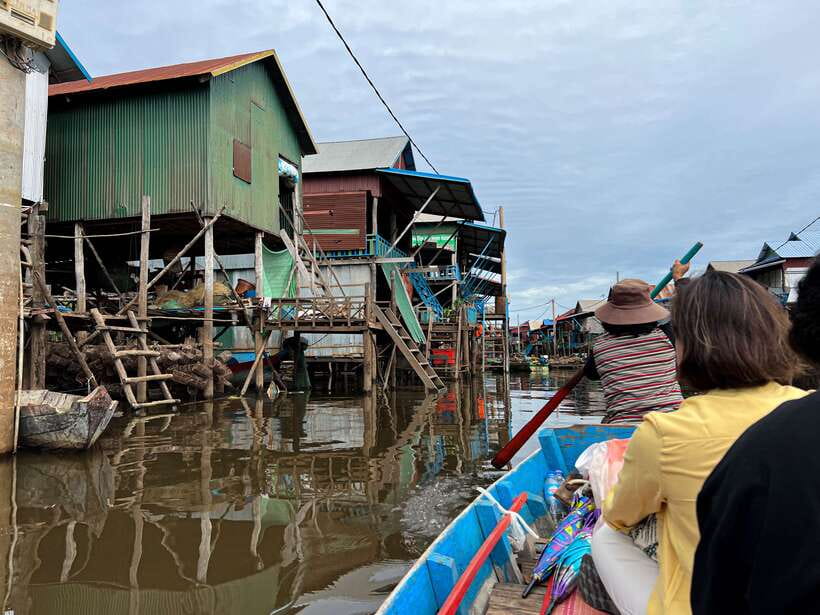
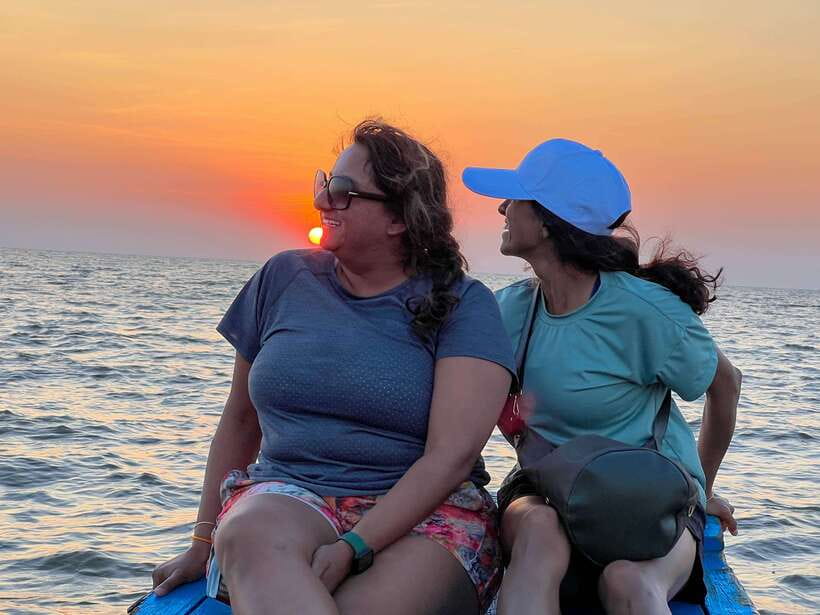
The final part of the outing is a sunset boat ride on Tonle Sap, described as the largest lake in Southeast Asia. The open water gives the sunset room to unfold, with fewer town buildings around you than in Siem Reap.
This is the moment the five-hour schedule is built around, but you should keep expectations flexible. On a clear evening, the low light can make the boat ride especially pleasant. On a rainy or windy day, cloud cover may block the sunset, and the water can become rough enough to reduce the pleasure of sitting outside.
A late-July outing, for example, may bring substantial rain and wind. If that happens, the guide can still make the time useful by explaining village life, the stilt houses, and how the area changes during the dry season. The sunset is a bonus, not something the operator can control.
The timing is practical. You leave Siem Reap in the afternoon, see the village in daylight, and finish on the lake before returning to town. You are not committing to a full-day excursion, and dinner remains free for you to arrange afterward.
Guides, transport, and the $80 price
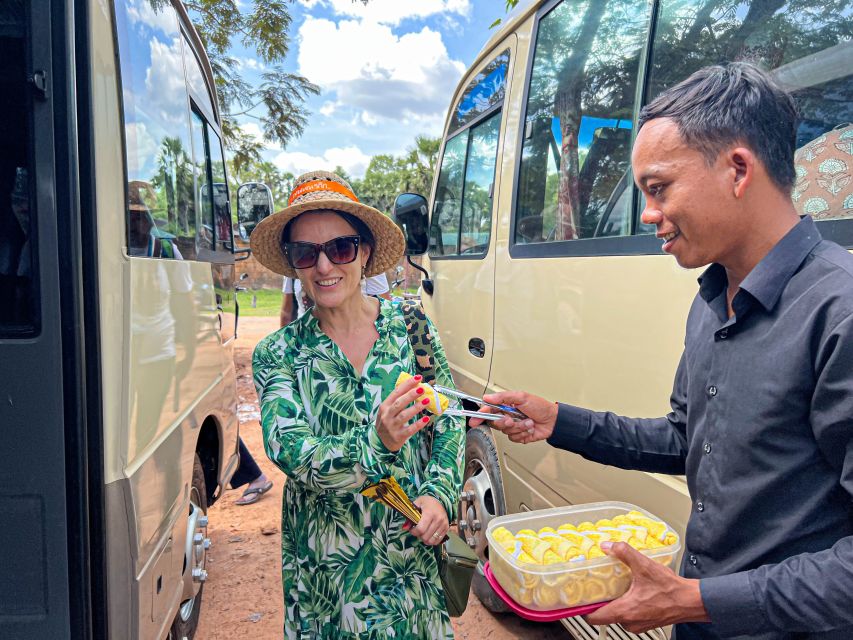
The experience costs $80 per person. That is not the cheapest way to reach Tonle Sap, but the price includes several items that can add up when arranged separately: an English-speaking guide, air-conditioned transport, hotel pickup and drop-off, entrance fees, the local boat, and bottled water.
The private-group format is also important. It gives the outing a more personal feel than a large coach excursion, and you can ask questions about fishing, housing, water levels, and the village as you go. The exact group size is not specified, so I would confirm that detail if it affects your decision.
Several guides have been singled out by name on individual departures, including Mr. Sean, Mr. Rama, and Mr. Ti. You should not assume a particular guide will lead your trip, but these examples point to the value of having someone who can explain the setting rather than simply drive you to the port.
Transport receives especially strong marks, with 91 percent of ratings giving it a perfect score. That makes sense for this itinerary. The road trip, port transfer, and boat ride all work better when the timing is handled carefully, especially because the pickup window is narrow and the lake schedule depends on daylight.
The main extra cost to remember is food. Dinner and wine are not included. Since the tour returns to Siem Reap in the evening, you can choose your own restaurant afterward instead of being tied to a set meal.
Who will enjoy this afternoon most
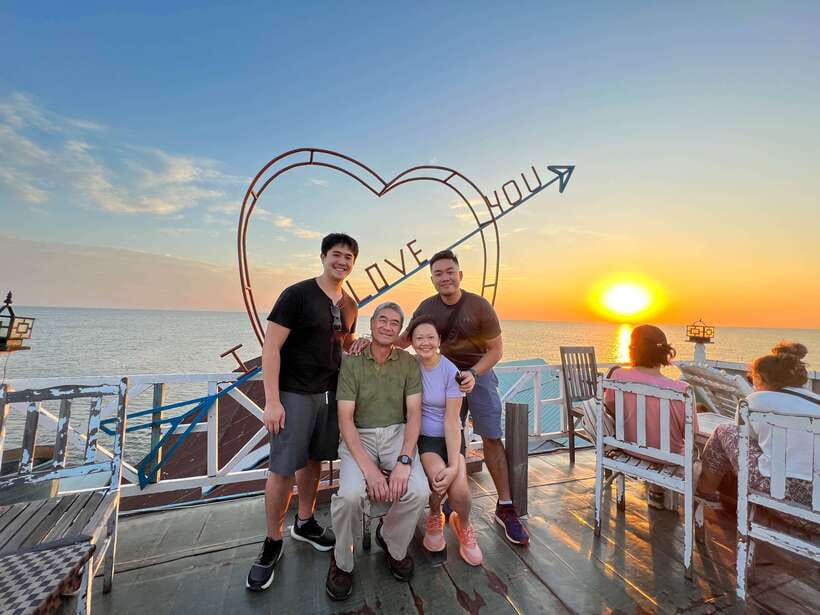
I would recommend this trip if you want to see a working community near Siem Reap and prefer having transport and a guide arranged in advance. It suits first-time visitors who want cultural context without spending a full day away from town.
It is also a good fit if you enjoy photography but can accept changing conditions. Stilt houses, boats, waterways, and the sunset give you plenty to watch, but the best views depend on water levels and weather.
Families and private groups may appreciate the included pickup and the shorter five-hour format. You can spend the morning at another Siem Reap sight, then make the lake your afternoon plan.
I would think twice if you need a guaranteed sunset, dislike boat travel in wind or rain, or want a polished attraction with fixed conditions. This is a real village and a working lake. That is its value, but it also means mud, changing water routes, and weather can shape the day.
Book with a little seasonal awareness. From late March through July, ask about the water level and flooded-forest access. During the rainy season, carry protection from sun and insects, and accept that clouds may replace the sunset.
Practical details for a smooth outing
The tour lasts about five hours, with pickup between 2:00 and 2:30 pm. Be in your hotel lobby early because the guide and driver will wait no more than 10 minutes after the scheduled pickup time for a small group.
Pack:
- Sunglasses
- Sunscreen
- Insect repellent
Wear clothing that works for a warm afternoon and a boat ride. The supplied water is helpful, but dinner is not part of the package, so plan to eat after returning to Siem Reap.
Cancellation is flexible up to 24 hours before departure for a full refund, and you can reserve now and pay later. Starting times should be checked for your chosen date.
Should you book the Kampong Phluk sunset cruise?
Book it if you want a guided, straightforward way to see Tonle Sap, Kampong Phluk, local craftwork, stilt houses, and a Buddhist monastery in one afternoon. The strongest reasons are the useful cultural explanations, the private-group setup, and the fact that pickup, transport, boat fees, and entry are already covered.
The main warning is simple: do not book this expecting a guaranteed golden sunset or identical scenery in every month. Water levels, wind, rain, and access to the flooded forest all change the experience.
For most people with five hours to spare in Siem Reap, the $80 price is fair because it combines several moving parts and leaves you free for dinner afterward. If you approach the lake as a living place rather than a set photo stop, Kampong Phluk gives you a more meaningful afternoon outside the town.
FAQ
How long does the Kampong Phluk sunset cruise last?
The activity lasts about five hours, including hotel pickup and return to Siem Reap.
What time is hotel pickup?
Pickup is scheduled between 2:00 and 2:30 pm. You should wait in your hotel lobby 10 minutes before the scheduled pickup time.
Is transport from Siem Reap included?
Yes. Air-conditioned transport by minivan or minibus, hotel pickup, and hotel drop-off are included.
Does the price include the boat ride and entrance fee?
Yes. The $80 price includes the entrance fee and local boat ride, as well as the guide, transport, and bottled water.
Is dinner included?
No. Personal expenses, dinner, and wine are not included.
Can I cancel the tour for a full refund?
Yes. You can cancel up to 24 hours in advance for a full refund. You can also reserve now and pay later.
More Evening Experiences in Siem Reap
- Angkor Wat Sunrise or Sunset Tour with Guide from Siem Reap
★ 5.0 · 12,109 reviews - Siem Reap: Angkor Wat: Small-Group Sunrise or Sunset Tour
★ 5.0 · 9,444 reviews - Siem Reap: Angkor Wat 2-Day Tour with Sunrise and Sunset
★ 4.9 · 4,429 reviews - Siem Reap: Full-Day Angkor Wat Guided Tour with Sunset
★ 4.9 · 3,803 reviews
Just added around Siem Reap
- Ultimate Sunrise to Angkor Wat, Angkor Thom and Bayon Temple★ 5.0 · 3 reviews
- Twilight Tastes of Siem Reap Include Dinner★ 5.0 · 13 reviews
- Trekking Tour at Phnom Kulen National Park from Siem Reap★ 5.0 · 3 reviews
- Full-Day Private Tour of Angkor Wat with Pick Up★ 5.0 · 12 reviews
- Private Day Trip to Angkor Temples with Expert Guide★ 5.0 · 4 reviews
- Waterfall & River of 1000 Siva Linga- Kulen Mountain Private Tour★ 5.0 · 3 reviews
- Professional Photo Shoot in Angkor Archaeological Park, Siem Reap★ 5.0 · 42 reviews
- Ultimate Siem Reap Food Tour by Tuk Tuk – 20 Tastings, 8 Stops★ 5.0 · 13 reviews
Floating Village Tours, compared.
Sunset tour of Kampong Phluk stilts home village on the Tonle Sap
Read our review →
Kampong Phluk Floating Village Tour with Boat
Read our review →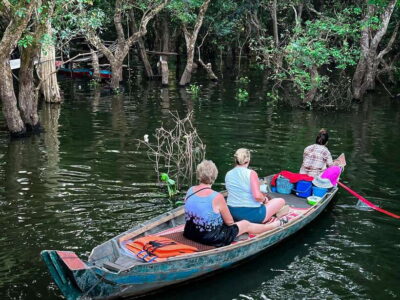
Siem Reap Floating Village Kampong Phluk Sunset with Boat
Read our review →
Kompong Phluk Floating Village Half-Day Tour ( Morning / Sunset )
Read our review →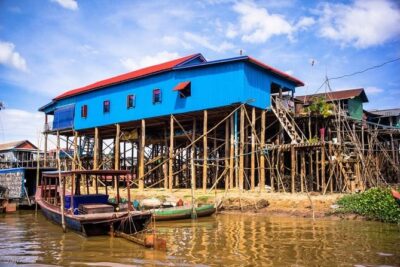
Tonle Sap Lake & Kampong Phluk Village Half-Day Tour
Read our review →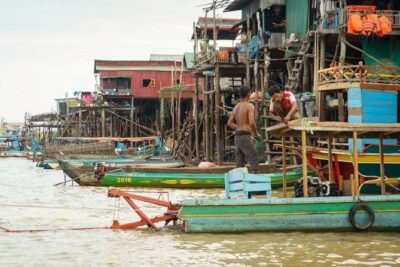
Browse the lists this tour appears in