
Reviewed · ANGKOR WAT TOURS
Siem Reap: Angkor Wat Tour Explore The Most Iconic Temples
Angkor Wat is only the opening act here. Over eight hours, you move from the grand galleries of Angkor Wat to the tree-choked ruins of Ta Prohm, the calm corridors of Banteay Kdei, and Bayon’s famous stone faces. The private format lets you set your pace, which matters in Cambodia’s heat.
I like the easy hotel pickup and the small touches: unlimited bottled water and cool, jasmine-scented towels. Drivers such as Ray, Chamrong, Lay, and Soka have been praised for waiting at each temple, helping with directions, and keeping the day comfortable. The main drawback is that the temple pass and meals cost extra, and eight hours of uneven walking can be tiring.
Key points before you book
- Sunrise at Angkor Wat: An early start brings cooler air and a chance to see the towers reflected in the moat before the main crowds arrive.
- Seven meaningful stops: You visit Angkor Wat, Banteay Kdei, Ta Prohm, Ta Keo, Bayon, and the South Gate of Angkor Thom, with Phnom Bakheng listed as a sunset option.
- Private transport for up to two: The $24 rate covers a private group of up to two people, making it strong value for a couple.
- Drivers who stay close: Ray, Chamrong, Lay, Danny, Lai, and Soka are noted for punctual pickups, temple directions, and waiting outside each site.
- Bring proper clothing: Your shoulders and knees must be covered, and comfortable walking shoes are essential.
- The pass is separate: You must buy a valid Angkor Temple Pass yourself before entering the archaeological park.
Why this eight-hour temple route works
Angkor is not one temple with a few nearby ruins. It is a large archaeological park, and walking between the main sites is not practical. This tour solves the basic problem with private round-trip transport from your Siem Reap hotel or accommodation.
The listed price is $24 per group of up to two people. That is a particularly good deal if you are traveling as a pair, since the charge is not listed per person. You still need to pay for the Angkor Temple Pass and your meals, so do not treat the advertised price as the complete cost of the day.
The schedule is built around the classic Angkor circuit, with a few useful additions. Banteay Kdei gives you a quieter stop, Ta Prohm supplies the jungle spectacle, Ta Keo adds a less finished and more austere temple, and Bayon delivers the most memorable faces. You also pass through Angkor Thom’s South Gate, where the causeway and gate make an excellent final photo stop.
If you choose the sunrise option, pickup is early from your hotel. You travel to the archaeological park, buy your pass at your own expense, and enter through the western entrance of Angkor Wat. If you do not choose sunrise, confirm the start time when booking, since the experience is valid for eight hours and available start times can vary.
More Angkor Wat Tours in Siem Reap:
- Angkor Wat Sunrise or Sunset Tour with Guide from Siem Reap
★ 5.0 · 12,109 reviews - Siem Reap: Angkor Wat: Small-Group Sunrise or Sunset Tour
★ 5.0 · 9,444 reviews - Siem Reap: Angkor Wat 2-Day Tour with Sunrise and Sunset
★ 4.9 · 4,429 reviews
Angkor Wat at sunrise and inside the galleries
The sunrise stop gives the day its strongest opening. Angkor Wat’s five towers rise behind the moat, and the water can catch their reflection as the sky brightens. The early light also helps you take in the outline of the temple before the day becomes hot.
Sunrise is not a quiet private viewing. The site is famous, so other people will be there, especially at the reflection pools. Still, arriving early gives you the best chance of seeing the temple before the larger daytime crowds gather.
After sunrise, allow time to go inside. Angkor Wat was first built as a Hindu temple dedicated to Vishnu and later became a Buddhist site. That change is part of what makes the monument so interesting: its religious use developed over time, while much of the grand design remained.
Look closely at the bas-reliefs and galleries rather than rushing straight to the central sanctuary. The carvings show scenes from Hindu mythology, and the long corridors help you understand the scale of the complex. You will walk on stone, climb steps, and cross uneven surfaces, so sensible shoes matter more here than stylish ones.
Modest dress is required throughout the temple park. Cover your shoulders and knees before leaving your hotel. A loose shirt and light trousers or a longer skirt are more useful than trying to improvise clothing at the gate.
Banteay Kdei, a calmer change of pace
Banteay Kdei means Citadel of Chambers, and the name fits. Its corridors and enclosed spaces feel more intimate than Angkor Wat, with a softer, less formal rhythm.
This late 12th-century Buddhist monastery is partly ruined. That is not a flaw to hide. Broken walls, quiet passageways, and incomplete sections give the site a more reflective mood than the major monuments.
I like the place in this itinerary because it breaks up the scale of Angkor Wat. You get a chance to look at carvings and doorways without spending the entire morning among only the largest structures. Your driver can point out the route and wait while you walk through the temple, but the information provided for this tour does not promise a dedicated licensed temple guide at every stop.
That distinction is worth understanding. The English-speaking driver may offer useful directions and basic temple information, but you should not automatically expect a full historical lecture. Several named drivers, including Chamrong and Soka, are praised for explaining what they could and giving practical advice. If detailed archaeology is your priority, ask in advance what guiding is included.
Ta Prohm and the trees over the ruins
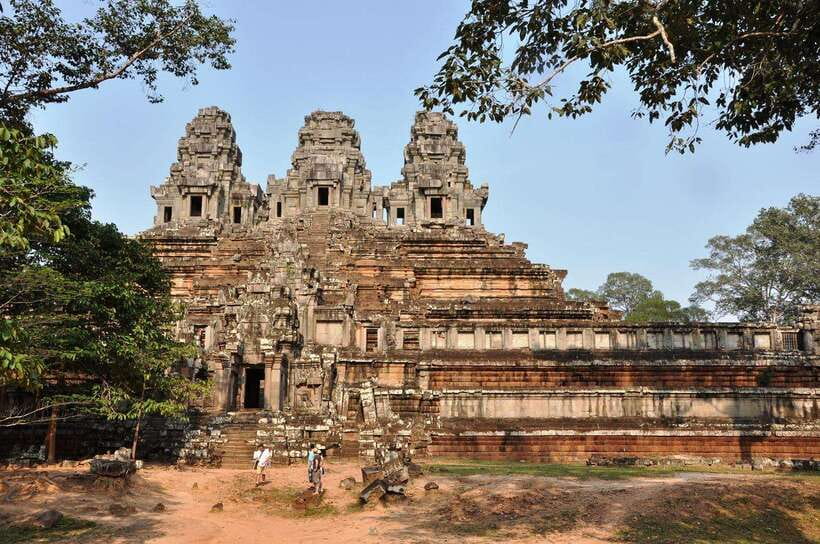
Ta Prohm is the most theatrical stop of the day. Huge tree roots grip walls and towers, pushing through the old stonework in a way that makes the temple feel claimed by the forest.
The temple was built in the 12th century and left largely unrestored. That choice creates the famous jungle-temple appearance, though it also means uneven paths, rough stones, and sections that can feel awkward to navigate.
Ta Prohm became widely known through Tomb Raider, but its appeal is not limited to film fans. The contrast between carved stone and living roots is easy to understand at a glance. You do not need a long explanation to see why this temple has become one of Angkor’s signature images.
Give yourself time to look beyond the best-known tree-covered doorway. The site has galleries, courtyards, and carved details that can be missed if you only stop for a photograph. At the same time, this is not a place where you should wander carelessly. Watch your footing, follow instructions around restricted areas, and keep an eye out for monkeys, which one guide specifically warned about.
Same country, a completely different kind of day:
- From Siem Reap: Kampong Phluk Floating Village Tour by Boat
★ 4.9 · 6,979 reviews - Sunset tour of Kampong Phluk stilts home village on the Tonle Sap
★ 5.0 · 4,865 reviews - Siem Reap: Kampong Phluk Floating Village Tour with Boat
★ 4.9 · 3,843 reviews - Siem Reap: Full-Day Angkor Wat Guided Tour with Sunset
★ 4.9 · 3,803 reviews
Ta Keo, Angkor’s unfinished monument
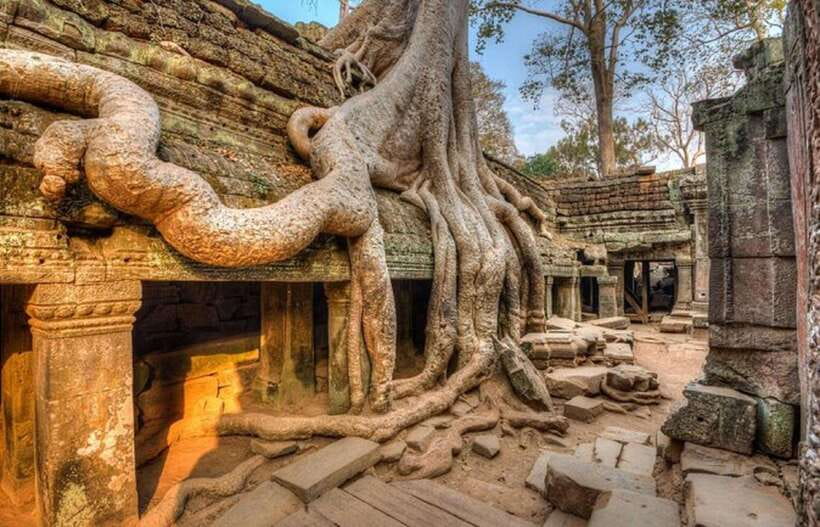
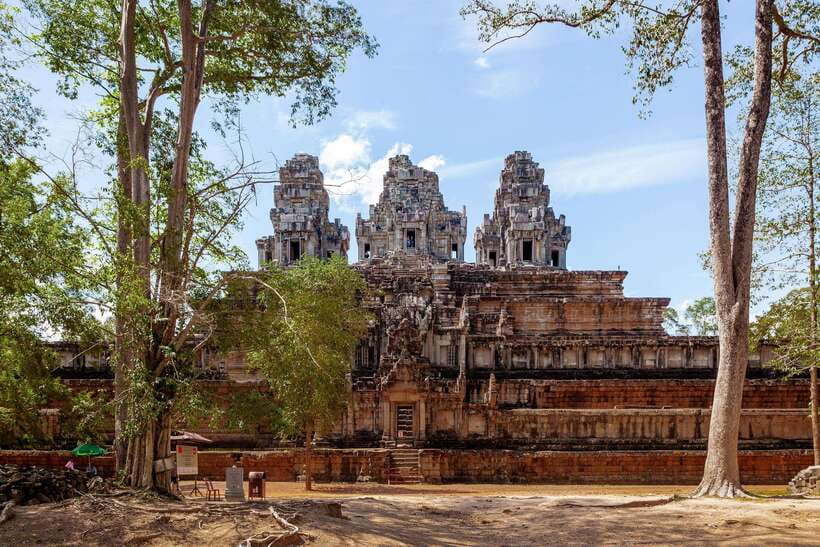
Ta Keo offers a different kind of experience. Built in the late 10th or early 11th century under King Jayavarman V and continued by later rulers, it was never fully completed.
The unfinished state is the point. Some surfaces lack the detailed carving seen elsewhere, giving Ta Keo a more severe and block-like appearance. Instead of imagining a temple softened by decoration, you see something closer to its underlying architectural structure.
The climb and uneven terrain require care. This is one of the places where comfortable shoes and a reasonable level of mobility make a real difference. The tour is not wheelchair accessible because the temple park has uneven ground and difficult surfaces.
Ta Keo also helps keep the day from becoming a parade of identical monuments. Angkor’s temples share certain design ideas, but they do not all create the same mood. Here, the incomplete stonework gives you a useful comparison with Angkor Wat’s elaborate galleries and Ta Prohm’s overgrown ruins.
Bayon’s smiling stone faces
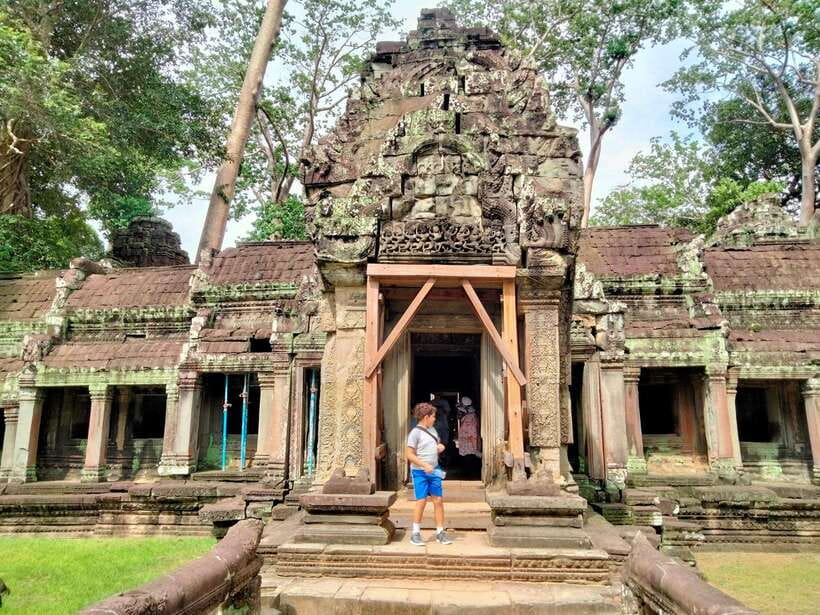
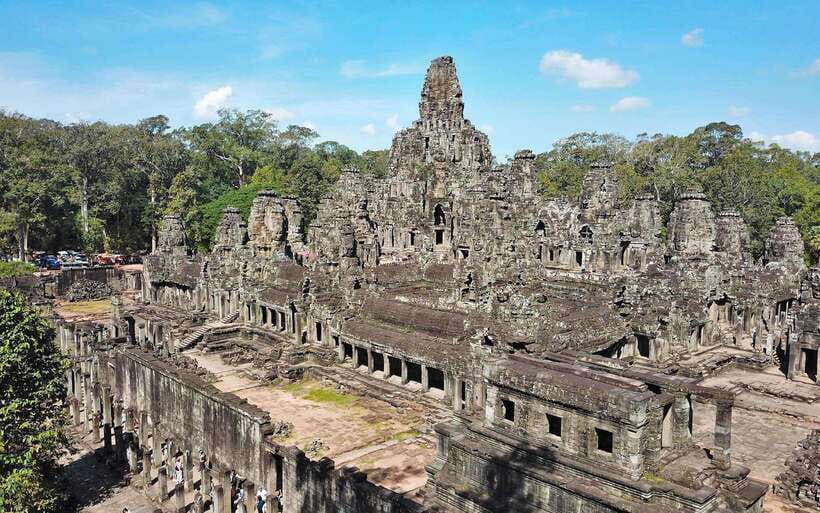
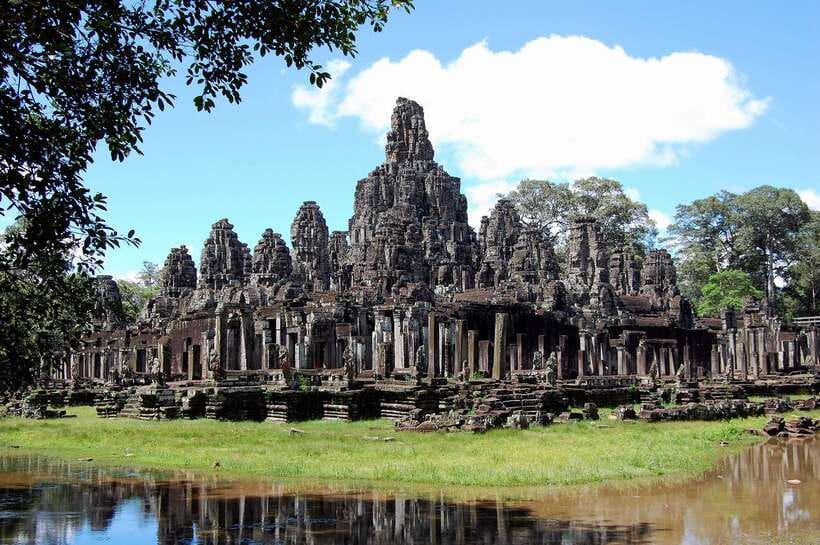
Bayon sits at the center of Angkor Thom and supplies the day’s most distinctive image after Angkor Wat. Its 54 towers carry more than 200 large stone faces, traditionally linked with Avalokiteshvara.
The faces appear calm and watchful. As you move through the crowded upper levels and narrow passages, new faces appear from different angles. It is one of those places where looking up and around matters as much as following the main route.
Bayon also has detailed carvings showing daily life and historical battles. These scenes make the temple feel less remote. Alongside religious images, you can look for ordinary activities and moments from the world that surrounded the monument.
The temple can feel tight and confusing inside, so a driver who gives a clear meeting point is useful. Several people have praised drivers for waiting outside each temple, which removes the worry of finding your transport after exploring. Confirm the meeting location before you walk in, especially if you are taking photographs and losing track of time.
The South Gate of Angkor Thom
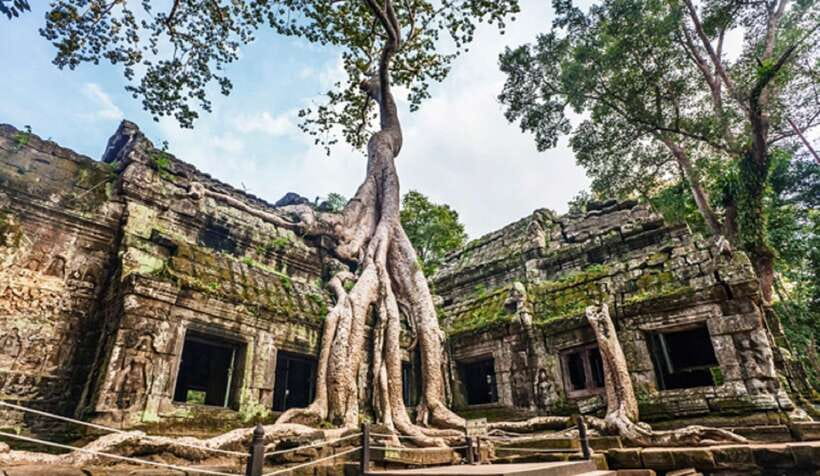
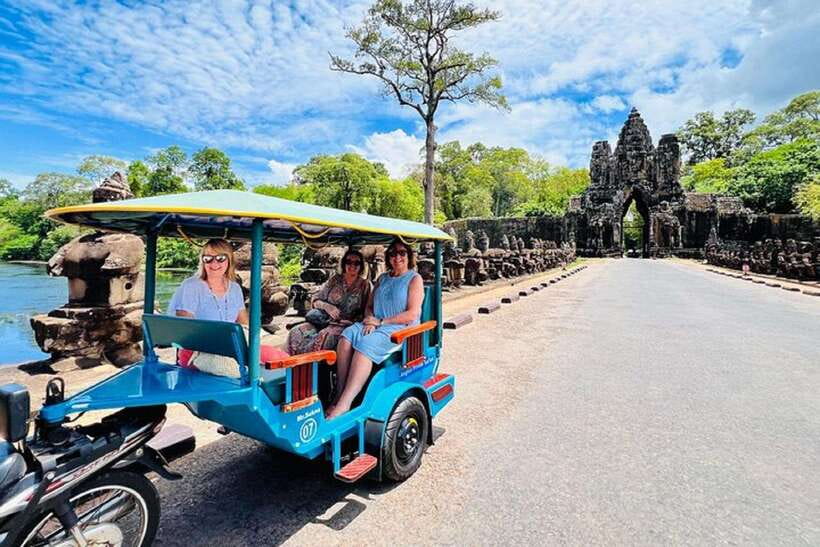
Tonle Om Gate, also called the South Gate of Angkor Thom, is a strong stop either before or after Bayon. A long causeway leads toward the gate, lined with statues of gods and demons. The gate itself carries four large stone faces similar to those at Bayon.
This is a good place for a wider photograph. At the temples, you spend much of your time looking at walls, carvings, and doorways. At the South Gate, the road, causeway, statues, and tower come together in one view.
The stop is brief compared with Angkor Wat or Ta Prohm, but it gives the route a sense of place. You are not simply moving from one isolated ruin to another. Angkor Thom was a major walled city, and the gate helps you picture how the temple center connected to the wider urban complex.
Transport, water, and the day’s practical comfort
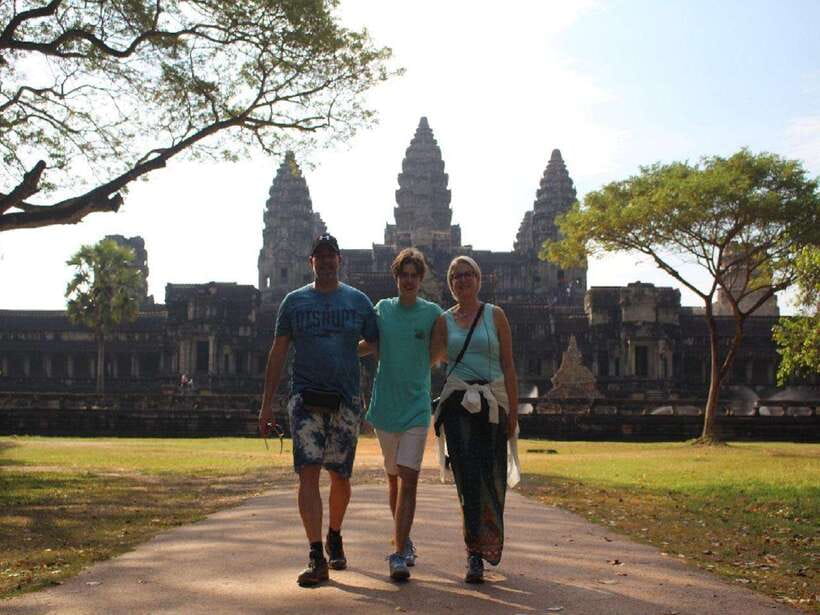
The experience includes private round-trip transportation, hotel pickup and drop-off, unlimited bottled water, and a cool towel. In the supplied accounts, the transport is described as a tuk-tuk, which can be a pleasant choice in the heat because the moving air helps on the road between temples.
A tuk-tuk is open to the elements. That means you get a breeze, but you also get sun and dust. Wear sunglasses, apply sunscreen, and keep valuables secure. The water and cold towels are not decorative extras. After climbing steps and walking over hot stone, they are genuinely useful.
Punctuality is another strong point to look for. Ray was praised for finding the meeting point precisely, while Danny, Lay, Lai, Chamrong, and Soka were singled out for reliable help or waiting outside the temples. Individual service can vary, but the pattern suggests that this arrangement is designed to keep transport simple.
The driver speaks English. Some drivers provide directions, local tips, and explanations when possible. The experience information does not say that a separate, fully licensed guide is included, so book this mainly for transport and route coverage unless the operator confirms more guide service.
Heat, clothing, and the pace of the route
Eight hours sounds generous, but the day can pass quickly. Angkor Wat alone deserves several hours if you want to see its galleries, while Ta Prohm and Bayon both reward slow looking. Add the walking time, transport between sites, photographs, and breaks, and you should expect a full day rather than a quick sightseeing loop.
The route is best suited to people who can walk comfortably on uneven temple ground and manage steps. It is not suitable for babies under one year, people over 95, or wheelchair users because of the terrain.
Bring:
- Sunglasses and sunscreen
- Cash for the separate temple pass and meals
- Comfortable walking shoes
- Clothing covering your shoulders and knees
Alcohol and drugs are not allowed, and pets cannot join the activity. Meals are not included, so plan to buy food during the day or eat before and after the tour. The provided details do not specify a restaurant stop, so do not assume lunch is built into the schedule.
Cost, cancellation, and who gets the best value
At $24 for a private group of up to two, this is strong value for a couple who wants transport without joining a large group. The price covers the vehicle, hotel transfers, water, and towel, while the flexibility of a private group can make the day less stressful.
The temple pass is a separate expense. That is standard for a temple transport tour, but it remains the most important extra cost to remember. Meals also come out of your pocket.
You can cancel up to 24 hours ahead for a full refund, and the reserve-now, pay-later option helps if your Siem Reap plans are still shifting. Pickup is listed as roughly five minutes before departure, with a message sent the day before. Keep your phone available and make sure the operator has the correct accommodation details.
This tour suits a couple, friends sharing a vehicle, or anyone who wants the major temples without arranging separate rides. It is also a good fit if you value a reliable driver more than a long formal history lesson.
Should you book this Angkor temple tour?
Book it if you want the essential Angkor route, private transport, an optional sunrise start, and a low group price. The combination of Angkor Wat, Ta Prohm, Bayon, Banteay Kdei, Ta Keo, and the South Gate gives you a broad look at the park rather than only one famous monument.
You should think twice if your main goal is expert archaeological interpretation at every stop. The English-speaking driver can help with directions and practical advice, but the supplied details do not promise a dedicated guide. Also remember that the sunrise option means a very early pickup, while the full route involves heat, stairs, and rough stone.
For most couples staying in Siem Reap, I would choose the sunrise departure, wear light but respectful clothing, carry sunscreen and cash, and ask the operator exactly what guiding service your assigned driver provides. That approach lets you enjoy the tour’s best features while avoiding its main surprises.
FAQ
Is the Angkor Temple Pass included?
No. You must purchase a valid Angkor Temple Pass separately, and the ticket cost is not included in the tour price.
How long does the tour last?
The tour is valid for eight hours. Starting times vary, so check availability when booking.
Is hotel pickup included?
Yes. Pickup and drop-off at your hotel or accommodation are included. The listed pickup time is approximately five minutes before departure, and a message is sent one day before the tour.
Can I see Angkor Wat at sunrise?
Yes, if you select the sunrise option. You will be picked up early, travel to the archaeological park, purchase your pass, and enter through Angkor Wat’s western entrance.
Which temples are included?
The route includes Angkor Wat, Banteay Kdei, Ta Prohm, Ta Keo, Bayon Temple, and Tonle Om Gate, also called the South Gate of Angkor Thom. Phnom Bakheng is listed as a sunset point.
Is transportation private?
Yes. Private round-trip transportation is included, and a private group option is available. The price is $24 for a group of up to two people.
Are food and drinks included?
Meals are not included. Unlimited bottled water and a cool towel are included.
What should I wear and bring?
Cover your shoulders and knees, and wear comfortable walking shoes. Bring sunglasses, sunscreen, and cash. The temples have uneven terrain, and the tour is not wheelchair accessible.
Just added around Siem Reap
- Ultimate Sunrise to Angkor Wat, Angkor Thom and Bayon Temple★ 5.0 · 3 reviews
- Twilight Tastes of Siem Reap Include Dinner★ 5.0 · 13 reviews
- Trekking Tour at Phnom Kulen National Park from Siem Reap★ 5.0 · 3 reviews
- Full-Day Private Tour of Angkor Wat with Pick Up★ 5.0 · 12 reviews
- Private Day Trip to Angkor Temples with Expert Guide★ 5.0 · 4 reviews
- Waterfall & River of 1000 Siva Linga- Kulen Mountain Private Tour★ 5.0 · 3 reviews
- Professional Photo Shoot in Angkor Archaeological Park, Siem Reap★ 5.0 · 42 reviews
- Ultimate Siem Reap Food Tour by Tuk Tuk – 20 Tastings, 8 Stops★ 5.0 · 13 reviews
Angkor Wat Tours, compared.

Angkor Wat Sunrise or Sunset Tour with Guide from Siem Reap
Read our review →
Angkor Wat: Small-Group Sunrise or Sunset Tour
Read our review →
Angkor Wat 2-Day Tour with Sunrise and Sunset
Read our review →

Angkor Wat Sunrise tour with Small – Group and Guide tours
Read our review →
Angkor Wat Highlights and Sunrise Guided Tour from Siem Reap
Read our review →
Angkor Wat Sunset Small Group Tour with Lunch Included
Read our review →