
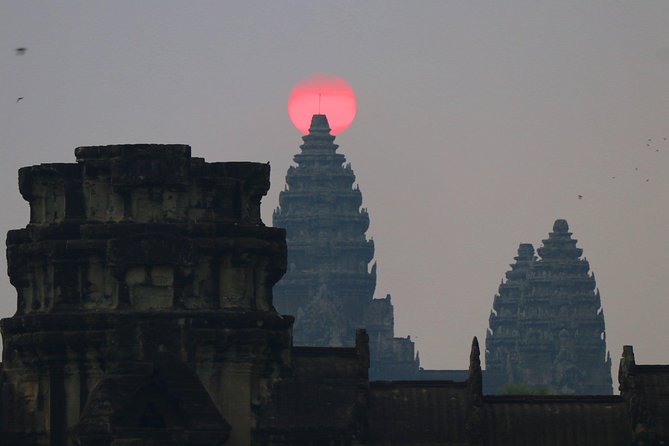
Reviewed · 1-DAY TOURS
One Day tour with sunrise in car with A/C or Van & Guide.
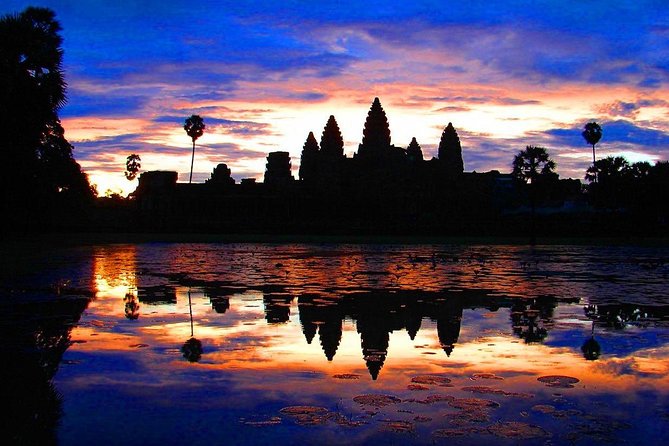
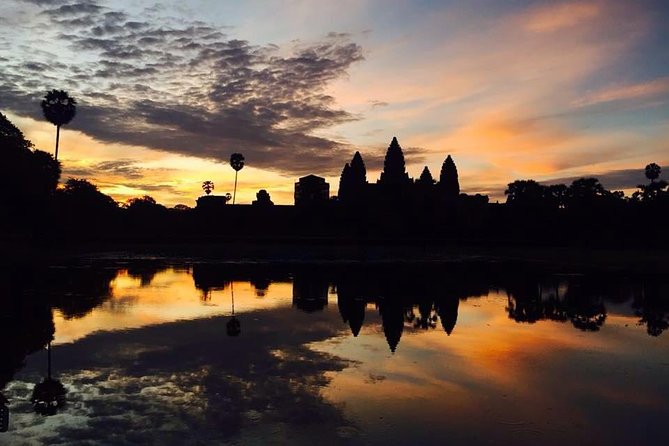
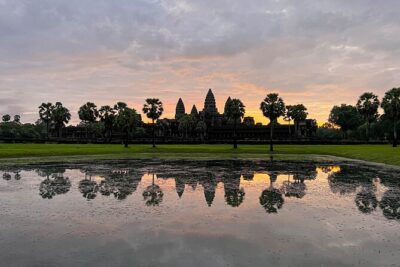
Angkor Wat at sunrise is the reason to book this tour. You leave Siem Reap at 5 am, reach the temple before the day heats up, and watch the first light spread across the lotus ponds and towers. The early start also gives you a quieter look at Cambodia’s best-known temple.
I like the private format, which lets you ask for more history, fewer explanations, or extra photo time. I also like the practical touches: an air-conditioned car or van, cold water, and chilled towels. Guides such as Bunleat, Borey, Vandy, Ramy, and Sothan are praised for clear storytelling, patient pacing, and help with photographs.
The main drawback is the price detail: $58 covers the guide, vehicle, and water, but the Angkor temple ticket costs another $37 per person, and lunch is not included. You must also be ready for a 5 am pickup and a full morning of walking in the heat.
Key points to know before booking
- Sunrise comes first: Leave Siem Reap at 5 am for Angkor Wat and its lotus-pond views.
- Several major temples in one day: The route includes Angkor Wat, Baksei Chamkrong, Bayon, Angkor Thom, Baphuon, and Ta Prohm.
- Private attention: Only your group takes part, so the pace and focus can be adjusted.
- Comfort matters: Transport is by air-conditioned car, or by van for a larger group, with cold water and refreshing towels.
- Guides add real value: Bunleat, Borey, Vandy, Ramy, and Sothan are noted for history, photography help, patience, and flexible service.
- Budget beyond the tour price: Add the one-day temple pass, listed at $37, plus lunch and any tip you choose.
Why a 5 am start makes sense at Angkor Wat
You will not be easing into the day. Pickup is scheduled for 5 am, so pack breakfast from your hotel before leaving. That small bit of planning matters because lunch is not included, and the tour lasts about seven to eight hours.
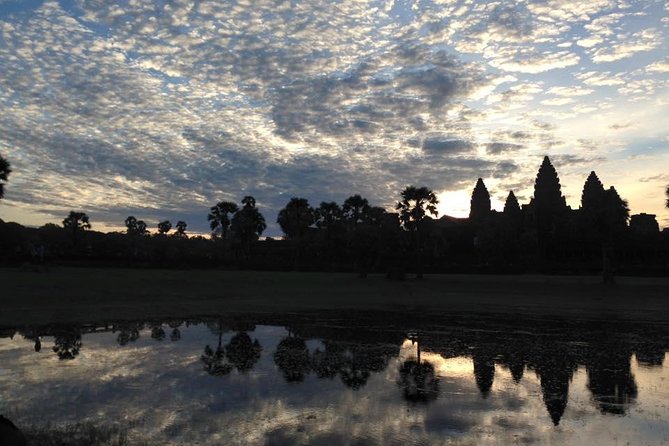
The payoff is Angkor Wat before the strongest heat. Sunrise gives you a striking view toward the temple towers, with lotus ponds in the foreground. Even if clouds soften the color, the quiet morning light makes the immense scale easier to appreciate.
The early hour can also help you get your bearings before the complex becomes more active. This is not a guarantee of solitude, but the timing is designed to reach Angkor Wat when crowds are at a minimum.
Bring only what you need. You will have cold water and chilled towels, but you should still wear comfortable walking shoes, use sun protection, and bring a camera or phone with enough battery. The supplied information calls for a moderate level of physical fitness, so expect walking, steps, and time outside rather than a sightseeing day spent in the vehicle.
A few more Siem Reap trips to weigh up
- Angkor Wat Sunrise or Sunset Tour with Guide from Siem Reap
★ 5.0 · 12,109 reviews - Siem Reap: Angkor Wat: Small-Group Sunrise or Sunset Tour
★ 5.0 · 9,444 reviews - Siem Reap: Angkor Wat 2-Day Tour with Sunrise and Sunset
★ 4.9 · 4,429 reviews
Angkor Wat: the grand opening scene
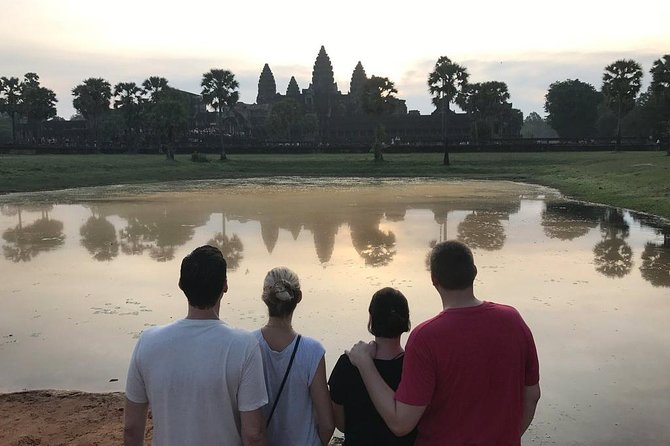
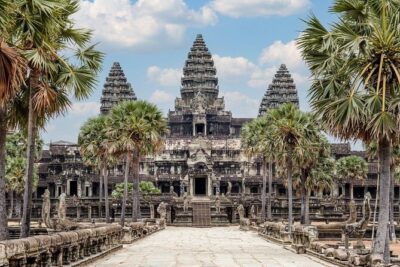
Angkor Wat is the clear centerpiece. Built as a vast temple complex, it is admired for its towers, galleries, stone reliefs, and carefully planned approach. At sunrise, your attention naturally goes first to the silhouette and reflections, but the guide is important once you move beyond the photo stop.
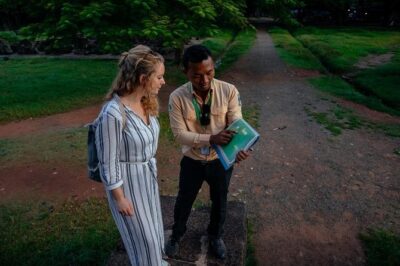
A good guide can help you read the temple rather than simply look at it. Bunleat, for example, is praised for explaining the history of the temples, finding useful photo positions, and taking pictures for visitors. Borey is also noted for combining temple explanations with camera tips and help composing photographs.
That service is especially useful at Angkor Wat because there is a lot to take in. A private guide can explain the Hindu and Buddhist connections that shape Cambodia’s religious monuments, then give you time to look without filling every quiet moment with information.
Your guide may also adjust the amount of explanation to suit your group. Sothan is described as speaking at a comfortable pace and allowing time for ideas to sink in. That is a valuable quality here. Angkor Wat can feel overwhelming when every carving, tower, and historical date arrives at once.
Baksei Chamkrong and a useful change of scale
After Angkor Wat, the route heads north to Baksei Chamkrong. This pyramid temple was built in 947 AD by Harshavarman I and dedicated to Shiva.
Baksei Chamkrong is a smaller and more compact stop than Angkor Wat, which makes it a useful change of scale. Its pyramid form invites comparison with the pyramid temple at Tikal in the ancient Maya city in Central America. The comparison does not mean the two sites are connected, but it gives you a memorable way to think about how different ancient cultures used stepped pyramid shapes.
This stop also helps break up the day. You are not looking at one huge monument for hours. Instead, the route moves between large ceremonial spaces and more contained temple forms, giving your eyes and mind a different kind of work.
The site may be less familiar to first-time visitors, so the guide’s context matters. Ask about the temple’s date, dedication, and place within the wider Angkor complex. Because this is a private tour, you have a better chance of getting an answer suited to your own interests.
Bayon and the smiling faces of Angkor Thom
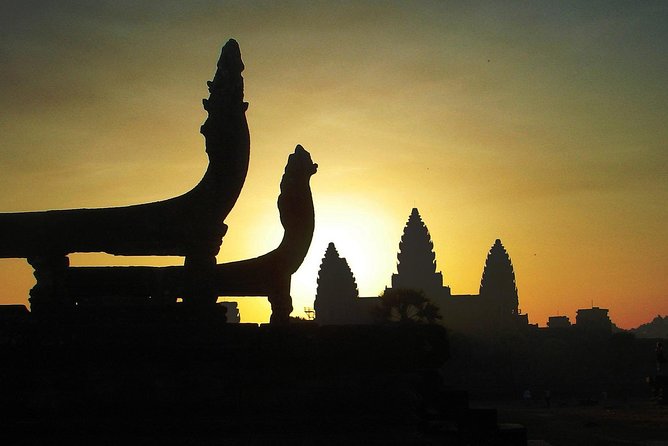
The tour continues to Bayon, the temple at the center of Angkor Thom. Its famous smiling faces are among the most recognizable images in Cambodia.
Bayon feels different from Angkor Wat. Instead of one broad, commanding composition, you move through a more crowded arrangement of towers, corridors, and carved faces. The result can be confusing at first. A guide helps you understand how the temple fits into Angkor Thom, the ancient city that once had a population of about 300,000 people in the thirteenth century.
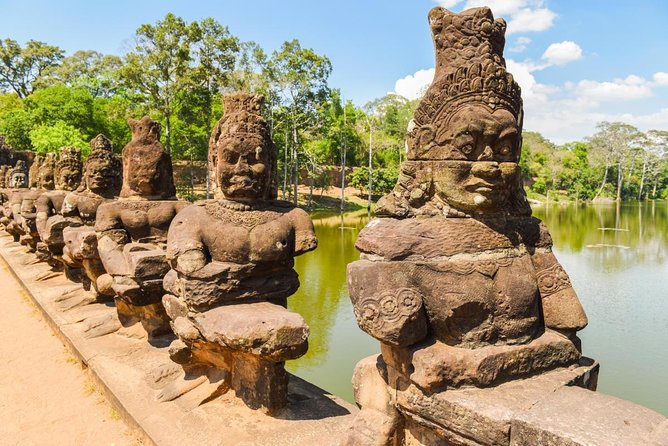
That city context gives Bayon more meaning. You are not simply visiting a lone temple in the forest. You are seeing the religious center of a major urban complex, with the South Gate and other structures forming part of a much larger plan.
The guide can also help with photographs. Several guides connected with this tour are praised for showing the best places to take pictures and helping with phone photography. At Bayon, that is useful because the faces and towers change appearance as you move around them. A quick photo stop may miss the best angles.
Same country, a completely different kind of day:
- From Siem Reap: Kampong Phluk Floating Village Tour by Boat
★ 4.9 · 6,979 reviews - Sunset tour of Kampong Phluk stilts home village on the Tonle Sap
★ 5.0 · 4,865 reviews - Siem Reap: Kampong Phluk Floating Village Tour with Boat
★ 4.9 · 3,843 reviews - Siem Reap: Full-Day Angkor Wat Guided Tour with Sunset
★ 4.9 · 3,803 reviews
Angkor Thom and Baphuon: allow time for the details

The route includes the South Gate of Angkor Thom and Baphuon. These stops extend the story beyond Bayon and show how the ancient city was entered and arranged.
Baphuon is another pyramid-style temple, but you should not expect it to feel like Baksei Chamkrong. Each monument has its own scale, setting, and visual rhythm. The benefit of seeing both is that you can compare how the builders used height, terraces, and central towers in different settings.
The South Gate provides another change in mood. After the close-up stonework of Bayon, a gateway helps you think about movement into the city. Your guide can connect the gate, Angkor Thom, and Bayon so the stops do not feel like unrelated ruins.
The tour is advertised as seven to eight hours, which sounds generous, but the schedule still asks a lot from one day. You are fitting several major sites into a single outing. Private guiding helps because your group can spend more time at a favorite temple and less at one that does not hold your attention, but the day cannot cover everything at Angkor.
Ta Prohm brings the day to a dramatic finish
Ta Prohm is the final major stop named in the route. It is known for its atmosphere and for the way trees and stone appear together. The temple offers a striking contrast to the open views at Angkor Wat and the face towers at Bayon.
By the time you reach Ta Prohm, the early start will be catching up with you. That is part of the reason the order works well. You see the signature sunrise site first, move through several different temples, and finish with a place that rewards slower looking and strong photographs.
Your guide can keep the pace comfortable. One of the strongest patterns in the guide feedback is attention to individual needs. Guides are praised for adapting the itinerary, allowing a relaxing pace, and helping with mobility concerns. The experience still requires moderate physical fitness, but you are not locked into a rigid group schedule.
Ta Prohm can also be a good place to ask your guide to point out details you might otherwise pass. Stone carvings, doorways, roots, and collapsed sections can blur together when you are tired. A clear explanation gives the final stop more shape.
What the private format really gives you
Private does not mean you will have every temple to yourself. It means your group is the only group taking part in the activity with your guide. That distinction matters.
You can ask for more information about a particular temple, request help with photos, or slow down if someone in your group needs a break. The experience is also suitable for a second visit. One person used a shorter approach on a return trip because the major sites had already been seen, while a first-time visitor can ask for fuller explanations.
The guide names supplied for this experience include Bunleat, Vanny, Sothan, Boray or Borey, Hoy Sovandy, and Ramy. The exact guide is not guaranteed in the tour details, so do not book solely because you want one particular person unless you confirm that directly.
The most praised qualities are practical rather than flashy. Guides are described as friendly, punctual, professional, patient, and attentive. They explain without overloading you, adjust to your preferences, help with photographs, and supply cold water and towels. Those are small things, but they matter during a hot temple day.
Car, van, water, and the cost of the day
The tour price is $58 per person. It includes an English-speaking guide, an air-conditioned car, or a van for a large group, and cold water. Chilled towels are also highlighted as part of the comfort provided during the day.
You must add the one-day temple ticket, listed at $37 per person. Lunch is also extra, and tips are optional. In practical terms, the advertised price is not the full cost of your day, so include the temple pass and a meal when comparing it with other Angkor options.
Still, the value can be strong if you want a private guide rather than only transport. A driver can get you from temple to temple, but an English-speaking guide gives the monuments a sequence and meaning. The photography help is another useful bonus if you want good group pictures without handing your phone to strangers.
Air conditioning is important here. The temples are spread across a large area, and the vehicle provides a place to cool down between stops. A van is available for a larger group, though the details do not specify an exact maximum group size.
Who should book this sunrise tour
This is a good fit for first-time visitors who want to see the essential Angkor sites in one long day. You get Angkor Wat, Bayon, Angkor Thom, Baphuon, Ta Prohm, and Baksei Chamkrong, with a guide to connect them.
It also suits families and small private groups that want flexibility. The guides are described as accommodating with mobility issues and personal preferences, but the tour still calls for moderate physical fitness. If anyone in your group has trouble with stairs or long walks, discuss that before booking.
Photographers should also consider it. Sunrise provides the day’s strongest opening light, while guides such as Borey and Bunleat are praised for showing photo locations and offering camera or phone advice.
I would be less keen to recommend it to someone who dislikes early mornings or prefers a slow, single-site visit. Seven to eight hours is a substantial commitment, and the route is designed for coverage. If you want to study every carving at length, two or more days at Angkor would be more comfortable.
Booking details and cancellation
Pickup is offered from Siem Reap, with the activity beginning at 5 am and ending back at the meeting point. Confirmation is provided when you book, and the area is near public transportation.
The activity is listed as private, and group discounts are available. Mobile tickets are supported. You can cancel for a full refund if you do so at least 24 hours before the local start time. Cancellations or changes made inside that window are not accepted for a refund.
Should you book it?
Book this tour if you want the classic Angkor day handled in one private outing, with sunrise at Angkor Wat, air-conditioned transport, and a guide who can explain the temples without forcing you into a fixed group pace.
The strongest reasons are the early timing, the useful temple sequence, and the repeated emphasis on friendly guides, clear history, photography help, cold water, and chilled towels. Just budget the extra $37 temple pass and lunch, pack breakfast, and accept that you will be up before dawn.
For a first visit to Siem Reap, this is a practical and well-rounded choice. For a return visit, its private format lets you trim the explanations and focus on the places or photographs you missed the first time.
FAQ
What time does the tour start?
The tour starts at 5:00 am, with pickup in Siem Reap.
Is hotel pickup offered?
Pickup is offered in Siem Reap Province, Cambodia. The activity ends back at the meeting point.
How long does the tour last?
The tour lasts approximately seven to eight hours.
Is the tour private?
Yes. Only your group will participate in the private activity.
Which temples are included?
The route includes Angkor Wat, Baksei Chamkrong, Bayon, Angkor Thom and its South Gate, Baphuon, and Ta Prohm.
Is the Angkor temple ticket included?
No. The one-day temple ticket costs $37 per person and is not included in the tour price.
What does the $58 price include?
The price includes an English-speaking guide, an air-conditioned car or a van for a large group, and cold water.
Is lunch included?
No. You should pack breakfast from your hotel, and lunch is not included.
Can I request a particular guide?
The guides associated with this experience include Bunleat, Vanny, Sothan, Borey, Hoy Sovandy, and Ramy. The supplied details do not guarantee a specific guide, so confirm this before booking if it matters to you.
What happens if I need to cancel?
You can receive a full refund if you cancel at least 24 hours before the experience start time. Cancellations or changes made less than 24 hours before the local start time are not accepted.
Just added around Siem Reap
- Ultimate Sunrise to Angkor Wat, Angkor Thom and Bayon Temple★ 5.0 · 3 reviews
- Twilight Tastes of Siem Reap Include Dinner★ 5.0 · 13 reviews
- Trekking Tour at Phnom Kulen National Park from Siem Reap★ 5.0 · 3 reviews
- Full-Day Private Tour of Angkor Wat with Pick Up★ 5.0 · 12 reviews
- Private Day Trip to Angkor Temples with Expert Guide★ 5.0 · 4 reviews
- Waterfall & River of 1000 Siva Linga- Kulen Mountain Private Tour★ 5.0 · 3 reviews
- Professional Photo Shoot in Angkor Archaeological Park, Siem Reap★ 5.0 · 42 reviews
- Ultimate Siem Reap Food Tour by Tuk Tuk – 20 Tastings, 8 Stops★ 5.0 · 13 reviews
1-Day Tours, compared.
1-Day Amazing Angkor Wat Tour with Sunset & All Interesting Major Temples
Read our review →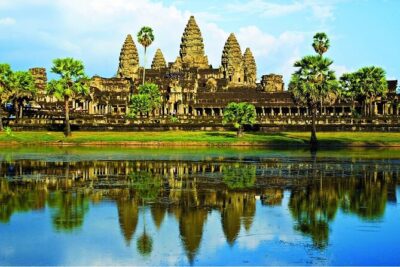
Angkor Wat one Day Private Tour for All Highlight Angkor Temples
Read our review →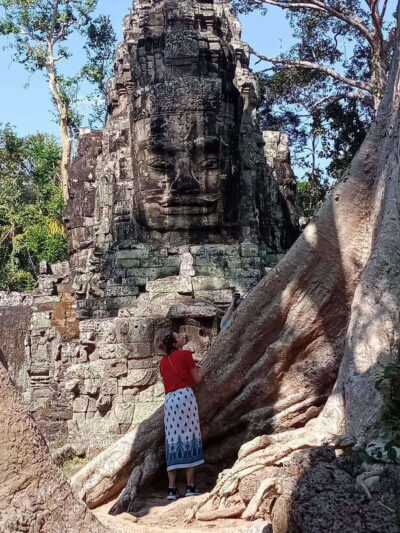
1-Day private Angkor Temple Tour from Siem Reap
Read our review →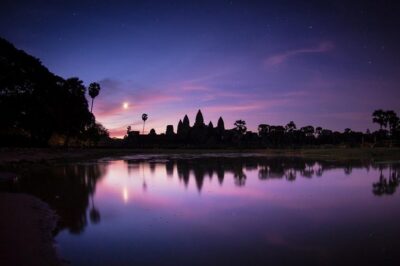
1-Day Angkor Wat Sunrise & All Interesting Temples Private Tour
Read our review →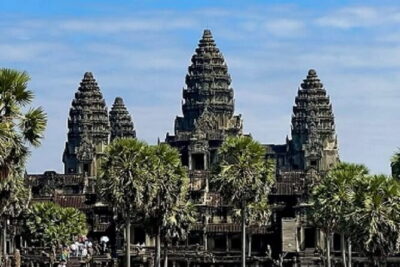
Angkor Wat Sunrise Small-Group 1-Day Tour from Siem Reap
Read our review →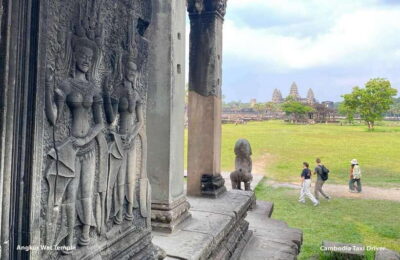
Browse the lists this tour appears in