
Reviewed · FARMS
Half Day Trip: Silk Farm, Satcha, and Senteur d’Angkor Tour
The most revealing part of this half-day outing is the silk farm, where you follow the whole chain from mulberry trees and silkworms to woven fabric. I like that the visit shows skilled work in real stages, not just finished souvenirs. I also like the mix of four craft stops, especially Satcha’s six workshops and its bamboo buildings from Kampong Cham.
The main consideration is pace. Each stop lasts about 50 minutes, so you get a useful introduction rather than a long workshop or a slow shopping visit. If you have only a short stay in Siem Reap, this is a smart cultural side trip. If you want temples, markets, or hands-on crafting, you may find the schedule too focused on display and shopping.
Key points to know before you go
- Silk from tree to fabric: See mulberry cultivation, silkworms, and the traditional weaving process at Angkor Silk Farm.
- Six workshops at Satcha: Walk through bamboo-built spaces where Khmer ornaments meet modern craft design.
- Four stops in four hours: The schedule moves quickly, with roughly 50 minutes at each center.
- Private tuk-tuk transport: Hotel pickup and drop-off in Krong Siem Reap are included for your group.
- A practical souvenir route: Senteurs d’Angkor and Artisan d’Angkor give you several chances to buy locally made products.
- Good value for two people: The listed price is $25 per group of up to two, before personal spending.
Why the silk farm is the strongest part
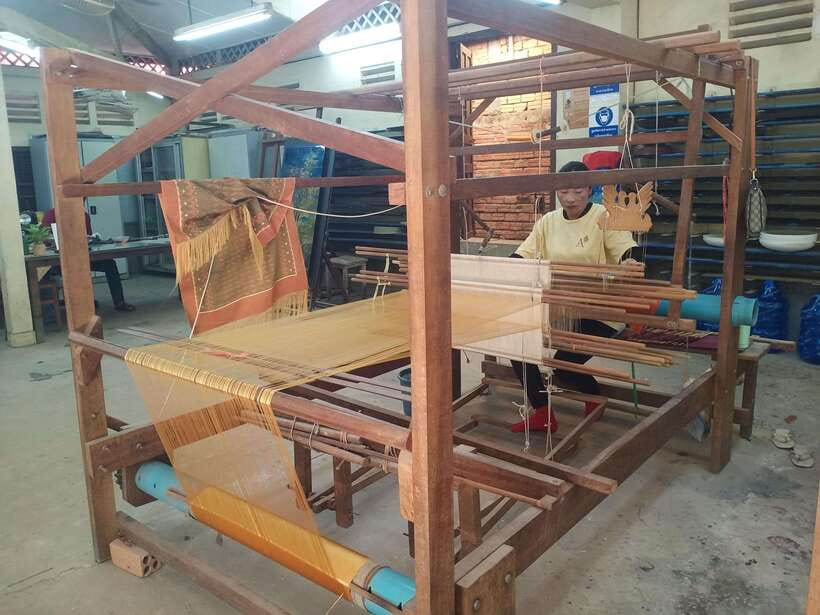
I would make the Angkor Silk Farm the centerpiece of this outing. Silk can look like a finished luxury product in a shop, but here you see the work behind it. The visit covers the carefully grown mulberry trees, the life cycle of the silkworms, and the weaving of the final cloth.
That sequence matters. You are not simply shown a rack of scarves and told they are traditional. You can connect the raw material to the finished fabric and see why silk production takes patience and repeated handwork. The visit includes a guided tour, walking time, a craft market, shopping, and a workshop-style look at the process.
The farm is also the stop most likely to appeal to you if you enjoy practical demonstrations. A French visitor rated the tour only as an optional activity rather than a must-see, but the positive accounts give the silk farm special weight. One Australian visitor described learning about the full life cycle and praised the kindness of the staff. That is useful guidance: allow yourself to watch the process, not just hurry toward the shop.
The 50-minute visit is enough to understand the basic stages, though not enough for a full lesson in silk weaving. You will probably see more than you can absorb if the guide moves quickly, so ask questions while you are there. Comfortable walking shoes will help, since the stop includes walking around the farm and workshop areas.
A few more Siem Reap trips to weigh up
- Siem Reap Lotus Silk Farm Discovery tour & Lake experience
★ 4.7 · 291 reviews - Siem Reap: Khmer Village and Fish Farm ATV Tour
★ 4.9 · 266 reviews - Siem Reap: Lotus Silk Farm- Tour, Lake & Masterclass
★ 4.9 · 77 reviews
Satcha puts Cambodian bamboo to work
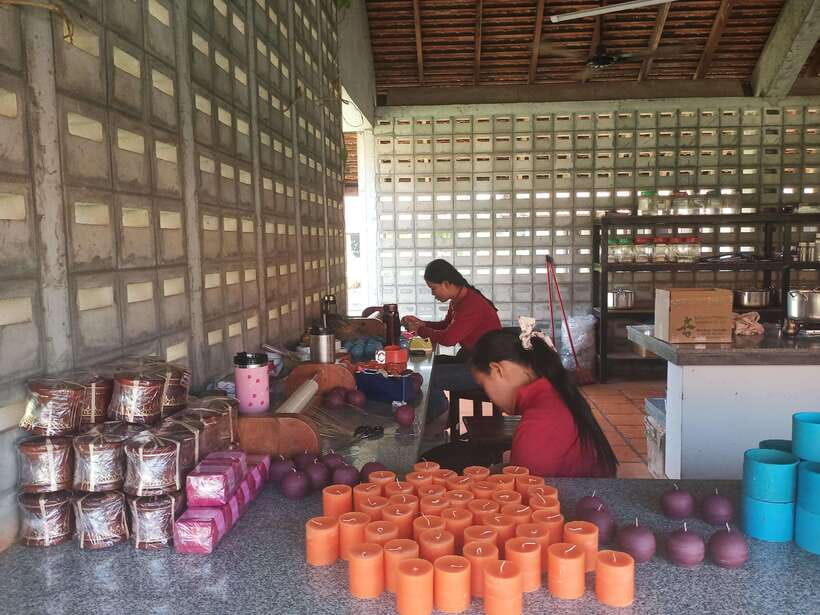
The next craft stop is Satcha Handicraft Center, built with Cambodian bamboo from Kampong Cham. The center contains six workshops, giving this visit a broader feel than a single demonstration room.
Satcha’s appeal comes from the meeting of old and new. The work draws on traditional Khmer know-how, while the designs use contemporary forms inspired by Khmer ornaments. I like that balance because it gives you a better sense of living craft. You are not looking at an object frozen in the past. You are seeing traditional ideas adapted for present-day use.
You will have time to walk through the workshops, view the making process, and shop. The schedule also allows for photographs and a guided explanation. Since this stop lasts about 50 minutes, think of it as a clear introduction to the center rather than a course in bamboo work.
The bamboo construction itself is part of the visit. It gives the stop a distinct character and helps explain why the building is more than a neutral showroom. If you are interested in architecture, materials, or sustainable design, Satcha may be your favorite stop after the silk farm.
There is a small tradeoff. A short visit can make the center feel like a series of quick impressions. If you want to ask about every object or compare many pieces before buying, you may feel pressed for time. Still, the six-workshop layout gives you variety without requiring a full day.
Senteurs d’Angkor focuses on useful local products
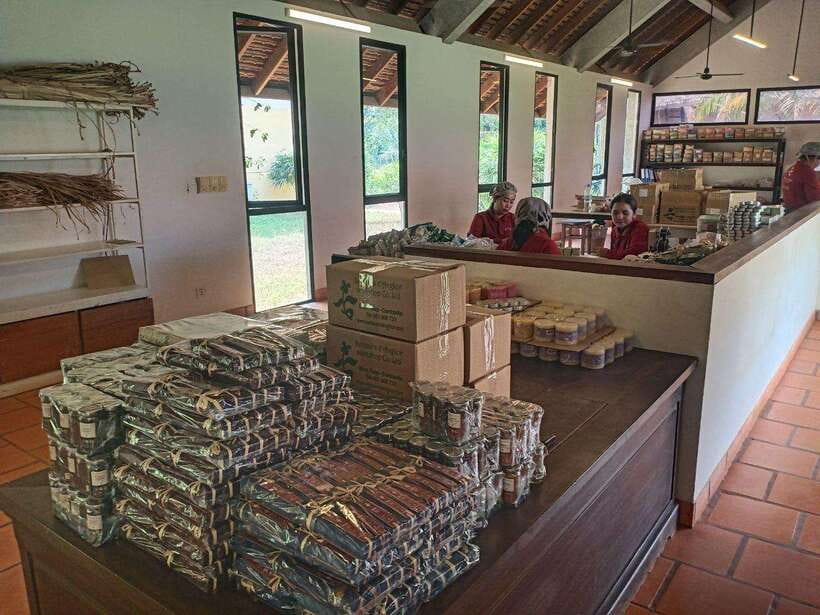
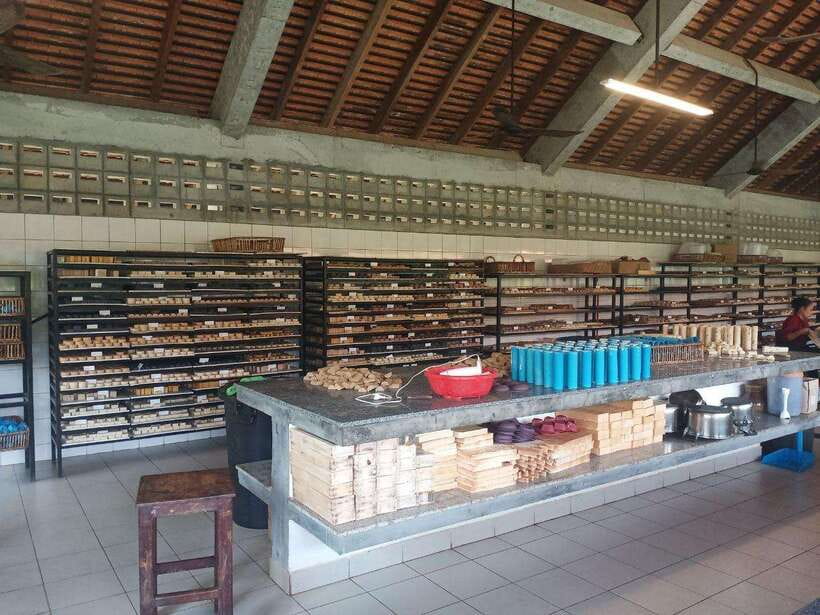
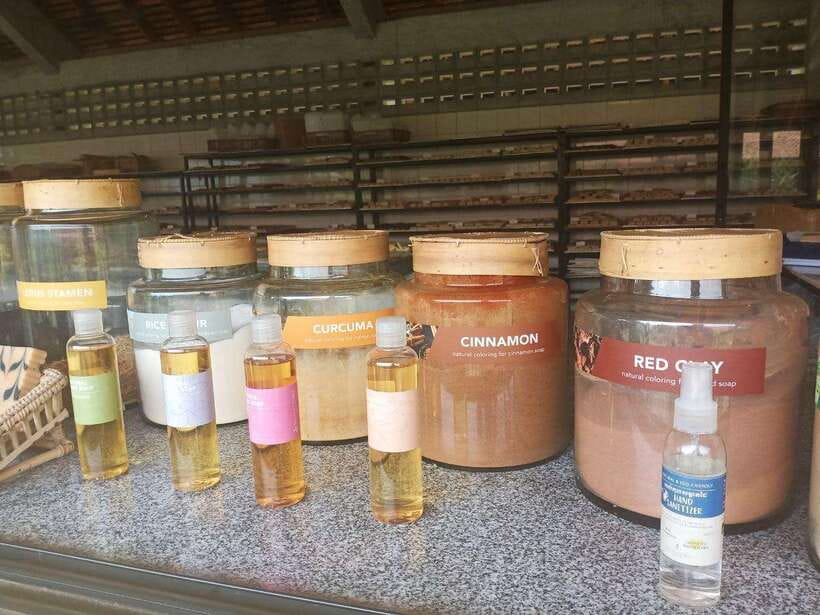
Senteurs d’Angkor brings a different type of craft experience. The focus is on sustainable Cambodian treasures and artisanal products tied to local culture. The stop includes a guided visit, walking, shopping, photographs, and a workshop-style look at how products are made.
This is a good place to think about souvenirs in a more useful way. Instead of buying a generic item with no clear connection to the place, you can look for products made through local skills and materials. The available information does not specify every product on display, so I would treat this as a chance to discover the range rather than arrive expecting one particular item.
You may find this stop more commercial than the silk farm. That is not automatically a fault. Shopping is part of the stated visit, and the center gives you a chance to see local production before deciding what, if anything, to purchase. I prefer that arrangement to being taken directly to a shop with no explanation of the work.
The 50-minute limit keeps the stop manageable. You can listen to the guide, look around, take photographs, and browse without giving up most of your day. Personal purchases are not included in the $25 price, so keep that distinction clear when planning your budget.
Artisan d’Angkor closes the craft circuit
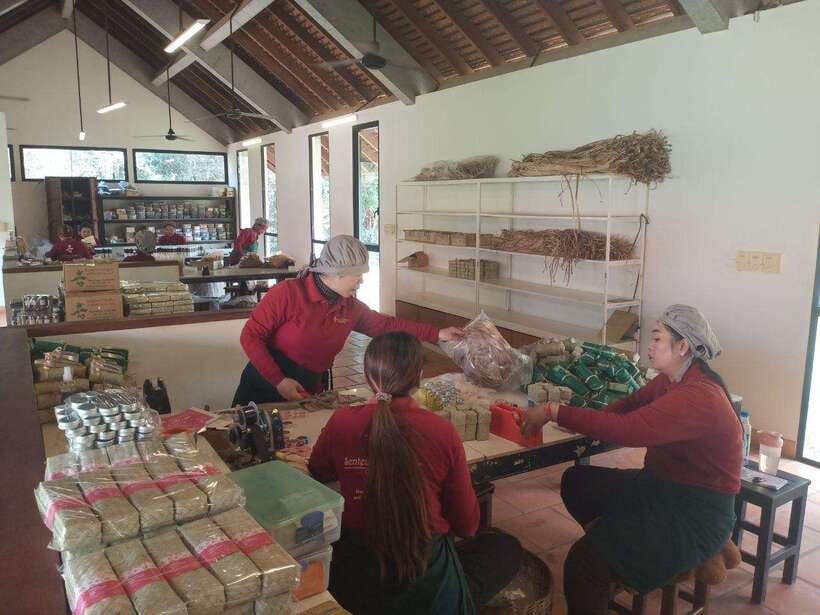
The final stop is Artisan d’Angkor, where local handicrafts are made. It follows naturally after the silk, bamboo, and artisanal-product visits by returning to the broader subject of Cambodian handwork.
Here, you can see how local handicrafts are produced and compare the different skills introduced earlier. The visit includes a photo stop, guided sightseeing, walking, shopping, and workshop time. It is another 50-minute stop, followed by a short tuk-tuk ride back to Siem Reap.
This is a useful ending because it lets you look at finished handicrafts with more context. After seeing raw materials and production methods, you can better judge the labor and design behind the objects. I would save any serious shopping decisions for this point only if you want to compare items across the stops first.
The limitation is repetition. Silk, bamboo, and other handmade products are different, but four craft centers in one morning or afternoon can begin to feel similar if you are not especially interested in making techniques. A French visitor found the stops pleasant but not essential to Siem Reap. That is a fair assessment. Artisan d’Angkor works best for you if you want a focused craft route, not if you are looking for a major historic attraction.
Same country, a completely different kind of day:
- Angkor Wat Sunrise or Sunset Tour with Guide from Siem Reap
★ 5.0 · 12,109 reviews - Siem Reap: Angkor Wat: Small-Group Sunrise or Sunset Tour
★ 5.0 · 9,444 reviews - From Siem Reap: Kampong Phluk Floating Village Tour by Boat
★ 4.9 · 6,979 reviews - Sunset tour of Kampong Phluk stilts home village on the Tonle Sap
★ 5.0 · 4,865 reviews
How the four-hour schedule works
The outing begins with pickup in Krong Siem Reap. The first tuk-tuk ride takes about 15 minutes, followed by a 50-minute visit at the silk farm. You then have another 15-minute ride to the next center.
The listed timing repeats the pattern:
- About 15 minutes by tuk-tuk to the silk farm
- About 50 minutes at each of the first three craft centers
- About 5 minutes by tuk-tuk to the last stop
- Hotel drop-off in Siem Reap after the final visit
The exact order places the silk farm first, followed by Satcha Handicraft Center, Senteurs d’Angkor, and Artisan d’Angkor. The transport between stops keeps the route simple, and you do not need to arrange separate taxis or tuk-tuks.
Four hours is a sensible length for this subject. It gives you a half-day cultural activity without taking over your entire Siem Reap schedule. You can pair it with temple sightseeing on another day or use it as a lighter alternative when you want a break from major monuments.
The pace is the part I would watch most closely. Each 50-minute stop includes several elements: a guided explanation, walking, photographs, shopping, and a workshop or production area. You will get a good overview, but you should not expect long conversations at every station.
Why private tuk-tuk transport helps
The private-group format is a real advantage for a small party. The price is $25 for a group of up to two, rather than $25 per person, which makes the outing especially attractive for a couple or two friends traveling together. Hotel pickup and drop-off are included.
The driver is listed as English-speaking, and one confirmed booking specifically praised the tuk-tuk driver. That detail matters because the vehicle is not just a ride between attractions. It is your connection between four separate centers, and a helpful driver can make the transfers feel easy.
You also avoid arranging transport in an unfamiliar area outside central Siem Reap. The tuk-tuk rides are short, with most of the value coming from the stops themselves. This is not a scenic road trip, and the information provided does not promise commentary during the rides, so think of transport mainly as convenient local transfer.
A separate entrance for the activity is listed, which may help reduce waiting at the included sites. The experience is private rather than a large shared group, so you should have more control over where you look and how much time you spend asking questions, within the fixed schedule.
Is $25 good value?
For two people, $25 is a strong price for four hours of transport and entry visits to four craft centers. Hotel pickup and drop-off are included, as are visits to Angkor Silk Farm, Senteurs d’Angkor, Satcha Handicraft Center, and Artisan d’Angkor.
The value is highest when you use the tour as a convenient introduction to Cambodian handicrafts. You would otherwise need to organize several rides and decide which centers are worth visiting. Here, the route is already arranged, and you can compare different forms of making in one short outing.
The price does not include food or personal expenses. There is no meal listed, so eat before you go or plan food afterward. Shopping is also separate. Since several stops include markets or retail areas, it is easy to spend more than the booking price if you find products you want.
I would not judge the value by the number of attractions alone. Four stops can sound like a lot, but each visit is short. The better question is whether you want to spend half a day learning about craft production. If yes, the cost is modest. If you mainly want famous Siem Reap sights, the same four hours may be better used elsewhere.
What to bring and how to prepare
Wear comfortable walking shoes. The experience includes walking at every major stop, and you will be moving through farms, workshops, and craft centers rather than sitting in one room.
Bring a camera. Photography is part of the scheduled visits, and the bamboo buildings at Satcha, the silk-making stages, and the finished handicrafts give you plenty to record. Smoking is not allowed.
You do not need to bring food as part of the booking, since meals are not included. It is also wise to leave room in your day for browsing. Even if you do not intend to buy anything, the products are part of the experience, and rushing through the shopping areas would miss some of the point.
The tour is offered in English, with an English-speaking driver. No guide names are provided, so you should not book expecting a particular named guide. The booking is for a private group, which is more important here than a large group lecture because the stops rely on looking closely and asking questions.
Who will enjoy this tour most?
I would recommend it to you if you enjoy seeing how objects are made. The silk farm is especially good for anyone curious about natural materials, hand production, or traditional textiles.
It also suits couples and pairs of friends because the $25 group rate applies to up to two people. Families may appreciate the short rides and clear sequence of stops, though the booking information does not specify child pricing or special activities for children.
This is a good choice after you have seen the main temples and want a different view of Cambodia. It gives you contact with local production and design without requiring a full-day commitment.
You may want to skip it if you have only one day in Siem Reap and have not yet visited the area’s main sights. You may also prefer another activity if shopping is not your interest. The tour includes shopping at several stops, even though the focus is on how products are made.
My practical verdict
I like this outing because it treats handicrafts as work, not just decoration. The silk farm gives the clearest story, Satcha adds strong design and bamboo architecture, and Senteurs d’Angkor and Artisan d’Angkor round out the picture with more local products and finished goods.
I would book it for a reasonably priced, private half-day outside the temple circuit. Go in expecting short guided introductions, not long workshops. If you want to understand Cambodian silk and see several craft centers with simple tuk-tuk transport, this is a sensible choice. If you need a single unforgettable landmark, or if your schedule is packed with temples, this can wait.
Cancellation is flexible up to 24 hours before departure for a full refund, and you can reserve now and pay later. Check the available starting times when booking, then leave space in your budget for any items you choose to buy.
FAQ
How long does the tour last?
The experience lasts four hours, including tuk-tuk transfers, guided visits, walking, photography, workshops, and shopping time.
What places are included?
The tour includes Angkor Silk Farm, Satcha Handicraft Center, Senteurs d’Angkor, and Artisan d’Angkor.
Is hotel transportation included?
Yes. Pickup and drop-off in Krong Siem Reap are included, with tuk-tuk transportation between the stops.
Is this a private tour?
Yes. It is offered as a private group experience for up to two people at the listed $25 group price.
What language is available?
The activity is offered in English, and the driver is listed as English-speaking.
What should I bring?
Comfortable walking shoes and a camera are recommended. Smoking is not allowed, and meals and personal expenses are not included.
Just added around Siem Reap
- Ultimate Sunrise to Angkor Wat, Angkor Thom and Bayon Temple★ 5.0 · 3 reviews
- Twilight Tastes of Siem Reap Include Dinner★ 5.0 · 13 reviews
- Trekking Tour at Phnom Kulen National Park from Siem Reap★ 5.0 · 3 reviews
- Full-Day Private Tour of Angkor Wat with Pick Up★ 5.0 · 12 reviews
- Private Day Trip to Angkor Temples with Expert Guide★ 5.0 · 4 reviews
- Waterfall & River of 1000 Siva Linga- Kulen Mountain Private Tour★ 5.0 · 3 reviews
- Professional Photo Shoot in Angkor Archaeological Park, Siem Reap★ 5.0 · 42 reviews
- Ultimate Siem Reap Food Tour by Tuk Tuk – 20 Tastings, 8 Stops★ 5.0 · 13 reviews
Farms, compared.
Pepper Farm Tours, Salt, Lake & Phnom Chhngok Temple
Read our review →
Siem Reap Lotus Silk Farm Discovery tour & Lake experience
Read our review →
Full-day Countryside Tour with Pepper Farm and Kep
Read our review →
Tuk Tuk Trip to Pepper Farm, Kep, Crab Market & More
Read our review →
Kampot Countryside include Pepper farm, Salt field & Lake
Read our review →
KAMPOT TRAVEL-Pepper farm. Cave.Secret lake-Crab market & Salt…
Read our review →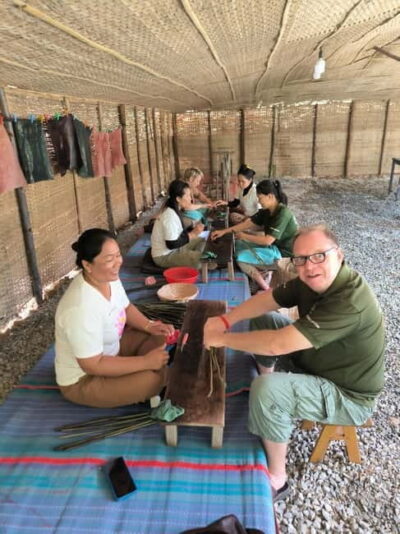
Browse the lists this tour appears in