
Reviewed · CITY TOURS
Siem Reap: City Walking Tour
Siem Reap’s best introduction may be on foot, moving from the quiet Royal Gardens to colonial lanes, a working market, and the city’s famous Pub Street. This two-hour walking tour gives you more than a list of sights: guides such as Tea, Sai, Ty, and Chek explain daily Cambodian life, Buddhist customs, local food, and how the town fits together.
I like the small groups of up to 10, which leave room for questions, and the price: $6 buys a useful orientation with a local guide rather than a quick drive-by. The main drawback is the heat. You walk between stops, and the meeting point outside Damnak Supermarket is not a hotel pickup, so you need comfortable shoes, sun protection, and a little planning.
Key points at a glance
- Royal setting first: See the Royal Residence, Royal Gardens, and the city’s central green space before the markets grow busy.
- Colonial Siem Reap: Walk through Kandal Village, where boutique shops and coffee houses occupy older streets and buildings.
- Buddhism in daily life: Visit Wat Preah Prom Rat, Siem Reap’s largest pagoda, and see its striking reclining Buddha.
- Market life, not just souvenirs: Explore Psar Chas, or Old Market, with clothing, produce, food stalls, and local goods.
- Pub Street in daylight: Learn where to return at night and how to approach the city’s best-known evening quarter.
- A useful first-day walk: The compact route helps you find your bearings before temple visits and evening plans.
Why this $6 walk makes sense early in your stay
Siem Reap is easy to like, but its center can feel scattered when you first arrive. A temple is around one corner, a market is down another lane, and the river, Royal Residence, hotel areas, and nightlife zone each have a different feel.
This tour gives you a working map in your head. You see where the Royal Gardens sit, how the old streets lead toward Kandal Village, where Wat Preah Prom Rat fits into the center, and how the Old Market connects with Pub Street.
At $6 per person, the value is unusually strong. You are not paying for transport, food, or entrance extras. You are paying for two hours of local explanation and a route that would take more effort to understand on your own.
I would book it near the beginning of a Siem Reap stay. You can ask your guide about places to eat, local products, evening entertainment, road crossing, or areas you plan to visit later. Several guides, including Tea, Sai, Ty, and Chek, are praised for clear English, humor, and personal stories about Cambodian life.
The tour is not a replacement for a full Angkor temple visit. It is a city walk, and its value lies in context. You see how modern Siem Reap works beside its royal, religious, colonial, and market traditions.
A few more Siem Reap trips to weigh up
- Siem Reap City Walking Tour
★ 4.5 · 114 reviews - Siem Reap Walking Tour: Landmarks & Hidden Gems
★ 5.0 · 15 reviews - Angkor Wat: Tuk Tuk and Walking Tour
★ 5.0 · 12 reviews
Starting at Damnak Supermarket
The meeting point is outside Damnak Supermarket, on the corner of Wat Bo Road and 7 Makara Street, also called High School Road. Arrive five minutes before departure.
There is no hotel pickup, so check the route from your accommodation before you book. If you have just arrived, ask your hotel to arrange a tuk-tuk. One traveler noted that this was the easiest way to reach the starting point, but you should allow enough time rather than rushing across town.
This is a walking tour, not a vehicle sightseeing trip. The route covers central streets and several stops, so wear shoes that can handle uneven pavement and warm weather. Bring a hat, sunglasses, and sunscreen. You may find shade along parts of the walk, but do not count on the whole route being cool.
The small-group format matters here. With no more than 10 people, you can hear the guide more easily and ask about details that interest you. If the group is very small, the walk may feel almost personal. One guide, Sai, even extended the route to about three hours when the pace allowed it, though the advertised duration is two hours.
The Royal Residence and Gardens
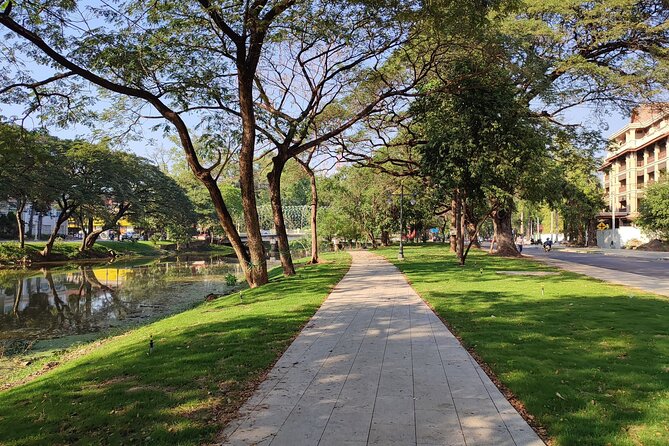
The opening stop introduces Siem Reap through its royal center. The Royal Residence and Royal Gardens offer a calmer start than the market streets, with space to look around and hear about the role of the monarchy in Cambodia.
Do not expect a long palace tour with a string of indoor rooms. The supplied details focus on the residence and gardens as part of the city walk. Your guide provides the explanation, points out what matters, and places the site in the wider story of Siem Reap.
I like beginning here because it creates a useful contrast. The gardens are a public, open setting, while the markets and Pub Street later show the town’s commercial side. You get a sense of how Siem Reap contains formal civic spaces, religious sites, small businesses, and tourist venues within a compact center.
The central green space also offers a glimpse of local routines. Previous walks have included people playing sport and dancing near the gardens, giving you a chance to observe ordinary city life rather than only prepared sights.
Your guide may also help you understand why certain places you pass later matter. Ati, Tea, and other guides are noted for explaining sites that are easy to walk past without stopping. That is one of the tour’s strongest features: it teaches you where to look.
Kandal Village and the colonial back streets
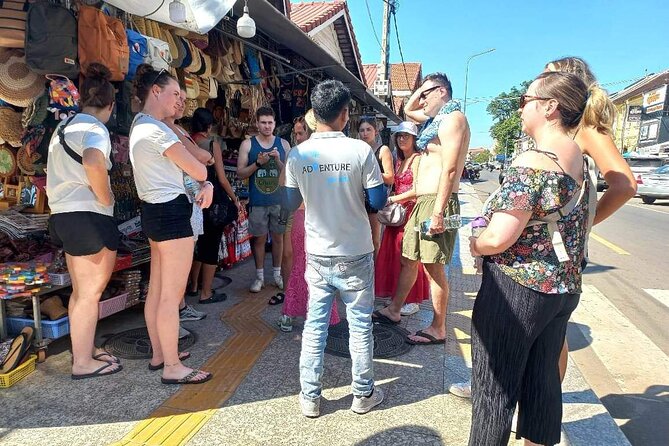
From the royal area, the route moves into older central streets and Kandal Village. This is one of the more appealing parts of the walk for anyone who likes to see a town between its headline attractions.
Kandal Village is known for boutique stores and coffee houses set among older colonial architecture. The setting is not a museum district. You are walking through a lived-in commercial area, where attractive small businesses share space with the ordinary activity of the town.
This stop is useful for shopping later. You can note which shops interest you, compare prices without feeling rushed, and return on your own. The walk may also help you separate locally made products from generic souvenirs, though you should still ask questions before buying.
The older buildings give Siem Reap a different mood from the temple compounds outside town. They also show how the city has changed as tourism grew. Your guide can add the local perspective, including how Cambodian people use the center and how tourist businesses fit into everyday life.
Several guides are praised for making this kind of information personal. Tea, Ty, and Sai are described as friendly, funny, and willing to answer questions. That is important in Kandal Village, where the value comes less from one grand monument and more from understanding the streets around you.
Same country, a completely different kind of day:
- Angkor Wat Sunrise or Sunset Tour with Guide from Siem Reap
★ 5.0 · 12,109 reviews - Siem Reap: Angkor Wat: Small-Group Sunrise or Sunset Tour
★ 5.0 · 9,444 reviews - From Siem Reap: Kampong Phluk Floating Village Tour by Boat
★ 4.9 · 6,979 reviews - Sunset tour of Kampong Phluk stilts home village on the Tonle Sap
★ 5.0 · 4,865 reviews
Wat Preah Prom Rat and the reclining Buddha
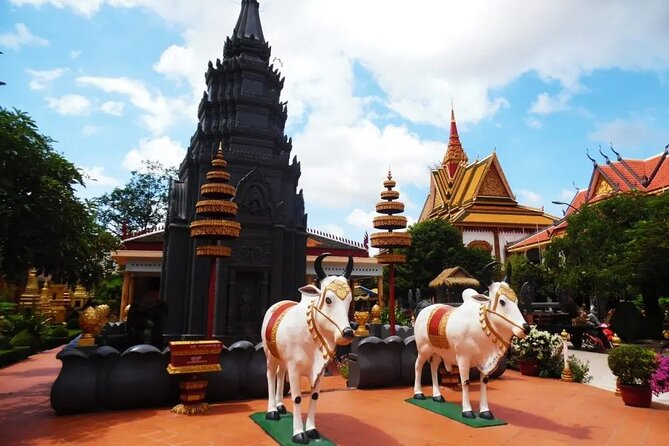
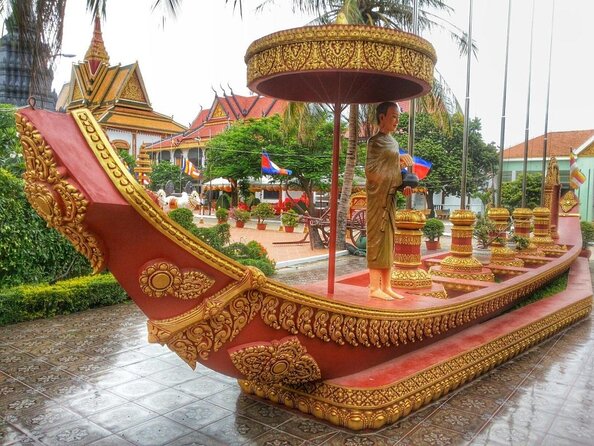
Wat Preah Prom Rat is described as Siem Reap’s largest pagoda. It is also home to an impressive reclining Buddha, making this the most substantial religious stop on the route.
You must remove your shoes before entering a pagoda. Dress and behave with respect, and follow your guide’s instructions about where to stand and what you may photograph. The visit is not simply a photo stop. Your guide introduces the role of pagodas and Buddhism in Cambodian daily life.
This explanation can change how you see later temple visits. Instead of treating every pagoda as a decorative building, you begin to notice its role as a place of worship, learning, community activity, and reflection. One guide explained Buddhist life, prayer, and the significance of religious objects, while another used the monastery and learning center to discuss local customs.
The reclining Buddha is the visual highlight, but the surrounding explanation is what gives the visit lasting value. You may learn about how people pray, how monks fit into the community, and why removing your shoes is part of entering a sacred space.
The stop does require a little patience. A pagoda is an active religious place, not a controlled attraction. The atmosphere may change during your visit, and you should allow the guide to set the pace. If you want a fast sequence of photographs, this tour may feel slower than a private sightseeing ride. If you want to understand what you are seeing, the pause is worthwhile.
Psar Chas and the practical side of Siem Reap
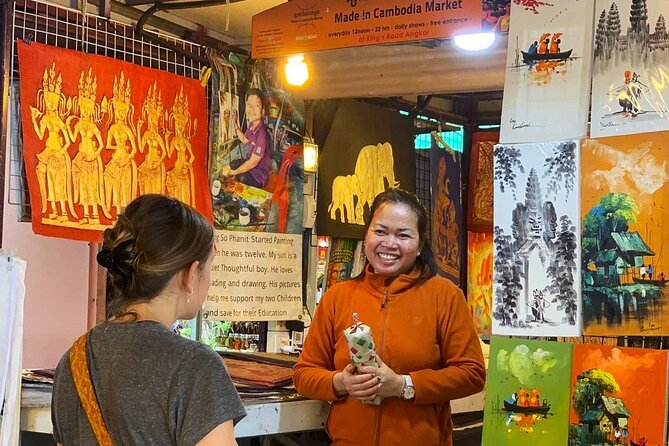
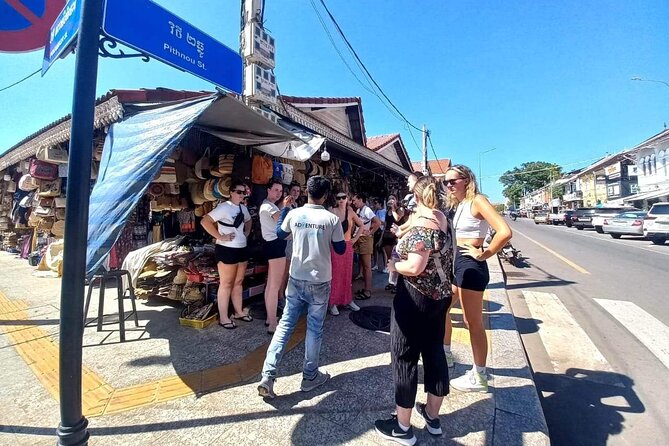
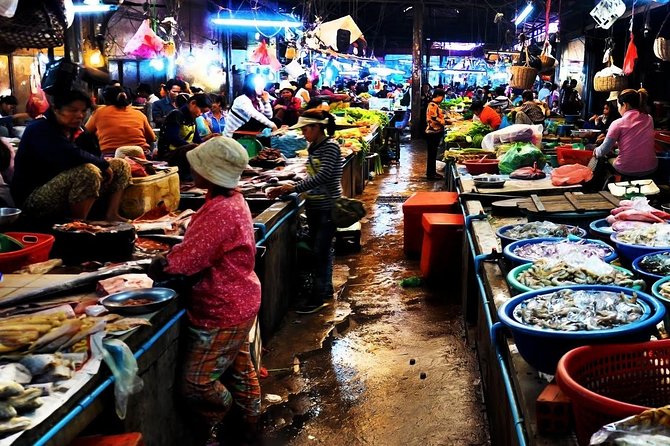
Psar Chas, or Old Market, is the city’s central market hub. Its stalls cover a wide range of goods, including clothing, souvenirs, fresh produce, and food.
This is where the walk becomes especially practical. You see what people buy, how food is displayed, and how the market serves more than the tourist trade. A guide may point out local fruits, fish, other products, and ways they are prepared. That kind of explanation is difficult to get from a self-guided stroll.
The market is also a place to ask questions. You can check what a food is, learn which items are used in Cambodian cooking, and get advice on gifts. You still need to make your own choices about hygiene, prices, and purchases. The tour does not include food or drinks, so any tasting or buying comes from your own budget.
Do not expect a slow shopping session with time to inspect every stall. Two hours must cover several parts of the center. Think of Psar Chas as an introduction, then return later if you want to shop or eat.
I find this more useful than a market visit focused only on souvenirs. The fresh produce and food stalls show a side of Siem Reap that is easy to miss if you stay on the main tourist streets. Your guide can also explain everyday matters such as local houses, road crossing, cuisine, and how people live.
Pub Street by day, evening advice for later
Pub Street is usually associated with nighttime entertainment, but seeing it during the day gives you a clearer look at its layout. The tour uses the area as a final orientation point and gives you tips for returning after dark.
That is a smart use of the stop. At night, the noise, lights, restaurants, and crowds can make the area feel less straightforward. Seeing it in daylight lets you identify the main routes and decide if the atmosphere suits you before committing to an evening there.
Your guide may suggest places for food or entertainment, based on what you ask about. One guide helped a couple find a theater, and another pointed out local cuisine options. These small conversations can be more valuable than a fixed list of recommendations because you can explain your budget and interests.
Pub Street is also a useful final stop because it links several parts of the central area. From here, you can continue to dinner, return to your hotel, or explore nearby shops. The tour does not include food, drinks, or evening activities, so treat the advice as orientation rather than a package.
If you prefer quiet streets and local neighborhoods, Pub Street may be the least appealing part. If you want to understand Siem Reap’s tourist center and plan a night out, it earns its place on the route.
What the guides add to the walk
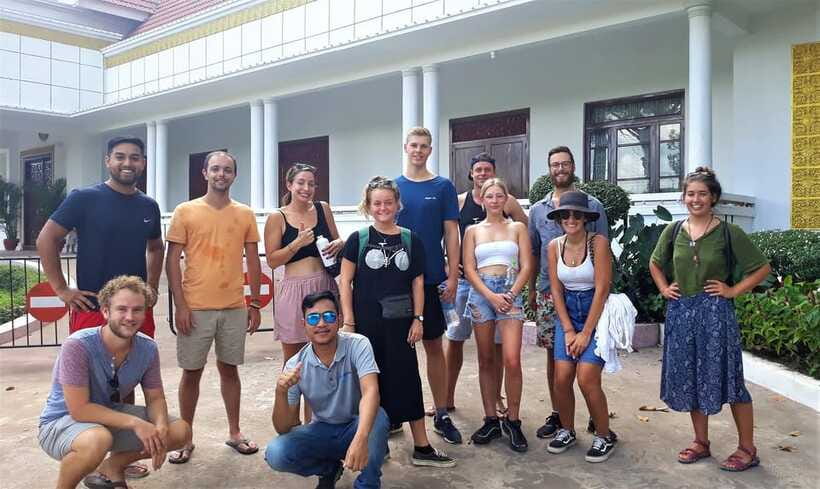
The guide makes or breaks a city walk, and this experience depends heavily on who leads your group. Names that appear across the guide team include Tea or Tee, Sai, Ty, Chek, Ati, and Banana.
The strongest pattern is clear English and a relaxed, friendly manner. Guides explain Cambodian culture and history, answer questions without making the walk feel like a lecture, and often add family stories or views about life in Cambodia today.
That personal angle is valuable. You may hear about food, religion, daily routines, local architecture, road crossing, houses, and the way Siem Reap has developed. These details connect the formal stops to real life.
The best guides also adjust their pace. Several walks were described as easy and well timed, even in hot weather. One guide balanced information with casual conversation, while others used humor to keep the group engaged. If you are a solo visitor, a small group gives you an easy way to meet people while still having space to ask questions.
Guide names and schedules can change, so you should not book solely for one specific person. Instead, consider the local English-speaking guide as the main feature. The experience works when you take part, ask questions, and tell the guide what you want to understand.
Timing, heat, and comfort
Two hours is a good length for this route. It is long enough to cover the royal area, Kandal Village, pagoda, market, and Pub Street without taking over your day.
A few people have enjoyed longer walks when the group had time, but you should plan around the stated two-hour duration. If you have an afternoon temple visit, a boat trip, or evening entertainment, the short format is easy to fit in.
Heat is the main physical consideration. The walk is described as manageable, with some sections in shade, but Siem Reap can still feel hot. Drink water before you begin, protect your head and skin, and wear shoes suitable for walking.
There is no stated restroom break. Plan ahead before meeting the guide, especially if you are traveling with children or prefer regular facilities. Food and drinks are not included, and personal expenses remain yours.
The tour is not presented as a specialist accessible route, and no accessibility details are provided. If you have mobility concerns, ask before booking so you can confirm whether the route suits you.
Who should book this Siem Reap walk
I would choose this tour if you have just arrived and want to understand the center before planning the rest of your stay. It is also a good fit for solo visitors, couples, and anyone who prefers local explanation to a silent walk with a map.
It suits you especially well if you want:
- A short introduction before visiting Angkor
- Practical market and food information
- A closer look at Buddhist daily life
- A small group rather than a large coach
- A local guide who can answer personal questions
- Help finding restaurants, shopping areas, or evening entertainment
I would not choose it if you want extensive time inside the Royal Residence, a full market shopping trip, or a detailed archaeological tour. It also may not suit you on the hottest part of the day if you dislike walking in the sun.
The free cancellation policy allows cancellation up to 24 hours before the start for a full refund, and you can reserve now and pay later. Those terms make it easier to place the walk early in your schedule while keeping plans flexible.
Should you book it?
At $6, this is an easy recommendation for most first-time visitors to Siem Reap. You get a small-group walk, a local English-speaking guide, a pagoda visit, market context, royal sights, colonial streets, and useful evening advice.
Book it for orientation and cultural context, not for grand monuments or a full-day adventure. Arrive at Damnak Supermarket early, wear comfortable shoes, carry sun protection, and be ready to ask questions. If you want to get your bearings fast and see how Siem Reap works beyond the temple circuit, this modest walk earns its place on your first or second day.
FAQ
How long does the Siem Reap City Walking Tour last?
The stated duration is two hours. Some walks may run longer if the group has time and the guide chooses not to rush, but you should plan around the advertised two-hour schedule.
How much does the tour cost?
The price is $6 per person.
Where does the tour meet?
Meet outside Damnak Supermarket at the corner of Wat Bo Road and 7 Makara Street, also known as High School Road.
How early should I arrive?
You should arrive five minutes before the tour starts.
Is hotel pickup included?
No. Hotel pickup is not included, so you need to make your own way to the meeting point.
What languages are available?
The live guide service is available in English and Cambodian.
How large is the group?
The tour is limited to 10 participants.
What should I bring?
Bring comfortable shoes. A hat, sunglasses, and sunscreen are also recommended for sun protection.
Do I need to remove my shoes?
Yes. You must remove your shoes when entering the pagodas.
Are food and drinks included?
No. Food and drinks are not included, and personal expenses are also separate.
Can I cancel the booking?
You can cancel up to 24 hours in advance for a full refund. You can also reserve now and pay later.
Just added around Siem Reap
- Ultimate Sunrise to Angkor Wat, Angkor Thom and Bayon Temple★ 5.0 · 3 reviews
- Twilight Tastes of Siem Reap Include Dinner★ 5.0 · 13 reviews
- Trekking Tour at Phnom Kulen National Park from Siem Reap★ 5.0 · 3 reviews
- Full-Day Private Tour of Angkor Wat with Pick Up★ 5.0 · 12 reviews
- Private Day Trip to Angkor Temples with Expert Guide★ 5.0 · 4 reviews
- Waterfall & River of 1000 Siva Linga- Kulen Mountain Private Tour★ 5.0 · 3 reviews
- Professional Photo Shoot in Angkor Archaeological Park, Siem Reap★ 5.0 · 42 reviews
- Ultimate Siem Reap Food Tour by Tuk Tuk – 20 Tastings, 8 Stops★ 5.0 · 13 reviews
City Tours, compared.
Phnom Penh City Tour, Silver Pagoda, Genocide Museum, Killing Fields
Read our review →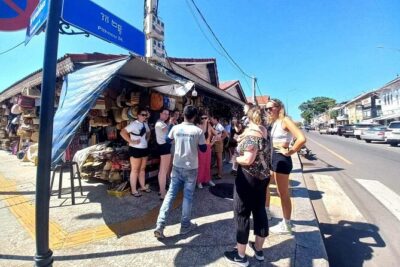
Siem Reap City Hidden Gems (Private Guided Tour)
Read our review →
Siem Reap City to Siem Reap Angkor Airport by Shuttle Bus
Read our review →
Ho Chi Minh City: 2-Day Bike & Kayak Mekong Delta Tour
Read our review →
Private Airport Transfer: Siem Reap Angkor (SAI) ↔ City Hotels
Read our review →
Browse the lists this tour appears in