
Reviewed · CITY TOURS
Siem Reap City Hidden Gems (Private Guided Tour)
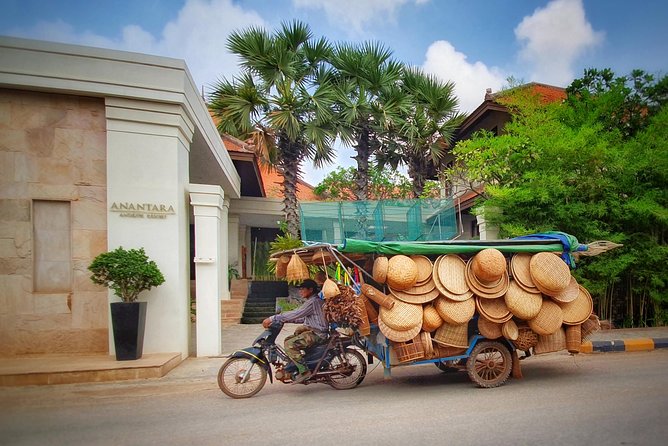
Siem Reap’s best-known sights are made of sandstone, but city life is found in markets, monasteries, shrines, workshops, and streets away from the temple circuit. This private tour gives you that broader view by tuk-tuk, with time for a local snack, a monk-centered monastery visit, and an old riverside temple most short city tours skip.
I like the private format, since your guide can answer questions and adjust the pace. I also like the stop at Satcha, where you can see Cambodian artists working with stone, wood, silk, natural fibers, and paint. The main consideration is that the tour covers many places quickly, and some stops may feel modest if you expect grand temple ruins throughout.
Key points before you book
- A city orientation by tuk-tuk: Cover markets, monasteries, parks, shrines, and craft workshops without spending the whole morning on foot.
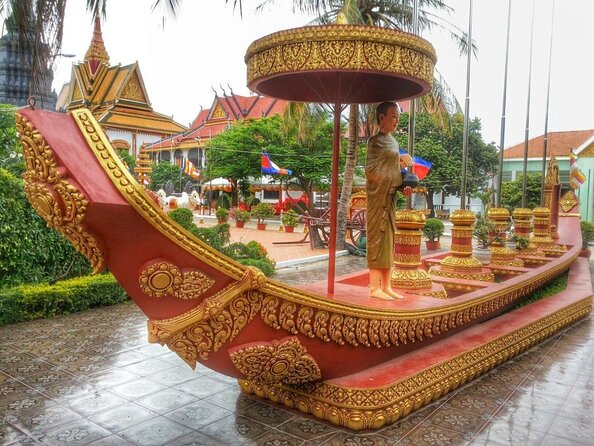
- Two very different religious stops: Wat Preah Prom Rath introduces present-day monastic life, while Wat Preah Enkosey includes an old 10th-century temple building.
- The APOPO visit costs extra: Allow an additional admission fee, listed as $10 per person in the fee details, though another tour note says $8.
- Satcha is a strong stop for craft lovers: Watch demonstrations of carving, weaving, painting, and silk work.
- A private English-speaking guide is included: Guides named in past bookings include Nak, Ran, Lux, Raj, and Sok Win, though your assigned guide may differ.
- Morning departures can include lunch: An 8 or 9 a.m. start may be followed by lunch at Neary Khmer Restaurant.
Why this is a useful first look at Siem Reap
I would treat this as a city introduction, not a replacement for Angkor Wat. The tour is designed to show how Siem Reap works today, with links to older royal, religious, and artistic traditions along the way.
That makes it a sensible choice near the beginning of a stay. You can ask about local customs, food, temples, shopping, and transport, then use those answers during the rest of your time in Cambodia. One past guest even asked to stop at a local supermarket to learn about tropical fruits and vegetables, an example of how the private setup can respond to your interests.
The price is $39 per person. For a private experience lasting about 3 to 4 hours, that is reasonable if you value door-to-door movement, a guide, bottled water, and the ability to ask plenty of questions. It is less compelling if you only want major monuments, since several stops are short and the grandest Angkor sites are not part of this route.
The tour includes an English-speaking local guide and tuk-tuk driver. Pickup is offered, and the activity returns to the meeting point area. A mobile ticket and group discounts are also listed.
A few more Siem Reap trips to weigh up
- Full-Day Angkor Wat Sunrise Private Tour with Guide from Siem Reap
★ 5.0 · 2,920 reviews - Siem Reap: Angkor Wat Private Tuk-Tuk Tour
★ 4.9 · 2,222 reviews - Angkor Wat Private Day Tour from Siem Reap
★ 5.0 · 834 reviews
Starting at Café Amazon Psa Chas
The meeting begins at Café Amazon Psa Chas, near the Old Market area. The opening ten minutes are used for introductions and a basic explanation of Siem Reap.
That short briefing matters more than it sounds. Siem Reap can seem like a collection of hotels, restaurants, tuk-tuks, and temple excursions until someone explains how the market district, river, old royal area, religious sites, and newer craft centers fit together.
Because the experience is private, this is a good moment to tell your guide what you want from the morning. If you want more local life, ask for extra time at the market. If art interests you, protect time for Satcha. If the mine-detecting rats are a priority, say so before the route begins.
Psar Chaa and the daily market
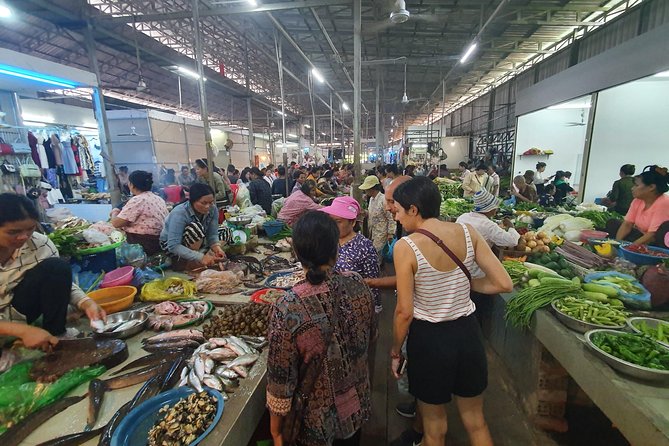
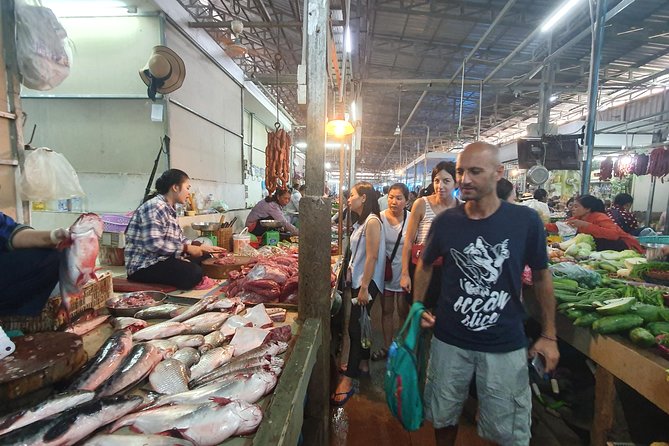
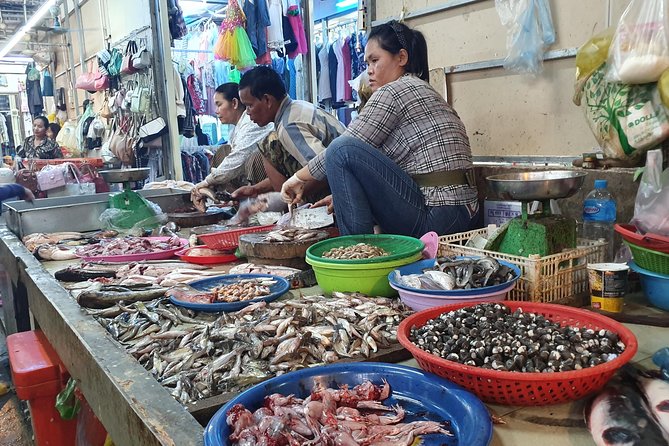
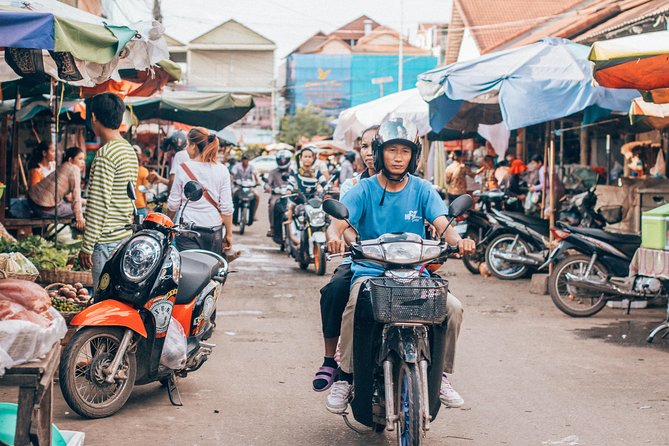
The Old Market, or Psar Chaa, is the most immediate way to see ordinary commerce in central Siem Reap. You walk inside and around the market for about 30 minutes, observing how people sell food, produce, souvenirs, and household goods.
The useful part is not simply looking at stalls. Your guide can explain how the market differs from what you know at home, how local vendors make a living, and what foods are common in Cambodian cooking. The tour also includes a chance to try traditional street snacks and desserts, which gives the stop a more personal purpose than a quick pass through.
Keep your expectations measured. This is a working market in a tourist district, so it is not an untouched village market. Still, it provides a quick lesson in shopping and eating patterns, and the private format lets you stop to ask about something unfamiliar.
The market is also a practical place to sharpen your senses before later stops. You begin to recognize the relationship between food, religion, craft, and family life that the guide explains elsewhere.
Wat Preah Prom Rath and the life of a monastery
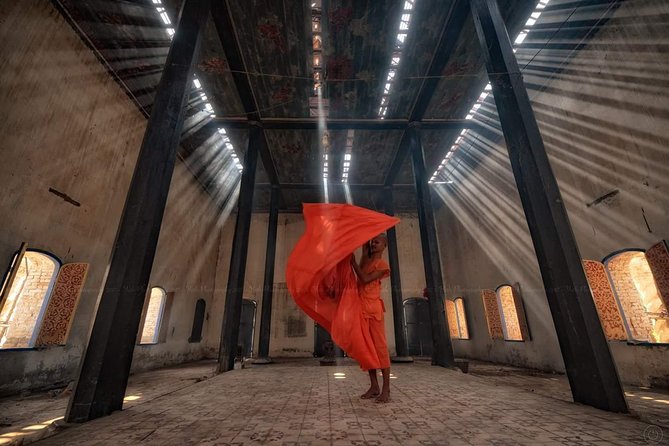
From the Old Market, the route continues to Wat Preah Prom Rath, described as one of the oldest monasteries in town and dated to the 14th century. You spend about 30 minutes here learning about monk life, religious practice, and the role of ritual in Cambodian culture.
This stop adds needed context to the temples. At Angkor, it is easy to focus on carvings and grand stone buildings. At a working monastery, you get a better sense of how Buddhism remains part of daily life.
The guide may explain temple art and Buddhist teachings as you look around. Ran, one guide praised for his explanations, used temple imagery to describe the stages of becoming Buddha. That kind of conversation is where this tour can be strongest, especially if you ask direct questions rather than simply following the route.
Dress and behavior should be respectful at religious sites. The supplied details do not specify a formal dress code, but modest clothing is the sensible choice for a monastery. Move quietly and follow your guide’s instructions around worship spaces and monks.
Same country, a completely different kind of day:
- Angkor Wat Sunrise or Sunset Tour with Guide from Siem Reap
★ 5.0 · 12,109 reviews - Siem Reap: Angkor Wat: Small-Group Sunrise or Sunset Tour
★ 5.0 · 9,444 reviews - From Siem Reap: Kampong Phluk Floating Village Tour by Boat
★ 4.9 · 6,979 reviews - Sunset tour of Kampong Phluk stilts home village on the Tonle Sap
★ 5.0 · 4,865 reviews
The Royal Residence, shrine, park, and flying bats
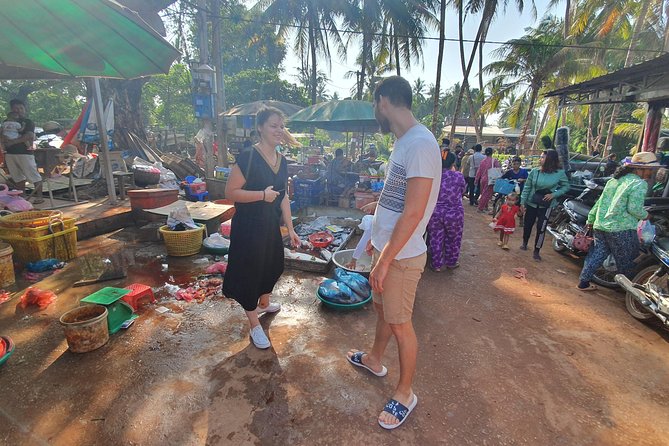
The next stop lasts about 25 minutes and combines several small points of interest: the area around the former royal residence, a local shrine, a park, and a quieter residential area.
The royal residence itself is not presented as a long interior tour. Think of this part as an outdoor look at the civic center and the way religious spaces fit into the city. The shrine offers a chance to see local devotional practice, while the park is known for its large bats.
This section may appeal most to people who like city texture rather than formal attractions. You might see a quieter side of Siem Reap, away from the restaurant streets and market traffic. The residential lanes also help explain why a tuk-tuk is useful: you can cover disconnected areas without turning the tour into a long, hot walk.
On the other hand, this is one of the stops most likely to feel ordinary if you want a major sight at every turn. The value comes from the guide’s explanation and the sequence of small observations, not from a single headline attraction.
Wat Preah Enkosey and the 10th-century temple
Wat Preah Enkosey is the route’s older temple stop, with a 10th-century building near the riverside. The visit lasts around 25 minutes.
This is the kind of place that can be easy to miss when your schedule is built around Angkor Wat, Bayon, and Ta Prohm. It gives you an example of an older religious structure within the city area, rather than requiring a full day outside town.
Do not compare it directly with the huge Angkor monuments. The appeal here is scale and setting. You see an old temple element beside the river, then return to the present-day city instead of spending hours moving between distant ruins.
The short timing also tells you how to plan your expectations. You will get an introduction and a chance to look around, not an extended archaeological study. If old architecture is your main interest, tell the guide early and ask how much time can be assigned here.
APOPO and Cambodia’s mine-detecting rats
The APOPO Visitor Center is the most unusual stop on the route, with about 40 minutes set aside. The center trains rats to detect landmines, and the visit explains how these animals help identify dangerous explosives.
Several people who enjoyed this tour singled out the Hero Rats program as the most memorable part. That makes sense: it connects Cambodia’s recent past with a practical effort happening now, and it is unlike the markets and temples elsewhere on the route.
There is an important cost detail. The tour price does not clearly settle the APOPO admission amount: the fee information says $10 per person, while the stop description says $8. Treat the center as an optional extra and confirm the current fee when booking or before departure.
The stop may also affect your sense of value. If you are interested in Cambodia’s postwar story, mine clearance, or animal training, the extra charge is likely worthwhile. If you want only religious and cultural sights, you may prefer to skip it or ask whether the schedule can give more time to the monasteries and craft center.
Satcha’s workshops and Cambodian craft
Satcha, the Cambodian Handicraft Center, receives about 30 minutes and is one of the most useful stops for anyone who wants to understand local making traditions.
The center presents workshops in stone carving, wood carving, natural-fiber weaving, painting, and silk weaving. You can see how raw materials become finished objects, rather than encountering only polished goods in a shop.
The purpose is also practical. Satcha supports local craftsmanship and aims to create work opportunities through Cambodian production. If you want souvenirs, this is a better setting for learning what you are buying and how it was made.
I would save questions for this stop. Ask about the materials, the time needed to make an item, and which techniques are traditional. One past guest particularly enjoyed seeing artists create work on the spot, and that hands-on element gives Satcha more value than a standard retail stop.
Still, remember that this is a craft center, so shopping may be part of the experience. You are not required to buy anything, but some people may feel the stop is more commercial than the monasteries or market.
Lunch at Neary Khmer Restaurant
If you start around 8 or 9 a.m., the schedule may include lunch at Neary Khmer Restaurant before you return to your hotel or meeting point. About 45 minutes is allocated for this part.
Lunch is not automatic for every departure. The information says you can choose to eat at the restaurant or make your own lunch arrangements. Ask your guide at the start if food is important to your plan.
This flexibility is useful because a 3 to 4 hour tour can stretch when lunch is included. It can also turn a morning orientation into a more relaxed half-day outing. One past guest praised a guide’s restaurant recommendation, but you should still tell the guide about your timing and preferences.
Bottled water is included. Food beyond the stated lunch arrangement is not clearly described, so bring enough money for snacks or confirm what you will pay at the restaurant.
How the private tuk-tuk format changes the day
The tuk-tuk is more than transport here. The stops are spread across central Siem Reap, and the open vehicle lets you see streets and neighborhoods between them.
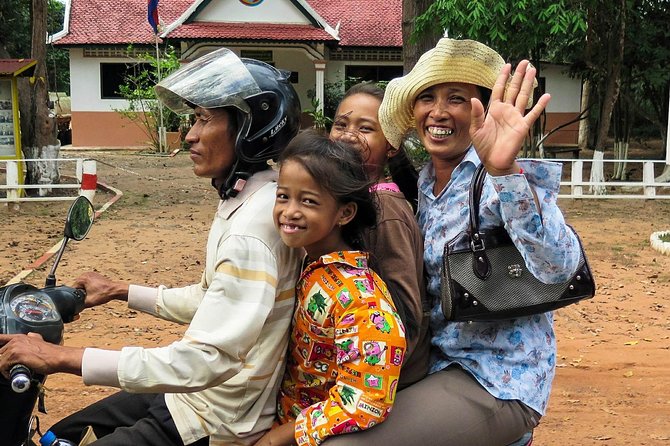
You also avoid the fixed rhythm of a large group. Guides such as Nak, Lux, Raj, Ran, and Sok Win were praised for clear English, punctuality, local explanations, and attention to the heat. Those details matter because a city tour works best when you can pause for a question or adjust your pace.
The tour is listed as private, meaning only your group participates. That is especially helpful for couples, families, and small groups with different interests. You can spend more time at Satcha, ask for a supermarket stop if the guide agrees, or focus your questions on Buddhism and Cambodian history.
The trade-off is that a private tour does not guarantee a long stop at every site. The route has eight points, including lunch if applicable, within a few hours. You are getting breadth rather than an exhaustive study of each location.
The experience is described as a gentle walking and sightseeing tour, but Cambodia’s heat still matters. The tuk-tuk reduces walking, and one guide was specifically praised for checking that the group was coping with the heat. Even so, drink the provided water and tell the guide if you need a slower pace.
Who gets the most from this tour
I would recommend this experience most strongly in three situations:
- You are new to Siem Reap and want help understanding the city before visiting Angkor.
- You have already seen the major temples and want markets, religious life, crafts, and recent Cambodian issues.
- You prefer private questions and flexible pacing to a large scheduled group.
It is also a good fit for people who enjoy small cultural details. The shrine, market, monk lifestyle, bats, local snacks, and weaving demonstrations may stay with you longer than another formal monument.
I would be more cautious if your main goal is a long temple visit. The tour includes an old 10th-century temple, but it is not an Angkor archaeological day. Some sections can feel ordinary, especially if you are expecting a grand sight at every stop.
The 96 percent recommendation rate and 4.8 rating from 105 reviews suggest a dependable experience, though the lower ratings point to the main weakness: some people wanted more of the city or found portions of the route routine. That is a fair warning, not a reason to dismiss the tour.
Price, timing, and cancellation advice
At $39 per person, the tour offers reasonable value for a private guide, tuk-tuk driver, bottled water, and several city stops. Group discounts may improve the price for larger parties.
Budget separately for APOPO. The supplied fee information gives two amounts, $8 and $10 per person, so confirm the current admission before you go. The stop is listed as admission included in one itinerary line, but the separate-fee note is clearer and should guide your planning.
The activity lasts roughly 3 to 4 hours. An 8 or 9 a.m. start may add lunch, which can make the outing longer. Confirmation is provided at booking, and free cancellation is available up to 24 hours before the start time. Changes or cancellations inside that window are not accepted for a refund.
Most people can participate, and the meeting point is near public transportation. The activity begins and ends in the Siem Reap meeting point area, with pickup offered.
Should you book the Siem Reap city tour?
Book it if you want a low-stress introduction to Siem Reap that connects markets, Buddhism, local craft, older buildings, and modern mine-clearance work. I especially like it as a first or second day activity, before you settle into a temple-heavy schedule.
If you book, make three requests clear at the start: how much time you want at Wat Preah Enkosey, whether you want the APOPO stop, and whether lunch should be included. Those choices will help the guide shape the morning around your interests.
Skip it if you want only major ruins or a tightly focused historical tour. For everyone else, the combination of private transport, an English-speaking guide, and lesser-known city stops makes this a practical way to see Siem Reap beyond its famous temple gates.
FAQ
How long does the Siem Reap City Hidden Gems tour last?
The tour lasts approximately 3 to 4 hours. A morning departure around 8 or 9 a.m. may include lunch, which can affect the total timing.
How much does the tour cost?
The listed price is $39 per person. Group discounts are available.
Is the tour private?
Yes. Only your group participates in the activity.
Is hotel pickup available?
Pickup is offered. The stated meeting location is in Krong Siem Reap, Cambodia, and the activity ends back at the meeting point.
What transportation is used?
The tour includes a tuk-tuk driver and moves between the city stops by tuk-tuk.
Is a guide included?
Yes. An English-speaking local guide is included. Guides named in past bookings include Nak, Ran, Lux, Raj, and Sok Win, but the assigned guide can vary.
Is APOPO included in the tour price?
The APOPO Visitor Center requires a separate admission fee. The supplied information lists both $8 and $10 per person, so confirm the current amount before visiting.
Does the tour include food?
Traditional snacks and desserts are part of the market experience. For morning departures, lunch at Neary Khmer Restaurant may be offered, or you can arrange lunch yourself.
Can I cancel for a refund?
You can cancel up to 24 hours before the experience begins for a full refund. Cancellations and changes made less than 24 hours before the start time are not accepted for a refund.
Just added around Siem Reap
- Ultimate Sunrise to Angkor Wat, Angkor Thom and Bayon Temple★ 5.0 · 3 reviews
- Twilight Tastes of Siem Reap Include Dinner★ 5.0 · 13 reviews
- Trekking Tour at Phnom Kulen National Park from Siem Reap★ 5.0 · 3 reviews
- Full-Day Private Tour of Angkor Wat with Pick Up★ 5.0 · 12 reviews
- Private Day Trip to Angkor Temples with Expert Guide★ 5.0 · 4 reviews
- Waterfall & River of 1000 Siva Linga- Kulen Mountain Private Tour★ 5.0 · 3 reviews
- Professional Photo Shoot in Angkor Archaeological Park, Siem Reap★ 5.0 · 42 reviews
- Siem Reap City Tour with War Museum and Killing Field★ 5.0 · 27 reviews
City Tours, compared.
Phnom Penh City Tour, Silver Pagoda, Genocide Museum, Killing Fields
Read our review →
Siem Reap City to Siem Reap Angkor Airport by Shuttle Bus
Read our review →
Ho Chi Minh City: 2-Day Bike & Kayak Mekong Delta Tour
Read our review →
Private Airport Transfer: Siem Reap Angkor (SAI) ↔ City Hotels
Read our review →
Browse the lists this tour appears in