
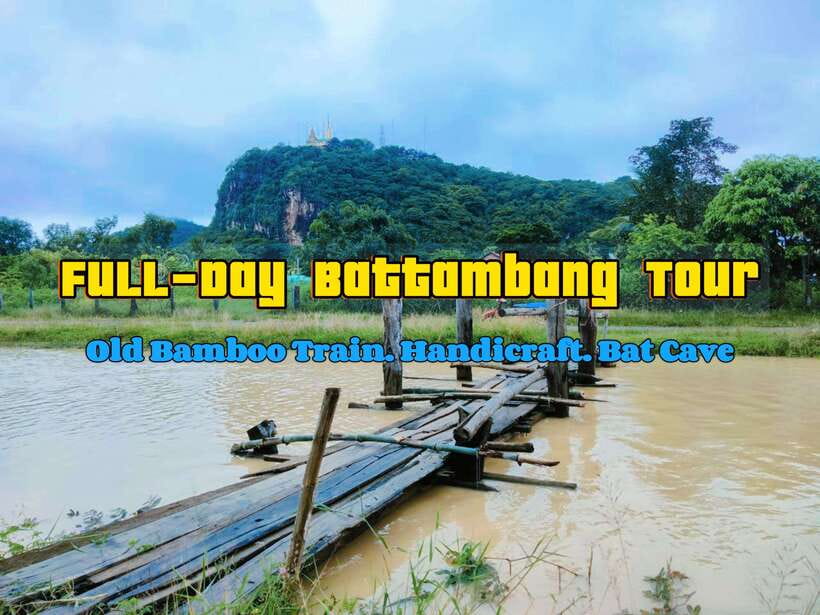
Reviewed · BAMBOO TRAIN TOURS
Full-day: Handicraft, Bamboo train, Killing cave, Bat Cave
Battambang’s best day out is not only about temples. It is a moving tour through rice paper kitchens, prahok markets, village farms, suspension bridges, and the old railway line, ending with thousands of bats pouring from Phnom Sampau at dusk. The local food stops make this feel like daily Cambodian life rather than a quick list of monuments.
I like the way the guides, including David and Kim, leave room for spontaneous stops and explain what you are seeing in plain English. I also like the mix of small-scale village visits and major sights, from bamboo sticky rice and rice wine to the Killing Cave and Ek Phnom Temple.
The main drawback is the pace. Ten hours in a tuk tuk, with walking at temples and Phnom Sampau, makes for a long, hot day. Lunch is not included, and the bamboo train costs extra, so you should bring cash and wear proper shoes.
Key points to know before you book
- Local food comes first: See rice paper, spring rolls, dried bananas, bamboo sticky rice, rice wine, rice noodles, and the Khmer prahok market.
- The history is serious: Wat Samrong Knong’s Well of Shadows and Phnom Sampau’s Killing Cave explain some of Cambodia’s darkest years.
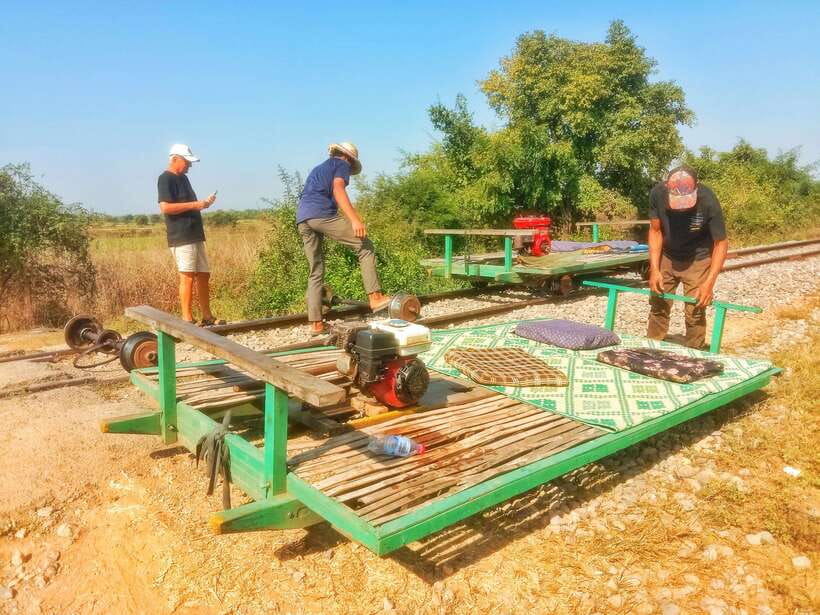
- The bamboo train is an extra-cost ride: The train fee is listed as $5 per person, separate from the $15 tour price.
- The final sight is timed well: The Bat Cave visit takes place before sunset, when thousands of bats fly from the mountain.
- This is a private tour: Pickup and drop-off are provided in Battambang, with an English-speaking guide and tuk tuk transport.
- Bring more than a camera: Sunscreen, hiking shoes, cash, and patience for a full day are all useful.
A food-focused start in Battambang
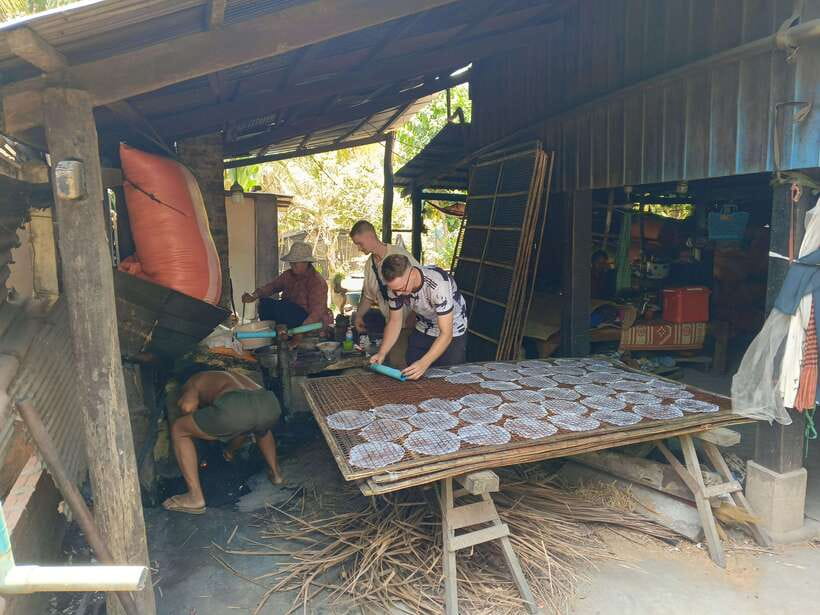
The morning begins with pickup in Krong Battambang. The tour then heads into the countryside and local food stops, where you can see rice paper being made and learn how familiar Cambodian snacks are produced.
Rice paper is used for spring rolls, and the stop gives you a better sense of the work behind a dish that can seem simple on a restaurant plate. You also get to see or taste dried bananas, bamboo sticky rice, rice noodles, and rice wine. The point is not just sampling. Your guide explains how these foods fit into everyday life and local trade.
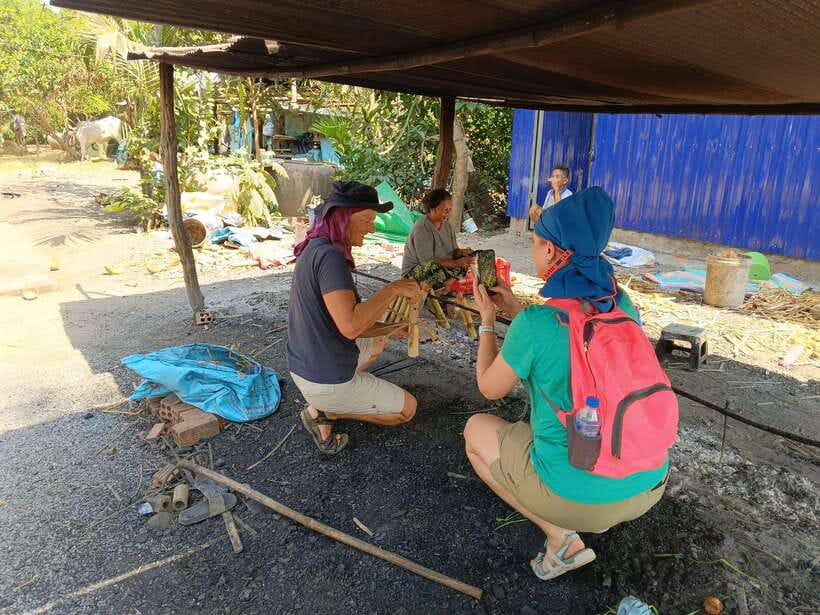
Bamboo sticky rice is especially interesting because it shows how practical Cambodian cooking can be. Sticky rice is packed into bamboo and cooked, creating a portable snack with a very different feel from a formal meal. The rice wine visit adds another side of village production, though alcohol is not allowed as part of the tour, so keep the stop focused on learning and tasting only what is offered.
The Khmer prahok market is less polished than a tourist attraction, and that is exactly why it matters. Prahok is a strong-smelling fermented fish paste used in Cambodian cooking. If you are sensitive to powerful smells, this stop may test you, but it gives you a more honest look at local food habits than a staged cooking demonstration.
You may also visit a restaurant that prepares rice paper and spring rolls. Snacks and tastings are included, but meals are not, so do not treat the included food as a full breakfast or lunch. The guides can recommend places for lunch and dinner, which helps when the day is already packed.
More Bamboo Train Tours in Battambang
- Battambang: Tuk-Tuk, Bamboo Train, Killing/Bat Caves, Sunset
★ 4.9 · 1,436 reviews - Afternoon tour by tuk tuk to bamboo train,bat cave,killing cave,countryside.
★ 5.0 · 344 reviews - Battambang: Bamboo Train, Bat Cave, Killing Cave by Tuk Tuk
★ 5.0 · 182 reviews
Wat Samrong Knong and the Well of Shadows
Wat Samrong Knong brings the tour into Cambodia’s recent past. The temple area includes the Well of Shadows, a memorial connected with the Khmer Rouge period.
This is a place to slow down. The subject is painful, and the memorial asks you to think about the people who suffered rather than rush from one photo stop to the next. Your guide can provide context about the Khmer Rouge and help connect the site to Cambodia’s wider story.
The temple itself also offers a chance to learn about Buddhism in Cambodia. You will visit pagodas and hear about the religion that shapes much of daily life, public ceremonies, art, and village customs.
The tour information allows a substantial amount of time here, but the day includes several long stops. Ask your guide early in the morning how the timing will work if you want more time at the memorial or temple. The itinerary also describes some portions as bike tours, while the included transport is a tuk tuk. Confirm the exact transport arrangement when booking, especially if you have planned the day around cycling.
From the prahok market to the rice fields
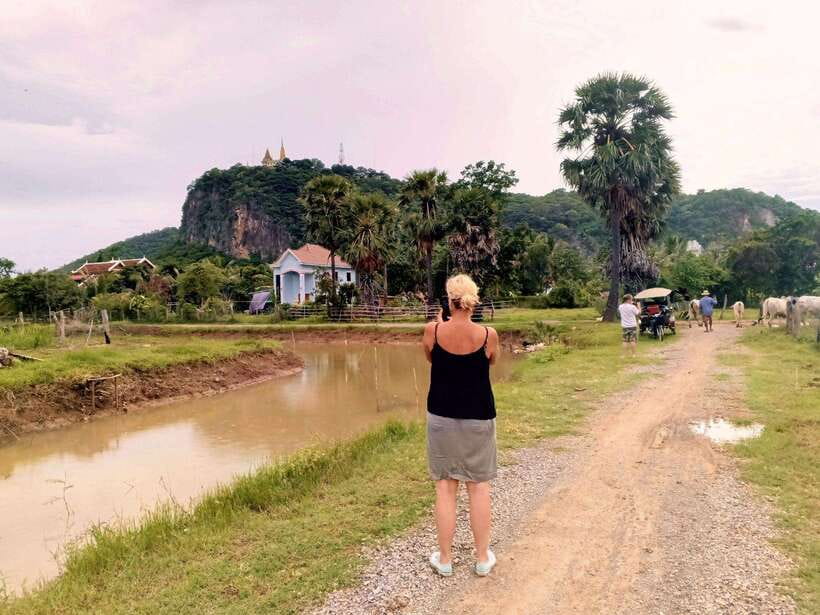
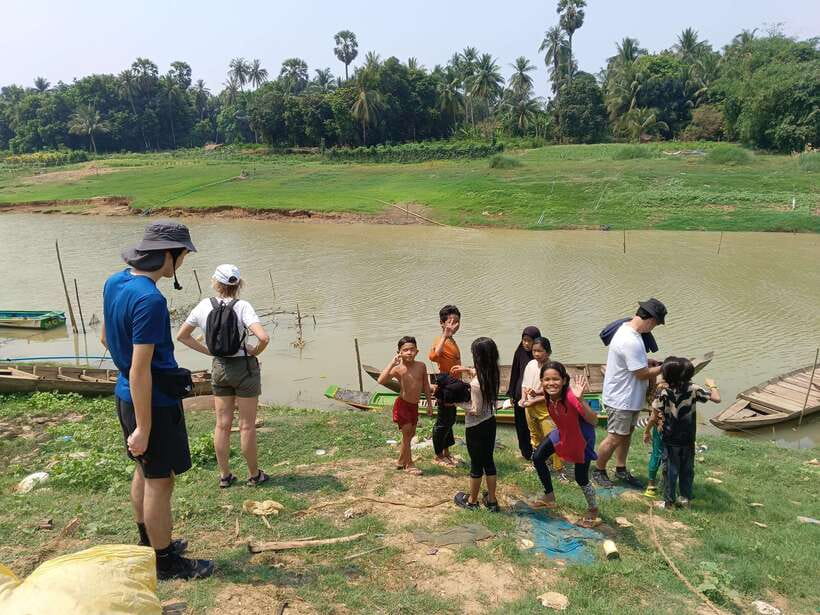
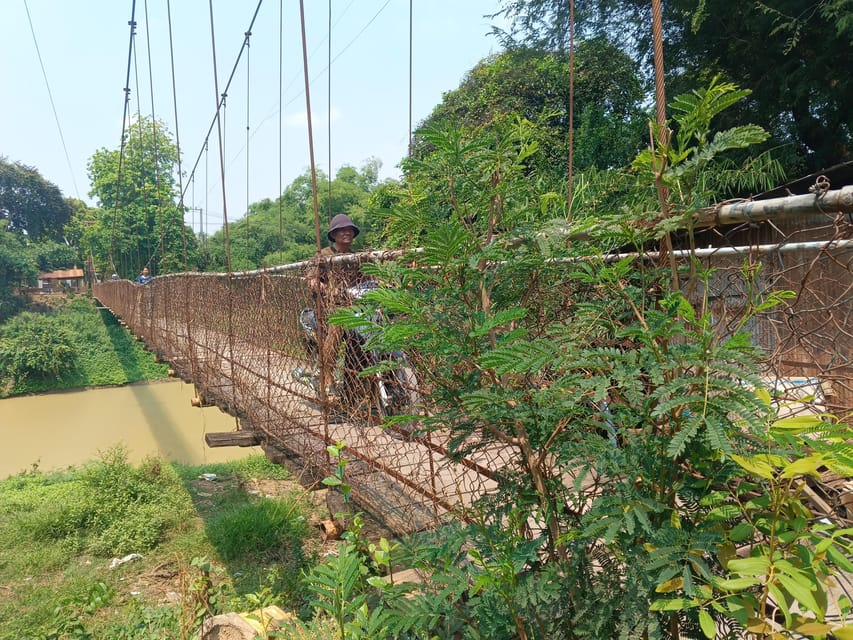
Between the main landmarks, the route passes through rural areas around Battambang. You may stop at plantation farms, talk with farmers, and see village life along the Sangke River.
This is one of the strongest parts of the day because it leaves room for ordinary scenes. A suspension bridge, a pagoda, a Cham village, and people working around farms can tell you more about the region than another grand monument. You are not simply passing through countryside in a vehicle. The guide can explain what you are looking at and stop when something catches your interest.
David is described as friendly and open to requests, while Kim is praised for his enthusiasm and clear explanations. One guide may be joined by his brother during the afternoon, adding a family touch to the private tour. Guide quality matters here because the rural stops do not come with large signs or formal presentations. Much of their value comes from the person interpreting them for you.
The Sangke River portion includes suspension bridges and contact with farming communities. These are practical places, not designed viewing platforms, so expect a more basic setting. Wear shoes that can handle uneven ground, and keep sunscreen nearby. The tour provides unlimited mineral water and cold towels, a useful comfort in Battambang’s heat.
Ek Phnom Temple on the north side
Wat Ek Phnom is the final major landmark on the north side before the route returns to Battambang city. The temple visit adds an older layer to a day that has already covered food, Buddhism, and modern Cambodian history.
The stop is included in a long morning or midday sequence, with time listed for visiting and travel. You can expect another opportunity to look at temple remains and learn from the guide rather than simply walk around alone.
The tradeoff is that the tour covers a lot of ground. If you want a slow archaeological visit, this may feel quick compared with a private temple day built around one site. If you want variety, Ek Phnom works well because it breaks up the food and village stops before lunch and the afternoon mountain visit.
After Ek Phnom, the tuk tuk returns to Battambang. This is a sensible point for lunch, but remember that lunch is not part of the $15 price. The guide can suggest where to eat, and the timing may be late depending on how long you spend at earlier stops.
Same country, a completely different kind of day:
- Battambang Tuk Tuk tour: Bambootrain, Killing & Bat Caves,Sunset
★ 5.0 · 799 reviews - Local Livelihood Half Day Bike Tour in Battambang
★ 5.0 · 287 reviews - Explore Battambang full day tour by Tuk Tuk (start from 9am-6:30pm)
★ 5.0 · 240 reviews - Full Day tour .City tour.Countryside.Bamboo Train.Secret Bat Cave
★ 5.0 · 178 reviews
Battambang’s colonial center and Ta Dambong Kro Aung
The city portion includes colonial buildings around the provincial hall and the Ta Dambong Kro Aung statue. These sights help you understand Battambang as more than a base for countryside trips.
The colonial structures give the city a different look from the rural villages and temples. The provincial hall is a useful reference point for Battambang’s civic center, while the statue connects with the local legend of Ta Dambong Kro Nhong, a key figure in the city’s identity.
This part is not presented as a long architectural walk. It is one element in a full circuit, so expect a brief introduction and time for photographs rather than an extended study of every building. Still, it adds welcome variety and gives you some city context before or after the quieter rural sections.
The tour is private, which makes these short city stops more useful. You can ask for extra explanation, request a photograph, or tell the guide if you prefer to move on. That flexibility is harder to find on a fixed group excursion.
Riding the original bamboo train
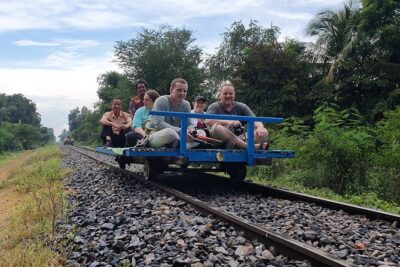
The original bamboo train is the day’s most playful stop. A simple bamboo platform, traditionally powered along the railway, carries you through the countryside. It is a modest attraction, but the ride is memorable because of its unusual design and open-air views.
The train fee is not included. The listed price is $5 per person, described as a fee per person, so confirm the current charge and payment method before you ride. Your total cost is therefore more than the advertised $15 if you choose to take the train.
Do not expect a luxury railway journey. The appeal is the basic setup, the unusual track experience, and the view as you move through the countryside. After the ride, the program continues to a village restaurant for a late lunch, also at your own expense.
The timing is important. By this point, you have already spent much of the day visiting food producers, markets, temples, and villages. If you are hungry, make sure you know when lunch is planned. Carrying cash for food is a simple way to avoid an awkward pause.
Phnom Sampau, the Monkey Forest, and the Killing Cave
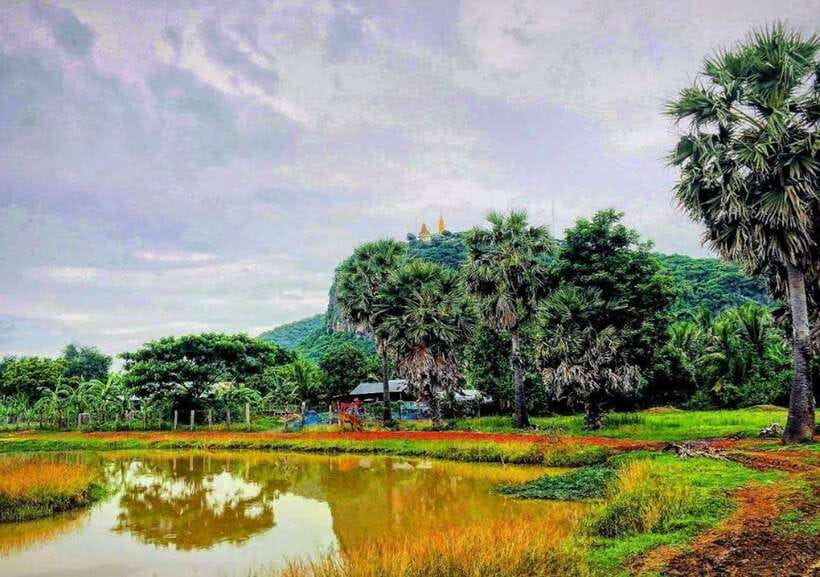
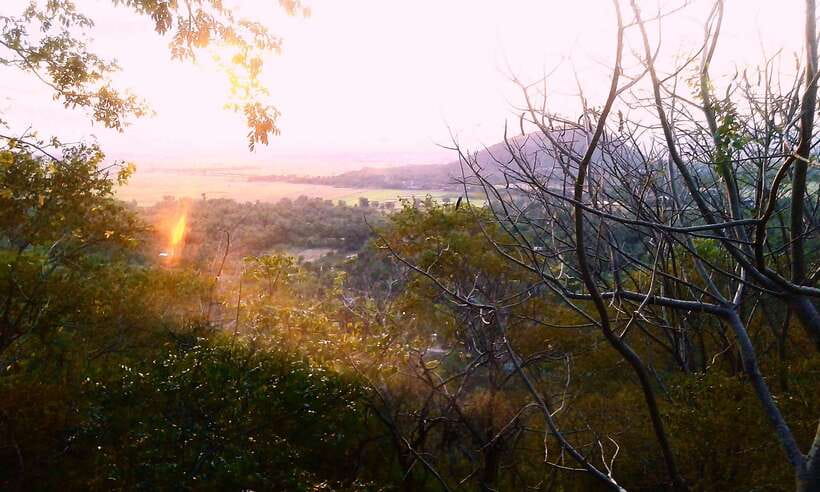
In the afternoon, the tuk tuk heads toward Phnom Sampau. The mountain area brings together religious sites, views across the surrounding countryside, a Monkey Forest, and the Killing Cave associated with the Khmer Rouge period.
The Killing Cave requires a respectful attitude. Like the Well of Shadows, it is a memorial site connected with mass suffering. The visit can be emotionally difficult, especially after you have already learned about the period at Wat Samrong Knong. That seriousness is part of the day’s value, but it also means this is not a light sightseeing loop.
The tour includes the entrance fee for the Killing Cave and Bat Cave. The ride up to the Killing Cave is not included, and walking is free. If you prefer to avoid the vehicle ride, be prepared for the walk and the mountain setting. The information provided does not give the length or difficulty of that walk, so ask your guide on the day.
You may also see the Golden Temple and shrines around Phnom Sampau. These religious sites contrast with the memorials and give the afternoon a broader view of the mountain. The area can involve walking and slopes, so hiking shoes are a sensible choice.
People with mobility impairments may find this part difficult. The tour is also not suitable for people with high blood pressure or those over 95 years old, according to the activity guidance. If you have a health concern, ask for details before booking rather than relying on the general tour description.
The Bat Cave at sunset
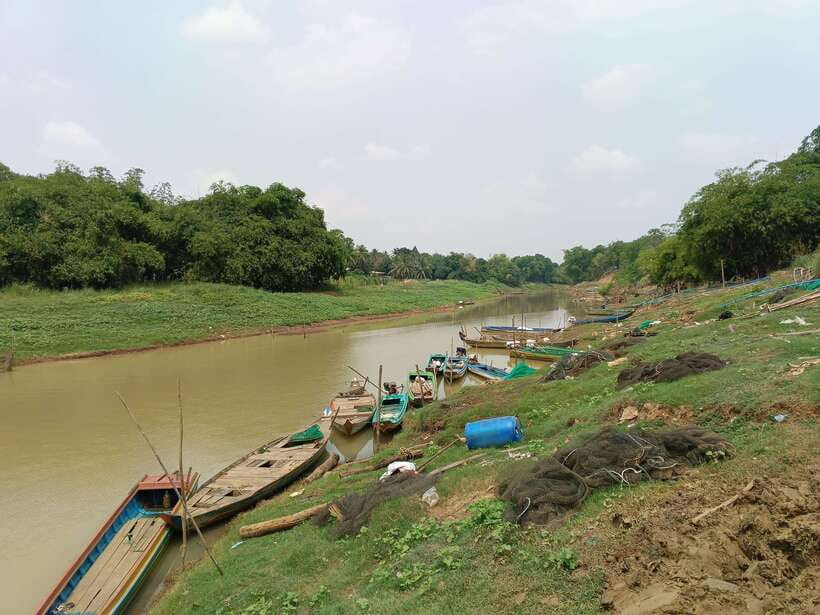
The final stop is the Bat Cave, timed before sunset. As dusk arrives, thousands of bats fly out from the opening in the mountainside in a long moving stream.
This is a strong ending because it requires no elaborate presentation. You simply wait, watch, and let the sight unfold. The best timing depends on the day, but the program is designed to finish around sunset.
Bring your camera, but do not let photography take over. The bats are the reward for waiting at the end of a long day, and the light changes quickly. Your guide can help position the visit within the wider Phnom Sampau area and manage the timing after the Killing Cave.
The Bat Cave fee is included, which makes the ending especially good value within the package. You get one of the area’s most distinctive sights without paying another admission fee at the final stop.
What the $15 price really covers
At $15 per person, this is an unusually full private day. The price includes hotel pickup and drop-off, tuk tuk transport, an English-speaking guide, unlimited mineral water, cold towels, local snacks and tastings, and the entrance fees for the Killing Cave and Bat Cave.
It does not include lunch, personal expenses, or the bamboo train. The separate train fee is listed as $5 per person. Add money for meals, drinks beyond the provided water, and any other purchases at stops.
The value comes from the number of different experiences packed into one day. You are not paying only for a vehicle to Phnom Sampau. You are also getting food production visits, a market, city sights, rural stops, temples, historical memorials, the bamboo train, and the bat flight.
There is a cost to that value: the day is long and busy. If you prefer a slow morning with one temple and a long lunch, this tour may feel too crowded. If you have only one full day in Battambang and want to see how the city connects with its surrounding villages, the price is strong.
Practical advice for a smoother day
Give the provider a clear pickup point, such as your hotel, guesthouse, or a named restaurant. Pickup and drop-off are included, but the location needs to be provided in advance.
Wear light clothing, sunscreen, and hiking shoes. The day combines tuk tuk travel, temple visits, village stops, and walking around Phnom Sampau. Bring cash for the bamboo train and meals.
Carry a camera, but also bring patience. The day depends partly on local stops and conversations, and the best moments may be an unscheduled pause at a farm, market, or village. David and Kim are both described as open to requests, so speak up if you want more time at a particular place.
The tour is a private group rather than a large shared excursion. That makes it easier to ask questions and adjust the pace, but it does not remove the physical demands of a 10-hour program.
Free cancellation is available up to 24 hours before the start for a full refund, and you can reserve now and pay later. Those terms are useful if your Battambang plans may shift.
Who should book this Battambang day?
Book it if you want food, village life, history, temples, and the bamboo train in one outing. You will get the most from it if you enjoy asking questions, tasting unfamiliar foods, and seeing ordinary places between the headline sights.
It suits first-time visitors who want a broad introduction to Battambang, as well as returning visitors who want more contact with the countryside. The private format is also helpful if you value a guide who can explain local customs and make spontaneous stops.
Skip it if you want a relaxed schedule, have difficulty walking or climbing, or prefer to avoid difficult Khmer Rouge memorial sites. You should also allow extra money for lunch and the bamboo train, since the $15 price is not all-inclusive.
For most active visitors with one spare day in Battambang, I would book it. The food stops, personal guiding, and Bat Cave finale give the day a clear sense of place, while the low price keeps the value high. Just start early, bring cash, and accept that a worthwhile day here is a long one.
FAQ
How long does the Battambang tour last?
The activity lasts 10 hours. Starting times depend on availability, so check the schedule when booking.
Where does pickup take place?
Pickup and drop-off are provided in Krong Battambang. You need to provide a hotel, guesthouse, restaurant, or another clear pickup location.
Is the tour private?
Yes. The group type is private, so you visit with your own group and an English-speaking live guide.
What transport is included?
Tuk tuk transportation is included. Some itinerary entries describe portions as bike tours, so confirm the exact arrangement with the provider before booking if this matters to you.
Is lunch included?
No. Meals are not included. Snacks and tastings of local food are included, and the guide can recommend places for lunch and dinner.
How much does the bamboo train cost?
The bamboo train is not included in the tour price. The listed fee is $5 per person. Confirm the current charge when you book or before the ride.
Are the Killing Cave and Bat Cave entrance fees included?
Yes. Entrance fees for both the Killing Cave and Bat Cave are included. The ride up to the Killing Cave is not included, and walking up is free.
What should I bring?
Bring a camera, hiking shoes, sunscreen, and cash. Mineral water and cold towels are provided, but you will need cash for meals, personal expenses, and the bamboo train.
More Train Experiences in Battambang
- AfternoonTour.Bamboo train.killing cave with Secret bat cave
★ 5.0 · 41 reviews - Full Day-Tour: Handicraft, Bamboo train, Killing cave. Bat cave
★ 5.0 · 29 reviews - Full day tour by bicycle & tuk tuk,bamboo train,bat cave,villages
★ 5.0 · 27 reviews - Afternoon tour to Original Bamboo train. Bat cave. Killing cave
★ 5.0 · 25 reviews
More Bat Cave Tours in Battambang
- Afternoon Tour: Bamboo Train, Killing Cave &Bat Cave
★ 5.0 · 73 reviews - Battambang: Bamboo Train, Bat Cave and Killing Cave Tour
★ 4.9 · 58 reviews - Afternoon Tour BambooTrain & Bat Cave
★ 5.0 · 57 reviews - A Day TukTuk Bambootrain, Banan, Killing & Bat Caves, Sunset
★ 4.9 · 48 reviews
Just added around Battambang
- Bamboo Train, Banann Temple, Fruit Bat, Bat Cave, Sunset★ 4.2 · 3 reviews
- Afternoon tour to Original Bamboo train. Bat cave. Killing cave★ 5.0 · 25 reviews
- Private Taxi Transfer Battambang from/to Phnom Penh★ 5.0 · 7 reviews
- Private Taxi Transfer From Battambang – Siem Reap City★ 5.0 · 4 reviews
- Afternoon Tour BambooTrain & Bat Cave★ 5.0 · 57 reviews
- Explore local livelihood & countryside (Half-Day Cycling Tour)★ 5.0 · 19 reviews
- Private Boat from Battambang to Siem Reap via Tonle Sap Lake★ 4.5 · 3 reviews
- Tuk Tuk Tour (Full-Day)★ 5.0 · 7 reviews
Bamboo Train Tours, compared.
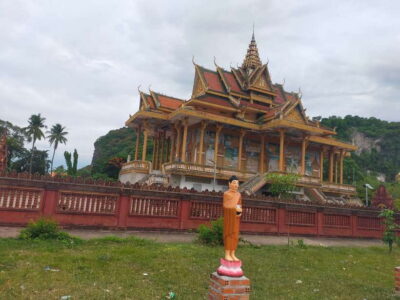
Tuk-Tuk, Bamboo Train, Killing/Bat Caves, Sunset
Read our review →
Afternoon tour by tuk tuk to bamboo train,bat cave,killing cave,countryside.
Read our review →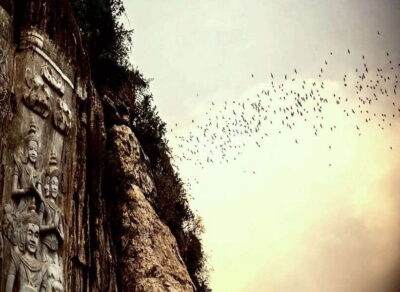
Battambang Full Day Tour from Siem Reap – Bamboo Train, Killing Cave & Sunset
Read our review →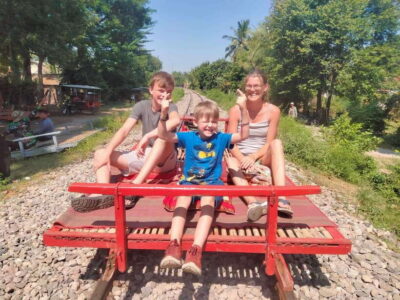
Afternoon Tour: Bamboo Train, Killing Cave &Bat Cave
Read our review →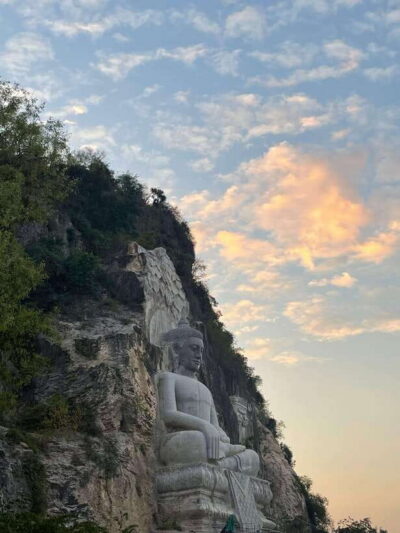
Full Day From Siem Reap – Bamboo Train, Killing Cave & Sunset
Read our review →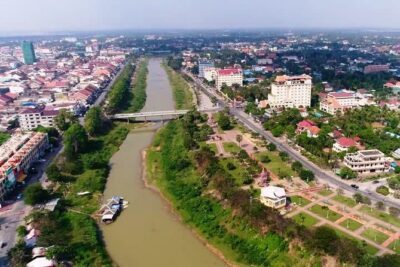
Battambang Day Trip from Siem Reap-Bamboo Train, Bats Cave
Read our review →Browse the lists this tour appears in