
Reviewed · BAT CAVE TOURS
A Day TukTuk Bambootrain, Banan, Killing & Bat Caves, Sunset
Battambang’s best day out ends with one of Cambodia’s great natural shows: millions of bats stream from Phnom Sampov as dusk falls, forming a dark ribbon across the sky. Before that, you ride the original bamboo train, climb 358 steps to Wat Banan, pass village farms, and face the painful story of the Khmer Rouge at the Killing Cave.
I like the mix of countryside, history, and wildlife, especially the chance to stop in small villages rather than race from one major sight to the next. I also like the guides’ personal touch. Samol is known for his jokes, magic tricks, photos, and lively explanations, while guides such as Jay and Uk Bon Thai bring their own local knowledge. The drawback is simple: this is a long, hot 11-hour day, and the pace can feel slow after Banan Temple.
Key points at a glance
- The bat flight is the finale: Arrive at Phnom Sampov in time to watch millions of wrinkle-lipped bats pour from the cave for more than 50 minutes.
- Wat Banan takes effort: The ancient temple sits above a 358-step staircase, but its five towers and hilltop views reward the climb.
- The bamboo train costs extra: The ride is not included in the $14 tour price, so budget another $5 per person.
- The history is serious: The Killing Cave presents the Khmer Rouge period directly and without softening its cruelty.
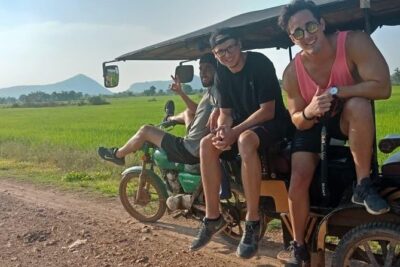
- Village stops add local detail: Fruit plantations, rice fields, a suspension bridge, farmers, and roadside food make the trip feel broader than a temple tour.
- Bring cash and water protection: Lunch and personal expenses are extra, and sunscreen, rain gear, and cash are listed as essentials.
Why this Battambang day trip works
This experience gives you a useful answer to a common Battambang problem: how do you see the city, countryside, temples, caves, and sunset without arranging five separate rides? For $14 per person, you get hotel pickup and drop-off within 5 kilometers of town, an English-speaking guide, entrance fees, bottled water, wet wipes, fruit salad, mountain transport, and donations.
That price is strong value, but it is not the full cost. The bamboo train adds $5 per person, lunch is separate, and you will want cash for drinks, snacks, and personal purchases. Even after those additions, the day remains inexpensive for the amount of ground covered.
The tour begins around 8:20 AM and runs for about 11 hours. That length matters. You are not getting a quick highlights loop. You are spending most of the day in a tuk-tuk, on foot, at temple steps, and outside in the heat. I would choose this trip if you want a full picture of Battambang and have only a short stay. If you prefer a slow morning and one major sight, it may feel overpacked.
More Bat Cave Tours in Battambang:
- Battambang: Tuk-Tuk, Bamboo Train, Killing/Bat Caves, Sunset
★ 4.9 · 1,436 reviews - Battambang Tuk Tuk tour: Bambootrain, Killing & Bat Caves,Sunset
★ 5.0 · 799 reviews - Afternoon tour by tuk tuk to bamboo train,bat cave,killing cave,countryside.
★ 5.0 · 344 reviews
Starting in Battambang with Ta Dambong Kranhoung
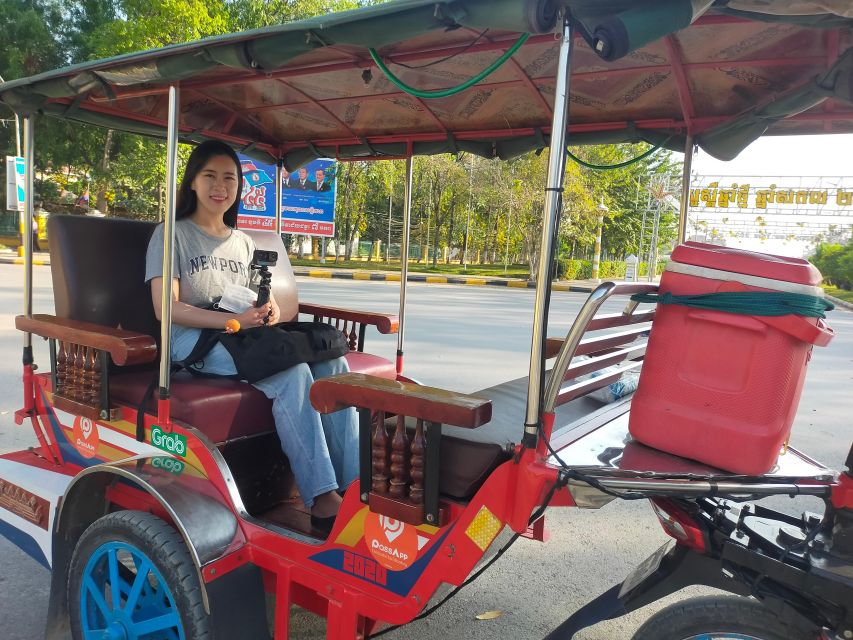
Your guide picks you up from your accommodation or a restaurant, then uses the ride into the day to explain Battambang and Cambodia. Expect stories about local agriculture, religion, culture, folk tales, and the city’s past rather than a silent transfer.
The opening city section includes historical buildings, the central market, the provincial hall, and Ta Dambong Kranhoung, the statue that acts as Battambang’s local symbol. This is a sensible beginning because it gives you basic bearings before heading into the countryside.
Samol is the guide most often named for this experience. His style is energetic and playful, with jokes, magic tricks, and plenty of photographs. Other named guides include Jay and Uk Bon Thai. The important practical point is that the quality of the day depends heavily on the guide’s English and storytelling, and this outing is built around explanation as much as transport.
You should use this first part to ask questions. The later sites cover difficult subjects, including Buddhism, temple building, and the Khmer Rouge. A guide who can connect those topics makes the stops far more useful than a simple photo run.
Through farms and villages to the original bamboo train
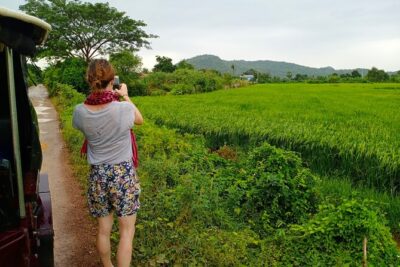
The countryside section begins with small villages, fruit plantations, rice fields, and a suspension bridge. You may stop to speak with farmers and see how people live and work outside the city. These pauses are not grand attractions, but they help you understand Battambang as an agricultural province rather than just a base for temple visits.
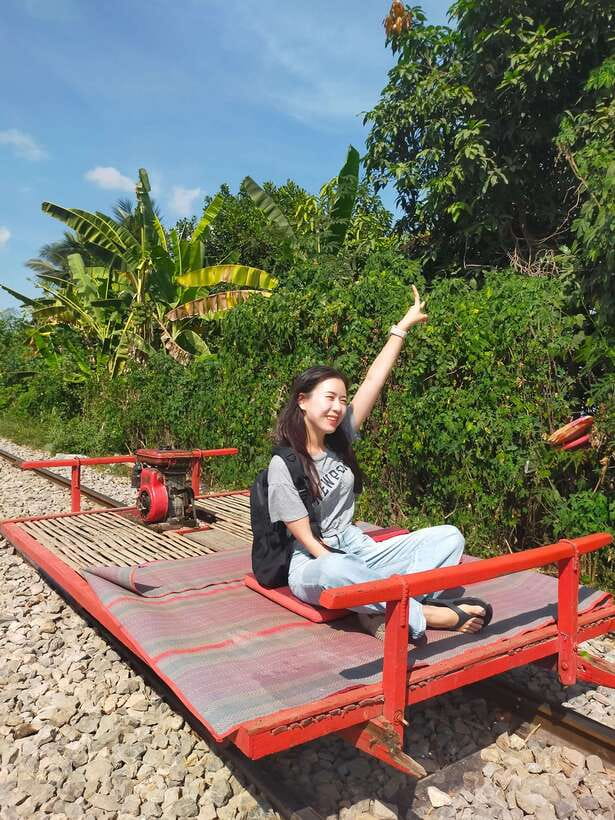
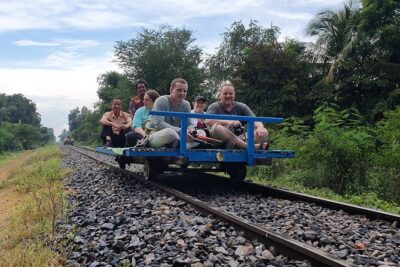
The bamboo train itself is a short, unusual ride on a simple bamboo platform powered along a railway track. You buy the ticket locally, then board and watch the rice fields and village scenery slide past. The ride is bumpy and basic, which is part of its charm.
Do not expect a major railway journey. One traveler found it less exciting than expected, and that is a fair warning. The ride works best as a curious local experience, not as the central reason to book the day. I would see it as a pleasant break between the city and the temples.
The supplied details also mention a free massage, though the precise timing is not explained. Fruit bats hanging in trees may be visible on the road between the bamboo train and Banan. Keep your eyes up during the tuk-tuk ride, since these animals are easy to miss if you are focused only on the road.
Rat barbecue tasting is optional. It is presented as a local food experience, not a required part of the trip. If you are willing to try something unfamiliar, this can be one of the day’s more memorable food moments. If not, you can simply skip it without losing the main sights.
Climbing 358 steps to Wat Banan
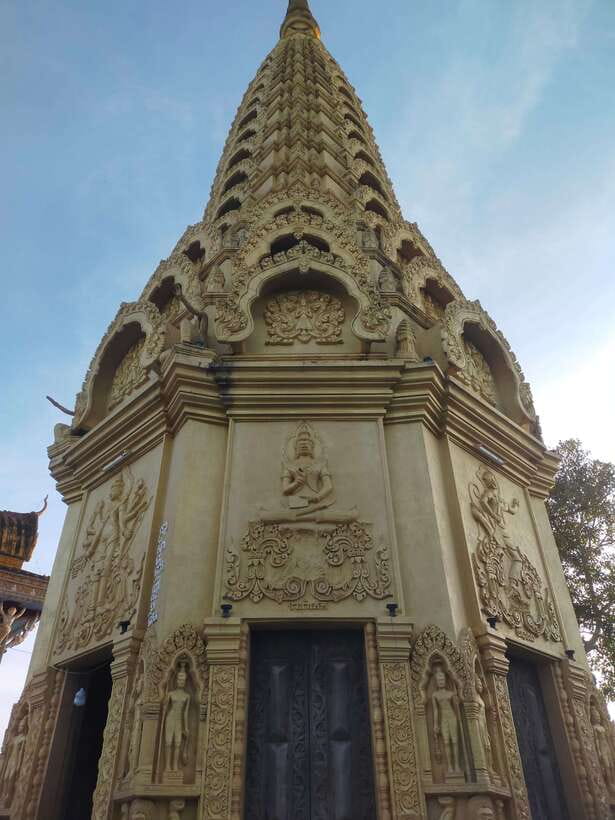
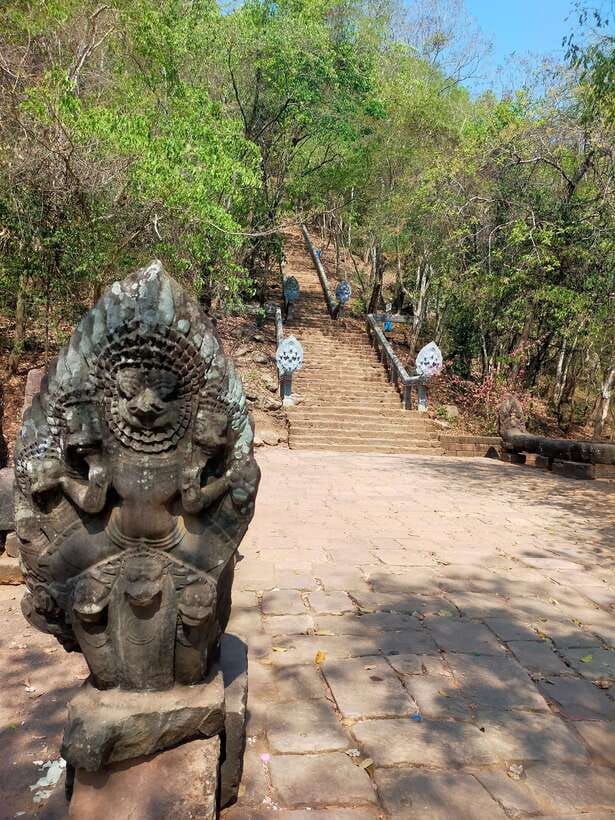
Wat Banan is one of Battambang’s most rewarding stops. The 11th-century temple sits on a hill and is reached by a laterite staircase with naga figures along the sides. The climb involves 358 steps, so this is where the day’s physical demands become clear.
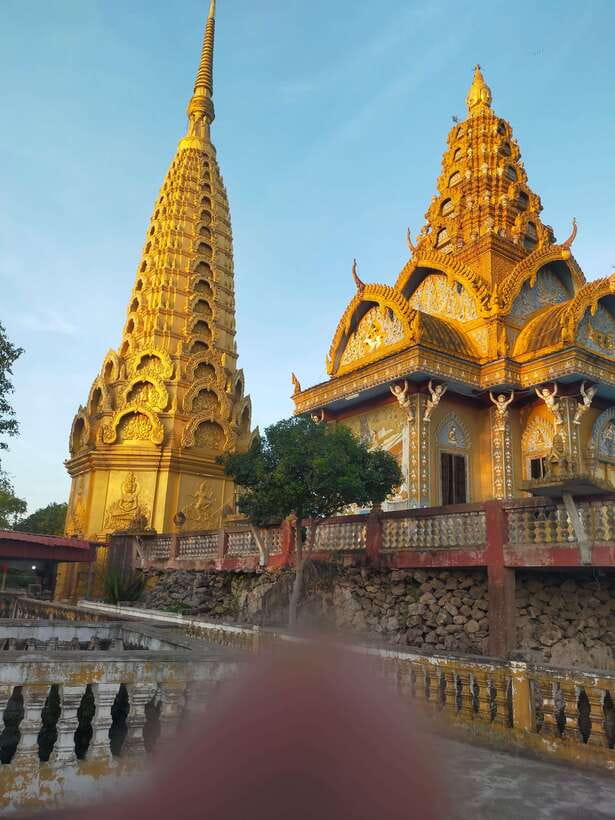
At the top, you find five towers arranged in a way that recalls Angkor Wat, though Wat Banan is much smaller. Its setting gives you a strong sense of the surrounding countryside, and the temple’s scale makes it easier to examine than Cambodia’s biggest monuments.
The temple was built under King Udayadityavarman II, the son of King Suryavarman I. It was intended for giving thanks, asking for help, and praying to the gods. The early connection was Hindu, especially Shaivite, but the sculptures visible at Phnom Banan are mainly Buddhist. The site was altered over time, and later rebuilding under Jayavarman VII is thought to explain the Buddhist character.
You do not need to be an architecture expert to enjoy the place. Look at the towers, the naga-lined approach, the worn stone, and the views. Your guide can explain the changes in religious use and the temple’s place in Cambodian history.
The climb is the main consideration. In hot weather, take it slowly and use the water provided. The tour includes mountain transport by motorbike or pickup truck for the return, but the listing does not clearly state which sections use that transport. Anyone with limited mobility should ask before booking.
Lunch follows by a lake in a relaxed setting. It is not included in the price, so bring cash. The meal gives you a proper pause after the temple climb, and the lakeside setting helps break up the long day.
A few more Battambang trips to weigh up
- Explore Battambang full day tour by Tuk Tuk (start from 9am-6:30pm)
★ 5.0 · 240 reviews - Battambang: Bamboo Train, Bat Cave, Killing Cave by Tuk Tuk
★ 5.0 · 182 reviews - A Day TukTuk Handicrafts Bambootrain Killing&BatCaves,Sunset
★ 4.9 · 78 reviews - Full day tour by bicycle & tuk tuk,bamboo train,bat cave,villages
★ 5.0 · 27 reviews
Facing the Killing Cave at Phnom Sampov
Phnom Sampov brings a sharp change in mood. Before reaching the hill, you may be offered a taste of KFR, the local rat barbecue. Then a motor taxi or pickup truck takes you uphill toward the Killing Cave.
The cave is a memorial site connected to the Khmer Rouge period from 1975 to 1979. More than 10,000 people were killed here, according to the supplied information. This is not a light sightseeing stop, and it should not be treated as one. Your guide explains the events and helps place the cave within Cambodia’s recent past.
I value the inclusion of this site because a day focused only on pleasant scenery would give you a thin picture of Cambodia. The Killing Cave is difficult, but learning about it can help you understand the country’s present and the weight carried by many families.
Give yourself room to be quiet here. The stop may feel stark after the bamboo train and food tasting. That contrast is not a flaw, but you should know about it before booking. Families with young children may want to consider how they will explain the site, and anyone who finds memorial spaces especially distressing should prepare for a sober visit.
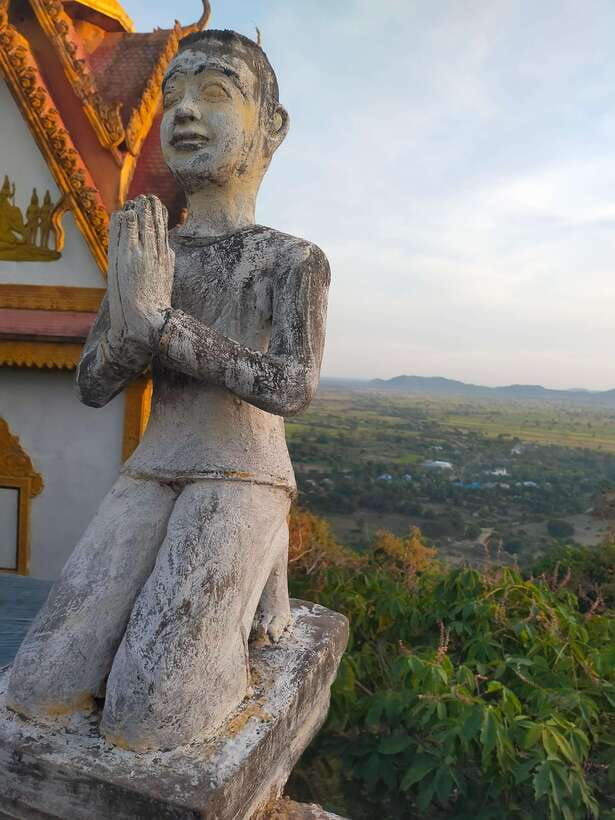
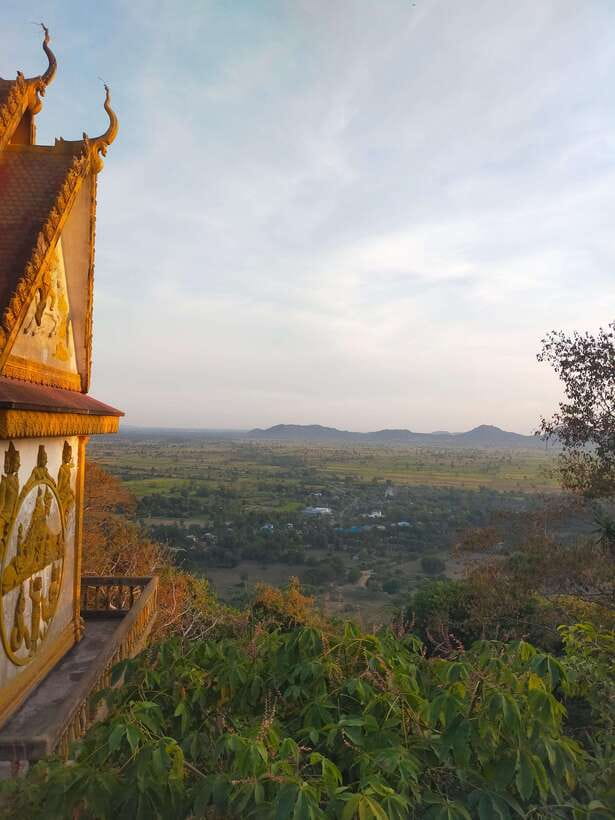
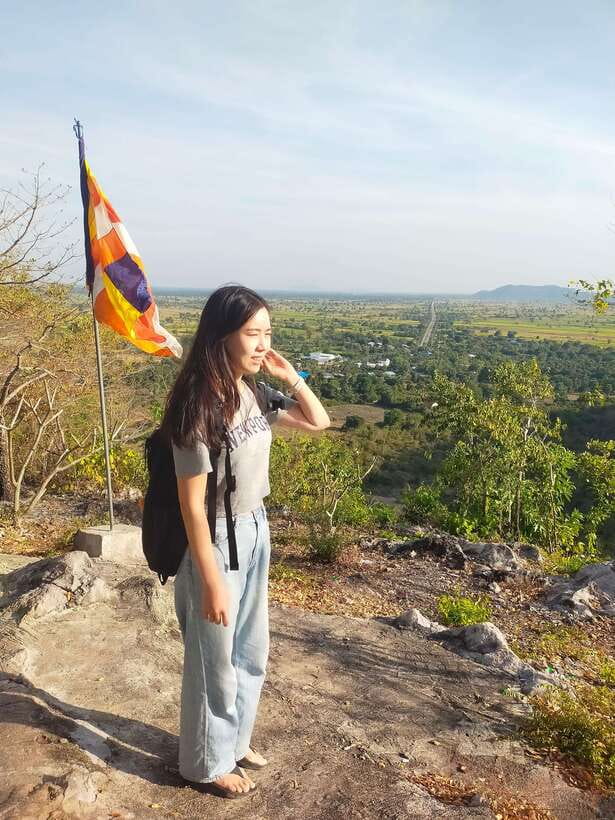
After the cave, you climb farther toward the summit. The hill has temples, monkeys, and viewpoints. The monkeys add a touch of everyday drama, but keep food and loose items secure. The viewpoints open across the countryside and help you see why Phnom Sampov is such a major stop around Battambang.
Sunset and the bat cave spectacle
The final event is the reason I would time this trip carefully. After visiting the summit and viewpoints, you come down to wait near the bat cave. At sunset, millions of wrinkle-lipped bats fly out in a continuous stream that can last more than 50 minutes.
This is a natural event, not a staged show. You wait, watch the cave mouth, and then see the movement build into a long black line across the evening sky. It is a simple spectacle, but the scale makes it unforgettable.
Bring your camera, though do not expect every photograph to work in fading light. The experience is better when you watch the full movement rather than spend the whole time checking your screen. The waiting period also means the day ends late, so plan nothing demanding afterward.
Once the bats have left, the tuk-tuk returns you to your hotel or to Pomme Bar in town. Confirm your preferred drop-off when arranging pickup, especially if you want to finish at the bar rather than your accommodation.
What the $14 price really includes
The base price is unusually low for an 11-hour private-style sightseeing day, but read the inclusions carefully. You receive:
- Pickup and drop-off within 5 kilometers of Battambang town
- An English-speaking guide
- Cold bottled water and wet wipes
- Fruit salad
- Admission to Wat Banan, Phnom Sampov, the Killing Cave, and the bat cave
- Mountain shuttle or motorbike transport for the return
- Donations connected with the visits
- Photo opportunities
The bamboo train costs an additional $5 per person. Lunch, drinks beyond the supplied water, and personal expenses are also extra. Rat barbecue is optional, so you only pay for it if you choose to try it.
For the money, the strongest value comes from the admissions and transport. Organizing separate tuk-tuks to Banan and Phnom Sampov would take more planning, and you would lose the guide’s explanations between stops. The day is not luxurious, but it is practical and full.
Heat, walking, and who should book
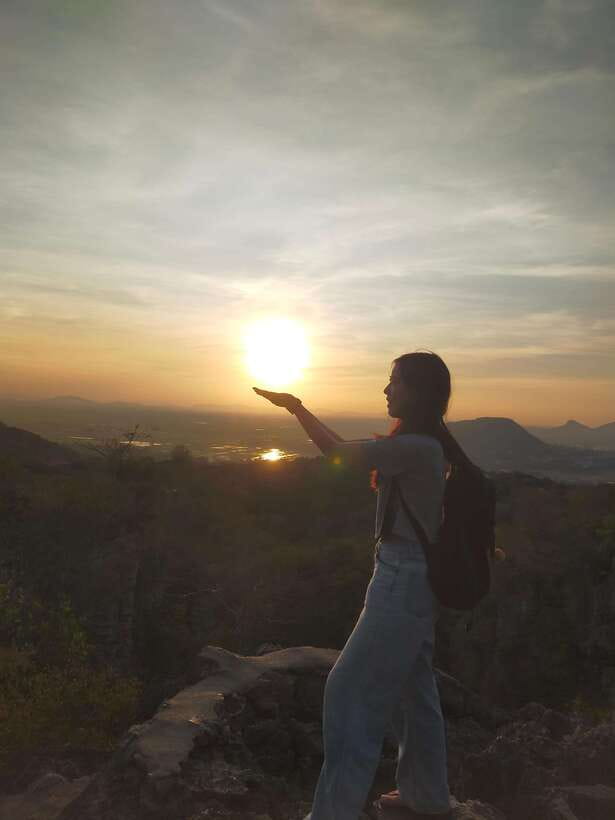
You need sunscreen, a camera, rain gear, and cash. Rain gear is worth carrying even if the morning looks clear, since the tour spends much of its time outside. Comfortable footwear matters most at Wat Banan and Phnom Sampov.
The activity is not considered suitable for pregnant women, people over 220 pounds or 100 kilograms, people with high blood pressure, or people over 95 years old. These restrictions relate to the long day, outdoor heat, climbing, and mountain transport. If any condition is close to these limits, ask the operator before paying.
I would recommend this tour to first-time visitors with one or two days in Battambang, couples or friends who want variety, and anyone who likes local food, history, and nature in the same outing. It also suits you if you value a guide who talks, jokes, answers questions, and takes photos.
I would hesitate if you dislike long outings, struggle with stairs, want a quiet temple visit, or prefer to make your own choices at each stop. The bamboo train may feel modest, and the time after Banan can move slowly. Still, the wide range of places makes the full day feel worthwhile for most active visitors.
Final verdict: book it for the bats and the full picture
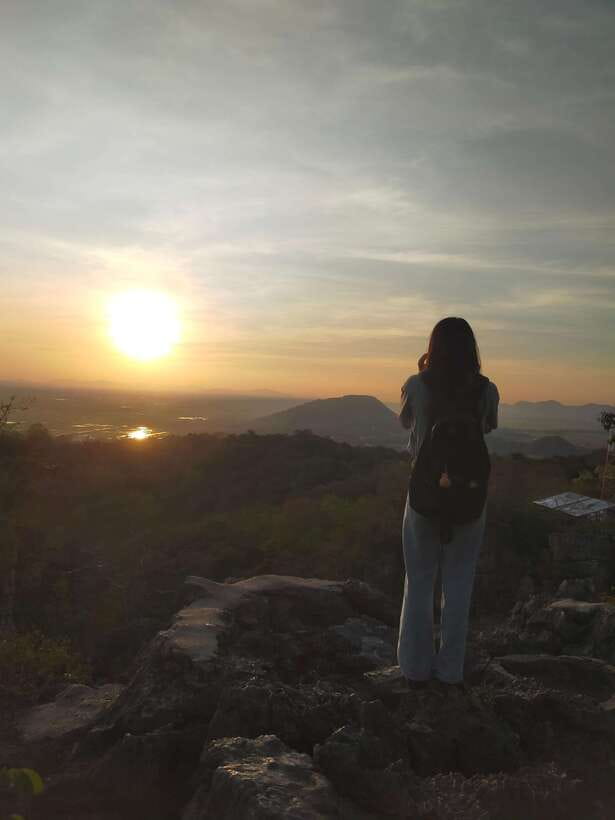
I would book this tour if I wanted one efficient day to understand Battambang beyond its center. The combination is unusually broad: city landmarks, farm roads, village life, an old railway ride, a five-tower temple, Khmer Rouge history, hilltop views, monkeys, and the evening bat flight.
Choose it with realistic expectations. The bamboo train is a quirky extra, not a thrilling ride. Lunch costs more, the heat can wear you down, and the Killing Cave requires a respectful frame of mind. But with a guide such as Samol, Jay, or Uk Bon Thai, the day gives you context, humor, and a practical route through the province for a very modest base price.
FAQ
How long does the Battambang tuk-tuk tour last?
The tour lasts about 11 hours and begins with pickup around 8:20 AM. It ends after the sunset bat flight, with drop-off at your hotel or at Pomme Bar in town.
How much does the tour cost?
The listed price is $14 per person. The bamboo train costs an additional $5 per person, while lunch and personal expenses are not included.
Is hotel pickup included?
Yes. Hotel pickup and drop-off are included, but the accommodation must be within 5 kilometers of Battambang town. Pickup can also be arranged from a restaurant.
Is the tour conducted in English?
Yes. The tour has a live English-speaking guide. Named guides connected with the experience include Samol, Jay, and Uk Bon Thai.
How many steps are there to Wat Banan?
The climb to Wat Banan involves 358 steps. Mountain shuttle or motorbike transport is included for the return, according to the activity details.
Is the rat barbecue compulsory?
No. Rat barbecue tasting is optional. Lunch is also separate from the tour price.
More Evening Experiences in Battambang
- Bamboo Train, Banann Temple, Fruit Bat, Bat Cave, Sunset
★ 4.2 · 3 reviews - Angkor Wat Sunrise or Sunset Tour with Guide from Siem Reap
★ 5.0 · 12,109 reviews - Siem Reap: Angkor Wat: Small-Group Sunrise or Sunset Tour
★ 5.0 · 9,444 reviews - Sunset tour of Kampong Phluk stilts home village on the Tonle Sap
★ 5.0 · 4,865 reviews
Just added around Battambang
- Bamboo Train, Banann Temple, Fruit Bat, Bat Cave, Sunset★ 4.2 · 3 reviews
- Afternoon tour to Original Bamboo train. Bat cave. Killing cave★ 5.0 · 25 reviews
- Private Taxi Transfer Battambang from/to Phnom Penh★ 5.0 · 7 reviews
- Private Taxi Transfer From Battambang – Siem Reap City★ 5.0 · 4 reviews
- Afternoon Tour BambooTrain & Bat Cave★ 5.0 · 57 reviews
- Explore local livelihood & countryside (Half-Day Cycling Tour)★ 5.0 · 19 reviews
- Private Boat from Battambang to Siem Reap via Tonle Sap Lake★ 4.5 · 3 reviews
- Full/Half Day Tuk TuK: Handicrafts Bambootrain Killing&Bat Caves★ 5.0 · 14 reviews
Bat Cave Tours, compared.
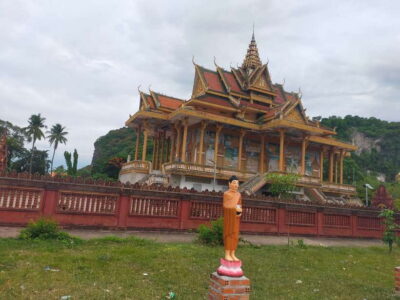
Tuk-Tuk, Bamboo Train, Killing/Bat Caves, Sunset
Read our review →
Afternoon tour by tuk tuk to bamboo train,bat cave,killing cave,countryside.
Read our review →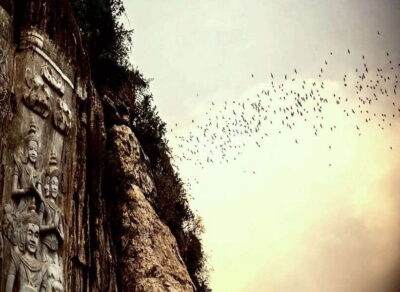
Battambang Full Day Tour from Siem Reap – Bamboo Train, Killing Cave & Sunset
Read our review →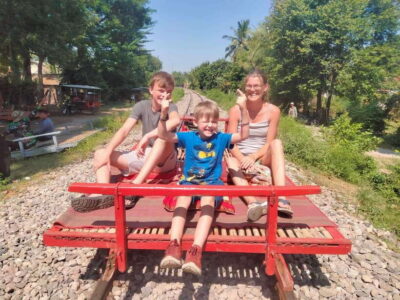
Afternoon Tour: Bamboo Train, Killing Cave &Bat Cave
Read our review →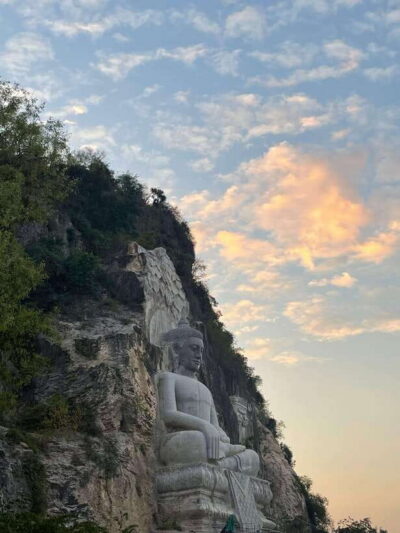
Full Day From Siem Reap – Bamboo Train, Killing Cave & Sunset
Read our review →Browse the lists this tour appears in