
Reviewed · FLOATING VILLAGE TOURS
Bakong Temples & Floating Village Tour
Bakong gives this tour its real sense of place. Built in 881 AD, it was the Khmer Empire’s first sandstone temple-mountain and the model for later monuments, including Angkor Wat. You then trade stone towers for Kampong Phluk’s homes, schools, and shops on the water, a sharp change of scene in one day.
I like the mix of major history and daily life. The private vehicle and guide make the long loop easier, while the smaller Roluos temples offer a quieter look at early Khmer design. I also like that the tour includes a boat ride along the river to the floating village, rather than stopping at a roadside viewpoint.
The main drawback is cost. The advertised $45 price does not include the $37 Angkor Pass or the floating village admission, so your final bill will be higher. The full outing can also take 6 to 8 hours, with three hours planned at Kampong Phluk.
Key points to know before booking
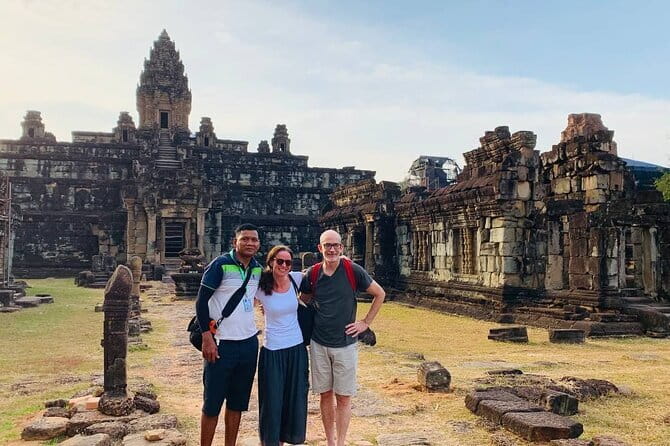
- Bakong is the architectural star: Its five-level pyramid, moats, guardian animals, and Naga causeway make it an important early Khmer monument.
- The Roluos group comes first: Lolei and Preah Ko show the development of Khmer temple design before Bakong reached its grander scale.
- Kampong Phluk is a working community: Homes, schools, and shops are built to cope with changing water levels.
- You get a private tour: Only your own group participates, with hotel pickup and drop-off in an air-conditioned vehicle.
- The guide matters: Mr Oun Kosorl and Mr K are identified with the experience, and both are praised for clear, engaging explanations.
- Budget for extra admission: The $45 tour price excludes the $37 Angkor Pass admission and the floating village fee.
Why Bakong deserves the longest temple stop
If you have seen Angkor Wat first, Bakong helps explain where the idea came from. It is not simply another old temple near Siem Reap. Built by King Indravarman I in 881 AD, it was the first Khmer temple-mountain made from sandstone and became a pattern for later royal monuments.
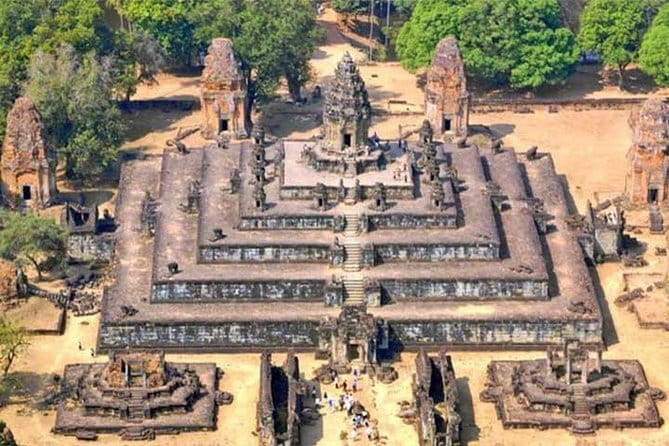
The design represents Mount Meru, the sacred mountain at the center of the Hindu universe. You can read that idea in the temple’s rising five-tiered pyramid. The structure draws your eye upward, from the lower levels to the central sanctuary, while the moats and enclosing walls mark the sacred area around it.
I find Bakong especially useful for understanding Khmer architecture as a process rather than a collection of isolated ruins. The monument shows how the builders handled scale, symbolism, raised terraces, gateways, and guardian figures before the empire’s later temples became even larger.
Look closely at the lower levels for the stone elephants and lions. These large guardians are among Bakong’s most memorable details, and they give the pyramid a strong, watchful character. The earliest known example of a Naga causeway in Khmer architecture is another feature worth asking your guide about.
The planned two-hour visit gives you enough time to move around the complex without reducing it to a quick photo stop. You can examine the terraces, notice the relationship between the pyramid and its surrounding water, and listen to the story of how later Khmer temples developed from this early model.
Bakong is still a temple ruin, so it will not offer the polished scale or famous galleries of Angkor Wat. That is part of its appeal, but it also means you should book this tour for historical importance and architectural detail, not only for a grand postcard view.
More Floating Village Tours in Siem Reap:
- From Siem Reap: Kampong Phluk Floating Village Tour by Boat
★ 4.9 · 6,979 reviews - Sunset tour of Kampong Phluk stilts home village on the Tonle Sap
★ 5.0 · 4,865 reviews - Siem Reap: Kampong Phluk Floating Village Tour with Boat
★ 4.9 · 3,843 reviews
Lolei and Preah Ko show the earlier Khmer style
The tour begins at Lolei, the northernmost of the three Roluos temples. It dates from the late ninth century and is one of the early Hindu foundations connected with the ancient city of Hariharalaya.
The one-hour stop gives you a gentle introduction before Bakong. Lolei is useful because it puts the later temple-mountain into sequence. You can see how the Khmer religious centers of this period were arranged and then compare their scale and design with the larger monument that follows.
Admission at Lolei is listed as not included, so check exactly how your Angkor Pass applies before setting out. The tour price should not be treated as an all-inclusive temple ticket.
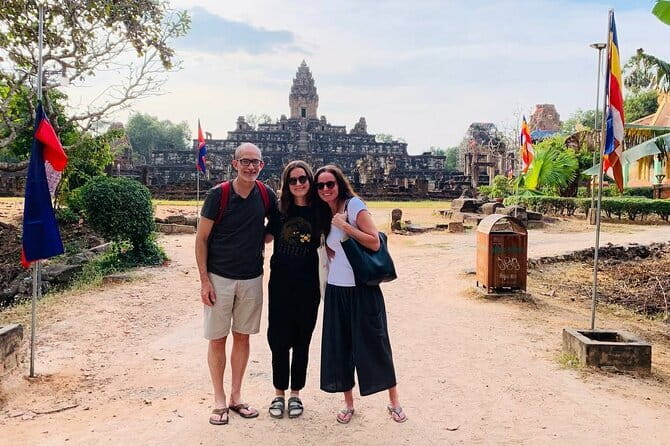
Preah Ko follows, with another hour set aside. It was the first temple built in Hariharalaya, an ancient city about 15 kilometers southeast of the main Angkor temple group. Its importance comes from that early date and its place in the development of Khmer religious architecture.
I like the order of these three temple visits. Lolei and Preah Ko prepare you to notice the changes at Bakong. Instead of seeing three unrelated stops, you get a basic story of early Khmer construction, from the first foundations at Hariharalaya to a much larger sandstone temple-mountain.
The drawback is that history-minded visitors may want more time at each site, while those focused on the best-known Angkor monuments could find the first two stops less dramatic. Your guide makes a real difference here. Mr Oun Kosorl and Mr K are praised for explaining Siem Reap and its temples with charm and clarity, which is particularly useful at smaller sites where the meaning is less obvious at first glance.
A boat ride leads to Kampong Phluk
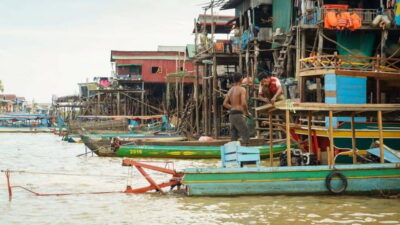
After the temples, the day changes direction at Kampong Phluk Floating Village. This is not a single attraction built for a quick look. It is a full community on and beside the water, with homes, schools, and shops shaped by the seasonal rise and fall of Tonle Sap Lake.
The village uses two main kinds of structures. Some buildings float directly on the water. Others sit on tall stilts, standing high above the ground during the dry season. That practical design tells you more about local life than a short stop beside the lake would.
The visit lasts about three hours, making it nearly as important as the temple portion. You reach the village by boat, traveling along the river before moving into the watery community. One account of the experience includes a stop at a school where young children were learning English. That kind of moment can make the village feel like a lived-in place rather than a scenic add-on.
I appreciate the chance to see how people adapt their homes and services to changing water levels. The village is not frozen in a traditional picture. Its structures move, rise, and adjust with the seasons, and your guide can help you understand why homes on stilts and floating buildings exist side by side.
You should also approach this part of the day with care. The village reflects difficult living conditions, and the experience can feel uncomfortable if you expect only a pleasant boat outing. The point is not to treat the community as a stage set. Pay attention to the practical choices people have made and follow your guide’s lead about respectful behavior.
Weather may affect the boat trip. One account describes poor weather making the visit less enjoyable, so a cloudy or wet day can change the mood and the quality of the views. This is one reason I would avoid packing the schedule with another major activity afterward.
What the private vehicle adds to a long day
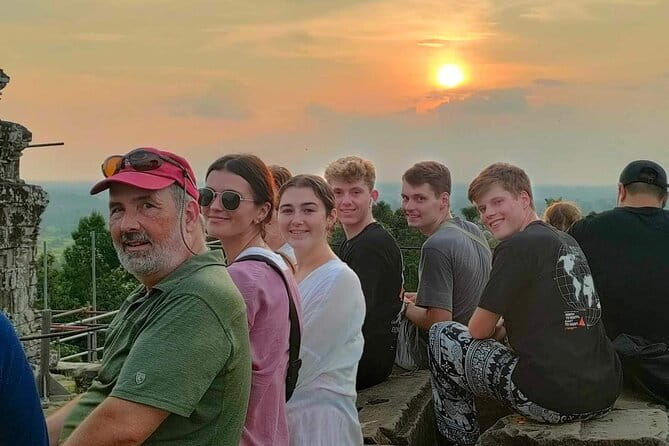
The tour provides pickup and drop-off, an English-speaking guide, cold drinking water, and an air-conditioned vehicle. Those details matter in Siem Reap, where a day moving between temples and the lake can feel long, hot, and dusty.
Because this is a private activity, only your own group participates. That gives you more control than a large shared outing. You can ask your guide to spend longer at Bakong, request a clearer explanation at Preah Ko, or pause for a practical question about the floating village without waiting for a bus full of strangers.
The private format does not guarantee a completely flexible schedule. The published timing adds up to about seven hours: one hour at Lolei, one at Preah Ko, two at Bakong, and three at Kampong Phluk. With driving and the boat transfer included in the day, the total duration is given as 6 to 8 hours.
Cold water is a small but welcome inclusion. It means you do not have to depend entirely on finding drinks during the temple loop. The air conditioning is more important, especially when you are moving from open temple grounds to a boat in the same afternoon.
The trade-off is that the price is based on a private experience, not a low-cost shared shuttle. If you are alone or traveling as a couple, the $45 per-person rate may feel less economical once admission is added. Group discounts are offered, so the value improves when several people share the vehicle.
Same country, a completely different kind of day:
- Angkor Wat Sunrise or Sunset Tour with Guide from Siem Reap
★ 5.0 · 12,109 reviews - Siem Reap: Angkor Wat: Small-Group Sunrise or Sunset Tour
★ 5.0 · 9,444 reviews - Siem Reap: Angkor Wat 2-Day Tour with Sunrise and Sunset
★ 4.9 · 4,429 reviews - Siem Reap: Full-Day Angkor Wat Guided Tour with Sunset
★ 4.9 · 3,803 reviews
The real price is closer to $82 before the village fee
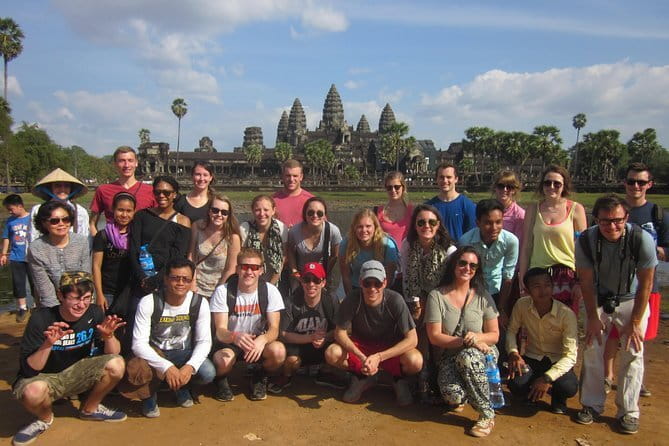
At first glance, $45 per person looks reasonable for a full private day with transport, a guide, water, and air conditioning. But the listed price excludes the $37 Angkor Pass admission per person. It also excludes admission for Kampong Phluk.
That puts the known cost at at least $82 per person before the floating village fee. I would use that figure when comparing this tour with other Siem Reap options. The price is easier to justify if you value private transport and a guide, rather than simply wanting a ride to the temples.
Lolei admission is also marked as not included, so you should confirm whether your pass covers the temple entries required for your visit. The cost information makes one thing clear: this is not a single-payment tour.
The value is strongest for a small group that wants one vehicle and one guide for the whole day. A family or group of friends can spread the private-tour cost across several people, and the offered group discounts may help further.
For a solo visitor, the extra fees deserve closer attention. You may find a shared temple tour cheaper, though it may not combine the Roluos group and Kampong Phluk in the same private schedule.
Guides Mr Oun Kosorl and Mr K can shape the day
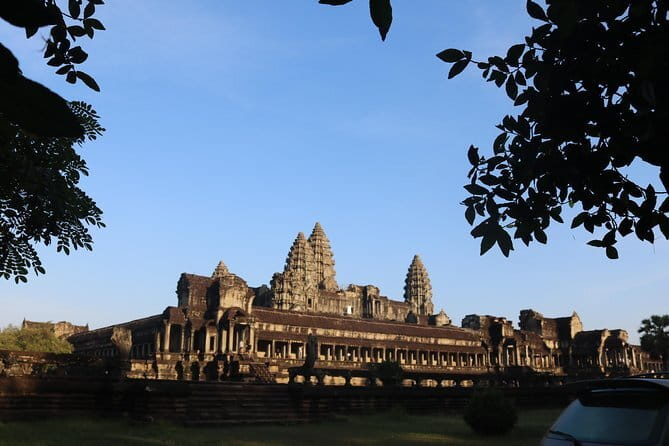
The guide is central to this experience because Lolei, Preah Ko, and Bakong reward explanation. Without context, you may see old brick, sandstone, moats, and statues. With a good guide, you can follow the change from early Hariharalaya temples to the first sandstone temple-mountain.
Mr Oun Kosorl is praised for bringing energy to explanations of the temples, including Angkor Wat. Mr K is also described as charming and insightful when discussing Siem Reap and the various monuments. The supplied information connects both names with the experience, so you should check which guide is assigned when booking if that matters to you.
I would ask about the Naga causeway at Bakong, the meaning of the five levels, and the role of the elephant and lion guardians. At Kampong Phluk, ask how floating buildings and stilt homes respond to the seasonal water changes. These questions should help turn a sightseeing loop into a more useful lesson.
The guide also helps with the human side of the floating village. A school visit where children were learning English was included in one account of the day, but the exact stops can vary. Treat it as a possible part of the village visit, not a guaranteed performance or scheduled attraction.
Who will get the most from this experience
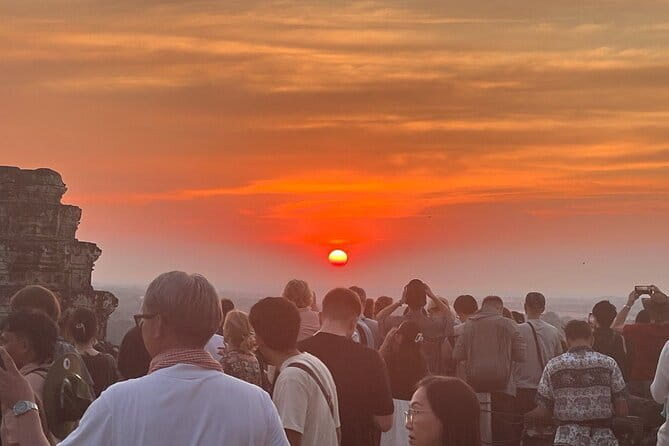
I would choose this tour if you have already seen, or plan to see, the main Angkor temples and want early Khmer sites with a different pace. Bakong is the main reason to book, while the floating village adds a social and environmental contrast.
It also suits you if you prefer a private guide to a fixed large-group schedule. The air-conditioned vehicle, pickup, drop-off, and included water remove some of the ordinary friction from a long day outside.
Families and small groups may find the format practical, especially with group discounts. You can share the cost and keep the day together instead of arranging separate transport for the temples and lake.
I would be more cautious if you want only the biggest and most decorated monuments. Lolei and Preah Ko are historically important but less imposing than Angkor Wat. The floating village can also be emotionally challenging, and bad weather may reduce the pleasure of the boat ride.
The tour is best for people who want to see how temples developed and how a Cambodian community adapts to water. It is less suited to someone seeking a short, polished sightseeing circuit with no added admission costs.
Is the six to eight hour tour worth booking?
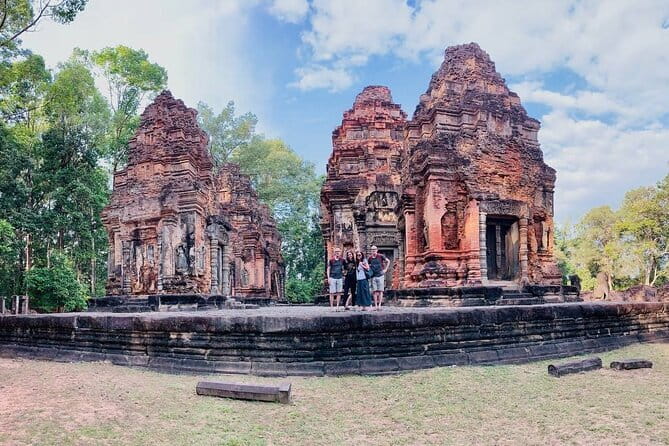
I would book it if your priorities are Bakong’s early temple architecture and a direct look at life around Tonle Sap. The combination is unusual: three early Hindu temples in the morning or early part of the day, followed by a boat trip through a community built around seasonal water.
I would not book it without first confirming the total cost, including the Angkor Pass and Kampong Phluk admission. I would also allow the whole day, since the schedule can run to eight hours and weather may affect the village portion.
For a small group, the private vehicle and guide make the $45 base price more appealing. For a solo visitor, compare the final price with shared tours before deciding.
Free cancellation is available if you cancel at least 24 hours before the start time. Cancellations within 24 hours are not refunded, and changes inside that period are not accepted. With those conditions in mind, this is a solid choice for a history-focused day that also gives you a more grounded look at Cambodian life beyond the temple zone.
FAQ
How long does the Bakong Temples and Floating Village Tour last?
The experience lasts approximately 6 to 8 hours. The planned stops include one hour at Lolei, one hour at Preah Ko, two hours at Prasat Bakong, and three hours at Kampong Phluk Floating Village.
What is included in the $45 tour price?
The price includes an English-speaking tour guide, pickup and drop-off, cold drinking water, and transportation in an air-conditioned vehicle.
Is the Angkor Pass included?
No. Admission under the Angkor Pass is listed as an additional $37 per person. Kampong Phluk admission is also not included.
Is this a private tour?
Yes. Only your own group participates in the activity. Group discounts are offered.
Which temples are visited?
The tour visits Lolei, Preah Ko, and Prasat Bakong. Lolei and Preah Ko are part of the Roluos group, while Bakong is the first Khmer sandstone temple-mountain.
Can I cancel for a full refund?
Yes, if you cancel at least 24 hours before the experience start time. Cancellations made less than 24 hours in advance are not refunded, and changes within that period are not accepted.
Just added around Siem Reap
- Ultimate Sunrise to Angkor Wat, Angkor Thom and Bayon Temple★ 5.0 · 3 reviews
- Twilight Tastes of Siem Reap Include Dinner★ 5.0 · 13 reviews
- Trekking Tour at Phnom Kulen National Park from Siem Reap★ 5.0 · 3 reviews
- Full-Day Private Tour of Angkor Wat with Pick Up★ 5.0 · 12 reviews
- Private Day Trip to Angkor Temples with Expert Guide★ 5.0 · 4 reviews
- Waterfall & River of 1000 Siva Linga- Kulen Mountain Private Tour★ 5.0 · 3 reviews
- Professional Photo Shoot in Angkor Archaeological Park, Siem Reap★ 5.0 · 42 reviews
- Ultimate Siem Reap Food Tour by Tuk Tuk – 20 Tastings, 8 Stops★ 5.0 · 13 reviews
Floating Village Tours, compared.
Sunset tour of Kampong Phluk stilts home village on the Tonle Sap
Read our review →
Kampong Phluk Floating Village Tour with Boat
Read our review →
Siem Reap Floating Village Kampong Phluk Sunset with Boat
Read our review →
Kompong Phluk Floating Village Half-Day Tour ( Morning / Sunset )
Read our review →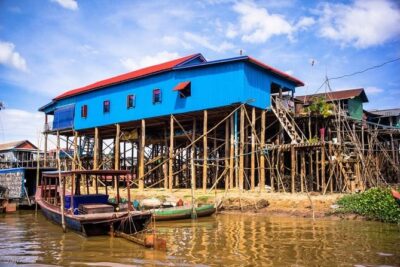
Tonle Sap Lake & Kampong Phluk Village Half-Day Tour
Read our review →
Browse the lists this tour appears in