
Reviewed · ANGKOR WAT SUNRISE TOURS
Siem Reap Angkor Wat Sunrise or Sunset Explore The Temples +Guide
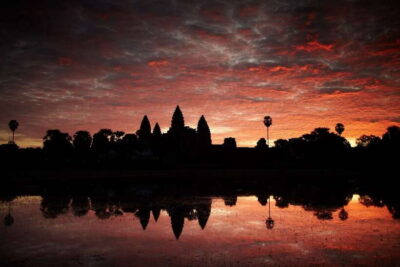
Angkor Wat at first light is the great draw here, but the day gets better when you move beyond the postcard view. This eight-and-a-half-hour temple circuit pairs the famous sites with quiet Banteay Kdei, and the air-conditioned minibus keeps the long day manageable. I also like that guides such as Prem and Chamrong have been singled out for clear English, smooth organization, and strong knowledge of the monuments.
The $18 price is hard to fault for transport, hotel pickup, water, and a guide. You should budget separately for the Angkor Archaeological Park entrance ticket and food, and a group of up to 25 people means this is not a private, flexible tour.
Key points to know before booking
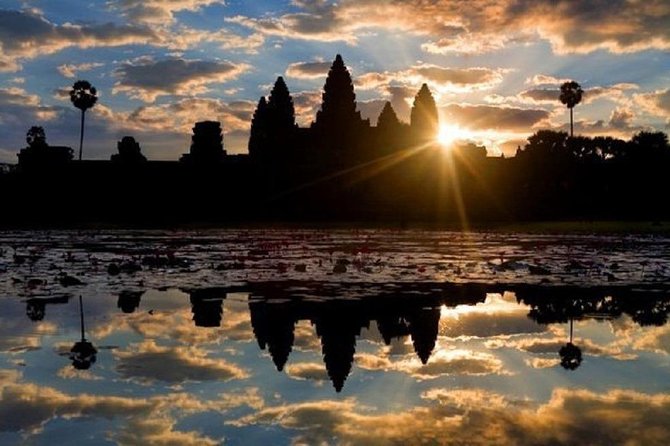
- Angkor Wat gets three hours: You have time for the grand galleries, carvings, and sacred central areas rather than a rushed photo stop.
- Banteay Kdei adds a quieter hour: Its corridors and Buddhist architecture offer a calmer change from the busiest monuments.
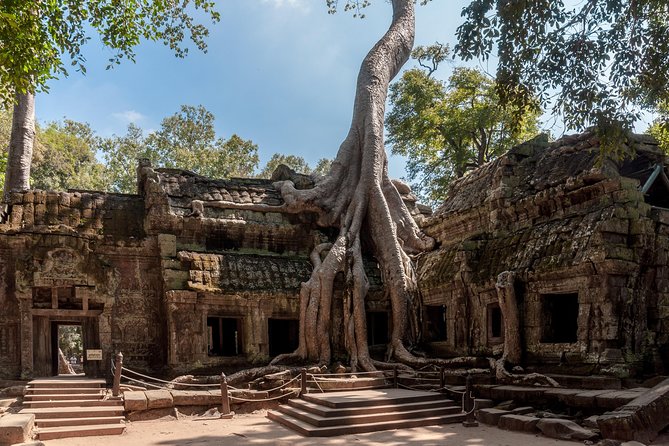
- Ta Prohm gets two hours: That is useful for seeing the famous tree roots and exploring beyond one crowded viewpoint.
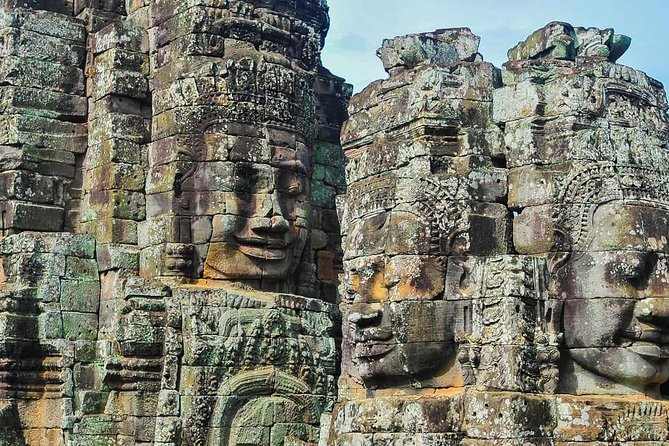
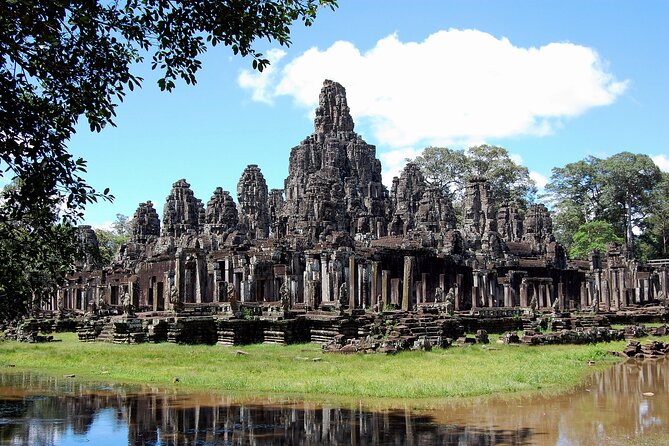
- Bayon has two hours: Look up at the stone faces, then down at carvings showing daily life and historic battles.
- Transport is simple: Hotel pickup, an air-conditioned minibus, drinking water, and drop-off are included.
- The entrance ticket is extra: The $18 tour price does not cover admission to the archaeological park.
What this Angkor temple day is really like
This is a full circuit of the Angkor complex, not a single-monument visit. You begin with an early pickup from your Siem Reap hotel, ride in an air-conditioned minibus, and spend the day moving between five major stops.
The route is built around variety. Angkor Wat gives you scale and ceremony. Banteay Kdei slows the pace. Ta Prohm supplies the jungle-covered ruins that appear in so many photographs. Bayon shifts your attention to sculpture and faces, while Angkor Thom’s South Gate provides a grand approach to the old city.
That range matters. If you visit only Angkor Wat, you see the most famous temple but miss how different the Angkor monuments can feel from one another. This outing gives you a useful first look at the major sights without asking you to arrange separate transport or negotiate the route yourself.
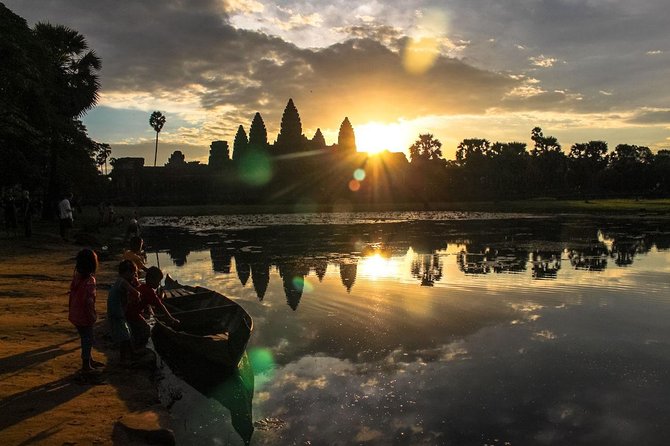
The tour description allows for a sunrise or sunset experience, while the published schedule begins with early pickup and an Angkor Wat visit. If the time of day is important to you, confirm the exact option when booking. The morning plan is especially appealing because the light around Angkor Wat can change quickly, and the cooler start helps before the heat builds.
More Angkor Wat Tours in Siem Reap:
- Angkor Wat Sunrise or Sunset Tour with Guide from Siem Reap
★ 5.0 · 12,109 reviews - Siem Reap: Angkor Wat: Small-Group Sunrise or Sunset Tour
★ 5.0 · 9,444 reviews - Siem Reap: Angkor Wat 2-Day Tour with Sunrise and Sunset
★ 4.9 · 4,429 reviews
Angkor Wat: three hours with Cambodia’s great symbol
Your first major stop is Angkor Wat, the monument most closely linked with Siem Reap. The visit covers intricate carvings, grand galleries, and sacred sanctuary areas, so three hours gives your guide room to explain what you are seeing instead of pointing out a few details and moving on.
The scale is the first thing to grasp. Angkor Wat is not just a temple facade. It is a large ceremonial complex with long galleries, carved surfaces, and carefully arranged spaces. A guide can help you read the building in stages, from the outer areas toward the more sacred parts.
I like the generous time here because it protects you from the common mistake of treating Angkor Wat as a quick sunrise photograph. The famous view matters, but the carvings and galleries reward slower attention. Ask your guide to point out the most important scenes and architectural details, especially if this is your first visit.
The practical catch is the entrance ticket. Admission is not included, so the $18 price is not your total cost for the day. You will need to purchase the required Angkor Archaeological Park ticket separately before entering the temples. Food is also excluded, so plan for that cost as well.
The early start may not suit every schedule, particularly if you prefer leisurely mornings. Still, it is a sensible way to begin a long temple day. You get the most famous site first, with the best chance of enjoying cooler conditions and changing morning light.
Banteay Kdei: a quieter hour among chambers
After Angkor Wat, the route turns to Banteay Kdei, whose name means Citadel of Chambers. Built in the late 12th century, this Buddhist monastery is known for its corridors, carvings, and more peaceful character.
This stop is valuable because it breaks up the parade of headline monuments. Banteay Kdei is less famous than Angkor Wat, Ta Prohm, and Bayon, so you can focus more easily on its layout and details. The architecture is not simply a smaller version of Angkor Wat. It has its own mood, with enclosed passages and a sense of a former religious community.
You have about an hour here. That is enough to understand the basic plan and see the notable carvings, though it is not a leisurely architectural study. I would use this time to stay close enough to hear the guide, then take a few quiet minutes to look along the corridors without rushing from one photo point to the next.
Banteay Kdei also gives the day a useful rhythm. Angkor Wat is grand and formal. This temple feels more intimate. After the broad galleries of the first stop, the change in scale helps you notice how many different purposes and designs were part of the Angkor complex.
Ta Prohm: two hours with the famous tree roots
Ta Prohm is the temple most likely to trigger a recognition moment. Massive tree roots spread over walls and ruins, creating the jungle-temple appearance that made the site famous around the world.
The appeal is visual, but the visit should not end at the best-known root-covered doorway. Two hours gives you time to explore the ruined galleries and see how the vegetation has become part of the monument’s identity. The temple was left largely unrestored, which creates a rougher, more enclosed feeling than the carefully presented areas of Angkor Wat.
I like the length of this stop. Ta Prohm can become crowded around its most photographed roots, and a short visit often means standing in one place, taking a picture, and leaving with little sense of the wider temple. With two hours, you have a better chance to look beyond the famous scene.
The drawback is that the most recognizable spots may be busy, and the ruins can feel less orderly than restored temples. That is also the point. Ta Prohm shows you the tension between preserving a monument and allowing nature to remain visible within it.
Your guide can add meaning to what might otherwise be a collection of dramatic stone walls. Guides named Prem and Chamrong have been praised for clear explanations and capable organization, which is particularly useful here. Ta Prohm is easy to photograph, but it is more interesting when you understand how the temple fits into the wider Angkor story.
More Angkor Wat Sunrise Tours in Siem Reap:
- Angkor Wat Sunrise tour with Small – Group and Guide tours
★ 5.0 · 3,655 reviews - Full-Day Angkor Wat Sunrise Private Tour with Guide from Siem Reap
★ 5.0 · 2,920 reviews - Angkor Wat Sunrise & 3 Main Temples with Breakfast – Small Group
★ 5.0 · 2,857 reviews - Siem Reap: Angkor Wat Sunrise and Full-Day Sightseeing Tour
★ 4.9 · 2,828 reviews
Bayon Temple: faces, carvings, and a change of mood
Bayon sits at the center of Angkor Thom and brings a very different visual focus. Instead of broad galleries and tree-covered ruins, you get towers topped with enormous serene faces.
The description refers to 54 towers, each associated with four faces of Avalokiteshvara, creating the well-known count of more than 200 stone faces. From ground level, the faces seem to appear at different heights and angles, so the temple changes as you move through it.
Two hours is a useful allocation. The faces are the obvious attraction, but Bayon also has detailed carvings showing daily life and historic battles. These scenes can make the monument feel more human. You are not looking only at a royal or religious structure. You are also seeing carved evidence of people, work, conflict, and ceremony.
This is one of the places where an English-speaking guide adds real value. The stone faces are memorable without explanation, but the surrounding reliefs need context. A clear guide can help you distinguish the visual drama from the details that tell you how the temple functioned and what its carvings represent.
Bayon can feel visually dense. Towers, passages, faces, and reliefs compete for your attention. The two-hour visit gives you room to pause, but you may still need to accept that you cannot inspect every carving. Follow the guide for the main highlights, then choose a few areas for your own look.
Angkor Thom South Gate: a grand final approach
The final stop is Tonle Om Gate, also called the South Gate of Angkor Thom. You get about 30 minutes here, with the main focus on the entrance causeway lined by statues of gods and demons.
This is a short stop, but it ties the day together. After seeing Bayon at the center of Angkor Thom, you see one of the city’s monumental entrances. The causeway and gate create a formal approach, and the gate itself is crowned with four large stone faces similar to those at Bayon.
Thirty minutes is enough for photographs and a guide’s explanation of the entrance. It is not enough for a long walk or close study of every statue. Think of this as a strong final viewpoint rather than another full temple visit.
I like the placement at the end. The South Gate provides a sense of arrival and departure, even though you are seeing it after the central temple. The statues also give you one last reminder that Angkor was planned on a grand civic scale, not built as a collection of isolated ruins.
What the $18 price includes, and what it does not
At $18, this is a transport-and-guide package, not an all-inclusive admission deal. You receive:
- Hotel pickup and drop-off
- Air-conditioned minibus transport
- A professional English-speaking guide
- Drinking water
You pay separately for the entrance fee and food. That distinction is important when comparing this outing with other temple options. The low headline price looks excellent, but your real day budget must include the park ticket and meals.
Even with those extras, the price offers good value if you want a guide and do not want to arrange a vehicle for the full circuit. Hiring transport on your own may give you more freedom, but it leaves you responsible for navigation and timing. Here, the route is already organized and the vehicle is provided.
The group can include up to 25 people. That is a moderate-to-large group for a temple tour. It keeps the price down, but it may mean waiting for people at entrances, moving at a shared pace, and having less chance to ask the guide long individual questions.
The experience is designed for most people, and pickup is offered. The information also notes access to public transportation nearby. No special fitness requirement is stated, but you should expect a long day visiting several temple sites. Comfortable clothing, practical footwear, sun protection, and water are sensible choices, with drinking water supplied as part of the tour.
The guide can make the difference
The tour includes a professional English-speaking guide, and the guide is central to its value. Angkor’s carvings and layouts are impressive, but without context, several temples can blur together by the afternoon.
Prem has been described as a qualified guide with strong knowledge of the temple complex and its buildings. Chamrong handled the route and dining arrangements with ease during one outing. Yoeun Nuok is associated with Siem Reap Tour Trails, the local provider behind the experience.
You may not receive the same guide on every departure, so do not book solely on the expectation of one particular person. Still, the available names give you a useful idea of the kind of service to expect: clear English, historical explanation, friendly help, and attention to timing.
I would ask questions as you go. Bayon and Ta Prohm reward curiosity, and the guide can point out details you might otherwise pass without noticing. In a group of up to 25, it helps to stay near the guide during explanations, then wander a little during free viewing time if the schedule allows.
Who should book this temple circuit?
I would choose this experience if you want the main Angkor sights in one organized day, prefer hotel pickup, and value an English-speaking guide. It is especially suitable for a first visit, when you want a broad introduction before deciding which temples deserve a later return.
It also suits budget-conscious visitors. The $18 fee keeps the organized part of the day affordable, while the minibus and guide remove much of the planning burden.
I would hesitate if you want a private tour, a slow photographic schedule, or complete control over how long you spend at each temple. A 25-person maximum is manageable, but it is still a shared outing. You should also be comfortable paying the park entrance fee and food costs separately.
The sunrise option is the natural choice for an early Angkor Wat start. If you prefer the softer feel of late-day light, ask about the sunset version before booking, since the stated schedule emphasizes an early pickup.
Booking, cancellation, and weather notes
Confirmation is provided at booking, and free cancellation is available if you cancel at least 24 hours before the experience starts. Cancellations made less than 24 hours ahead, or changes made inside that window, are not accepted for a refund.
The activity depends on good weather. If poor weather causes cancellation, you are offered another date or a full refund. Cutoff times follow local Siem Reap time, so check the clock carefully if you are changing plans from another destination.
Should you book it?
Book this tour if you want five important Angkor stops, shared transport, and a guide for $18, with the park entrance fee handled separately. The route has a strong balance: Angkor Wat for scale, Banteay Kdei for quiet, Ta Prohm for atmosphere, Bayon for sculpture, and the South Gate for a grand finish.
Skip it if your priority is privacy or a flexible custom route. For everyone else, especially a first-time visitor who wants a practical introduction without arranging every detail, this is a sensible and good-value way to spend a full day at Angkor.
FAQ
Where does the tour take place?
The tour takes place in Siem Reap, Cambodia, with visits to temples in the Angkor Archaeological Park.
How long does the experience last?
The tour lasts approximately eight hours and 30 minutes.
Is hotel pickup included?
Yes. Pickup from your Siem Reap hotel and drop-off are included.
What type of transport is provided?
Transportation is provided by air-conditioned minibus.
Is an English-speaking guide included?
Yes. A professional English-speaking tour guide is included.
Is the Angkor entrance ticket included?
No. The entrance ticket is not included and must be paid for separately.
Is food included?
No. Food is not included in the tour price.
How many people can join the tour?
The activity has a maximum group size of 25 people.
Can I choose a sunrise or sunset visit?
The experience is presented as a sunrise or sunset temple tour. The stated schedule begins with an early pickup, so confirm your preferred option when booking.
What happens if bad weather cancels the tour?
If poor weather causes cancellation, you can choose a different date or receive a full refund.
More Morning in Siem Reap
- Angkor Wat Highlights and Sunrise Guided Tour from Siem Reap
★ 5.0 · 3,213 reviews - Siem Reap: Angkor Wat Sunrise or Sunset Guided Tour
★ 4.9 · 2,123 reviews - Angkor Wat: Highlights and Sunrise Guided Tour
★ 4.9 · 1,586 reviews - Kompong Phluk Floating Village Half-Day Tour ( Morning / Sunset )
★ 5.0 · 1,494 reviews
More Evening Experiences in Siem Reap
- Sunset tour of Kampong Phluk stilts home village on the Tonle Sap
★ 5.0 · 4,865 reviews - Siem Reap: Full-Day Angkor Wat Guided Tour with Sunset
★ 4.9 · 3,803 reviews - Angkor Wat Sunset Small Group Tour with Lunch Included
★ 5.0 · 3,059 reviews - Angkor 2-Day Sunset & Sunrise Small-Group Tour
★ 5.0 · 2,567 reviews
Just added around Siem Reap
- Ultimate Sunrise to Angkor Wat, Angkor Thom and Bayon Temple★ 5.0 · 3 reviews
- Twilight Tastes of Siem Reap Include Dinner★ 5.0 · 13 reviews
- Trekking Tour at Phnom Kulen National Park from Siem Reap★ 5.0 · 3 reviews
- Full-Day Private Tour of Angkor Wat with Pick Up★ 5.0 · 12 reviews
- Private Day Trip to Angkor Temples with Expert Guide★ 5.0 · 4 reviews
- Waterfall & River of 1000 Siva Linga- Kulen Mountain Private Tour★ 5.0 · 3 reviews
- Professional Photo Shoot in Angkor Archaeological Park, Siem Reap★ 5.0 · 42 reviews
- Ultimate Siem Reap Food Tour by Tuk Tuk – 20 Tastings, 8 Stops★ 5.0 · 13 reviews
Angkor Wat Sunrise Tours, compared.

Angkor Wat Sunrise or Sunset Tour with Guide from Siem Reap
Read our review →
Angkor Wat Sunrise tour with Small – Group and Guide tours
Read our review →
Full-Day Angkor Wat Sunrise Private Tour with Guide from Siem Reap
Read our review →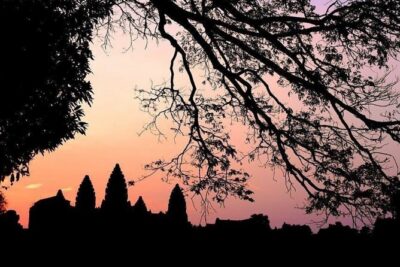
Angkor Wat Sunrise & 3 Main Temples with Breakfast – Small Group
Read our review →
Angkor Wat Sunrise and Full-Day Sightseeing Tour
Read our review →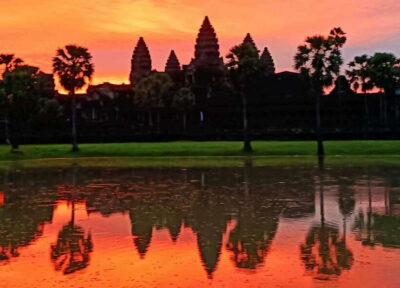
Angkor Sunrise 1- or 2-Day Guided Temples Tour
Read our review →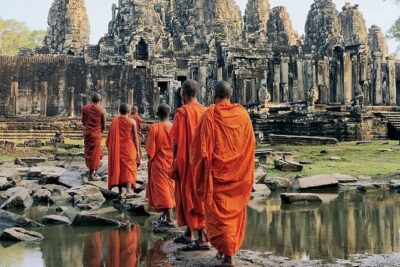
Siem Reap Tour: Angkor Wat Sunrise, Bayon, Ta Prohm, Banteay Srei
Read our review →Browse the lists this tour appears in