
Reviewed · ANGKOR WAT TOURS
Sunset or sunrise bicycle tour around Angkor Wat and nearby temples
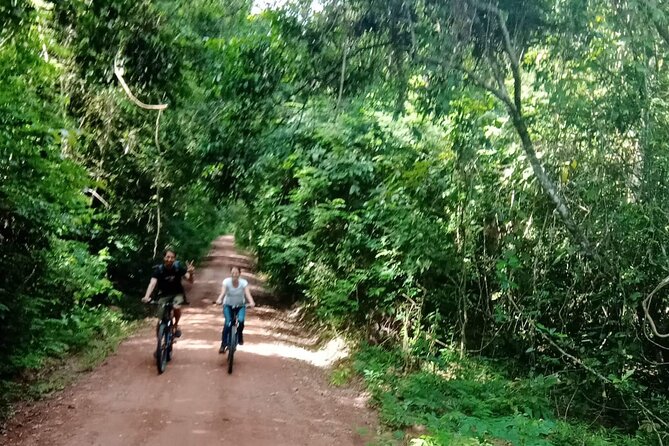
The best thing about this tour is the way a bicycle lets you move between Angkor’s temples at human speed. You hear the road, feel the morning air, and see jungle and stone between major stops instead of spending the whole day inside a vehicle. Sunrise at Angkor Wat gives the day a memorable start, while the sunset option offers a slower beginning and a hilltop finish.
I like two things in particular: the tour covers the essential temples without making you arrange bicycles, water, or transfers, and the small-group format keeps the outing more personal than a large bus trip. Guides such as Sam Vone are praised for lively storytelling, patience, and taking good photos. The main caution is physical effort. Biking, walking, heat, and temple stairs can make this a tiring seven- to eight-hour day, and sunrise riders should bring or request a light for dark roads.
Key points to know before booking
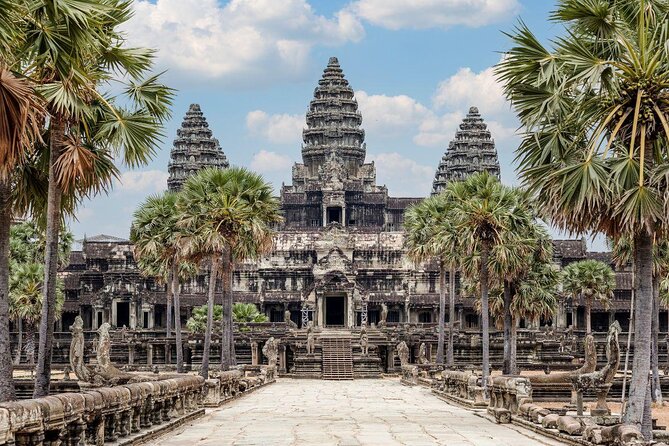
- Choose your best light: The sunrise departure begins before dawn at Angkor Wat. The sunset departure saves the early alarm and ends at Phnom Bakheng.
- Ride through the temple zone: Angkor Wat, Angkor Thom, Bayon, Ta Prohm, Banteay Kdei, and Ta Keo are included.
- Expect real exercise: The day combines cycling with walking and climbing, so moderate fitness is needed.
- A guide makes the difference: Sam Vone, also referred to as Vone, is praised for history, Khmer culture, patience, and photography.
- The $45 price covers the basics: You get a guide, bicycle, bottled water, and hotel pickup and drop-off, but not lunch or the Angkor Pass.
- Plan for a small group: The maximum is 15 people, a useful size for keeping together on roads and paths.
Why a bicycle works so well at Angkor
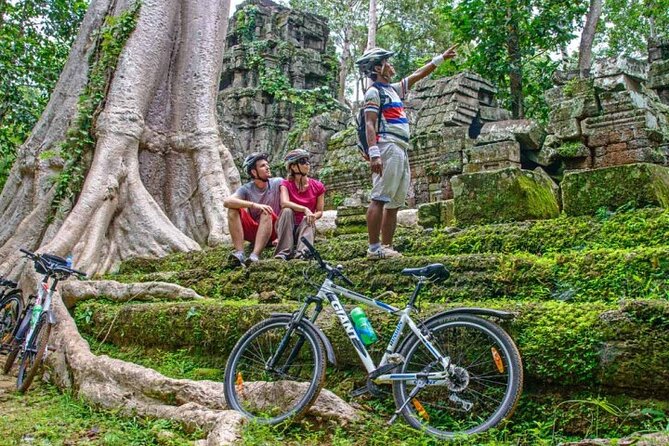
Angkor is spread across a large area, and the distance between temples is part of the experience. By bicycle, you are not simply hopping from one parking area to another. You have time to notice the jungle pressing close to the ancient roads, the change in light on the stone, and the quiet spaces between famous monuments.
I also like that cycling is a lower-impact way to see the complex. It avoids adding another full day of vehicle traffic to your visit, and it gives you some control over the pace. You still have a guide to lead the way, but the journey feels active rather than passive.
The tradeoff is simple: a bicycle does not remove the heat or the distance. The tour requires a moderate level of fitness, and one full day can include plenty of walking and stair climbing after the riding is done. If you want an easy sightseeing day with little exertion, a car or tuk-tuk tour will be more comfortable.
Your package includes two-way transfers from Siem Reap hotels to the bicycle base. The listed meeting point is Siem Reap Pub Hostel, behind the Angkor Night Market. The activity ends back at that meeting point, so confirm how your hotel pickup will work when you book.
More Angkor Wat Tours in Siem Reap:
- Angkor Wat Sunrise or Sunset Tour with Guide from Siem Reap
★ 5.0 · 12,109 reviews - Siem Reap: Angkor Wat: Small-Group Sunrise or Sunset Tour
★ 5.0 · 9,444 reviews - Siem Reap: Angkor Wat 2-Day Tour with Sunrise and Sunset
★ 4.9 · 4,429 reviews
Sunrise at Angkor Wat: an early start with a big payoff
The sunrise version begins with a pre-dawn pickup. One account describes a 4:30 a.m. tuk-tuk pickup, followed by a ride through the dark toward Angkor Wat. The exact pickup time will depend on the day and season, but you should expect a very early morning.
The reward is the view across the temple’s pools and towers as daylight appears. Angkor Wat has to be seen in changing light, and the quiet anticipation before sunrise gives the first stop a special mood. Your guide can help you find a good viewing position and explain what you are seeing rather than leaving you to guess at the temple’s layout.
Bring patience. Sunrise is popular, and the best places can be busy. The experience still gives you a strong opening to the day, but it is not a private moment in an empty temple.
The early cycling deserves practical attention. One person specifically suggested better bike lights because the roads and paths can be dark during the sunrise ride. I would take that advice seriously. Ask about lights before setting off, and bring a small flashlight if you have one. This is one of the few clear weaknesses in an otherwise highly praised outing.
After Angkor Wat, the tour continues through the main temple circuit. You will need energy for the rest of the day, not just the sunrise stop.
Angkor Thom and Bayon: faces at the center of the old capital
Angkor Thom was the later capital of the Angkor Empire. The approach passes through the South Gate, where rows of gods and demons appear to pull a giant serpent in opposite directions. This entrance is more than a gateway. It gives you a visual introduction to the religious ideas and royal power that shaped the city.
At the center is Bayon, famous for its large carved faces. The temple can feel confusing at first, with towers, galleries, and narrow passages packed close together. A guide is especially useful here. Sam Vone is praised for explaining Angkor and Khmer culture with enthusiasm, and that kind of commentary can turn a collection of stones into a place with purpose.
The stop is listed at about an hour. That is enough to see the key areas, but you will not study every carving. Keep your expectations sensible. Angkor Thom is a major city site, not a single compact temple you can fully understand in a quick visit.
The bicycle makes the approach memorable. You enter through the historic gate instead of arriving directly beside the central monument. I find that change in scale useful: first the broad city, then the crowded stone towers of Bayon.
Ta Prohm: jungle, roots, and the Tomb Raider effect
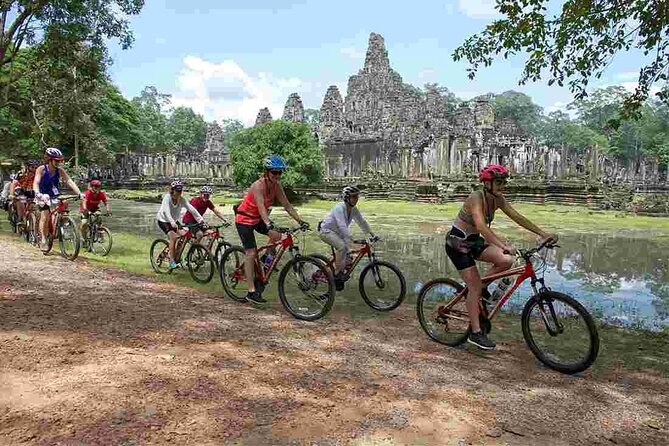
Ta Prohm is the stop most likely to match the image many people carry of Angkor. Trees push through walls, roots twist over stone, and sections of the ruin appear to be held together by the forest around them. The temple is also known as the Tomb Raider temple because of its appearance in the 2001 film starring Angelina Jolie.
The movie connection brings extra attention, but Ta Prohm deserves more than a quick film reference. Its power comes from the tension between construction and collapse. You can see carved doorways and galleries, then turn a corner and find tree roots woven across the structure.
This is also one of the places where a guide can help you avoid seeing only the best-known photo spots. Ask about the carvings and the temple’s design, then leave time to look up and around. The most memorable details are often not the obvious doorway.
The one-hour stop may pass quickly. Ta Prohm is visually crowded, and walking through the ruins can be slow. Wear shoes that are comfortable for uneven ground, and remember that the day includes several more stops after this one.
A few more Siem Reap trips to weigh up
- Sunset tour of Kampong Phluk stilts home village on the Tonle Sap
★ 5.0 · 4,865 reviews - Siem Reap: Full-Day Angkor Wat Guided Tour with Sunset
★ 4.9 · 3,803 reviews - Angkor Wat Sunset Small Group Tour with Lunch Included
★ 5.0 · 3,059 reviews - Angkor 2-Day Sunset & Sunrise Small-Group Tour
★ 5.0 · 2,567 reviews
Banteay Kdei: a quieter ruin with striking trees
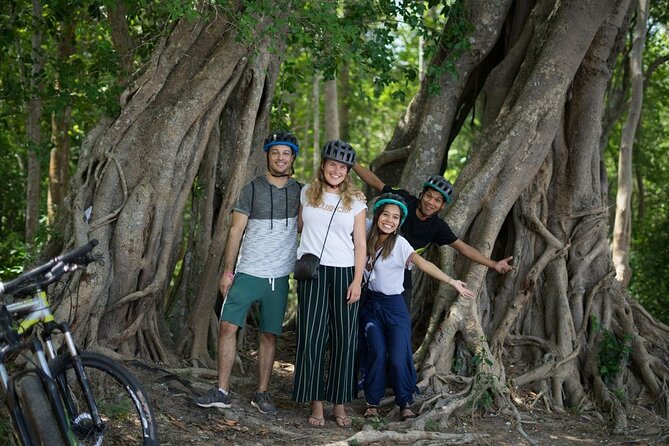
Banteay Kdei means citadel of monk’s cells. It is partially overgrown, with tall, sinuous trees and silk-cotton roots reaching through the ruined walls. Compared with Angkor Wat and Ta Prohm, it may feel less overwhelming, which is part of its appeal.
I like this stop as a change of pace. After the fame of Angkor Wat, the city scale of Angkor Thom, and the movie associations at Ta Prohm, Banteay Kdei lets you pay attention to texture and atmosphere. The trees are the main visual draw, but the worn stone and open sections also show how much of the site has weathered over time.
The stop is planned for about an hour. You may find it easier to slow down here, take photographs, and listen to the guide without the same pressure to see one famous feature. It is still a ruin, not a polished monument, so some visitors may find it less immediately dramatic than Ta Prohm.
Ta Keo: a stark pyramid and a physical climb
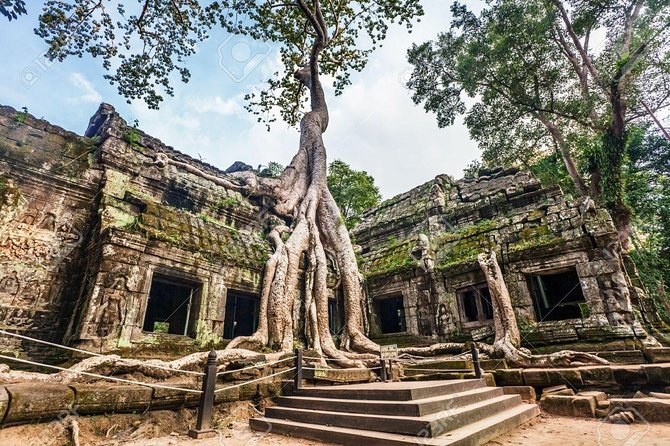
Ta Keo looks different from many of the other temples on this route because it was never finished. Its square, layered-pyramid shape gives it a hard, geometric profile. Where other temples draw you toward carvings and jungle growth, Ta Keo makes you notice height, mass, and steep terraces.
The climb is part of the stop. You should be ready for stairs and uneven surfaces, and you should not treat this as a quick photo break. From the upper levels, the structure’s shape becomes clearer, but the climb can add to the day’s fatigue.
This is one reason the cycling format suits active visitors. You are already moving under your own power, and Ta Keo adds another physical challenge. It is also why I would not book this tour casually after a sleepless arrival or if you have trouble with stairs.
Phnom Bakheng: the sunset option and its limits
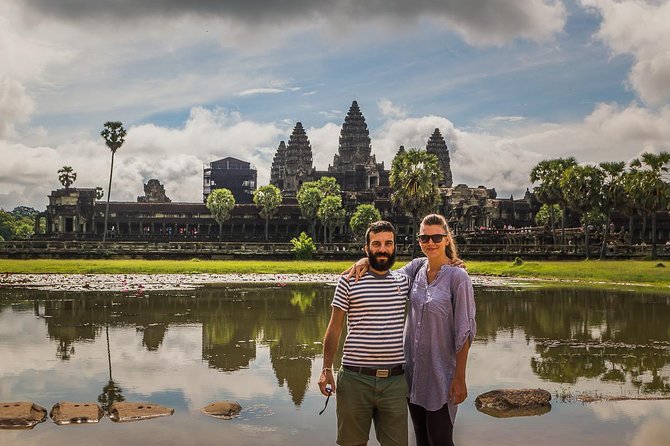
The sunset tour follows a different rhythm. Instead of waking before dawn, you begin later and finish at Phnom Bakheng, a hilltop temple built hundreds of years before Angkor Wat. From the hill, you can look toward Angkor Wat as the light fades.
That setting gives the sunset version a clear advantage. You spend the day visiting the major temples, then end with a broad view from above rather than returning straight to town. If you prefer a later start, this is probably the better choice.
The hill climb also means the sunset tour is not an easy alternative. You still need to walk uphill and climb around the temple area after a full day of cycling and sightseeing. Sunset viewpoints can also be popular, so do not expect complete solitude.
The experience details do not promise identical timing every day, and the cycling portion can vary with conditions. Treat the seven- to eight-hour duration as an estimate. One account described a day closer to 10 hours, with extensive biking, walking, and climbing. I would keep the evening open rather than schedule a tight dinner reservation or onward activity.
What the $45 price really includes
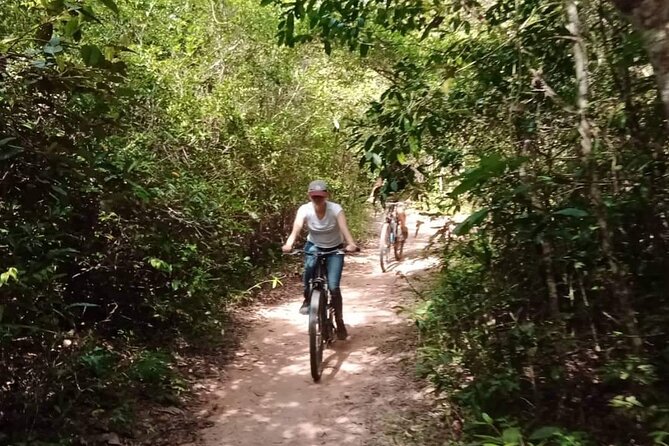
At $45 per person, the price is reasonable for a guided full-day outing if you want an active visit to Angkor. The fee includes the bicycle, guide, bottled water, and pickup and drop-off. That saves you from arranging equipment and transport separately.
The Angkor Pass is not included. Lunch is also not included, so you need to budget beyond the advertised price. Since no lunch arrangement is guaranteed in the package, ask your guide about the plan for the midday break and carry enough water and snacks for your own comfort.
One negative account raised concern about being taken to an expensive restaurant with poor food. I would not assume this will happen, but I would ask where lunch will be and what your choices are before ordering. The tour package itself does not cover lunch, so you should feel free to clarify the cost.
Group discounts are available, and the maximum group size is 15. That is small enough for a guide to give directions and help with temple visits, though it is not a private tour. If you want the guide’s full attention or a custom pace, ask about a private option before booking.
Guide quality, bicycles, and practical preparation
The guide can shape this experience more than almost anything else. Sam Vone, also called Vone, receives especially warm praise for enthusiasm, patience, Khmer cultural context, and photography. He is also described as someone who can point out good positions for photographs, which matters at temples where the best angle is not always obvious.
Guide quality can vary, so I would ask for Sam Vone by name if he is available, without assuming he will lead every departure. One poor account describes a guide with limited English and little interest in explaining the sites. That is a reminder to speak up early if you need clearer commentary or more time at a stop.
The bicycle should be treated as a real part of your safety plan. For the sunrise tour, confirm that it has a working light. If the sunset route includes dark riding after the final stop, ask the same question. A flashlight is a sensible backup.
You should also bring:
- Comfortable clothing for a long, active day
- Shoes suitable for walking and temple stairs
- Sun protection
- Extra water or snacks beyond the included bottle
- A small flashlight for pre-dawn riding
- A camera or phone, since the guide may help with photo locations
The activity is near public transportation, but the included pickup is more useful than arranging your own ride to the base. You receive confirmation at booking, and the tour can be canceled if poor weather or an insufficient number of bookings prevents departure. Free cancellation is available up to 24 hours before the start time.
Who should book this Angkor bicycle tour?
I would choose this tour if you want to see Angkor actively, value local explanation, and like the idea of traveling between temples under your own power. It suits reasonably fit visitors who are happy to spend most of a day outdoors and who see exercise as part of the sightseeing.
The sunrise version is best for photographers and first-time visitors who want Angkor Wat in early light. It demands the stronger alarm clock and careful attention to bike lights, but the first view of the temple can make the lost sleep worthwhile.
The sunset version suits you if pre-dawn starts sound miserable or if you prefer to finish with a hilltop view. It still requires stamina, especially at Phnom Bakheng, but the morning is less punishing.
I would think twice if you have limited mobility, dislike stairs, or want a relaxed, air-conditioned day. I would also avoid pairing this with another demanding activity in the evening. Angkor rewards time and attention, and you will enjoy it more if you are not rushing afterward.
Should you book it?
I would book this tour for the bicycle access, the coverage of Angkor’s major sites, and the chance to have a guide such as Sam Vone add context and help with photographs. The $45 fee is fair because it includes the bike, water, guide, and transfers, though you must add the temple pass and lunch.
Choose sunrise if Angkor Wat at first light is your priority, and confirm the bike lights before departure. Choose sunset if you want a later start and a final view from Phnom Bakheng. If you are fit, curious, and ready for a long day on two feet and two wheels, this is a memorable way to see Angkor without spending the whole visit behind a vehicle window.
FAQ
How long does the bicycle tour last?
The tour lasts approximately seven to eight hours. The exact day can run longer, so allow extra time for cycling, walking, climbing, and the temple visits.
Can I choose between sunrise and sunset?
Yes. The sunrise option begins before dawn at Angkor Wat. The sunset option starts later and includes Phnom Bakheng for sunset instead of the sunrise stop.
Which temples are included?
The route includes Angkor Wat, Angkor Thom, Ta Prohm, Banteay Kdei, and Ta Keo. The sunset option also includes Phnom Bakheng.
Is the Angkor Pass included?
No. The temple pass is not included in the $45 price and must be paid for separately.
Is lunch included?
No. Lunch is not included. Bottled water is provided, and you should clarify the lunch plan and prices with the guide before ordering.
How many people can join the tour?
The maximum group size is 15 people.
Can I cancel for a refund?
You can cancel at least 24 hours before the local start time for a full refund. Cancellations or changes made less than 24 hours before departure are not accepted for a refund. If poor weather or too few bookings cancels the tour, you will be offered another date or experience, or a full refund.
More Morning in Siem Reap
- Angkor Wat Sunrise tour with Small – Group and Guide tours
★ 5.0 · 3,655 reviews - Angkor Wat Highlights and Sunrise Guided Tour from Siem Reap
★ 5.0 · 3,213 reviews - Full-Day Angkor Wat Sunrise Private Tour with Guide from Siem Reap
★ 5.0 · 2,920 reviews - Angkor Wat Sunrise & 3 Main Temples with Breakfast – Small Group
★ 5.0 · 2,857 reviews
Just added around Siem Reap
- Ultimate Sunrise to Angkor Wat, Angkor Thom and Bayon Temple★ 5.0 · 3 reviews
- Twilight Tastes of Siem Reap Include Dinner★ 5.0 · 13 reviews
- Trekking Tour at Phnom Kulen National Park from Siem Reap★ 5.0 · 3 reviews
- Full-Day Private Tour of Angkor Wat with Pick Up★ 5.0 · 12 reviews
- Private Day Trip to Angkor Temples with Expert Guide★ 5.0 · 4 reviews
- Waterfall & River of 1000 Siva Linga- Kulen Mountain Private Tour★ 5.0 · 3 reviews
- Professional Photo Shoot in Angkor Archaeological Park, Siem Reap★ 5.0 · 42 reviews
- Ultimate Siem Reap Food Tour by Tuk Tuk – 20 Tastings, 8 Stops★ 5.0 · 13 reviews
Angkor Wat Tours, compared.

Angkor Wat Sunrise or Sunset Tour with Guide from Siem Reap
Read our review →
Angkor Wat: Small-Group Sunrise or Sunset Tour
Read our review →
Angkor Wat 2-Day Tour with Sunrise and Sunset
Read our review →

Angkor Wat Sunrise tour with Small – Group and Guide tours
Read our review →
Angkor Wat Highlights and Sunrise Guided Tour from Siem Reap
Read our review →
Angkor Wat Sunset Small Group Tour with Lunch Included
Read our review →
Full-Day Angkor Wat Sunrise Private Tour with Guide from Siem Reap
Read our review →Browse the lists this tour appears in