
Reviewed · ANGKOR WAT TOURS
Sunrise at Angkor Wat and Small Tour with Tours Guide
Angkor Wat at sunrise is the hook, but the real value comes from what follows: a full day through the stone faces of Bayon, the royal terraces of Angkor Thom, and the tree-wrapped ruins of Ta Prohm. You leave Siem Reap at 4:30 AM, so you pay for the view with an early alarm.
I like the way the tour pairs the famous temples with a local guide who can explain Khmer art and the old empire instead of leaving you to puzzle over every carved wall. I also like the practical touches: hotel transfers, bottled water, cold towels, and an air-conditioned vehicle.
The main drawback is the low advertised price does not include the Angkor pass, breakfast, lunch, or other drinks. A shared vehicle can also be fairly large, with one group reaching 22 people, and the early start plus long walking day may not suit anyone over 70.
Key points before you book
- Sunrise begins before dawn: Pickup is scheduled for 4:30 AM, with about two hours at Angkor Wat for sunrise and temple touring.
- The temple route covers the essentials: You visit Angkor Wat, Angkor Thom, Bayon, Ta Prohm, and Banteay Kdei.
- Guide Ounra earned special praise: He was noted for finding good sunrise viewpoints, avoiding some crowds, and taking strong photographs.
- The $6 price is only the tour service: Add the required Angkor admission pass, which costs $37 for one day.
- Shared and private choices change the feel: A private group should offer more control, while a shared tour keeps the base cost low.
- Plan for a demanding day: The schedule runs about eight hours and includes early rising, walking, heat, and many temple steps.
Why the 4:30 AM start is worth considering
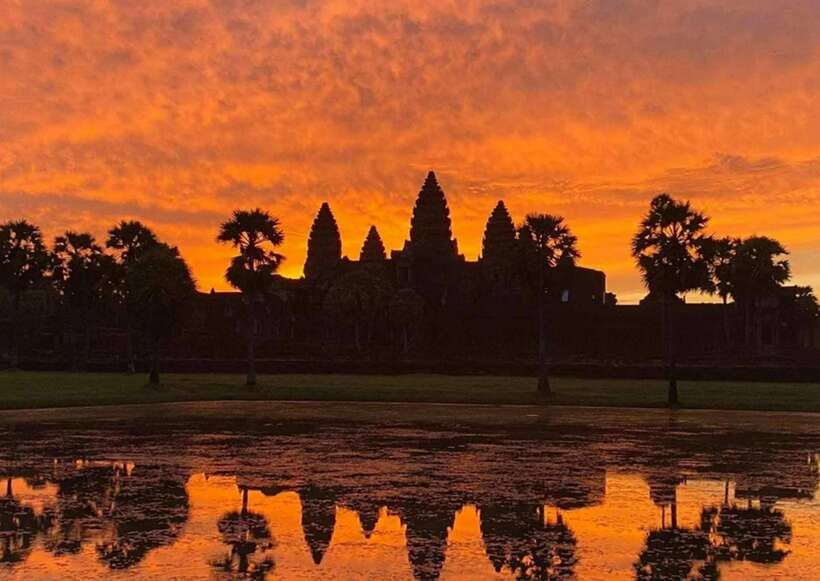
You are collected from your hotel in Siem Reap at about 4:30 AM and driven to the main entrance of Angkor Wat. The vehicle is air-conditioned, which matters later in the day, but at this hour the main challenge is simply getting moving.
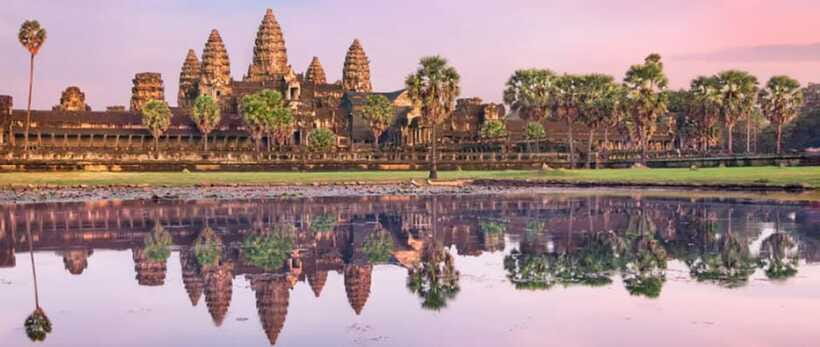
Sunrise is the emotional high point. Angkor Wat’s towers and reflecting pools take on a different mood as the light grows, and you have time to walk, take photographs, and hear the first part of the temple story from your guide. The schedule allows roughly two hours here, followed by another 1.5 hours of guided sightseeing at Angkor Wat.
Do not treat the first stop as a quick photo break. Angkor Wat is a large complex, and the guide’s help is useful for understanding how its spaces fit together. You can also ask for advice on where to stand for photographs. Ounra, one of the named guides, was especially praised for finding good viewing spots and taking photographs for the group.
There is a practical catch. Sunrise at Angkor Wat is popular, and the experience is not a quiet private meeting with the temple. A private booking may give you more freedom about where and when to stop, but the supplied details do not promise an empty viewing area. Go for the atmosphere and the architecture, not for complete solitude.
More Angkor Wat Tours in Siem Reap:
- Angkor Wat Sunrise or Sunset Tour with Guide from Siem Reap
★ 5.0 · 12,109 reviews - Siem Reap: Angkor Wat: Small-Group Sunrise or Sunset Tour
★ 5.0 · 9,444 reviews - Siem Reap: Angkor Wat 2-Day Tour with Sunrise and Sunset
★ 4.9 · 4,429 reviews
Breakfast is a break, not part of the $6 price
After the sunrise visit, the schedule includes about 30 minutes for breakfast, followed by another short 15-minute break. Meals and beverages are not included, so you need to budget separately.
This is one of those small details that can affect the whole morning. You are leaving before breakfast, spending time outdoors, and walking through large temple grounds. Bring enough money for food and drinks, and do not assume the tour price covers the meal.
One past booking described the lunch restaurant as good but expensive for the area near the temples. That is useful advice: food close to Angkor can cost more than a meal in central Siem Reap. You may value the convenience, but if price matters, ask what stop is planned and check the menu before ordering.
Bottled drinking water is listed as included, along with a cold towel. One person reported not receiving either the water or the towel, so it is sensible to carry your own water as a backup. The cold towel is a welcome touch after the morning heat, but it should be treated as a helpful extra rather than the reason to book.
Angkor Thom begins at the South Gate
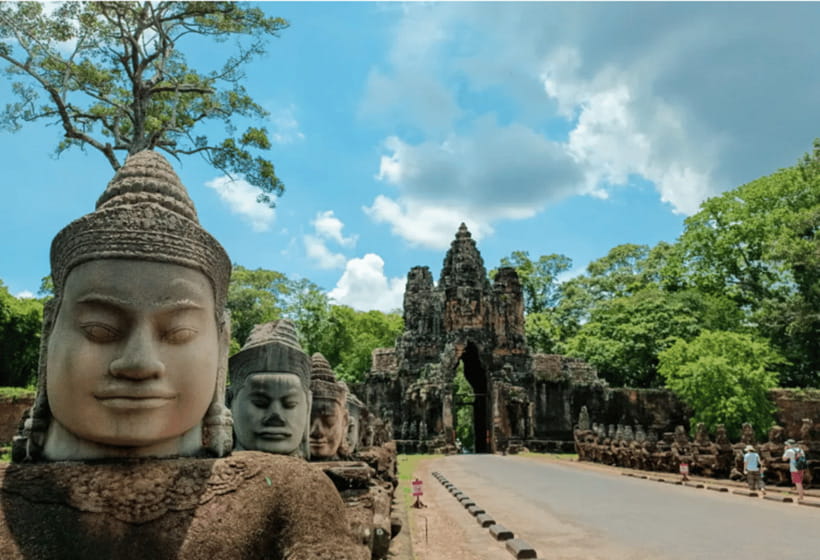
The route then moves to the South Gate of Angkor Thom, with about an hour for a guided visit. This approach is one of the most striking parts of the circuit. Stone figures line the causeway, creating a formal entrance to the old royal city.
Your guide explains the Khmer Empire, the temples, and the religious ideas behind the carvings. This is where a guide earns his fee. Without context, the statues and towers can blur together after several hours. With a clear explanation, the route becomes a story about royal power, sacred space, and the way Cambodian art presented both gods and kings.
The tour also includes a short photo stop and scenic views along the way, listed at about 45 minutes. That should give you time to look around rather than rush straight from vehicle to monument. Still, keep your expectations practical. The schedule covers many major sites in one day, so this is a highlights tour, not a slow study of every corner.
Bayon’s stone faces need time and context
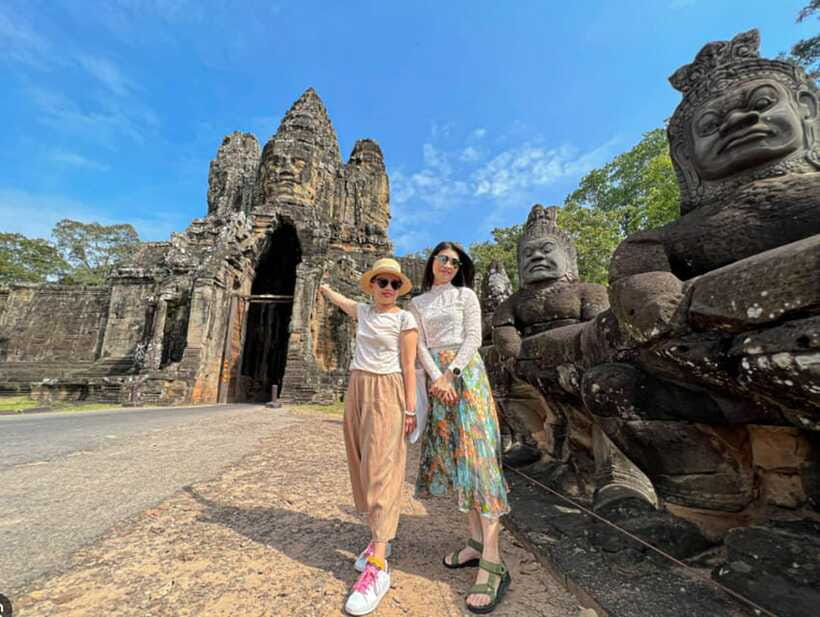
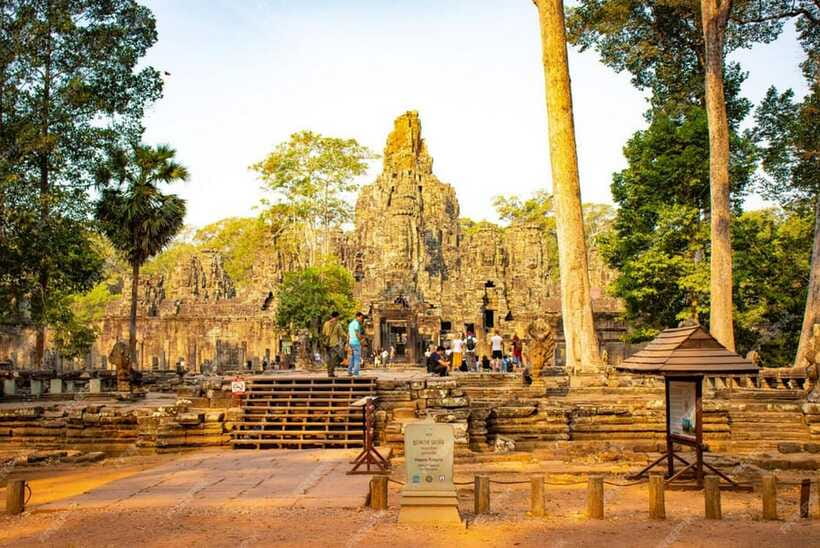
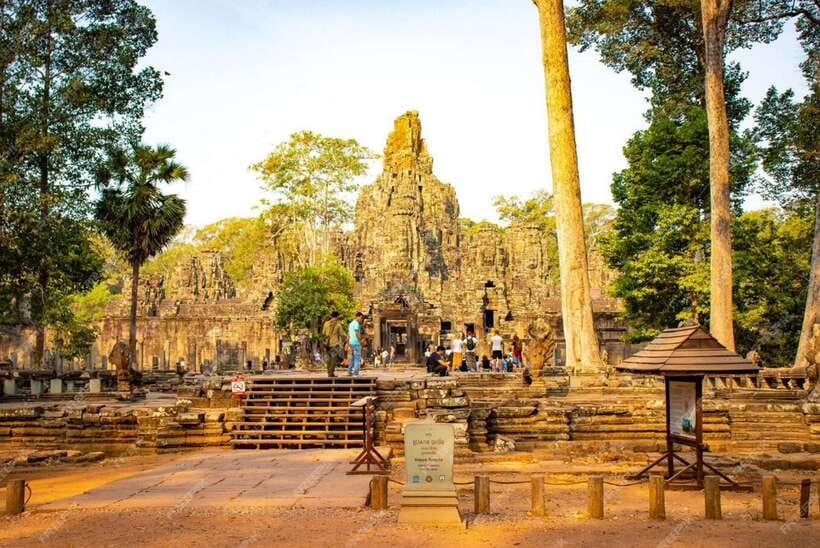
Bayon gets about 1.5 hours. This is the temple at the heart of Angkor Thom, known for its towers and enormous carved faces. The description counts 54 towers and 216 faces associated with the bodhisattva Avalokesvara.
The faces are the reason many people remember Bayon most clearly. They appear from different angles as you move through the tight stone corridors, and the expressions can seem calm, watchful, or almost amused. Your guide can point out what to look for in the carvings and explain how Bayon fits into the reign of King Jayavarman VII.
The corridors and towers make Bayon more physically demanding than a simple walk around an open monument. You will spend time walking over uneven stone and moving through narrow spaces. Comfortable shoes matter, especially because Bayon is only one stop in a full day of walking.
This is also where group size can affect the experience. A shared group of 22 people may make it harder to pause at the exact spot you want. The advantage is a lower base price and a social outing. If photographs, questions, and flexible pacing are important to you, select the private group option if available for your booking.
A few more Siem Reap trips to weigh up
- Angkor Wat Sunrise tour with Small – Group and Guide tours
★ 5.0 · 3,655 reviews - Angkor Wat Highlights and Sunrise Guided Tour from Siem Reap
★ 5.0 · 3,213 reviews - Full-Day Angkor Wat Sunrise Private Tour with Guide from Siem Reap
★ 5.0 · 2,920 reviews - Angkor Wat Sunrise & 3 Main Temples with Breakfast – Small Group
★ 5.0 · 2,857 reviews
The royal terraces show Angkor Thom from another angle
The plan includes the Terrace of the Elephants and the Terrace of the Leper King after the South Gate and Bayon visits. These terraces served as royal viewing platforms and as the setting for the king’s great audience hall.
They are not as instantly famous as Angkor Wat or Ta Prohm, but they help you understand Angkor Thom as a working royal city. The stone carvings and long raised platforms point to ceremonies, public display, and the power of the king. This stop is especially useful after seeing the temples because it shifts your attention from worship to government and court life.
You may spend less time here than at Bayon or Ta Prohm. That is not a flaw so much as a result of the eight-hour schedule. The terraces make sense as part of the larger story, and the guide’s explanation gives them more weight than a quick photograph would.
Ta Prohm brings stone and trees together
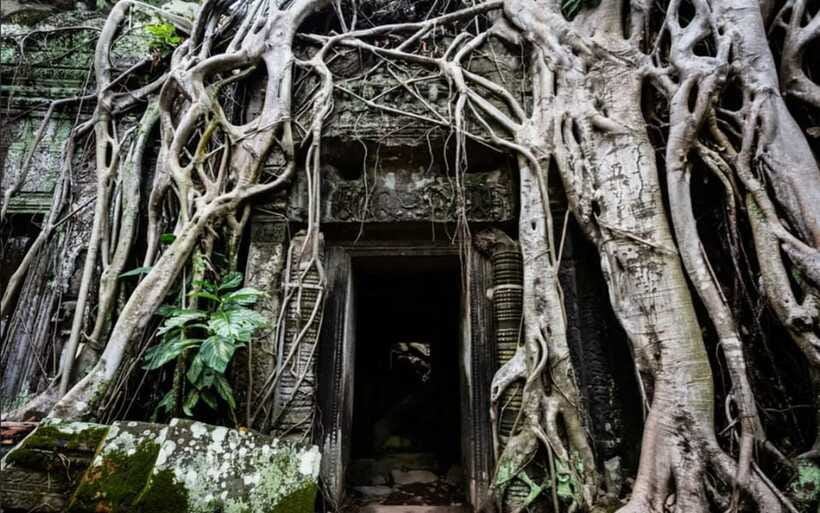
Ta Prohm receives about two hours, making it one of the longer stops. This is the jungle temple, where large trees grow around and over the stone structures. The roots and walls create the unusual scene that has made Ta Prohm one of Angkor’s most photographed places.
I like this part of the route because it feels different from Angkor Wat and Bayon. Angkor Wat presents order and scale. Bayon surrounds you with carved faces. Ta Prohm shows what happens when a monumental building is left in close contact with the forest.
The setting is dramatic, but it can also be crowded and awkward to photograph. Tree roots, broken stone, and narrow paths require care. Your guide can help you find the main details and keep the visit moving, but do not expect every photograph to be clear of other people.
Two hours is enough for a meaningful visit, though you may want more if you are interested in architectural details. This is a good stop for people who prefer atmosphere and unusual views over a long lecture about dates and rulers.
Banteay Kdei adds a quieter final temple
The final temple described in the route is Banteay Kdei, built by King Jayavarman VII in the late 12th century. It is less famous than Ta Prohm, but that makes it a useful closing stop after the day’s best-known monuments.
Banteay Kdei continues the Jayavarman VII connection found at Bayon and Ta Prohm. Seeing these places together helps you notice shared design ideas and the scale of the king’s building program. The temple also gives you another chance to walk through stone corridors and courtyards without making the entire day about only one or two headline sites.
The supplied stop list names Banteay Kdei in the main plan, though the detailed timing section does not give it a separate duration. For that reason, ask your guide how the day is being paced if Banteay Kdei is a priority. The route may need to adjust based on traffic, walking speed, and time spent at the earlier temples.
After the temple circuit, you return to one of two drop-off locations in Siem Reap. Hotel pickup and return transfer are included when you provide your hotel name and room number by email or WhatsApp.
What the guide adds to the day
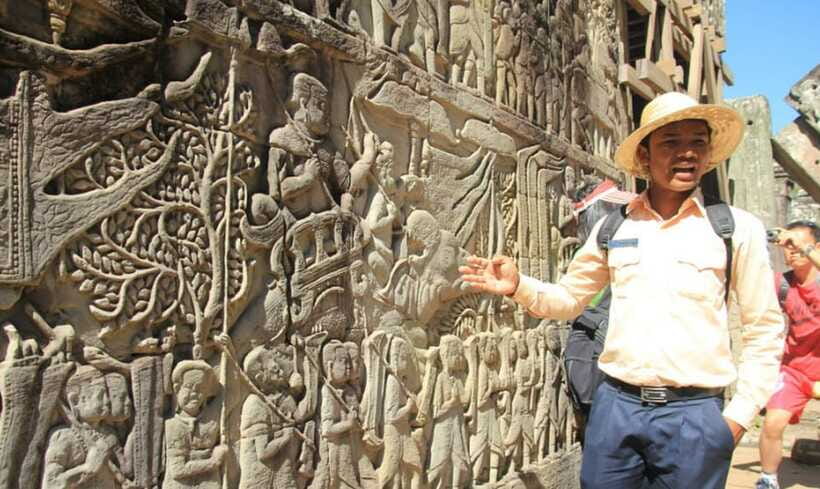
The tour is conducted in English. Your guide explains Cambodian culture, art, and the history of the Khmer Empire at the temples rather than simply pointing out photo stops.
That distinction matters at Angkor. The carvings are impressive, but many details are hard to read without help. A guide can connect the faces at Bayon, the royal terraces, and the temples of Jayavarman VII into one historical thread.
Ounra was specifically praised for his sunrise knowledge, crowd awareness, photography, and friendly help. That combination is valuable at the first stop, when everyone wants a strong view and good photographs. English ability can vary by guide, and one person found the explanations difficult to follow at times, so consider asking questions when you need a point repeated.
A private group is the better choice if you want a slower pace, more photographs, or more direct conversation. The shared option is more economical, but the larger group size can make the day feel less personal. The exact group size depends on the option you select.
The real cost is closer to $43 for one day
The advertised tour price is $6 per person, which is unusually low for an eight-hour temple day with transport, an English-speaking guide, bottled water, and a cold towel. But that figure is not your full Angkor budget.
An Angkor pass is required. The listed prices are:
- One-day pass: $37
- Three-day pass: $62
- Seven-day pass: $72
The passes must be used on consecutive days. For this one-day tour, most people will need to add the $37 pass, bringing the basic cost to about $43 before breakfast, lunch, and other drinks.
At that total, the tour can still be good value if you want the major temples handled in one organized day. The vehicle, guide, hotel transfer, and route planning remove several practical hassles. The value is weaker if you already have temple transport, know Angkor well, or want to set your own pace.
The private option may cost more than the shared rate, but the supplied price does not state the private-group supplement. Check that amount before booking rather than assuming the $6 price applies to a private vehicle.
Who will get the most from this temple day
This tour suits you if you have one main day for Angkor and want the classic route explained in English. It is also a good fit if you appreciate hotel pickup and do not want to arrange transport before dawn.
You should book it if sunrise photography, Bayon’s faces, and Ta Prohm’s tree-covered ruins are your priorities. The combination gives you three very different views of Angkor in one day.
You may want another plan if you dislike early mornings, prefer long quiet visits, or need a gentle walking schedule. The tour begins before dawn, lasts eight hours, and includes several large temple areas. The information provided also says it is not suitable for people over 70.
Bring comfortable footwear, money for food, and a spare bottle of water. Tell the operator your hotel name and room number ahead of time, and decide before booking if you want shared transport or a private group.
Should you book the sunrise Angkor tour?
I would book this tour if your goal is to cover the essential Angkor sights at a very low tour price, with a guide and transport already arranged. The strongest parts are the sunrise timing, the full route through Angkor Thom and Ta Prohm, and the chance to have a guide such as Ounra help with both history and photographs.
I would choose the private option if you care about pace and personal attention. I would choose the shared option if keeping costs down matters most and you can accept a larger group.
Just budget properly. The $6 is not the complete cost, and meals are extra. With the Angkor pass added, the tour remains a practical value for a first visit, but it is best understood as a fast, well-packed highlights day rather than a relaxed archaeological study.
FAQ
What time does hotel pickup begin?
Pickup begins at about 4:30 AM from your hotel in Siem Reap. You need to provide the hotel name and room number by email or WhatsApp.
Is the Angkor admission pass included?
No. You must buy an Angkor pass separately. The listed prices are $37 for one day, $62 for three days, or $72 for seven days, and the pass must be used on consecutive days.
Does the price include breakfast or lunch?
No. Meals and beverages are not included. The schedule provides breaks for breakfast and lunch, but you pay for your own food and drinks.
What language does the guide speak?
The live tour guide speaks English.
Can I book a private group?
Yes. A private group option is available, alongside a shared group choice.
Can I cancel the booking for a refund?
Yes. You can cancel up to 24 hours in advance for a full refund. The reserve-now, pay-later option also lets you book without paying immediately.
Just added around Siem Reap
- Ultimate Sunrise to Angkor Wat, Angkor Thom and Bayon Temple★ 5.0 · 3 reviews
- Twilight Tastes of Siem Reap Include Dinner★ 5.0 · 13 reviews
- Trekking Tour at Phnom Kulen National Park from Siem Reap★ 5.0 · 3 reviews
- Full-Day Private Tour of Angkor Wat with Pick Up★ 5.0 · 12 reviews
- Private Day Trip to Angkor Temples with Expert Guide★ 5.0 · 4 reviews
- Waterfall & River of 1000 Siva Linga- Kulen Mountain Private Tour★ 5.0 · 3 reviews
- Professional Photo Shoot in Angkor Archaeological Park, Siem Reap★ 5.0 · 42 reviews
- Unveiling 2 Days Private Angkor Wat/Beyond In Sunrise/Sunset Tour★ 5.0 · 48 reviews
Angkor Wat Tours, compared.

Angkor Wat Sunrise or Sunset Tour with Guide from Siem Reap
Read our review →
Angkor Wat: Small-Group Sunrise or Sunset Tour
Read our review →
Angkor Wat 2-Day Tour with Sunrise and Sunset
Read our review →

Angkor Wat Sunrise tour with Small – Group and Guide tours
Read our review →
Angkor Wat Highlights and Sunrise Guided Tour from Siem Reap
Read our review →
Angkor Wat Sunset Small Group Tour with Lunch Included
Read our review →