Reviewed · PRIVATE
Siem Reap: Private Tour of Angkor Complex
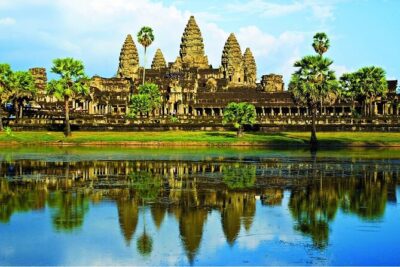
Angkor Wat may be the headline, but the full story unfolds across the ancient city around it. This private day from Siem Reap takes you through Angkor Thom, the mysterious faces of Bayon, the jungle-wrapped ruins of Ta Prohm, and the great temple of Angkor Wat itself.
I like the private car and driver, which give you shade, cold water, and a quieter way to move between widely scattered temples. I also like the route’s range: royal terraces, carved towers, ruined jungle walls, and one of the world’s grandest religious monuments. The main caution is guide quality. One poor experience described very little explanation at Angkor Wat, so it is wise to confirm your guide’s plan and ask questions from the start.
Key points to know before booking
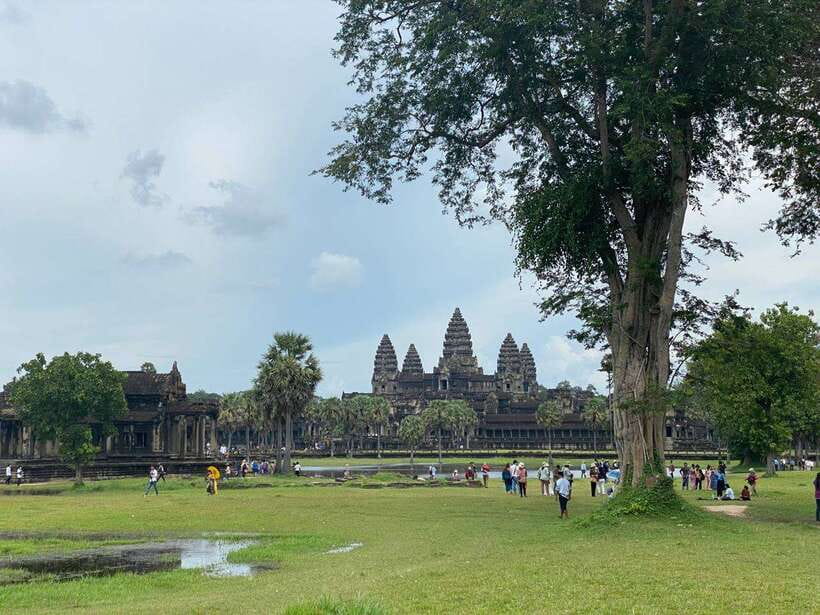
- A full circuit of Angkor’s essential sights: You visit Angkor Thom, Bayon, Baphuon, the Royal Enclosure, Phimeanakas, both terraces, Ta Prohm, and Angkor Wat.
- Private transport makes the long day easier: An air-conditioned car or minivan collects you at your Siem Reap hotel and carries you between the temples.
- Angkor Wat comes after lunch: The famous temple is scheduled for the afternoon, when you can give it your full attention rather than rushing through it early.
- The temple pass costs extra: The tour price is $72 per person, but the Angkor entrance fee is another $37 per person.
- Small comforts are included: You receive drinking water, fresh coconut juice, and a cool towel, useful in Cambodia’s heat.
- Guide service matters: The English-speaking guide is meant to explain the temples and Cambodian history, but the quality of commentary may vary.
A private route through the Khmer capital
The Angkor complex covers roughly 60 square miles, so this is not a walk from one monument to the next. You need transport, and the private air-conditioned vehicle is one of the practical strengths of the day.
Your guide and driver pick you up at your hotel or guesthouse in Siem Reap City. You need to provide the property name when booking. From there, the route begins at Angkor Thom, the last great capital of the Khmer Empire.
The temples were built under Khmer kings from the ninth through the fifteenth centuries. Around 1430, the city was abandoned, and the forest gradually took over many of its structures. That long gap helps explain the strange mood here. You are not simply visiting isolated temples. You are moving through the remains of a royal city that once had streets, courtyards, official buildings, shrines, and monuments on a huge scale.
A private tour is useful because you can ask for context as you go. The carved scenes and religious symbols are far easier to understand when someone explains what you are seeing. Still, do not assume the guide will automatically give you a detailed talk at every stop. Ask direct questions, especially at Angkor Wat and Bayon, where a quiet guide can leave you with little more than photographs.
A few more Siem Reap trips to weigh up
- Full-Day Angkor Wat Sunrise Private Tour with Guide from Siem Reap
★ 5.0 · 2,920 reviews - Siem Reap: Angkor Wat Private Tuk-Tuk Tour
★ 4.9 · 2,222 reviews - Angkor Wat Private Day Tour from Siem Reap
★ 5.0 · 834 reviews
Angkor Thom and the South Gate
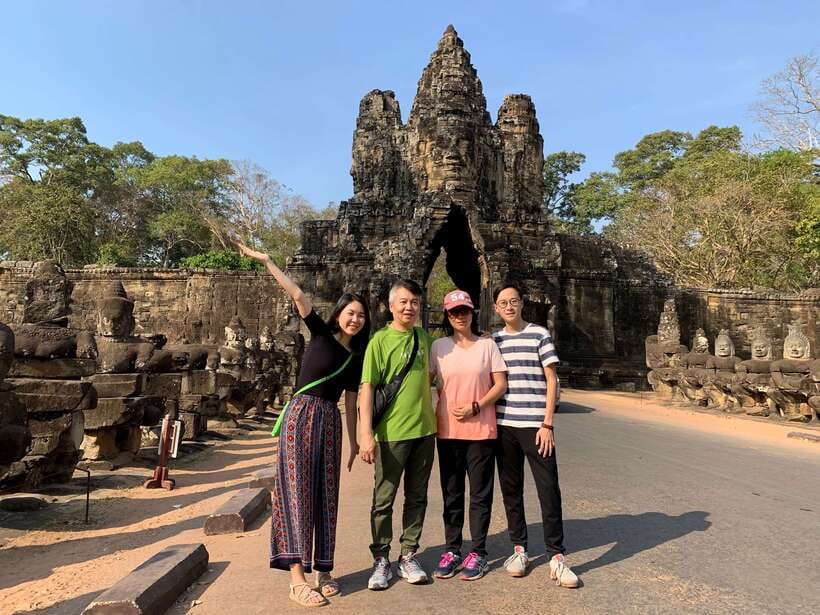
The approach to Angkor Thom begins at the South Gate, one of the most memorable entrances in the complex. The gateway is framed by monumental figures lining the road, creating a strong first sense of arrival.
From here, the tour moves into the former capital. Angkor Thom is not one single temple, so this part of the day feels more like exploring a historic city than checking off a monument. You will see several major sites close together, including Bayon, Baphuon, the Royal Enclosure, Phimeanakas, the Terrace of the Elephants, and the Terrace of the Leper King.
This sequence gives you a useful sense of how Khmer rulers displayed power. Temples were religious places, but the terraces and royal grounds also projected the authority of the king. The scale is impressive, though the number of monuments can become tiring if you try to study every carving in detail.
I suggest keeping your pace steady here. Bayon deserves time, and the terraces are best appreciated with a guide who can point out what they were used for. You do not need to treat every stop as a separate major event. Think of Angkor Thom as a connected group of royal and religious spaces.
Bayon’s carved faces
Bayon is the visual surprise of Angkor Thom. Its towers carry large carved faces that look out in different directions, giving the temple an eerie, watchful character.
The faces are the reason most people remember Bayon, but the temple is also a maze of galleries and stone passages. You can feel the building’s complexity as you move through it. The carvings on the walls add another layer, showing scenes tied to Khmer life and warfare.
This is one of the stops where a good explanation makes a real difference. Without context, you may simply see towers and faces. With a clear guide, you can better understand why the monument was built and how it fit into the king’s city.
The private format helps here. You are not tied to the speed of a large group, so you can pause for photographs or ask about a carving. On the other hand, the site can feel visually crowded in your own mind, with faces, towers, corridors, and reliefs competing for attention. Let your guide set a simple path rather than trying to see every corner.
Baphuon, Phimeanakas, and the royal terraces
After Bayon, the route continues to Baphuon Temple, the Royal Enclosure, and Phimeanakas. These sites are less famous than Angkor Wat and Ta Prohm, but they help fill in the story of Angkor Thom.
Baphuon is a large temple structure with a strong sense of height and mass. Its form is different from Bayon’s crowded towers, so the change of mood is welcome. Phimeanakas and the Royal Enclosure bring you closer to the old royal center, though the surviving remains require imagination.
The Terrace of the Elephants is one of the clearest reminders that Angkor was a ceremonial capital. Its carved elephants and long platform point to public display and royal processions. The Terrace of the Leper King is more intimate, with detailed carvings that reward a closer look.
These stops may not deliver the instant shock of Angkor Wat, but I would not skip them. They give the day structure and show that Angkor is far more than one famous temple. You also get a better idea of the Khmer Empire’s interest in combining sacred imagery with royal power.
Same country, a completely different kind of day:
- Angkor Wat Sunrise or Sunset Tour with Guide from Siem Reap
★ 5.0 · 12,109 reviews - Siem Reap: Angkor Wat: Small-Group Sunrise or Sunset Tour
★ 5.0 · 9,444 reviews - From Siem Reap: Kampong Phluk Floating Village Tour by Boat
★ 4.9 · 6,979 reviews - Sunset tour of Kampong Phluk stilts home village on the Tonle Sap
★ 5.0 · 4,865 reviews
Ta Prohm and the jungle ruins
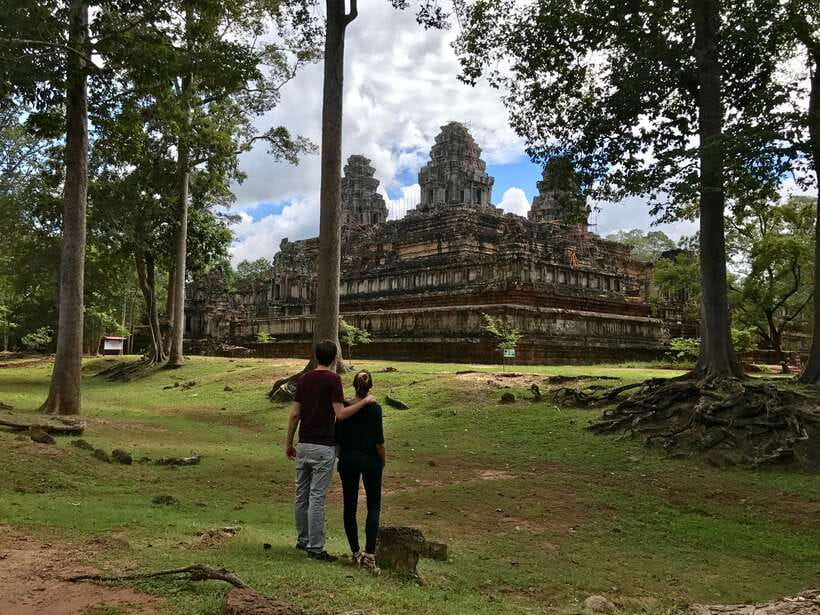
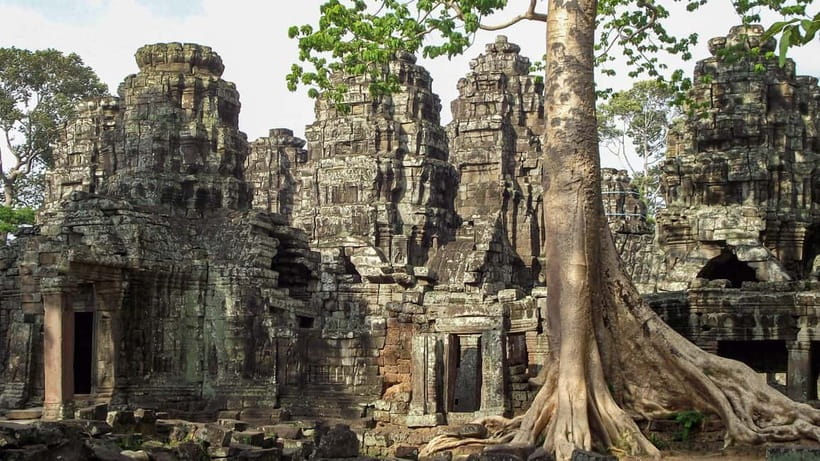
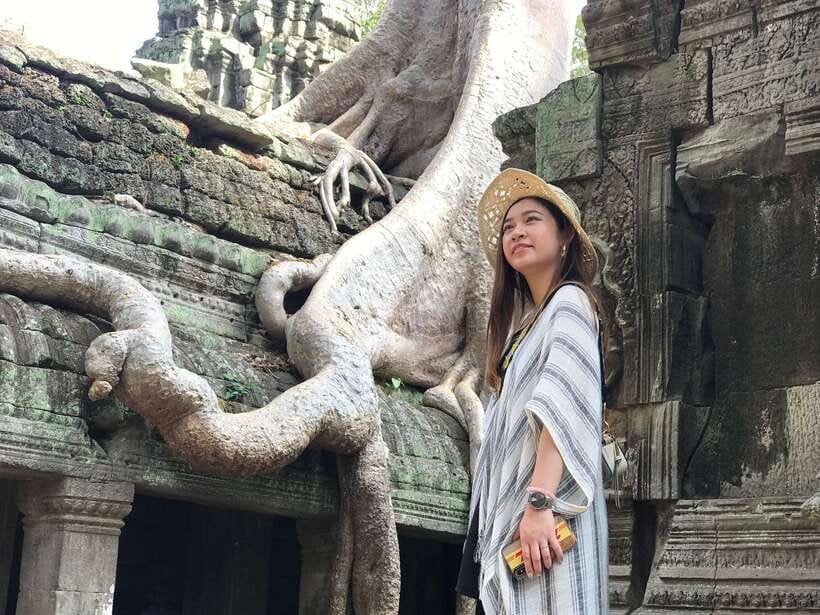
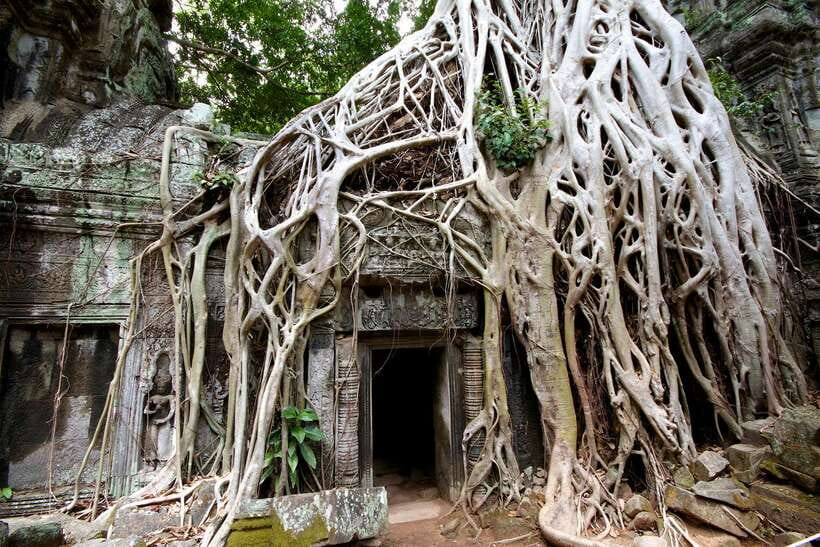
Ta Prohm is the temple that feels most like a lost city. It has been kept relatively untouched since its discovery, with trees and jungle growth still wrapped around parts of the stonework.
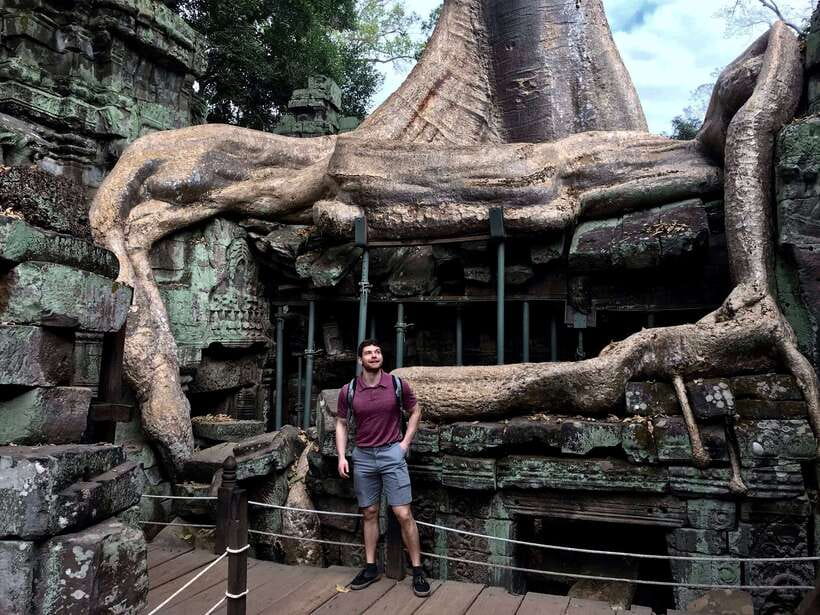
The appeal is not just the greenery. Ta Prohm shows what happens when a large religious complex is left to weather and vegetation. Roots press against walls, corridors open into shadow, and fallen stones make the building feel less controlled than Angkor Wat or Bayon.
This is likely to be one of your favorite stops if you want atmosphere rather than perfect symmetry. It also offers a useful contrast. Angkor Thom shows the Khmer capital as an organized royal center, while Ta Prohm gives you a glimpse of the same world after centuries of abandonment.
Take care with your expectations. The jungle setting is memorable, but the temple is not a quiet wilderness far from all other activity. It is a major Angkor stop, and the experience depends partly on how much time your guide gives you. Ask for a slower walk through the most interesting sections instead of a quick photo stop.
Lunch and the afternoon visit to Angkor Wat
Lunch is not included, so you pay for your own meal and drinks. The tour schedule places Angkor Wat after lunch, which is sensible because the temple deserves a long, focused visit.
The main temple complex covers about 81 hectares, roughly the size of the Imperial Palace in Beijing. That figure helps explain why a short stop does not do it justice. You first encounter the broad layout, then the galleries, towers, courtyards, and sculpted details begin to separate into smaller stories.
Angkor Wat is famous for its balance and proportions. Its towers rise above a carefully planned series of galleries and spaces, while the walls carry extensive carved scenes. The building works both as a grand silhouette and as a place of close observation.
I like visiting it later in the day because you have already seen the smaller parts of Angkor. By then, you can better understand the temple as the high point of a much larger royal project. The risk is fatigue. After Bayon, the terraces, and Ta Prohm, you may arrive at Angkor Wat tired and less patient. Drink the supplied water, use the cool towel, and do not try to race through every gallery.
One important practical point is guide communication. A full day with a private guide should include explanation, not only transport. If your guide is quiet, ask for the story behind the main carvings, the temple’s layout, and the role of Angkor Wat in the Khmer Empire. One recorded experience described the visit as largely silent and ended back at the hotel around 2:30 p.m., well before the expected late afternoon finish. That is not the experience you want from a full-day booking, so clarify the planned timing at pickup.
What the $72 price really covers
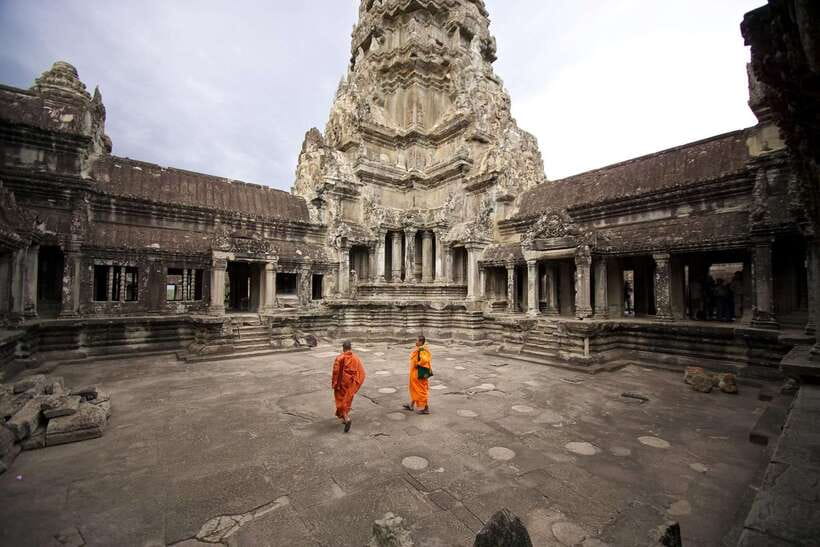
The tour costs $72 per person. That price includes the private English-speaking guide and driver, hotel pickup and drop-off within Siem Reap City, an air-conditioned car or minivan, drinking water, fresh coconut juice, and a cool towel.
The temple pass is not included and costs $37 per person. That brings the basic cost to $109 per person before lunch, soft drinks, beer, or personal purchases. The final amount matters, especially if you are comparing this with a larger group tour.
The value depends on how many people are in your booking. For two people, you are paying for private transport and personal attention, not only admission and a seat in a vehicle. One booking account put the total tour price at $60 per person, but that may reflect a different rate or booking condition. Use $72 as the current reference price supplied for this experience.
I see the strongest value for couples, families, or friends who want their own vehicle and do not want to spend the day waiting for a large group. Solo visitors pay more per person for the private setup, though the freedom to ask questions and control the pace may still be worthwhile.
Lunch being separate is normal for a temple day, but it means you should budget for it. Food and other drinks are not covered, while water and coconut juice are supplied.
Comfort, timing, and guide expectations
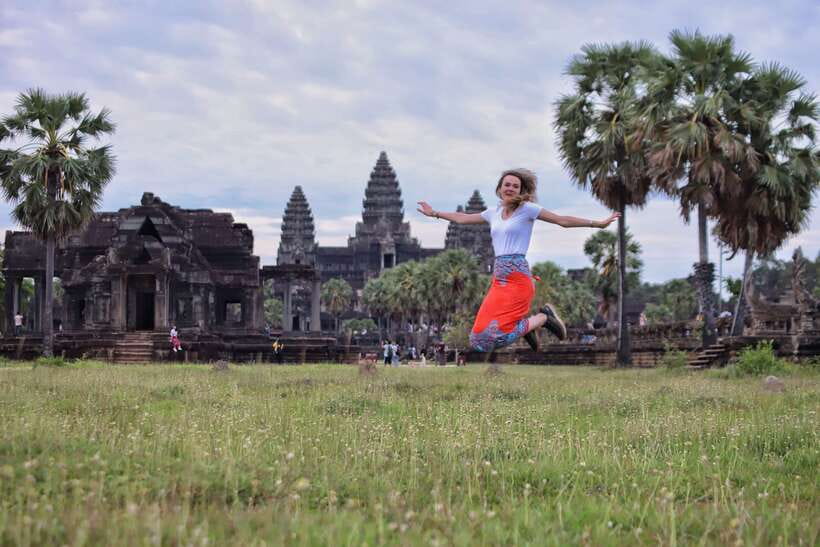
Angkor is a demanding full-day outing. Even with a car, you spend much of the day walking around stone courtyards, galleries, terraces, and uneven temple areas. The air-conditioned vehicle gives you a valuable break between sites.
The included water, coconut juice, and cool towel are small details, but they suit the setting. You will appreciate them more as the day progresses, especially after walking through the open areas of Angkor Thom and the large grounds of Angkor Wat.
The advertised route is a full day, with Angkor Wat in the afternoon. Exact departure and return times are not stated, so ask your guide when you are collected. This is especially important if you have evening plans in Siem Reap.
The biggest variable is the guide. The tour is conducted in English, and the purpose of hiring a private guide is to hear the story behind the stones. One poor account described a guide as minimally informed and listless, while the driver was described as polite, friendly, and courteous. That contrast is useful: the transport side appears to be a strength, but the commentary is the part to monitor.
You can help make the day better by asking for detail early. Ask what you are looking at, why a temple was built, and how each site connects to the Khmer kings. If answers remain thin, politely request more explanation or a slower pace.
Who should book this Angkor day?
I would choose this tour if you want the major Angkor sites in one private outing and value hotel pickup, air conditioning, and your own guide. It works especially well for first-time visitors who want a broad introduction rather than a single-temple visit.
It also suits anyone who prefers flexibility. You can pause at Bayon, spend more time at Ta Prohm, or ask for added explanation at Angkor Wat without managing a large group. The private format is also useful for families or pairs who want to move at their own speed.
I would be more cautious if your main goal is an exceptionally detailed archaeological tour. The itinerary covers many places, and the guide experience can affect how much you learn. The price is also less attractive for a solo visitor once the $37 temple pass and lunch are added.
Book with the right expectation: this is a well-planned sightseeing route through the essential temples, not a specialist study tour. The monuments provide the drama. Your guide needs to provide the connections between them.
FAQ
Where does the tour take place?
The tour begins in Siem Reap Province, Cambodia, and visits the Angkor temple complex. Pickup and drop-off are provided from hotels or guesthouses in Siem Reap City.
What is included in the $72 price?
The price includes a fully vaccinated English-speaking guide and driver, transport in an air-conditioned car or minivan, hotel pickup and drop-off in Siem Reap City, drinking water, fresh coconut juice, and a cool towel.
Is the Angkor temple pass included?
No. The temple pass costs $37 per person and must be paid separately.
Is lunch included?
No. Lunch, soft drinks, beer, and other food and drinks are not included. Drinking water and fresh coconut juice are provided during the tour.
Which temples and monuments does the route visit?
The itinerary includes Angkor Thom, Bayon Temple, Baphuon Temple, the Royal Enclosure, Phimeanakas, the Terrace of the Elephants, the Terrace of the Leper King, Ta Prohm, and Angkor Wat.
What language is the tour conducted in?
The tour is conducted in English with an English-speaking guide.
Just added around Siem Reap
- Ultimate Sunrise to Angkor Wat, Angkor Thom and Bayon Temple★ 5.0 · 3 reviews
- Twilight Tastes of Siem Reap Include Dinner★ 5.0 · 13 reviews
- Trekking Tour at Phnom Kulen National Park from Siem Reap★ 5.0 · 3 reviews
- Full-Day Private Tour of Angkor Wat with Pick Up★ 5.0 · 12 reviews
- Private Day Trip to Angkor Temples with Expert Guide★ 5.0 · 4 reviews
- Waterfall & River of 1000 Siva Linga- Kulen Mountain Private Tour★ 5.0 · 3 reviews
- Professional Photo Shoot in Angkor Archaeological Park, Siem Reap★ 5.0 · 42 reviews
- Ultimate Siem Reap Food Tour by Tuk Tuk – 20 Tastings, 8 Stops★ 5.0 · 13 reviews
Private, compared.

Full-Day Angkor Wat Sunrise Private Tour with Guide from Siem Reap
Read our review →
Phnom Penh Full Day Private Tour Included All Admission Tickets
Read our review →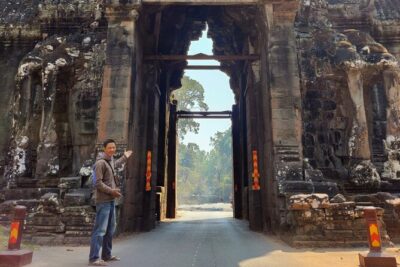
Angkor Sunrise Half-Day Tour with Private Vehicles & Tour Guide
Read our review →