Reviewed · GUIDED
Siem Reap: Grand circle tour Sun set on bakeang hill & Guide
The best part of this Siem Reap tour is its route through six Angkor temples that many visitors skip. You move from Shiva temples and ancient reservoirs to tree-covered gateways, healing pools, and a sunset viewpoint, with a local guide such as Sam, Sary, Sayon, or Vone adding the human details behind the stones.
I like the $19 price, which covers hotel transport, a guide, chilled water, and a full day of temple visits. I also like the relaxed start and air-conditioned minibus, especially after the heat begins to build. The trade-off is a full schedule: six temples in about eight hours can feel tiring, and the temple pass, lunch, and other drinks cost extra.
Key points to know before you book
- Six temples beyond Angkor Wat: See Pre Rup, East Mebon, Ta Som, Neak Pean, Preah Khan, and Phnom Bakheng in one long loop.
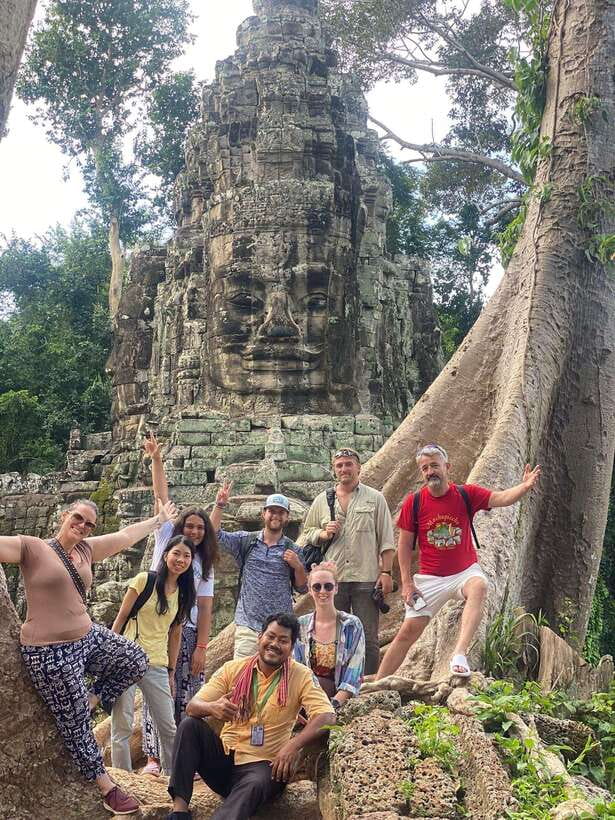
- Guides add real value: Guides including Sam, Sary, Sayon, Vone, Pip, Tom, and Narith are praised for clear explanations, humor, cultural context, and help with photos.
- Sunset finishes the day: Phnom Bakheng sits on a hill and gives the tour its final dramatic stop.
- Transport is practical: Hotel pickup, an air-conditioned minibus, bottled water, and a wet towel are included.
- The temple pass is separate: Buy your Angkor pass through the official Angkor Enterprise website before the tour.
- Dress for temple rules: Wear comfortable shoes and clothing that covers your shoulders and knees.
Why the Grand Circle is a smart second day in Angkor
Angkor Wat gets the attention, quite rightly, but the wider temple complex tells a fuller story. This Grand Circle route takes you away from the single famous monument and into a chain of sites built for different religious, royal, and practical purposes.
I like this tour best as a second Angkor day, after you have seen Angkor Wat itself. The route gives you a better sense of how the Khmer kings planned temples, reservoirs, roads, and sacred spaces across a huge area. You are not just ticking off ruins. You are seeing how water, religion, power, and family shaped the old capital.
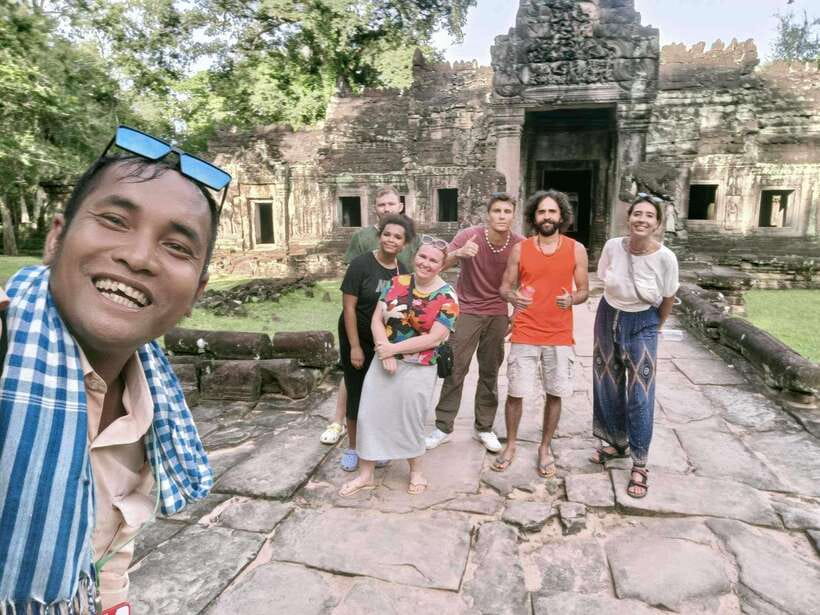
The guide matters here. A pile of carved stone can blur together after a few hours, but a good explanation gives each site a clear role. The strongest guide feedback centers on people such as Sam, who explains Cambodian culture as well as the temples, and Pip, who is praised for taking photos and keeping the day pleasant. Sary, Sayon, Vone, Tom, Narith, Sok, Sina, and John are also named as friendly, organized, funny, or especially good at explaining the sites.
The tour has earned a 4.8 rating from 58 ratings, and transport receives a 93 percent perfect score. That fits the practical appeal: you get a long temple day without having to arrange each ride yourself.
A few more Siem Reap trips to weigh up
- Angkor Wat Sunrise or Sunset Tour with Guide from Siem Reap
★ 5.0 · 12,109 reviews - Siem Reap: Full-Day Angkor Wat Guided Tour with Sunset
★ 4.9 · 3,803 reviews - Angkor Wat Sunrise tour with Small – Group and Guide tours
★ 5.0 · 3,655 reviews
Pre Rup gives the morning a strong start
After pickup in Krong Siem Reap, the minibus takes about 30 minutes to reach Pre Rup. The temple is dedicated to Shiva and rises in a stepped, mountain-like form, giving you an early lesson in the Khmer taste for sacred architecture that reaches upward.
Your guided visit is scheduled for about an hour. That is enough time to examine the terraces, climb where permitted, and hear how the temple fit into Hindu worship. The guide also explains a common misunderstanding: Pre Rup is often called a crematorium because of a stone structure that resembles a coffin. The explanation given on the tour connects this structure with Hindu meditation at the full moon instead.
That small detail shows why a guide helps. Without context, the site can seem like another red-brown ruin. With context, its shape and purpose become easier to read.
Pre Rup is also one of the more exposed stops. Bring sunscreen, sunglasses, and water, even though chilled bottles are supplied. Comfortable shoes matter because the ground and steps can be uneven.
East Mebon explains the lost reservoir
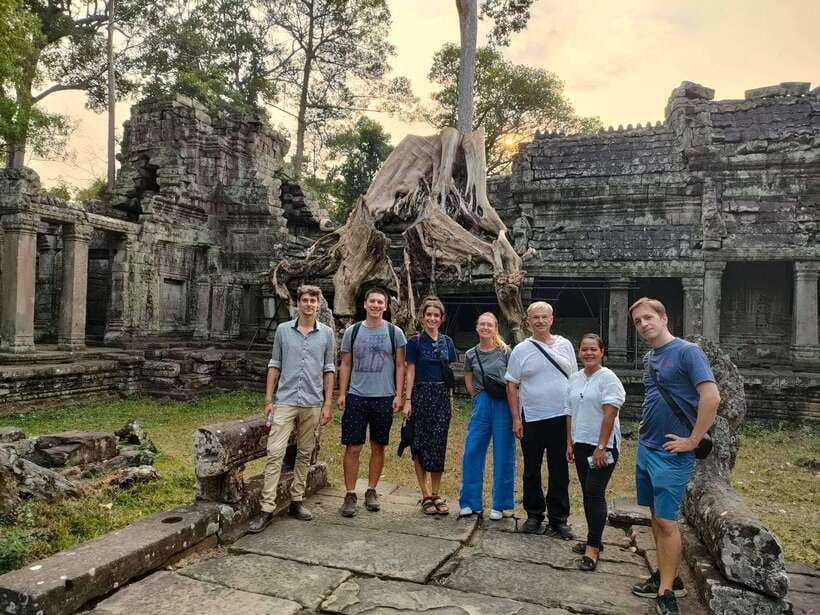
Next comes East Mebon, another temple with a strong connection to water. It was built in the 10th century for royal ancestors and once sat in the middle of a reservoir. Today, the water is gone, so the temple’s original setting takes some explanation.
This is a good place to listen closely to the guide. The temple’s location makes much more sense when you understand that it was once surrounded by a large body of water. The site was not an isolated building in dry country. It formed part of a carefully planned system linking religion, royal memory, and water management.
The scheduled stop lasts about an hour. You can use that time to look at the surviving carvings and get a feel for the layout without rushing from one corner to the next. The route also gives you a change of mood after Pre Rup, moving from one elevated temple to a structure whose original setting was defined by a reservoir.
Ta Som has the tree everyone remembers
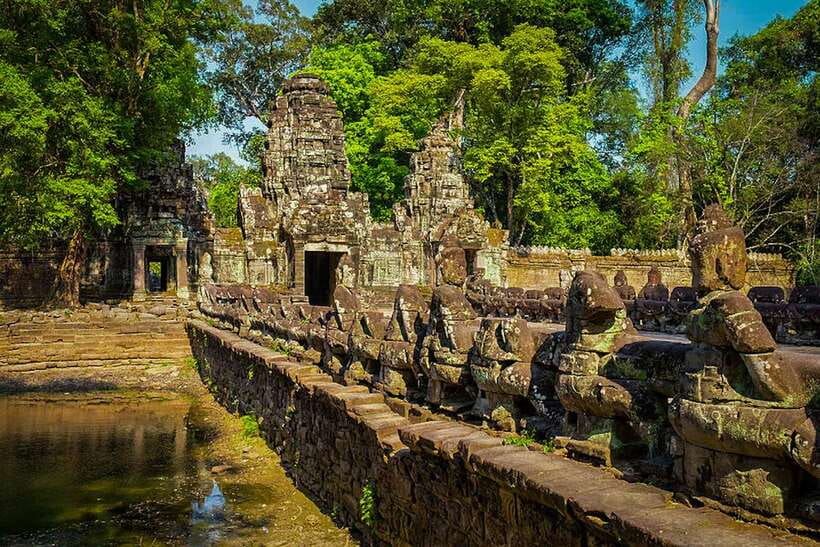
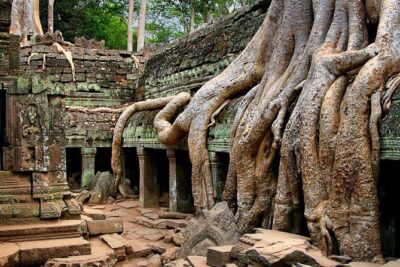
Ta Som is smaller and more intimate than Preah Khan, but it has one of the most memorable images on the route: a large tree growing over the east gate. Roots and stone meet here in a way that makes the temple easy to remember, and the overgrown entrance gives you the classic Angkor feeling without relying on Angkor Wat itself.
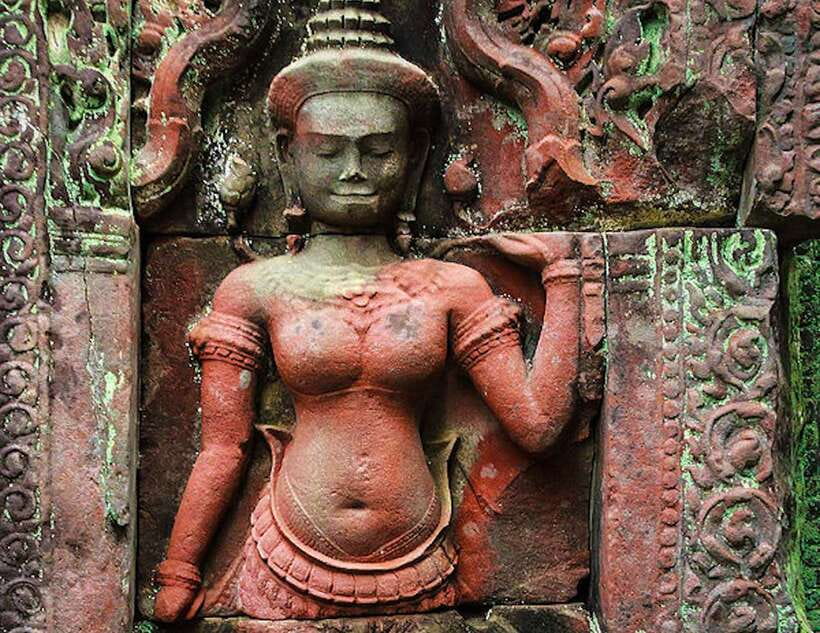
The temple was built for the king’s sister and includes many sculptures of dancers with long hair. A guide can point out details you might otherwise pass while looking only for the tree.
Ta Som has also been carefully restored, which makes it easier to understand than a site where every wall has collapsed. That does not mean it feels polished or rebuilt. You still see the age of the place, but the restoration helps you read the design.
Allow about an hour. This is a fine stop for photographs, but do not spend all your time at the famous gate. Ask your guide to show you the carvings and the less obvious parts of the temple. The small size can make this one of the most manageable visits of the day.
Same country, a completely different kind of day:
- Siem Reap: Angkor Wat: Small-Group Sunrise or Sunset Tour
★ 5.0 · 9,444 reviews - From Siem Reap: Kampong Phluk Floating Village Tour by Boat
★ 4.9 · 6,979 reviews - Sunset tour of Kampong Phluk stilts home village on the Tonle Sap
★ 5.0 · 4,865 reviews - Siem Reap: Angkor Wat 2-Day Tour with Sunrise and Sunset
★ 4.9 · 4,429 reviews
Neak Pean turns water into sacred design
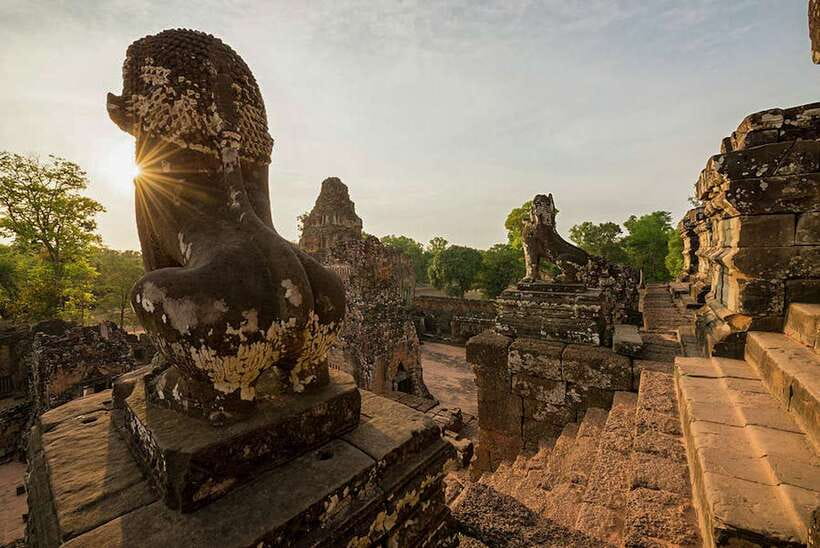
Neak Pean is one of the route’s most unusual stops. The temple sits on an island, reached by a causeway across a watery setting. During the Angkor period, the water around the island was used for bathing and health.
The design centers on four pools with symbolic links to elemental forces. The site connects religion and healing, so it is more than a small shrine surrounded by water. It shows how sacred places could also be tied to ideas about physical well-being.
The planned visit lasts an hour, followed by another hour for a break. That pause is useful. By this point, you have already seen several temples, and the day is not finished. Use the break to drink water, rest your feet, and take stock before the longer visit to Preah Khan.
Food and drinks are not included. One stop later in the day may include a restaurant option, but lunch remains your responsibility. Bring money for the meal and any drink beyond the supplied bottled water.
Preah Khan is the day’s big temple visit
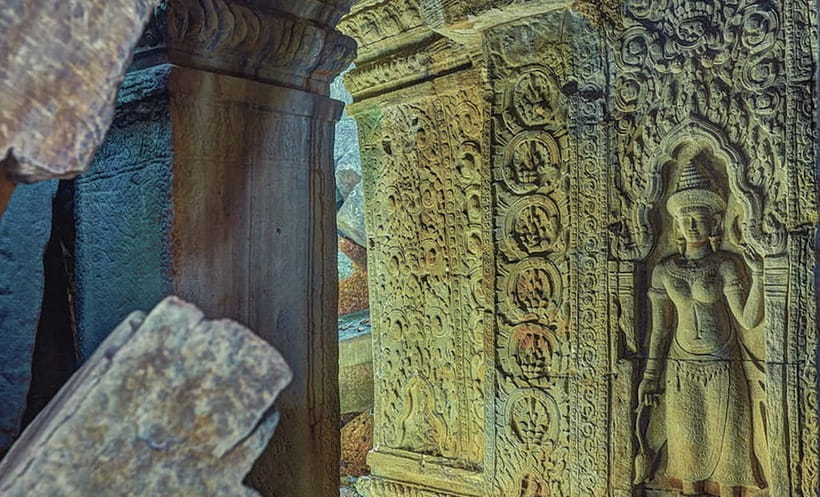
Preah Khan is the largest temple on this loop and receives about an hour and a half. It was built by King Jayavarman VII for his father and its name means Sacred Sword. Compared with Ta Som and Neak Pean, Preah Khan gives you a much larger space to explore.
This is where a guide can help you keep the site from becoming a maze. Long corridors, courtyards, carved doorways, and partially restored walls can blur together if you explore without a plan. A good guide sets the route, explains the royal purpose, and points out details instead of leaving you to guess what each section meant.
I would save some energy for this stop. The temple’s size rewards slow looking, but the heat and walking can catch up with you. Use the earlier break properly rather than treating it as optional.
Preah Khan also gives you a sense of how religious buildings operated as part of a larger institution. It was not simply a pretty stone monument. Its scale suggests an active center with people, rituals, and daily work around it. The guide’s cultural explanations are especially useful here, since the stones alone cannot tell you how the place functioned.
Phnom Bakheng closes the day with sunset
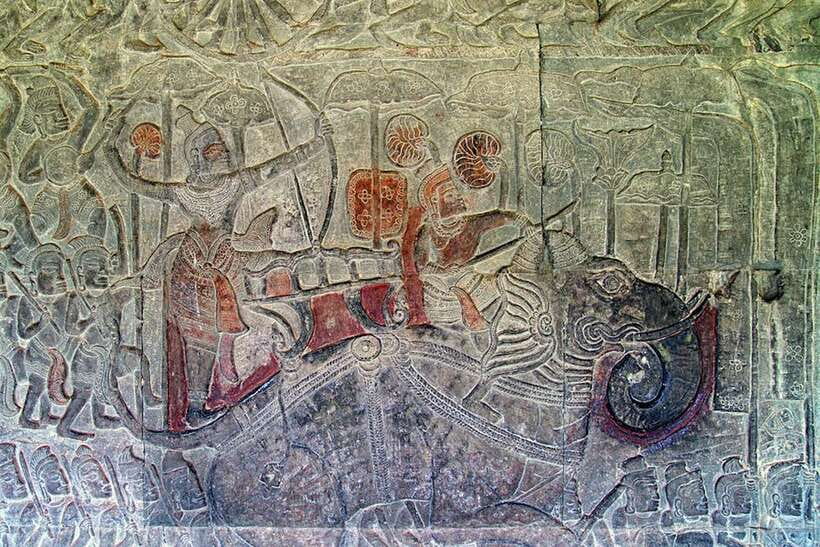
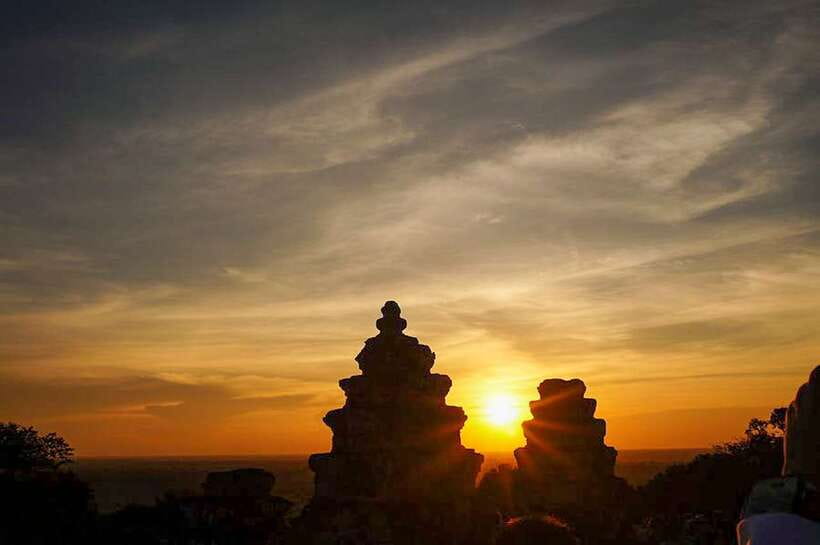
The last major stop is Phnom Bakheng, a Hindu and Buddhist temple at the top of a hill. Its 33 towers are said to represent the heavens, and the climb gives the final visit a different character from the flat temple sites earlier in the day.
The tour allows about an hour and a half here, including the sunset experience. That makes Phnom Bakheng more than a quick photo stop. You have time to reach the hilltop, hear the temple’s story, and find a good place to watch the light change.
Sunset is also the part most likely to affect the day’s pace. The exact view and timing depend on the schedule, weather, and how long earlier visits take. You should expect a popular viewpoint rather than complete solitude, and you should be ready for a hill and uneven footing.
Still, it is a fitting finish. After seeing temples tied to ancestors, healing water, family, kingship, and Hindu worship, you end above the surrounding area with a broad view and a sky that changes by the minute. Bring a charged smartphone, but do not spend the entire sunset looking at its screen.
What the transport and guide service add
Hotel pickup and drop-off simplify a long day. The driver collects you from your accommodation about 30 minutes before the scheduled start, then returns you to Krong Siem Reap after the final ride, which is listed at about 45 minutes.
The air-conditioned minibus is a real benefit in Cambodia’s heat. Bottled water and a wet towel are included, too. Those are modest extras, but they matter after hours of walking over sunlit stone.
The experience is in English, and a private group is available. If you want more control over photo stops or pacing, the private option may suit you better. The standard setup is useful if you enjoy meeting people from different countries. One rating specifically praises the small group format for keeping the visit organized and focused.
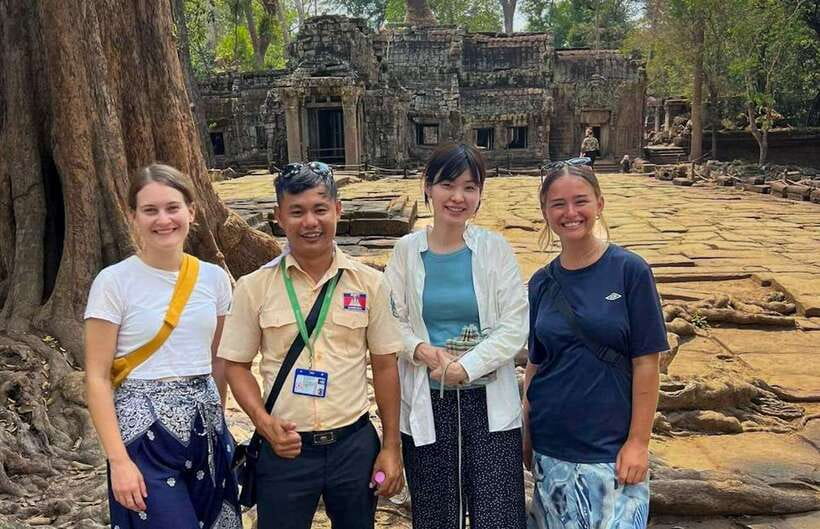
The guide is the most important variable in the experience. Ask for a guide by name if the booking system allows it, but do not assume a particular person is guaranteed. Sam is praised for broad Cambodian cultural knowledge, Sary and Sayon for clear and friendly explanations, Vone for patience and humor, and Pip for helping with photos. Narith is remembered for making the route feel less crowded and more relaxed.
The price is strong, but budget for the pass
At $19 per person, this is a low-cost way to cover six temples, transport, and guiding in one day. Paying separately for six rides and arranging an English-speaking guide would take more time and could cost more, so the package makes sense if you want efficiency.
The temple pass is not included. You must buy it separately through the official Angkor Enterprise website. Food and drinks are also extra, so the true daily cost is $19 plus your temple admission and lunch budget.
The value is best if you want a broad introduction to the Grand Circuit. It is less ideal if you prefer to spend a whole morning at one temple or stop for long, unplanned photo sessions. The route is designed to show you a lot, not to give you unlimited time at each place.
What to bring and what to wear
Dress rules are strict enough to plan around. Shorts, short skirts, and sleeveless shirts are not allowed, so wear clothing that covers your knees and shoulders from the start.
Bring:
- Comfortable shoes for steps, paths, and uneven temple floors
- Sunscreen and sunglasses
- A charged smartphone
- Money for lunch, drinks, and the separate temple pass
Water is supplied, but extra hydration is sensible on a full temple day. You should also expect heat, sun, and a fair amount of walking. The experience is not suitable for people over 95, according to the activity information.
Cancellation is flexible, with a full refund available if you cancel at least 24 hours ahead. You can also reserve now and pay later, which helps if your Siem Reap schedule is still shifting.
Who should book this Grand Circle tour?
I would choose this tour if you have limited time in Siem Reap and want a guided look at the temples beyond Angkor Wat. It suits first-time visitors who want the major Grand Circuit sites explained in plain English, rather than trying to identify every tower and carving alone.
It is also a good match for solo visitors and couples who like a social minibus day, as well as anyone who wants help taking photos. The guides are repeatedly praised for patience, humor, organization, and cultural explanations, which can make a long route feel easier.
I would think twice if you dislike fixed schedules, midday heat, or climbing to a sunset viewpoint. Six temples is a lot. The tour gives you breadth and context, but not much room to linger wherever you please.
Should you book it?
Book it if you want strong value, dependable transport, and a clear introduction to six important Angkor sites for $19, with the temple pass and lunch added separately. The standout strengths are the knowledgeable English-speaking guides, the cooling minibus, and the way the route moves from ancient reservoirs and healing pools to a hilltop sunset.
Choose a private group if flexibility matters more than price. Otherwise, the standard tour is a practical Grand Circuit day, especially after you have already seen Angkor Wat and want the wider story of Cambodia’s great temple city.
FAQ
Does the tour include Angkor Wat?
No. The route visits Pre Rup, East Mebon, Ta Som, Neak Pean, Preah Khan, and Phnom Bakheng. Angkor Wat itself is not listed as a stop.
Is the temple pass included?
No. The temple pass is separate. You can purchase it through the official Angkor Enterprise website.
What is included in the $19 price?
The price includes hotel pickup and drop-off, an air-conditioned minibus, an English-speaking guide, visits to six temples, chilled bottled water, and a wet towel.
Is lunch included?
No. Food and drinks are not included. You should budget separately for lunch and any drinks beyond the bottled water provided.
What language is the tour conducted in?
The live tour guide speaks English.
Can I book a private group?
Yes. A private group option is available.
Just added around Siem Reap
- Ultimate Sunrise to Angkor Wat, Angkor Thom and Bayon Temple★ 5.0 · 3 reviews
- Twilight Tastes of Siem Reap Include Dinner★ 5.0 · 13 reviews
- Trekking Tour at Phnom Kulen National Park from Siem Reap★ 5.0 · 3 reviews
- Full-Day Private Tour of Angkor Wat with Pick Up★ 5.0 · 12 reviews
- Private Day Trip to Angkor Temples with Expert Guide★ 5.0 · 4 reviews
- Waterfall & River of 1000 Siva Linga- Kulen Mountain Private Tour★ 5.0 · 3 reviews
- Professional Photo Shoot in Angkor Archaeological Park, Siem Reap★ 5.0 · 42 reviews
- Ultimate Siem Reap Food Tour by Tuk Tuk – 20 Tastings, 8 Stops★ 5.0 · 13 reviews
Guided, compared.

Angkor Wat Sunrise or Sunset Tour with Guide from Siem Reap
Read our review →

Angkor Wat Sunrise tour with Small – Group and Guide tours
Read our review →
Angkor Wat Highlights and Sunrise Guided Tour from Siem Reap
Read our review →
Full-Day Angkor Wat Sunrise Private Tour with Guide from Siem Reap
Read our review →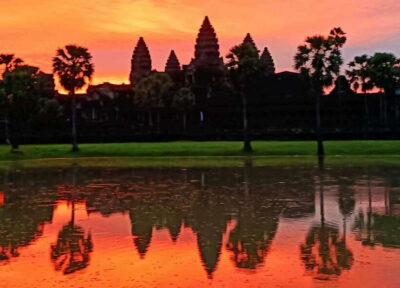
Angkor Wat Small-Group Exploration with Expert Guide
Read our review →