Reviewed · GUIDED
Siem Reap Angkor Private Tour Guide in English and Spanish
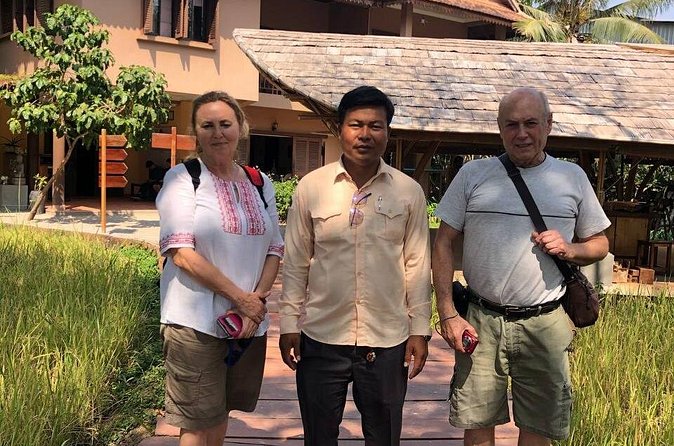
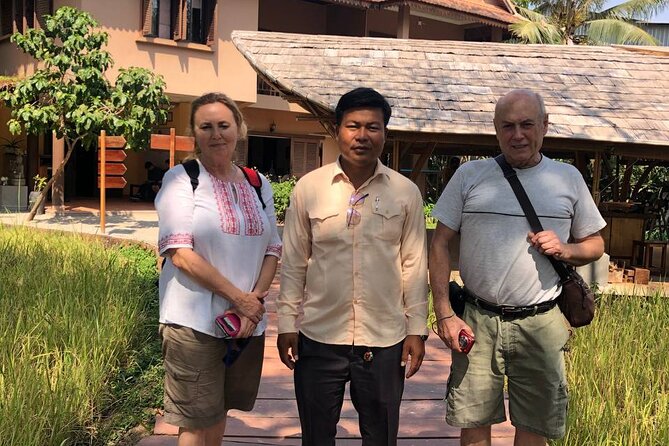
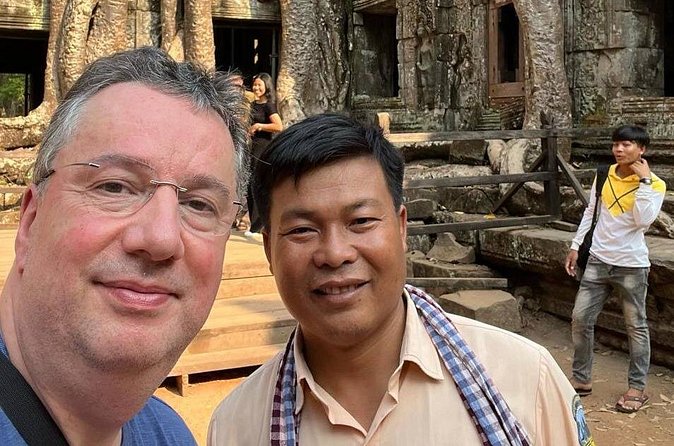
Angkor is much easier to understand with the right guide, and this private tour brings an unusual strength: the guide has taken part in the Greater Angkor Project with the University of Sydney. That work included research into the decline of Angkor and archaeological study of dams, canals, and temples lost in the jungle. Son, the Spanish-speaking guide, is especially useful if you want more than a quick temple tour.
I like the private format, which lets your group move at its own pace, and I like the early 5:00 am start, which gives you the best chance of seeing Angkor Wat before the heat builds. The guide also speaks English and Spanish, a real help for couples or families who prefer detailed explanations in Spanish.
The main drawback is cost planning. The $65 price covers private transport, cold water, and the guide, but the one-day temple pass costs another $37 per person. Meals, tips, the $20 boat ticket, and the $15 Angkor National Museum entry are also separate.
Key points to know before booking
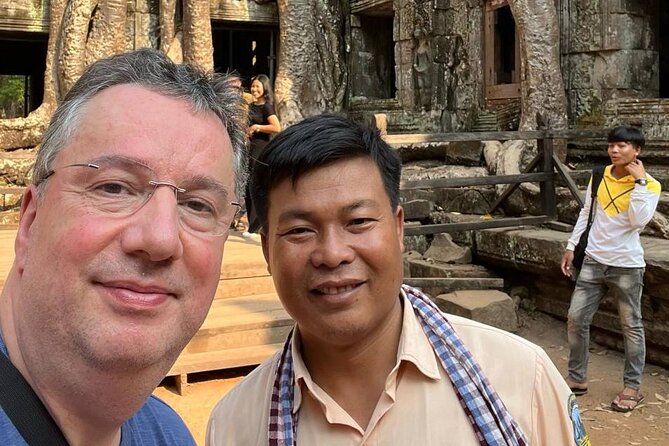
- Research-led guiding: Your guide has worked on archaeological research involving Angkor’s dams, canals, lost temples, and decline.
- 5:00 am departure: The early start is built into the day, so this is not a relaxed late-morning outing.
- Private vehicle and guide: Only your group participates, with transport and cold water included.
- Spanish or English service: Son is specifically praised for his excellent Spanish and ability to explain both temples and Cambodian culture.
- Four major stops: The route covers Angkor Wat, Bayon, an ancient Angkor city area, and Ta Prohm.
- Extra fees matter: Temple admission is not included, and other optional costs can raise the final bill.
Why the archaeological background matters at Angkor
Many Angkor tours give you a date, a king, and a story about a carving before moving on. This experience promises a different kind of explanation. The guide has participated in the Greater Angkor Project, a University of Sydney project that studied the decline of Angkor civilization and examined its dams, canals, and temples hidden in the jungle.
That background matters because Angkor was not simply a collection of stone buildings. Water management helped support the ancient city, and canals and reservoirs were tied to daily life, farming, and the power of the state. A guide who understands those systems can help you read the wider site, not just photograph the towers.
I would choose this tour if you enjoy asking why a temple was built, how an enormous city functioned, and what happened when Angkor declined. It is also a good fit if you want cultural information alongside architecture. The guide is expected to explain Cambodian culture as well as the monuments themselves.
The Spanish option is a major advantage. Son is named as the Spanish-speaking guide, and his Spanish has been praised as excellent. If you are more comfortable discussing history and culture in Spanish, that may make the tour far more rewarding than relying on brief translated comments.
A few more Siem Reap trips to weigh up
- Full-Day Angkor Wat Sunrise Private Tour with Guide from Siem Reap
★ 5.0 · 2,920 reviews - Siem Reap: Angkor Wat Private Tuk-Tuk Tour
★ 4.9 · 2,222 reviews - Angkor Wat Private Day Tour from Siem Reap
★ 5.0 · 834 reviews
Starting at 5:00 am from the Hard Rock Cafe
The meeting point is the Hard Rock Cafe on King’s Road Angkor, Street 7 Makara, near the Old Market Bridge in Siem Reap. The tour begins at 5:00 am and finishes back at the same meeting point.
That early hour is not a small detail. You need to be ready before sunrise, and the day can last five to seven hours. The benefit is a cooler start and an earlier arrival at the temples. Angkor Wat is far more pleasant before the day becomes hot, especially during the long walk across its approach.
Pickup is offered, but the stated meeting point is the Hard Rock Cafe. At booking, confirm how pickup works if you are staying elsewhere in Siem Reap. The supplied information also places the meeting point near public transportation, though this is a private tour with private transport.
Cold water is included. It sounds basic, but it is useful in Cambodia, where the walking and heat can wear you down quickly. Meals are not included, so plan for food before or after the tour rather than expecting a restaurant stop to be part of the price.
Angkor Wat, three hours with Cambodia’s great symbol
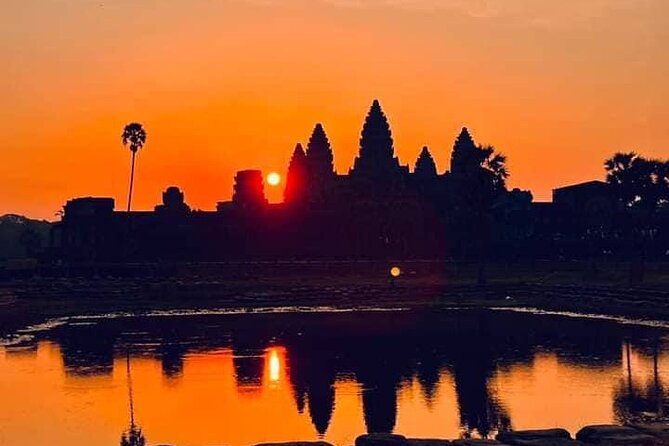
The first stop is Angkor Wat, about six kilometers north of Siem Reap. This is the largest and most visited temple in the group, surrounded by a broad moat and approached by a bridge said to stretch about 700 meters.
Allowing three hours here is sensible. Angkor Wat is not a quick photo stop. The approach alone gives you time to take in the scale of the moat, the causeway, and the towers before you reach the main temple. Inside, you can expect a long visit through galleries, courtyards, stairs, and carved stone details.
The guide’s archaeological background should be most useful here when you want to connect the temple to the wider Angkor system. Ask about the water around the temple, the role of the site, and how the builders managed such a large religious complex. The supplied details do not promise a sunrise viewing position or a special sunrise service, so do not book this expecting a dedicated sunrise package. The 5:00 am departure simply gets you moving early.
The temple entrance is not included. The stated one-day pass costs $37, while a three-day pass costs $50. For a tour lasting one day, most people will likely consider the one-day pass, but the longer pass can make sense if you plan to visit Angkor on other days.
The three-hour stop can feel long if you only want a quick look at the famous front view. It is a better match for you if you care about stonework, layout, and explanations. Wear practical shoes, since the visit involves walking through a large site rather than standing in one viewing area.
Bayon’s smiling faces and crowded stone towers
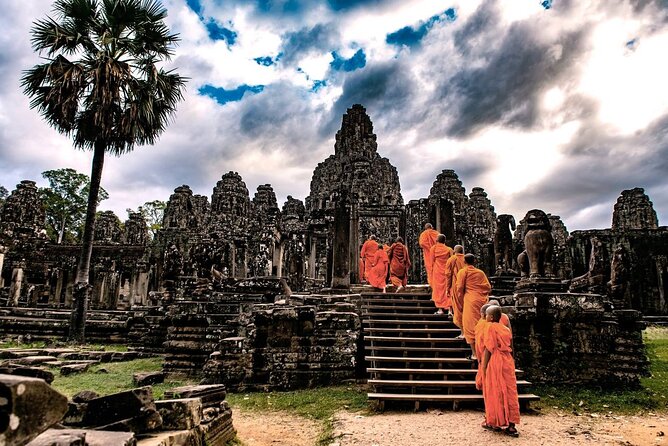
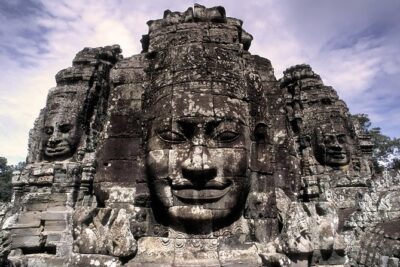
Bayon Temple is scheduled for about one hour. It is known for its smiling faces and has three levels with 54 towers rising above the structure.
This is one of Angkor’s most memorable stops because the faces appear from different angles as you move through the temple. The effect is less about one perfect viewpoint and more about turning a corner and finding another carved face looking back at you.
A guide can help you make sense of the temple’s design and the royal imagery. The description connects the highest parts of the towers with views of the king’s smiling faces, so listen for how the building’s height and arrangement shape what you see.
One hour is enough for a focused visit, but it leaves little room for lingering. Bayon can be confusing without guidance because its corridors and levels can blur together. I like having a private guide here because you can ask for clarification instead of trying to follow a large group’s fixed speech.
Again, the temple entrance is extra, covered by the Angkor pass rather than the $65 tour price. The tour does not list separate timing details for traffic or queues, so the actual length of this stop may shift with conditions.
Same country, a completely different kind of day:
- Angkor Wat Sunrise or Sunset Tour with Guide from Siem Reap
★ 5.0 · 12,109 reviews - Siem Reap: Angkor Wat: Small-Group Sunrise or Sunset Tour
★ 5.0 · 9,444 reviews - From Siem Reap: Kampong Phluk Floating Village Tour by Boat
★ 4.9 · 6,979 reviews - Sunset tour of Kampong Phluk stilts home village on the Tonle Sap
★ 5.0 · 4,865 reviews
The ancient Angkor city stop and one itinerary detail to confirm
The third stop is listed as Angkor Wat, but its description clearly refers to an ancient city populated by around one million people over many generations. It is dated from the ninth to the fourteenth century and is described as having become jungle-covered after its decline.
Because the title and description do not match neatly, I would confirm the exact site with the provider before booking. The description may refer to the wider ancient Angkor city area, but the supplied information does not name it clearly enough to state that with certainty.
This stop is scheduled for two hours, which gives the guide room to explain how Angkor functioned as an urban center rather than only as a group of temples. That distinction is important. You are not just looking at religious buildings. You are trying to understand a major city, its population, its water systems, and the reasons its power faded.
This is likely the part of the tour where the guide’s work on dams, canals, and lost temples becomes most useful. I would ask direct questions about how the city’s water network worked and what archaeological research can tell us about Angkor’s decline.
The lack of a precise site name is the main concern here. A careful booking message can settle it. Ask what you will visit during the two-hour stop and whether it is included under the same Angkor temple pass. Do not assume that the separate boat or museum charges apply to this stop, since those are listed as possible extra costs but are not part of the stated core itinerary.
Ta Prohm and the trees growing through stone
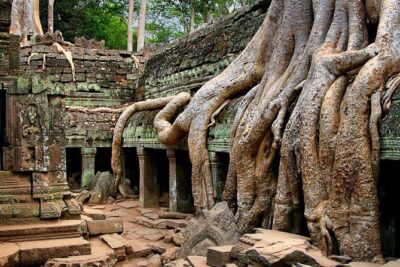
Ta Prohm receives about one hour. It is presented as a model of how the temples looked when the city was found in the nineteenth century, with heavy vegetation, large trees, and roots still growing across the temple.
Ta Prohm offers a sharp contrast with Angkor Wat. Angkor Wat feels planned and monumental. Ta Prohm shows what happens when stone buildings and tropical growth occupy the same space for centuries. The roots are not just decoration for photographs. They are part of the reason the temple feels so unusual.
The one-hour allocation is enough to see the main character of the site, though you may want more time if you are interested in carvings and architectural detail. The guide can explain why Ta Prohm was left in a more vegetation-filled condition and how that affects the way you read the ruins. The provided information does not promise exclusive access, quiet paths, or particular photo locations, so keep expectations sensible.
This is also a stop where a private group helps. You can pause for a question or move on when you have seen enough. In a large group, you may have to stay with a fixed pace.
What the $65 price really covers
The listed price is $65 per person. That is not the complete cost of the day, since temple admission is separate. Add $37 for a one-day temple pass, bringing the known total to $102 per person before meals, tips, or other extras.
The value depends on group size. If you are traveling alone or as a couple, a private guide and vehicle cost more per person than a shared coach. If you have several people in your group, the private arrangement becomes easier to justify because everyone shares the guide and transport while avoiding a large tour group.
You are paying for the guide, private transportation, and cold water. You are not paying for lunch, tips, temple admission, the boat ticket, or Angkor National Museum entry. The boat ticket is listed at $20 per person, and the museum entry at $15 per person, though neither is part of the four-stop schedule as described.
The price is strongest for people who value explanation. If you only want transport between temples, a cheaper arrangement may suit you better. If you want a guide who can discuss archaeology, water systems, the fall of Angkor, and Cambodian culture in English or Spanish, the fee has a clearer purpose.
Who should book this private Angkor tour
I would recommend this experience for you if you want a focused introduction to the main Angkor sites and prefer a private setting. It suits couples, families, and small groups who want to ask questions without holding up strangers.
It is especially appealing to Spanish-speaking visitors. Son is identified by name and praised for clear Spanish, temple knowledge, and answers about Cambodian culture. That combination can make a major difference when you are dealing with complex religious art and centuries of history.
The tour also fits people with a strong interest in archaeology. The guide’s participation in research on Angkor’s decline, canals, dams, and lost temples gives the experience a more serious academic angle than a basic sightseeing transfer.
I would hesitate if you dislike early starts or want a slow day with long meal breaks. The 5:00 am departure and five to seven-hour duration require energy. I would also ask for clarification about the third stop before paying, since its title and description do not identify the same place clearly.
Most people can participate, according to the supplied information. The activity is private, and only your group takes part. Confirmation arrives at booking, and free cancellation is available if you cancel at least 24 hours before the start time. Changes or cancellations made later are not accepted for a refund.
Should you book it?
Book this tour if you want private transport plus serious historical explanation, particularly in Spanish. The research background and Son’s reported command of Spanish give it a useful edge over a simple driver service.
Before booking, confirm the exact third stop, ask how pickup from your accommodation will work, and budget for the $37 temple pass. With those details settled, this is a practical way to see Angkor Wat, Bayon, and Ta Prohm in one early, focused outing.
FAQ
What time does the tour start?
The tour starts at 5:00 am.
Where does the tour begin and end?
It starts at the Hard Rock Cafe on King’s Road Angkor, Street 7 Makara, near the Old Market Bridge in Siem Reap. The activity ends back at the same meeting point.
Is this a private tour?
Yes. Only your group participates, and private transportation is included.
Is the tour available in Spanish?
Yes. The experience is offered in English and Spanish. The Spanish-speaking guide named in the information is Son.
Is the Angkor temple entrance fee included?
No. The one-day temple pass costs $37, and a three-day pass costs $50.
Are meals included?
No. Meals are not included in the tour price.
Can I cancel for a full refund?
Yes, if you cancel at least 24 hours before the experience start time. Cancellations or changes made less than 24 hours before the start time are not refunded or accepted.
Just added around Siem Reap
- Ultimate Sunrise to Angkor Wat, Angkor Thom and Bayon Temple★ 5.0 · 3 reviews
- Twilight Tastes of Siem Reap Include Dinner★ 5.0 · 13 reviews
- Trekking Tour at Phnom Kulen National Park from Siem Reap★ 5.0 · 3 reviews
- Full-Day Private Tour of Angkor Wat with Pick Up★ 5.0 · 12 reviews
- Private Day Trip to Angkor Temples with Expert Guide★ 5.0 · 4 reviews
- Waterfall & River of 1000 Siva Linga- Kulen Mountain Private Tour★ 5.0 · 3 reviews
- Professional Photo Shoot in Angkor Archaeological Park, Siem Reap★ 5.0 · 42 reviews
- Ultimate Siem Reap Food Tour by Tuk Tuk – 20 Tastings, 8 Stops★ 5.0 · 13 reviews
Guided, compared.

Angkor Wat Sunrise or Sunset Tour with Guide from Siem Reap
Read our review →

Angkor Wat Sunrise tour with Small – Group and Guide tours
Read our review →
Angkor Wat Highlights and Sunrise Guided Tour from Siem Reap
Read our review →
Full-Day Angkor Wat Sunrise Private Tour with Guide from Siem Reap
Read our review →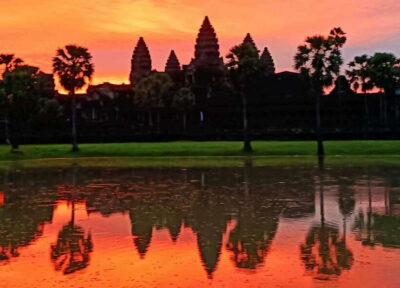
Angkor Wat Small-Group Exploration with Expert Guide
Read our review →