
Reviewed · CAMBODIAN COUNTRYSIDE TOURS
East Corner of Siem Reap – Roluos Group & Countryside
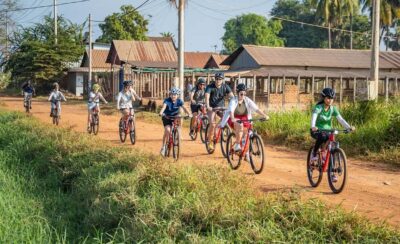
The best part of this seven-hour cycling tour is the change of pace. You leave Siem Reap by bike and trade busy streets for rice fields, village paths, a nature reserve, and the old Khmer capital of Hariharalaya. The Roluos temples give the ride a clear purpose, but the countryside is just as important as the ruins.
I like the chance to meet local villagers and see ordinary rural life rather than spending the whole day among major monuments. I also like the practical setup: a TREK mountain bike, helmet, drinking water, coconut water, lunch, and a small group capped at 10 people. The main drawback is cost planning, since the $50 tour price does not include the $37 temple pass or transport to the meeting point.
Key points to know before you book
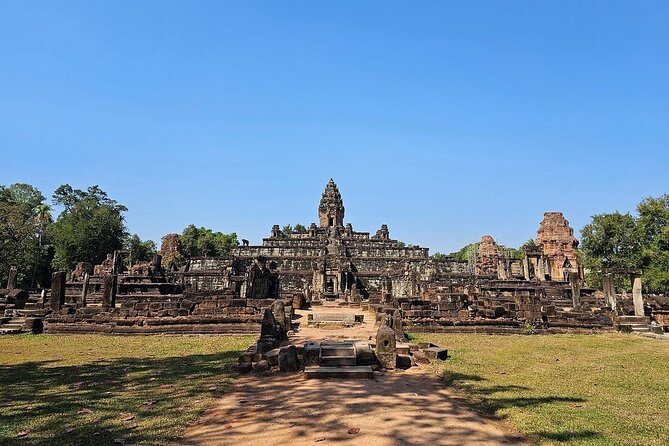
- Three early Khmer temples: Visit Preah Ko, Bakong, and Lolei at Hariharalaya, an early capital of the Khmer Empire.
- A countryside-first route: Ride through rice fields, rural scenery, and a nature reserve instead of staying in central Siem Reap.
- Small-group format: The maximum group size is 10, which helps the guide manage bikes and temple visits.
- Well-supported cycling: A TREK mountain bike, helmet, mechanic support, water, coconut water, and lunch are included.
- A 7:30 am start: The early departure gives you most of the day for riding and temple visits.
- Budget for the pass: The $50 price excludes the one-day temple admission fee of $37.
Leaving Siem Reap for Hariharalaya
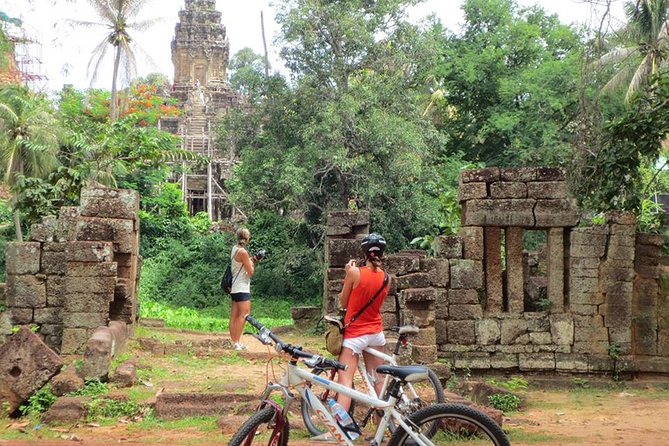
The meeting point is Angkor Cycling Tour on Taphul Road in Siem Reap. You start at 7:30 am and return to the same place after roughly seven hours. Since hotel pickup and drop-off are not included, you need to arrange your own way to Taphul Road.
That meeting-point format works well if you are staying in or near central Siem Reap and want control over your morning. It is less convenient if you are staying far outside town, so check the route before booking. The activity is near public transportation, but the details provided do not specify a particular bus, taxi, or tuk-tuk arrangement.
The tour is led in English, and the bike team includes guide Seng and mechanic Nguey. That personal support matters on a cycling day. One published account specifically praised the way the bikes were fitted and maintained, with both men offering support throughout the ride. I would still tell the operator your height and any bike concerns when booking.
You receive a premium TREK mountain bike and helmet. The equipment is a meaningful part of the $50 price, since a properly fitted bike makes a long morning far more comfortable than a basic rental. The tour information does not give a mileage figure, exact road surface, or elevation profile, so ask if those details matter to you.
More Cambodian Countryside Tours in Siem Reap
- Siem Reap Countryside Bike Tour / E-Bike or Tuk Tuk
★ 5.0 · 935 reviews - Siem Reap Countryside Quad Biking Tour
★ 5.0 · 322 reviews - Siem Reap: Guided Countryside Bike Tour
★ 4.9 · 294 reviews
Rice fields, rural paths, and a nature reserve
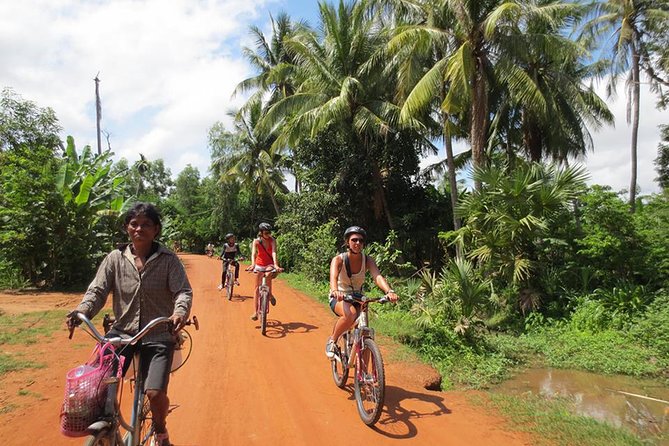
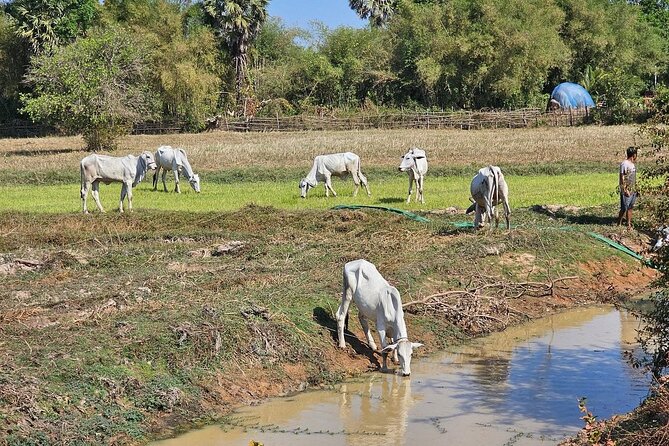
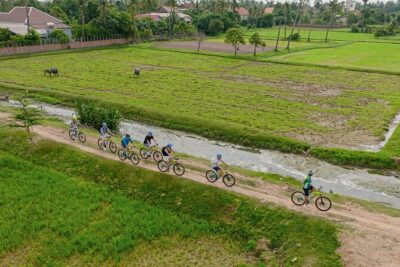
Once you leave the city, the experience shifts from temple sightseeing to open-air cycling. The route passes lush rice fields and a nature reserve, with local plants and wildlife forming part of the scenery. You are not simply being driven between monuments. The movement from one place to the next is the heart of the day.
That is useful for anyone who wants to see more of Cambodia than the main Angkor circuit. You may see rural homes, villagers working, and children greeting the group. The tour also encourages contact with local communities and offers a look at daily activities away from the tourist center.
Keep your expectations sensible. This is a cultural cycling trip, not a wildlife expedition, and there is no promise of particular animals or rare plants. The natural setting adds variety, but the main rewards are the ride, the villages, and the gradual approach to the old temple area.
The tour includes refreshing coconut water and pure drinking water. Those are small details, but they matter in Cambodia’s heat. Sunglasses, sunscreen, and a camera are specifically recommended. I would also wear light clothing that works for cycling and temple visits, though the supplied information does not set out a formal dress code.
A local market with Khmer flavors
The countryside section includes a stop at a local market. You can expect exotic fruits, Khmer snacks, and local delicacies. This is one of the more useful parts of the day for curious eaters because it puts food in its everyday setting rather than presenting only a restaurant meal.
Market visits can be brief, so do not treat this as a full food tour. The tour description does not specify the market’s name, opening hours, or which snacks you will taste. Still, the stop gives you a chance to see ingredients and eating habits that you might miss if you stay on the standard temple route.
If you have dietary restrictions, advise the operator when booking. Lunch is included, but the available information does not list the meal or confirm which dietary requests can be met. That early notice is especially important if you do not eat meat or have allergies.
Preah Ko and the first sacred bulls
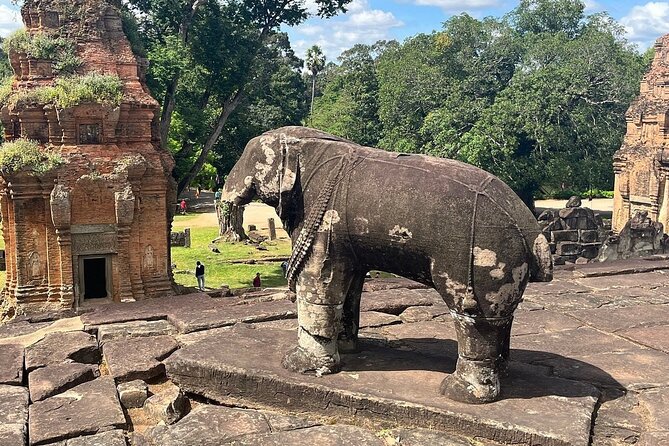
The temple visit begins with Preah Ko, whose name means sacred bull in Khmer. The temple was dedicated to the Hindu god Shiva, giving you a direct link to the religious ideas that shaped early Khmer architecture.
Preah Ko is valuable as an introduction to the Roluos Group. It is not the largest temple of the day, so the guide can help you focus on its purpose and details rather than judging it only by size. The stop also makes more sense after the countryside ride, since you arrive at an early Khmer center rather than a later, more familiar Angkor monument.
You should expect the guide to explain the site and help with photographs. A guide is particularly useful here because the early temples can feel less immediately dramatic than the major Angkor landmarks. Context helps you understand why this smaller complex matters.
Same country, a completely different kind of day:
- Angkor Wat Sunrise or Sunset Tour with Guide from Siem Reap
★ 5.0 · 12,109 reviews - Siem Reap: Angkor Wat: Small-Group Sunrise or Sunset Tour
★ 5.0 · 9,444 reviews - From Siem Reap: Kampong Phluk Floating Village Tour by Boat
★ 4.9 · 6,979 reviews - Sunset tour of Kampong Phluk stilts home village on the Tonle Sap
★ 5.0 · 4,865 reviews
Bakong, the day’s grandest temple
Bakong is described as the first large mountain temple of Angkor. It is likely to be the strongest architectural stop on the route, especially if you want a temple with a more imposing central structure.
The mountain-temple design is important because it represents a Khmer idea of sacred space, with the temple rising as a symbolic center. Your guide can point out how the form differs from Preah Ko and Lolei. The three stops work best together, since each shows a different stage or expression of early Khmer temple building.
The word mountain can set up the wrong expectation if you imagine a hard climb through hills. The tour information does not provide elevation or stair details, so you should ask the operator about physical demands if you have knee, balance, or mobility concerns. The general note says most people can participate, but that does not replace a personal check about your own fitness.
Bakong is also where the value of a small group becomes clear. With no more than 10 participants, the guide should have a reasonable chance to keep the temple explanation together and assist with photos without the stop turning into a large procession.
Lolei and an island temple in the old capital
The final named temple is Lolei, described as an island temple built by King Yasovarman I. Its setting adds another layer to the visit, since you are seeing a temple connected with water and the early capital of Hariharalaya.
Lolei helps complete the historical picture. Preah Ko introduces a sacred foundation, Bakong shows the large mountain-temple form, and Lolei gives you a different setting and royal connection. The sites are close enough in theme to compare, yet distinct enough to keep the temple portion from feeling repetitive.
The tour description does not provide a detailed timetable for each temple or say how much free time you receive at each one. If photography is important to you, tell the guide. The tour specifically presents photo opportunities as part of the experience, and the guide can help you find suitable places to stop.
Lunch, village contact, and the human side of the ride
An authentic Khmer meal is included, along with water and coconut water. Lunch gives the day a proper pause after the cycling and temple visits. Since the menu is not specified, send dietary requirements at the time of booking rather than waiting until the morning.
The village encounters are a major reason to choose this trip. You may receive a warm welcome from local people and interact with rural children. These moments can feel more personal than a quick temple photograph, but you should approach them with patience and respect. A friendly greeting is welcome. Turning people into props for your camera is not.
The tour also aims to show local daily activities. That makes the ride more than exercise with ruins added on. You get a view of how people live and work around the historic sites, which is often the part you remember after the stonework begins to blur together.
At the same time, the route is presented as an organized cultural activity, not an independent visit to a village. Your guide controls the pace and introductions. Listen to that guidance, especially when taking photographs or approaching homes.
What the $50 price really covers
The listed price is $50 per person. For a visitor who needs a bike, helmet, guide, food, and hydration, that is a reasonable package for a full morning and afternoon activity. The small maximum group size improves the value, since you are not paying for a large coach-style outing.
The important extra cost is the temple pass. A one-day pass is listed at $37, bringing the tour and admission to $87 per person before you pay for transport to Taphul Road. The admission ticket is not included, so do not arrive assuming the $50 covers the temples.
You are also paying for the route between the sites, not just entry. The ride through rural scenery, the nature reserve, local market, and village areas gives the day a wider scope than a simple temple transfer. If you only want the cheapest way to see Preah Ko, Bakong, and Lolei, this is not the lowest-cost option. If you want cycling and countryside access as part of the visit, the calculation looks better.
The current score is 5 out of 5 from 11 ratings, with 100 percent recommending the experience. That is a small sample, so I would not treat it as a guarantee. The strongest practical signal is the praise for bike condition and fitting, which are especially important on a seven-hour ride.
Who will get the most from this tour
I would choose this trip if you enjoy active sightseeing and want a break from Siem Reap’s central streets. It suits people who prefer a slower connection with villages, fields, food, and temple history rather than a rapid list of monuments.
It is also a good fit if you have already seen some major Angkor sites and want a different kind of day. The Roluos Group is historically important, while the route gives you a fresh setting and a more physical way to reach it.
You should think twice if cycling for much of a day sounds tiring, or if you need a precise distance and terrain description before committing. The supplied details confirm cycling through the countryside but do not state the route length, surface, or degree of difficulty.
Families and mixed-ability groups should ask specific questions before booking. Most people can participate, and the group is limited to 10, but the activity still involves a substantial bike ride. The operator can also address dietary needs if you provide them in advance.
Practical details that shape the day
The tour begins at 7:30 am and ends back at the meeting point after approximately seven hours. That early start is useful because it gives you a full day, but it means you need to plan breakfast and your arrival in Siem Reap.
Bring a camera, sunglasses, and sunscreen. The camera is worthwhile for both temple details and rural scenes, while sunglasses and sunscreen are basic protection for an extended ride. Water and coconut water are included, so you do not need to depend entirely on your own supply.
A mobile ticket makes entry simple, but the temple pass remains separate. Confirmation is provided at booking. Free cancellation is available if you cancel at least 24 hours before the start time. Changes or cancellations inside that window are not accepted, and the cutoff follows local time.
Should you book the Roluos countryside ride?
Book it if you want cycling, village life, and early Khmer temples in one day. The route offers more texture than a standard temple transfer, and the included bike, guide, lunch, coconut water, and small group make the $50 base price easy to understand.
Skip it if you want a short, low-effort temple visit, or if adding the $37 admission fee makes the total too high. Before booking, confirm the cycling distance, road conditions, and meal arrangements if any of those could affect your decision.
For the right person, this is a thoughtful way to reach Preah Ko, Bakong, and Lolei. You get history, countryside, food, and human contact, with enough support to make a long ride manageable.
FAQ
Where does the tour start and finish?
It starts at Angkor Cycling Tour on Taphul Road in Krong Siem Reap. The activity ends back at the same meeting point.
What time does the tour begin?
The start time is 7:30 am.
How long does the experience last?
The tour lasts approximately seven hours.
Is the temple admission fee included?
No. The one-day temple pass costs $37 and is not included in the $50 tour price.
Is hotel pickup and drop-off provided?
No. Hotel pickup and drop-off are not included. You need to reach the meeting point yourself.
What equipment is included?
You receive a premium TREK mountain bike and helmet. The tour also includes pure drinking water and refreshing coconut water.
Is lunch included?
Yes. Lunch is included. You should advise the operator about specific dietary requirements when booking.
How many people can join the tour?
The maximum group size is 10 travelers.
Just added around Siem Reap
- Ultimate Sunrise to Angkor Wat, Angkor Thom and Bayon Temple★ 5.0 · 3 reviews
- Twilight Tastes of Siem Reap Include Dinner★ 5.0 · 13 reviews
- Trekking Tour at Phnom Kulen National Park from Siem Reap★ 5.0 · 3 reviews
- Full-Day Private Tour of Angkor Wat with Pick Up★ 5.0 · 12 reviews
- Private Day Trip to Angkor Temples with Expert Guide★ 5.0 · 4 reviews
- Waterfall & River of 1000 Siva Linga- Kulen Mountain Private Tour★ 5.0 · 3 reviews
- Professional Photo Shoot in Angkor Archaeological Park, Siem Reap★ 5.0 · 42 reviews
- Ultimate Siem Reap Food Tour by Tuk Tuk – 20 Tastings, 8 Stops★ 5.0 · 13 reviews
Cambodian Countryside Tours, compared.
Siem Reap Countryside Bike Tour / E-Bike or Tuk Tuk
Read our review →
Afternoon tour by tuk tuk to bamboo train,bat cave,killing cave,countryside.
Read our review →
Full-day Countryside Tour with Pepper Farm and Kep
Read our review →
Siem Reap Countryside Vespa Tour / Tuk Tuk Available
Read our review →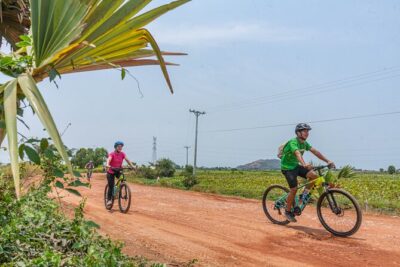
Siem Reap Countryside Sunset Bike Tour / E-Bike or Tuk Tuk
Read our review →Browse the lists this tour appears in