
Reviewed · ANGKOR WAT TOURS
Angkor Wat Admission Ticket
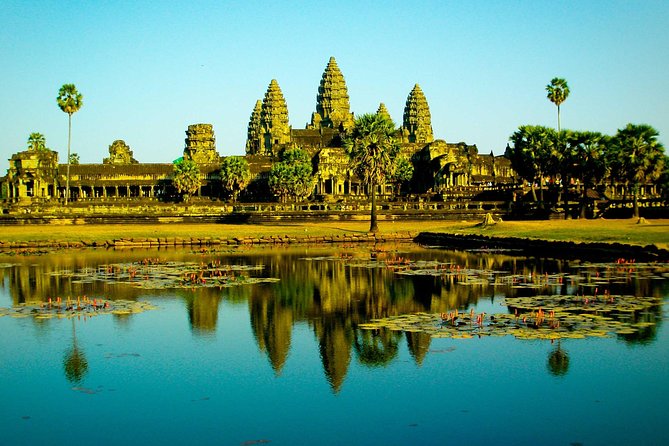
The smart part of this Angkor Wat experience happens before you reach the temples. Your photo pass is delivered to your hotel, usually around 6 pm the evening before your visit, so you can head straight toward Angkor Wat before sunrise instead of stopping at the ticket office. That matters when every minute of dawn counts.
I like the simple hotel delivery and the choice of 1, 3, or 7 days, especially if your schedule includes more than the famous three temples. The catch is cost: you pay a service charge above the official ticket price, and this is an admission service, not a guided tour. You must arrange transport and hire a guide separately.
Key points to know before booking
- Hotel delivery the evening before: Your printed pass is left at the front desk under your name.
- Sunrise-friendly planning: You can go directly to Angkor Wat without buying a ticket that morning.
- Several pass lengths: Options are designed for a quick temple visit or a longer stay around Siem Reap.
- Lanyards can help: Several bookings included lanyards, useful because guards may check the pass repeatedly.
- The ticket alone is not a tour: Tuk-tuk rides, cars, food, drinks, and guides cost extra.
What this Angkor pass actually provides
Think of this as a ticket delivery service, not a fixed sightseeing program. You receive an Angkor National Park pass, then decide when to visit within its printed validity dates and how many temples to fit into each day.
The advertised price is $59 per person, but the supplied pricing information gives different base prices by pass type. A 1-day pass is listed at $37 plus service fees, a 3-day pass at $62 plus fees, and a 7-day pass at $72 plus fees. The information also refers to a 2-day option in one place, while the main choices are described as 1, 3, and 7 days.
That inconsistency is worth clearing up before you pay. Ask which pass length the displayed price covers, what the final total is, and what dates will be printed on the pass.
The extra charge pays for arranging the ticket, collecting the required photo, and delivering the finished pass to your hotel. I can see the value if you have one precious morning, arrive late, or want to avoid dealing with the ticket office before sunrise. If you have plenty of time and want the lowest possible price, buying directly from the official Angkor Enterprise ticket office may be better.
More Angkor Wat Tours in Siem Reap:
- Angkor Wat Sunrise or Sunset Tour with Guide from Siem Reap
★ 5.0 · 12,109 reviews - Siem Reap: Angkor Wat: Small-Group Sunrise or Sunset Tour
★ 5.0 · 9,444 reviews - Siem Reap: Angkor Wat 2-Day Tour with Sunrise and Sunset
★ 4.9 · 4,429 reviews
Why sunrise makes delivery useful
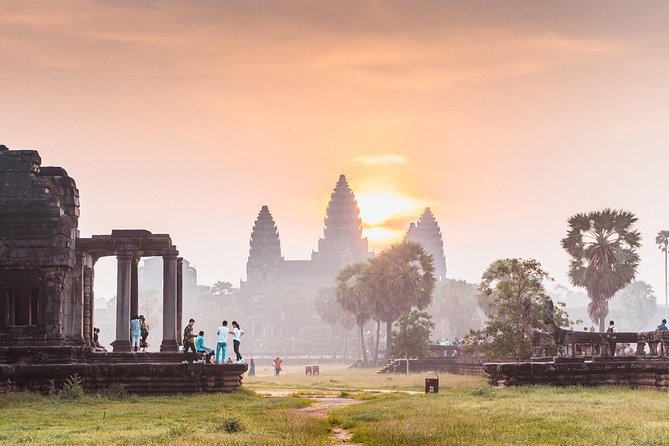
Angkor Wat opens early enough for sunrise visits, and the classic plan begins before dawn. With a pass already in hand, you can leave your hotel and go directly to the temple area.
That is the main reason to consider this service. A delay at the ticket office could mean missing the changing colors over Angkor Wat’s towers, then joining the morning crowds at the same time as everyone else.
The pass is personal. It includes your photograph and cannot be transferred, so you need to email a passport-style photo for every person on the booking. The operator says no ticket will be issued without those photos. Send them promptly and include your booking reference, since one booking experience specifically found that matching the photo to the reservation mattered.
Keep the pass with you during the visit. Temple entrance staff may ask to see it, and the lanyard supplied with some orders makes repeated checks easier. Do not lose it, lend it to someone, or use it after the printed validity dates.
Angkor Wat and the central temples
Angkor Wat deserves the longest look. The enormous complex was originally built as a Hindu temple dedicated to Vishnu and later became a Buddhist site. Allowing about two hours gives you time for the grand approach, galleries, towers, and detailed carvings, although sunrise itself can make the first part of the visit feel hurried.
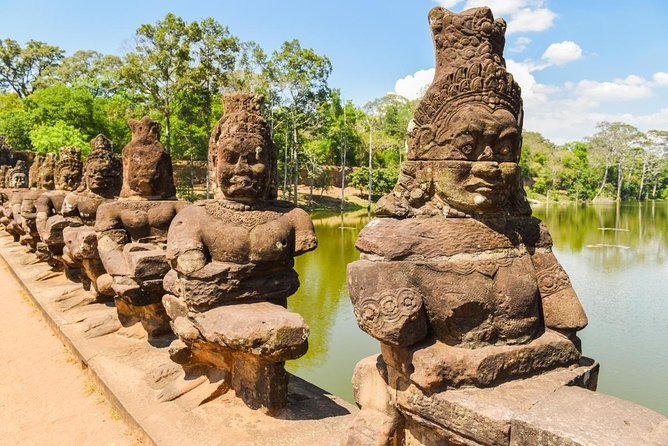
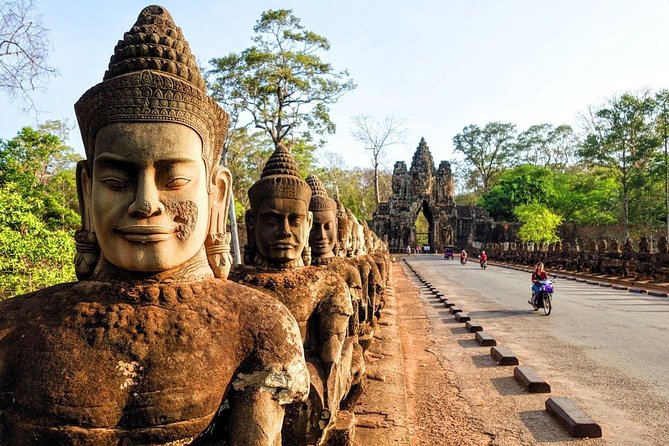
From there, Angkor Thom gives you a different sense of scale. This was the last major capital of the Khmer Empire, established in the late 12th century by King Jayavarman VII. The suggested visit lasts about an hour and 20 minutes, enough to see the monumental entrances and move toward the central Bayon.
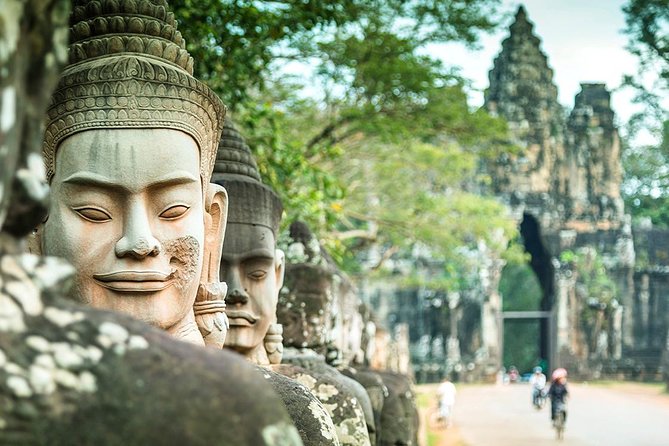
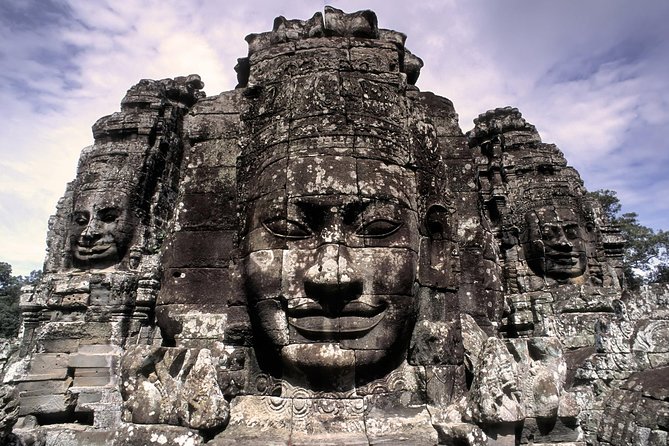
At Bayon Temple, the famous stone faces are the main attraction. The temple was built as a state temple during Jayavarman VII’s reign, and its close-packed towers create a more enclosed, maze-like experience than Angkor Wat. Give it about an hour, but watch your footing on uneven stone.
Ta Prohm is the temple most closely linked with the Tomb Raider film. Its trees and partly collapsed structures create a dramatic scene, but the popularity of the site can make it harder to linger quietly. The suggested hour works well for a focused visit.
These three sites form the classic first day. They are also the busiest part of the park, so a pre-arranged pass is most useful if you are trying to reach Angkor Wat at first light.
Smaller temples with more breathing room
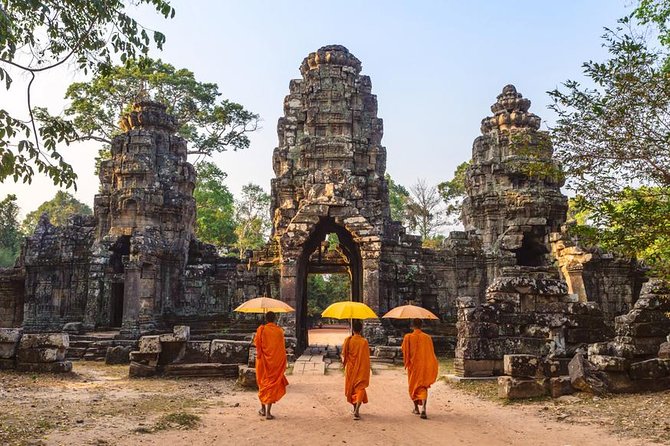
The longer list gives you room to move beyond the standard circuit.
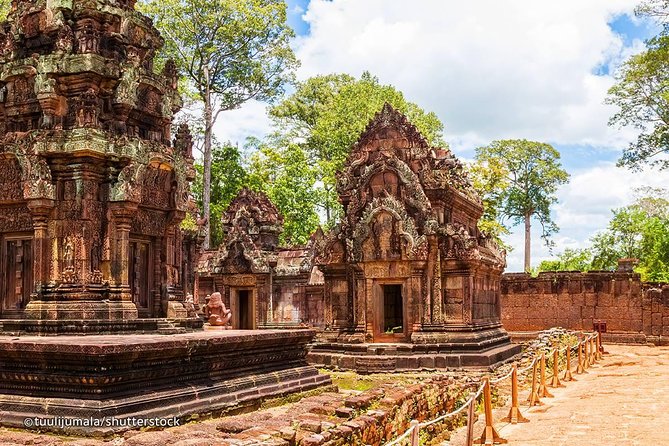
Banteay Srei, about 25 kilometers northeast of the main Angkor group, is a 10th-century temple dedicated to Shiva. Its detailed stonework is a major reason to make the trip, though its distance means you need transport and extra time. The plan allows one hour at the temple.
Preah Khan is another large Jayavarman VII foundation, built to honor his father. It lies northeast of Angkor Thom and near the Jayatataka reservoir. An hour and 20 minutes gives you time to look beyond the entrance and notice the long corridors and layered spaces.
Neak Pean sits on an artificial island in the Jayatataka Baray. The water setting makes it a change of pace from temple mountains and enclosed galleries. Allow about an hour, though your actual time will depend on access conditions and how long you spend walking toward the island.
Ta Som is smaller and more intimate, with about 40 minutes suggested. It was also built for Jayavarman VII and lies east of Neak Pean. This is a good stop when you want a quieter temple after the major sites.
At Banteay Samre, you get a substantial Hindu temple built during the early 12th century. Its position east of the East Baray makes it less central to the usual small circuit, so it works best when grouped with other eastern sites. The suggested visit is 40 minutes.
Pre Rup is a brick, laterite, and sandstone temple mountain built in the 10th century. Its half-hour stop is brief but worthwhile for its strong upper platforms and clear architectural shape.
Ta Keo is another temple mountain, possibly the first at Angkor built entirely from sandstone. It is on the small circuit and gets about 40 minutes in the suggested schedule. The steep structure can be tiring, so take care on the steps.
Prasat Kravan is compact, with five reddish brick towers on one terrace. Thirty minutes is enough for a quick look, especially if you are interested in early brick construction rather than giant temple complexes.
Srah Srang, the Royal Bath, is a reservoir east of Banteay Kdei. It is allotted just 20 minutes, making it an easy stop between temples rather than a destination requiring a long visit.
A few more Siem Reap trips to weigh up
- Siem Reap: Phare, the Cambodian Circus Show Tickets
★ 4.9 · 1,850 reviews - Siem Reap: Angkor Wat Admission Ticket
★ 4.7 · 106 reviews - Kulen National Park Ticket
★ 5.0 · 33 reviews - Phnom Kulen National Park Admission Ticket
★ 4.7 · 30 reviews
Roluos, hills, and outlying sites
Some of the listed places require a much longer day and more road time. Your pass may help with access to Angkor sites, but transport is not included, so the distances matter.
Bakong is about 15 kilometers from central Siem Reap and is described as the first sandstone temple mountain built by Khmer rulers at Angkor. Plan about an hour. It pairs naturally with the Roluos group.
Preah Ko is another Roluos temple, positioned between Bakong and Lolei. Its suggested 30-minute visit makes it easy to add to a half-day outing.
Lolei, the northernmost of the three main Roluos temples, dates from the late 9th century and sits about 15 kilometers east of Siem Reap. Allow about 25 minutes. Together, Bakong, Preah Ko, and Lolei provide an earlier chapter of Khmer temple building than the grand 12th-century monuments.
Phnom Krom lies about 12 kilometers southwest of Siem Reap. The temple sits on a hill, with a two-hour, 20-minute allowance in the plan. The hill is also described as a good sunset viewpoint, but the climb and extra travel make it a poor addition to an already overloaded temple day.
Phnom Bok is another hill temple, part of a trio of mountain sites with similar layouts. The suggested visit is two hours. This is best for someone with a 3-day or 7-day pass, not for a rushed one-day circuit.
Kbal Spean requires a serious time commitment. The site is on the southwest slopes of the Kulen Hills and follows a 150-meter stretch of riverbed with Angkorian carvings. The itinerary gives it three hours in one entry and four hours in another, so the listing appears to describe the same place twice rather than two separate attractions. Confirm the plan before arranging a driver.
Beng Mealea is about 40 kilometers east of the main Angkor group. It is an Angkor Wat-period temple with a more remote, ruined setting, and the plan allows two hours. It is marked as admission ticket free in the supplied details, but the separate note says Phnom Kulen and Koh Ker require their own tickets. Do not assume every outlying attraction is covered by this pass.
Planning one day, three days, or seven days
For a 1-day pass, focus on Angkor Wat, Angkor Thom, Bayon, and Ta Prohm. You can add one or two nearby temples, but trying to cover the entire list would turn the day into a race between ruins.
A 3-day pass is the sensible choice for most first visits. Use one day for Angkor Wat, Angkor Thom, Bayon, and Ta Prohm. Reserve another for Preah Khan, Neak Pean, Ta Som, and the eastern temples. Use the third for Banteay Srei, Roluos, or one of the hill and outlying sites.
A 7-day pass suits visitors who want slow mornings, repeat visits, photography, or time away from the busiest monuments. It also allows you to spread out sites such as Kbal Spean and Beng Mealea instead of forcing them into a single punishing day.
The pass gives you access from sunrise to sunset on your own arrangement. It does not create a timetable, provide a vehicle, or place a guide beside you. You will need to coordinate each day with a tuk-tuk driver, car, minivan, or bus operator.
Guides, transport, and the real cost
A guide is available to hire in several languages, but one is not included. This matters at Angkor. The stones are impressive on their own, yet a guide can explain the figures, religious changes, royal building programs, and purpose of each space.
Specific guides named in the supplied information include Mr Ho, Vantha, Bob, Sok Piseth, and Bunthang Lim. The pass service itself does not promise any particular guide, so treat these names as examples of possible guide arrangements, not as part of the ticket package.
Transport is also separate. You can arrange a tuk-tuk, car, minivan, or bus, depending on how far you plan to go. A tuk-tuk may suit the central circuit, while distant sites such as Banteay Srei, Kbal Spean, or Beng Mealea require careful planning with your driver.
This is where the $59 price needs an honest look. You are not paying only for admission. You are paying for advance handling and hotel delivery. I think that is fair for a sunrise start or a short stay, but it is not the cheapest route to the temples. If the ticket office is quiet during your dates, the convenience fee may feel large.
What to send and what to wear
After booking, email passport photos for everyone who needs a pass. Children under 12 do not need a national park ticket, but they must show a passport proving their age.
Wear clothing that covers your shoulders and knees. The visitor code also asks you to respect monks and signs, avoid touching carvings, refrain from smoking, and take your rubbish with you. Do not give money or candy to children around the monuments.
Comfortable shoes are essential. Even a simple central circuit involves long periods of walking, stone surfaces, stairs, and uneven ground. One full-day plan can last eight hours or more, especially if you add several temples.
Professional commercial photography and drone use require a permit from the APSARA National Authority. Casual sightseeing photography is treated separately, but you should follow all posted rules.
The activity is described as private, meaning only your group participates. That applies to the booked activity arrangement, not to the ancient temples themselves. Expect other people at popular sites, especially around Angkor Wat, Bayon, and Ta Prohm.
Delivery reliability and booking cautions
The usual delivery promise is the evening before your visit, around 6 pm. Several bookings received passes earlier, sometimes at hotel reception in an envelope addressed to the guest. Communication through WhatsApp was praised, and email is also used for passport photos and booking details.
There was at least one case in which the pass was not at the hotel on arrival and arrived later that evening after an email. If you need the pass for an early morning departure, check with reception and contact the operator if it has not arrived by the stated time.
The ticket is non-refundable, non-transferable, and cannot be changed after booking. That makes date selection important. The pass has valid-from and valid-to dates printed on it, so check them as soon as you receive the envelope.
Should you book this Angkor Wat pass?
Book it if you have a sunrise plan, a late arrival, a short stay, or little patience for ticket-office administration. The hotel delivery is the service’s clear strength, and a lanyard makes the frequent ticket checks less awkward.
Skip it if your main goal is the lowest admission price, you have plenty of spare time, or you prefer to buy directly from the official ticket office. Also skip it if you expect a guided tour or vehicle, since neither is included.
For most people, I would choose the 3-day option if the schedule allows it. It gives Angkor Wat and the central temples room to breathe, while leaving time for Banteay Srei, Roluos, or a quieter outlying site. Before paying, confirm the pass length, final price, delivery time, and the exact validity dates.
FAQ
What pass options are available?
The main choices are 1-day, 3-day, and 7-day Angkor National Park passes. The supplied information also refers to a 2-day ticket in one place, so confirm availability and pricing for that option before booking.
How is the ticket delivered?
The printed pass is delivered to your Siem Reap hotel front desk under your name, normally around 6 pm in the evening before your visit. Some bookings received the pass earlier.
Do I need to send a photograph?
Yes. You must email a passport photo for every traveler included in the booking. The operator states that a ticket will not be issued if the required photo is missing.
Is transportation included?
No. Tuk-tuk, car, minivan, and bus transportation are not included. You arrange transport to the temples separately.
Is a guide included?
No. A guide is not included, though guides can be hired in several languages.
Do children need a ticket?
Children below 12 do not need an Angkor National Park ticket, but they must show a passport to prove their age.
Can I get a refund or transfer my pass?
No. Passes are non-refundable and non-transferable. They are personal because they contain your photograph, and they are not valid after the printed validity dates.
Just added around Siem Reap
- Ultimate Sunrise to Angkor Wat, Angkor Thom and Bayon Temple★ 5.0 · 3 reviews
- Twilight Tastes of Siem Reap Include Dinner★ 5.0 · 13 reviews
- Trekking Tour at Phnom Kulen National Park from Siem Reap★ 5.0 · 3 reviews
- Full-Day Private Tour of Angkor Wat with Pick Up★ 5.0 · 12 reviews
- Private Day Trip to Angkor Temples with Expert Guide★ 5.0 · 4 reviews
- Waterfall & River of 1000 Siva Linga- Kulen Mountain Private Tour★ 5.0 · 3 reviews
- Professional Photo Shoot in Angkor Archaeological Park, Siem Reap★ 5.0 · 42 reviews
- Ultimate Siem Reap Food Tour by Tuk Tuk – 20 Tastings, 8 Stops★ 5.0 · 13 reviews
Angkor Wat Tours, compared.

Angkor Wat Sunrise or Sunset Tour with Guide from Siem Reap
Read our review →
Angkor Wat: Small-Group Sunrise or Sunset Tour
Read our review →
Angkor Wat 2-Day Tour with Sunrise and Sunset
Read our review →

Angkor Wat Sunrise tour with Small – Group and Guide tours
Read our review →
Angkor Wat Highlights and Sunrise Guided Tour from Siem Reap
Read our review →
Angkor Wat Sunset Small Group Tour with Lunch Included
Read our review →