
Reviewed · CYCLING TOURS
Angkor Region & Rainforest Bike Tour
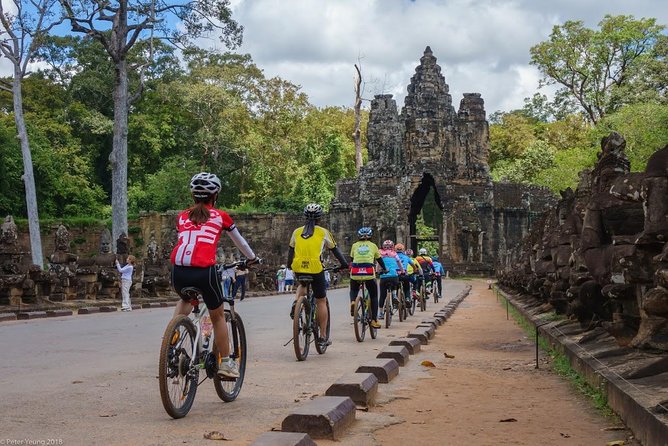
The best part of this Angkor tour is the route between the temples. Instead of spending the whole day on the main roads, you ride rainforest trails and quiet paths that reveal old walls, jungle-covered ruins, and parts of Angkor Thom that many visitors never reach. I especially like the included Trek mountain bike and the small maximum group of 10, which keeps the day more personal.
I also like the practical touches: lunch, coconut water, and drinking water are included, and the English-speaking guide handles the route while you focus on the ruins. The main drawback is that the $50 price does not include the one-day temple pass, which adds $37, and you must make your own way to the starting point at 7:30 am.
Key points to know before you book
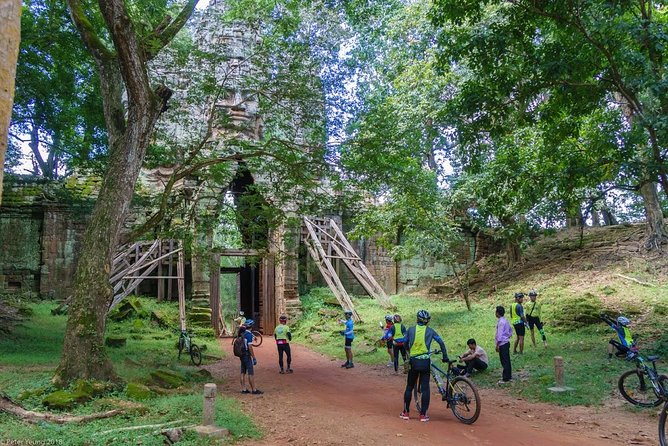
- Rainforest riding: The route uses natural forest trails, not just paved roads between the famous temples.
- Five major temple visits: Angkor Wat, Bayon, Preah Khan, Tanei, and Ta Prohm are included.
- Angkor Thom from above: You ride along part of the old defensive wall to Prasat Chrung for wide views.
- Gear is supplied: A Trek mountain bike, helmet, lunch, coconut water, and drinking water are included.
- Small group size: The tour accepts no more than 10 people, useful for a guided ride through narrow paths.
- Extra cost to budget: The Angkor temple pass costs $37 for one day and is not included.
Why cycling changes your day at Angkor
Angkor is often treated as a string of roadside photo stops. You arrive by vehicle, walk through a temple, return to the vehicle, and repeat the pattern. This bike tour offers a different rhythm. You pedal through the spaces between the monuments, where the forest and old stonework become part of the experience rather than background scenery.
The ride is also practical in Cambodia’s heat. A bicycle lets you cover a broad area without sitting in traffic or waiting for a vehicle to pull around after every stop. You still need energy for an eight-hour day, but the route gives you regular changes of pace: riding, walking through temples, pausing for views, and stopping for food and drinks.
The forest section is a major reason to choose this outing. The paths can be narrow, wet, or muddy, especially in rainy weather. That makes the ride more adventurous than a standard temple circuit. It also means you should be comfortable on a mountain bike and ready for road conditions that may change during the day.
The group limit of 10 is another useful detail. A large cycling group can become slow and awkward on small trails. With up to 10 people, the guide can keep the group together more easily and give clearer instructions at junctions and temple stops.
A few more Siem Reap trips to weigh up
- Siem Reap Countryside Bike Tour / E-Bike or Tuk Tuk
★ 5.0 · 935 reviews - Angkor Sunrise Bike Tour / E-Bike or Tuk Tuk
★ 5.0 · 615 reviews - Siem Reap: Bike the Angkor Temples – Full-Day 30km Tour
★ 5.0 · 463 reviews
Starting at 7:30 am in Siem Reap
The meeting point is Angkor Cycling Tour on Taphul Road in Siem Reap. Hotel pickup and drop-off are not included, so you need to arrange your own way to the start. That is worth checking carefully the night before, since the departure is early and the tour runs for about eight hours.
Confirmation is provided when you book. You must also give each passenger’s height in advance, allowing the operator to prepare suitable bicycles. If you have dietary needs, share them at booking rather than waiting until lunch.
The tour includes a premium Trek mountain bike and helmet. You do not need to spend time hiring equipment in Siem Reap, and the supplied helmet is a useful safety item on forest paths. Bring sunscreen, sunglasses, and a camera. Modest clothing is important, too. Angkor remains an active spiritual site, and bare shoulders or shorts and skirts above the knees are not permitted in sacred palace areas.
Riding the rainforest trails
The early cycling section takes you away from the most direct tourist routes and into the forest around the Angkor complex. The appeal is not speed. It is the chance to see how much of the ancient site remains surrounded by trees, vegetation, and quiet tracks.
You may encounter damp ground and mud if rain has passed through. One especially useful point comes from the experience of the route itself: a wet day can make the trail more enjoyable for riders who like a little rough going, but less appealing if you want a clean, easy ride. Wear clothing and shoes that can handle dirt.
The guide leads the group through the natural paths and explains the World Heritage area along the way. Since the ride combines several temples with forest sections, you get more than a fitness outing. The cycling helps connect the monuments, while the guide provides the historical and architectural setting.
Do not expect to race from one stop to the next. The day is built around seeing Angkor by bicycle, so the pace includes time to stop, walk, listen, and look closely.
Angkor Wat, the grand opening stop
Angkor Wat is the tour’s most famous stop and the monument most people want to see first. Its scale can be hard to grasp from a single viewpoint. Arriving by bicycle gives you a gradual approach through the surrounding grounds rather than a simple vehicle drop-off.
You will have time to see the temple as part of the larger Angkor area, not as an isolated building. The guide can help you understand why Angkor Wat matters as both a religious monument and a symbol of the Khmer Empire.
The drawback is simple: Angkor Wat is the most popular site in the region. Even a cycling route that avoids some main flows cannot guarantee solitude here. Go in expecting a major attraction, then enjoy the quieter paths later in the day.
Same country, a completely different kind of day:
- Angkor Wat Sunrise or Sunset Tour with Guide from Siem Reap
★ 5.0 · 12,109 reviews - Siem Reap: Angkor Wat: Small-Group Sunrise or Sunset Tour
★ 5.0 · 9,444 reviews - From Siem Reap: Kampong Phluk Floating Village Tour by Boat
★ 4.9 · 6,979 reviews - Sunset tour of Kampong Phluk stilts home village on the Tonle Sap
★ 5.0 · 4,865 reviews
Angkor Thom’s south gate and defensive wall
After Angkor Wat, the ride continues to Angkor Thom. The south gate is one of the most striking entrances in the complex, with its defensive setting and monumental approach. It gives you a strong sense of the city’s former scale before you reach the central temples.
A special feature of this tour is the chance to climb onto part of Angkor Thom’s protection wall and ride toward Prasat Chrung. This is more active than a normal temple visit, but the reward is a broad view over the surrounding area and a better sense of how the old capital was defended.
The wall section may not suit everyone. You need to be comfortable getting on and off a bicycle and handling an uneven route. If you prefer flat paved cycling, this is one of the parts to consider carefully.
The route also passes Angkor Thom’s west and north gates. These stops add variety and show that the ancient city was more than Bayon alone. You see the defensive design as a complete system, rather than only one famous entrance.
Bayon and its many stone faces
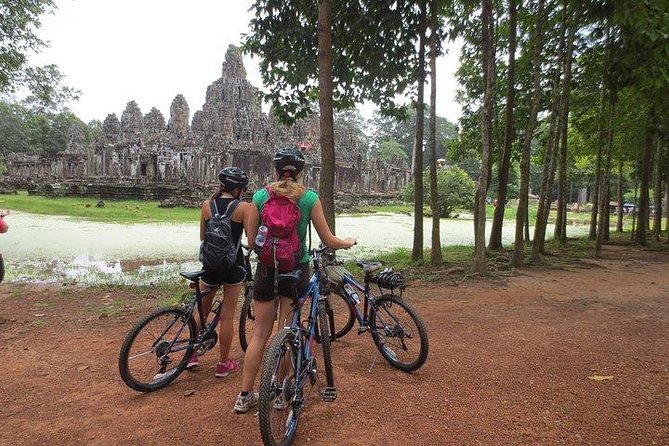
Bayon is the visual centerpiece of Angkor Thom. Its towers carry the famous smiling faces, traditionally counted as 216 faces across 54 towers. The temple feels compact and complex, with passageways and towers packed closely together.
A bike is useful here because you can arrive without dealing with a long vehicle transfer from another part of the park. Once inside, though, you explore on foot. Allow time to look up, turn corners, and study how the faces appear from different angles.
Bayon can feel crowded at popular times, and the narrow interior makes it difficult to move quickly. The guide’s role matters here. A good explanation helps you see the temple’s layout and details instead of simply taking a few photographs and leaving.
Preah Khan, where jungle meets stone
Preah Khan offers a different mood from Bayon. The temple is known for its jungle-covered setting, with trees and vegetation pressing close to the old stone structures. Here the forest does not merely surround the temple. It has become part of the visual character of the place.
This is a good stop for you if you enjoy the meeting of nature and architecture. Doorways, corridors, and courtyards create changing views as you move through the site. The temple can also feel rougher and less polished than the most restored monuments, which is part of its appeal.
The uneven surfaces require attention. Watch your footing and do not rush from one chamber to the next. Your guide can point out what you are seeing, but you will get more from Preah Khan if you give yourself time to notice the small details.
Tanei and the quieter ruins
Tanei is described as an ancient hospital site that has remained largely untouched by archaeologists. It is a useful contrast to Angkor Wat and Bayon, where restoration, access, and crowds shape the visit.
You may find Tanei more atmospheric because it is less formal and more closely held by the forest. The setting gives you a better feel for the extent of the Angkor area and for how many old structures remain beyond the standard route.
This stop may be less satisfying if you want a fully restored temple with clear paths and dramatic towers. Its value lies in the sense of discovery and the chance to see a site where vegetation and stone still share the space.
Ta Prohm and the famous tree-covered ruins
Ta Prohm is the other major temple on the route and one of the most recognizable places in Angkor. Its towers, galleries, and courtyards are tangled with trees, creating the scene many people associate with the temples of Cambodia.
The cycling approach adds something here. You reach the temple as part of a full day in the forest, so the tree-covered ruins feel connected to the route rather than presented as a single quick stop.
Ta Prohm is popular, and its narrow passages can become crowded. Be patient, keep your group together, and follow the guide’s timing. The site rewards a slower look, especially where roots and masonry meet, but you may need to share the best-known viewpoints.
Lunch, coconut water, and the value of the $50 price
The tour costs $50 per person. That price covers the English-speaking guide, Trek mountain bike, helmet, lunch, coconut water, and pure drinking water. For an eight-hour outing, those inclusions make the cost reasonable, especially since bicycle hire and food can otherwise add planning work to a temple day.
You must add the $37 one-day Angkor pass, bringing the known total to $87 per person before getting to the meeting point. That is the number I would use when comparing this tour with other ways to see Angkor.
The value depends on what you want. If you only need transport between the major temples, a different arrangement may be cheaper or more comfortable. If you want a guided route through forest trails, supplied equipment, several temple visits, and refreshments without organizing each part yourself, the price is easier to justify.
Lunch also matters because this is not a short morning activity. You will be out for most of the day, and the included water and coconut juice reduce the need to carry every drink yourself. Still, bring sunscreen and use it throughout the ride.
Who will enjoy this ride most
I would choose this tour if you want an active way to see Angkor and like the idea of reaching the temples under your own power. It suits people who are comfortable with an eight-hour day, uneven paths, heat, and the possibility of mud.
It is also a good choice for families or groups who want more than a standard temple transfer. The fact that one person enjoyed the route enough to return with family suggests the format can work well for repeat visitors and mixed-age groups, as long as everyone can manage the cycling.
You may want another option if you dislike bicycles, need frequent vehicle access, or want a slow temple day with minimal physical effort. The route includes several major sites, so the schedule has purpose, but it is not a relaxed one-stop visit.
The operator has received a 5.0 rating from 85 reviews, with 100 percent recommending the experience. That strong record is supported by specific praise for well-maintained bikes, professional service, and enjoyable forest riding. Bo Bo and the wider team are named in the feedback, while the operator’s English-speaking guides lead the tours.
Practical details before you reserve
The tour ends back at the meeting point. Since transport is not included, plan your return to your hotel or onward destination separately.
Free cancellation is available if you cancel at least 24 hours before the local start time. Changes or cancellations made inside that window are not accepted for a refund.
Dress respectfully for the temples. Shoulders should be covered, and shorts or skirts above the knees are prohibited in sacred palace areas. Pack a camera, sunglasses, sunscreen, and suitable clothing for a potentially muddy ride.
The tour is capped at 10 people, and most people can take part. You still need to provide passenger heights and any dietary requirements when booking.
Should you book the Angkor Region and Rainforest Bike Tour?
Book it if you want Angkor to feel like a place you move through, not a set of monuments viewed from a vehicle. The forest paths, Angkor Thom wall ride, five temple visits, and included refreshments give the day a clear sense of purpose.
I would be especially keen to choose it on a repeat visit to Siem Reap, when Angkor Wat and Bayon are familiar but the less-used trails and Tanei offer something new. Just budget the extra $37 temple pass, arrive ready for an early start, and accept that wet trails and a full day in the saddle are part of the deal.
FAQ
How much does the Angkor Region and Rainforest Bike Tour cost?
The tour costs $50 per person. The one-day Angkor temple pass is not included and costs $37.
How long does the tour last?
The experience lasts approximately eight hours.
What time does the tour start?
The tour starts at 7:30 am.
Where does the tour begin?
It begins at Angkor Cycling Tour on Taphul Road in Krong Siem Reap.
Is hotel pickup included?
No. Hotel pickup and drop-off are not included. The tour ends back at the meeting point.
Which temples are visited?
The route includes Angkor Wat, Bayon, Preah Khan, Tanei, and Ta Prohm.
Is bicycle equipment provided?
Yes. A Trek mountain bike and helmet are included.
Are food and drinks included?
Yes. Lunch, refreshing coconut water, and pure drinking water are included.
What should I wear and bring?
Wear respectful clothing that covers the shoulders and reaches below the knees. Bring a camera, sunglasses, and sunscreen. You should also be ready for possible wet or muddy forest trails.
Just added around Siem Reap
- Ultimate Sunrise to Angkor Wat, Angkor Thom and Bayon Temple★ 5.0 · 3 reviews
- Twilight Tastes of Siem Reap Include Dinner★ 5.0 · 13 reviews
- Trekking Tour at Phnom Kulen National Park from Siem Reap★ 5.0 · 3 reviews
- Full-Day Private Tour of Angkor Wat with Pick Up★ 5.0 · 12 reviews
- Private Day Trip to Angkor Temples with Expert Guide★ 5.0 · 4 reviews
- Waterfall & River of 1000 Siva Linga- Kulen Mountain Private Tour★ 5.0 · 3 reviews
- Professional Photo Shoot in Angkor Archaeological Park, Siem Reap★ 5.0 · 42 reviews
- Ultimate Siem Reap Food Tour by Tuk Tuk – 20 Tastings, 8 Stops★ 5.0 · 13 reviews
Cycling Tours, compared.
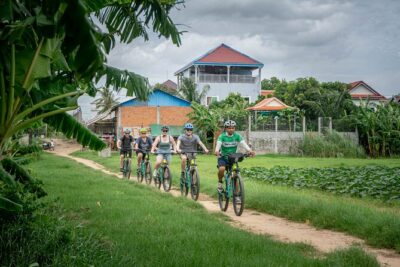
Siem Reap Countryside Bike Tour / E-Bike or Tuk Tuk
Read our review →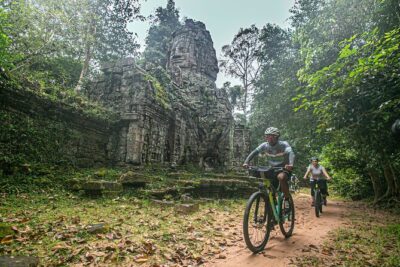
Phnom Penh Silk Island Bike Tour/ E-Bike or Tuk Tuk
Read our review →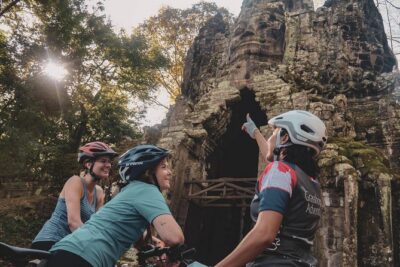
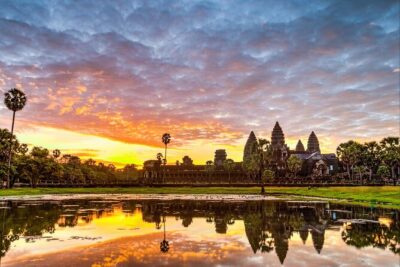
Angkor Wat Sunrise Bike Tour & Jungle Breakfast
Read our review →
Local Livelihood Half Day Bike Tour in Battambang
Read our review →Browse the lists this tour appears in