
Reviewed · TUK-TUKS
Siem Reap : Private Tuk-Tuk Tour of the Magnificent Temples.
Angkor Wat is only the opening act on this private tuk-tuk tour. Over 8.5 hours, you move through the Small Circuit by open-sided local transport, stopping at Bayon’s stone faces, Ta Prohm’s tree-covered ruins, and several quieter corners of the ancient capital. I like the freedom of a private vehicle and the simple hotel-to-hotel service. I also like that the route can be tailored instead of forcing you into a large group.
The catch is important: the temple guide is not included. Your English or French-speaking driver handles the driving, but the information inside the temples may be limited unless you add the English-speaking guide option for $35. One past booking also involved paying for a French guide who was not available, leaving the English-speaking driver to fill in.
Key points
- A private tuk-tuk for one to three people: You avoid a large coach and can move at a more personal pace.
- Six major temple stops: The route covers Angkor Wat, Angkor Thom, Bayon, Ta Keo, Ta Prohm, and Banteay Kdei.
- Hotel pickup and drop-off included: You do not need to arrange transport to the ticket station or back to Siem Reap.
- Angkor Pass costs extra: Buy your archaeological park entry ticket at the ticket station before entering the temples.
- Lunch is on your own: You stop at a local restaurant, but food and soft drinks are not part of the $18 price.
- Dress for temple rules: Wear comfortable clothing that covers your shoulders and knees, with good walking shoes.
Why a tuk-tuk works so well for Angkor’s Small Circuit
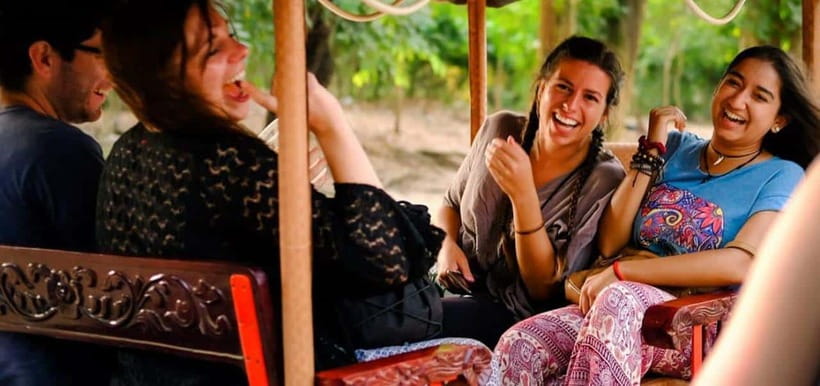
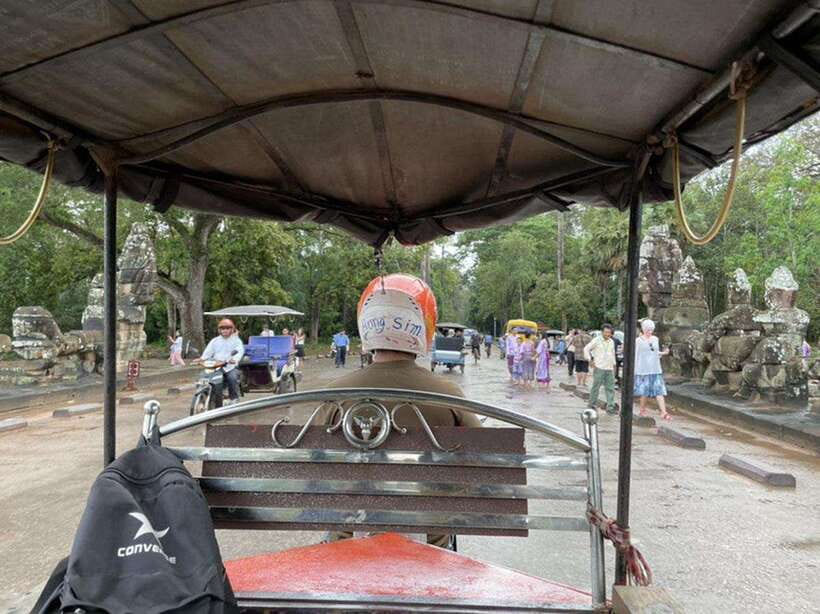
For an Angkor day, the ride between temples matters almost as much as the stops. The open tuk-tuk gives you fresh air, a clear view of the road, and a close connection to the countryside around Siem Reap. You are not sealed inside a bus, and you can watch the forest and local life pass by between ruins.
The vehicle accommodates one to three people. That makes this a good choice for a couple, a small family, or a few friends who want their own route. It also means you can ask for a short pause or adjust the order of stops more easily than you could with a fixed group.
The tour lasts about 8.5 hours, so this is a full day rather than a quick temple sampler. The exact start time depends on availability, but pickup takes place in the morning. You should be ready in your hotel lobby 30 minutes before the scheduled start, since the pickup occurs within that half-hour window.
A bottle of chilled water is included. That sounds minor, but it is useful after walking across broad temple courtyards and climbing stone steps. Bring cash for lunch, drinks, and the park entry ticket.
A few more Siem Reap trips to weigh up
- Siem Reap: Angkor Wat Private Tuk-Tuk Tour
★ 4.9 · 2,222 reviews - Siem Reap Countryside Bike Tour / E-Bike or Tuk Tuk
★ 5.0 · 935 reviews - Angkor Sunrise Bike Tour / E-Bike or Tuk Tuk
★ 5.0 · 615 reviews
Starting at Angkor Pass station
The day begins with pickup in Krong Siem Reap. The tuk-tuk then heads to the ticket station so you can obtain your Angkor Pass. The pass is not included in the tour price, so allow for that separate expense when comparing the total cost.
This stop is practical rather than scenic, but it keeps the morning organized. You do not have to find your own way to the ticket station, and your driver takes care of the transport from your hotel. Once the ticket is arranged, the temple circuit begins.
The listed transfer segments include rides of roughly 15 minutes, another 15 minutes, and about 20 minutes. These are useful breathing spaces between temple visits. You can sit back, cool off, and reset before the next set of stairs and courtyards.
Angkor Wat, the grand first stop
Angkor Wat is the emotional high point for many people, and it is the first temple on this route. Built as a vast religious complex, it is known as the largest religious monument in the world. Its towers rise in a lotus-bud shape, and its scale becomes clear as you cross the approach toward the central structure.
Give yourself time to take in the proportions. Angkor Wat is not simply a building to photograph from one angle. The galleries, towers, courtyards, and long approach create a slow reveal. You may find that the first view is less informative than walking farther into the complex and looking back.
The drawback is that the site can feel demanding at the start of the day. There is a lot of ground to cover, and the stone surfaces can be uneven. Comfortable shoes are essential. A driver can bring you to the entrance, but you will still do the walking yourself.
Since the driver is not automatically an inside-the-temple guide, you may want to arrange the additional English-speaking guide if architectural details and religious symbolism matter to you. Without that extra service, you will see the major spaces but may need to read signs or explore independently.
Angkor Thom and Bayon’s stone faces
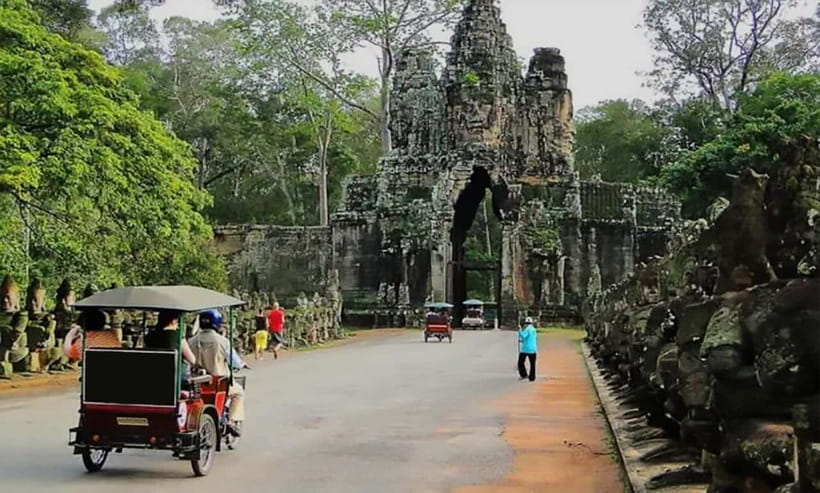
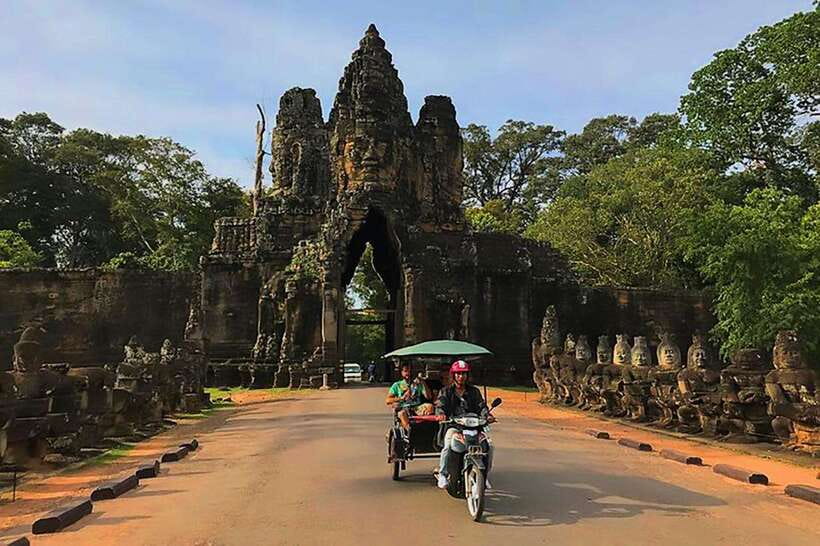
The route continues to Angkor Thom, the great fortified city that includes Bayon Temple. Bayon is famous for its enormous carved faces, which appear from towers throughout the complex. The effect changes as you walk around them. A face that seems hidden from one path can suddenly come into view from another.
Bayon is best approached in the morning because its eastern-facing position receives favorable light at that time. That timing is one reason the early start makes sense. You get the temple before the day has fully worn on, and the stone details are easier to appreciate in softer light.
Angkor Thom is more than Bayon alone. The city setting helps you understand the scale of the Khmer capital, while the forest around the ruins gives the ride and the walk a strong sense of place. You are moving through an old urban center, not visiting isolated monuments scattered without a plan.
The site can be visually busy, with towers, passages, and carvings competing for your attention. If your driver is not serving as a temple guide, decide in advance how much explanation you want. The private format gives you room to linger, but it does not automatically provide historical interpretation.
Same country, a completely different kind of day:
- Angkor Wat Sunrise or Sunset Tour with Guide from Siem Reap
★ 5.0 · 12,109 reviews - Siem Reap: Angkor Wat: Small-Group Sunrise or Sunset Tour
★ 5.0 · 9,444 reviews - From Siem Reap: Kampong Phluk Floating Village Tour by Boat
★ 4.9 · 6,979 reviews - Sunset tour of Kampong Phluk stilts home village on the Tonle Sap
★ 5.0 · 4,865 reviews
A lunch break at a local restaurant
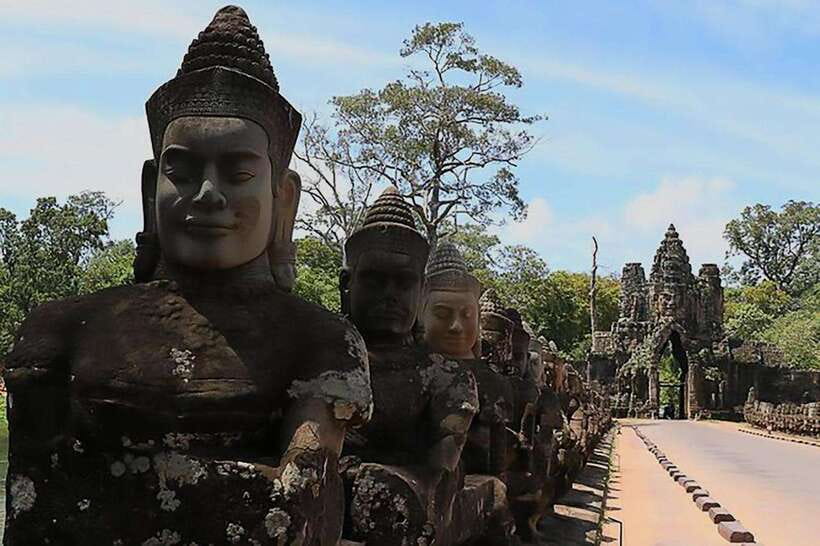
After the morning temples, you stop for lunch at a local restaurant. Food and soft drinks are not included, so bring cash and expect to pay directly for what you order.
This break is useful because the tour is long and the temples require steady walking. It gives you time to sit down before the afternoon stops. The dining location is not specified, so do not book this expecting a particular restaurant or a set menu.
You may prefer to keep lunch fairly light. The next stops still involve walking, steps, and uneven stone. The best value here is not a included meal, since there is none, but the chance to pause without arranging your own transport or losing your way.
The Terrace of the Elephants
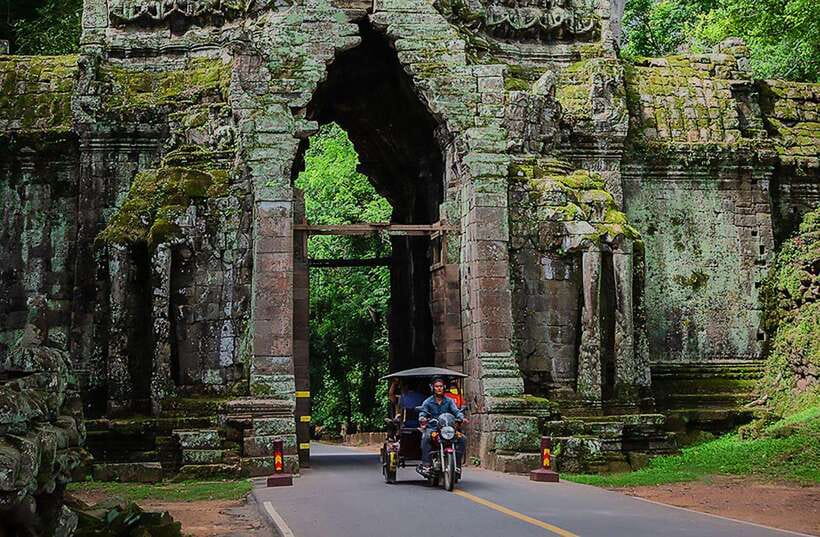
The Terrace of the Elephants is a long platform, about 300 meters in length, where King Jayavarman VII watched games, public celebrations, and returning armies. Its importance comes from both its carved decoration and its role as a royal viewing platform.
This is a good place to think about how Angkor functioned as a capital. The temples are not only sacred monuments. They were connected to royal ceremonies, public events, military power, and everyday movement through a large city.
The terrace is also a change of pace after the enclosed galleries at Angkor Wat and the tower-filled Bayon. You get a broad platform and a sense of public space. Still, the visit may feel shorter than the major temple stops, especially if you are looking for towering sanctuaries rather than carved walls.
Ta Keo, an unfinished mountain temple
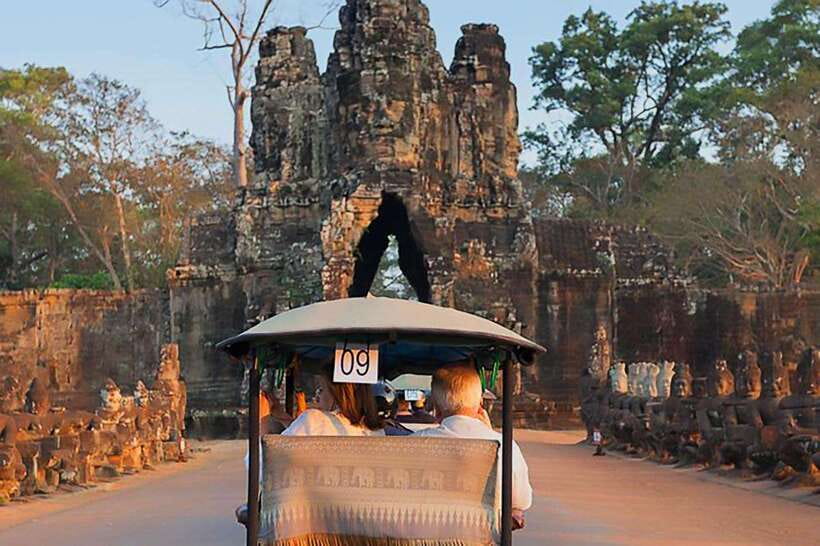
Ta Keo offers a different kind of interest. The temple was left unfinished after a lightning strike during construction, so its surfaces do not have the same completed decoration found at some other sites.
That unfinished quality helps you notice the structure itself. You can focus on the stepped design and the effort needed to build a temple of this scale, rather than only on finished carvings. It is a useful contrast with Angkor Wat and Bayon.
Stone stairs and elevated sections make footwear and careful footing important. The tour instructions call for comfortable shoes and clothes, and this is one stop where that advice matters. If you dislike climbing or uneven surfaces, Ta Keo may be more tiring than its time on the schedule suggests.
Ta Prohm and the Tomb Raider effect
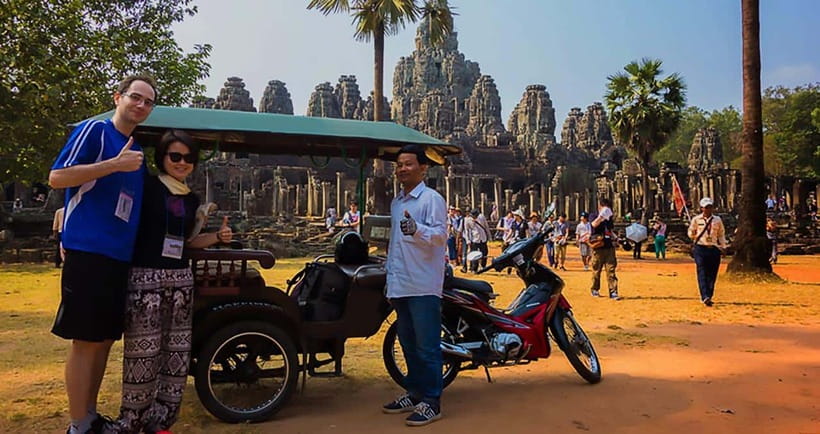
Ta Prohm is the stop most associated with the film Tomb Raider. Its appeal comes from the way trees and vegetation surround the ruins, giving the temple a more tangled and enclosed appearance than Angkor Wat.
The vegetation is not just a backdrop for photographs. It changes the way you move through the site. Doorways, galleries, and courtyards appear in fragments, and the contrast between carved stone and plant growth makes Ta Prohm instantly recognizable.
It is also one of the stops where patience pays off. Look beyond the most obvious photo locations and notice the less dramatic corridors and carved details. The temple can be uneven underfoot, and the combination of roots, stone, and narrow passages calls for sensible shoes.
The cinematic connection may draw you here, but Ta Prohm is worth more than a movie reference. It shows how the forest has become part of the visual identity of the ruins. Your driver can get you there and wait while you explore, but an inside guide would add more context about the temple’s original purpose and design.
Banteay Kdei, a quieter final temple
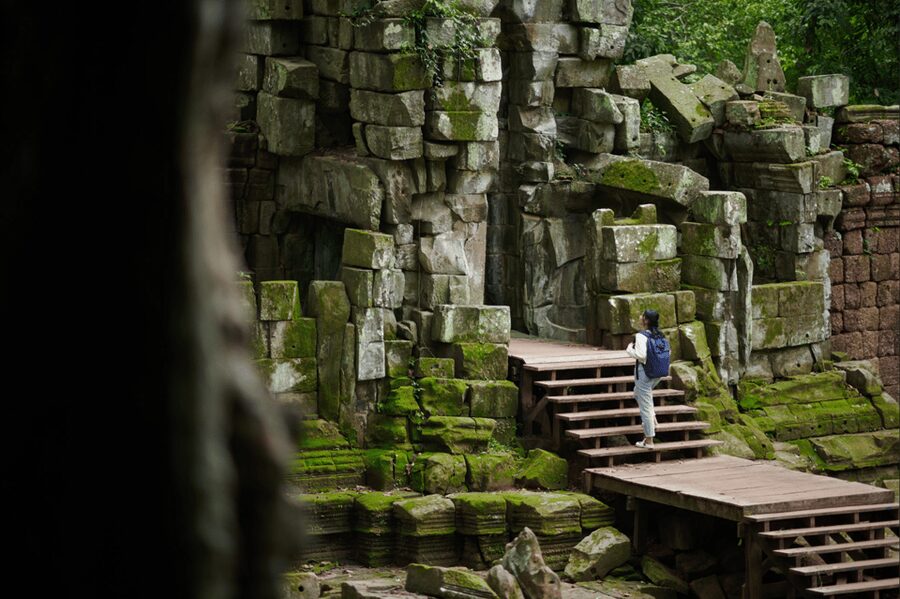
The final temple is Banteay Kdei, surrounded by vegetation. After the scale of Angkor Wat and the crowded visual language of Bayon, this can feel like a calmer way to finish the circuit.
Banteay Kdei gives you another look at how the temples relate to the forest. Its enclosed spaces and worn stone create a different mood from the more monumental stops earlier in the day. You may find the final visit especially welcome because the full route has already included several large complexes.
By this point, fatigue is a real consideration. An 8.5-hour temple day asks a lot of your feet and attention. The private tuk-tuk helps because you have your own shaded ride between stops, but it cannot remove the walking required at each temple.
What the $18 price really covers
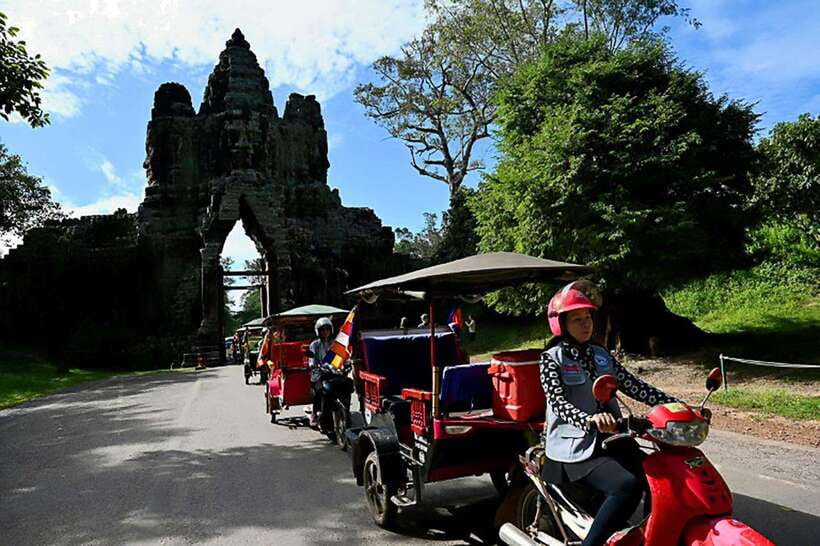
At $18 per person, this tour is inexpensive for a private full-day vehicle with hotel pickup and drop-off. The value is strongest if two or three people share the tuk-tuk, since you receive private transport without paying for a large private car.
The price includes:
- Private tuk-tuk transport
- Private round-trip hotel transfers
- An English-speaking driver
- A route that can be adjusted to your interests
- Chilled bottled water
The price does not include the Angkor Archaeological Park entry ticket, lunch, soft drinks, or an inside temple guide. Those exclusions matter. The advertised price is the transport cost, not the complete cost of your day.
An English-speaking guide option is listed at $35 for the tour through the return to your hotel. Confirm exactly what guide service you are booking, particularly if you want French. One reported problem involved a French guide being paid for but not appearing, while the driver spoke English instead. That makes clear communication before departure especially important.
How to prepare for the temple day
Dress rules are strict enough that you should plan carefully. Shorts, short skirts, and sleeveless shirts are not allowed. Choose comfortable clothes that cover your shoulders and knees, and wear shoes made for walking on uneven surfaces.
Pack:
- Comfortable walking shoes
- Modest clothing
- Cash for the ticket, lunch, and drinks
- A charged smartphone
- Sun protection, if you normally use it
Your phone is useful for contact with the operator and for keeping the emergency WhatsApp number from your voucher available. The booking information lists English and French for the host or greeter, but the driver’s language and any guide arrangement should be confirmed if that point is important to you.
Free cancellation is available up to 24 hours before the tour for a full refund. You can also reserve and pay later, which helps if your Siem Reap schedule is still shifting.
Who should book this private circuit
I would choose this tour if you want a low-cost, private way to cover the best-known Small Circuit temples and you are comfortable exploring some sites without a formal guide.
It suits couples and small groups of up to three people particularly well. The tuk-tuk is part of the Siem Reap experience, and private transport gives you more control than a shared group vehicle. Hotel pickup also removes a small but annoying layer of planning.
I would think twice if detailed history is your main goal and you do not want to pay extra for a guide. The driver can provide transport, but the included service does not promise full explanations inside each temple. Also consider the long duration and amount of walking if you prefer a short sightseeing outing.
Should you book the Angkor tuk-tuk tour?
Book it if you want private transport, a classic tuk-tuk ride, and a well-packed Small Circuit route at a modest starting price. The combination of Angkor Wat, Bayon, Ta Prohm, Ta Keo, Banteay Kdei, and the Terrace of the Elephants gives you a broad look at Angkor in one day.
Before paying, decide if you need an inside guide, budget separately for the Angkor Pass and lunch, and confirm the language arrangement in writing. With those points clear, this is a practical choice for seeing the major temples without joining a large group.
FAQ
How long does the private tuk-tuk tour last?
The tour lasts 8.5 hours. Check availability for the specific starting time.
Is hotel pickup and drop-off included?
Yes. Round-trip private hotel transfer by tuk-tuk is included. You should be ready in your hotel lobby 30 minutes before the tour begins.
How many people can ride in the private tuk-tuk?
The tuk-tuk can accommodate one to three people, and the tour is operated as a private group.
Is the Angkor Pass included in the tour price?
No. The Angkor Archaeological Park entry ticket is not included. You obtain the pass at the ticket station after hotel pickup.
Is a temple guide included?
No. An inside-temple guide is not included in the basic tour. An English-speaking guide option is listed for an additional $35. English and French are listed as available languages, so confirm the language you need before departure.
Are lunch and drinks included?
No. Lunch at a local restaurant, food, and soft drinks are at your own cost. Chilled bottled water is included.
Just added around Siem Reap
- Ultimate Sunrise to Angkor Wat, Angkor Thom and Bayon Temple★ 5.0 · 3 reviews
- Twilight Tastes of Siem Reap Include Dinner★ 5.0 · 13 reviews
- Trekking Tour at Phnom Kulen National Park from Siem Reap★ 5.0 · 3 reviews
- Full-Day Private Tour of Angkor Wat with Pick Up★ 5.0 · 12 reviews
- Private Day Trip to Angkor Temples with Expert Guide★ 5.0 · 4 reviews
- Waterfall & River of 1000 Siva Linga- Kulen Mountain Private Tour★ 5.0 · 3 reviews
- Professional Photo Shoot in Angkor Archaeological Park, Siem Reap★ 5.0 · 42 reviews
- Ultimate Siem Reap Food Tour by Tuk Tuk – 20 Tastings, 8 Stops★ 5.0 · 13 reviews
Tuk-Tuks, compared.
Tuk-Tuk, Bamboo Train, Killing/Bat Caves, Sunset
Read our review →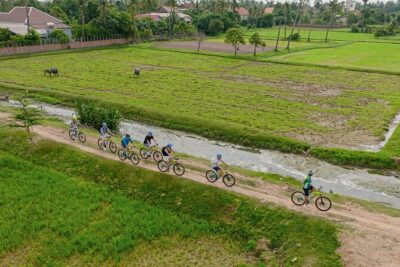
Siem Reap Countryside Bike Tour / E-Bike or Tuk Tuk
Read our review →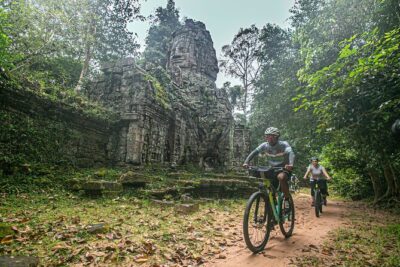
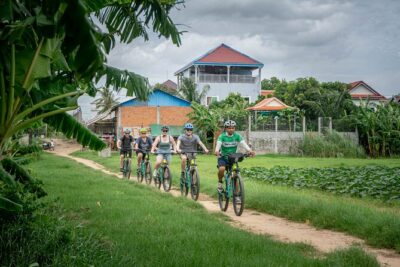
Phnom Penh Silk Island Bike Tour/ E-Bike or Tuk Tuk
Read our review →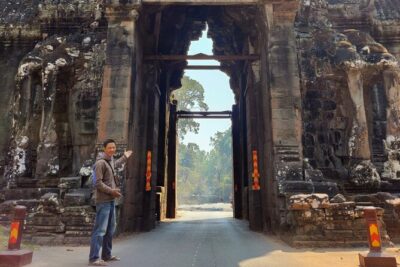

Ultimate Phnom Penh Food Tour by Tuk Tuk: 20 Tastings and Drinks
Read our review →
Afternoon tour by tuk tuk to bamboo train,bat cave,killing cave,countryside.
Read our review →Browse the lists this tour appears in