
Reviewed · MUSEUMS
Siem Reap: War Museum included Ticket & Free Round trip
Siem Reap’s War Museum is not a polished hall of glass cases. It is a large open-air garden filled with vehicles and artillery used during the Khmer regime, plus smaller military objects along the paths. That rough, outdoor setting gives the visit a direct, unvarnished feel.
I like the simple hotel pickup and return, and I like that the museum ticket is included in the $19 price. The small group, capped at 10 people, also keeps the outing manageable. The main drawback is clear: the vehicles are not restored, so this is better for historical atmosphere and context than for beautifully presented machinery.
Key points to know before booking
- Open-air military collection: Walk garden paths past vehicles, artillery, guns, clothing, and other wartime objects.
- Hotel-to-hotel tuk-tuk ride: An English-speaking driver collects you and returns you after the museum visit.
- Only war museum in Cambodia: The visit offers a focused look at the country’s painful modern past.
- Unrestored vehicles: Expect weathered, aging machinery rather than restored museum pieces.
- Personal guidance can add a lot: Drivers such as Savady have been praised for being helpful and engaging, while a veteran guide may provide much deeper war-related context.
- Two hours and $19: The price includes entry and round-trip transport, with free cancellation up to 24 hours before departure.
An open-air look at Cambodia’s wartime past
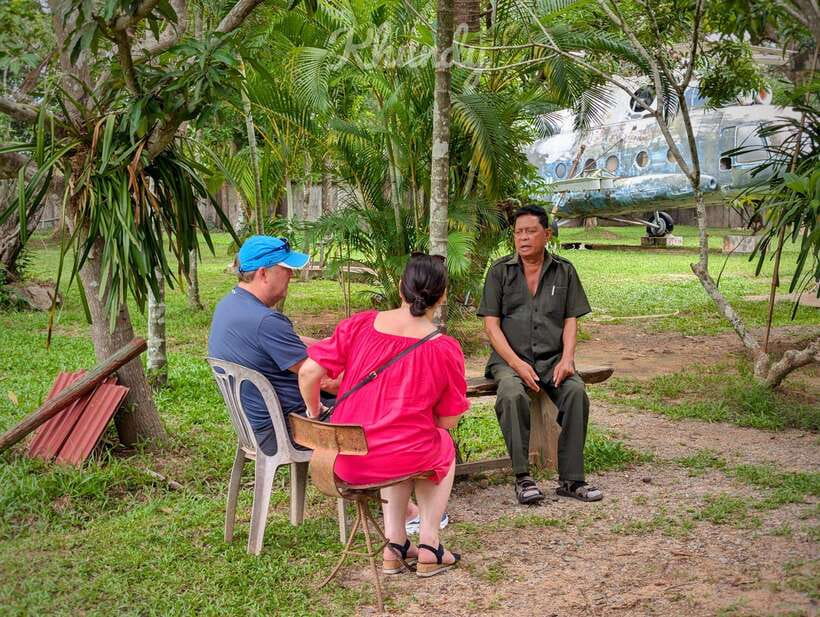
The first thing to understand is the character of this museum. You are not entering a large, formal institution with a carefully arranged indoor collection. You are walking through a broad garden where military vehicles, artillery, and smaller artifacts sit along paths.
That setting has both strengths and limits. It lets you get close to the objects and move at your own pace. You can look at the shape of a vehicle, study a gun, or pause over a panel without being hurried through a crowded room. At the same time, the collection does not have the finish or preservation work you might expect from a major military museum.
The museum is presented as the only war museum in Cambodia. Its purpose is not simply to display machines. It also introduces Cambodia’s culture, civilization, present-day living standards, and the painful stories left by the country’s past. Those subjects make the visit more useful than a quick walk around old vehicles.
A few more Siem Reap trips to weigh up
- Bantey Srei, Kbal Spean and Landmine museum Private Tuk-Tuk
★ 4.7 · 30 reviews - Siem Reap City Tour with War Museum and Killing Field
★ 5.0 · 27 reviews - Private Tour: HERO Rats & Angkor National Museum
★ 4.5 · 16 reviews
The tuk-tuk pickup keeps the visit easy
Your English-speaking tuk-tuk driver collects you from your hotel in Siem Reap and takes you to the museum. After your visit, the driver returns you to the same hotel.
That arrangement matters in Siem Reap. You do not need to find a taxi for the outward journey, bargain for a ride back, or work out where the museum is on your own. The transport is not an extra charge added at the end, since both the museum entrance fee and round trip are included.
The ride also gives you a simple way to fit the museum into a day built around other sights. The listed duration is two hours, and starting times depend on availability. You should still check the exact pickup time carefully, since the total outing includes the tuk-tuk journey as well as time at the museum.
The vehicle is a tuk-tuk, not a private car. That is part of the local feel, though you should choose your clothing with an open-air ride in mind. The supplied information does not promise air conditioning or a private vehicle, so book this for straightforward local transport rather than comfort on the level of a private car transfer.
Walking the garden of vehicles and artillery
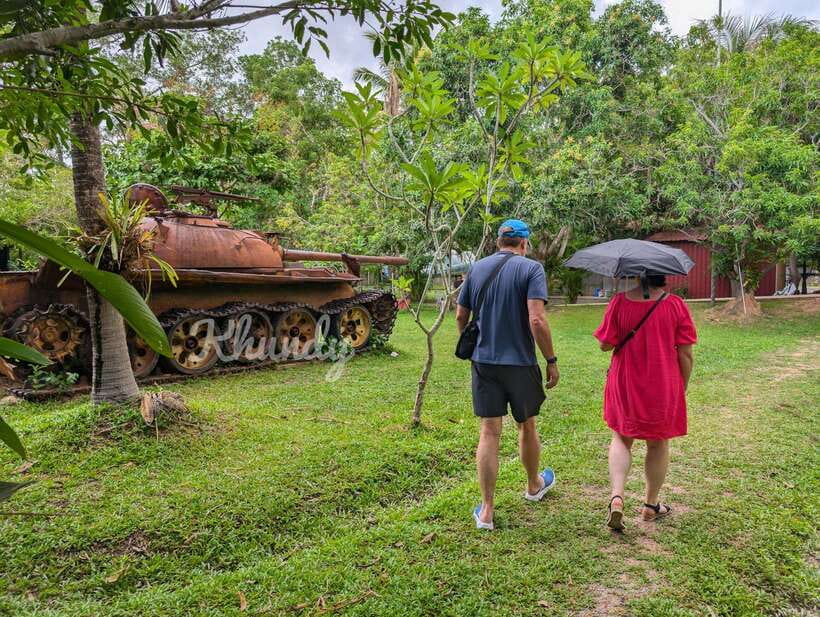
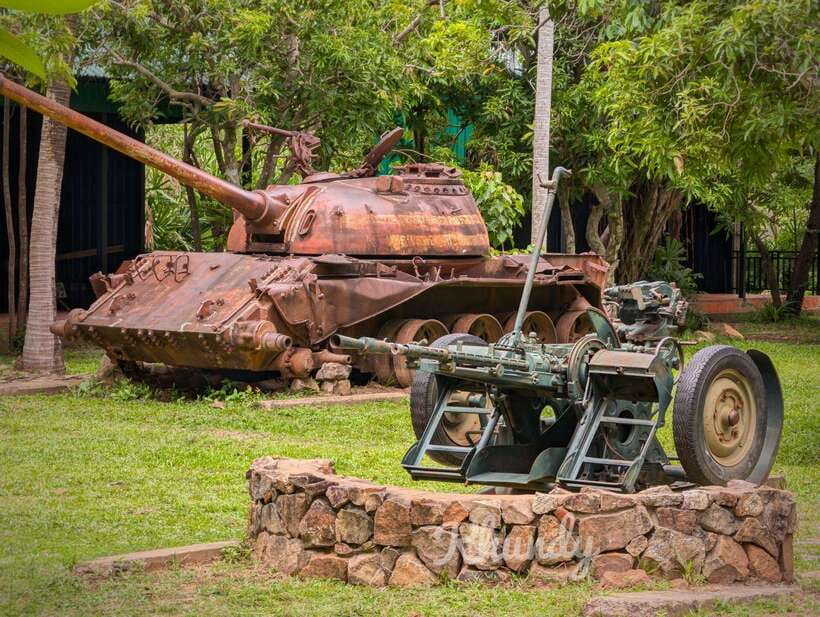
Once you arrive, expect the visit to unfold on foot. The museum grounds are essentially a large garden with paths leading between military vehicles and artillery pieces.
The collection covers different types of vehicles employed during the Khmer regime. The information provided does not give a full inventory, so you should not book expecting a precise list of tanks, trucks, or weapons. What you can count on is a spread of large military objects that you can view at close range.
The outdoor layout makes the experience fairly flexible. You can spend more time with the pieces that interest you and move faster past those that do not. For a two-hour outing, that freedom is useful. You are not tied to a long lecture or a fixed series of rooms.
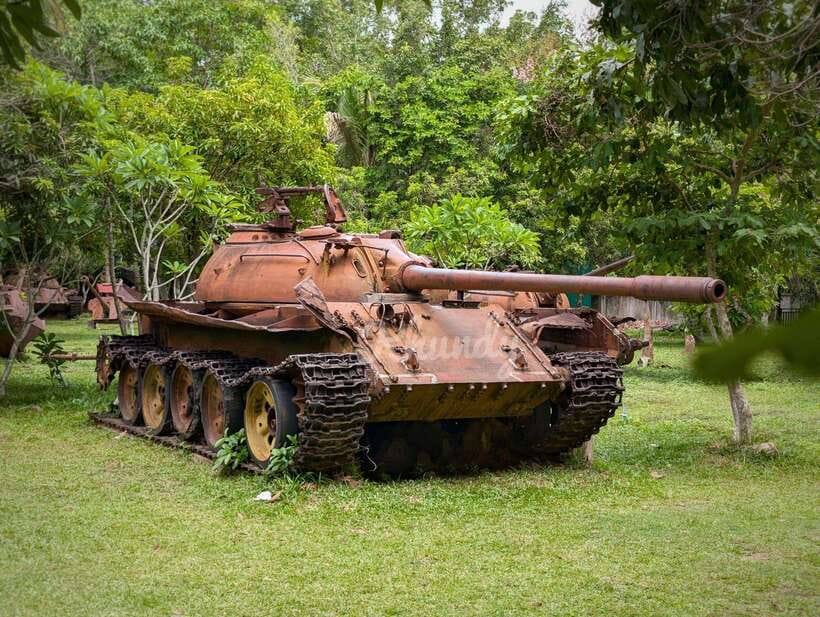
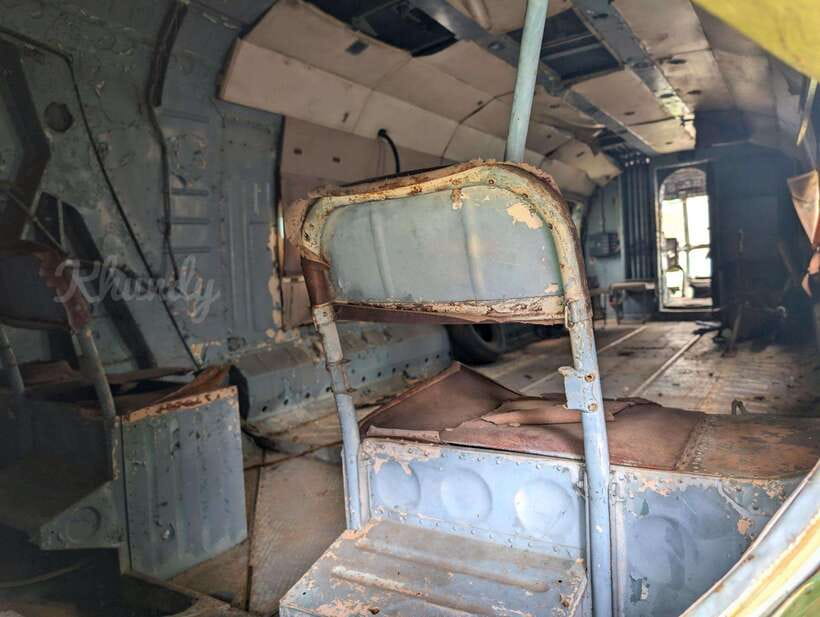
The condition of the machinery is a central part of the experience. The museum grounds are well maintained, but the vehicles themselves are not restored. In practical terms, you will see aged objects with a worn appearance rather than machines returned to their original condition.
That can be disappointing if you enjoy technical detail, polished displays, or museum conservation. It can also make the visit feel more immediate. These are not shiny replicas or modern exhibition pieces. Their weathered condition reminds you that this is a collection of objects connected to a difficult period, not a showroom.
Smaller artifacts fill in the human story
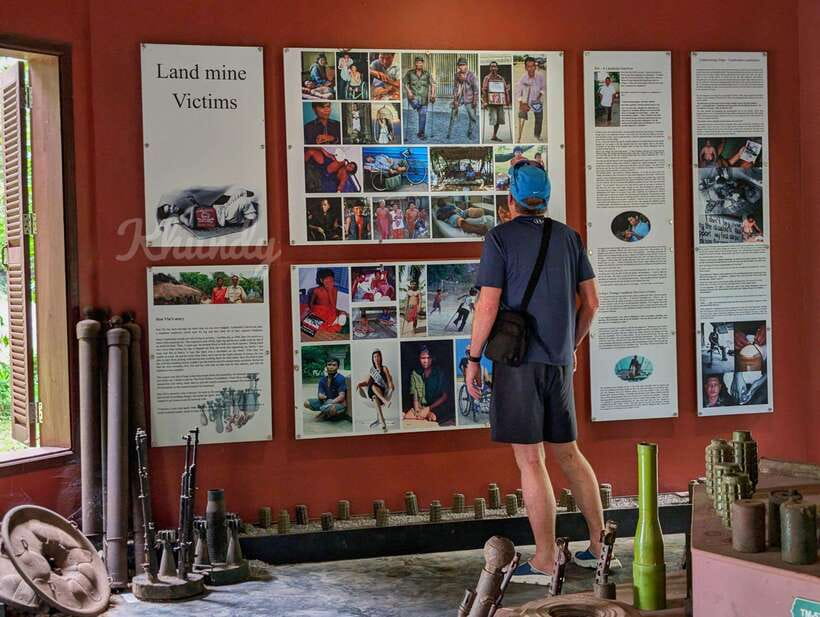
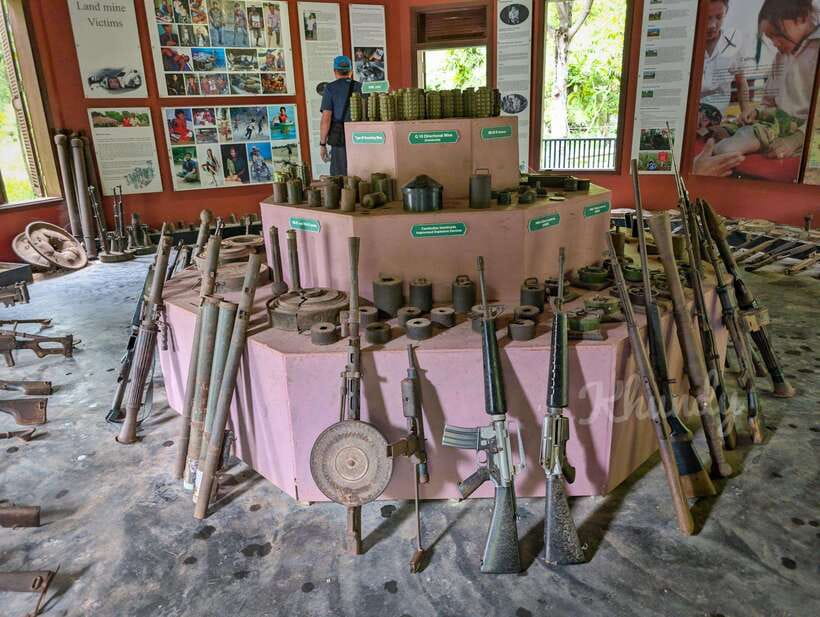
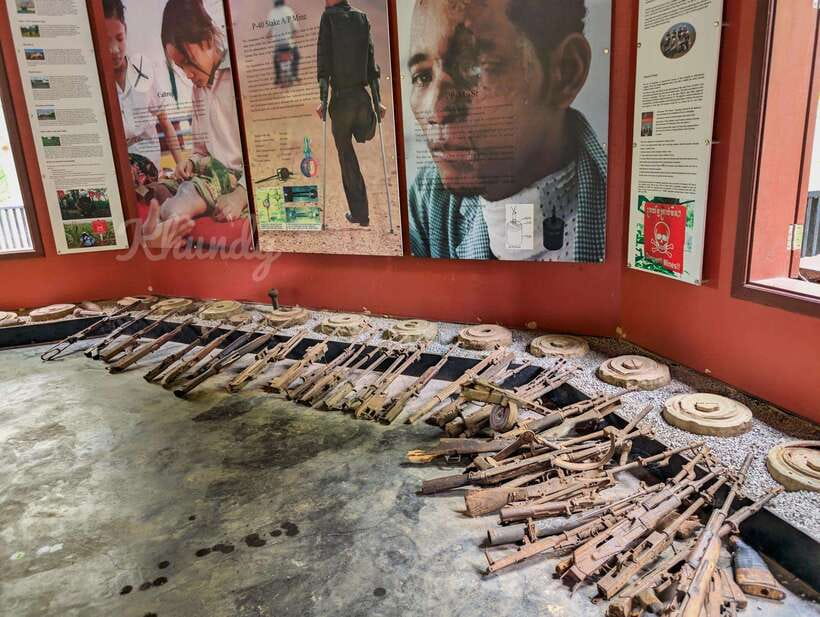
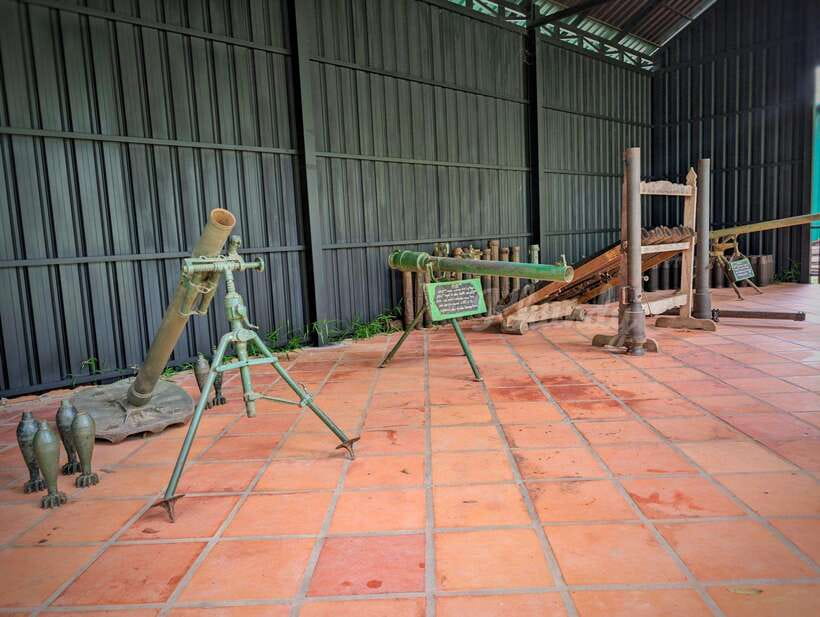
The larger vehicles are likely to catch your eye first, but do not rush past the smaller displays. Along the walkways, you can see guns, clothing, and other military artifacts.
These objects help give scale to the history. A large vehicle shows the hardware of conflict. A uniform, gun, or personal item points toward the people who used and lived around that equipment. The collection is not described as a fully restored or heavily interpreted exhibition, so the written boards become important.
Several large boards provide photographs and background information. Take time to read them rather than treating the museum as a place for quick photographs. The panels are where the individual objects connect to Cambodia’s wider story and where the museum addresses the sad events of the past.
The supplied details do not specify how much text appears in each language, so you should not assume every panel will offer extensive English explanation. The activity itself is offered in English, and your driver speaks English, which may help with basic questions and orientation.
Same country, a completely different kind of day:
- Angkor Wat Sunrise or Sunset Tour with Guide from Siem Reap
★ 5.0 · 12,109 reviews - Siem Reap: Angkor Wat: Small-Group Sunrise or Sunset Tour
★ 5.0 · 9,444 reviews - From Siem Reap: Kampong Phluk Floating Village Tour by Boat
★ 4.9 · 6,979 reviews - Sunset tour of Kampong Phluk stilts home village on the Tonle Sap
★ 5.0 · 4,865 reviews
A guide can change the quality of the visit
The transport driver is part of the experience, but the depth of guiding may vary. Several particularly positive accounts identify Savady, also spelled Sovaday in one account, as helpful, engaging, and supportive. One account also describes receiving extensive information from a veteran at the museum.
That detail is worth keeping in mind when you book. The museum can be visited independently, but personal explanation may give the objects more meaning. If your driver offers background or introduces you to someone who can discuss the war, make time for the conversation.
You should not assume that a veteran guide or a long personal talk is guaranteed as part of the $19 package. The stated inclusions are the entrance ticket and round-trip transport. Still, the possibility of hearing first-hand or locally informed explanations is one of the strongest reasons to choose this experience instead of arranging only a ride to the museum.
Savady’s praise also points to the value of a good driver in a short outing. An attentive driver can help you settle into the visit, answer basic questions, and make the pickup and return less stressful. If you are assigned a different driver, the official activity information still promises an English-speaking driver, but not a particular person.
What the museum can teach you
This visit deals with serious material. The museum presents Cambodia’s painful past and the military equipment connected with the Khmer regime. It also aims to help you understand Cambodian culture, civilization, and present-day living standards.
That wider goal matters because a war museum should not be treated as a collection of machines alone. The vehicles and guns are evidence of conflict, but the photographs and written boards point toward the people and society affected by it.
I would plan to visit with patience and respect. The museum is not described as an entertainment attraction, and the subject matter may feel heavy. The outdoor garden format makes the visit physically simple, but it does not make the stories less difficult.
For many people, this will be a useful counterpoint to Siem Reap’s famous temples. Angkor introduces you to Cambodia’s older civilization. The War Museum addresses a far more recent and painful chapter. Seeing both helps you avoid reducing the country to ancient stonework and postcard views.
The information provided does not claim that the museum offers a complete account of every part of Cambodian history. Treat it as a focused visit centered on wartime vehicles, military objects, photographs, and background information. If you want an exhaustive historical course, two hours here will not provide that.
Why the unrestored condition matters
The word unrestored deserves attention. Many military museums spend large sums making vehicles look as they did when new. Here, the grounds are cared for, but the vehicles have not received that treatment.
For some visitors, that is a major drawback. You may find faded surfaces, aging metal, and equipment that does not look ready for display in a modern military collection. If your main interest is engineering, exact military specifications, or restored machinery, the presentation may feel limited.
For others, the condition is part of the museum’s character. The objects look like old survivors rather than freshly prepared exhibits. You can see that the collection is built around the things that remain, not around a polished recreation.
The best approach is to set your expectations correctly. Come for the chance to see Khmer-era military vehicles and artifacts at close range, along with the photographs and accounts that explain them. Do not pay $19 expecting a high-budget museum with pristine displays.
Is $19 a fair price?
At $19 per person, the value rests on convenience as much as admission. You receive the museum entrance fee, a hotel pickup, a tuk-tuk ride to the site, and a return trip. For a short visit, that bundled arrangement is easier than arranging transport and admission separately.
The two-hour duration also suits people with a full Siem Reap schedule. You can give attention to a serious subject without committing half a day. The exact starting times depend on availability, so check those before booking if you are coordinating the visit with temple plans or other activities.
The price is less compelling if you are already near the museum and can arrange very cheap local transport yourself. In that case, the value of the package comes mainly from the included ticket and the ease of hotel-to-hotel service.
The small-group limit of 10 people is another positive. It is not a private tour, but it should be more personal than a large coach outing. You may have a better chance to ask the driver questions and move through the grounds without being part of a big crowd.
The activity also allows you to reserve now and pay later. You can cancel up to 24 hours in advance for a full refund. Those terms are useful if your Siem Reap plans are still shifting, though you should read the final booking conditions at checkout.
Who will get the most from this outing?
I would recommend this tour to you if you want a short, practical introduction to Cambodia’s recent war history and prefer transport to be arranged. It suits visitors who are comfortable with an open-air museum, weathered vehicles, and a subject that requires a respectful mood.
It is also a good fit if you value local conversation. The strong praise for Savady and for the veteran who provided extensive information suggests that the human side of the outing can be especially worthwhile. Ask questions, listen carefully, and give yourself enough time to read the boards.
Families and mixed-interest groups may appreciate the two-hour format, though the serious subject matter may not suit every child. The supplied information does not give a recommended age, so you should decide based on your own group and how comfortably everyone handles wartime history.
I would be more cautious about booking if you want a highly polished military collection, extensive technical labeling, or a guaranteed private historian. Those features are not promised. The vehicles are not restored, and the package is built around access and transport rather than a long specialist lecture.
Practical tips for a thoughtful visit
- Wear clothing suited to a tuk-tuk ride and an outdoor garden setting.
- Allow time to read the large boards, not just inspect the vehicles.
- Ask your driver questions, especially if you are assigned Savady or another driver who offers background.
- Keep an open mind about the unrestored displays.
- Check the available starting times before you book.
- Remember that the subject concerns Cambodia’s painful past, so plan the visit for a time when you can give it proper attention.
These are simple choices, but they can change the experience. The museum does not appear to depend on elaborate staging. Your patience and willingness to read will do much of the work.
Should you book the Siem Reap War Museum tour?
Book it if you want a compact, affordable visit to Cambodia’s only war museum, with a ticket and round-trip tuk-tuk transport included. The combination is practical, and the chance to hear useful explanations from an English-speaking driver or a veteran can add real value.
Skip it if restored vehicles and polished indoor displays are essential for you. The collection is weathered, the information provided is fairly general, and no particular guide is guaranteed.
For most history-minded visitors with two spare hours, I think the $19 package makes sense. Go for the honest open-air setting, the difficult stories, and the convenience of being collected and returned to your hotel. Set your expectations properly, and the museum can add an important modern chapter to your understanding of Cambodia.
FAQ
What is included in the $19 price?
The price includes the War Museum Cambodia entrance fee and round-trip transport by tuk-tuk from your hotel.
How long does the activity last?
The listed duration is two hours. Starting times vary, so you need to check availability when booking.
Will the driver speak English?
Yes. The activity includes an English-speaking driver, and English is the listed language.
How many people are in the group?
This is a small-group activity limited to 10 participants.
What can I see at the museum?
You can see vehicles and artillery used during the Khmer regime, along with guns, clothing, photographs, and other military artifacts. Large information boards provide background details.
Are the vehicles restored?
No. The museum grounds are well maintained, but the vehicles themselves are not restored.
Can I cancel or pay later?
You can cancel up to 24 hours in advance for a full refund. You can also reserve the activity and pay later, keeping your plans flexible.
Just added around Siem Reap
- Ultimate Sunrise to Angkor Wat, Angkor Thom and Bayon Temple★ 5.0 · 3 reviews
- Twilight Tastes of Siem Reap Include Dinner★ 5.0 · 13 reviews
- Trekking Tour at Phnom Kulen National Park from Siem Reap★ 5.0 · 3 reviews
- Full-Day Private Tour of Angkor Wat with Pick Up★ 5.0 · 12 reviews
- Private Day Trip to Angkor Temples with Expert Guide★ 5.0 · 4 reviews
- Waterfall & River of 1000 Siva Linga- Kulen Mountain Private Tour★ 5.0 · 3 reviews
- Professional Photo Shoot in Angkor Archaeological Park, Siem Reap★ 5.0 · 42 reviews
- Ultimate Siem Reap Food Tour by Tuk Tuk – 20 Tastings, 8 Stops★ 5.0 · 13 reviews
Museums, compared.
The Killing Field and Toul Sleng Genocide Museum (S21) Tour
Read our review →
Killing field and Toul Sleng genocide museum Tour
Read our review →
Private Half Day To Killing Field & S21 Genocidal Museum in Phnom Penh
Read our review →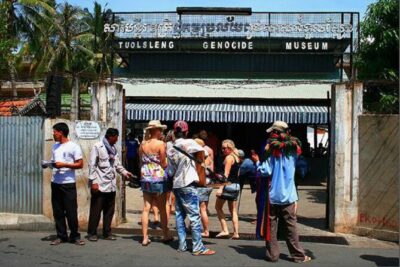
Tuol Sleng Genocide Museum (S-21) and Choeung Ek Killing Fields Tour
Read our review →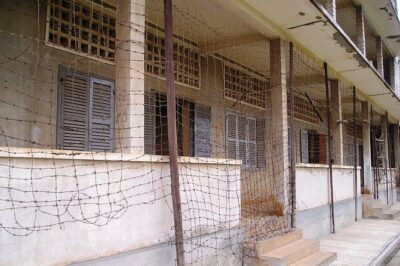
Phnom Penh City Tour, Silver Pagoda, Genocide Museum, Killing Fields
Read our review →
Bantey Srei, Kbal Spean and Landmine museum Private Tuk-Tuk
Read our review →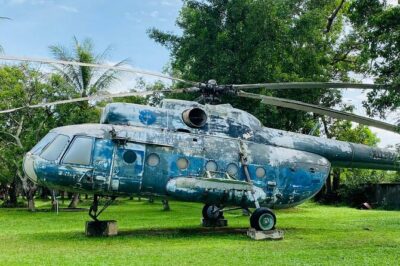
Siem Reap City Tour with War Museum and Killing Field
Read our review →The killing field and Toul Sleng Genocide museum (S21) Tour
Read our review →Browse the lists this tour appears in