
Reviewed · ANGKOR WAT TOURS
Angkor Wat: Sunrise 2.5 Days Temples & Tonle Sap-Small Group
Angkor Wat at sunrise is the star, but the clever part of this 2.5-day plan is the range. You get the great temple before the crowds fully gather, then see delicate Banteay Srei, face towers at Bayon, root-covered Ta Prohm, and the stilted villages of Tonle Sap. Guides such as Pal Saruon, Pireak, AJ, and Sam add useful detail, while drivers have been praised for meeting you with cold water and wet towels.
I like two things here. First, the schedule includes both famous temples and quieter corners such as Neak Pean and Preah Khan. Second, a group capped at 15 people keeps the price modest without turning the tour into a large coach procession. The main catch is the extra $62 temple pass, and the Tonle Sap visit changes to Phare Circus in the dry season.
Key points at a glance
- Sunrise inside Angkor Wat: Enter before dawn and use the eastern side, where the corridors are usually calmer.
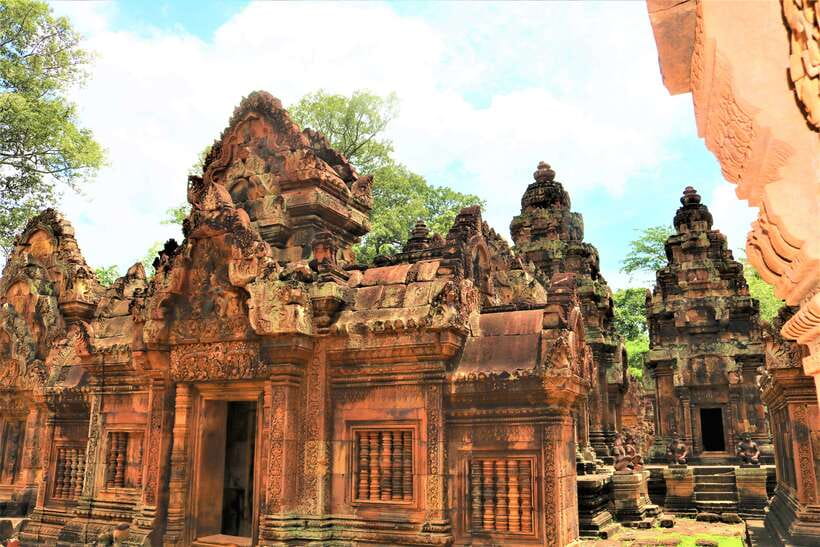
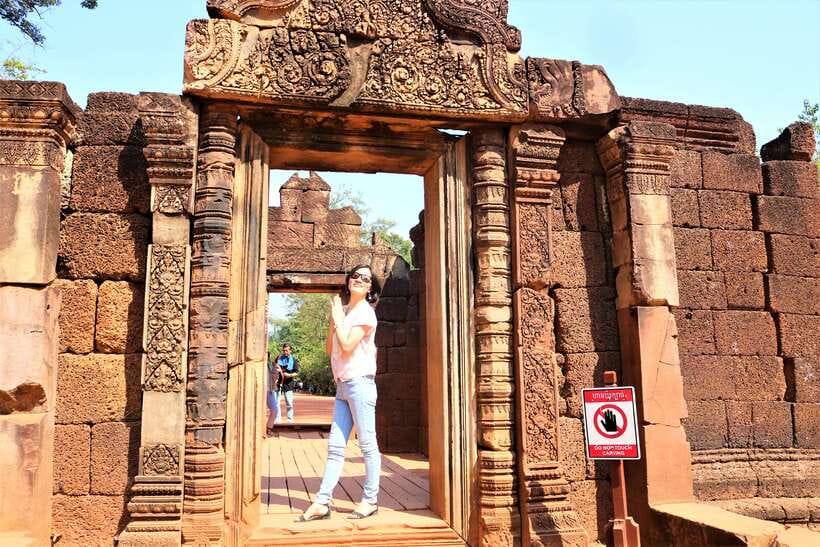
- Banteay Srei’s fine carvings: This smaller sandstone temple has some of Cambodia’s most carefully cut reliefs.
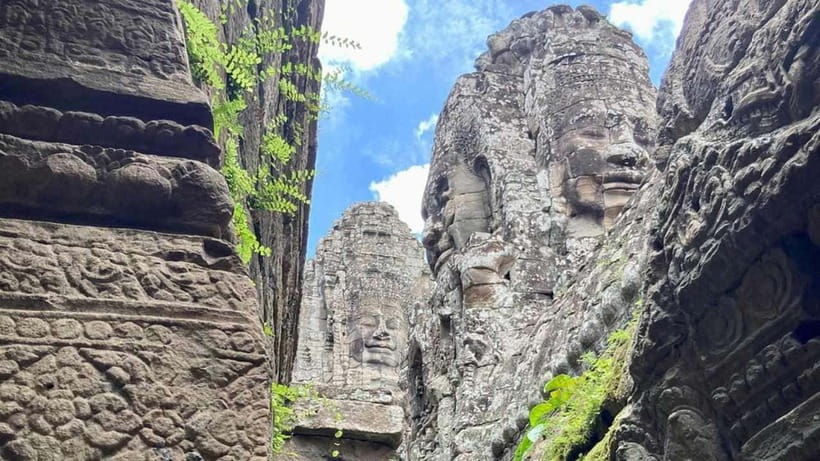
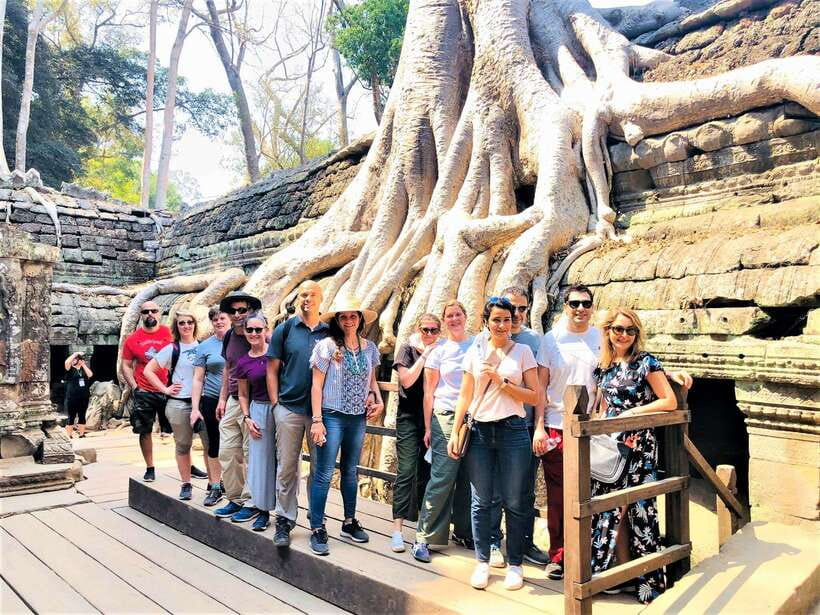
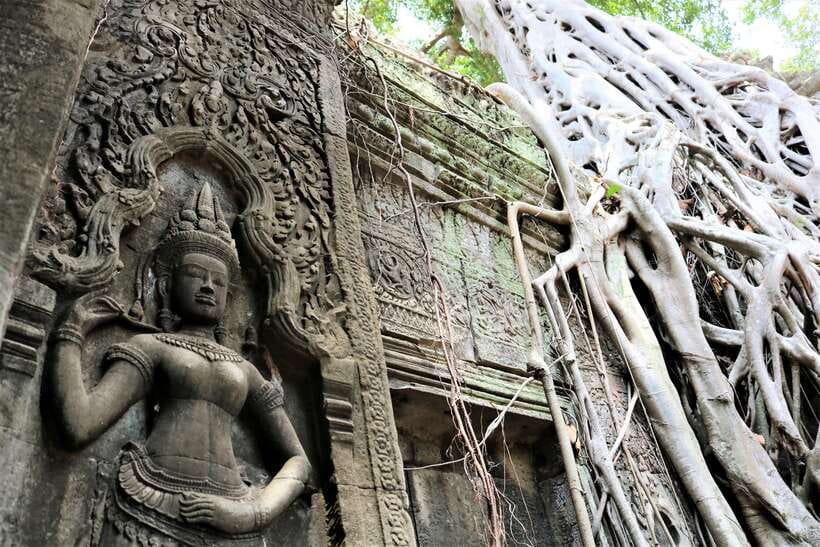
- Faces and forest roots: Bayon’s giant stone faces and Ta Prohm’s trees give you two very different Angkor experiences.
- Tonle Sap or Phare Circus: See Kampong Phluk by boat when conditions allow, or attend the circus during the stated dry-season alternative.
- Cold towels after temple walks: Drivers including Keal, Ro, and Mao have been noted for handing out water and cool towels.
- A practical small-group format: Hotel pickup, air-conditioning, an English-speaking guide, and a limit of 15 help keep three active days manageable.
Why this 2.5-day route works
Angkor is too large for a rushed one-day visit. The temples are spread across a wide area, and the experience changes with the light, the crowds, and the style of each monument. This tour gives you one day for the outer temples, one major day inside the Angkor complex, and a final morning for Tonle Sap or Phare Circus.
That split matters. You are not trying to see every major temple while racing from one gate to the next. You also get time for a short rest after the early start and midday heat. The schedule is still active, but the breaks make it more workable.
The $69 tour price looks appealing, but you need to add the required three-day temple pass, listed at $62 per person. That brings the core cost to $131, before breakfast. For that amount, you receive transport, a guide, water, and two and a half days of sightseeing, so the package offers good value if you want a structured visit rather than arranging separate drivers and explanations.
More Angkor Wat Tours in Siem Reap:
- Angkor Wat Sunrise or Sunset Tour with Guide from Siem Reap
★ 5.0 · 12,109 reviews - Siem Reap: Angkor Wat: Small-Group Sunrise or Sunset Tour
★ 5.0 · 9,444 reviews - Siem Reap: Angkor Wat 2-Day Tour with Sunrise and Sunset
★ 4.9 · 4,429 reviews
Day one: Pre Rup, Banteay Srei, Neak Pean, and Preah Khan
The first day goes beyond Angkor Thom, beginning with Pre Rup. Built as a state temple, Pre Rup has the strong, stepped form of a mountain temple. Brick, laterite, and sandstone give it a more severe look than the finely carved monuments later in the route.
I like starting here because it gives you an early lesson in Khmer temple design without immediately throwing you into Angkor Wat’s scale. The upper levels can involve uneven steps and exposed walking, so comfortable shoes are not just a packing suggestion. People with mobility impairments may find this route difficult.
Banteay Srei is the day’s artistic high point. It is smaller than Angkor Wat, but its sandstone reliefs are exceptionally detailed. The carvings are close to eye level, which lets you study figures, patterns, and stories without the vast distances found at the larger temples.
The temple was only accessible to outsiders after the Khmer Rouge left the area in the late 1990s. That fact adds modern Cambodian context to what can otherwise feel like a purely ancient site. Your guide can help connect the careful stonework with the wider Khmer world and explain what you are seeing rather than leaving you to decode every wall alone.
The return route includes Neak Pean, an artificial island with a Buddhist temple on a circular island. Its setting gives the visit a different mood from Pre Rup and Banteay Srei. Instead of a high mountain form or carved sandstone walls, you get water, a central structure, and a layout built around symbolism.
Preah Khan closes the temple day. It is ruined and atmospheric, with tree roots, crumbling stone, and long passages that suggest the scale of the original complex. I would not expect the polished symmetry of a fully restored monument here. The appeal is the mixture of architecture and decay, with enough surviving structure to show how large and busy the site once was.
This is a full day, and the heat can make the distance between stops feel longer than it looks on a map. The included air-conditioned vehicle is important. Drivers such as Keal, Ro, and Mao have been praised for providing cold water and wet towels when you return from a hot temple walk. That small service can make a real difference by the afternoon.
Day two: Angkor Wat before dawn
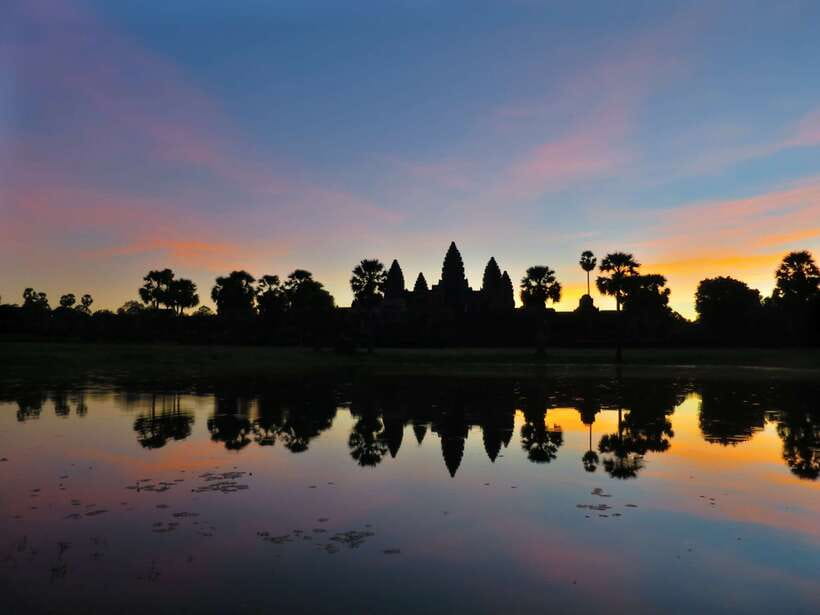
Day two begins with a pre-dawn pickup from your hotel. You enter Angkor Wat in darkness and walk with a torch toward the eastern side. This is one of the strongest features of the tour because most people focus on the familiar front view and the reflection pools. The eastern side offers a quieter way into the monument before sunrise.
You will need to be ready for an early start and a dark walk over uneven ground. Wear sturdy, comfortable shoes and bring only what you can carry easily. Short skirts are not allowed, so dress with temple rules in mind.
As the light grows, your guide explains the bas-reliefs and the stories shown on the walls. Angkor Wat contains the longest stretch of bas-relief carvings in the world, and the scenes are far easier to understand with someone who can point out the figures, battles, religious themes, and details of daily life during the Khmer Empire.
The guide’s role is especially valuable here. Pal Saruon has been praised for patient explanations and for taking good photographs, while Pireak has been described as friendly and clear when discussing the temples and Cambodian culture. Other guides named during the tour include Sam, Usa, AJ, Pi, and Sokpee Sumsot. Since assignments can change, you should not book solely for one particular guide, but the repeated strength of the guiding team is a good sign.
After the sunrise visit, you have breakfast outside Angkor Wat and a short rest. Breakfast itself is not included, so plan to pay for it separately. This pause is practical rather than decorative. Without it, the combination of darkness, heat, and several hours on foot would make the rest of the day harder.
Angkor Thom and the stone faces of Bayon
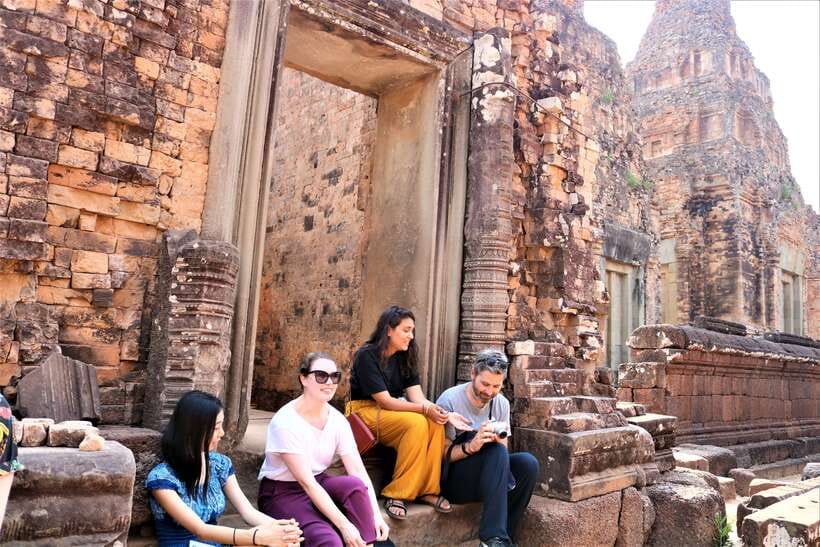
The morning continues at the southern gate of Angkor Thom. The approach is lined with 54 stone figures of gods and demons, arranged along the causeway. This is one of the best places to see how Khmer builders combined religious ideas with monumental urban planning.
Angkor Thom was a fortified city, not just a single temple. That distinction helps you picture the site as a center of power, worship, and daily activity. The walls and gates make more sense when your guide explains the city as a planned capital rather than a collection of isolated ruins.
At Bayon, the mood changes again. More than 200 enormous faces look out from the central towers. Their expressions are calm and slightly mysterious, and the effect changes as you move through the tight upper levels and narrow passages.
Bayon can feel confusing without help because the towers overlap and the routes are not always obvious. This is a place where an English-speaking guide can save time and give you a better sense of what you are looking at. You should still expect uneven surfaces and steps.
After lunch and a rest break, you head to Ta Prohm. The temple is famous for its jungle setting, with tree roots pressing against and over the stonework. It is one of Angkor’s most atmospheric stops, but its popularity means the most photographed areas can be busy.
Ta Prohm is worth seeing even if you have visited other ruined temples. Preah Khan feels broad and architectural, while Ta Prohm feels more enclosed and overtaken by nature. Together, they show two sides of Angkor’s ruins. Do not expect a quiet private visit, but the tour’s small-group size should make movement and listening easier than with a very large party.
More Tonle Sap Lake Tours in Siem Reap:
- Sunset tour of Kampong Phluk stilts home village on the Tonle Sap
★ 5.0 · 4,865 reviews - Siem Reap: Kulen Mountain, Beng Mealea and Tonle Sap Tour
★ 5.0 · 1,483 reviews - Tonle Sap Lake & Kampong Phluk Village Half-Day Tour
★ 5.0 · 1,045 reviews - Kulen Mountain with Beng Mealea and Tonle Sap Small Group Tour
★ 5.0 · 780 reviews
Day three: Kampong Phluk and Tonle Sap
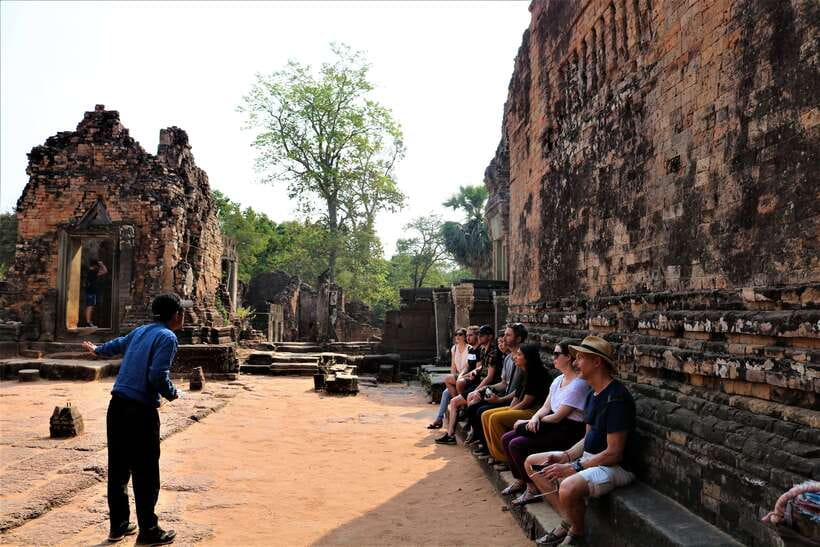
The final morning leaves the temples behind and heads through the countryside to Tonle Sap, one of the world’s largest freshwater lakes. The boat trip visits Kampong Phluk, a group of three fishing villages set among a flooded forest.
You see houses on stilts, local fishing practices, and residents working around the water. The point is not just a scenic boat ride. Tonle Sap shows a way of life shaped by seasonal water levels, where homes, transport, and work all depend on the lake.
AJ has been praised for explaining village life and for adding a market visit with local produce and stories about vendors. That sort of local detail is useful because the floating and stilted homes can otherwise seem like a quick photo stop. You get more from the visit when you understand how people use the water and why the homes are built as they are.
Conditions affect this part of the program. During the stated dry-season period, March 1 to June 31, Tonle Sap is replaced by Cambodia Phare Circus, with a Category C seat included. Check the date carefully when booking if the lake is a main reason you want this tour. The circus is a different kind of outing, so you should not assume it is simply a backup version of the village trip.
The lake excursion is not a full day, which makes sense after two long temple days. You get a change of pace, a look at rural Cambodia, and a final activity that is less focused on stonework. It also means the overall experience is broader than an Angkor-only package.
Small-group transport and guide quality
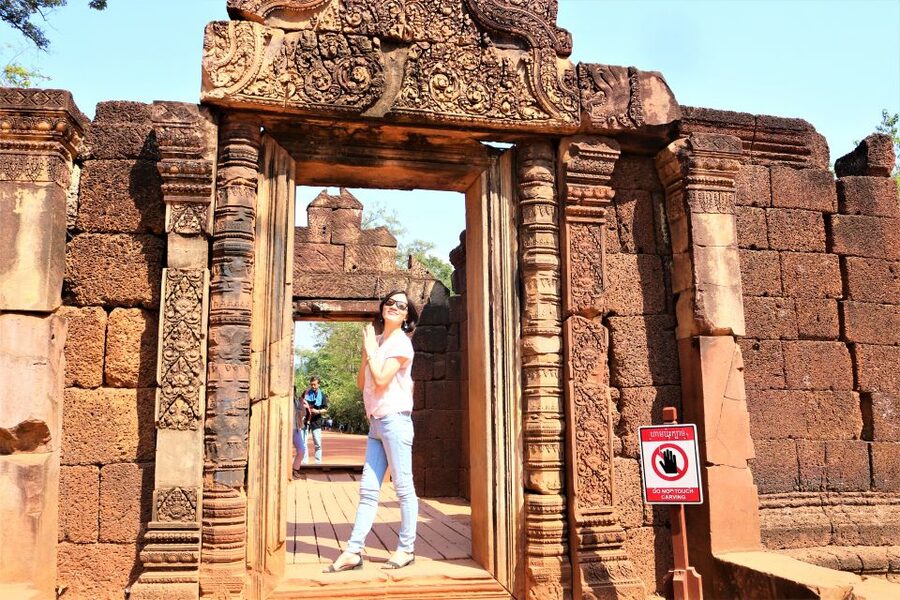
The group limit is 15 people. That is small enough for you to hear the guide in corridors and courtyards, though the actual feel will depend on how many people join your departure. In quieter periods, the group may feel much smaller. One June departure was described as almost private because of low-season conditions.
Hotel pickup and drop-off are included, with collection at the hotel lobby. The air-conditioned vehicle matters in Siem Reap, where temple walking quickly becomes tiring. Mineral water is included, and the repeated mention of cold towels suggests the drivers pay attention to comfort after each stop.
The named drivers include Keal, Ro, Mao, and Keai. Their job is more than simply getting you from gate to gate. A good pickup at the temple exit saves you from standing in the heat looking for the vehicle, and drivers on this experience have been noted for arriving as people approached the exit.
Guide quality is central to the value. The temples are visually powerful, but their stories are not always easy to read from the stone. Guides such as Pal Saruon, Pireak, AJ, and Sam have been praised for clear English, cultural explanations, patience, and a willingness to answer questions. Ask questions as you go. This is where a guided tour earns its place over a cheaper car-only arrangement.
What the price includes, and what it does not
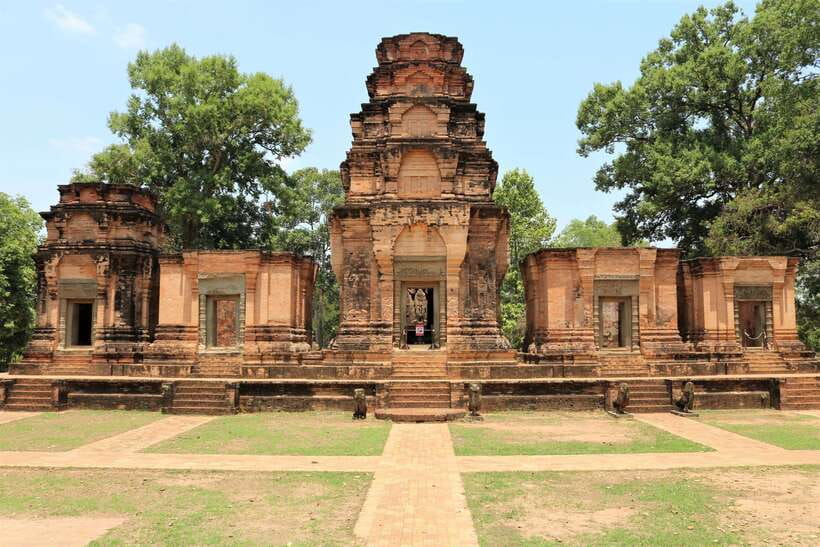
At $69 per person, the tour is priced as an efficient sightseeing package rather than an all-inclusive holiday. You get:
- Two and a half days of temple and Tonle Sap or Phare Circus visits
- An English-speaking licensed guide
- Air-conditioned hotel transport
- Hotel pickup and drop-off
- Mineral water
- Tonle Sap entrance and boat cruise, or a Category C Phare Circus seat
The major extra cost is the three-day Angkor temple pass at $62 per person. Breakfast is also excluded. Add those costs before comparing this tour with a private guide, tuk-tuk, or hotel-arranged driver.
Even with the pass, the package can be good value for someone who wants the sunrise timing, a guide, transport, and a sensible route. The better comparison is not just the $69 headline price. Compare the total cost of arranging three days of transport, a sunrise pickup, temple explanations, and the lake or circus separately.
Who should choose this tour?
I would choose this experience if you want to see the major Angkor sites but prefer not to plan every gate, road, and pickup yourself. It suits first-time visitors, couples, friends, and solo visitors who like meeting a small group without joining a large bus tour.
It also suits you if cultural explanation matters. The route covers architecture, religion, royal power, village life, and modern Cambodian context. You get more than a photo checklist.
I would think twice if you have limited mobility. The route includes uneven temple ground, steps, long walks, and a pre-dawn entry. Short skirts are not allowed, and comfortable footwear is essential.
I would also check the season before booking if Tonle Sap is your priority. During the listed dry-season alternative, the program changes to Phare Circus. That may be an excellent cultural outing, but it is not the same experience as cruising through Kampong Phluk.
Free cancellation up to 24 hours before the activity and the option to reserve now and pay later add useful flexibility. Still, the important choice is the route itself: three days of temples plus lake or circus, with the temple pass and breakfast paid separately.
Should you book it?
Book this tour if you want a well-paced introduction to Angkor with sunrise, the major temples, and a final change of scene at Tonle Sap or Phare Circus. The strongest reasons are the small group, capable English-speaking guides, air-conditioned transport, and practical touches such as cold water and towels.
Skip it if you want a slow private schedule, dislike early mornings, or need an itinerary built around easy access. Also check the seasonal program before paying. For most first-time Siem Reap visitors who want solid coverage without organizing the details themselves, this is a strong-value choice once you budget for the $62 temple pass.
FAQ
How long does the tour last?
The experience lasts 2.5 days and includes two temple-focused days plus a final morning at Tonle Sap or Phare Circus.
Does the tour include Angkor Wat sunrise?
Yes. Day two begins before dawn, with entry to Angkor Wat for sunrise and a visit to the eastern side of the temple.
Is the temple entrance fee included?
No. The three-day Angkor temple pass costs $62 per person and is not included in the tour price.
Is breakfast included?
No. Breakfast is not included, including the breakfast stop outside Angkor Wat after the sunrise visit.
What is included in the Tonle Sap visit?
The Tonle Sap option includes the entrance fee and a boat cruise at Kampong Phluk, where you see stilted homes, fishing villages, and flooded forest.
What replaces Tonle Sap during the dry season?
Cambodia Phare Circus is the alternative during the stated dry-season period from March 1 to June 31. A Category C seat is included.
How large is the group?
The tour is a small-group experience limited to 15 participants.
Is hotel pickup included?
Yes. Pickup and drop-off are included, and you should wait in your hotel lobby for collection.
What should I bring, and are there clothing restrictions?
Bring comfortable shoes. Short skirts are not allowed, and the route may not suit people with mobility impairments.
More 5-Day Experiences in Siem Reap
- Angkor Wat Sunrise and Tonle Sap Lake 1.5 Days
★ 5.0 · 39 reviews - Private Cambodia 5 Days Tour from Siem Reap to Phnom Penh
★ 5.0 · 19 reviews - 5-Day All Major Temples & Kulen Mount Waterfall & Koh Ker & Beng Mealea
★ 5.0 · 13 reviews - 5-Day ‘All The Sights’ Tour
★ 5.0 · 11 reviews
More Morning in Siem Reap
- Angkor Wat Sunrise tour with Small – Group and Guide tours
★ 5.0 · 3,655 reviews - Angkor Wat Highlights and Sunrise Guided Tour from Siem Reap
★ 5.0 · 3,213 reviews - Full-Day Angkor Wat Sunrise Private Tour with Guide from Siem Reap
★ 5.0 · 2,920 reviews - Angkor Wat Sunrise & 3 Main Temples with Breakfast – Small Group
★ 5.0 · 2,857 reviews
Just added around Siem Reap
- Ultimate Sunrise to Angkor Wat, Angkor Thom and Bayon Temple★ 5.0 · 3 reviews
- Twilight Tastes of Siem Reap Include Dinner★ 5.0 · 13 reviews
- Trekking Tour at Phnom Kulen National Park from Siem Reap★ 5.0 · 3 reviews
- Full-Day Private Tour of Angkor Wat with Pick Up★ 5.0 · 12 reviews
- Private Day Trip to Angkor Temples with Expert Guide★ 5.0 · 4 reviews
- Waterfall & River of 1000 Siva Linga- Kulen Mountain Private Tour★ 5.0 · 3 reviews
- Professional Photo Shoot in Angkor Archaeological Park, Siem Reap★ 5.0 · 42 reviews
- Siem Reap City Tour with War Museum and Killing Field★ 5.0 · 27 reviews
Angkor Wat Tours, compared.

Angkor Wat Sunrise or Sunset Tour with Guide from Siem Reap
Read our review →
Angkor Wat: Small-Group Sunrise or Sunset Tour
Read our review →
Angkor Wat 2-Day Tour with Sunrise and Sunset
Read our review →

Angkor Wat Sunrise tour with Small – Group and Guide tours
Read our review →
Angkor Wat Highlights and Sunrise Guided Tour from Siem Reap
Read our review →
Angkor Wat Sunset Small Group Tour with Lunch Included
Read our review →
Full-Day Angkor Wat Sunrise Private Tour with Guide from Siem Reap
Read our review →Browse the lists this tour appears in