Reviewed · GUIDED
Siem Reap: Cambodia local street foods and local guide
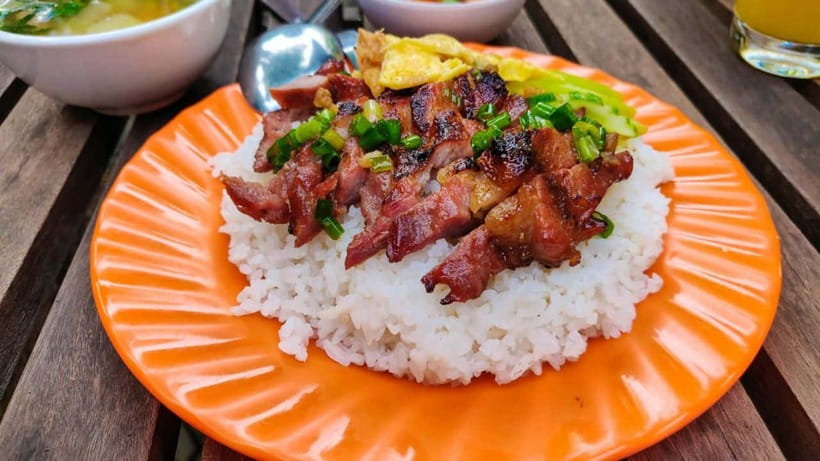
Cambodian food gets far less attention abroad than Thai or Vietnamese cooking, and that makes this tour especially useful. You spend eight hours with a local English-speaking guide, visiting the less-seen side of Psar Char and Siem Reap’s Route 60 night market, where food stalls serve everything from familiar Khmer dishes to insects and frogs.
I like the local market focus and the fact that all food, drinks, and transport are included in the $90 price. I also like the personal touch from guides such as Heang, Vone, and Dara, who have helped guests order, chat with vendors, and see more than just a plate of food. The main drawback is the long eight-hour duration, especially if you want only a short evening tasting or feel unsure about unusual foods.
Key points to know before booking
- Psar Char beyond the tourist lanes: See a less familiar side of Siem Reap’s central market and learn how local ingredients shape Khmer cooking.
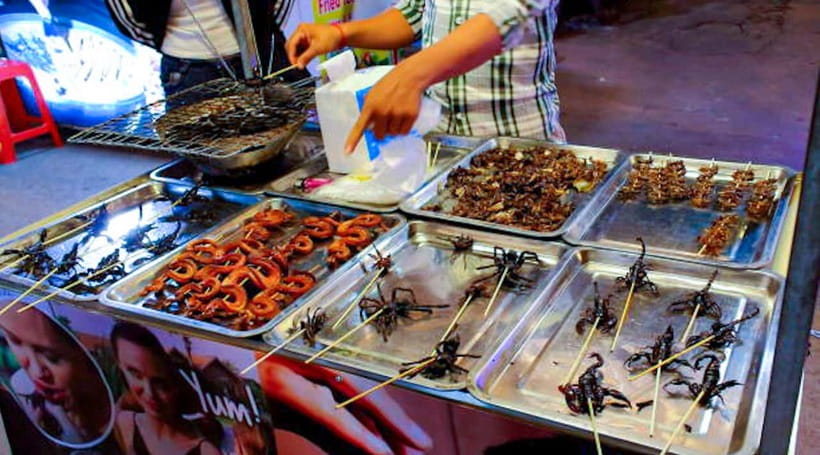
- Route 60 after dark: Visit the market locals use for food, clothing, and unusual snacks, including insects and frogs.
- A guide who orders with you: An English-speaking local guide helps explain dishes and makes Khmer menus easier to handle.
- Food and drinks included: You do not need to keep calculating the cost of each taste during the tour.
- Small group of up to 10: The group size allows more conversation than a large coach outing.
- Eight hours of eating and exploring: This is a full food experience, not a quick market walk.
Why Cambodian food deserves its own tour
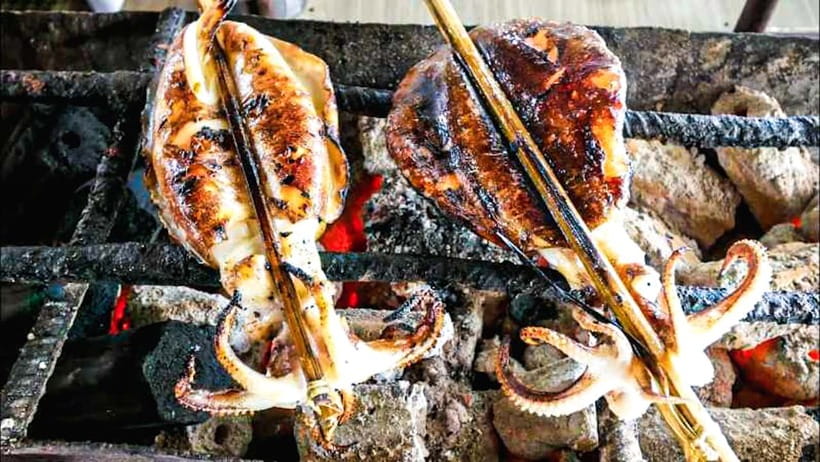
If Thai food is known for heat and Vietnamese food for herbs, Cambodian food can be harder to place. Khmer cooking uses freshwater fish from the Tonle Sap, coconut, sugar cane, and other ingredients sourced close to home. It is often gentler in heat than neighboring cuisines, though that does not mean it lacks flavor.
That distinction matters when you order on your own. A Khmer menu may be written in a script you cannot read, and a dish name translated into English may still tell you very little about what will arrive. A local guide gives you a starting point. You learn which ingredients are common, what certain dishes may contain, and how to order with more confidence later in your trip.
I see this as a good tour to book near the beginning of your Cambodia visit. You are not just eating for one night. You are building a small food vocabulary for the rest of your stay.
The emphasis is also on food outside polished hotel restaurants. You visit markets and local eating places, where the point is not decoration or ceremony. The experience is about seeing what is sold, asking questions, and deciding what you want to try.
A few more Siem Reap trips to weigh up
- Angkor Wat Sunrise or Sunset Tour with Guide from Siem Reap
★ 5.0 · 12,109 reviews - Siem Reap: Full-Day Angkor Wat Guided Tour with Sunset
★ 4.9 · 3,803 reviews - Angkor Wat Sunrise tour with Small – Group and Guide tours
★ 5.0 · 3,655 reviews
Psar Char, seen from a different angle
Psar Char is one of Siem Reap’s best-known markets, but this experience is designed to show you the side most tourists miss. That makes the stop more useful than a simple walk through souvenir stalls.
The market helps you understand the ingredients behind Cambodian cooking. Depending on what is available during your visit, you might find the fish, produce, snacks, and other local goods that support everyday meals. Your guide can explain what you are seeing and help you speak with vendors.
That human contact is a major part of the appeal. A market can feel like a blur of unfamiliar signs and smells if you walk through alone. With an English-speaking guide, you can ask what something is, how it is prepared, and whether it is worth tasting.
Do not expect a quiet, carefully arranged food hall. Markets are working places, and the experience can feel direct and unpolished. That is the value, but it can also be a challenge if you prefer neat surroundings or a fixed tasting menu.
The tour is not simply about collecting the most dishes. It gives you context for the food you eat later. You begin to recognize the role of freshwater fish, coconut, sugar cane, and local produce in Khmer cooking.
Route 60 market after dark
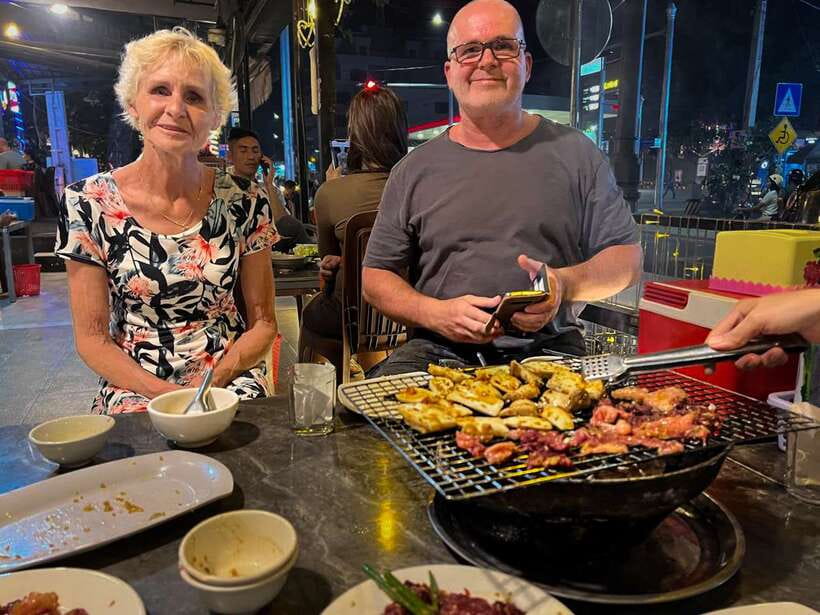
The stop at Route 60 is one of the clearest reasons to choose this tour. It is presented as Siem Reap’s real night market, rather than a market aimed mainly at foreign shoppers.
Here you can expect more than food. The market also has clothing and other local goods, so the walk gives you a look at ordinary evening commerce as well as eating. The setting helps you see a different side of Siem Reap from the hotel district and the souvenir-focused areas.
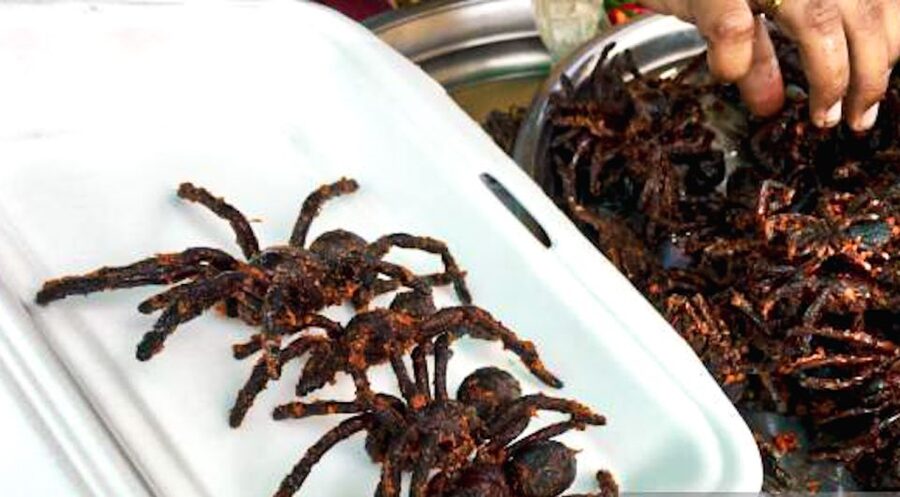
The food choices can be adventurous. Insects and frogs may be available to see and taste. You are not required to eat anything that makes you uncomfortable, but having a guide beside you makes it easier to understand what is on offer and how locals approach it.
This is where the tour’s tone becomes more playful. Trying an unfamiliar snack can be memorable, but it is also fine to stay with food that looks more approachable. A strong guide should help you make that choice without pressure.
One practical point: Route 60 is not just a restaurant stop with seats and a printed menu. You may be walking, looking, asking, and sampling as you go. Wear comfortable shoes and leave room for a change of pace.
What your guide adds to the meal
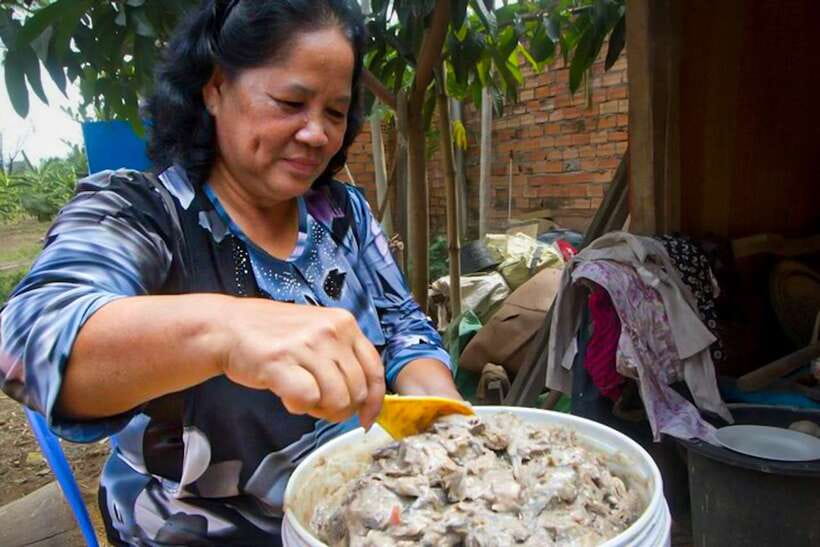
The guide is the key difference between this and simply visiting a market yourself. The tour is offered in English, and the guide helps you communicate with vendors and understand what you are ordering.
Several guides have led memorable versions of this experience. Heang has been praised for combining food with local places and traditional ceremonies, as well as for being flexible. Vone has taken guests to several of Siem Reap’s best local food spots and encouraged them to try unfamiliar menu items. Dara has led a private tuk tuk food tour that covered a broad range of Cambodian food and included the Route 60 walk.
Those names give you a sense of the guiding style, but your assigned guide may be different. The important point is that this is designed around a personal local host, not a recorded commentary or a large group following a flag.
The guide can also help you judge how adventurous to be. You may want to try a new ingredient, but you may not know whether it is sweet, salty, fermented, spicy, chewy, or crisp. A short explanation makes the choice easier.
I also value the conversation. Food tours work best when you can ask small questions as they occur: what people eat at home, how a dish is prepared, or which ingredients appear often in local cooking. With a maximum of 10 participants, there should be more room for that exchange than on a large group outing.
Same country, a completely different kind of day:
- Siem Reap: Angkor Wat: Small-Group Sunrise or Sunset Tour
★ 5.0 · 9,444 reviews - From Siem Reap: Kampong Phluk Floating Village Tour by Boat
★ 4.9 · 6,979 reviews - Sunset tour of Kampong Phluk stilts home village on the Tonle Sap
★ 5.0 · 4,865 reviews - Siem Reap: Angkor Wat 2-Day Tour with Sunrise and Sunset
★ 4.9 · 4,429 reviews
Expect a wide range of Khmer flavors
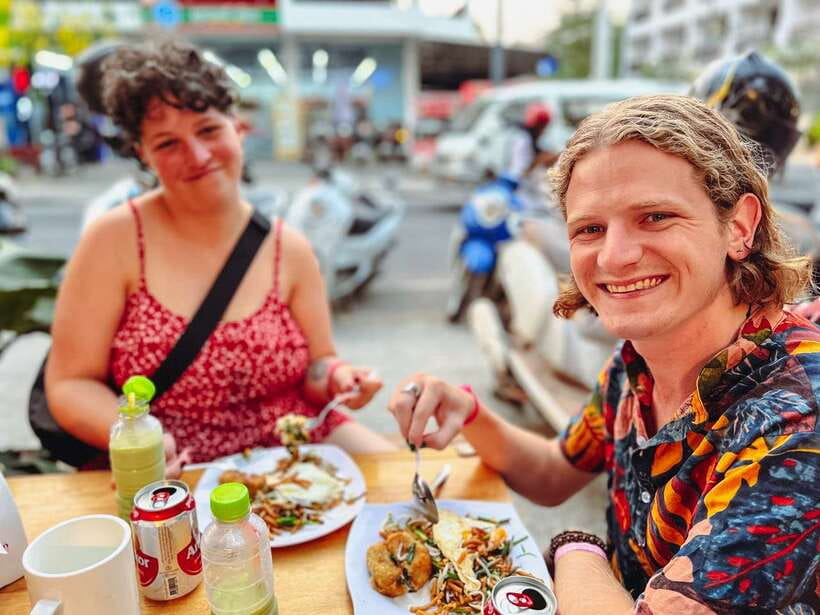
The tour does not promise a fixed list of dishes, so you should think of it as a guided tasting route rather than a set restaurant meal. The exact food will depend on the markets, vendors, and stops available that day.
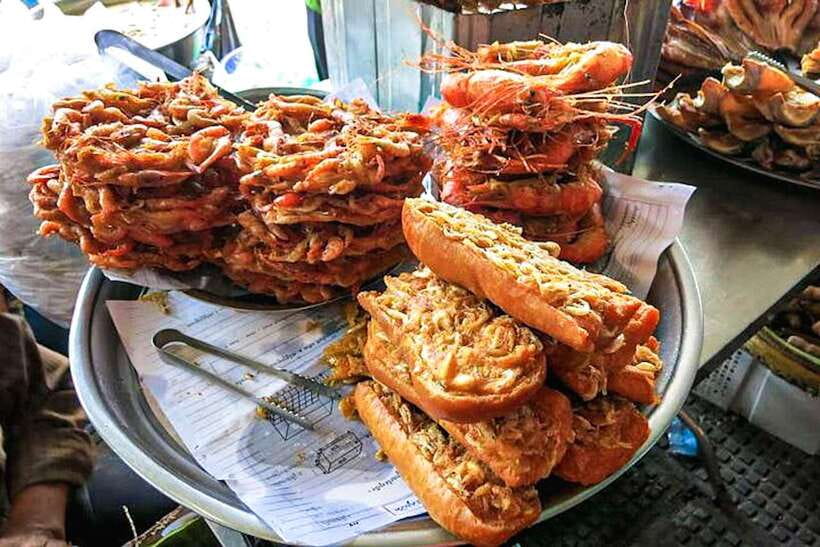
You might encounter dishes built around fish, coconut, sugar cane, or other local ingredients. You may also see snacks and foods that are difficult to identify from an English menu. The guide’s role is to make those choices less confusing.
Cambodian cooking is often less fiery than Thai cooking, but you should not assume every dish will be mild. If you have a strong preference about spice, tell the guide early. The provided information does not promise specific adjustments, so it is best to ask rather than assume.
The included food and drinks make the experience easier to enjoy. You can focus on tasting instead of wondering how much each small purchase will add to the bill. At $90 per person, that matters because the price covers more than food alone: you are also paying for eight hours of guiding and transportation.
Still, the value depends on how much time you want to spend on eating and markets. If you are looking only for a few samples, $90 may feel high. If you want an extended introduction to Khmer cuisine, local markets, and food customs, the package is easier to justify.
Private feel, small-group setting, and transport
The advertised group size is limited to 10 participants. That is small enough for questions and conversation, though it is not the same as a private tour. Some past arrangements have been private, but you should not assume that your booking will be private unless the option says so.
Transportation is included. Hotel pickup and drop-off are included when the minibus option is selected, and past versions of the experience have used a tuk tuk with the guide and driver. Confirm the transport choice when booking if that detail affects your plans.
Give your hotel address clearly. The driver and guide collect you from the hotel, and you should be ready at least 20 minutes before the published start time. This is a small detail, but a wrong or incomplete address can create a poor start to a long day.
The eight-hour length also means you should plan around it. Check the available start time before booking, since the exact departure time is not fixed in the information provided. You will want a fairly open schedule, rather than fitting this between several other major activities.
Is the $90 price good value?
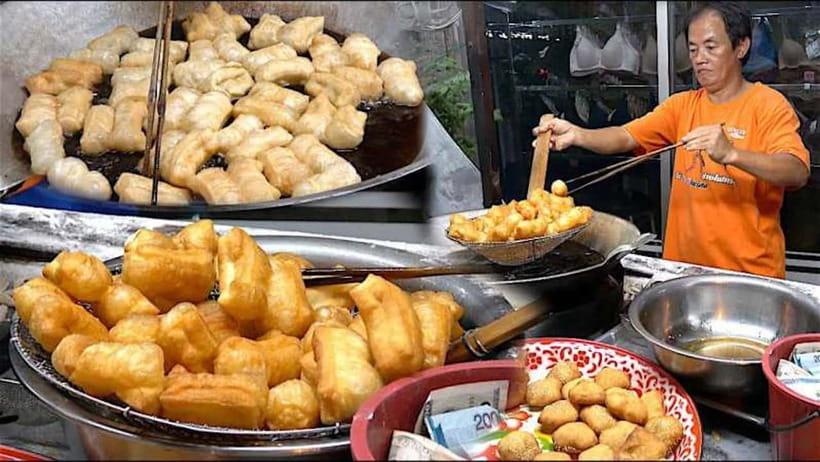
The $90 per-person price is not a bargain-basement market walk, but it includes the parts that can add up quickly: all food, drinks, transportation, and a live English-speaking guide. The small group limit also gives the outing a more personal shape.
I would judge the value by your interest in Cambodian food. If you want to understand Khmer cooking and taste several kinds of local food without decoding menus or negotiating every purchase, the price is reasonable. The guide’s help with vendors is a real part of the service.
If your main goal is shopping at Route 60, you can visit a market without paying for a full tour. If your main goal is simply dinner, a local restaurant will cost less. This experience earns its price through access, explanation, transport, and variety.
The food is also unpredictable by design. You are paying for a route through local food culture, not a guarantee of a particular famous dish. That is a plus for curious eaters and a weakness for anyone who wants a tightly controlled menu.
Who will enjoy this experience most?
I would recommend it to first-time Cambodia visitors who want help getting started with Khmer food. It suits people who like markets, conversation, and tasting small portions of unfamiliar things.
It is also a good match for adventurous eaters. The chance to see and try insects or frogs at Route 60 adds a memorable edge, though you can choose what you eat. The guide makes the experience less intimidating without taking away your choice.
Couples, friends, and solo visitors can all fit the format. A solo participant may especially appreciate the company and the help speaking with vendors. A group of friends may enjoy making the food choices together.
This is less suitable for anyone who wants a short, quiet meal or a polished restaurant setting. The tour involves markets and local food stalls, so you should be comfortable with unfamiliar surroundings and a less predictable food selection.
The experience is not suitable for babies under one year or people over 70. That restriction is stated clearly, so take it seriously when planning a multigenerational itinerary.
Practical advice for making the most of it
Start the day with an open mind, but do not feel obliged to eat every unusual item. The best food tour is one where you learn what you like, not one where you force yourself to prove something.
Tell the guide about food preferences or concerns at the start. The available information does not list allergy arrangements, so anyone with a serious allergy should ask the provider before booking rather than rely on assumptions.
Wear comfortable clothing and shoes. You may move between food stops and market areas, and Route 60 is described as a walk through a night market rather than a single seated meal.
Keep your hotel phone number and address available. Pickup is included, but the driver and guide need accurate information to find you. Be ready 20 minutes before the published departure time.
Book this early in your stay if possible. The practical payoff is greatest when you can use what you learn at other Cambodian restaurants and markets afterward.
Free cancellation is available up to 24 hours before the activity for a full refund, and you can reserve now and pay later. Those terms are useful if your Siem Reap schedule is still shifting.
Final call: should you book it?
Book this tour if you want more than a meal and prefer local markets, direct conversation, and a broad taste of Khmer cooking. The strongest features are the less-touristy Psar Char visit, the Route 60 market, included food and drinks, and guides who help you handle unfamiliar dishes.
I would skip it if you want a brief evening snack, a fixed restaurant menu, or complete control over every ingredient. Eight hours is a serious commitment, and the $90 price makes sense only if you value the guiding and transport as much as the food.
For curious eaters, especially those new to Cambodian cuisine, this is a useful first step into Siem Reap’s food scene. Go ready to ask questions, try what appeals to you, and leave the insects and frogs for someone else if they are not your idea of dinner.
FAQ
How long does the Siem Reap food tour last?
The experience lasts eight hours.
How much does the tour cost?
The listed price is $90 per person.
What food and drinks are included?
All food and drinks during the experience are included.
Is transportation included?
Yes, transportation is included. Hotel pickup and drop-off are included when the minibus option is selected.
Is hotel pickup available?
Yes, pickup is included. You should provide a clear hotel address and be ready at least 20 minutes before the published start time.
What language does the guide speak?
The live tour guide speaks English.
How many people can join the group?
The group is limited to 10 participants.
Which markets are included?
The experience includes the less-touristy side of Psar Char and Siem Reap’s Route 60 night market.
Can I try insects and frogs?
Insects and frogs may be available to see and taste at Route 60 market. The information does not state that you must eat them.
Can I cancel for a refund?
You can cancel up to 24 hours in advance for a full refund.
Can I reserve now and pay later?
Yes. The reserve-now, pay-later option lets you book without paying anything today.
Is the tour suitable for everyone?
It is not suitable for babies under one year or people over 70.
Just added around Siem Reap
- Ultimate Sunrise to Angkor Wat, Angkor Thom and Bayon Temple★ 5.0 · 3 reviews
- Twilight Tastes of Siem Reap Include Dinner★ 5.0 · 13 reviews
- Trekking Tour at Phnom Kulen National Park from Siem Reap★ 5.0 · 3 reviews
- Full-Day Private Tour of Angkor Wat with Pick Up★ 5.0 · 12 reviews
- Private Day Trip to Angkor Temples with Expert Guide★ 5.0 · 4 reviews
- Waterfall & River of 1000 Siva Linga- Kulen Mountain Private Tour★ 5.0 · 3 reviews
- Professional Photo Shoot in Angkor Archaeological Park, Siem Reap★ 5.0 · 42 reviews
- Ultimate Siem Reap Food Tour by Tuk Tuk – 20 Tastings, 8 Stops★ 5.0 · 13 reviews
Guided, compared.

Angkor Wat Sunrise or Sunset Tour with Guide from Siem Reap
Read our review →

Angkor Wat Sunrise tour with Small – Group and Guide tours
Read our review →
Angkor Wat Highlights and Sunrise Guided Tour from Siem Reap
Read our review →
Full-Day Angkor Wat Sunrise Private Tour with Guide from Siem Reap
Read our review →

Angkor Wat Small-Group Exploration with Expert Guide
Read our review →