
Reviewed · ANGKOR WAT TOURS
Siem Reap: Angkor Wat Small Group Tour with Spanish Guide
Angkor is far easier to understand when someone can connect the stones, carvings, and old royal city into a clear story. This tour gives you that context in Spanish, with guides such as Mario and Samuel explaining the temples and helping you find strong photo angles along the way.
I like the choice between a small shared group and a private outing. I also like the practical care: hotel pickup, cold water, cold towels, and a guide who can take photos instead of leaving you to manage a phone or camera at every stop. The main drawback is the heat, and the one-day route packs a lot into a long day.
Key points to know before booking
- Spanish-speaking guides: Mario and Samuel are specifically praised for patient explanations, good humor, and help with family schedules.
- One or two days: The one-day trip covers the main temples. The two-day plan adds the Grand Circuit and Banteay Srei at a calmer pace.
- Sunrise starts at 5:00 AM: The early option finishes around noon, so bring breakfast from your hotel.
- Transport depends on group size: One or two people generally ride in a tuk-tuk, while groups of three or more use an air-conditioned van or bus.
- The pass costs extra: Add $37 for a one-day Angkor ticket or $62 for a two to three-day pass to the advertised $50 tour price.
- Dress rules matter: Cover your knees and shoulders, especially at Angkor Wat, or you may not be allowed inside some areas.
Why a Spanish guide changes the Angkor experience
Angkor is not just a group of old buildings. It is a huge former capital spread across forest and open ground, with temples built for different purposes and rulers. Without help, you can admire the stones but miss why one doorway faces another, why certain towers repeat a face design, or how water shaped the entire area.
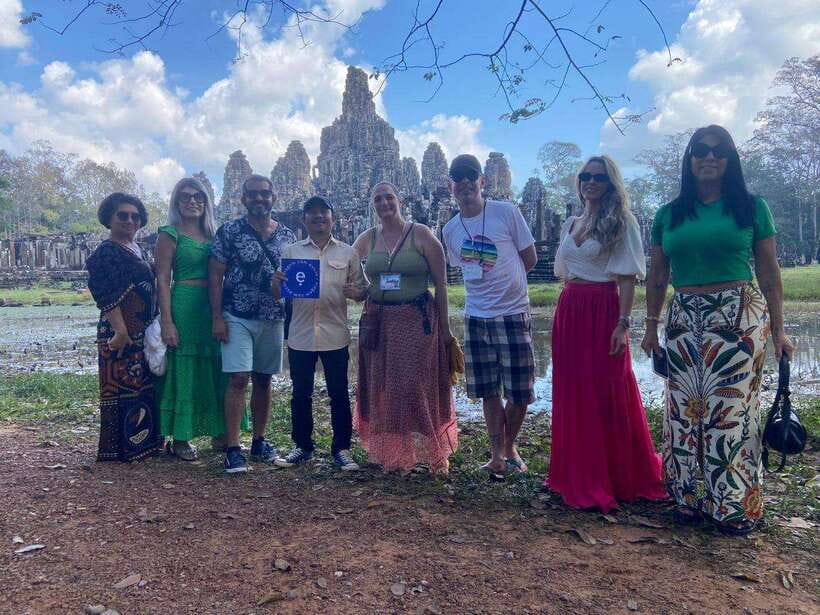
A Spanish-speaking guide lets you ask questions without stopping to translate every detail. That matters most at Bayon and Angkor Wat, where the carvings and layout reward explanation. You can also ask for a slower pace, a photo stop, or a simpler version of a complicated religious story.
Mario receives especially strong praise for combining detailed explanations with a relaxed manner and photography help. Samuel is noted for his patience and ability to adjust the timing for a family. Your guide may be different, but the experience is designed around live Spanish commentary rather than an audio recording.
The tour has a 4.9 rating from 192 ratings, and the most consistent strength is the human service. Guides are described as attentive, funny, patient, and eager to make the day comfortable. The driver also keeps an eye on hydration, offering cold water during the route.
More Angkor Wat Tours in Siem Reap:
- Angkor Wat Sunrise or Sunset Tour with Guide from Siem Reap
★ 5.0 · 12,109 reviews - Siem Reap: Angkor Wat: Small-Group Sunrise or Sunset Tour
★ 5.0 · 9,444 reviews - Siem Reap: Angkor Wat 2-Day Tour with Sunrise and Sunset
★ 4.9 · 4,429 reviews
One day at Angkor, from the gates of Angkor Thom to sunset at Angkor Wat
The standard day begins with hotel pickup between 8:30 and 9:00 AM in Siem Reap. You go first to the ticket booth to buy your Angkor pass, unless you have already purchased it online. The pass is not included, so prepare $37 per person for one day.
The route may begin at Ta Prohm, followed by Angkor Thom and its main monuments, then a lunch break near Srah Srang, and finally Angkor Wat. The sequence can vary, but the full day is planned to cover the essential temples.
Ta Prohm and its tree-covered ruins
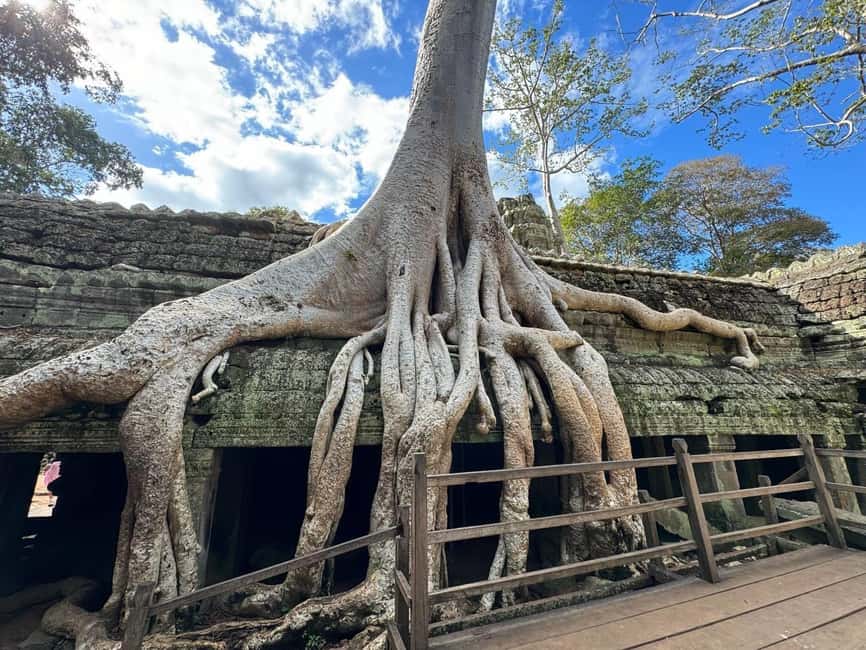
Ta Prohm is one of the most memorable stops because the forest has become part of the architecture. Large roots press against walls and climb over galleries, creating the scene most people picture when they first think of Angkor.
You receive about an hour here with a guided visit. That gives you time to notice more than the famous tree roots. Your guide can point out carvings, explain the temple’s role, and help you frame photographs that show the scale of the stonework.
Ta Prohm can feel crowded at popular photo points, and the ground is uneven. Wear shoes with a firm sole, and keep your pace sensible. The heat builds quickly, even when sections of the temple are shaded.
Victory Gate and Angkor Thom
A short photo stop at Victory Gate introduces the monumental scale of Angkor Thom. This gate is less famous than the South Gate, but it helps you see how the old city was organized and protected.
The main Angkor Thom visit lasts about two hours. This is not a single temple but a large walled city with several important sites inside. The South Gate, with its enormous stone faces, is one of the classic arrival points and gives you an immediate sense of the Khmer Empire’s artistic confidence.
Inside, you visit the Terrace of the Elephants, the Terrace of the Leper King, Baphuon, and Bayon. The terraces once served ceremonial purposes and are covered with carved figures. Your guide can help separate what you are seeing from the many similar-looking stones, which is useful when your eyes begin to tire.
Baphuon has a different feel from Bayon. Its tall, pyramid-like structure makes you work your way upward and gives the route some variety. The visit here lasts about 30 minutes, enough to understand its design without turning the stop into a long climb.
A few more Siem Reap trips to weigh up
- Siem Reap: Full-Day Angkor Wat Guided Tour with Sunset
★ 4.9 · 3,803 reviews - Angkor Wat Sunrise tour with Small – Group and Guide tours
★ 5.0 · 3,655 reviews - Angkor Wat Highlights and Sunrise Guided Tour from Siem Reap
★ 5.0 · 3,213 reviews - Full-Day Angkor Wat Sunrise Private Tour with Guide from Siem Reap
★ 5.0 · 2,920 reviews
Bayon and its serene stone faces
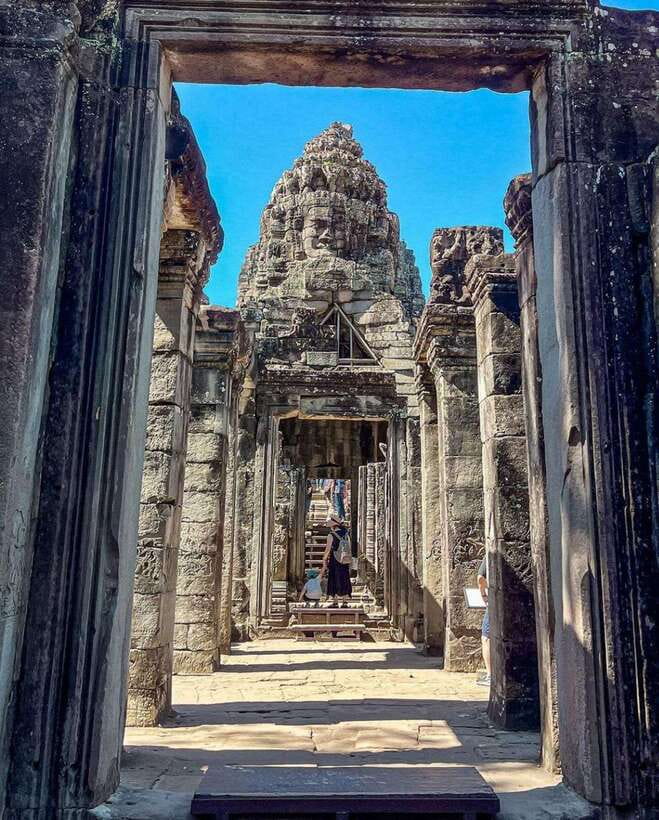
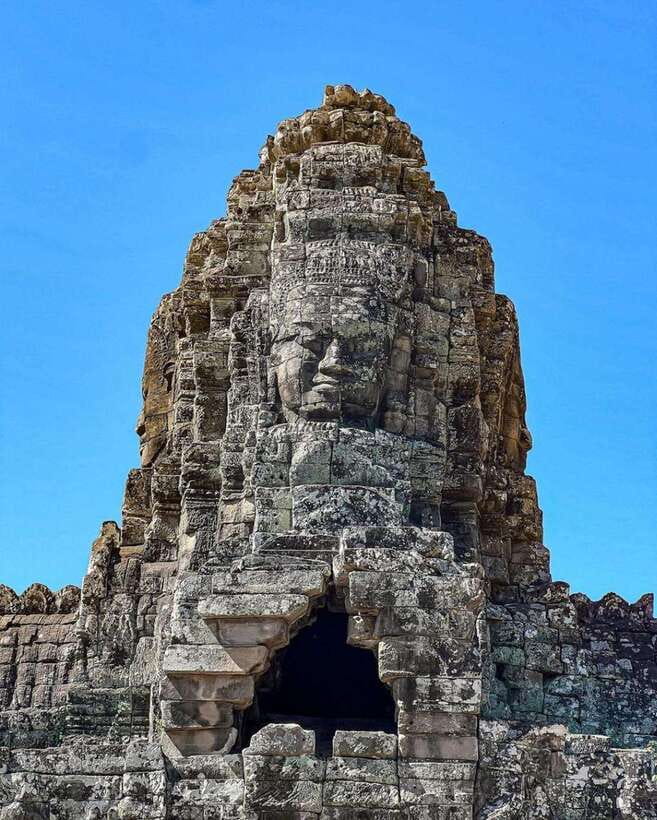
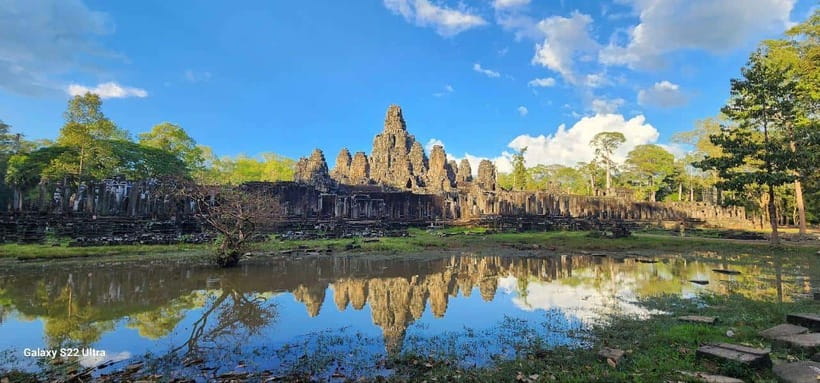
Bayon is the emotional center of Angkor Thom for many people. Its towers carry huge carved faces with calm expressions, and the effect changes as you move through the narrow passages.
The planned guided visit lasts about 45 minutes. That is enough for an introduction, though you may wish you had more time if you enjoy details. I would listen closely here, since a guide can explain the temple’s imagery and help you see how the faces appear from different angles.
The route through Angkor Thom involves walking, steps, and uneven surfaces. You will appreciate the supplied cold towel by this point. It is a small touch, but after several temples in Cambodian heat, it feels useful rather than decorative.
Lunch near Srah Srang
The lunch break lasts about an hour near Srah Srang, a large reservoir with a quieter setting. Lunch is not included, and the tour does not set a fixed meal price in advance. You should budget separately for a Cambodian meal and bring patience if the stop becomes busy.
This is a good point to rest, drink water, and take pressure off your feet. The day is more enjoyable if you treat lunch as a real break rather than a quick refueling stop. The guide can also help you understand the timing for the afternoon visit.
Angkor Wat, the grand final stop
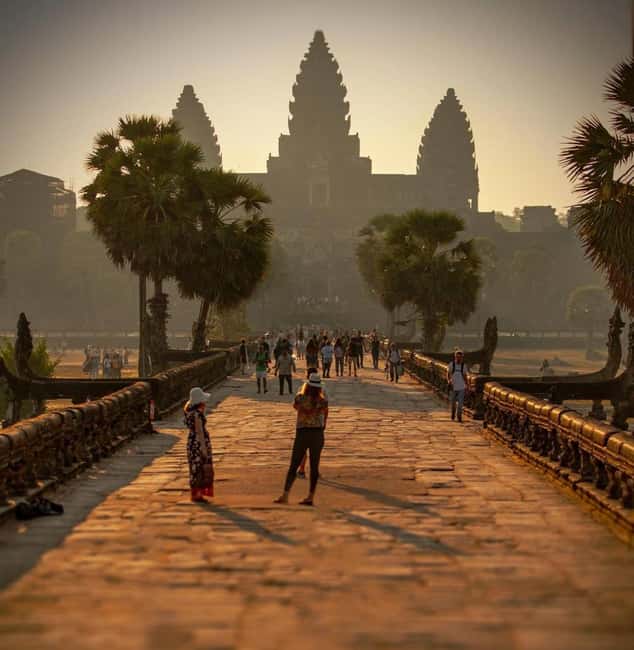
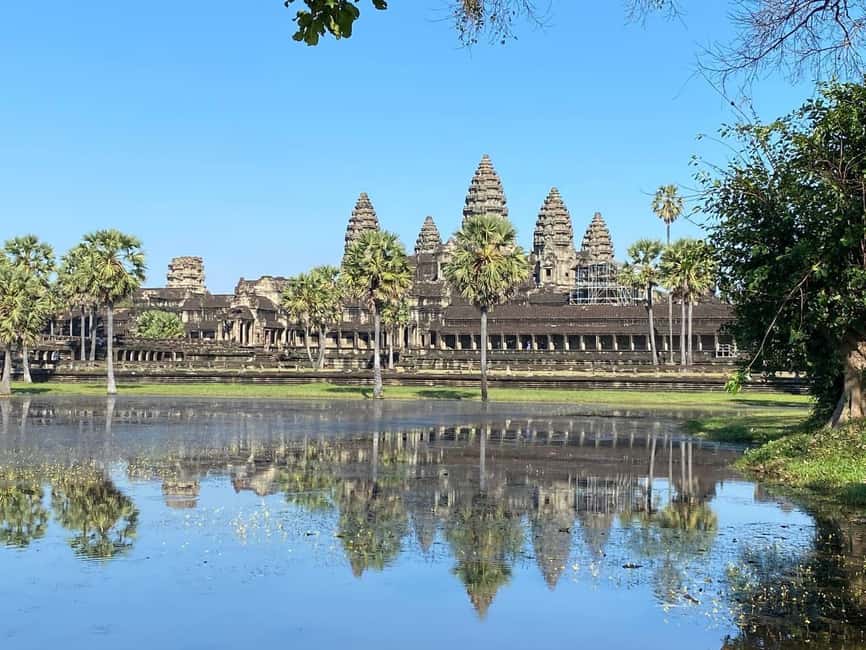
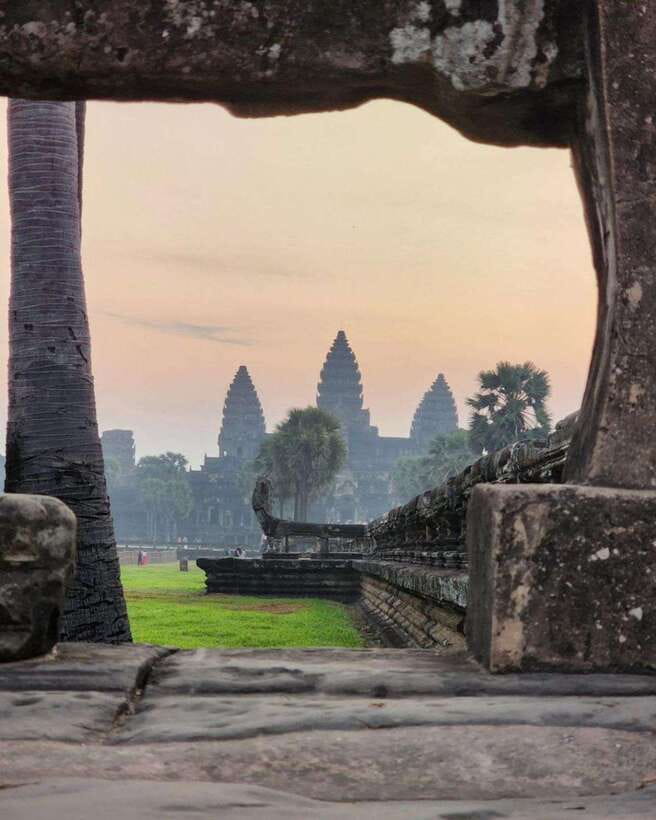
The afternoon is devoted to Angkor Wat, with about two and a half hours for a guided visit. That long time is justified. Angkor Wat has broad galleries, towers, bas-reliefs, courtyards, and long approaches that are difficult to appreciate in a rushed hour.
The temple was built as a major religious center, and its plan carries layers of symbolism. Your Spanish guide can make sense of the layout and explain the stories carved into the walls. This is where the tour’s language choice offers real value, since there is much to absorb and plenty of detail that could otherwise blur together.
Dress carefully for Angkor Wat. You need clothing covering your shoulders and knees. Shorts, short skirts, tank tops, and other revealing clothing are not accepted in areas with the strictest rules. A scarf may help at some temples, but proper trousers or a longer skirt and a shirt with sleeves are the safer choice.
The normal day finishes around 5:00 PM and includes transport back to your hotel. It is a full schedule, not a gentle stroll. I would choose it if your time in Siem Reap is limited and you want the major sights explained in Spanish in one outing.
The two-day plan gives the temples room to breathe
The two-day option keeps the first day focused on the Small Circuit and uses a second day for the Grand Circuit and Banteay Srei. The advertised two to three-day Angkor pass costs $62, so your ticket cost is higher than on the one-day option, but the pace is easier and the temple list is much longer.
The second day finishes around 4:00 PM. It is still an active day, yet spreading the major visits over two mornings means you are less likely to rush through Angkor Wat or treat every later temple as just another pile of stones.
Preah Khan and its long corridors
Preah Khan begins the second day with a large monastic complex full of corridors and carved details. Its scale makes it a useful contrast with the more compact points of Angkor Thom.
This is a place where a live guide earns the fee. You can easily lose your sense of direction among the galleries, and Spanish explanations help you focus on the parts that matter. Allow time to look up, since the atmosphere comes from the combination of tight passageways, worn carvings, and open sections where trees and stone meet.
Neak Pean and the old water system
Neak Pean is smaller and quieter than the major headline temples. It is surrounded by pools, giving the stop a different mood after the enclosed corridors of Preah Khan.
The temple also helps you understand how central water was to Angkor. Your guide can explain the structure and its setting, while you enjoy a slower walk before the next stop. Do not expect another Angkor Wat scale monument here. Its appeal comes from proportion, setting, and the change of pace.
Ta Som and the famous tree-covered gate
Ta Som is known for its tree-covered gate, an image that recalls Ta Prohm but on a smaller scale. It makes a good comparison point: you see how nature has affected more than one temple, while the smaller site may feel easier to take in.
The Grand Circuit includes several stops, so I would use this visit to focus on one or two details rather than trying to remember every date and ruler. The guide can point out the best angle for photos and keep you moving before the heat becomes tiring.
East Mebon and Pre Rup
East Mebon once rose from an island in a huge reservoir. The water is no longer the main feature, but the temple’s original position gives you a glimpse of the engineering behind Angkor’s royal center.
Pre Rup follows with a strong mountain-style form and views over the Cambodian countryside. It gives the second day a more open finish before the final trip to Banteay Srei. Steps and exposed areas make sun protection important. Bring your hat, sunglasses, sunscreen, and water.
Banteay Srei, the finest carving stop
Banteay Srei is often the reason to choose two days. The temple is smaller than Angkor Wat, but its pink sandstone carvings are exceptionally fine and detailed. The name is often translated as Citadel of Women, and the site has a distinct look that sets it apart from the larger gray stone monuments.
The extra drive is worthwhile if you care about sculpture and close-up detail. You can spend time looking at the carved figures, lintels, and decorative patterns without facing the scale of the main temples. It also gives your second day a clear finale rather than ending with another similar large complex.
One honest point: a two-day plan can feel repetitive if you are not especially interested in temple architecture. One rating specifically notes that the second day, without the sunrise, may feel less varied after the main temples are complete. Choose it for a slower pace and Banteay Srei, not simply because more stops always means more enjoyment.
Sunrise starts at 5:00 AM, but changes the shape of the day
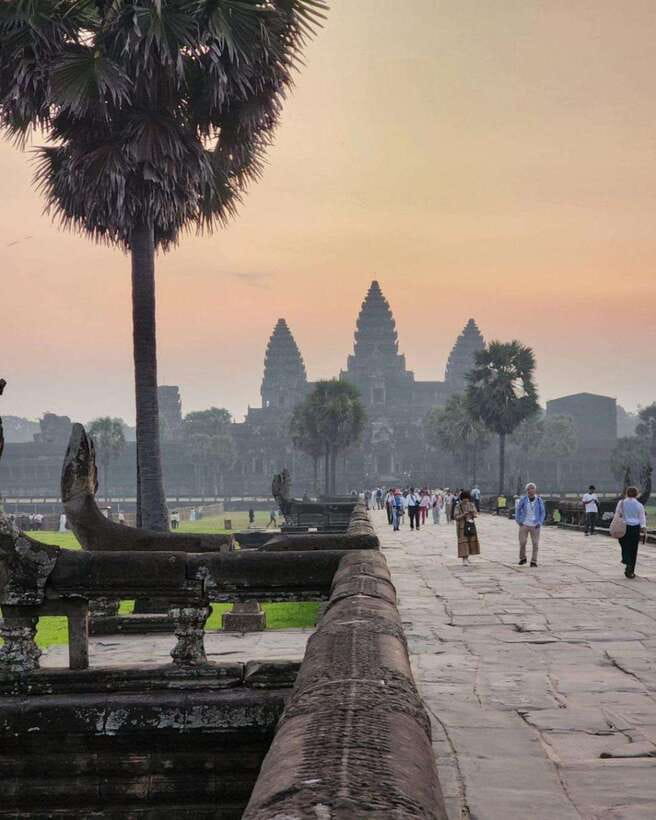
The sunrise option begins pickup at 5:00 AM and finishes around noon. Bring breakfast from your hotel, as the tour advises. The early start can make the main temples feel different, but it also means less sleep and a long morning of walking.
The sunrise choice is available at checkout for the relevant option. For the two-day tour, the early start is stated for Day 2 when selected. Check the exact selection before paying so you know which morning begins before dawn.
I would choose sunrise if early mornings suit you and you want to use the cooler part of the day. I would skip it if you know that tiredness makes it harder to listen, walk, or enjoy the carvings. Angkor rewards attention, and a sleepy start can cancel out some of the benefit.
Transport, group size, and comfort
Transport is based on party size and the option you select. Shared tours use a tuk-tuk for one or two people and an air-conditioned van for three to six people. Private one-day tours use a tuk-tuk for one or two people, with a car available as an upgrade at checkout, and an air-conditioned van or bus for larger parties.
On the private two-day plan, one or two people use a tuk-tuk on Day 1 and a car on Day 2. Three or more people travel by air-conditioned van or bus. This distinction matters in Cambodia’s heat, especially on the longer two-day route.
The tuk-tuk gives you open-air travel between sites, which can be pleasant and more connected to the surroundings. An air-conditioned vehicle offers more relief after walking in the sun. If you dislike heat or are traveling with older family members, consider the car option where available.
Hotel pickup and drop-off are included. Give the provider your hotel name or address and a contact number when booking. The service is not suitable for wheelchair users or people over 95 years old.
What the $50 price really covers
The advertised price is $50 per person. That includes the one-day or two-day guided experience, hotel transfers, transport, Spanish guide service, cold drinking water, and cold towels.
The Angkor pass is extra. For one day, your basic cost becomes $87 before lunch and a tip. For the two-day route, the tour and two to three-day pass bring the total to $112 before meals and gratuity.
That is a fair value if you want a guide who can explain the monuments in Spanish and manage transport between widely separated sites. It is less attractive if you only want a ride and quick photo stops, since the ticket and meals add to the headline price.
Children under 12 join free on private tours, though a passport must be shown as proof and children still need to follow the temple dress rules. Shared group pricing does not include the same free child benefit.
You can cancel up to 24 hours in advance for a full refund, and the reserve now, pay later option keeps your plans flexible. Those terms are useful when your Siem Reap schedule is still changing.
How to prepare for a hot, active day
Wear comfortable shoes, loose clothing that follows the dress code, sunglasses, a hat, sunscreen, and insect repellent. Bring breakfast for the sunrise option and keep your passport available if a child under 12 is joining a private tour.
The walking surfaces are not presented as wheelchair-friendly, and several sites include steps or uneven ground. Plan on regular exposure to the sun, even when part of a temple route passes through shade.
Ask your guide about photo stops early in the day. Mario is especially praised for taking many photos and finding good locations, while the general service includes help with photographs. Still, bring your own phone or camera, and do not let picture-taking replace time spent looking carefully at the carvings.
Who should book this Spanish-guided Angkor tour?
I would recommend the one-day option if you have limited time and want Ta Prohm, Angkor Thom, Bayon, and Angkor Wat covered in a single organized day. It is also a good fit if a Spanish explanation will make the art and religious ideas easier for you to follow.
Choose two days if you prefer less pressure, want Banteay Srei, or enjoy comparing different temple styles. Families may appreciate the private format and the guide’s ability to adjust timing. Samuel’s patient approach, as well as Mario’s careful attention to comfort and photos, points to the kind of service this tour aims to provide.
I would hesitate only if you dislike early starts, hot outdoor walking, or a full itinerary. The second day can feel repetitive if your interest ends after the famous temples. In that case, book one day and use your extra time elsewhere in Siem Reap.
FAQ
Is the Angkor entrance ticket included?
No. The Angkor Archaeological Park pass costs $37 per person for one day or $62 per person for two to three days.
What time does the standard tour begin?
Hotel pickup takes place between 8:30 and 9:00 AM. The booking requires your hotel name or address and a contact number.
What time does the sunrise option begin?
The sunrise option begins at 5:00 AM and finishes around noon. Bring breakfast from your hotel.
Which temples are included on the one-day tour?
The one-day route includes Ta Prohm, Angkor Thom, the Terrace of the Elephants, Baphuon, Bayon, Srah Srang, and Angkor Wat.
Which temples are included on the second day?
The second day includes Preah Khan, Neak Pean, Ta Som, East Mebon, Pre Rup, and Banteay Srei.
Is lunch included?
No. Lunch is not included, and you eat at a nearby Cambodian restaurant during the scheduled break.
What type of transport is used?
One or two people generally travel by tuk-tuk. Groups of three or more use an air-conditioned van or bus. A car can be selected at checkout for some private tour options.
Can children join for free?
Children under 12 join free on private tours only. A passport must be shown as proof of age.
What clothing is required at the temples?
You need clothing covering your knees and shoulders. Shorts, short skirts, sleeveless shirts, tank tops, and revealing clothing are not permitted, especially at Angkor Wat.
Should you book it?
Book this tour if you want Angkor explained in Spanish, rather than simply photographed. The strongest reason to choose it is the guide service, especially if you are matched with someone such as Mario or Samuel who can answer questions, adjust the pace, and help with photos.
Choose one day for the essential monuments and two days for a slower schedule with Banteay Srei. Add the entrance pass, lunch, and tip to your budget, dress properly, and prepare for heat. With those points understood, this is a practical way to see Angkor without spending your precious Siem Reap time sorting out transport and temple order yourself.
Just added around Siem Reap
- Ultimate Sunrise to Angkor Wat, Angkor Thom and Bayon Temple★ 5.0 · 3 reviews
- Twilight Tastes of Siem Reap Include Dinner★ 5.0 · 13 reviews
- Trekking Tour at Phnom Kulen National Park from Siem Reap★ 5.0 · 3 reviews
- Full-Day Private Tour of Angkor Wat with Pick Up★ 5.0 · 12 reviews
- Private Day Trip to Angkor Temples with Expert Guide★ 5.0 · 4 reviews
- Waterfall & River of 1000 Siva Linga- Kulen Mountain Private Tour★ 5.0 · 3 reviews
- Professional Photo Shoot in Angkor Archaeological Park, Siem Reap★ 5.0 · 42 reviews
- Ultimate Siem Reap Food Tour by Tuk Tuk – 20 Tastings, 8 Stops★ 5.0 · 13 reviews
Angkor Wat Tours, compared.

Angkor Wat Sunrise or Sunset Tour with Guide from Siem Reap
Read our review →
Angkor Wat: Small-Group Sunrise or Sunset Tour
Read our review →
Angkor Wat 2-Day Tour with Sunrise and Sunset
Read our review →

Angkor Wat Sunrise tour with Small – Group and Guide tours
Read our review →
Angkor Wat Highlights and Sunrise Guided Tour from Siem Reap
Read our review →
Angkor Wat Sunset Small Group Tour with Lunch Included
Read our review →