
Reviewed · ANGKOR WAT TOURS
Siem Reap: Angkor Wat, Bayon & Ta Prohm Guided Tour
Angkor Wat is only the opening chapter of this full temple day. You move from its grand galleries to the enormous stone faces of Bayon, then into the crooked, tree-wrapped ruins of Ta Prohm. The route gives you three very different views of the Khmer world without making you arrange transport between them.
I like the hotel pickup and air-conditioned van, especially in Cambodia’s heat. I also like having an English-speaking guide to explain the carvings, religious changes, and old capital city rather than simply pointing out photo spots. The main catch is the extra cost: the $16 tour does not include the $37 one-day temple pass or lunch, and the long walking day is not suitable for wheelchair users.
Key points to know before booking
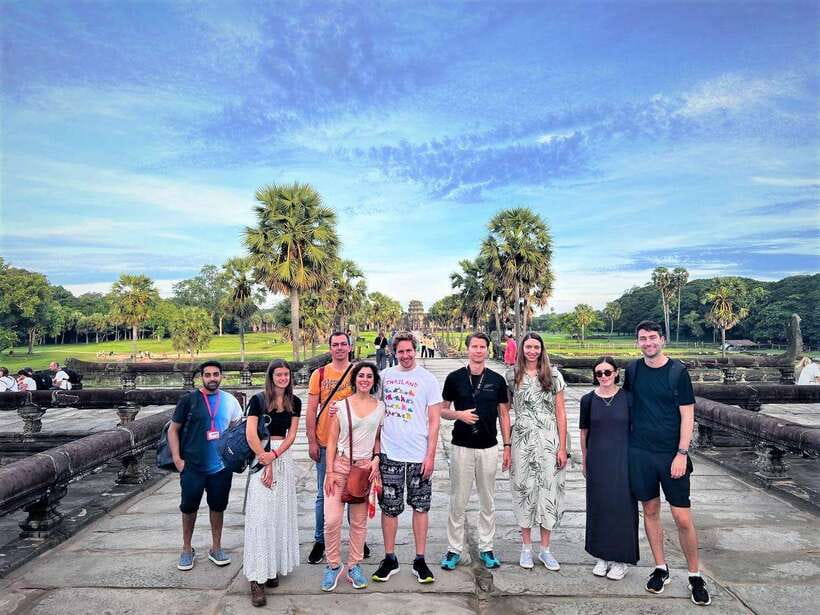
- Angkor Wat receives two full hours, giving you time to walk through its galleries and study the stonework.
- Bayon’s central towers carry more than 200 huge carved faces, one of the most memorable sights in the park.
- Ta Prohm offers a completely different mood, with fig trees pressing against the temple walls and jungle growth around the ruins.
- Hotel pickup and drop-off in Siem Reap city are included, with the exact pickup time supplied one day before departure.
- The $16 price covers the tour service, not entry, so budget another $37 per person for the one-day temple pass.
- Guide Yuth has been especially praised for his sociable approach, temple explanations, mythology, and personal stories when he leads the group.
Three major temples, three different moods
This tour works because each stop has a clear character. Angkor Wat is the grand ceremonial monument, Angkor Thom shows the scale of an ancient capital, and Ta Prohm gives you a more tangled, atmospheric set of ruins.
You are not just checking off famous names. The sequence lets you compare formal stone galleries, a city built for royal power, and a temple slowly being reclaimed by trees. That variety matters on an eight-hour day. If every stop looked like Angkor Wat, the experience could blur together.
The schedule also keeps the route practical. You leave Siem Reap by van, spend the morning at Angkor Wat, stop for lunch at your own expense, and then visit Ta Prohm, Angkor Thom, and Bayon before returning to town. The listed driving time is about 20 minutes each way, though actual road conditions can affect the day.
More Angkor Wat Tours in Siem Reap:
- Angkor Wat Sunrise or Sunset Tour with Guide from Siem Reap
★ 5.0 · 12,109 reviews - Siem Reap: Angkor Wat: Small-Group Sunrise or Sunset Tour
★ 5.0 · 9,444 reviews - Siem Reap: Angkor Wat 2-Day Tour with Sunrise and Sunset
★ 4.9 · 4,429 reviews
Leaving Siem Reap by air-conditioned van
Pickup is included from hotels in Siem Reap city. You receive the exact pickup time one day before the tour, so keep your morning flexible until that message arrives.
The first drive takes about 20 minutes. An air-conditioned vehicle is a real comfort here, since you will spend much of the day walking outdoors among stone surfaces that hold the heat. Bottled water and a cool towel are also included. Those are small touches, but they are useful after an hour of temple steps and open courtyards.
There is a short stop at a visitor center for photographs before the main temple visit. It is listed as about 10 minutes, so think of it as a brief orientation and camera break rather than a major attraction.
The group size is not specified, so you should not assume a private tour or a tiny party. The guide’s ability to explain the sites clearly will matter more than the vehicle itself. English is the tour language.
Angkor Wat: two hours inside Cambodia’s great monument
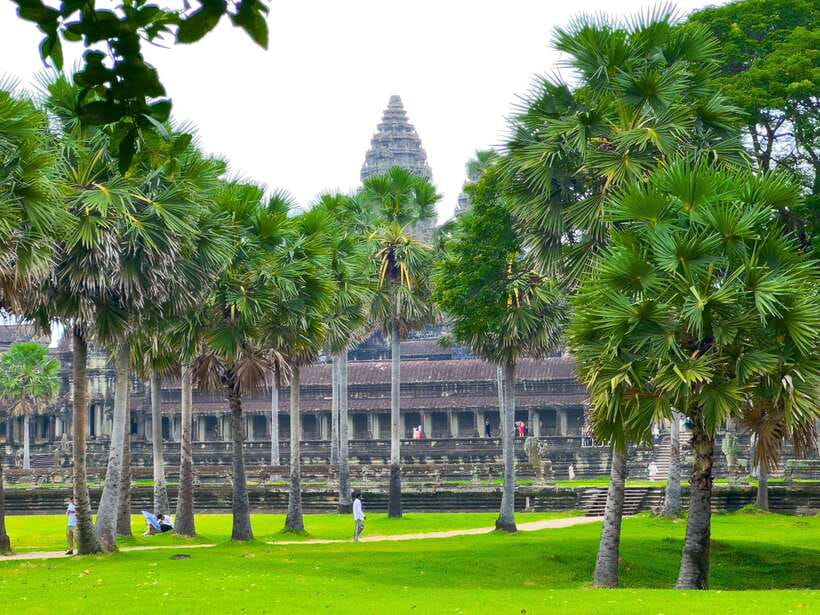
Angkor Wat gets the longest visit, and rightly so. You have about two hours for a guided walk through the galleries and courtyards, with time to look closely at the carved stonework.
The monument was built as a religious center and is widely recognized as the world’s largest religious monument. Your guide explains its place in Cambodia’s religious story as you move through the site. That context is valuable because the complex can otherwise feel like an endless series of walls, towers, and corridors.
I would use this first visit to get your bearings rather than rush for photographs. Notice how the broad scale changes as you pass into the galleries. From a distance, Angkor Wat feels monumental and ordered. Inside, the experience becomes more detailed, with carved surfaces and passages that reward a slower pace.
Comfortable shoes are essential. The tour involves walking for roughly two hours at this stop, followed by more walking later. Bring sunglasses and a hat, since shade may not cover every approach or open area. Insect repellent is also recommended for the day.
Modest clothing is important at the temples. Skirts are not allowed, so choose practical clothing that lets you walk comfortably while respecting the religious setting. The provided information does not list every dress rule, so it is wise to dress conservatively.
Lunch break: simple planning keeps the afternoon easy
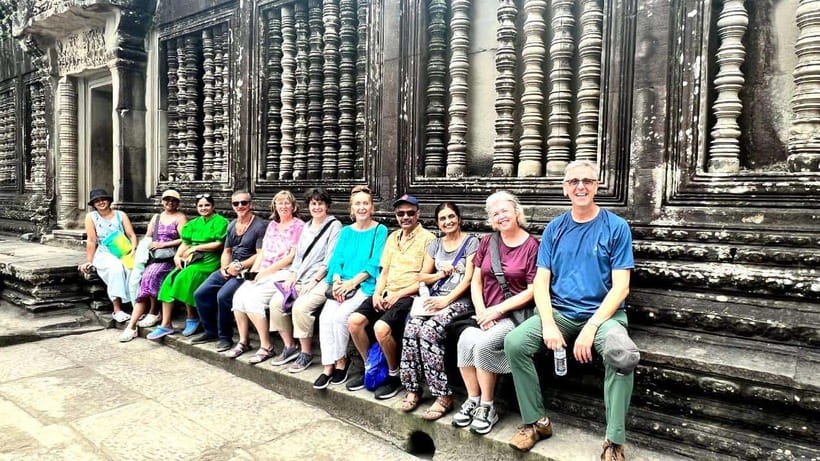
Lunch takes about an hour at a local restaurant, but the meal is not included. Bring enough cash or make sure you have a payment option accepted locally, since the tour price covers transport and guiding rather than food.
Because the lunch stop sits between Angkor Wat and the afternoon temples, it gives you a useful pause. You can eat, cool down, and refill your energy before facing Ta Prohm and Bayon. I would not treat this as a long dining experience. The value is the break in the walking rhythm.
Remember to budget for both lunch and the temple pass. The tour costs $16 per person, while the one-day entrance fee is listed separately at $37 per person and covers all the temples visited that day. That makes the known base cost $53 per person before lunch.
At that combined price, the tour is not the cheapest possible way to see Angkor if you already have transport and a guide. But it is a solid value if you want hotel pickup, a vehicle, bottled water, and an English-speaking guide without arranging each part yourself.
A few more Siem Reap trips to weigh up
- Siem Reap: Full-Day Angkor Wat Guided Tour with Sunset
★ 4.9 · 3,803 reviews - Angkor Wat Sunrise tour with Small – Group and Guide tours
★ 5.0 · 3,655 reviews - Angkor Wat Highlights and Sunrise Guided Tour from Siem Reap
★ 5.0 · 3,213 reviews - Full-Day Angkor Wat Sunrise Private Tour with Guide from Siem Reap
★ 5.0 · 2,920 reviews
Ta Prohm: trees, broken walls, and a slower pace

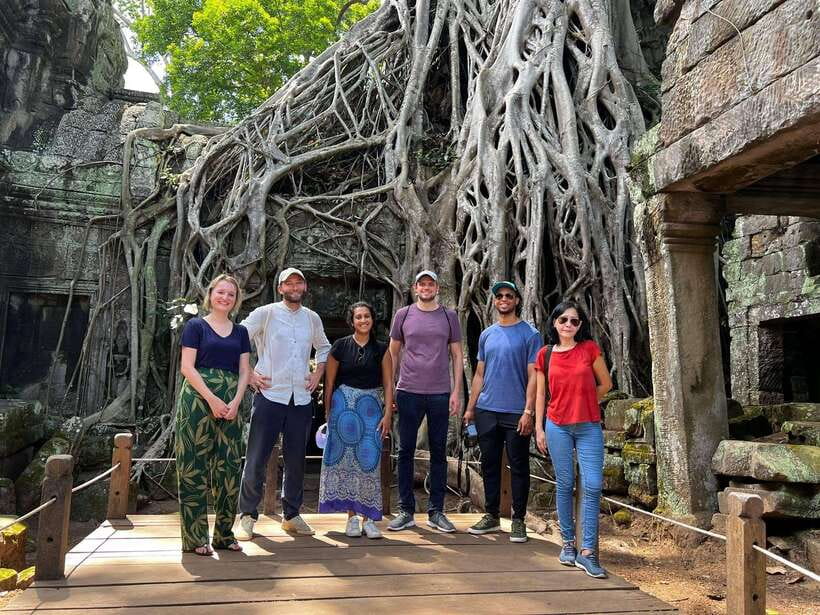
Ta Prohm changes the tone of the day. After the formal scale of Angkor Wat, you enter a temple complex surrounded by jungle growth, where fig trees press against the old stonework.
The visit lasts about an hour and includes a guided walk, sightseeing, and time for photographs. The ruins have a maze-like quality, with crooked paths and carved structures appearing between the trees. You might find this stop more atmospheric than grand. It is less about one sweeping view and more about how nature and architecture meet in tight, uneven spaces.
The trees are not just background decoration. Their roots and trunks help create the visual identity of Ta Prohm, while also showing the force working against the old buildings. Your guide can help you understand what you are seeing instead of reducing the stop to a collection of famous photo angles.
Take care on the paths. The tour is not suitable for wheelchair users, and the information provided describes walking at each temple. Even without a mobility limitation, you will want shoes with good grip and enough support for an uneven ruin site.
Ta Prohm is also where the day may feel most peaceful. The description of a rural atmosphere is apt: the enclosed paths and heavy tree cover offer a contrast to Angkor Wat’s broad ceremonial spaces. If you prefer quiet textures and close-up details to enormous monuments, this may become your favorite stop.
Angkor Thom: entering an ancient capital city
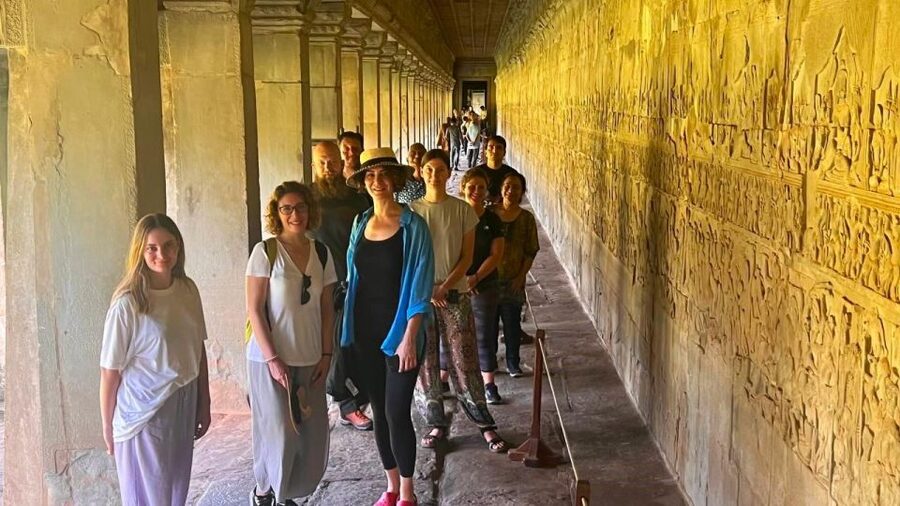
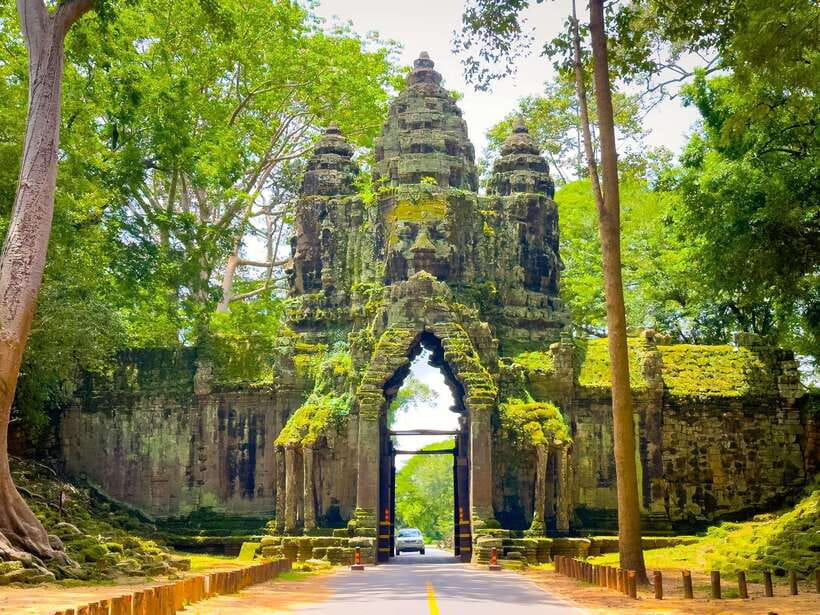
Angkor Thom is not simply another temple. It was the capital city of the Khmer Empire, and the visit helps you grasp the scale of the wider site.
The tour gives you about 30 minutes at Angkor Thom itself, with a guided visit and walking time before moving to Bayon. That is a fairly short window for an ancient capital, so listen closely while your guide explains how the city functioned and why its size matters.
The first impression comes from the grandeur of the site. You pause to take in the view before going farther inside. This short stop works best as a broad introduction, helping you understand that the temples were part of a planned royal center rather than isolated buildings in the forest.
Do not expect to explore every corner of Angkor Thom in half an hour. The schedule gives Bayon its own longer visit, while Angkor Thom serves as the setting and historical frame. If you want a very slow examination of the city walls, gates, and surrounding structures, you may find this portion brisk.
Still, it is an efficient use of time for a first visit. You see the capital’s scale, hear why it was important, and then focus on Bayon, its most celebrated temple.
Bayon: more than 200 stone faces
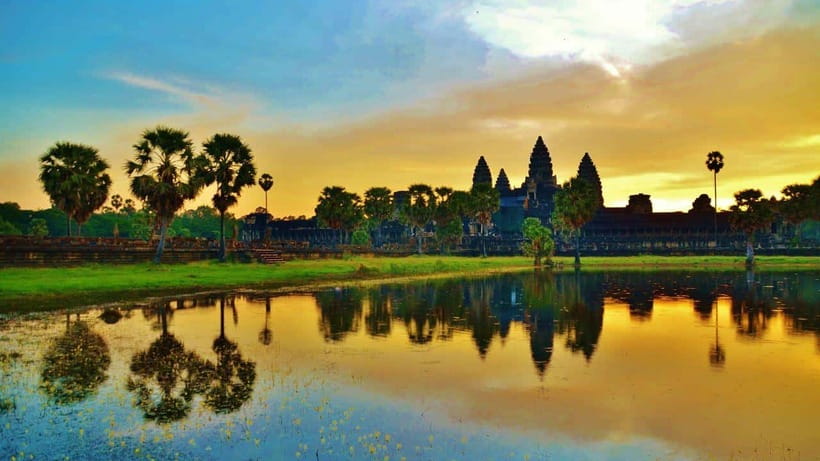
Bayon receives about an hour, including a guided visit, walking, sightseeing, and photographs. Its central towers are covered with more than 200 enormous carved faces, making this one of the easiest temples to recognize and remember.
The faces appear from different angles as you move through the temple. That makes Bayon a place to keep walking rather than stop at the first good photograph. Look up, turn around, and compare the expressions and positions of the towers as your guide explains the site.
This is where a strong guide adds real value. The tour description promises an experienced English-speaking guide, and Yuth has received especially warm praise for combining temple history and mythology with personal experiences. When he leads the day, his sociable style should suit you if you prefer explanations and conversation over a silent escort.
The hour is long enough for a useful introduction, but not for every carved detail. Bayon can feel crowded and visually busy, with towers, faces, galleries, and narrow passages competing for attention. A guide helps you focus on the main ideas and prevents the visit from becoming a hunt for random carvings.
After Bayon, you return to Siem Reap by van, with the listed return drive taking about 20 minutes. Hotel drop-off is included within Siem Reap city.
What the $16 tour price really gives you
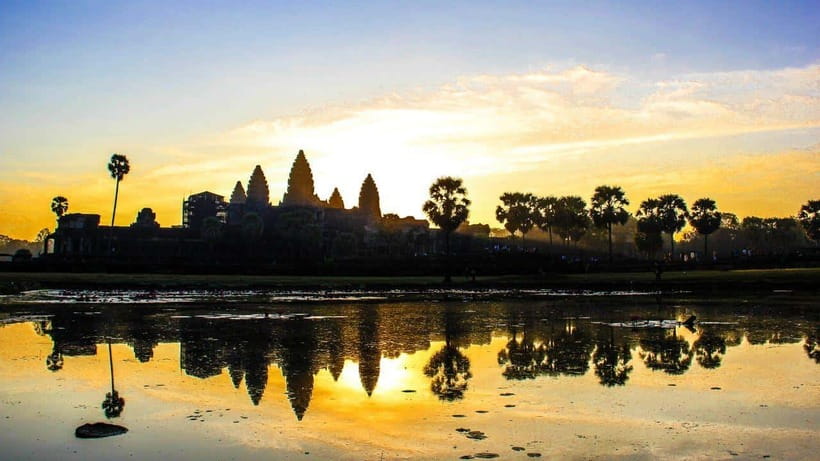
The low advertised tour price needs a careful reading. The $16 covers a full day of transport, guiding, hotel pickup and drop-off, bottled water, and a cool towel. It does not cover the $37 temple entrance pass or lunch.
That means the tour is best judged as a convenience package rather than a complete day cost. With the entrance fee added, you are at $53 per person before eating. For a first visit, that can still be good value because the major expense is the required temple pass, not the tour operator’s fee.
The tour also includes the convenience of moving between four major sites without hiring separate transport. You do not need to bargain for rides between Angkor Wat, Ta Prohm, Angkor Thom, and Bayon, and you avoid the work of fitting the sites into a sensible route.
The tradeoff is flexibility. The day follows a set order and gives each place a planned amount of time. If you want to linger for hours at one temple, return at a different time, or focus on photography, a private arrangement may suit you better.
Free cancellation up to 24 hours before departure and the reserve-now, pay-later option reduce the risk of booking. These policies are useful if your Siem Reap plans are still shifting, but they do not change the need to arrange the temple pass and lunch separately.
Who will get the most from this temple day?
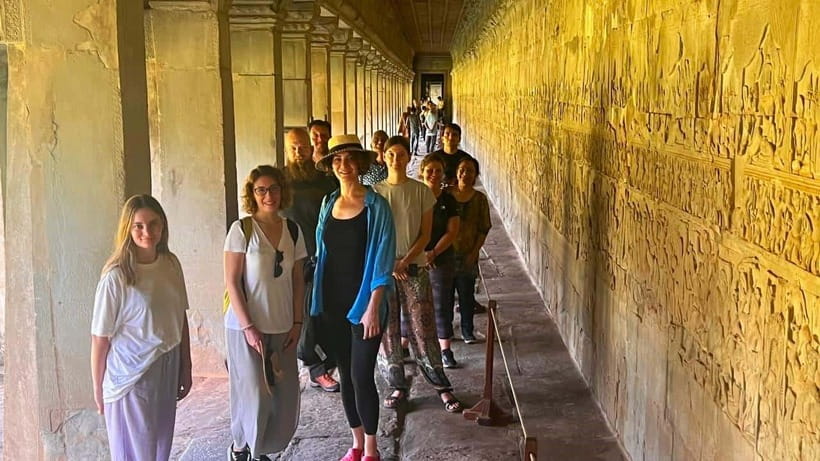
I would recommend this tour to a first-time Angkor visitor who wants the main sights explained in one organized day. The route covers the big three temple experiences plus Angkor Thom, and the guide gives you historical and religious context as you walk.
It also fits you if you value simple transport. Hotel pickup, an air-conditioned vehicle, water, and drop-off remove several small chores that can become tiring in the heat.
The tour suits active visitors who can walk for much of the day. Comfortable shoes are not optional advice here. The route includes temple galleries, courtyards, maze-like ruins, and several sightseeing walks.
I would think twice if you use a wheelchair, since the experience is specifically not suitable for wheelchair users. I would also hesitate if your main goal is a slow photographic study of one temple. The schedule is designed for broad coverage, not long independent sessions.
Families and mixed-interest groups may appreciate the variety, though the data does not specify a child age policy or group size. Since those details are not provided, check them before booking if they matter to your plans.
Should you book this Angkor Wat tour?
Book it if you want a well-priced introduction to Angkor’s essential sights, an English-speaking guide, and door-to-door transport from Siem Reap. The strongest reasons are the varied route, the two hours at Angkor Wat, the memorable faces of Bayon, and the unusual tree-covered ruins at Ta Prohm.
Before you commit, add the $37 temple pass and lunch to the advertised $16. Bring a hat, sunglasses, insect repellent, and shoes made for walking. If that total fits your budget and you prefer guided structure, this is a practical choice.
Skip it in favor of a more flexible or private plan if you want to set your own pace, avoid a possible shared group, or spend far longer at individual temples. For most first-time visitors who want the highlights in one day, the balance of price, coverage, and guidance is appealing.
FAQ
How long does the Angkor Wat, Bayon, and Ta Prohm tour last?
The experience lasts eight hours, including transportation from Siem Reap and the visits to Angkor Wat, Ta Prohm, Angkor Thom, and Bayon.
What is included in the tour price?
The price includes visits to the major temples, an English-speaking guide, an air-conditioned vehicle, bottled water, a cool towel, and hotel pickup and drop-off in Siem Reap city.
Is the temple entrance fee included?
No. The one-day temple entrance fee is listed separately at $37 per person and covers all the temples visited during the day.
Is lunch included?
No. Lunch at a local restaurant is taken at your own expense.
What language does the guide speak?
The live guide speaks English. The exact guide may vary, although Yuth is one guide associated with this experience.
Is hotel pickup available?
Yes. Pickup and drop-off are included for hotels in Siem Reap city. The exact pickup time is provided one day before the tour begins.
What should I bring?
Bring sunglasses, comfortable shoes, insect repellent, and a hat. Skirts are not allowed, and the tour is not suitable for wheelchair users.
Just added around Siem Reap
- Ultimate Sunrise to Angkor Wat, Angkor Thom and Bayon Temple★ 5.0 · 3 reviews
- Twilight Tastes of Siem Reap Include Dinner★ 5.0 · 13 reviews
- Trekking Tour at Phnom Kulen National Park from Siem Reap★ 5.0 · 3 reviews
- Full-Day Private Tour of Angkor Wat with Pick Up★ 5.0 · 12 reviews
- Private Day Trip to Angkor Temples with Expert Guide★ 5.0 · 4 reviews
- Waterfall & River of 1000 Siva Linga- Kulen Mountain Private Tour★ 5.0 · 3 reviews
- Professional Photo Shoot in Angkor Archaeological Park, Siem Reap★ 5.0 · 42 reviews
- Ultimate Siem Reap Food Tour by Tuk Tuk – 20 Tastings, 8 Stops★ 5.0 · 13 reviews
Angkor Wat Tours, compared.

Angkor Wat Sunrise or Sunset Tour with Guide from Siem Reap
Read our review →
Angkor Wat: Small-Group Sunrise or Sunset Tour
Read our review →
Angkor Wat 2-Day Tour with Sunrise and Sunset
Read our review →

Angkor Wat Sunrise tour with Small – Group and Guide tours
Read our review →
Angkor Wat Highlights and Sunrise Guided Tour from Siem Reap
Read our review →
Angkor Wat Sunset Small Group Tour with Lunch Included
Read our review →