
Reviewed · CYCLING TOURS
Angkor Cycling Tour
Angkor is easier to understand when you move through it at bicycle speed. This 35 km ride leaves the main roads behind for forest tracks, quiet canals, and countryside paths, then brings you to Angkor Wat, Bayon, Ta Prohm, and the old walls of Angkor Thom. It is a full day, but the pace is designed to mix effort with plenty of temple time.
I like the 70 percent off-road route, which gives you a much calmer view of the complex than a vehicle tour. I also like the stops at Jayatataka Baray, where birds, butterflies, monkeys, and, with luck, freshwater otters add a little wild Cambodia to the ruins. The main consideration is the heat: 35 km in the Cambodian sun is not a casual pedal, even though the route is rated medium and most of the ride is manageable.
Key points at a glance
- Seven hours and 35 km: A serious full-day outing with time for both cycling and temple visits.
- Mostly forest tracks: About 70 percent of the route uses off-road trails around Angkor and Bakheng Hill.
- Major temples included: Visit Angkor Wat, Bayon, Ta Nie, and Ta Prohm, plus the Elephant Terrace and Angkor Thom walls.
- A wildlife pause: Jayatataka Baray is used for birdwatching, with possible sightings of cranes, egrets, kingfishers, monkeys, and otters.
- Good practical support: Mountain bikes, helmets, water, snacks, lunch, a first-aid kit, spare parts, and tuk tuk transfers are included.
- Temple pass is extra: You must arrange your Angkor pass separately, and modest clothing is needed for the temples.
Why a bicycle changes your view of Angkor
A standard Angkor visit often means moving from one monument to the next by tuk tuk or minivan. That is efficient, but it can make the complex feel like a series of stops. This ride connects those stops with the places between them: the moat, tree-lined tracks, old walls, canals, and forest.
I like that the route does not treat the temples as isolated photo backdrops. You cycle along the ancient moat of Angkor Wat, ride toward Bakheng Hill, and follow narrow tracks linked to the old Khmer city. The ride gives you a better sense of the scale of Angkor and of how much remains beyond the famous monuments.
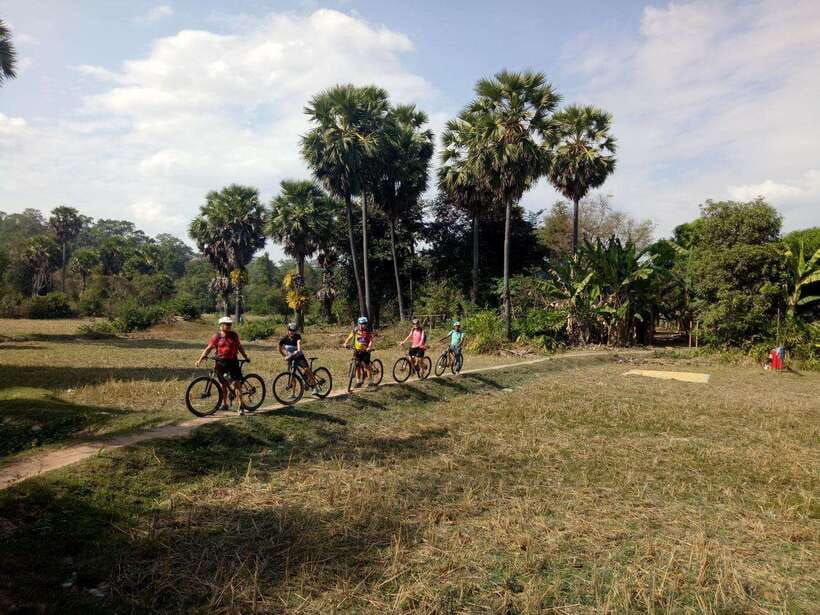
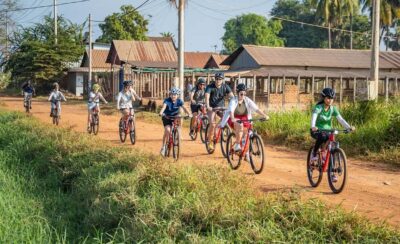
The off-road sections are the real reason to book. They make up roughly 70 percent of the route, while the remaining 30 percent uses paved roads and smooth bike lanes. The balance matters. You get the fun of a rougher forest track without spending the entire day bouncing over uneven ground.
The tour is rated medium. That does not mean a race or an extreme mountain-bike trip. The supplied details describe most of the ride as easy, with a few moderate portions. Still, you should be comfortable spending much of the day on a bicycle and riding in warm weather.
A few more Siem Reap trips to weigh up
- Siem Reap Countryside Bike Tour / E-Bike or Tuk Tuk
★ 5.0 · 935 reviews - Angkor Sunrise Bike Tour / E-Bike or Tuk Tuk
★ 5.0 · 615 reviews - Siem Reap: Bike the Angkor Temples – Full-Day 30km Tour
★ 5.0 · 463 reviews
Starting in Siem Reap at 7:45 AM
Pickup is included from hotels, apartments, and Airbnb lobbies in Siem Reap city, usually 15 minutes before the scheduled start. Transport is by tuk tuk or minivan, depending on the group size. At the shop, you receive a mountain bike, helmet, and a quick fitting before setting off.
The operator provides bikes in all sizes, but you should give your height in centimeters when booking. That small detail helps the team prepare the right bicycle and makes a long day more comfortable.
The early start is sensible. It gives you cooler riding conditions at the beginning and places you at Angkor Wat before the day becomes hotter. Bring sunscreen, sunglasses, and plenty of water, even though more water is supplied along the way.
From Siem Reap, the route heads past the river and into the rainforest tracks of the Angkor complex. This opening stretch helps you leave town behind gradually rather than arriving at the first temple in a vehicle and immediately joining the sightseeing crowd.
Angkor Wat, two hours with the guide
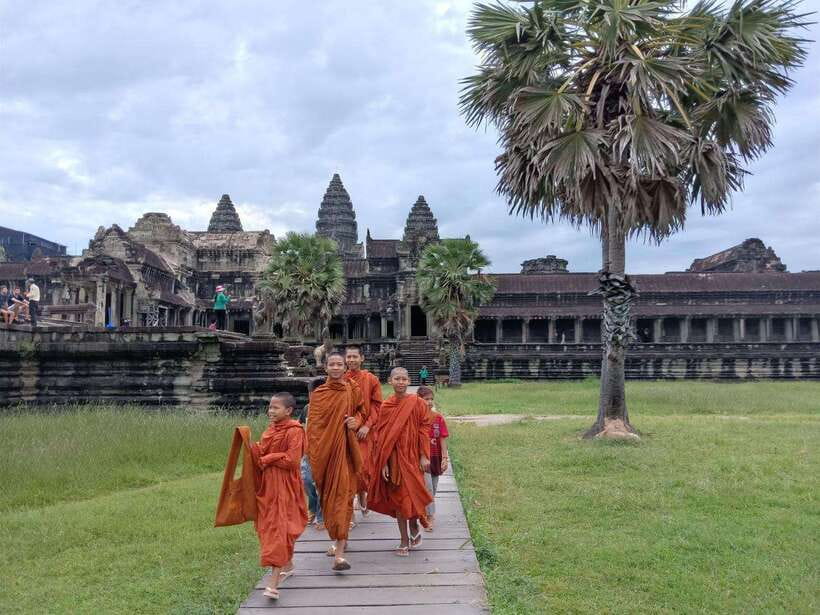
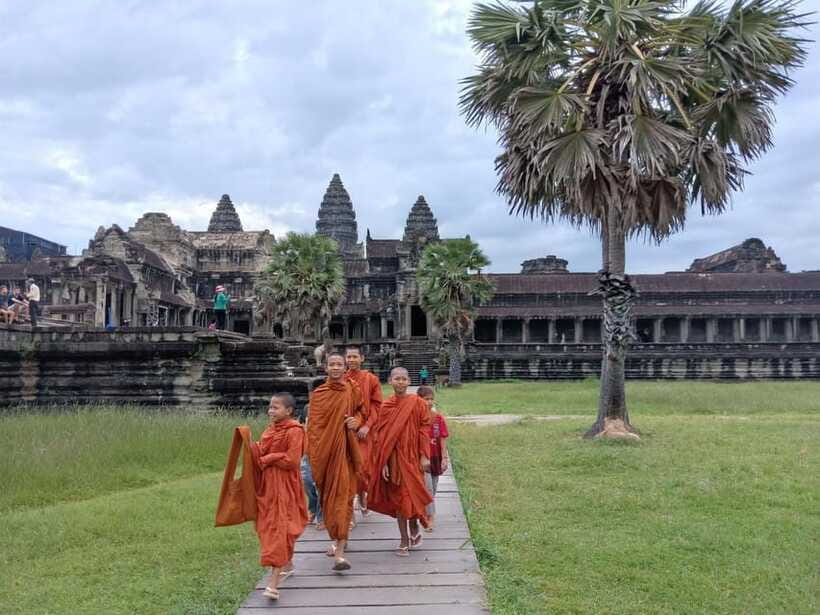
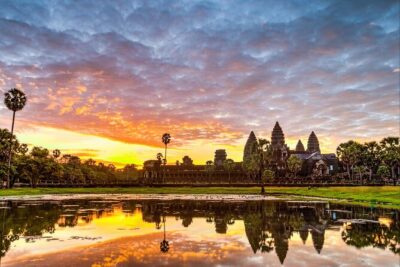
Angkor Wat receives about two hours, with guided sightseeing and time to walk, take photographs, and look closely at the temple’s galleries and towers. The guide is there to explain the stories and details that can be easy to miss when you are on your own.
The bicycle approach is especially pleasant here. Instead of stepping out of a vehicle beside the entrance, you first ride beside the moat, with the temple appearing as part of a much larger setting. It is a simple but memorable way to reach Cambodia’s most famous monument.
You should expect to do a fair amount of walking once the bike is parked. Wear closed-toe shoes, and choose light clothing for cycling. Shorts are allowed during the ride, but you need a spare layer or longer clothing for temple visits. Modest dress is required at sacred sites.
Angkor Wat is the most important architectural stop of the day, but it is not the only one. If you have already visited it on another day, this tour still offers plenty beyond the main entrance and central galleries.
Bakheng Hill and the walls of Angkor Thom
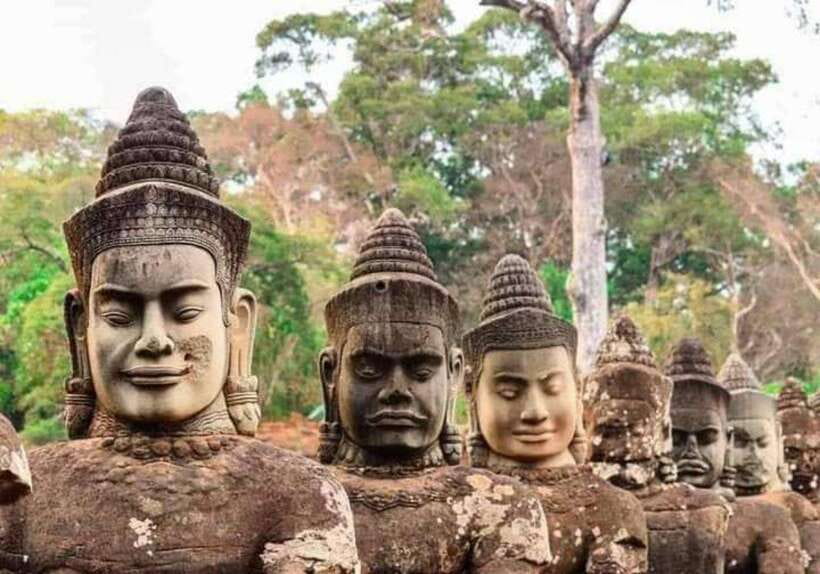
After Angkor Wat, the route follows the moat and heads toward Bakheng Hill. Here the ride turns more adventurous, using forest tracks that are quieter than the main temple roads. The appeal is not simply speed or difficulty. It is the change in mood, from formal monument to shaded trail.
The route then enters Angkor Thom through the South Gate. One of the unusual parts of the day is the chance to cycle along the ancient city wall. Riding above or beside those old fortifications gives you a physical sense of the city’s defenses and boundaries.
This section may be one of the tour’s most distinctive moments. Most people see Angkor Thom from the road and then head straight to Bayon. Cycling on the wall slows the transition and turns the approach into part of the experience.
The Ghost Gate provides a pause for stories and photographs. Its name alone gives the stop a slightly mysterious character, though the real value is the setting and the guide’s explanation of the old city. The route here is not just a checklist of famous names. It links monuments through the remains of a once-planned urban center.
Same country, a completely different kind of day:
- Angkor Wat Sunrise or Sunset Tour with Guide from Siem Reap
★ 5.0 · 12,109 reviews - Siem Reap: Angkor Wat: Small-Group Sunrise or Sunset Tour
★ 5.0 · 9,444 reviews - From Siem Reap: Kampong Phluk Floating Village Tour by Boat
★ 4.9 · 6,979 reviews - Sunset tour of Kampong Phluk stilts home village on the Tonle Sap
★ 5.0 · 4,865 reviews
Bayon’s stone faces and lunch at Elephant Terrace
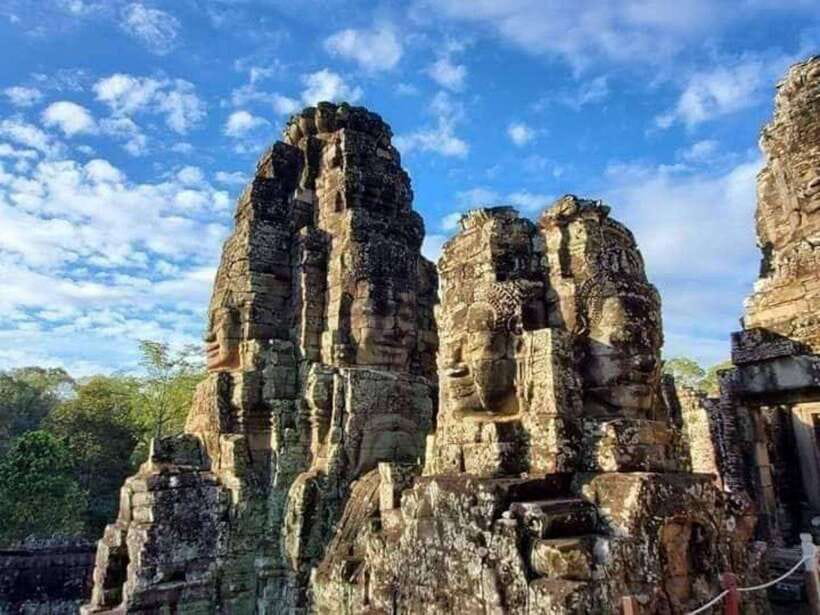
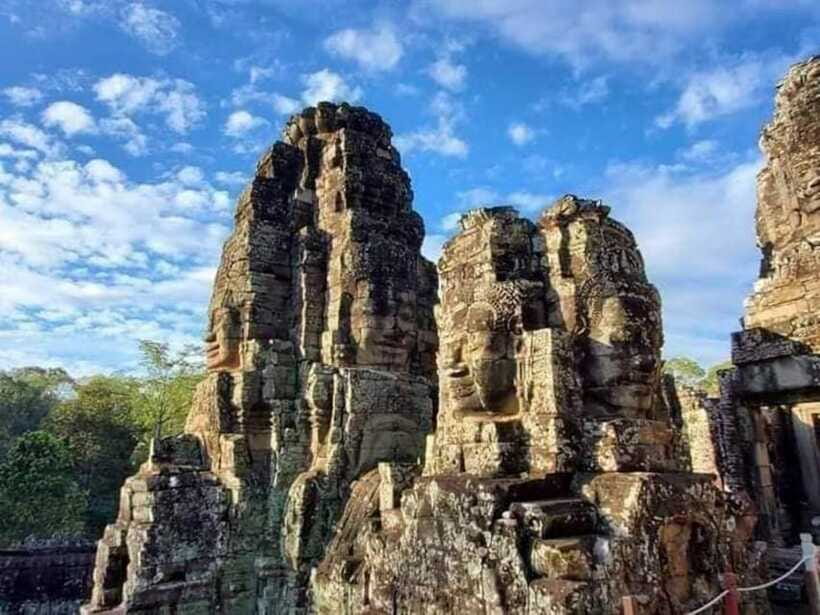
Bayon is only about 1 km from the Ghost Gate. Its towers carry the famous serene faces, which appear from different angles as you move around the temple. The scale can be hard to grasp in photographs, so take time to look upward and notice how the faces are positioned across the structure.
The guide leads the visit, but you will also have time for your own photographs and a walk through the temple. Bayon can feel visually busy, with carvings and corridors competing for attention. A guide helps give the stop some order.
Lunch comes at a local restaurant in front of the Elephant Terrace. The setting is practical rather than grand, and that is part of the appeal. You get a break from the saddle, a taste of Khmer specialties, and a view connected to the old royal center.
Lunch is included, along with water, snacks, and seasonal fruit. Cold water and snacks are also served at temple stops. This support is important on a route of this length. You do not have to spend the day searching for refreshments, though I would still carry a small bottle for easy access while riding.
Ta Nie, a quiet forest sanctuary
After lunch, the route leaves the main Angkor Thom area and heads toward Ta Nie. Compared with Angkor Wat, Bayon, and Ta Prohm, Ta Nie is a smaller and quieter stop. That makes it useful in the rhythm of the day.
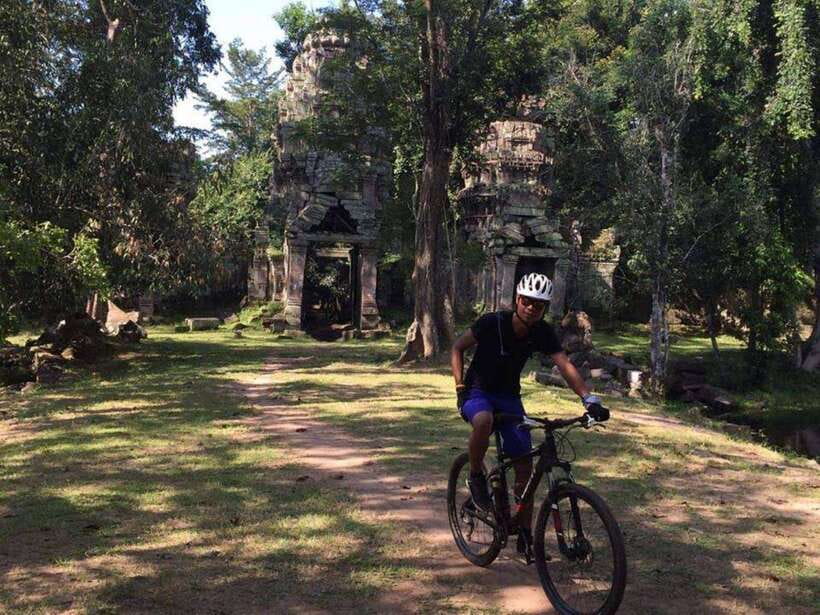
The temple is surrounded by forest, and the ride to it uses tracks away from the main traffic. You may notice roots, rougher ground, and narrower passages here. The guide and the route support make this feel like an accessible off-road outing rather than an isolated ride through unfamiliar paths.
Ta Nie gives you room to pay attention to texture: weathered stone, trees pressing close to the ruins, and the way the forest has taken back parts of the site. It is a good counterpoint to Angkor Wat’s grand scale and Bayon’s carved faces.
This is also where the tour feels most different from a typical temple circuit. You are not simply being delivered to another major entrance. You are reaching a smaller sanctuary by bicycle, with the ride itself acting as part of the visit.
Birdwatching at Jayatataka Baray
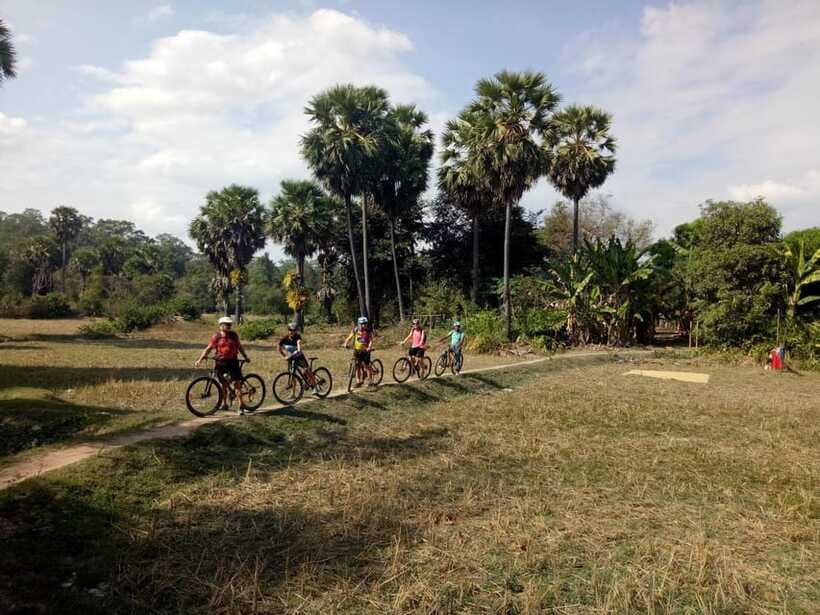
Jayatataka Baray adds a nature stop to a day otherwise focused on architecture. The guide pauses here for birdwatching, and you might see cranes, egrets, lesser whistling ducks, or kingfishers. Butterflies and monkeys are also possible, while freshwater otters may appear in the river if conditions are kind.
No wildlife sighting is guaranteed, so treat this as a peaceful pause rather than a formal animal-viewing excursion. The value lies in changing pace, cooling down, and seeing how water and forest still shape the Angkor setting.
I especially like this part because it prevents the day from becoming a contest to see as many temples as possible. You get a quiet tree nursery garden and a chance to listen and look around. For photographers, it offers a different set of subjects from towers and stone carvings.
Keep your expectations sensible. This is not a dedicated birding tour, and the Cambodian heat may make a shaded rest just as welcome as a bird sighting. Still, the baray gives the day a useful balance of culture and nature.
Ta Prohm and the famous tree roots
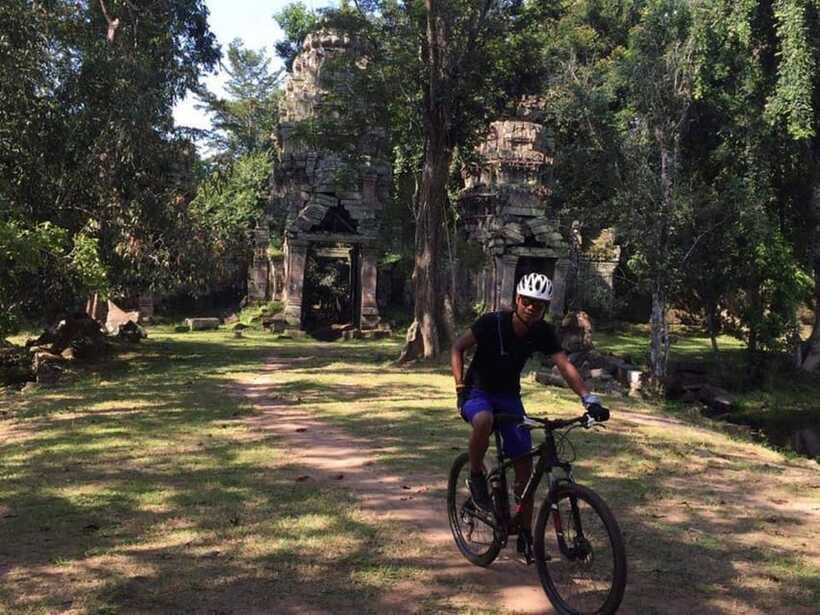
Ta Prohm is the final major temple, known worldwide as the Tomb Raider temple. Large tree roots grip the stone walls, creating the dramatic meeting of forest and monument that many visitors come to see.
The setting is striking, but it can also be the busiest temple stop of the day. Arriving by bicycle through forest tracks gives you a more gradual approach than coming directly by road. Once inside, you should be ready for walking, uneven surfaces, and plenty of photo stops.
Ta Prohm is not just about the roots. Look at the corridors, fallen stones, carved details, and the way the temple’s plan is revealed in fragments. The forest makes the site memorable, but the human work beneath it deserves attention too.
Because this comes late in a seven-hour outing, you may be warm and tired by the time you arrive. That is worth considering. The route builds toward a famous finish, but you should pace yourself earlier rather than treating the morning like a race.
The ride back to Siem Reap
The return covers about 12 km, using winding single tracks and smoother bike lanes before bringing you back toward town. After the temples, this final section lets you settle into the rhythm of the bicycle again.
For some people, the return will be a highlight. You have already seen the major monuments, so there is less pressure to stop constantly. For others, it will be the hardest part simply because it comes after a full day of riding and walking.
The support team can provide tuk tuk transfers, and free transfers are included in the activity details. The practical arrangements are designed to keep the day moving, but ask your guide about the return plan if you are concerned about your energy late in the afternoon.
What the $65 price includes
At $65 per person, the price is reasonable for a seven-hour guided outing, particularly because it includes much more than bike hire. You receive a mountain bike and helmet, an English or Spanish-speaking guide, lunch, water, snacks, seasonal fruit, temple-stop refreshments, spare bike parts, a first-aid kit, and tuk tuk transfers.
The guide is a major part of the value. The experience is designed around a patient, accommodating leader who can manage the pace, explain the temples, and keep the mood friendly. That matters more on a long cycling day than it would on a short city ride.
You still need to budget for the Angkor temple pass. It is not included in the $65 price, and the tour cannot replace that admission requirement. You also pay for personal expenses and travel insurance separately.
The price makes the most sense if you want a full day that combines transport, guiding, food, cycling, and several major temple visits. If you only want a short bicycle outing or plan to spend most of the day at Angkor Wat, a less expensive option may suit you better.
Heat, clothing, and practical preparation
Cambodia’s sun can make the ride feel harder than the route rating suggests. Start with water, apply sunscreen before pickup, and use sunglasses. Water is supplied, but having it within reach while cycling is still useful.
Wear light, breathable clothing and closed-toe shoes. Loose clothing is not allowed, so choose fitted or secure clothing that will not catch on the bicycle. Shorts work for the cycling sections, but bring a spare temple-appropriate layer.
You will move between cycling and walking throughout the day. Sturdy shoes are more useful than sandals, especially on forest tracks and around old stonework.
Pregnant women should not book this activity. The tour is also not a good choice if you dislike sustained physical activity, strong sun, or uneven off-road paths. If you are unsure about the effort, the best approach is to ask the operator about current trail conditions before confirming.
The tour allows free cancellation up to 24 hours in advance, and reserve-now-pay-later booking is available. Those terms offer some flexibility, but they do not change the need to secure your temple pass and prepare for the ride.
Who should book this Angkor cycling tour?
I would choose this tour if you want Angkor to feel like a place rather than a row of monuments. The forest tracks, city wall ride, canal views, and baray stop make the route more varied than a standard vehicle circuit.
It suits active visitors who want a moderate challenge, not expert cyclists seeking technical terrain. It also works well for people who appreciate a slower, quieter rhythm and want a guide to explain the temples along the way.
Families with young children, anyone with limited cycling stamina, and people uncomfortable in intense heat should think carefully before booking. The route is described as mostly easy, but 35 km plus temple walking is still a substantial day.
The strongest reasons to book are the off-road route, the patient and accommodating guide service, and the unusual mix of Angkor’s major temples with forest and wildlife. The strongest reasons to hesitate are the length, the heat, and the extra cost of the temple pass.
If you are comfortable on a bicycle and have one full day for Angkor, I think this is a strong-value choice. Book it when you want the famous temples, but also want to see the trails and quieter corners that connect them.
FAQ
How long is the Angkor cycling tour?
The tour lasts seven hours and covers about 35 km. The day includes cycling, guided temple visits, walking, photo stops, lunch, snacks, and breaks.
What temples and sites does the tour visit?
The route includes Angkor Wat, the wall of Angkor Thom, the Ghost Gate, Bayon, the Elephant Terrace, Ta Nie, Jayatataka Baray, and Ta Prohm.
Is the Angkor temple pass included?
No. The temple pass is required but is not included in the $65 tour price.
What is included in the tour price?
The price includes a mountain bike, helmet, English or Spanish-speaking guide, lunch, water, snacks, seasonal fruit, a first-aid kit, spare bike parts, and free tuk tuk transfers.
What should I bring?
Bring closed-toe shoes, sunscreen, sunglasses, plenty of water, and a spare piece of clothing suitable for visiting the temples. Give your height in centimeters when booking so the bike can be prepared correctly.
Is the tour suitable for pregnant women?
No. Pregnant women are advised not to take this activity. The route is rated medium and includes 35 km of cycling, with about 70 percent on off-road trails.
Just added around Siem Reap
- Ultimate Sunrise to Angkor Wat, Angkor Thom and Bayon Temple★ 5.0 · 3 reviews
- Twilight Tastes of Siem Reap Include Dinner★ 5.0 · 13 reviews
- Trekking Tour at Phnom Kulen National Park from Siem Reap★ 5.0 · 3 reviews
- Full-Day Private Tour of Angkor Wat with Pick Up★ 5.0 · 12 reviews
- Private Day Trip to Angkor Temples with Expert Guide★ 5.0 · 4 reviews
- Waterfall & River of 1000 Siva Linga- Kulen Mountain Private Tour★ 5.0 · 3 reviews
- Professional Photo Shoot in Angkor Archaeological Park, Siem Reap★ 5.0 · 42 reviews
- Siem Reap City Tour with War Museum and Killing Field★ 5.0 · 27 reviews
Cycling Tours, compared.
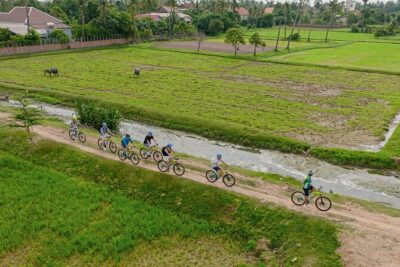
Siem Reap Countryside Bike Tour / E-Bike or Tuk Tuk
Read our review →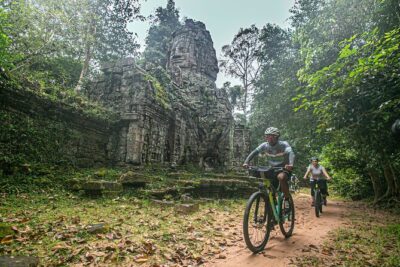
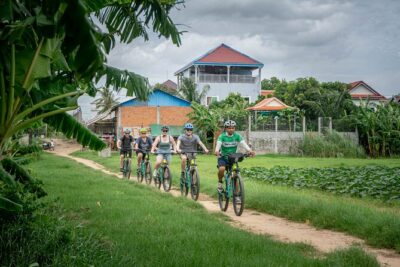
Phnom Penh Silk Island Bike Tour/ E-Bike or Tuk Tuk
Read our review →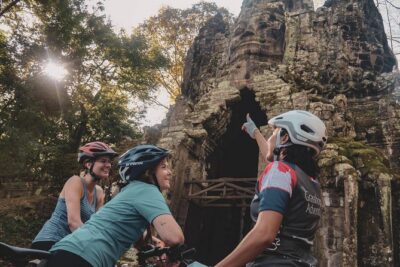
Angkor Wat Sunrise Bike Tour & Jungle Breakfast
Read our review →
Local Livelihood Half Day Bike Tour in Battambang
Read our review →Browse the lists this tour appears in