
Reviewed · CAMBODIAN COUNTRYSIDE TOURS
Kampot: Cultural Bike Experience – Local Life & Countryside
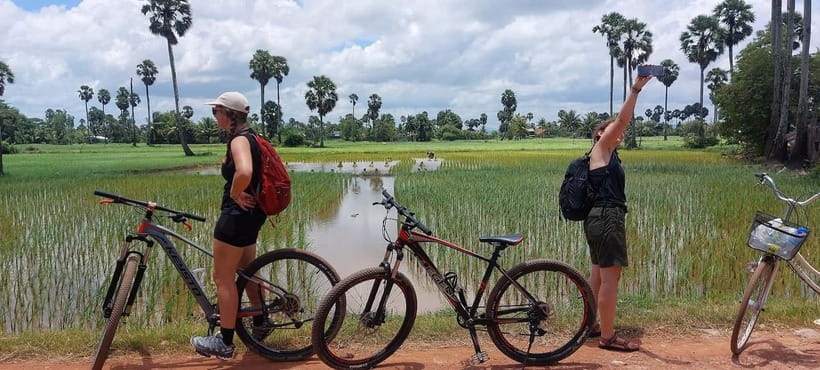
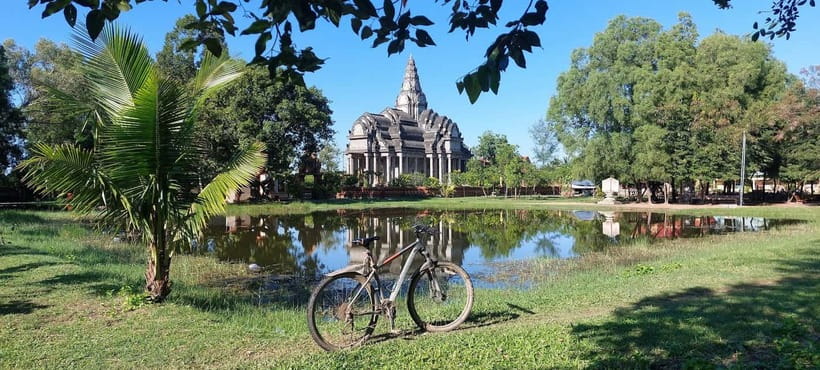
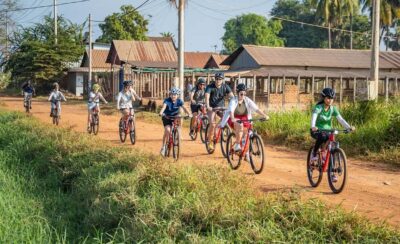
Kampot’s best stories are often found beyond the riverfront and pepper shops. This gentle 15-kilometer bike ride carries you along quiet country roads to Buddhist monasteries, rice fields, a palm sugar farm, and village homes, with time to stop, walk, ask questions, and watch daily life unfold.
I like the honest contact with local communities, especially the meal in a traditional wooden house and the careful look at how rice and palm sugar support rural families. I also like the teaching: Jason explains Cambodian history, Buddhism, local legends, and the economy in a way that gives the scenery meaning. The main consideration is the length. Six and a half hours is a full morning and afternoon, and this is not a good choice if you cannot ride a bicycle or walk comfortably.
What makes this Kampot bike tour special
- Three Buddhist monasteries give you several chances to see how religious life fits into village communities.
- A home-cooked Cambodian lunch takes place at a local family’s traditional wooden house.
- The 15-kilometer route is flat, with slow cycling and country roads that have very little traffic.
- Palm sugar and rice farming show you two important parts of rural Cambodia beyond the usual sightseeing stops.
- Jason leads in English, with detailed explanations of Cambodian culture, history, and local traditions.
- The $35 price includes bicycle rental, drinks, and lunch, making the long day easy to budget.
Why the countryside matters more than another town stop
Kampot is easy to enjoy from its cafes, riverside streets, and Old Market area. But those familiar stops tell you only part of the story. This experience shifts attention to the villages around town, where temples, farms, homes, and rice fields are part of the same daily setting.
You are not simply pedaling from one attraction to another. The stops are built around walking tours and conversation. That matters because a pagoda is more than a pretty roof, and a rice field is more than a green view. The guide connects each place to Cambodian beliefs, work, family life, and the country’s past.
Jason’s broad command of Cambodian history, economy, and culture is a major strength. One review specifically praised the amount and quality of information, while another highlighted Jason’s route and the kindness of Vin and the Cambodian people encountered along the way. That combination of explanation and personal contact is the real point of the day.
More Cambodian Countryside Tours in Kampot
- Kampot: Full-day Countryside Tour with Pepper Farm and Kep
★ 4.9 · 245 reviews - Kampot Countryside include Pepper farm, Salt field & Lake
★ 4.9 · 100 reviews - Kampot’s Countryside & Kayak Tour, Pepper Farm include Lunch
★ 4.8 · 74 reviews
Setting out from the Kampot Pepper Shop
The tour begins at The Kampot Pepper Shop near the Old Market. This is a practical meeting place if you are already in central Kampot, and the bicycle portion starts with a short ride of about 15 minutes.
The early cycling helps you get used to the bike before the longer countryside sections. The pace is described as slow, not a fitness challenge. You will cover about 15 kilometers in total, but the route is broken into rides, breaks, walks, and sightseeing rather than one continuous push.
That format makes the trip approachable for ordinary riders. You should still expect to spend much of the day moving under your own power. Anyone who has not ridden a bicycle recently may find the total time tiring, even though the route has no hills.
Country roads, scenery, and a slower pace
After leaving Kampot, you spend about 30 minutes cycling and taking in the views, followed by another section of about 25 minutes that mixes biking and sightseeing. These early stretches are less about checking off a landmark and more about seeing the change from town to rural communities.
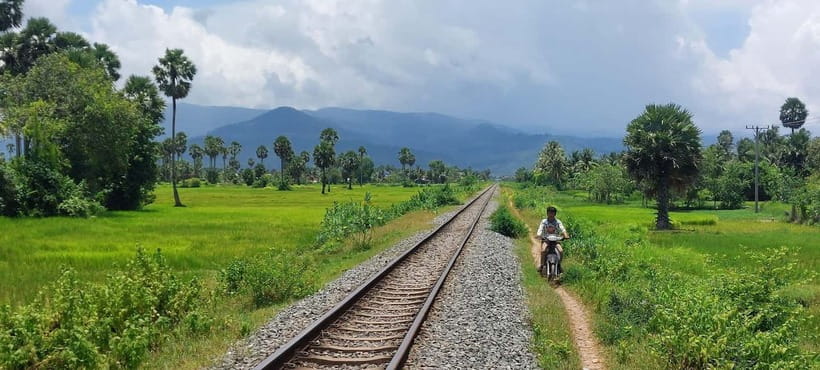
The roads are flat and have very little traffic, which is a real advantage. You can pay attention to houses, fields, and roadside activity instead of worrying about steep climbs or heavy vehicles. The route is designed for slow cycling, with regular stops every 30 to 45 minutes.
Do not expect a high-speed ride or a polished adventure course. The value is in the pauses. You may find the scenery simple rather than dramatic, but that is part of the appeal. This is a look at modern Cambodia away from the standard tourist circuit.
Wat Chum Kriel and the first long walking stop
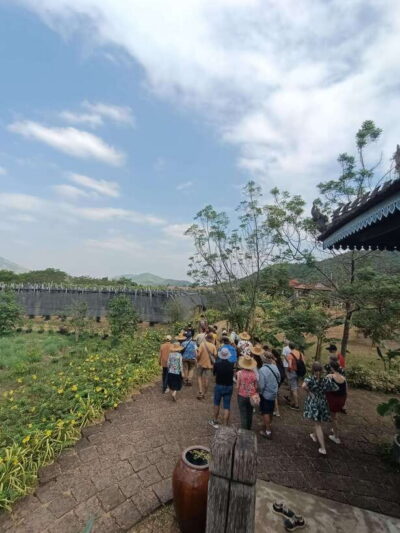
The first major stop is Wat Chum Kriel, written in the schedule as វត្តជុំគ្រៀល. You spend about an hour here on a break, guided visit, and sightseeing.
A stop of this length gives the guide room to explain Buddhist practice instead of rushing you through a photo stop. You can learn how village pagodas function as places of worship and community life, and how Buddhism shapes everyday customs in Cambodia.
The exact details of the visit can vary with local activity, but the format is clear: plan to leave the bicycle for a while and walk around with the guide. Wear shoes that are comfortable for walking and clothing suitable for entering Buddhist religious spaces. The supplied information does not state a formal dress code, so your safest approach is modest, respectful clothing.
Same country, a completely different kind of day:
- Kampot: Pepper Farm Tours, Salt, Lake & Phnom Chhngok Temple
★ 4.8 · 432 reviews - Kampot: Bokor Mountain Classic or Sunset Tour
★ 4.7 · 147 reviews - Kampot: Tuk Tuk Trip to Pepper Farm, Kep, Crab Market & More
★ 4.9 · 143 reviews - Green Cathedral Kayaking Journey & Reflection River View
★ 4.8 · 123 reviews
Tuek Chhou and the farming countryside
The route then continues toward Tuek Chhou. This section includes a photo stop, scenic views, and another bike ride, lasting about an hour in total.
Tuek Chhou gives the day a useful change of rhythm. Instead of focusing only on temples, you see the rural setting that supports the communities around Kampot. The guide can place the fields and villages in the wider story of Cambodian work and local economies.
This is also where the flat route proves its worth. You can ride slowly enough to look around, but you should not confuse easy terrain with no effort. A six-and-a-half-hour outing requires stamina, water, and a willingness to keep going after the novelty of the first hour wears off. Drinks are included, which helps, but bring a comfortable attitude toward a long active day.
Wat Ang Prey Serey Meanchey and lunch with a family
Wat Ang Prey Serey Meanchey is the heart of the experience. The schedule allows about an hour for a break, photos, a guided visit, and free time, followed by another hour for lunch.
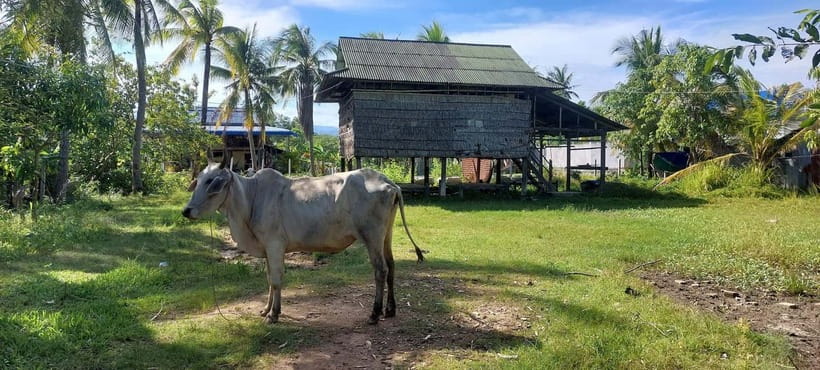
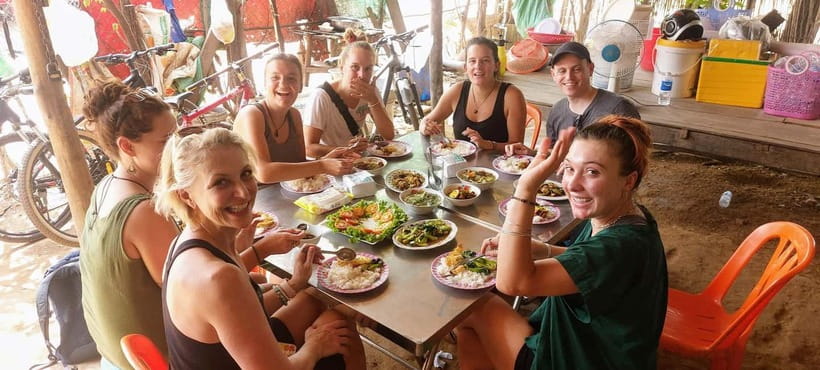
The temple visit lets you continue the Buddhist side of the tour, while the meal shifts the focus from public religious life to family life. Lunch takes place at a local family’s traditional wooden house and is described as an authentic Cambodian home-cooked meal.
That setting is more valuable than eating another restaurant meal because it puts food, architecture, and hospitality together. You see where a family lives, share a meal in a real home, and have time to meet local people. The information does not provide a set menu, so you should not book this expecting a particular dish or a restaurant-style selection.
The lunch stop is also the day’s best chance to slow down completely. After several rides and temple walks, an hour at the house gives you time to eat and reset. If local interaction is your main reason for booking, this is the stop to keep in mind.
Palm sugar, rice, and the work behind the scenery
The experience includes a visit to a local family-run palm sugar farm. It also takes you to a rice-farming community where you learn about rice cultivation.
These visits are useful because they show how rural income is tied to land, crops, and family labor. Palm sugar is not presented as a factory attraction. The focus is on a local family operation, which gives the stop a more personal scale.
The rice visit adds another practical lesson. You learn how rice is cultivated and see the communities connected to that work. Cambodia is often presented through temples and ancient monuments, but food production is just as important to understanding present-day life.
You should keep your expectations realistic. The supplied details do not promise that you will take part in farming, harvest sugar, or enter every working area. Expect explanations, observation, and contact with rural communities rather than a hands-on agricultural workshop.
The tour also includes a visit to Muslim fishing villages in its wider cultural program. That broadens the day beyond a single religious or ethnic story and helps show the variety of communities around Kampot.
Wat Prey Tom closes the cultural circuit
After lunch, the return route includes about 45 minutes of biking and scenic views before the final major stop, Wat Prey Tom.
Here you have another hour for a break, guided tour, sightseeing, and views. By this point, the three-monastery structure becomes clear. You are not seeing one isolated temple and then returning to town. You are comparing several village religious settings while learning how Buddhism is practiced in local communities.
The final temple stop is well placed in the day. It gives you one more guided look before the last 30-minute bike ride back toward Kampot. You return to The Kampot Pepper Shop after the ride, completing a loop that begins and ends near the Old Market.
What the $35 price really covers
At $35 per person, this is a strong-value full-day experience if you want more than a short bike rental. The price includes the bicycle, all drinks, and lunch, so the main extra cost is already handled.
More important, the fee pays for time and access. You receive six and a half hours of guided travel, three monastery visits, farming stops, cultural explanations, and a meal in a local home. A simple countryside ride would cost less, but it would not provide the same structure or interpretation.
The value is strongest for you if you would otherwise spend money on separate transport, temple visits, lunch, and a guide. It is less attractive if you want a quick scenic ride, dislike scheduled stops, or prefer to explore independently.
The tour has a five-out-of-five rating from three verified bookings, including a United States guest who called the ride gentle and praised the history, economy, culture, food, and Jason’s breadth of information. A French guest described it as unforgettable and thanked Jason for the information, route, and the kindness of Vin and the Cambodian people met along the way. The sample is small, but the praise is consistent: the teaching, food, route, and human contact are the strongest parts.
Who should book, and who should skip it
You should consider this tour if you want to understand Kampot beyond its central streets. It suits curious adults who enjoy asking questions, visiting religious sites, and seeing how farming communities live and work.
It is also a good match for riders who want an active day without hills. The cycling is gentle, and the roads have little traffic, but you still need to be able to ride a bike and walk during the temple and community visits.
This is not suitable for children under 12, wheelchair users, people with mobility impairments, or anyone who cannot ride a bike. The stated age restriction also excludes people over 95. Those limits are practical rather than minor fine print, since cycling and walking are built into nearly every part of the day.
You may also want to skip it if your priority is ancient architecture, a short excursion, or a tightly packed list of famous sights. The temples are important to the communities, but this is not presented as a grand-monument tour. The emphasis is on local life and explanation.
Simple preparation for a better day
Wear comfortable clothes for cycling and walking, and choose footwear that works for temple visits. Because the tour lasts six and a half hours, start the day ready for steady activity rather than a leisurely cafe outing.
Keep your schedule open. The route includes planned rides and stops, but local visits can feel less rigid than a standard sightseeing program. The best attitude is to pay attention, listen to the guide, and allow the countryside to set the pace.
English is the stated tour language. Jason leads the experience, and Vin may be part of the local hosting and introductions. If you want a tour built around detailed explanations, this is an important reason to choose it.
Free cancellation is available up to 24 hours before departure for a full refund, and you can reserve now and pay later. Starting times should be checked when booking because availability controls the exact departure.
Should you book this Kampot experience?
Book it if you want a gentle but full day of cycling, culture, food, and rural contact. The home-cooked lunch, three monastery visits, palm sugar farm, and rice community create a fuller picture of Cambodia than a standard town tour.
The best reason to choose it is Jason’s teaching combined with the chance to meet local families. The main tradeoff is time and physical commitment. You will spend most of a day riding, walking, listening, and eating rather than relaxing by the river.
For an active visitor who wants to understand how Kampot’s surrounding communities live, $35 is a sensible buy. For anyone unable to cycle or looking for a short, landmark-focused outing, choose something else.
FAQ
Where does the tour start and finish?
It starts and finishes at The Kampot Pepper Shop near the Old Market in Kampot.
How long does the experience last?
The tour lasts 6.5 hours.
How far do you cycle?
The total cycling distance is about 15 kilometers.
Is the route hilly?
No. The route is entirely flat and has no hills.
Are the roads busy?
The tour information describes the route as using country roads with very little traffic.
Which temples or monasteries do you visit?
The route includes Wat Chum Kriel, Wat Ang Prey Serey Meanchey, and Wat Prey Tom.
Is lunch included?
Yes. Lunch is included and takes place at a local family’s traditional wooden house.
Are drinks included?
Yes. All drinks are included in the tour price.
What language is the tour conducted in?
The live guided tour is conducted in English.
Who cannot take part?
The experience is not suitable for children under 12, people with mobility impairments, wheelchair users, people who cannot ride a bike, or people over 95 years old.
More Cycling Tours in Kampot
- Siem Reap Countryside Bike Tour / E-Bike or Tuk Tuk
★ 5.0 · 935 reviews - Angkor Sunrise Bike Tour / E-Bike or Tuk Tuk
★ 5.0 · 615 reviews - Phnom Penh Silk Island Bike Tour/ E-Bike or Tuk Tuk
★ 5.0 · 495 reviews - Siem Reap: Bike the Angkor Temples – Full-Day 30km Tour
★ 5.0 · 463 reviews
Just added around Kampot
- Trip with Local tuk tuk to Country side & Pepper farm…★ 5.0 · 13 reviews
- Khmer Food Culture Cooking Class in Kampot★ 5.0 · 7 reviews
- Kayaking tour around green cathedral★ 4.8 · 38 reviews
- Kep: Discover kampot pepper farm/lake & Salt fields…more★ 5.0 · 5 reviews
- Kampot-Phnom Penh include Pepper farm Tour, Salt field, Lake★ 4.8 · 5 reviews
- Kampot: Sunset Walking Tour★ 4.1 · 9 reviews
- Kep town: Local tuk tuk to Countryside & Pepper farm★ 4.6 · 8 reviews
- Kampot Pepper Farm Tour: Salt Fields, La Plantation & Cave★ 4.8 · 18 reviews
Cambodian Countryside Tours, compared.
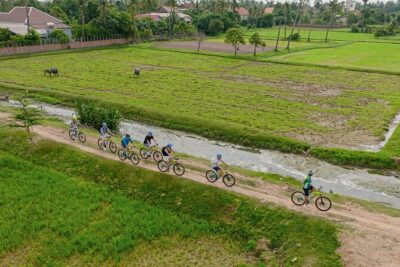
Siem Reap Countryside Bike Tour / E-Bike or Tuk Tuk
Read our review →
Afternoon tour by tuk tuk to bamboo train,bat cave,killing cave,countryside.
Read our review →
Full-day Countryside Tour with Pepper Farm and Kep
Read our review →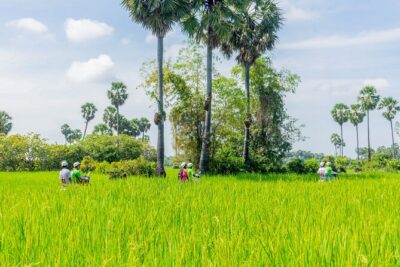
Siem Reap Countryside Vespa Tour / Tuk Tuk Available
Read our review →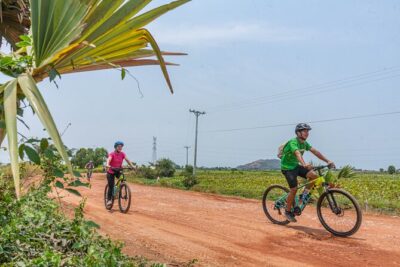
Siem Reap Countryside Sunset Bike Tour / E-Bike or Tuk Tuk
Read our review →Browse the lists this tour appears in